
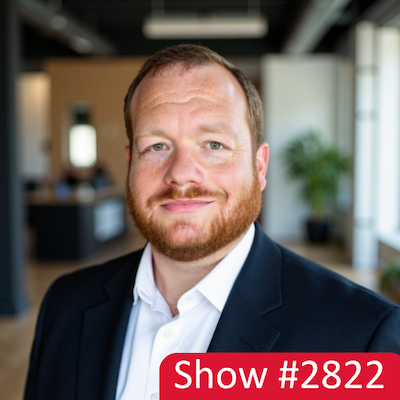
06 Jul July 7, 2026 – Media Ad Wholesalers Skip Wilson and Leader With A Heart Lorenzo Payman
Intro 1 0:04
Broadcasting from AM and FM stations around the country. Welcome to the Small Business Administration Award-winning School for Startups Radio, where we talk all things small business and entrepreneurship. Now here is your host, the guy that believes anyone can be a successful entrepreneur, because entrepreneurship is not about creativity, risk, or passion. Jim Beach.
Jim Beach 0:26
Hello, everyone. Welcome to another exciting edition of School for Startups Radio. We have a great show for you today, and I really appreciate you being with us. You know, I really do believe we have great shows, and we’ve done that 2800 times now. We have amazing guests, and I have nothing to do with that. I am just here to interview, and all I try to do is let their brilliance shine through, ask a question or two, and get out of the way. And we put together amazing guests for you. First up, we have Skip Wilson, one of the best educational interviews that I’ve had in a long time. You’re going to learn a ton about ad wholesaling and the back end of how we all get ads in this new digital world. And then one of the most motivating interviews I’ve seen in a long time, heard in a long time from an amazing motivational person, Lorenzo Payman is with us. You are going to be blown away by his story, and how he has built a podcast empire. It’s an incredibly motivating story altogether. I’ve got an incredible show, education and motivation. What else can I give you? We are back, and again, thank you so very much for being with us. Very excited to introduce my first guest today. Please welcome Skip Wilson to the show. He is the CEO of Draft Media Partners. They are an advertising infrastructure company that helps agencies and brands execute scalable paid media strategies. Very interesting career. He started off when he was 16, and tried to.. he was writing copy, trying to impress a girl. Good grief, skip, that’s the best strategy you could come up with. Copywriting to impress a girl, it might.. you know, it just shows how
Skip Wilson 2:14
little I knew. Yeah, yeah, exactly.
Jim Beach 2:17
He was part of CNN’s I report team, where he helped develop emerging digital platforms, and then moved to Clear Channel, where he was part of building the company’s digital division. He spent more than a decade at iHeart Media, and then came and started his own company. They have received all sorts of awards for their just good place to work and all that kind of stuff. He has a podcast of his own called The Advertising Podcast. Skip Wilson, how you doing? Welcome to the show.
Skip Wilson 2:50
Doing well, thanks for having me.
Jim Beach 2:52
All right, an advertising infrastructure company that helps agencies and brands execute, does that mean that your customer is other digital companies.
Skip Wilson 3:04
It is, yeah, and the vast majority of our business is other ad agencies, marketing companies, fractional CMOs, those things.
Jim Beach 3:11
That’s interesting. So,
Skip Wilson 3:14
usually you’re either great at the client management side and the, like, you know, coming up with the idea side, or you’re great at the like nerd side of like actually scheduling things, make sure tracking pixels are set up right, and all those different things, and very, very few companies are great at both, and so, yeah, we just sort of went hard into our core competency of just being being the ad infrastructure,
Jim Beach 3:41
I’m sorry, saying that the ad infrastructure company. Okay, so what does that, what does that mean? You actually do for them then.
Skip Wilson 3:49
So it’s, I think it’s almost best to know, like, how we, like, we started off as a SAS, like we originally launched with this planning tool. This was before, this was in 2020 so this was right before AI was the thing, and the original structure was we built this tool that would allow us to be able to say, like, okay, if you’re a roofing company in Des Moines, then your cost per lead should be this, and this should be your media mix, and here’s in all those different things, so we actually launched with that, that’s actually the draft is dynamic response advertising forecast tool, um which was an acronym that lasted about eight months, but the, but that was the original goal, but we kept building these plans for agencies, and then the feedback we would get is like, hey, this is great, but we only have, you know, head in the office, or Nancy in the office is the only one that does ads, and they’re not going to be able to execute this, because we don’t have access to the trade desk, we don’t have access to these data platforms, or you know, for this budget, we’re not going to execute on four different platforms, and so we kept, we after hearing that same thing five or six different times, we realized, oh, that’s the opportunity here, then so we give the plan. Any tool for free, and then the execution part is where we make money.
Jim Beach 5:06
Very interesting model.
Skip Wilson 5:08
Yeah, well, we got to it by accident.
Jim Beach 5:11
And how has the industry responded to it? How, what is the response?
Skip Wilson 5:15
It’s been great. I mean, it’s.. it’s.. there’s been several things since then that have been, it’s been very, very great timing, which you know is impossible to plan sometimes, but with the sort of SEO, so a lot of our, a lot of our traditional agencies were making a ton of money writing blogs and creating content and those types of things, and then with Google changing the way SEO, the SEO game is playing, that sort of disrupted a lot of their current campaigns, and Trade Desk has, like, 100 grand minimum, or something crazy like that, a month, and so, because of some of the industry changes, it just played well. So, I mean, it’s been perfect timing, because also marketing departments are always squeezed and cut back, and every business, even if you have an internal marketing department, what would have been a 10 person team 15 years ago is now a two or three person team, or even a one person team, and so it’s, it’s, it’s been great for us. All those things sound like bad things for the world, but it’s a good thing for us specifically, I so
Jim Beach 6:24
could you just say that we are the outsource marketing team?
Skip Wilson 6:28
Yeah, yeah. The analogy I use to people outside of the industry is that what, like Cisco Foods is for, like, a restaurant, or like they sell the food for the restaurant, that’s what we are for ad agency.
Jim Beach 6:39
What is the trade desk you mentioned $100,000 limit. I bet a lot of our entrepreneurs don’t have 100,000 in revenue, so they don’t know what that trade desk is.
Skip Wilson 6:50
That’s like the premium, that’s like the, if you think of it in like sales terms, that’s like the Glengarry leads of ad platforms, that’s like the Crim, the best of ad platforms, or the best of ad revenues, but they, they are a pay to play system. So, if you’ve ever wondered, like, you know, where, where’s Nike placing their ads, and those types of things, it’s those premium sources that most people, most businesses, most companies don’t have access to. And so that’s part of what we’re doing, is democratizing access to those things,
Jim Beach 7:22
it’s a where do I, or what kind of ads do I buy on the trade desk? Google, I don’t know.
Skip Wilson 7:30
Yeah, no, that’s a great, that’s a great question. So, where your ads actually still show up is places like Hulu, Disney Plus, although actually those are both Amazon’s DSP, not Trade Desk, but doesn’t matter, that’s that’s my nerd brain, but breaking in there, but where the ads actually show up are places like Hulu, Disney Plus, different blog articles, but then yeah, Google Search, Facebook, Meta, those things, those are still important platforms, but the big difference is the data behind them, like that, the ability to target whole households, so in other words, the ability to be able to hit somebody with a TV ad or an ad on their TV because they searched something on Google earlier that day. That type of capability is usually something that exists out there in the market, but usually it’s just too expensive.
Jim Beach 8:17
Well, that’s when we think that the man is listening to us and spying on us, you know.
Skip Wilson 8:23
It is, yeah, exactly. That’s that’s exactly right. It’s, and you know, it seems like sometimes seems like a happy accident, like, oh, I was just thinking about this company, and now here they, you know, here’s a postcard in the mail, or those types of things. It’s, it’s making that data talk to each other, that usually medium tier ad agencies and definitely direct businesses just don’t have access to, usually
Jim Beach 8:48
very interesting
Skip Wilson 8:49
for a company like us.
Jim Beach 8:51
So say we want to, we have a $20,000 spend that we want to do. What would your recommendation be? You know, we want to maybe always some of the TV ads that I see and things like that on the new channels,
Skip Wilson 9:09
so we have sort of a sort of mantra or a way of structuring things where it’s a specific message to a specific audience to get some specific results, and so really, and that’s true of any budget, so let’s say you’ve got 20 grand. What I’m going to start with is, like, what are you hoping to get out of that? You know, if it’s a government, we have, like, you know, anti-smoking campaigns, like through North Carolina, that are all about ceasing, you know, tobacco use. That is a very different call to action than an e-commerce company or, like, a lead gen company. So, you know it’s, hey, for this, what are you trying to get out of it? If it’s leads, which for most businesses, that’s what it is, is lead generation, or ultimately sales. Then we, then we sort of back into it, like we figure out what’s your customer acquisition, what a reasonable customer acquisition cost is for your, for your target audience. And then it’s as simple as coming up with the message of, you know, we use the target audience to determine which platforms to choose, and then we use that to figure out, okay, what do we got to say to them to get them to do whatever that specific thing is. So, if you’re playing at home, go ahead. So, if you’re playing at home, I was gonna say, so if you’re playing at home, I always recommend just taking a blank piece of paper and figure out, you know, specific audience, specific message, and then specific action, and work just up that page, like what’s the specific thing I’m trying to get, you know, leads from what type of audience, and then you just figure out what to say. You should honestly be doing that before you ever contact a professional, because that’s what will help guide those choices of, do I pick, do I lean into search, do I lean into social, do I lean into branding. The answer is, it depends on what you’re trying to get.
Jim Beach 10:52
You mentioned Google changes, if they change the algorithm.
Skip Wilson 10:56
Yes.
Jim Beach 10:57
How recent?
Skip Wilson 10:59
Well, I mean, they never like, so very rarely do they make big public announcements when they do, but 18 months ago they did. They also just had a big conference that literally about a month ago, but the SEO difference is that one that was about 18 months to two years ago, where you know, used to, if you were, let’s say, I’ll just keep picking on our roofing companies. If you’re a roofing company, it’d be a great idea to have, like, a roofing blog, and they talk about roofing on your blog, and those types of things, because on-site content really mattered a lot. But with generative AI, making building blogs like almost seamless, Google had to sort of change the way they rank those things, and now that’s barely even looked at. And actually, just at their latest conference, they just said that they’re only pulling that type of information from quote preferred sources, which just means if you’re not already one of those preferred sources, that’s a closed list, so to speak, so that’s just a very different game, you know. SEO is not impossible now, it’s still, you know, it’s still something to do, but it, you know, it’s, it’s now it’s making videos and putting them on YouTube. Now it’s, you know, still things like reviews and site structures still matter, that will always matter, probably. But those happen from just doing, doing good business. It’s always going to be good, hopefully, to just do good business, right?
Jim Beach 12:25
Well, Google doesn’t, I mean, their results just keep getting worse and worse and worse, useless at this point.
Skip Wilson 12:32
Yeah, well, you’re, you’re not going to like the fact that that they, one of the announcements they just recently made is that the the ad contact, so use like even a year ago, if we were setting up a search campaign, you put in 10 headlines, we have the option to then say, hey, yes, you can tweak these headlines or change these headlines, now that’s not going to be an option anymore, you put in your, you know, keywords and headlines, it will then contextualize that ad in the AI response. So, in other words, ads are coming to the AI responses, so that’s gonna, I’m sure, make you even happier.
Jim Beach 13:11
Yeah, right. Good grief, it
Skip Wilson 13:19
makes sense in a way, I mean, people are searching differently, you know. If, if I was looking for a pizza place, this happens all the time. Let’s say it’s 9o’clock at night, and I’m in a random city, and I’m looking for a pizza place that I can take my family of five to with small kids, like the safe. If it was a couple years ago, I would have searched pizza places near me. Now I can specifically say I’ve got, you know, family of five, three small kids. It’s, you know, late at night on a Saturday. Where can I safely take them and get a much more content? So it makes sense that the ads should be contextualized, so not to defend Google, but it does make sense that is a good change that if it shouldn’t say 999 pizza, if that’s what I’ve just, you know, based off of what I’ve just searched, so I like the change overall, but my hope is that it’ll become very clear of what’s an ad and what’s not an ad. I hope that doesn’t change.
Jim Beach 14:18
Go back in time, skip, and tell us the entrepreneurial history. So, how’d you get your first customer? How’d you get your first dollar? Go back in time and tell us some history.
Skip Wilson 14:31
Yeah, absolutely. Well, when I first went out on my own, like I said, we had a totally different business model than where we than where we landed at today. We didn’t change business models because it was crushing it. I’ll just put it that way. The I thought so. I had been division, so I had at that point drafts is the only business that I’ve started. So I’ve had an entrepreneur, entrepreneurial journey at one, really, unless you count when I was a freelancer, but when I, but I had been at that point at two. Large corporations, and both of them had been especially at iHeart, which ClearChare radio became iHeartMedia. It was definitely over my division, and so I thought, well, I’ve basically run my division, was judging on PNL, hired my own people, all of that stuff. I was like, that’s gonna be exactly the same when I start my own business. I was surprised by how different it is. The things you just don’t think about, like setting.. I remember two weeks after leaving the corporate world, I couldn’t get my printer to connect to my computer, and having almost an emotional breakdown of, like, there’s nobody to call here, like this.. this. there’s, you know, I can’t get this thing figured out, and I have.. there’s no, you know, there’s.. there’s no.. I can’t be like, ‘Hey, Bob, and it, like, come on up,
Jim Beach 15:49
Bob, and it
Skip Wilson 15:51
exactly.. I am the IT guy, right? And so that was a.. it was a very different, very big shock, but the biggest thing, I mean, the biggest thing was just listening to the market. I also had a ton of connections, you know, I had a ton of pretty decent rolodex, and I knew the need was there for our planning software, because just, I mean, for years I would get the question of, hey, if we give you a million bucks, what can we expect in return, and almost always the answer is, you know, so I knew that that was not a good answer. I knew, and so we built this thing that would be able to say, hey, for a million bucks in this market with this target audience, this is what you can get, you know, if it performs at the 50th percentile, the 60th percentile, and so forth. So I knew that we had a great product, and I knew there was need. What I had misjudged was my target audience, which I didn’t think about the fact that my, you know, the small and mid-sized agencies are very cash-strapped, so I’m selling to people that don’t have cash, and the last thing they need is another SaaS. Also, I was solving a sort of secondary problem, like I was solving a problem for the end customer. The end customer very much cares about ROAS, but for the agencies, most of them, they mostly care about, you know, making the sale and making the, you know, all of those different things. So, yes, they care about ROAS, yes, they care about making better plans, but it’s more, definitely more of a nice to have than a need to have for them. So, for that reason, we had a.. we were like, I said, but you know what was nice about it was, we had a couple of wins, we had a couple of wins, like right off the right off the bat, that I think they were just being nice to me, that allowed me to basically just stay afloat. The biggest game changer was just listening to the market, and when you hear, when you’re trying to sell one thing, if we were trying to sell a SaaS, but you hear that same pain point and that same story over and over again, of like, I love this plan, we agree with you that this is what we should be doing, but we don’t have the resources to execute this. When you hear that five or six or 10 or 15, or at that point probably 100 times, then it’s, it’s silly to not take it and be like, okay, that’s the opportunity, that’s what we’re running with.
Jim Beach 18:17
How do you? And ever since then, it’s been gross, them not having any cash,
Skip Wilson 18:22
well, they still don’t have cash, but what they do, but what they need, but what they actually needed was, you know, see, for them to be able to sell a larger campaign, so by taking our sort of our model now, where we’re more of a wholesaler, we’re not actually using their cash, you know, they’re using, they’re spending their clients’ cash, and so we kind of changed who we’re selling to in a bit. We didn’t change who we’re talking to on a day-to-day basis, but as far as the money that flows into us is actually flowing through very much like a retail wholesale situation, right, like where they become the retailers, the face, the company that you’re buying from, and we become the wholesalers on the back end, and so that’s that’s how you know you can’t necessarily solve that they don’t have cash, but what you can do is make it so that they’re not spending their cash.
Jim Beach 19:19
Yes, I love spending other people’s cash. I’m very good at that.
Skip Wilson 19:23
Yeah, so everybody does, and so you know, if you, if you can structure things in such a way to where you’re, you’re solving a problem for everyone involved, you know, and it’s, it’s a benefit to everyone. The end business gets a better campaign than they could have gotten. The middle agency is able to execute something that they couldn’t have executed otherwise, and it’s good for us, because now we’re selling to people that actually do have money, and you know, and able to prove those results out, and so it’s good all along. The I mean, I’m making it sound like I invented something crazy. The whole, the whole self, the wholesale retail thing exists in every category, pretty much. It was just new to advertising.
Jim Beach 20:01
Right, well, it’s a brilliant idea. It’s a really smart little pivot there, so it’s very impressive. So, did you, were you able to bootstrap? I didn’t hear anything about raising money. Are you 100%
Skip Wilson 20:15
We are. I’m a 90% owner, but yeah, we were able to, we were able to bootstrap, we’ve never had to raise money, the only affidavits out right now is is less employee incentives, so, so, yeah, we’ve been 100% bootstrapped ever from day one, and that was something that I was always committed to, I, that was part of the benefit, honestly, of launching in 2020 we were about to, in February of that year, when I basically decided that I was going to do this, and was talking to my, to the minority owner, my CEO of my co-founder, we were like, all right, we need to sign a lease somewhere, and we’re going to need to, you know, figure all that stuff. So immediately that we were like, okay, we’re gonna have to take on a lot of overhead and a lot of expense, and those types of things. 2020 really taught us, wait, you don’t need that expense. We now have an office, and we now have, you know, places to go, but you could, we could wait until we were a much more mature company that could, they could hold such things, you know, so we were able to keep our expenses very low, and we also, because we are a wholesaler, we have to keep our margins very low, because you know what we sell usually is being marked up, so we’ve just always tried to be very strategic and keep it going in a way that it’s sustainable.
Jim Beach 21:47
Well, I think that’s by far the smartest way, and you certainly have conserved your personal wealth by that strategy. So, I would give it an A plus. You’ve done it exactly right. Seems well, we’ll see, you know, it’s that’s that’s, but I think so. Yes, right now, so far, so good. We’ve grown ever since we made that pivot. Every month since then has been our best month, and I didn’t
Skip Wilson 22:12
think that we, we actually thought that June would be usually June and July are are lower than May, and so I was like, we’re about to, I bet we’re about to go below, we’re about to have our first month where we’re making, we’re going backwards, but we didn’t June once again set the set another month record, so yeah,
Jim Beach 22:35
How are these ads on the Hulu’s and Tubies and all of these various apps that we have on the TV. How are those doing? Are they actually getting strong ROI, or, you know, some of them you can forward through, some of them you can’t? Is it training us to go the bathroom then, just like the old TV used to? Well, so right now, and this is something that I’m hoping the industry doesn’t break right now. Right now, the ad sets are very short, so right now you’re looking at at most a two minute ad break. So, if you’re getting up to use the bathroom, you gotta go real quick. If a younger person, the go use the bathroom and write that, so that is something that I like. It is actually the ability, because we can target the house on that to the household level,
Skip Wilson 23:30
and because you can do things like now, and now through most DSPs, which is an advanced way of saying ad platforms. Now, through most ad platforms, you can respond by the remote, you know, or click text me this, or those types of things, which is even better than QR codes. So they’re, they’re definitely better. That is still a branding tactic, though. One of the, which means that it is something that is not likely. It’s something that is, I would say, a second or third tier of an ad, like, if you’re thinking of most, I’m about to say, is obviously every business category is differently, but for most businesses, you’re going to want to start with search and social, because you can target the people that are literally about to buy your thing, so you should always start there. Then you should start to think about retargeting and remarketing, then you should start to think about branding and future consideration, and those tactics, then that tactic, the TV tactic, streaming, podcast advertising, those things, those tactics do still live in that branding and future purchase world, so if you’re, if you are a business where you are concerned about direct, you know, if you’re concerned about keeping your cost for leads super low from an attribution standpoint. In other words, then that’s still a tactic that I would put further out. All
Jim Beach 24:54
right, it would be cool to see your own ad come up on the TV, though
Skip Wilson 24:59
I. It’s very, it’s very cool. Yeah, it’s, it’s, it’s, it’s great from like a vanity standpoint, and it’s great from a, I mean, honestly, out of foam is to like, you can buy billboards now cheaper than ever before, too. And something fun that you can do is, you now take 15 bucks and buy like a day’s worth of billboards in a market, and sometimes that’s fun to do, just to like be able to be like, hey, there we are. So, if you’re doing some like recruiting or hiring around or something, or you want to impress an employee girlfriend or somebody that you can just buy a day’s worth of billboards,
Jim Beach 25:40
fascinating skip great job, a pluses, as I said. How do we find out more? Get in touch, follow you online, all that, please.
Skip Wilson 25:48
Yeah, dropping new partners.com that has all our contact influence stuff, you can talk to us straight from there.
Jim Beach 25:54
Fantastic, thanks a lot for being with us, and we’d love to have you back. Thanks a lot.
Skip Wilson 25:59
Thank you,
Jim Beach 26:01
and we’ll be right back. We are back, and again, thank you so very much for being with us. Very excited to introduce another great guest, this was interesting. I was on his show earlier this week, and now he is here with us. Please welcome Lorenzo Payman to the show. He is the founder and host of Leader With a Heart podcast. He is also a TEDx speaker and author of Leaders with a heart volumes one and two, Lorenzo, welcome to the show. How you doing today?
Lorenzo Payman 26:46
I’m doing wonderful, thank you for having me, Jim. It
Jim Beach 26:48
is, and hello to
Lorenzo Payman 26:49
everybody.
Jim Beach 26:50
What is your main business? You have several that I want to talk about. Is Profitable Podcast in the YouTube Academy, where you teach podcasting and YouTubing? Is that your number one product source or income source?
Speaker 2 27:04
Yes, yes, that is the foundation of everything I do as my podcast leaders with a heart. My podcast is the reason I’m still here. So, whenever I start a talk, whether it’s a conference, a TED talk, or whatever, I always start that with everything I have today, I wrote to God, my family, and my podcast, and that order, my podcast literally not only opened the walls for me, but saved my life.
Jim Beach 27:26
Wow, wow, that’s quite a claim. I wouldn’t go that far with mine. Tell us why.
Lorenzo Payman 27:32
Oh, long story. How much time do I have?
Jim Beach 27:35
22 minutes. Go.
Lorenzo Payman 27:37
Okay, okay. So back in 2019 I was living in Hong Kong, trying to build a business. It didn’t work out. I literally ran out of money. If it wasn’t for a friend of mine who allowed me to stay at one of his properties, he’s running a multi million dollar Airbnb business. I would have been on the streets. Imagine living in the most expensive city in the world, more expensive than New York City, more expensive than London, Hong Kong on $20 a week, that was me. Yet, at the same time, it was some of the happiest moments of my life. You had met me in 2019 in Hong Kong. I was a guy with a three piece suit with no one in my pocket. I was going through a phase where almost, as if you know, in cartoons you have the character with a black cloud O ring over the head, and it just follows that follows them everywhere they go, it’s dry next to them, but on there just training on them. So, what that means for me is that I was not a newbie in business, I’d built and sold a business before. I was even hosting events, speaking, teaching people, coaching people, business. My background was e-commerce. I lived in China for four years. I was part of a team, we built and sold a brand on Amazon, so I knew my stuff, so I was teaching people how to, you know, launch profitable brands on Amazon, but for some reason when I applied it, it wasn’t working for me, and that completely destroyed my self-esteem. As a result of that, as I said, I ran out of money, my credit got destroyed, my cast, my credit, sorry, my credit got canceled, my credit destroyed. I literally have to ask my sister to book me a ticket, so I can come back to Canada. I will never forget that day, Tuesday, the 25th of February, 2020 The writers of the pandemic landing in Toronto with only $200 to my name. I knew I could get out, but I had no idea how, and ironically, what saved me had nothing to do with business. It was me going to my spiritual awakening, especially understanding two powerful principles about life. The first one was understanding the tremendous power of questions. You know, when something bad happens to us, something very difficult, painful, heartbreaking, we always tend to ask the wrong questions, such as what have I done to deserve this? Why, why, why, why, and why, until baby, and we both know that’s not the right question to ask. The right question to ask is, what is this trying to teach me, and what is the lesson for me to learn to that. So that was the first thing that literally got me back on my feet. The second thing was for me to reconnect, to realize that I need to reconnect with myself. What do I mean by that? What. I mean, by that is to listen to that gut feeling, those hunches, that voice in your head, your intuition, because that’s your soul talking to you when you have an idea once, Jim, that’s your, that’s your mind talking to, but if you get the same idea over and over and over again over a period of time, that’s your soul, so I need, I had to learn that, so for example, if I were to look at my life, the last five years, five, six years, the three to four decisions completely changed my life. Have all come result of me asking better questions and understanding my sorry and reconnecting myself. Actually, my TED talk is precisely on that topic. So, long story short, in October of 2020 I started my podcast without knowing anything, I was living with family in Canada. I was, I was in a very bad spot. Nothing was working for me at night. I wouldn’t, I would literally nights I would cry myself to sleep. I think they, I wouldn’t, I didn’t want to get out of bed, nothing was working for me. I was depressed, lost, obviously broke, and all that. So, when I started my podcast, October 2020 I got to talk all day long with incredible men and women from around the world, what overcame a billion times more painful, more heartbreaking things than me.
Lorenzo Payman 31:12
People had lost it all and went to jail, people that overcame terminal diseases, people that overcame becoming paraplegic, and all these incredible men and women telling me, without exception, hey, just because you’re going through some temporary keyword being temporary financial challenges, that’s not a reason for you to give up, and that’s how my podcast literally saved my life. If it weren’t for those incredible men and women, and giving me that mental, moral support, and not to give up. That’s what kept me going. That’s what, that’s how my podcast literally saved my life. So, I gave the full picture and a summary, so you and the audience can really understand where I come from, where I’ve been to. So, I’ve been to how and back a few times, and my podcast, what allowed me to not only to get back on my feet, but also to open up a completely new life. I’ve never even imagined or dreamed about
Jim Beach 32:09
what about the $200 You can, it takes about $200 to start a podcast when you buy a URL and some hosting and things like that. That’s not enough to live on, so how did the, how did the money piece work out?
Lorenzo Payman 32:25
Great question. So, first of all, I was staying with, with family, so they were great enough to let me stay at home for free. They would, they were feeding me and all that, and the actually, when I started my podcast, my microphone, I couldn’t buy it because I didn’t have a credit card. I had to ask my sister to buy it from me, even the domain meters with a heart calm, which is $10 a year. I couldn’t buy it because I didn’t have a credit card. I’m talking about early 2020 which is six six and a half years ago. So I, the $200 was just from me, just, I wouldn’t even say as a backup, and whatever I could, you know, just the basic cities, but because I was living with family, I didn’t, I didn’t have any expense, and that’s what I’m truly, incredibly, and deeply grateful for that, because they were there for me when I needed the most, and of course, I’ve been there for them as well all my life, so, so when I saw my podcast, I literally spent $0 because I didn’t have any money. I had to ask my sister to buy my first microphone, which was a Samsung QTU on Amazon for $65 and the domain my sister literally booked it for me. I bought it for me.
Jim Beach 33:38
Okay. Well, then she’s still not doing that. When did the money start to come in? And how, based on what?
Lorenzo Payman 33:43
Great question. Great question. So, the first year of me spending all day recording 234, podcast episodes a day, I did. I had no idea how to monitor the podcast, so I made a grant for the first year. I made a grant total of $0 However, as soon as I reached out to episode, which took exactly a year. That’s when things started to change. People started asking me, ‘Hey, payment, can you help me launch my podcast? At first, I was hesitant. Oh, go watch this video on YouTube, you’ll say, ‘No, show me how you did it. What do you want me to show you? Well, show me how you did it. And remember what I said just earlier about asking the right questions? Then I asked them one question that led to two questions completely open up everything. The first question was, Do you have your own podcast? Believe it or not, Jim, 97% of people that I talked to said no, and I asked him why. Three main reasons: I have no idea where to start, I’m not a techie, and I don’t know how to get the right people and how to grow it, and that’s when the light bulbs went in for me, and ask him one question. Open up everything, ask him, would you be interested if I were to show you not only how to launch a podcast, but build a platform, so you can share your story, speak from the heart, and build a connection with the audience, even if you have zero audience to start with. I get a resounding yes. I get six clients on the first weekend and. 60 clients, and next 10 months, all of that with a YouTube channel of less than 200 subscribers. That’s when I
Jim Beach 35:07
first six, where you said you got them all within the first weekend. Were you at cent? Or
Lorenzo Payman 35:12
great question for me, and that’s something a lot of people are sleeping on. Facebook groups have a gold mine, so I joined one Facebook group, networking Facebook group. They meet every Tuesday night at 7pm Eastern, and I would religiously attend every one of them. Just like, have you been to a BNI event, Jim?
Jim Beach 35:33
Yes, I have.
Lorenzo Payman 35:35
So, just like BNI, you get instead of 30 seconds, you get two minutes. We are what you do, and how can we? How can we help you? So everybody gets two minutes. I started talking. All I said was, “Hey, I just launched my podcast. I’m looking for people to showcase us on my podcast, because when I start, I had no business, and I had no idea how to market the podcast. So by getting those people on my podcast, getting to know them, then over a year later, that’s when they started asking me, ‘Hey, can you help me launch my podcast? That’s how my, the first version of the, of the, of my program was started. That was back in December of 2021
Jim Beach 36:21
Very interesting. I love
Lorenzo Payman 36:24
it. And if I may add one thing, the one thing that really started for me to make things together is for me to understand that business is not the numbers game. Should numbers matter, but ultimately it’s a relationship nurturing process. We do business with people who are like, greater than trust. For example, if me and your gym, we don’t connect men to men, we’re not going to talk, let alone do business with, but once we connect, it opens the doors, wallets, and everything else in between. So, once I understood that, then I ran with it. So, on my podcast, when I get a guest on my podcast, I don’t sell, I don’t pitch, I simply want to get to know them as a person. You were on my podcast not long ago. My podcast was not a typical podcast. It was my podcast, is all about getting to know you first and foremost as a man, as a human being, or as a woman. So, on my podcast, I simply leverage my podcast as a vehicle to get to know that person, to build that trust, to build that rapport, because anytime you’re selling anything, I take it over $1,000 pounds or euros. It’s about one thing, and one thing only: trust. Now, How do you build that trust? By building rapport. How do you build that rapport? By simply having a hard-to-date conversation. And what’s the best platform to do so? We’re doing it right now, me and you, a podcast. So, once I understood, understood that, that’s when things started to really make sense for me, and start, start to get really, really, really interesting.
Jim Beach 37:45
So, did you ask the guests on your show to have a podcast? Is that who you were selling?
Lorenzo Payman 37:52
Yes, but not directly, not on a podcast. So, what I would do, I would get to know them, and at the end of the podcast, I would have one question: hey, give you on podcast, and I’ll ask him why. Why not? And then they would tell me. And after that, I would get on a call with them and tell them, hey, have you thought about having the podcast yourself? And then that’s how I would, I would share with them all the benefits of podcasting, not only for them personally. For example, for me, podcasting has completely changed me as a person. The greatest gift podcasting has blessed my life with, beyond the financials and opportunities, was that of killing my shyness. I used to be incredibly painfully shy, that for me has been the greatest gift. So I started telling them about all of these amazing benefits of podcasting, not just for business, the obvious reason for business, but also, and first and foremost, for you as a person, make you much more interesting person to talk to, because you’ll be talking to so many people, a better listener, better speaker, able to really connect at a deeper level with people, not just business people, but even people in your life, your family, your kids, your spouse, your relatives, and all that. So I simply started sharing with them all the benefits of podcasting, not only for the business, but for them as well, and that’s when it started to really make sense to people.
Jim Beach 39:12
What do you charge for that package?
Lorenzo Payman 39:15
Well, when I first started, it was only $500 now it’s $5,000 but now it’s a much, much, much different, different program, much more robust. So it evolved from just launching a podcast in three weeks to launching a profitable podcast, and then to launch a profit podcast around your zone of genius. Now we’re doing something much, much, much different, next level, which is you may have visibility, but visibility alone doesn’t convert, because I’m sure you’ve seen enough people doing all the right things. People are, you know, creating content, posting all the time, nurturing relationships, attending events, and so on and so forth. But yet, crickets, why is that? It’s because in the wrong place, the wrong groups. Just like good luck trying to sell steaks to vegans or pork to Muslims, it’s not going to work, not going to happen. So it’s all about being in the right rooms for the right people. So now my program is much different, much more robust, and it’s called the Undeniability Authority Sprint. I get my clients to go from being invisible to becoming deniable to becoming the obvious choice in the niche by simply first helping them get the laser focus clarity on what is the one pain point is solving info, essentially help them helping them identify the zone of genius, and then help them build the eye ticket offer, and then I help them place them, I introduce them, and for the right audiences, so they can get introduced indoors by trusted hosts and for their audiences. It’s about a completely different identity shift, so it’s a much, much more higher level program now.
Jim Beach 40:58
How, what are some of the best practices for monetizing a podcast. What are your suggestions there
Lorenzo Payman 41:06
for me? The one thing I tell my students is don’t play. So, there’s two ways to, for me, that I’ve seen to monetize a podcast slash YouTube channel. The most popular one, which is what most people are doing is build a massive audience, and then make money through sponsorships, downloads, and all that. That’s beautiful, but that only works for three types of people: one, existing celebrities, people with existing massive audiences, and if you are a world-class expert with a few pages after your name, and that is, yes, it’s going to work beautifully for you. Look at, for example, any celebrity, they can sell anything right away, because they all have that audience, but for the rest of us, we don’t have any of that. The best way to do it is simply build a podcast, a YouTube channel around one specific pain point for one specific person. We’re speaking especially about that, and then you build a high ticket offer around that. This is what I’ve been doing. This, what I’ve been teaching my students, and this is how you beat you, beat the game, where you don’t need audiences. You can literally, I’ve been literally on calls with five people making a few $1,000 It’s not about the numbers, it’s about the being in front of the right people, essentially. So, the best way to monetize a podcast, especially starting brand new with no audience, is simply you address one specific pain point for one person, and how do you do that? You simply build it around your zone of genius, and you build the eye ticket offer around it of at least $1,000 or more. Are you simply helping that specific person solve that specific pain point, and you simply talk about that on the podcast?
Jim Beach 42:41
That is a great model. I love it. And so, how successful have you been to this point? How do you measure your KPI now on a monthly basis?
Lorenzo Payman 42:53
My KPI on a monthly basis now, it’s about introductions, it’s about getting people to go from being struggling, being overlooked, ignored, underpaid, to finally saying, “Wow, wow, never knew this was actually working. I’ve got this. It’s a new offer I just launched a month ago, in May, and I just did a founder’s launch with a UK group, and the result these people have been getting has been absolutely outstanding. I’ve been able to get them to secure placements in top 5% 3% 2% 1% 0.5% podcast, global rank podcast. As a matter of fact, myself, I get interviewed two weeks ago by David Meltzer. He’s a top 0.1% entrepreneur. He owns entrepreneur.com We did the live is going to come on my podcast. I’m going to go on this. So basically, my KPI right now is to
Jim Beach 43:58
interrupt you. You’ve got to ask him why he sues other entrepreneurs so much, you know that company is the number one sewer, really. They sued, okay? They’ve sued me, they’ve sued a lot of people. If you use the word entrepreneur, they will sue you. And I think really disgusting that Entrepreneur magazine does that, you can find this in many different sources if you go and Google it, but they, they acquired the word. This was from a movie that was made. I was interviewed for the movie, but I didn’t get in the movie. But it’s from the movie that there was a guy convicted of California of murder. He had a life sentence, and his sister worked at the Trademark Office in Washington, DC, and he would mail her applications that should not get approved, and she would approve them, including Cure, C U R E, Susan G Komen Association owns the word Cure, and if you’re doing. A cure for leukemia in your neighborhood, they will sue you, and you can tell how upset I am from a tone of my voice. I have been sued by Entrepreneur magazine. So,
Lorenzo Payman 45:10
wow,
Jim Beach 45:11
just go and ask him about that, see if that policy has changed. I’m just..
Lorenzo Payman 45:15
oh, wow,
Jim Beach 45:16
doesn’t that.. okay.
Lorenzo Payman 45:19
Absolutely, I was not aware of that. Thank you for and when I get on a call next time with them, I’ll definitely bring it up in a diplomatic way. Yeah, go back to your
Jim Beach 45:30
KPIs. You were talking about your KPIs when I interrupted.
Lorenzo Payman 45:34
So my KPI is just at this point for new offer is to sim, my KPI is simple. The premise that I get them is to introduce to provide them with four introductions at top rated globally ranked podcast per month, and the first group we didn’t reach four, each person got five. So that’s my main KPI right now for this new offer is to get them the right introductions, the right qualified top authority introductions each month, so they can get the visibility that actually matters for them. So, basically, they’re going to be speaking in front of hundreds, if not 1000s, of the exact little audience once a week, and not only going to be speaking, they’re going to be introduced and endorsed by trusted host. So, that’s my KPI, is for them to get the right introductions in front of the audiences that matter to them, and then that’s going to translate into opportunities, clients, booked calls, speaking engagement, and so on, and so forth. But because it’s a brand new offer, I don’t have those yet, just being truthful. But what I do have so far is amazing experience from the clients, they’re blown away, especially by the introductions that they’re getting, and mind you, those clients are not beginners, they’re very established entrepreneurs. Some of them have been on, I don’t know, 1020, 3050, podcasts, and yet getting crickets, because again, it’s not a matter of getting in front of any podcast that would take anyone with a pulse, it’s about getting to the right people and right podcasts. A podcast is completely bespoke, custom tailor-made for you, handpicked for you, and podcasts are very highly sought after. And this is how I’ve been able to be connected with you. For example, I know you have a leading podcast, so that’s one prime example.
Jim Beach 47:21
How do you help clients get to be interesting on a podcast? What’s the secret to having a great personality on a show?
Lorenzo Payman 47:31
The one thing I always tell my students, I’ve been telling everyone, is this: never speak from a script, don’t even speak from your mouth, speak from the heart, because when you speak from the heart, that certain people can really resonate with you, because the last thing they want is just another polish, corporate drone was just trying to be polite, no, speak from the heart, be authentic, if you, for example, an extreme case, if you use F bomb every three words, do it, just like Gary Vee, that’s how he built his brand, just be unapologetically you, that’s the main thing I tell all my students, be you, because people want to know you, they want to see and hear your personality, sense of humor, because that’s how people connect with you as a human being first and foremost, when they connect with you as a human being first and foremost, that’s when it opens the doors to opportunities, everything, and wallets and everything else in between, so essentially just be unapologetically you, be authentic, be genuine, be you, don’t self-censor, don’t you know, try to not, don’t censor, just be you, speak from the heart, that would be my biggest thing I would say,
Jim Beach 48:40
Why do you move around the world and run your business in different countries at different times? You’re in Malaysia, sometimes Singapore, sometimes Kuala Lumpur, and I know you’re in the Philippines today. Yeah, what’s the.. is that you just like to travel and it’s fun to have a business lifestyle like that?
Lorenzo Payman 48:58
Great question, I love that. Yes, because again, I was, I was lucky to have been born a fan of travelers. My father was a geologist, like, always traveling. And listen, the world is beautiful. The more you travel, the more you want to see more. It’s like, it’s like drugs, even though I’ve never touched drugs, I don’t really do it. It’s like a drug, when once, once you have a taste of it, you can’t stop. The world is beautiful, you know, I just love experimenting, experiencing new cultures, new places, and these days with technology, you only need two things: you need fast, reliable internet, just like me and you. It’s 8:27am for me, Thursday morning for you, it’s 8:27pm on a Wednesday night, so it doesn’t matter, there’s no limitations, you just need fast, reliable Wi-Fi and a computer, and most of us business owners will already have that. You have a passport, make good use of it. And also, because here’s something else. Have you heard of the term geographical arbitrage?
Jim Beach 49:59
Yeah. But yeah, I immediately know what it means, but I can’t. Well, no, I don’t. So, basically, how do I arbitrage time? So, it would have to be like a movie. They actually was a movie they made about that in Kuala Lumpur with Sean Connery.
Lorenzo Payman 50:16
Yes, so that term was, yeah, so that term was essentially made became mainstream with Tim Ferriss back in 2006 seven with his blockbuster book, The Forever Work Week, so meaning you make money in a strong currency like the US dollars, British pounds, or Euro,
Jim Beach 50:36
and then live in a.. and you live in a poor country,
Lorenzo Payman 50:39
not in a poor, and a place where your money goes further, for example, Malaysia is everything but poor. Actually, Malaysia would make the US and Canada look like several countries, and I’m not joking. Anyone that goes there will be absolutely blown away. Infrastructure is incredible, the lives, the buildings shiny like I’ve never seen buildings as luxurious in anywhere in Canada or even in the US than the ones in Kuala Lumpur, so it’s not about poor countries, simply, you know, just like in business, buy low, sell high, take your money where your money goes further, that’s simple as that. For example, right now in the Philippines, when US dollar is 6060 pesos, so your money is basically almost time times six, and Malaysia, when US dollar is four ringgits, Malaysian ringgits, so basically buying power is multiplied by a factor of 234, x, so you simply can live. For example, in Malaysia, I’ve had the most amazing, luxurious condos ever in my life on Airbnb for $800 a month. The same thing in Toronto, I don’t even think first they would even exist at that caliber, that level, but if they were, it would be paying eight to $10,000 a month. So, again, it’s not necessarily about living in poor countries. There are countries out there that would make the US and Canada look like third world folks. I’m not joking, but it’s about using your money smartly, intelligently, and also it’s just about being open-minded and just travel, just be daring, be adventurous, and that’s something I’ve always been. My middle name is adventurous, so I love exploring. Like, for example, I just spent two and a half years in Vietnam. I love it in a beach town called Danang, it’s called the Miami of Europe. It’s absolutely booming, construction everywhere, one of the most beautiful beaches everywhere, you can imagine incredibly friendly people, an incredibly affordable place. So, and same thing here. I used, I lived in many countries, I lived in, I’ve been blessed, I’ve lived in 14 countries and four continents so far. And I’m only getting started. I want to go back to South America. I used to live in Brazil. I used to spend a lot of time in Argentina. I love those places. I want to go back to Europe. I grew up in France. I’m looking to spend some time in the next year or so in Spain, or in Italy, in Greece. Actually, one of my clients, she’s from the US, she left the US, and they live now like kings and a beach and an island in Greece. They’re literally renting a house with a private beach deck and beach full for $900 a month.
Jim Beach 53:11
Wow,
Lorenzo Payman 53:12
that’s what I mean. Geographical arbitrage. First of all, you would not even really
Jim Beach 53:14
prove your case, Loriso. We need to wrap it up. We are out of time. One of those constraints of radio versus pod. I need to wrap it up. How do we get in touch? Follow you online, all that, please.
Lorenzo Payman 53:26
My YouTube channel, Leaders With a Heart. My Instagram, Official Payment, and my Facebook, Payment Lorenzo, LinkedIn, same thing, Payment Lorenzo, or simply Google me, Pamela Renzo.
Jim Beach 53:43
Fantastic. Thank you so much for being with us, and we’d love to have you back as you continue to work your way around the world. Great story. Thanks a lot.
Lorenzo Payman 53:50
Thank you for having me, my friend. I appreciate that.
Jim Beach 53:53
We are out of time, but back tomorrow. Be safe,
Skip Wilson – CEO of DRAFT Media Partners
The biggest game changer was just listening to the market.

Skip Wilson
Skip Wilson is the founder and CEO of DRAFT Media Partners, an advertising infrastructure company that helps agencies and brands execute scalable paid media strategies with greater speed, efficiency, and measurable results. With a career that spans digital media, advertising technology, and entrepreneurship, Skip has become a respected voice in modern marketing and media operations. His journey in advertising began at the age of 16 when he started writing copy to impress a girl who would later become his wife. That early passion for storytelling led him into web design, entrepreneurship, and digital media while still in college. He later joined CNN’s iReport team, where he helped develop emerging digital platforms before moving to Clear Channel, where he played a key role in building the company’s digital division. During his more than a decade with iHeartMedia, Skip served as Vice President of Digital Media, helping launch and grow what would become iHeartRadio and the iHeart Podcast Network. His experience in building large-scale media platforms and managing digital growth ultimately inspired him to launch DRAFT Media Partners, which now supports agencies and brands across multiple locations with advertising technology, media execution, and operational systems. In addition to his work as an entrepreneur, Skip is a bestselling author, investor, and host of The Advertising Podcast, where he shares practical insights on marketing, business growth, and the future of media. His company has received national recognition for innovation in marketing technology, earning honors for its software development and advertising solutions. Based in Greenville, South Carolina, Skip continues to help marketers, agencies, and business leaders build scalable systems that create meaningful results, combining decades of digital media experience with a passion for innovation, storytelling, and entrepreneurial growth.
Business is not the numbers game. Sure, numbers matter, but ultimately
it’s a relationship nurturing process. We do business with people
who we like, respect and trust.

Lorenzo Payman
Lorenzo Payman is a TEDx speaker, four-time #1 international bestselling author, podcast host, and entrepreneur who helps business owners become the obvious authority in their industries. As the founder of the Profitable Podcast and YouTube Academy and the creator of the Undeniability Authority Method™, he teaches entrepreneurs, coaches, authors, and experts how to use strategic conversations, positioning, and relationship building to attract high-value clients without relying on large audiences or viral content. After rebuilding his life from rock bottom, Payman transformed his experiences into a mission to help others create meaningful impact and sustainable business growth. He is the host of the Leaders With A Heart podcast, where he has conducted more than 420 interviews with entrepreneurs, thought leaders, and changemakers from around the world. Payman is also the author of the Leaders With A Heart book series and a sought-after speaker who shares practical insights on authority building, influence, podcasting, and entrepreneurship. His approach emphasizes the power of authentic relationships, meaningful conversations, and getting into the right rooms to create opportunities that lead to long-term success. Through his coaching, speaking, and media platforms, Payman continues to help entrepreneurs position themselves as trusted experts, build stronger businesses, and create a lasting impact through leadership and service.