
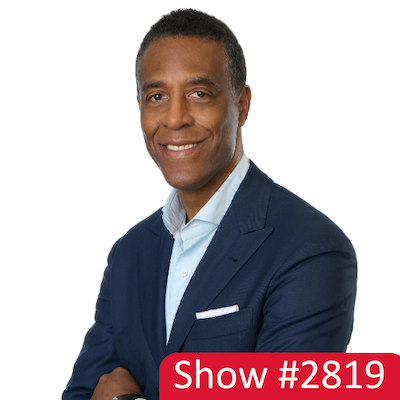
01 Jul July 2, 2026 – Bridal Dresses CEO Kelly Faetanini and Tyranny of False Choices Rey Ramsey
Intro 1 0:04
Broadcasting from AM and FM stations around the country. Welcome to the Small Business Administration Award-winning School for Startups Radio, where we talk all things small business and entrepreneurship. Now here is your host, the guy that believes anyone can be a successful entrepreneur, because entrepreneurship is not about creativity, risk, or passion. Jim Beach.
Jim Beach 0:26
Hello, everyone. Welcome to another exciting edition of School for Startups Radio. I hope you’re having a great day out there, riding the roller coaster life of the American experience, the incredible gift that we have been given of freedom and opportunity, the incredible joy that we should all have, and gratitude that we should have for our great country, and the fact that we get to live here. I have a fantastic show for you today. First up, we have Kelly Fay Tanini with us. Hope I got that right, it’s a difficult one. She is a wedding dress super guru, grew up doing it, sold her first dress at 18, and then we are going to have Ray Ramsey on the show, used to be the head of Habitat for Humanity, and is today got a new book out. We have a great conversation. I’m excited to introduce him to you as well. So, big show, let’s go and get started right now. Here we go. I have two daughters, and it seems like a high percentage of daughters at some point dream about their wedding dress and the amount of money that they can get their daddy to spend. And I’ve been married, so I’ve seen it on just.. I’ve just experienced it. Wedding dresses are pretty important. I’m excited to welcome one of America’s great wedding dress designers. She started in the industry when she was just 18. Please welcome Kelly Fantinini to the show. She is the founder and creative director of Kelly Fantinini Inc. It is an internationally recognized bridal fashion brand known for elegant design, customizable gowns, and a modern look. She designed her first gown when she was 18, and I think at 19 sold her first gown. By the age of 23 she was the youngest designer to showcase in the New York Bridal Fashion Week. Pretty impressive. Kelly, welcome to the show. How you doing?
Kelly Faetanini 2:25
Thank you so much. Thank you for that amazing introduction. I’m doing great today.
Jim Beach 2:30
What’s an amazing career? When did you first start dreaming of your wedding gowns?
Kelly Faetanini 2:35
You know, it kind of naturally just started happening. It, it just naturally flowed out into my hand. I was, I learned to sew from my grandma when I was five, and she would pick me up after school, and I was always in her sewing room, playing with fabric and sewing pillows and Barbie clothes, and helping her rip clothes apart when she was doing alterations, and then as I started getting into high school. I started making my own clothes, and I always loved dresses, just naturally. And went to fashion school, and during fashion school, I was researching different industries, and I just fell madly in love with the wedding industry. I loved the romance, the love, the beauty, just how special it was. And anytime I was sketching anything, it just naturally was a dress. So I feel like myself in the industry just kind of became a match pretty instantly in that way.
Jim Beach 3:37
Us boys are just shocked at the prices that these dresses cost a $40,000 dress. I’m not saying that’s your price. I have no idea what your prices are. Could be above that. Just, how does the industry approach paying or charging $40,000 for a dress?
Kelly Faetanini 3:56
Sure. Well, I mean, 40,000 sounds like a lot, so I’ll just say that our dresses range from around 2000 to 5000 The average is around much more reasonable, just to not scare anyone off. But there’s a lot that goes into designing a wedding dress. It’s a very complicated garment that takes a lot of skill, precision, delicate even just the mere fact of the, you know, the fabric is white, and so there are so many precautions that have to happen when we’re making the dress in order to keep white fabric completely crystal clean white, so all of that stuff, you know, that is like one aspect of cost we have extremely high quality control, because you know it’s not just a T-shirt, this is a wedding dress that you know it’s one of the most important days of a person’s life, and you know the expectation is wanting to have it be perfect, so every seam needs to be perfectly sewn, every shape, every. Fit, so that is a lot of, you know, pattern work, quality control. We have to have seamstresses, the most highly skilled seamstresses hired to make these dresses, because you know, you can’t just hire anyone, any sewer, to be able to do it. The construction is quite complex, and that seemed that’s the same thing with you know pattern making and then the next level is the design element design is you know there’s your your future projecting what might be a trend you’re also looking at how to make something feel different and unique and branded and special, not everyone wants to look the same on the wedding day, you know, from their sister and their cousin. So, there’s a lot of talent and thought and creativity that goes into it. So, often we will over design, kind of like a two to one, before we launch a collection. So, there’s a lot of product development that goes into it, we’re using lots of fabrics,
Jim Beach 6:04
two to one. What does that mean? Twice as many designs as you’ll actually
Kelly Faetanini 6:08
show, correct. Yep, yeah. And you know a lot of stuff, you know, when the designs are starting to come out, you’re like, oh, you know, that’s not really as strong as I wanted to be, and you know, you drop it. So those, you know, there’s, there’s so much time and energy that goes into it. So our development process takes six months for us to design the product to get it exactly right. We’ll often do four to five prototypes and fittings on models, the whole thing, in order to get that, you know, specific dress to fit right to have the proper design elements down to, you know, every placement of a single bead. Where does that bead go? And then also making sure that that dress can be replicated with perfection. For when a bride orders it from a store, she’s getting exactly, you know, the dress that she tried on from the store is precise to what she wanted,
Jim Beach 7:05
all right. And so, if I’m going to get married, how long in advance do I need to get my rest wrapped up? A great
Kelly Faetanini 7:12
question. Yeah, I would say, you know, we typically tell brides, you know, anywhere between eight months to a year. For us, we do offer rush options, but a lot of bridal designers don’t, and, and that’s all just, you know, supply chain. We have to manage fabrics that are coming in, and there’s other orders before that bride, and, you know, like I said, the dresses take a long time to make, so you know, we want to make sure it’s, you know, precise and correct, and it’s not rushed, but also, like, lately I’ve been telling brides to purchase sooner, because the world has been an unpredictable place, so things that happen in the world do affect supply chain, and sometimes, you know, we have to, sometimes things take longer, you know, that there’s the tariff issues, there are war, there’s gas prices, so that affects shipping and freight, so you know, for your wedding dress, you don’t want to be stressed out about it, so it’s always better to get it sooner. And also, I tell brides the wedding dress is the core focus of everything you’re planning in your wedding, so you can’t really move forward with the rest of your planning until you have that vision with your dress chosen, and then everything kind of, you know, unfolds after that. So I’d say a year is ideal, but you know, we can certainly do it for less than that.
Jim Beach 8:36
All right. Tell us about the business side of all of this, Kelly. Let’s focus on the entrepreneur in you. Do you ever think of yourself as an entrepreneur? Do you just think of yourself as a designer?
Kelly Faetanini 8:49
Yeah, that’s such a good question. Because when I launched the brand in 2012 in my head I was a designer, and I quickly learned that I definitely have a natural entrepreneurial spirit, so I love running my business, I love growing my business, I love operating it just as much as I love designing, and I one thing that was really important for me when I launched my brand, I was working for another bridal company prior to that, and it was around the time of Zappos you know, became really hot at the time. The shoe company and the concept of being customer centric was a highlight, and there were just a lot of bridal designers that weren’t really focusing as much on, you know, their services and being customer centric. That was really important to me when I launched, so we’ve done a lot of things in our business that really allow that customer-centric aspect, and one of those is customizations. When I launched, no one was doing customizations, it was this is the dress, I’m the designer, this is how it comes, shake it or leave it, and we offered cost. Organizations where a bride could say, I love everything about this dress, but I wish the neckline was a little bit different, or, oh, I’d love to add a sleeve to this, or some beading, and that’s been, you know, the key aspect of our brand, and brides love it, and there’s nothing better than, you know, really making something truly authentic for you for your wedding day, and make it feel special, like you got to put your touch on it.
Jim Beach 10:25
That makes a lot of sense. Yes, if I’m going to spend 1000s, I would expect to be able to have some customizations for sure. So, yeah,
Kelly Faetanini 10:33
absolutely.
Jim Beach 10:36
So, how big is your business in terms of some things, whatever you want to share with us, Kelly. How many employees or revenue is, or how many dresses you sold, or whatever. Just, we’re here to talk entrepreneurship. So,
Kelly Faetanini 10:52
I love it. I love it. Tell us,
Jim Beach 10:54
tell us.
Kelly Faetanini 10:54
Sure, sure. So, we are in 35 stores in the US, we sell wholesale, so we are working with bridal boutiques, not owned by us, but they are our wholesale partners, and we are very strategic on where we place our dresses. We want our gowns to be placed in with partners who have a high level of customer service and you know, can really offer the bride the best product, so 35 stores is what our, our core collection, which is the highest collection, and then we have about 13 stores internationally that carry the collection, so we have a nice spread across the US and international, we’re hoping to grow more, and we are, we’ve recently have worked on shifting our supply chain over to where we own it, which is really exciting. So we are now the proud owners of our own manufacturing, which has been incredible. So, thank you, I
Kelly Faetanini 12:02
I love that. So, yeah, and that’s been a fun journey, and an unexpected one. But that we have 65 employees that are making our dresses, and I have about
Jim Beach 12:21
temporary employees to come in an hour a week, or 65 like real employees,
Kelly Faetanini 12:26
real employees.
Kelly Faetanini 12:29
Yeah, yeah.
Kelly Faetanini 12:34
Thank you. Yeah, the manufacturing is a big part, and we’re looking to get, you know, we’re always looking to get the best of the best talent and in the US team is much smaller. I tried to keep the team smaller, actually less and more overseas. Yes, yeah,
Jim Beach 12:53
okay, good,
Kelly Faetanini 12:56
yes. So, yeah, it’s been good,
Jim Beach 13:00
cool, very, very impressive. When you say a location, are you talking about say yes to the dress?
Kelly Faetanini 13:09
Similar, similar, there. Yeah, that’s that’s a good, I good way to think of it. And some of the stores are much smaller than that. We have some stores that you know only have two or three fitting rooms, and the experience is very intimate and curated. And then we do have some stores that are like, say yes to the dress, that have, you know, 10 sitting rooms and tons of appointments, which is a different experience. But yeah, we have both, but that’s exactly the type of store that we’re in.
Jim Beach 13:40
I live right around the corner from that. I drive past that to go every time you go to the grocery store, I have to go past, say yes to the dress.
Kelly Faetanini 13:47
Oh, I love that. It
Jim Beach 13:49
sometimes you see the parking lot just absolutely packed, you know, with
Kelly Faetanini 13:54
on the
Jim Beach 13:54
weekends, especially. I guess the brides are in there making their decisions. How’s the wedding industry itself doing right now? Are we flat decreasing a little bit? Things like this generation of 20 year olds isn’t going to get married, isn’t going to have kids, and never is going to own a home.
Kelly Faetanini 14:17
Um, yeah, it is a challenging atmosphere right now. It has been on the decline. I think you know the biggest thing that happened, obviously, was Covid, and people weren’t dating during Covid, so people typically date for about three and a half years before they get engaged, and so Covid really drew out those engagements, and for a long time there were significantly less brides, and then there’s all these other factors that are happening in society, people are significantly less religious, you know, feminism. In a way, where a lot of women don’t feel like they need a man or don’t want one, or, you know, are completely happy on their own, the so the concept of getting married, I think, is less appealing because women are so much more independent, and the construct is completely different than it was, you know, decades ago, and then newer generations, you know, feel more liberated and making their own decisions and not conforming to society’s, you know, old way of doing things. So it’s more common that people are living together and not getting married, or having children together and not getting married. So there’s definitely a lot of factors in it, and engagement rings is usually one of the things that we look at, how those are trending, and those sales have been down, and those Google search terms have been down, so last year we saw a decrease in store traffic between 20 to 40% less brides in the stores, and part of that, I think, with less customers, but another part of that was also brides are just shopping differently, and the younger generation doesn’t necessarily have as much confidence in making decisions moving forward. There’s a lot more. Everything is over saturated. Social media is over saturated decisions, so their decision making, they’re very overwhelmed, and there’s a lot of FOMO, so brides are really, they’ll shop for a year, but not make a decision for, you know, up to a couple months before the wedding, and they’re panicking, and they’re stress buying, and they’re overwhelmed because they’ve tried on, you know, 150 dresses, and I can remember, you know, when I started my business, brides would try on 10 and be able to make a decision and move forward with it, but it seems like there’s a lot more pressure around the decision, but yeah, it’s it’s a different time, it’s been interesting navigating the changes in the industry.
Jim Beach 17:20
Well, Kelly, if I were an entrepreneur and I had just heard what I just heard, I would say you’ve got to expand outside of wedding dresses and do other things as well, and you know, not many women are wearing ball gowns out this, you know, like they used to, and you know, we’re just getting more and more casual as society and we’ve got.. I don’t know. It seems like common sense would say you got to go downstream, you know. What? How do you respond to that? What are your thoughts on that?
Kelly Faetanini 17:51
Yeah, absolutely. I mean, you know, the.. that’s one of the benefits of now owning our manufacturing is we have the ability to pretty much design any product we want in any capacity, you know it’s really nice being the boss of that. So we are looking at launching an evening wear collection. One of the missing holes in the market is Mother of the Bride. Mothers are much more younger, and you know they’re they’re looking for something that feels fresh and represents who they are in a way that feels flattering and makes them feel confident, and there’s not a lot of good product out there. A lot of the product for mothers feels a little dated, a little matronly, and that’s not really the new consumer in that market anymore. So we’re looking at launching an evening wear collection that can touch on Mothers of the Bride, but also, you know, the pre-party, the post-party, wedding guests, etc. Also other types of wedding-related product, accessories, handbags, things that you would wear, maybe on your honeymoon, or wear preparing for your wedding, you know, the rehearsal dinner, things of that nature, and who knows, there might be another opportunity to design something else, non-bridal at all, so I think it’s about finding, you know, for me I have to be very passionate about what I’m doing, because when you’re designing a product, it’s almost like, you know, writing a book, the writers go in the woods for, you know, a month and have to tap into this channel of creativity, it’s very much the same with designing, so you know, I want to find a product that I really feel passionate about that resonates, and you know that creative flow kind of comes out in that way. So, we’ll see, we’ll see what comes from it.
Jim Beach 19:52
What about a 499 mass market wedding dress?
Kelly Faetanini 19:56
Yes, I’ve thought about that as well. Um, that you know, my style in general, I’m, I tend to be a little bit more fashion forward, just naturally I get excited about creating something new and fresh and different that’s not in the market, and that’s just what feels most innate for me and exciting that tends to be as much smaller market, and not necessarily the market at the 499 Usually, the 499 market is your mass market, a little bit more rinse repeat, the dresses all start to look a little bit the same. There’s not much difference, so it’s definitely a less exciting avenue. However, that market is much, much larger than the high-end market, so there’s, you know, in my company, with my executive team, we have been talking about potentially launching a lower-end line as well. Now that we’re doing our own manufacturing, and maybe the brides, you know, will be open to something a little bit more different. I just want to be able to offer something unique and special in the market that I’m proud to put out. I don’t want to create, you know, cookie cutter things just for the sake of money, because at the end of the day, you know, we all need money, we all want to be successful, but I try to do everything in my business in a way that feels inspiring and aligned to something that is fulfilling, so that way I get the best of both worlds, a fulfilling job that also brings in money.
Jim Beach 21:44
Yep, that’s the perfect balance, I would think. How much of your time do you spend designing, working on business, CEOing, yelling at people? I’m teasing their HR issues. What are your buckets, and how much time do you spend in each bucket?
Kelly Faetanini 22:07
That’s a good question. It’s really changed a lot over the years. Prior, I was probably spending about in, I would say, 60% of my time designing, 40% running the business, and over the last, you know, every every year, as my team has grown, a goal of mine has been to have more balance, and I was also working, you know, crazy hours to as I was growing and growing the business, but I wanted to get to the point where I had a self managed business and I had a little bit more time to, you know, have balance in my personal life and the business, but also elevate myself out of the day to day task and really get to a place where I’m more strategic and CEO, so the last I would say year and a half, two years, my goal was self-managed business, and I put systems in place, processes brought in the right team members. We have a system that we call EOS, which is really popular in the entrepreneur community, and that you know is a complete game changer for us, so now, yeah, yes,
Jim Beach 23:26
the fact that you’re using EOS is very impressive to me, that means that you have a really, really strong financial underpinning that’s operating underneath all of this.
Kelly Faetanini 23:38
Thank you. Yeah, I’m really proud of it, and I’m happy to say I accomplished my goal of self-managed business. I, you know, I can easily take off three weeks and not check my messages, and you know, the company runs on its own, and to be honest, most days, like, I’m not getting tons of emails and tons of Slack messages, I have my consistent weekly team meetings, and that’s where everyone brings everything to me that is necessary. We need, and then I have my strategy meetings, but other than that, I’m not in the day-to-day problem solving. I’ve trained my team to a point where they have the tools and the skills to be able to manage and handle everything that comes up, and once in a while, you know, they’ll loop me in. But it’s been incredible to see my team rise to that level, and the more I give them, the more they take it, and it’s been great for them, because they’re learning and growing. So, it’s, it’s been
Jim Beach 24:41
very well said. How do we find out more about you? Follow you online by wedding dress.
Kelly Faetanini 24:46
Yes, you can find us at www dot Kelly Fate to nini.com It’s F A E T A N I N I, and I know you can, even if you forget, you can Google Kelly Wedding Dr. Dresses, and we will come up. We also have a really lovely Instagram page to follow us on Kelly Faitsmini, and yeah, come check out our dresses. We have lots of different esthetics that you can shop from, and very high quality and customizable.
Jim Beach 25:16
So, is that your husband’s name or your maiden name?
Kelly Faetanini 25:19
That is my maiden.
Jim Beach 25:22
So, you’ve had that name your entire life.
Kelly Faetanini 25:24
Yep, my entire life. Yeah.
Jim Beach 25:30
Well, Kelly,
Kelly Faetanini 25:30
it’s a good, it’s a good, it’s a good Italian last name. I think it’s like perfectly fitting for a fashion brand.
Jim Beach 25:38
Well done. A plus is all around, and we’d love to have you back. Great job,
Kelly Faetanini 25:43
amazing. Thank you so much. Thanks for having me.
Jim Beach 25:46
We will be right back.
Intro 2 26:01
Well, that’s the ventils. that’s a, that’s a wonderful question. Oh my gosh, I love the opportunity to do this. Thank you, Jim. Wow, that’s, that’s all, that’s a great one. You know, that is a phenomenal question. That’s a great question, and I don’t have a great answer. That’s a great question. Oh, that is such a loaded question, and that’s actually a really good question. School for startups radio
Jim Beach 26:27
with us today. I’m very excited to introduce Ray Ramsey to the show. He is an attorney and has built a career in some interesting ways. He’s kind of doing some two different paths, almost. He has given tremendously back to society with jobs like being the chairman of Habitat for Humanity, which was, of course, Jimmy Carter’s initiative of building houses. Very, very significant job here in Atlanta. It’s a big deal here in Atlanta. He’s also been the president of the Enterprise Foundation and director of Oregon Housing and Community Services Department, but at the same time he has also been a successful entrepreneur, has been the CEO of Tech Net, and president of Global Business Development and Opturna Net, and is now running a company called Sure, I get this right, Century Capital, where he is the chief executive officer. They are a data utilization company. We will learn about that, but he is also giving back still as president and CEO of the Nathan Cummings Foundation. We will learn about that as well, and I don’t know how he still has time. He wrote a book called The Tyranny of False Choices: A Guide to Authentic Decision Making. Ray, welcome to the show. How you doing?
Rey Ramsey 27:52
I’m doing well, although that lengthy introduction makes me feel really old. But other than that, I’m really
Jim Beach 27:59
successful. We also ship for a service that every time you walk into a new room, we will announce you like that, like you’re the Duchess of Sussex,
Rey Ramsey 28:09
bad comparison. But anyway, let’s.. I don’t want to get in trouble. Have an
Jim Beach 28:15
add-on too at night when you walk into your bedroom, we can go, world-renowned lover Ray Ramsey,
Rey Ramsey 28:22
that’s a lie. I’ll take that. That’s a lot better.
Jim Beach 28:26
Tyranny of false choices, that’s tyranny. It seems like an awfully strong word. What are you, false choice, tyranny? Help me here. Is it going to overthrow something?
Rey Ramsey 28:38
Well, look, I think we have, and I use that word intentionally to be provocative, but you know, tyrannies are happening when things are being taken away from you, and sometimes you know it, but the real scary forms of tyranny are when you actually don’t know that it’s happening, and I was motivated to do this, to write this, and I came up with that title very specifically during the Covid period, and there was tyranny all around us, and there were people coming down with edicts and dictates, and and then we started turning on each other, and those are some of the bad things that happen when you have what I call tyranny of thought, it’s not being locked up in a physical prison, it’s more about thought prisons.
Jim Beach 29:28
Okay, very interesting. And then the false choices, are you talking about when my child writes on the wall with crayon, and we tell them that was a bad decision?
Rey Ramsey 29:40
It’s more when, for example, sometimes without being too specific, there’s an election that happens, and you’re like, both choices suck, and I’ve got to pick one of them, and unfortunately we don’t make space to say. Know there ought to be another alternative, and so why am I getting two crappy alternatives when I should be thinking of a different one? So it’s all the things that distort what I call your sight lines, and so we live in a world now where people try to narrow what and how you think, and so they tell you, go with the blue side, go with the red side. I’m a blue state, I’m a red state. Well, they’re doing that, so that they can limit your choices and limit your options. And what I believe is that in order to make a real authentic decision, you need to be able to explore multiple options, and so those things shouldn’t be cut off, even algorithms, for example, you know, you’re doing, you know, radio, and, and you know, it’s a form of technology. We have these algorithms that only put in front of you the things that you already believe, and so if you don’t actively get out of that thought bubble, you will continue to only view the things you already believe, and so I look up and I go, what has happened to discourse and friendly debate, so that you can arrive at a better decision.
Jim Beach 31:13
Well, I certainly, certainly support that, and I will tweet that line out. I like that, Ray. You’ve made every single example you’ve given has been a political one, and I know that you start off by quoting George Orwell in the beginning of the book as well. Is this a political book? It sounds like you’re very much arguing that we need to all be in the center,
Rey Ramsey 31:44
yeah. And I don’t think I appreciate the question. First, the book is not a political book, and the framework of the avoidance of false choices happens at a personal level, it happens at an organizational level, it happens at a national level. So one of the examples I talk about in the book of a company that created a false choice was back, and for people over a certain age, we’ve heard of Kodak with their cameras and their film, and they eventually went bankrupt, and part of why they went bankrupt is they had an engineer who came up with not film, but using digital, and because they created so much of their profits off of film, they took this more blinded approach and kept on the shelf the digital version, but they were ambushed from a business standpoint when other companies like Sony and Canon were smart enough to say no, I’m going to have an expanded view of the world, I’m going to put this product in the market and we’re going to take off, and that’s what happened, and eventually Kodak lost its 80% market share and eventually went under, so it was an example of it didn’t have to be this, the false choice was they made it into I either am going to go with film or I’m going to go with digital, and the right answer should have been not an or but an and so they turned it into a false choice and it shouldn’t have been an either or, it should have been an amp, and so that’s just an example at a corporate level. I also write about, like, in my own life, when I’ve had some things happen, and in one case I had somebody very near and dear to me who was my mentor, running an organization, founding an organization, where I was the chairman, and in the end I was the impetus for terminating that individual, and I had many people that were trying to say, well, you don’t have to choose to do that, you can just let him get away with what happened, but I was like, our values matter, and you’re not going to make me choose between loving this person as a friend and doing the right thing for the organization, and what I did was I chose to do the right thing for the organization. Now, what this means is there are consequences. The consequence was I lost that friendship, I lost that friendship, but it was still the right thing to do, and so the whole premise of the book, but all of our lives, every single person, every one of your listeners, we make decisions, we have choices within that decision making, and what I am, what I am posing is, How informed is your decision. Do you know that there are people motivated by power, by money, by status that will attempt to distort and distract your decisions. We now have careers of people that are called influencers. The whole goal is to. Loans your decision, so a big part of this is be aware of what’s going on and use some of the tools that are available to you, so you can make the most authentic decisions possible. So those are just different examples, so it’s not just about the political choice making, it’s about business, it’s about our lives and and learning to what can we really rely on, what’s data, is that data or is it not
Jim Beach 35:30
all right? Great information there. I want to go back to Kodak for just a second. I think I just made us billionaires, Ray. Listen, so you were talking about Kodak, and I’ve heard the story before, and I was thinking of other companies that we could apply that same lesson to, and so, of course, I went, and I haven’t shaved recently, I’m like three or four days behind, so I went to Gillette, you know, their job is not to shave us but to keep hair off our face, right? Yeah, and so what if we invented a lotion that you rub on your face and then the hair falls out that day, but you have to use it every other day or so. You can’t just use it once, it’s a lotion that shaves you, you just kind of rub it in and the stubble falls away. What about that idea?
Rey Ramsey 36:22
Well, I don’t know whether that doesn’t already exist, to be honest. And I don’t have the advantage of being able to grow a beard. I wish I should, I wish I could, but that’s a really cool example of expanding your sight lines of possibilities, and a company like Gillette, if that technology is there, I would say, do both. You don’t have to make a false choice. It doesn’t have to be an either or. It can be an and, and part of it in the business world is you want to meet your customer where they are, and when companies run into trouble is when they start interjecting other considerations that shouldn’t be the primary consideration, and so you need to remember what, who is my customer, what is most important, and make sure I achieve that. But when you pollute your decision making with lots of other things, then you run into trouble.
Jim Beach 37:19
Do you have a process for making a decision. Do you write pros and cons down a sheet of paper, or how do you? I am not. I am
Rey Ramsey 37:27
not. I am not a pro and con person, and I often say, think about, I’m sure you have examples in your own life. You’ll have a friend come to you, and they’ll say, oh, I’ve got this list of the pros and cons, and what I often find is it’s merely an excuse to block what your gut is telling you. Now, I call it an inner compass, and I believe that every human being has a compass on the inside, a moral compass about what you know is right, where you should go, and just like any compass, you can distort and block the navigation. So, I think that list making, because very often it’s the thing with the fewest parts on the list, and our friends come to me going, “Oh, I’m agonizing it’s eight in favor and two no, and I go, “Well, you know, it should be the two nos, you’re just trying to come up with a reason to pile up on the eight. Why are you doing that? And so I’ve just often found that when you follow that there’s a reason why, and you have to learn to trust that navigation device that we have inside of ourselves. So, no, I first want to make sure, do I have the necessary facts? So it’s less about gathering that, and it’s about understanding, like if I think all of my facts are coming from evening cable news, that’s a problem, or if you aren’t aware that there are different biases built into that. So, what you want to do is account for the biases, you want to collect the data, so that your decision can be informed. But fundamentally, on a deep human level, we often have this tug of war between what is my desire, but what is my purpose, and I just think when those moments, those quintessential moments, happen in life, we should choose purpose, but that’s my opinion. But I think that makes you happier. A lot of times people will put, well, this is more prestigious, this one will make more money, and how many examples do we see when a person takes the money one or the more prestigious one? They’re actually less happy, and so life teaches you to take the path that will lead to that level of deeper happiness rather than allowing your decision making be to be distorted by the what you think people perceive you as. They are going to perceive me higher if I do this. They’re going to think of me this way. I’ve turned down lots of jobs over the years, and people would say, “I can’t believe you did that, or “That one was going to pay more, and I would just answer, “But that’s not where I needed to be. That’s not how I saw my purpose. And so I’m just a believer in using that internal compass that we all have.
Jim Beach 40:08
What about finding people that are not yes men that actually tell you the truth, and not only people, but news sources and information? How do you? I think it’s who to assume
Rey Ramsey 40:20
I love, I love debate. I was doing a debate team at school. I love finding people who aren’t in agreement, and then hopefully being able to have an authentic conversation, you know. And in these days, we’re so divided on so many different things, I’m troubled by people who exalt in the fact I never sit with somebody who believes this, I never talk to, and I think that’s sad, because I’m like, how do you learn, how do you learn, you’re not engaging, and so I think it’s part of the root of law,
Jim Beach 40:54
right?
Rey Ramsey 40:55
They don’t want to learn, right, but like, but here’s the problem, my friend, and this, this one is like a governmental issue. How is, and this is less about politics, more about governance. How can you try to solve a problem when you believe that you should only look to the left or to the right, and to believe that there’s a monopoly on solution making by picking one or the other, or when I mentioned COVID, when I heard something happen, and this is an example of like wanting yes people around you, and one of the officials used a phrase that I couldn’t believe, and it was Orwellian, and to say, well, this is settled science, those two words don’t belong next to each other settled, it’s settled. So, there’s no experiment anymore. There’s no inquiry. There’s no critical thinking. And so, what it really means, if you’re going to be a critical thinker, you want to collect data, you want to have healthy skepticism. That doesn’t mean just be a tear down, everything is a conspiracy, everything is wrong, healthy skepticism, and go through the rigors of that, and now you can make the most informed decision possible, because that’s what you’re after. It’s not about perfection, it’s how do I make this as informed as I can, and do I engage other ideas, because just maybe that person who you thought was a loser might have a couple of things, may not speak the King’s English, but may have a couple of ideas that, heaven forbid, you didn’t think about, and they might be really great ideas for your restaurant, for your business, for your gardening, whatever it is, I just think it’s useful, and I ask the question, do you want narrow thinking or wide scale thinking? Every time I’m going to choose wide scale thinking, expand your aperture of thoughts and ideas, expand your sight lines rather than narrow them.
Jim Beach 42:58
How do I ask that in an interview question without getting tired or having an complaint or something.
Rey Ramsey 43:06
Well, I think it’s just asking somebody, tell me more about what you think. How do you, and it’s asking the question, tell me how you problem solve. I’d love to learn more about your approach to solving a problem, or sometimes when I’m interviewing people, one of my questions is, How do you handle conflict? You know, how do you handle disagreement? And then you’ll learn a lot, you know, about that. I had, I had a conversation earlier today with someone, and he asked me from a strategy standpoint, you know, what should, and he’s a CEO, what should I value in my organization? And he asked me that today, and I said, value intellectual curiosity, intellectual humility, you know, as Socrates said, or is known to have said, know that I know little, and it’s actually very liberating, which means I seek out the process of seeking out answers and solutions, and it’s actually very liberating, because you don’t have to carry the weight of pretending that you know it all, and so if you stay curious, you want to continue to learn, you want to continue to grow. What happens? Methods get better, right? In farming, haven’t we learned things in farming to improve it different from 4050 years ago? Has an engineering advanced because of trial and error and critical thinking and experimentation? So we should bring more of those methodologies in to the various verticals of life. That’s how I view that,
Jim Beach 44:50
you know. For some reason, this is stuck in my mind forever, forever since it happened, but it comes to the forefront pretty frequently, the. Sarah Palin interview with Katie Couric. Katie asked, where do you get your information? What, what do you read? And, yeah, of course, Sarah couldn’t come up with the answer. It was the worst, worst answer ever. And yeah, maybe in the morning I go to Real Clear politics.club.com I think it’s a great place to start, because it’s fairly down the center, and it’s got articles on both sides. I just love that Katie Couric question. I think that’s a great question for any interview. If you’re applying for a job, or if I’m going to interview you in a job situation, it’s a great question. What are your thoughts? I
Rey Ramsey 45:44
think I think it is, as long as in this case, and I remember that as long as you are not as judgmental as I think she may have been.
Jim Beach 45:57
Oh, she was, and I
Rey Ramsey 45:58
say yes, and, and because we sometimes give instant credibility to certain sources, and in my opinion, they haven’t earned that, or they’ve been inaccurate so many times we forget it, and it’s why the public has turned from some of those so-called mainstream or traditional sources, because what they don’t want to own is they want to blame the public, but they never want to own or apologize for their inaccuracies, their mistakes, and their bias, and what has happened is we have too many people in that space instead of just conveying information, they want to be influencers, and we’re losing sight of no, we actually want you to either provide information or hold powerful people to account and interrogate, and it doesn’t matter what side of the aisle you’re from, you’re supposed to do that, but in plain sight, the public can see in accuracy. In plain sight, the public can see bias, and most of us can handle it if somebody says, “Well, I’m a commentator, because the commentator is, by definition, going to give you opinion, something wrong with that, you know. If you’re watching a certain person, they’re a commentator. The real problem is when someone says I’m a newsman or a news woman, and they, and they function like a commentator. That’s problematic. And I think it’s just important in a country that you know, it’s reason why it was called the fourth estate. We need a curious media to interrogate, ask questions, hold the powerful to account, and do that job, and we don’t need them to try to be influencers, we need them to provide information, so in this diffusive world of information and collection. I think it’s incumbent on individuals to be their own screeners, to apply standards, to use the art of critical thinking, but understand you’re receiving data points that you want multiple sources. You don’t want to just read what the New York Times says about it. You might want to check with someone else, and sometimes, like for me, I like looking at the Financial Times, I like looking at, you know, overseas press, or I like mixing in different podcasters to get perspective, and it just gives me perspective, and that’s what I’m after, to mix with my own.
Jim Beach 48:45
Give us a Jimmy Carter tale story. Ray,
Rey Ramsey 48:54
yeah, I’m right here. Jimmy
Jim Beach 48:55
Carter story.
Rey Ramsey 48:56
Oh, well, one fun story with him is he really loves, or loved, God, God rest his soul, he really got into house building, and I’ll never forget building with him in Mexico, and I made the mistake, he was, he’s a very proud man, and it was extremely hot, and we were working on the same house together, and I look over, and at the time, my lord, he was like an old gentleman, an older gentleman. He would hate me calling him old, and he was sweating profusely, carrying a bunch of stuff that I thought was heavy. So I rush over to grab that out of him, and he literally said, “Take your hands off of me, I know how to do this, and he did not want you helping him with something, and we had Secret Service building and working. He wanted to be treated like everybody else, and he was like, and just because I might be a few years older, I can probably put that brick wall up faster than you can. So I learned. Lesson, I only made that mistake once, where I tried to coddle him, and he wouldn’t allow me to do that. So, and what he did for Habitat for Humanity was amazing. He came in early in the existence of the organization. The founder was Millard Fuller, and but President Carter elevated the standing of that work, and they thrive today. Gentleman who runs it, Jonathan Reckford, has just done a remarkable job, and he’s been there for almost 20 years, and I had the distinction of being the person to hire him, and the organization continues to flourish
Jim Beach 50:42
fantastic. How do we find out more? Follow you online, get a copy of the book, The Tyranny of
Rey Ramsey 50:50
Tyranny of False Choices. Well, I have a website, Ray with an e r e y, Ray Ray ramsey.com and I’ve got some latest things that are up. I’ve been doing a lot of events. I’m headed to Arkansas. I’m going to be speaking at the Clinton Presidential Library and doing a book event there in July, and hopefully coming to a place near your listeners, and if they are interested in me coming to their city, let’s communicate, we’ll figure something out.
Jim Beach 51:26
What do you think of the new Obama library compared, say, to the Clinton Library, where you’re going to speak? You know, the Clinton library is half of a bridge, almost symbolic. Yeah, it’s a gorgeous glass building, ravine, they is absolutely beautiful. The Obama building is getting a lot of grief. What are your thoughts?
Rey Ramsey 51:49
Well, I hope the first thing that we can get to is what’s the substance in the building. Now, I’ve not been in the Obama library, I’ve had the privilege of meeting the President on a few occasions, and I would imagine that he and his team would have curated a good facility. It would not have been the architectural choice that I would have made, but I don’t want to make it about architecture, and again, I think, again, like I was saying, about false choices, I don’t think it’s an either. I think you can not like the architecture, but like the substance, but don’t let the architecture drown out if there is indeed substance. I’ve not been, because it just recently opened. I have been in the Clinton Library. I think it is spectacular, and there’s so much to learn there, and you look at the arc of his career and they’re adding more things from Hillary Clinton, who is obviously amazingly accomplished first lady in her own career, and I love the fact that they’re going to be adding more content with her and maybe doing some additional expansion.
Jim Beach 53:00
Yes, I think that building is amazing, and it will be fantastic to watch all of them grow. Ooh, do you think Biden’s going to be able to get funding?
Rey Ramsey 53:09
I’m laughing because I’ve heard that he’s struggling, you know, with that. It’s a tough one, and unfortunately, so
Jim Beach 53:18
embarrassing if he doesn’t.
Rey Ramsey 53:20
Yeah, you know, but fortunately for you and I, that’s the burden that he and Jill have to raise that money. You have to raise a lot of money, and to make these things work. And on the sad side, you know, he’s ill, and you know, and fighting the good fight with prostate cancer. So wish him Godspeed.
Jim Beach 53:42
Yes, Ray. Thank you so much for being with us, and we would love to have you back. Thanks a lot.
Rey Ramsey 53:47
Thank you. Bye, bye. Now
Kelly Faetanini – Founder/Creative Director at Kelly Faetanini LLC
At the end of the day, we all need money, we all want to be successful,
but I try to do everything in my business in a way that feels inspiring and
aligned to something that is fulfilling, so that way I get the best of both
worlds, a fulfilling job that also brings in money.
Kelly Faetanini
Kelly Faetanini is the founder and creative director of Kelly Faetanini LLC, an internationally recognized bridal fashion brand known for designing elegant, customizable wedding gowns for modern brides. Her passion for bridal design began at the age of 18, when she discovered the wedding industry and realized that creating gowns that help women feel beautiful and confident was her true calling. At just 19 years old, Kelly designed and sold her first wedding gown, an experience that inspired her lifelong commitment to bridal fashion. After working as an assistant designer for the renowned Priscilla of Boston bridal brand, she quickly established herself as one of the industry’s rising talents. By the age of 23, she became the youngest wedding gown designer to showcase a collection at New York Bridal Fashion Week. In 2012, Kelly launched her own label with a vision that extended beyond simply designing dresses. She built her company around creating a personalized experience for every bride, emphasizing honesty, trust, and exceptional service. Her collections feature a wide range of styles, from romantic and classic to dramatic and contemporary, with customizable options that allow brides to create gowns that reflect their own personalities and vision. Today, Kelly Faetanini gowns are sold through bridal boutiques around the world and are known for their craftsmanship, attention to detail, and modern elegance. Through her work, Kelly continues to inspire brides by combining timeless design with a deeply personal approach to the wedding experience.
Rey Ramsey – President & CEO of Nathan Cummings Foundation and Author of The Tyranny of False Choices: A Guide to Authentic Decision-Making
Do you want narrow thinking or wide scale thinking? Every time I’m
going to choose wide scale thinking, expand your aperture of thoughts
and ideas, expand your sight lines rather than narrow them.

Rey Ramsey
Rey Ramsey is a transformational leader, social entrepreneur, and author with more than three decades of executive experience spanning the private sector, government, nonprofit organizations, and philanthropy. He currently serves as President and CEO of the Nathan Cummings Foundation, where he leads initiatives focused on social justice, economic opportunity, and systemic change. Throughout his career, Rey has built and led organizations dedicated to expanding opportunity and strengthening communities. He previously served as President and Chief Operating Officer of Enterprise Community Partners, one of the nation’s leading affordable housing organizations, and as Director of Oregon Housing and Community Services. As founder and CEO of One Economy Corporation, he pioneered digital inclusion initiatives that connected hundreds of thousands of low income individuals and families to technology, education, and economic opportunities. He has also served as President and CEO of TechNet and as Chairman of Habitat for Humanity International. Rey’s leadership philosophy centers on challenging the false choices that often limit decision making in business and public life. He believes leaders do not have to choose between profit and purpose, growth and dignity, or conviction and collaboration. Instead, he encourages organizations and individuals to move beyond either or thinking and embrace more creative, principled, and effective solutions. He is the author of The Tyranny of False Choices: A Guide to Authentic Decision Making, which explores how leaders can break free from limiting assumptions, navigate complexity, and make decisions with greater clarity, courage, and purpose. Through his writing, speaking, and advisory work, Rey helps leaders expand their thinking, strengthen their organizations, and create meaningful impact while remaining grounded in human dignity and potential.