
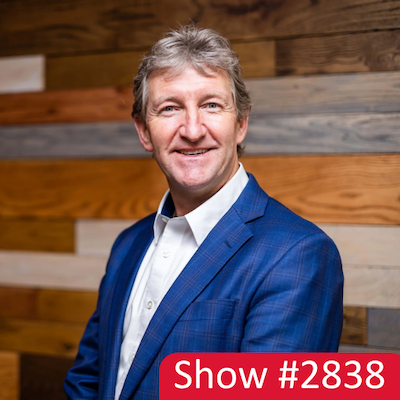
31 Jul July 31, 2026 – Mobile Mentor Denis O’Shea and Process Dr. Theodore Bibbes
00:00 Intro 1: Broadcasting from AM and FM stations around the country, welcome to the Small Business Administration award-winning School for Startups Radio, where we talk all things small business and entrepreneurship. Now, here is your host, the guy that believes anyone can be a successful entrepreneur because entrepreneurship is not about creativity, risk, or passion, Jim Beach.
00:26 Jim Beach: Hello, everyone. Welcome to another exciting edition of School for Startups Radio. I hope you’re having a great day out there, riding the roller coaster life of entrepreneurship, making millions of dollars and changing your future and the future of your children. We have a fantastic, uh, show for you today.
00:44 Jim Beach: We have two great guests I’m excited to introduce you for, uh, to. First up, we have Dennis O’Shea. He built an amazing company called Mobile Mentor. We’ll bring him out in just a second. And then after that, we have Dr. Ted Beavis, where you’re going to talk about business process management and how 01:00 important it is.
01:01 Jim Beach: So it is a great show with lots of fantastic information, and we appreciate you being here. And we are on billionaire alert. That’s right, in the next day or two, a week, we have a billionaire on the show. Um, we don’t tell who that is ’cause, you know, we don’t wanna be rude and crass and all that, but anyway, we have a billionaire coming up.
01:20 Jim Beach: All right, let’s get started with the show. I am excited to introduce my first guest to the show. Please welcome Dennis O’Shea. He started a company in 2004, I think, in New Zealand. Built it so successful that they were named an Endpoint Partner of the Year with Microsoft, an incredibly prestigious award.
01:37 Jim Beach: I’m not sure what endpoint means. We will ask that. I feel stupid not even knowing it, but very successful anyway. Dennis moved the company to Nashville, and they are now doing global sales and have an incredible business. So I’m excited to learn all about Mobile Mentor. Welcome to the show, Dennis. How you doing?
01:56 Denis O’Shea: Jim, I’m fantastic, and thank you very much for having me on your show. 02:00 I’m super excited. It is
02:01 Jim Beach: my pleasure. Okay, I have to ask a stupid question. What is endpoint?
02:06 Denis O’Shea: An endpoint is simply a device, so it can be your laptop, your desktop, your tablet, your smartphone, any device you work on. The industry jargon for all those things is endpoint.
02:20 Denis O’Shea: It’s where everything starts and ends in terms of your experience at work.
02:22 Jim Beach: Okay. So if you’re Global Partner of the Year for endpoint desktop management- What does that mean? Yes. What is, what does endpoint management mean then?
02:35 Denis O’Shea: It basically means that we are very good at helping organizations manage all their desktops, laptops, that could be Windows, MacBooks, um- Okay
02:46 Denis O’Shea: tablets, and smartphones, and securing them, but doing so in a way that the security is invisible and doesn’t get in the way of productive work. Okay. Is two-point verification 03:00 good security that doesn’t get in the way of my work? Yes. Yes, that’s a good thing to do, and passwords are a bad thing to do. So part of the work we do is helping our, helping our clients go password-less, and getting rid of passwords, and leaning on things like biometrics or scanning your face or your fingerprint and, and then having two-factor authentication to access your bank accounts and stuff like that.
03:24 Denis O’Shea: That’s, that’s best practice. Even if I have a face verification, I still need two-factor? Only for something really secure, such as your bank account. So your face will get you onto the device and authenticate you, say, to the first layer, to Windows or to macOS or to your iPhone, and then all the trusted apps, you will automatically sign into them without another password or authentication event.
03:49 Denis O’Shea: But if you wanted to access your bank account or something that’s really secure, that’s when you would need the second factor, either a text, text message or a, or confirming your identity 04:00 on an app.
04:01 Jim Beach: Even with my face?
04:03 Denis O’Shea: Correct.
04:04 Jim Beach: Even with my fingerprint?
04:06 Denis O’Shea: Correct.
04:07 Jim Beach: See, I consider that too much in security. If you got my face, you’re, you’re ac- The, the assumption is that we’re in an episode of 24, and you’ve cut my face off and put it on someone else.
04:23 Jim Beach: And then you’re gonna catch the g- the bad guy because he doesn’t know my PIN. Um- Yeah … but he already cut my face off, Dennis. Surely he will know my PIN-
04:33 Denis O’Shea: Yes …
04:33 Jim Beach: if he’s willing to cut
04:34 Denis O’Shea: my
04:34 Jim Beach: face off. Well- So you understand my, my point
04:37 Denis O’Shea: here? I, I do. I do. And you know, there are policies that can be changed. So you- Okay
04:42 Denis O’Shea: could choose to turn off the two-factor authentication. But picture this. If you signed into a device with your face and then somebody steals it off you or, or grabs it while you’re not looking and walks away, would you want them to be able to log into your bank account without any additional security?05:00
05:00 Jim Beach: No, of course not. But, you know, that i- assumes that I get robbed while I, the app is open or-
05:07 Denis O’Shea: Yeah …
05:08 Jim Beach: uh, you know, I just at that point-
05:10 Denis O’Shea: And that often does happen. You know, people will put their f- their phone down in a cafe or a bar or whatever, and it might disappear or it happened- Yeah … in an airport or whatever.
05:21 Jim Beach: We have the Einstein Awards for those people, right?
05:25 Denis O’Shea: We do, and then we have two-factor security for the rest of us
05:31 Jim Beach: Oh, well said, well said. Uh, well, I just want it noted that I think that if you have my face or my fingerprint, another layer is, uh, overboard. But anyway- Yeah, I- … that’s just my opinion. Okay, so now we- To be fair though
05:45 Jim Beach: understand endpoint
05:47 Denis O’Shea: Yes, just the devices we use. Right. And those devices have lots of software and applications and security and a sign-in experience and, and all the things that enable you to be a productive person when you get up in the morning 06:00 and turn on your, your device. Um, so everything that goes into making that happen is part of the endpoint experience.
06:06 Jim Beach: Okay. So does that mean that you manage the 38 computers and 12 laptops that we have for my company? Mm-hmm. And make sure that they all run and that the printer works? Is that what that mean? Is that what your-
06:19 Denis O’Shea: Correct … your
06:20 Jim Beach: company does? Okay.
06:21 Denis O’Shea: Correct. And making sure that you’ve got the right software that’s up to date and patched, so you’re not running old software that can easily be hacked.
06:30 Denis O’Shea: And that if something changes, we’re able to push out the changes to people quickly. If somebody leaves the organization, we can remove all the work data from those devices quickly and easily. If somebody new joins, we can set everything up over the air without touching the device, so everything’s working at 8:00 AM on the first day they arrive.
06:48 Denis O’Shea: So being able to do all of that remotely, silently, securely, that’s the work we do.
06:54 Jim Beach: Okay. Excellent. What about Frank, who will click on anything? He clicks on anything. What 07:00 are we gonna do about him?
07:02 Denis O’Shea: Well, that’s why we need two-factor authentication, ’cause if he clicks on the wrong thing and downloads a virus or a, a Trojan or gets some kind of infection on his machine, um, then we’re in trouble because that, that virus or that, that, that infection could be logging his keystrokes and capturing his passwords or recording his face- Right, but two factor-
07:24 Denis O’Shea: or capturing company data … doesn’t stop him clicking on an email that says, “Important invoice.” Correct. It doesn’t. But if, if, if that important invoice contains some code that takes over his computer- That’s right. That’s- … and captures- … that’s what I’m afraid of. Yeah. He, he does that all the time. And captures his passwords.
07:42 Denis O’Shea: He clicks on everything, damn Frank. Right. So let’s play this out. So Frank clicks on a link, downloads a piece of software, let’s say it looks like a benign PDF, but it actually runs a piece of code that takes over the machine. And now somebody overseas, let’s 08:00 say in Moscow or North Korea, or pick your favorite, uh, overseas country, is now controlling Frank’s machine, and they’re harvesting all his passwords.
08:09 Denis O’Shea: Now they can log into Frank’s bank account, ’cause they can just look at the history in the browser and see what’s his bank, log in. That’s where you would absolutely unconditionally want to have two-factor authentication. So that Frank gets a prompt on his phone saying, “Are you okay to approve this login to your bank account?”
08:26 Denis O’Shea: And that’s when you want Frank to say, “Hell no, that wasn’t me.” And you want him to get suspicious at that point.
08:34 Jim Beach: Are they gonna do Frank’s work also, or just steal from him? ‘Cause if they do Frank’s work- … I’m totally fine with them breaking in.
08:41 Denis O’Shea: Frank, Frank would be perfectly happy with that.
08:43 Jim Beach: Yeah.
08:44 Denis O’Shea: Yeah. Yeah.
08:46 Jim Beach: All right, so- Nah, they just
08:47 Denis O’Shea: want the goodies …
08:48 Jim Beach: we, I think I understand the business now. So you started in New Zealand in, 22 years ago, is that correct?
08:57 Denis O’Shea: Yeah, you got it. That ages all of us. 09:00
09:00 Jim Beach: Yes, it does. So why would you leave New Zealand? If you’re doing successfully in New Zealand- … why leave? You’re already in the prettiest place on earth.
09:09 Jim Beach: Why leave- Oh, thank
09:11 Denis O’Shea: you …
09:11 Jim Beach: and go somewhere else, like Nashville?
09:14 Denis O’Shea: Well, a super interesting story. We were running our business, doing just fine, and Microsoft approached us one day and said, “Hey, you are really annoying us. We’re seeing you in all our customer accounts in New Zealand. You’re working with all our competitors, not with us.
09:31 Denis O’Shea: Why don’t you change strategy? Why don’t you become a Microsoft partner? Why don’t you help us take our endpoint management software to market?” It was a very immature product at the time, and they said, “Why don’t you partner with us and, and, and work with us rather than against us?” And after many discussions with our engineering team, we decided, yes, we will do this.
09:52 Denis O’Shea: We’ll partner with Microsoft. And not just partner with them, but we said, “Let’s try and become the best in the world, ’cause this is new 10:00 technology. Let’s focus all our energy on learning everything we can about that, that software. Try and become the best in the world at that and really get Microsoft’s attention in the way that most other partners don’t.”
10:12 Denis O’Shea: And the thing to understand here is Microsoft has 400,000 partners. So if you’re living in New Zealand, you’re basically on the second la- second last rock before the end of the earth. So we really were nobody to Microsoft, in the middle of nowhere, essentially. And we had to figure out a way to get their attention, and by becoming the best in the world, one narrow thing, we got their attention.
10:37 Denis O’Shea: It took many, many years, but along the way, I decided to pack up and move to the US. So we packed a 40-foot container, my family and I, and moved from New Zealand to Nashville. Focused on this technology, became the best in the world, and won the Global Partner of the Year award in 2021.
10:55 Jim Beach: That is amazing. Uh, what did you do to become the best in 11:00 the world?
11:00 Jim Beach: What, how do you stand out and make it better than everyone else?
11:06 Denis O’Shea: We said no to 99 things that came our way, and we resisted a lot of the shiny objects and the temptations that were around us, you know, uh, and, and really narrowed our focus, really focused in on really just chasing business or taking on business that would enable us to get better at that one thing, and staying hyper-focused on that and working our way away from the competitive products that got us to where we were at that point.
11:42 Denis O’Shea: And we were very deliberate about hiring super smart people who either had great experience in our space, you know, managing devices, or who had the aptitude to learn and become experts. And we were very transparent in taking them on the journey, saying, “You know, we are babes in the wood here. 12:00 We are, we are absolute amateurs starting this out, and our language is going to be we want to become the best in the world.”
12:07 Denis O’Shea: And we’ve never said, ever, that we are the best in the world, ’cause that’s too arrogant. But we’re always striving. We tell every customer, “We’re striving to become the best in the world in this space. That’s our goal. We want to be the best.” And so just our- What,
12:21 Jim Beach: what does that even… What does that mean? How do you measure that?
12:22 Jim Beach: What are the metrics and KPIs that would establish you as the best? And how long you, uh, up ratios that all, all the servers are up percent of the time, or customer satisfaction? How do you measure that?
12:40 Denis O’Shea: You know, I’m not sure it is measurable, Jim. I feel like it’s more- But obviously it is. You won the damn award for it
12:46 Denis O’Shea: a qualitative thing. We won the award, yes, and, and, and because of that, Microsoft then introduced us to some amazing organizations. Like we work with the world’s largest healthcare provider, the largest education provider, some of the largest government 13:00 departments. It’s just been unbelievable. You know, as an entrepreneur, I look back on this journey with so much pride for my team and what they’ve achieved.
13:08 Denis O’Shea: It’s truly unbelievable. But what has happened as a result of it, so we are considered by Microsoft to be the best in, in our space. They tell us that, and customers tell us that, which is lovely to hear, but I don’t know of any objective way of measuring it and saying, you know, “We scored 89 points on this scale of blah, blah, blah.”
13:28 Denis O’Shea: I don’t believe there is an objective m- way of measuring this other than what we hear through feedback and the evidence of, you know, the customers we’ve managed to win and retain over the years.
13:41 Jim Beach: I think there’s got to be a way to measure this, and you should come up with it and then give it to Microsoft and force everyone else-
13:49 Jim Beach: to use it. But I, I can think of some things, Dennis, off the top of my head. How long do people wait on the telephone? You know, how long, uh, what… When they get an answer, do they 14:00 speak to a human or a machine? Uh, how long does it take for- Mm-hmm, mm-hmm … questions and issues to get resolved? How long are the tickets- Mm-hmm
14:07 Jim Beach: out there? What percentage of your tickets- Yeah … get successfully satisfied? I mean, we’ve come up with- Yeah … four or five right there.
14:15 Denis O’Shea: We’re halfway there, Dennis. How, how long does it take us to set up a new device, and how quickly can we patch a device? And there’s, there’s a whole bunch of things- There you go.
14:22 Denis O’Shea: 89 … we could measure. We could bunch all them together and come up with a metric, a measurement rubric. Yes. We could.
14:29 Jim Beach: And it just so happens that you get 100 on it.
14:35 Denis O’Shea: I love it.
14:36 Jim Beach: I think you should do that. Yeah. I’m serious. Uh, if you, if you don’t want do it, uh, want to do it, I’ll drive up to Nashville and do it and- Okay … uh, and put it there, and then you can send it to Microsoft, and I think it’d be- That’s
14:47 Denis O’Shea: great …
14:47 Jim Beach: then you’re the creator of the Microsoft grading system.
14:51 Denis O’Shea: Well, I’ll tell you something we have done that’s along those lines, and you’ll like this. We created a new language for our category because, you know, everyone’s 15:00 banging on about security, and it’s a tired old subject, and, you know, a lot of people just glaze over when they hear about or read about security.
15:07 Denis O’Shea: We’ve created a language that we call the endpoint ecosystem, and when we say it, everyone looks at me with, you know, crossed eyes like, “What’s that?” And we explain it’s everything that goes into making your device work efficiently, smoothly, securely, all the, all, all the things that happen in the background.
15:24 Denis O’Shea: Right. So the software, the applications, the patching, the updates, the sign-in experience, the support, the setup, blah, blah, blah. All the things we talked about. So we call that the endpoint ecosystem, and we do a big research study globally every two years to understand how people are working with their technology, what friction they experience, um, what’s the problem living with AI now, uh, how often they, uh, uh, really see security showing up visibly, what it was like when they joined their last company, setting up their devices, a bunch of research.
15:53 Denis O’Shea: And we publish that, and we give it all away for free so that we are synonymous with the term endpoint 16:00 ecosystem, and we bought all the domain names, you know, endpoint-ecosystem.com and blah, blah, blah, all those. And now we see that Microsoft is using the same language. They’re talking about the endpoint ecosystem, and some of our customers are.
16:13 Denis O’Shea: So that’s, that’s really heartwarming. So essentially, we came up with this category name with the goal of becoming number one in our own category by publishing the research, talking about it, sharing it, sharing case studies, putting our customers on a pedestal when they’re doing something well, promoting their success, and, and, and that’s worked, that’s worked pretty well in terms of, um, claiming the space.
16:40 Jim Beach: So we have the endpoint ecosystem grading system. Did I get it? The endpoint ecosystem grading matrix.
16:50 Denis O’Shea: Grading system. Grading matrix. I, I love it. I, I love it. I like that better. I, I can see a whole AI thesis unfolding here and, and, and, and, and a 17:00 big spreadsheet to build it out
17:04 Jim Beach: And you can even offer the service of grading a competitor or grading a company and add that as an extra i- item
17:12 Denis O’Shea: Yes.
17:13 Denis O’Shea: Yes.
17:13 Jim Beach: And I’ll be the-
17:14 Denis O’Shea: And
17:14 Jim Beach: we do … vice president of endpoint ecosystem matrix creation
17:20 Denis O’Shea: Inc.
17:21 Jim Beach: Inc.
17:24 Denis O’Shea: And they will, we’ll put the idea into a few PowerPoint slides- Yeah … and, and, and, and add AI to it, and then go out and raise $10 billion on the first round.
17:33 Jim Beach: Yep. The,
17:35 Denis O’Shea: the- And you said entrepreneurship was hard. We just mastered it- Yeah, there you go … right there. Yeah, and they will, and they will file for IPO based on- Yes
17:44 Denis O’Shea: Jim’s idea
17:46 Jim Beach: Oh, Dennis and Jim’s idea
17:48 Denis O’Shea: Okay, there you go. We’ll split, we’ll split the proceeds 50/50 then.
17:51 Jim Beach: Yes. I love it. Ugh, I love it.
17:54 Denis O’Shea: I, I’ll take this, I’ll take this- Well, I thought I was gonna be the
17:56 Jim Beach: vice
17:56 Denis O’Shea: president
17:56 Jim Beach: at your company in charge of this.
17:58 Denis O’Shea: Sure. Look, I, I- I thought I was
17:59 Jim Beach: specifically vice 18:00 president
18:00 Denis O’Shea: I, I’m gonna take this to, to IPO with you, Jim, and then hand it over to you to run it ’cause I’m gonna go off and play pickleball at that stage.
18:07 Jim Beach: Yes, you are a pickleball nut.
18:11 Denis O’Shea: I
18:11 Jim Beach: am. That was before we came online where we decided that you have, you claim to have tennis elbow and it’s really pickleball elbow.
18:19 Jim Beach: We should also- Hmm … we, we should trademark that as well, and make a claim that- Hmm … it’s different somehow because of the way you extend and follow through, and it’s a different swing. And so we have a different solution, which of course is proprietary, available only through us.
18:34 Denis O’Shea: Yes. Exactly, exactly. And we could take some existing s- medications or therapies for tennis elbow, rebrand them.
18:40 Jim Beach: Yes, just put them in a pickleball- A pickle elbow …
18:43 Denis O’Shea: package. Absolutely. Absolutely. Yes. And, um- We’re gonna make billions … yeah, there’s a whole market out there for that too.
18:48 Jim Beach: Yes. Which IPO should we
18:50 Denis O’Shea: do first? It’s
18:50 Jim Beach: amazing how, how much, it’s amazing how much pickleball stuff, you know, has developed so quickly, an entire ecosystem, to use the word again.
18:58 Jim Beach: The 19:00 franchises. There you go. You know, there’s, I think- Oh, yeah … 10 pickleball franchises out there already, you know?
19:05 Denis O’Shea: Yeah. Well, it’s the, it’s the fa- it has been the fastest growing sport in the world for four or five years now.
19:11 Jim Beach: So- But there’s a new competitor for the k- the kids are, the 20-year-olds are playing something different.
19:15 Jim Beach: Have you heard about that?
19:17 Denis O’Shea: Padel you mean?
19:18 Jim Beach: Yes, that’s it. Padel.
19:19 Denis O’Shea: Yeah.
19:19 Jim Beach: That, it’s gotta have an accent to be cool. Padel. Well,
19:24 Denis O’Shea: it’s European and that’s how they pronounce it over there, but it’s, it’s, uh, it’s interesting because the, the infrastructure you need for padel is very expensive. You need to build these very sturdy posts to hold up the glass wall and the fences, and be able to withstand some of the weather events we have here in America.
19:42 Denis O’Shea: So it’s much more expensive to build it, and so therefore you have to rent those courts at a much higher rate than a pickleball court, which is really just a, a converted tennis court- Yes … with two nets rather than one, or a badminton court with no change. Um, so pickleball is super 20:00 cheap and fast and, and low barrier to entry if you own the court.
20:04 Denis O’Shea: Low barrier to entry if you’re an amateur and you just want to play and have some fun. Um, padel, more expensive to build and get into, and, and a higher level of skill required ’cause of all the bounces off the walls and the fences. But it’s a hoot. It’s great fun. We played in Italy last year and I played with my son and it’s a blast.
20:23 Denis O’Shea: It’s so much fun
20:25 Jim Beach: Well, all of the bone doctors love it. All of the-
20:30 Denis O’Shea: All
20:30 Jim Beach: the orthos … emergency rooms are having a blast with all of these- Address … 58-year-olds coming in with a broken elbow and stuff. So- There you go … why Nashville, Dennis? You could have moved anywhere in the United States. Why Nashville? I lived there as a child.
20:44 Jim Beach: We had one of the biggest storms ever, the storm of ’71, ’72. Uh, we were there for that winter, and I remember- Mm … sitting at the dinner table all night and watching the, uh, dr- uh, the road behind us, and cars would try to 21:00 get up the hill and slide down, and try to get up and slide down. Wow. We lived across the street from Johnny Pride’s manager, and so that was really cool.
21:11 Jim Beach: Uh, we got to see- Ah … Johnny Pride, meet him, and, uh, you know, w- we were not in the industry, of course, and
21:19 Denis O’Shea: so- Yeah …
21:19 Jim Beach: loved Nashville. Why’d you pick it?
21:22 Denis O’Shea: We ca- we did a big vacation with our kids in 2014. I took 100 days off work, and we traveled around the world, and we came to Nashville first. We had some friends here, and I said to my wife, “Let’s, let’s go to Nashville.”
21:36 Denis O’Shea: And honestly, she had to look up on the map where Nashville was. Um, anyway, we, we, we got to Nashville and just loved it. Loved the energy, the people, the scenery, the vibe, the music, the culture, and then realized it’s a huge healthcare hub. You know, it’s the biggest healthcare hub in the US now, and, and I’m very passionate about the work we do in healthcare in particular.
21:58 Denis O’Shea: And so a, a 22:00 few dots started joining, and, uh, we came back another, for another vacation about two years later and said, “Okay, this is it. We’re gonna have an adventure. We’re gonna move here for four years.” That was the plan, and we’re now in year nine of the four-year plan, and, um, loving it. My family loves it, so this is home.
22:19 Jim Beach: How, what is a big account for you? How many endpoints does a big account have, Dennis? 10,000?
22:28 Denis O’Shea: 20,000? The biggest we’ve got is a million.
22:30 Jim Beach: Wow. Who is
22:32 Denis O’Shea: that? One of our customers is the New York City Department of Education. They’ve got 1.1 million students. Every student has a device, and that’s across 1,800 schools and across the five boroughs, so that, that, that’s a huge one.
22:46 Denis O’Shea: But we’ve got lots of organizations we work with that might have, you know, 10, 20, 30, 40, 50,000. But then we work with a bunch of small businesses, you know, who have 25, or 30, or 50, and they have complex needs. And 23:00 they have… I think we’re 76 people at the moment.
23:05 Jim Beach: Wow. That seems s- Really small to me. Not to be rude, but it seems like it would be, to manage one million computers, and when Freddy loses his, you have to go find Freddy’s replacement, and he left it on the subway.
23:22 Jim Beach: You know, uh, it seems- … like you would have a lot more employees, to be honest. I’m, I’m
23:27 Denis O’Shea: not- We’re, uh, yeah, yeah, a lot of the work we’re doing is the engineering work at the back end. We’re not going out hunting the subways looking for Freddy’s Chromebook or computer. That’s, that’s not the work we do. We’re doing more the, the security work, and the provisioning work, and making sure all the systems are working correctly, and designing for the future.
23:48 Denis O’Shea: Still, it seems like it’d be big. So it’s really the, the high- What, what kind of revenue- Yeah … is
23:51 Jim Beach: that? I mean, I would… Are you hundreds of million in, in revenue?
23:55 Denis O’Shea: Oh, gosh, I wish, I wish. Um, no, I think we’re 24:00 about 12 or 13
24:02 Jim Beach: million today. Okay. Well, you know, when- Yeah …
24:03 Denis O’Shea: we bring out
24:04 Jim Beach: our new division, I think we will get to 100 million.
24:08 Denis O’Shea: Overnight.
24:10 Jim Beach: Well, not
24:10 Denis O’Shea: overnight. Overnight, yeah. You have to give me a week. Yeah. Yeah, fair enough. Fair enough. Yes. But, but, but our investors who invest, uh, the, the 10 billion will, will expect great things from you, Jim.
24:22 Jim Beach: Well, we will deliver. Mm-hmm. We will deliver. Dennis, it’s an amazing story, and I’m really impressed, and it sounds like you’ve done absolutely everything correct.
24:34 Jim Beach: Uh-
24:35 Denis O’Shea: Oh, no …
24:35 Jim Beach: did, did you raise money along the way, or were you able to bootstrap? How far did you bootstrap
24:41 Denis O’Shea: it? You know, I, I did raise money because we went into Brazil and China in the early days of the business. We had a slightly different business model, and we raised money for that, and we had seven amazing years in Brazil and three disastrous years in China.
24:57 Denis O’Shea: And as a result of all of that, and then the 25:00 global financial crisis came around and kicked our, kicked our butts pretty bad. So long story short, I had to wind back on Brazil and China and buy out all the shareholders, and, uh, I took back 100% control of the company around 2012 after a retreat from China, um, which is another story for another day because that was a brutal experience.
25:22 Denis O’Shea: Um- Uh, China is just so hard. So hard. It is, and people tell you how hard it is to get into China. Nobody tells you how hard it is to get out of China. It is so hard to get out clean and close your books and file all your taxes and close off all the state registrations and comply with all the, the laws and, and, and, and requirements.
25:44 Denis O’Shea: It is so unbelievably hard. I had to hire a Chinese accountant for two years to do it right so that I wouldn’t be on a blacklist for the rest of my life. It is so hard to get out of China and not end up in prison. I’ve never heard that. And, and get your money out. You know, people go back. Yeah. But, you know, 26:00 they have Chinese police all over the world now, they say.
26:04 Denis O’Shea: If you believe conspiracy theories. It’s not an easy place to do business. It’s not. And, and you know, if you wanna keep your IP and keep your money and get out alive, it’s a very difficult place. So Brazil was amazing. China, extremely hard. Um, but long story short, I bought out the shareholders, so I took back 100% control of the business, and- Well, that- And I’ve shared some of the equity with my leadership team because they run the show nowadays and do an amazing job.
26:29 Denis O’Shea: Oh, good. How do we find out more, follow you online, get in touch? Company name is Mobile Mentor, and I’m on LinkedIn only. I’m not on the other social platforms. I’m a bit of a Neanderthal in that regard. Um, but LinkedIn, Denis with one N, D-E-N-I-S, and it’s O apostrophe S-H-E-A, and then mobile-mentor.com. That’s it.
26:54 Jim Beach: Fantastic. Denis, thank you so much for being with us. An amazing story. Congratulations, and I
26:59 Denis O’Shea: will- Thank you, Jim … see you in
26:59 Jim Beach: the 27:00 office Monday morning.
27:02 Denis O’Shea: Yes, to file for our IPO.
27:05 Jim Beach: Well, again, you have to give me a week or two b- uh, to get to the IPO. I mean, you can’t expect me to do it Monday.
27:11 Denis O’Shea: Okay. Monday we’ll do our slide deck to raise the money.
27:14 Jim Beach: All right, that’s fine. Sell, sell, sell.
27:16 Denis O’Shea: Sell, sell, sell. Awesome. Bye bye. Thank you, Jim.
27:18 Jim Beach: Thank you, Denis. We will be right back in just a second. Thanks for being with us.
27:37 Jim Beach: We are back and again, thank you so very much for being with us. Very excited to introduce another great guest. Please welcome Dr. Theodore Bebee to the show. He was sent to me by one of my great friends, uh, Ted. I don’t know if you knew that, Ted, that Ted sent us, uh, together. Anyway, he has built in a 28:00 really, uh, impressive career and an impressive business.
28:02 Jim Beach: He is the founder of TNB BPM Consulting. It helps small and medium-sized businesses grow processes that allow your systems to work, and he’s a big proponent of processes being more significant to the system than people. We will let him talk about that. He got his BBA, and it’s different from a PhD, and we’ll talk about that as well, but I think it’s important that we all know that, from Georgia State University, where, of course, I used to work.
28:33 Jim Beach: And prior to that, he was a vice president at JPMorgan Chase, also Bank of America. And this is cool, he ran the Georgia’s Governor’s Office of Customer Service back, uh, for one of our governors. I- it’s an office I didn’t even know we had Dr. Beebe, welcome to the show. How are you doing?
28:54 Dr. Theodore Bibbes: Doing great. Thanks for having me, Jim.
28:56 Dr. Theodore Bibbes: It’s my pleasure. Uh, and just, and just to be clear, I didn’t run the governor’s 29:00 office customer service. Uh, I was the program manager for process improvement. Ah, same thing. So I worked… We’re with you. Uh, yeah, I worked with, uh, state agencies to improve their processes. Uh, we had some great stuff under Sonny Perdue, uh, is, uh, was who, uh, had the, the office.
29:18 Dr. Theodore Bibbes: Um, and in, just as a quick if, you know, kind of thing, if 2006 if you tried to get your driver’s license renewed, you’d stand in line at the DMV for anywhere between four and eight hours. So one of the pilot projects that w- we did, we took that down to 20 minutes. So that’s just one of the things that just, uh, screams at me as to why I concentrate on processes and why it’s so important.
29:44 Jim Beach: Great example and segue. Uh, I live here in Georgia, and I’ve had a move, and I’ve had several, uh, new cars and stuff, and so I’ve had to deal with that office a lot recently and had to even go in. 30:00 And I didn’t wait 20 minutes. I waited two minutes and was out of there in under five. And you also have the kiosks all over town now at the…
30:11 Jim Beach: Are they at the Publix or the Kroger grocery stores? And I’ve interacted with the kiosks, and that’s even easier. 30 seconds, and you can get your business done. And so I was… When I saw what you had done in your past, I immediately thought of how good the DMV of Georgia is now. And so congratulations. You actually got it to work.
30:31 Dr. Theodore Bibbes: Oh, thanks. Thanks. Uh, give it to their credit, they’ve taken what we, uh, gave them, and they’ve run with it. A lot of those changes were well after I left, uh, you know, 15 years ago, so,
30:42 Jim Beach: um. Well, you set the, the s- the tone. I, uh, actually- Yeah … met Sonny Perdue. I took the kids to see Washington, and we were in one of the buildings for a tour of the Capitol.
30:55 Jim Beach: And we came out of, I think it was Isakson’s office. 31:00 And from the other door, you know, the offices all have multiple doors, Isakson and Perdue came out, uh, the two senators from Georgia. And they were walking ahead of us, and we all ended up at the elevator at the same time. And I introduced myself and my kids to them, and both of the senators gave the kids business cards and told them what to do if they needed anything and missed a whole elevator so that they could continue to talk to the two kids.
31:26 Jim Beach: They were both excellent.
31:28 Dr. Theodore Bibbes: Yeah. Yeah. It was, it was a pleasure working under Sonny Perdue. I, unfortunately I never got to meet him. Um, but, uh, it, he was a visionary when it came to customer service and truly believing that in order to serve the citizens better, we needed, the government needed to focus on customer service, and that was the key thing within that office.
31:55 Jim Beach: You know, we don’t have many interactions with the government in an ideal 32:00 world. And my only other interaction was I took a different set of kids 15 years later, I had two new kids that had to go to Washington, and I called all of the congressional offices to get, uh, White House and, uh, Senate tours and, uh, all of that.
32:17 Jim Beach: And the senator who’s running for re-election right now, their office took four weeks to get back to me and tell me that nothing was available, whereas other offices got me stuff within one or two days. So senator running for office re-election now did not have good processes. And-
32:41 Dr. Theodore Bibbes: Well, he’s free to call me if he wants help.
32:45 Jim Beach: So why do processes matter so much, even more than people? Can people survive or can a process survive bad people?
32:56 Dr. Theodore Bibbes: Uh, I think it, you know, I don’t think people can survive 33:00 bad processes. Uh, uh, uh, the- The other
33:03 Jim Beach: way around.
33:03 Dr. Theodore Bibbes: Can
33:03 Jim Beach: bad process, can bad- Yeah … can processes survive bad people?
33:09 Dr. Theodore Bibbes: Yes, because the pr- everything is designed, a process is perfectly designed to get to give you what you get.
33:16 Dr. Theodore Bibbes: So, um, it’s, it doesn’t matter who’s in it as long as, you know, so they can, as long as they’re following the process and the procedures that go along with it, the process is the process. It doesn’t matter about the people. And, and I, I, you know, I came about this, uh, years ago through my career, starting as a management consultant working with boutique firms and on the shop floor in manufacturing firms, watching machinery work and seeing the processes go.
33:46 Dr. Theodore Bibbes: You know, they can just go automatically. It doesn’t matter who’s running it. Uh, working with the governor’s office, uh, with either with DMV, Department of Revenue, Corrections, you know, looking at the 34:00 processes was so important. And then when I was with JPMC, uh, with JPMorgan Chase, uh, working in their legal department doing process improvement, I was given a project at one point, uh, that was kind of in the middle of things, a- and things were a mess and I did, you know, I, I was kinda lost at the beginning, but once I settled down and I focused on the process we were talking about, everything became clear, and that’s when we really got, uh, focused and we got, we were able to solve the issue that, that was at hand.
34:33 Dr. Theodore Bibbes: Uh, so that’s why processes to me are so important because when it boils down to everything is a process, and when you really understand your processes, then you’re gonna understand your business. And if you manage your processes versus managing your people, then you’re gonna manage the business. Uh, if you’re chasing the time that everybody comes in, if you’re chasing, 35:00 uh, their, uh, vacation policies or what they wear, you know, or, or how they talk to people, um, you’re gonna lose out on being able to really provide good customer service a- and provide the best quality of whatever it is you’re doing.
35:17 Dr. Theodore Bibbes: So focusing on processes is where I think the major impact is and the reason why I do what I do.
35:25 Jim Beach: All right. I love it. Very well said. Are processes the same thing as systems? Is there any difference?
35:25 Jim Beach: All right. I love it. Very well said. Are processes the same thing as systems? Is there any difference?
35:32 Dr. Theodore Bibbes: Uh, yes and no. Um, I try and make sure that we have a, uh, an understanding of things when I work with clients.
35:42 Dr. Theodore Bibbes: Uh, a process is part of a system. I think, you know, and the way I define it is a system is just a number of processes that are tied together through some sort of common outcome. Uh, so if you have, 36:00 you know, a pr- an HR process, um, that, that or something you’re hi- the hiring process might not be tied to sales, so that’s not necessarily the system.
36:12 Dr. Theodore Bibbes: But if you look at the larger organization, it’s all part of the organization’s system of operating.
36:21 Jim Beach: Okay. And when you say manage the process, not the people, don’t I get the process set? I- shouldn’t every business have their processes set and- Well, every business- … there’s nothing to do then, right? You set your processes and then the machine works, and if the machine is broken, you probably need to, uh, uh, fine-tune your processes, right?
36:46 Dr. Theodore Bibbes: Yeah, every business has a process, and I… And it even goes down to, you know, management. The pro- the manage- the process of management is there, but it’s not always defined. Um, yeah, if it’s a machine, you know what to 37:00 do, uh, but it might not necessarily be efficiently or effectively connected to the next step.
37:05 Dr. Theodore Bibbes: So understanding how each of those individual processes work together in the overall system is important. Understanding the, the process of management is important. And, uh, if you think about that, that s- process for management, forecasting, planning, assigning, evaluating, reporting, uh, all those are tied together a- as a process, uh, and how to manage.
37:34 Dr. Theodore Bibbes: And understanding how that works, uh, and working it diligently and intentionally is where you get, uh, a well-run organization
37:48 Jim Beach: Okay And as we move toward AI, isn’t process the number one thing we 38:00 need before we move to AI? Because if we don’t have a process that we can define, how can we tell the
38:07 Dr. Theodore Bibbes: AI, right?
38:08 Dr. Theodore Bibbes: Absolutely. Uh, I’ve been playing around with AI, uh, kind of l- lately, uh, more in depth. Um, and it is… I- it all comes down to whatever that prompt is you put in, but if you don’t understand what it is you’re trying to ask them, ask it, then you’re gonna get out something you’re not expecting. So, you know, back in the day, right, when computers were first coming up, um, it was the, you know, garbage in, garbage out.
38:36 Dr. Theodore Bibbes: If you don’t put the right code in, you’re gonna get a bad program. The same thing, I believe, is with AI. Um, and it’s, you know, that whole issue of understanding your process is one of the reasons that I kind of finally got down to putting all this into a, a book that I have coming out, uh, probably later in August, early September, uh, that talks 39:00 about that, um, and understanding processes.
39:05 Jim Beach: I did not know about the book. I wish I had known that. I would have included it in the introduction.
39:10 Dr. Theodore Bibbes: Um- That, that’s okay. It’s, it’s just, just now went to format, so I wasn’t ready to really s- talk about it. But it is just for you and for everybody else, it is, uh, the title is Running a Bus- Running the Business on Purpose.
39:24 Dr. Theodore Bibbes: It’s a manager’s guide to lead, control, and e- or, sorry, I forgot my own title. Lead, control, and improve operations every day. Yeah. Um, and it-
39:36 Jim Beach: Is-
39:36 Dr. Theodore Bibbes: Go ahead …
39:37 Jim Beach: are you self-publishing, or is it with one of the houses?
39:40 Dr. Theodore Bibbes: Yes. I’m self-publishing through Palmetto Publishers, uh, organization out of- Okay … out of, uh, South Carolina.
39:48 Jim Beach: I, I’ve run across them before. I bet they have been on the show, I think, the owner of that, ’cause that sound, that name rings a bell. Who’s the
39:59 Dr. Theodore Bibbes: person- Yeah …
39:59 Jim Beach: you’re 40:00 working with there?
40:01 Dr. Theodore Bibbes: Um, the… I ju- I just found out today my project manager is changing. Her name was Anna. Um, then I’ll be dealing with a woman named Heather Knox.
40:12 Jim Beach: You don’t know the top person. Do you know the top person’s name?
40:14 Dr. Theodore Bibbes: I, I do not remember the top person’s name. Okay.
40:17 Jim Beach: Um, but they have a hybrid system, I believe, where it’s not totally self-publishing, they hold your hand. Is that a fair way to say it?
40:28 Dr. Theodore Bibbes: Um, I, I guess it is. You know, I paid them a fee, I gave them my manuscript.
40:35 Dr. Theodore Bibbes: They’ve gone- we’ve gone through a couple of rounds of editing and, and they’ll get it out to, um, you know, Amazon and the other, uh, booksellers in hard copy, paperback, and e-book. Um, and they’ll do all the printing and, and handle it that way. I keep all the royalties, uh, and they, they handle all that other backend stuff for me.
40:57 Jim Beach: Right. Right. Yeah. That’s a great model, and I’m glad that you 41:00 went with that kind of thing. That’s a, a great idea. And when the book comes out you’ll have to come back and be on the show to tell us about it. So, uh, we will look forward to that. As a startup entrepreneur, we are very proud we have the best chitlins in all of north Georgia, and maybe even the world.
41:24 Jim Beach: And our chitlins are guaranteed, Ted, to soak through three bags within an hour. That’s how good they are. That they will saturate with grease three of those paper bags that they use. We are so proud of our chitlin business What, what do I do with processes? Where do I– How do I start? How do I– Do I just take a piece of paper and say, “Chitlin production,” write down all of the steps and then, “Chitlin bagging,” and write down…
41:57 Jim Beach: Is that what… How do I s- create the 42:00 processes and document it so I understand how my business is running?
42:04 Dr. Theodore Bibbes: Uh, the, well, in order, the, the, in order to run the business, uh, I have five steps you take. First, you set expectations. Establish reasonable expectations, uh, of the work. You want to then, uh, measure your actual production against those expectations.
42:24 Dr. Theodore Bibbes: Note- Number two, measure? Me-measure, right. Number two is measure. Number three is to, uh, note the variances and the reasons for variance between actual production and expectations. And number four is then to report that on a regular basis, what, you know, what the actual production is, uh, so that everybody can see it and has access to it.
42:48 Dr. Theodore Bibbes: And then the fifth step is to, um, to actually take action and correct any variance, uh, against that. And once you go through all 43:00 that, then you’ll start seeing improvements in your organization. And I, I wanted to go through that because that’s one of the core things in my, uh, in my book. But also it gets to your question.
43:12 Dr. Theodore Bibbes: So the first thing you have to do is establish those reasonable ex-expectations, and you need to do that by understanding the process. So you map the process first and put… and establish that work to time relationship between what is actually being done and, um, a-and what happened, so you have an objective measure to measure against.
43:34 Dr. Theodore Bibbes: Uh, and then once you have that expectation and you measure actual production about it, then you’ll know if you’re on, um, uh, on time or off, whether something’s gone wrong or not. If you’re supposed to make th- uh, 60 chitlins an hour and you only make 30, well, then you’ve lost 30 minutes of production time in there.
43:55 Dr. Theodore Bibbes: Something’s wrong. So you need to take action about it. Um, and the 44:00 more frequently you do it, the m- the better off you’re gonna be Uh, and I, I detail out all this in, in the book. Uh, it would take me forever to go through it, uh, for, for people here today. But if you follow those five steps, uh, and, uh, against your chitlin production, then your whole company will start to see improvements without really having to change anything.
44:26 Jim Beach: Do you love gizzards and chitlins as much as I do?
44:30 Dr. Theodore Bibbes: I can’t say I’ve a- actually had a chitlin.
44:32 Jim Beach: You’ve never stopped on the side of the road on the highway and gotten one of those greasy bags?
44:37 Dr. Theodore Bibbes: Just out of curiosity. I have not. I have not. You have to understand, I, I’m born and bred a California guy, so, uh, I grew up on the West Coast and we, chitlins aren’t really part of, uh, my growing up culture.
44:49 Dr. Theodore Bibbes: So I have never- Well, there we
44:50 Jim Beach: have expansion
44:51 Dr. Theodore Bibbes: opportunities
44:52 Jim Beach: everywhere, Ted.
44:54 Dr. Theodore Bibbes: Absolutely. What’s the difference
44:55 Jim Beach: between a DBA and a PhD?
44:58 Dr. Theodore Bibbes: Uh, the 45:00 DBA is, uh, pra- a practitioner’s, uh, doctorate. It’s, uh, especially the Georgia State program. I was in the second cohort back in 2013. Um, and it is focused on the practitioner.
45:18 Dr. Theodore Bibbes: It’s a structured three-year program. Uh, if you’re looking to get a, a degree, uh, a terminal degree such as a, a doctorate, I can, can’t recommend this highly enough. Uh, it was one of the best decisions I ever made. A PhD, on the other hand, is more teaching-focused. You’re gonna go in, you’re going to, uh, work underneath a professor and kinda do their research for them, but teach their classes, uh, with the goal of coming out and going into academia.
45:50 Dr. Theodore Bibbes: The DBA is more of that, as I said, practitioner-focused. You go in, um, you know, the G- Georgia State has a three-year program. 46:00 You’re still gonna write that dissertation, but that dissertation is on your choice of topic. Uh, as opposed to most traditional PhDs, you’re working under a professor who’s gonna help guide you through or kinda give you the topic that you’re gonna do.
46:15 Dr. Theodore Bibbes: Um, oftentimes it’s part of their typical research. Um, so that in, you know, between the Georgia State program and a traditional PhD, that’s kind of the biggest difference. It, uh, but really just practitioner based and focused.
46:32 Jim Beach: Yes. Some of my favorite stories come out of Georgia State. Uh, Ted, one of my favorite stories is having a tenured 65-year-old professor, been there 35 years, tell me, “I am so busy.
46:47 Jim Beach: I, I can’t really handle how busy I am.” “Well, what do you have coming up?” “I have a 20-page paper due in six months, and I have 12 students this semester. 47:00 Oh. Oh.” I’m like, “Dude- Yeah … go into the real world, and that’s called Tuesday morning.”
47:09 Dr. Theodore Bibbes: Yes. That was one of the reasons I didn’t get my PhD, was I didn’t wanna go into academia.
47:14 Dr. Theodore Bibbes: I, I didn’t see the, the, um, the draw of it. Um, you know, the politics, everything within… And I’ve worked with a lot of, uh, within the ac- within the USG system, um, in the university system. Uh, i- it’s, I’ve worked with people there. Uh, I don’t wanna work within the system as being part of it.
47:40 Jim Beach: Yes. When I left Georgia State, I was repla- I taught entrepreneurship.
47:45 Jim Beach: I was replaced by someone who had just gotten their PhD. They spent seven years writing their dissertation proving, Ted, are you ready for this? That a young, early entrepreneur needs connections more than a, an 48:00 established entrepreneur does. Seven years to study that. Yeah. And on average, my, my eight-year-old daughter knows that, you know?
48:13 Dr. Theodore Bibbes: I agree. I agree. It’s, uh, it can be, um- I don’t know, we, we call it self-fulfilling prophecies within that system. Uh, you just are chasing your own tail
48:26 Jim Beach: How do you build a consultancy? How did you get your practice up and running? Um, talk to us about building a consultancy.
48:35 Dr. Theodore Bibbes: Well, I, uh, I think I’m a little different than, than most people, um, in the sense of, you know, it’s based off of my previous experience over the last 25-plus years, uh, starting off as management consulting.
48:48 Dr. Theodore Bibbes: But then, uh, went through a bunch of different moves up to New Jersey and back down here. Um, when we came back, I needed to… I was trying to find 49:00 out what I wanted to do again, uh, and felt going out on my own was the best option. But when I started it, I purposely have focused on growing things naturally organically.
49:15 Dr. Theodore Bibbes: Uh, I, I haven’t done and don’t do a lot of hard sell, um, outreach and so forth. Um, I… My goal has always been to grow things word of mouth, and I’ve been good with that. It’s been slow. I’ve been… had low times, and I’ve had busy times. Uh, but it’s, you know, I do it bec- I do it because I like it, and I do it in the, what makes me feel comfortable in going forward, uh, without undue pressure here and there.
49:45 Dr. Theodore Bibbes: And I’ve been blessed where, you know, my wife is able to support us, um, you know, for the most part. Um, so I also was able to, you know, focus on providing, you know, the, that home support to 50:00 my daughter who, uh, when I started this, was in grade school, and is now about to start her second year of college. So, uh, kind of looking to get things still up and running a little bit more.
50:11 Dr. Theodore Bibbes: Uh, so from that standpoint, I’m kind of revamping, getting more entrepreneurial and po- doing much more in terms of posting onto LinkedIn, some Instagram things to help boost interest, uh, about that. But again, it’s… I wanna work with people who wanna work with me, and I, I personally don’t like forcing myself on other people.
50:32 Dr. Theodore Bibbes: So if you wanna work with me, if you have a need, I’ll be happy to talk to you about it, whether it’s improving processes, whether it’s managing the business better, or if it’s planning and strategic, doing strategic plans. Um, I’m happy to do it, anything from a, a one-on-one to a lunch and learn to a full-blown project.
50:54 Dr. Theodore Bibbes: But it’s, you know, I really, I enjoy working with people who wanna work with me, and that’s how I 51:00 always focused on kinda building or running consulting practice.
51:06 Jim Beach: Great answer. Very, very good answer. Do you encourage word of mouth? Do you ask people to do that? Is that something you can promote without-
51:18 Dr. Theodore Bibbes: I do.
51:18 Dr. Theodore Bibbes: I do. I do pro- I do- You, uh, ask people to promote, get, get, uh, feedback from them. Who else can I talk to? Uh, you know, if they hear of anything, please let me know. Um, so I’ve done, uh, worked with another organization here in Atlanta for a number of years. Um, a- and if anybody’s interested in doing volunteer work, uh, this organization called CCT Consulting, uh, cons- uh, Community Consulting Teams of Atlanta, uh, who work with nonprofits.
51:54 Dr. Theodore Bibbes: So I’ve done a lot of work with nonprofits, uh, and in that. And again, always leave 52:00 that job, leave those projects with a, “Hey, I’m, I’m around if you need me,” kind of thing as well. So I always ask for word of mouth, um, and you know, that kind of thing. A lot of times it doesn’t come as fruitful as I hope, but, uh, it’s there, and that’s always one of my main sources of, uh, new business would be is that word of mouth.
52:22 Dr. Theodore Bibbes: Yep. And the book will help with that tremendously. I hope so. But that’s, that’s not the reason, you know, I really did it. I did it because I hadn’t found anything like it. Uh, there’s, the, to my knowledge, there’s nothing that lays out what we call the management operating system, that, uh… And how to do it and how to put it into place.
52:43 Dr. Theodore Bibbes: So, uh, I, one of the key reasons, things I did is I felt it needed to be out there, it needed to be said. And so it’s… And that’s one of the things about my, when I got my doctorate, one of the things I learned is the whole reason for writing a dissertation is to get your 53:00 idea into the conversation, and that’s what this book is about as well.
53:05 Jim Beach: Fantastic. Ted, how do we find out more, follow you online, get in touch?
53:09 Dr. Theodore Bibbes: You can follow me online on LinkedIn. Find me, Ted Bibees, uh, at LinkedIn. Uh, I am, you can find on my website, www.tnbbpmconsulting.com. Uh, or you can reach out to me via email, T-N Bibbes, so T-N-B-I-B-B-E-S, @tnbbpmconsulting.com.
53:34 Jim Beach: Fantastic. Ted, thanks so much for being with us, and we’d love to have you back when the book comes out, and hope you have a good rest of your day.
53:41 Jim Beach: Thanks a lot.
53:42 Dr. Theodore Bibbes: Great. Thanks, Jim. Bye-bye.
53:44 Jim Beach: We are out of time, so you know what that means. That’s right, we will be back tomorrow. Be safe, take care, and go make a million dollars. Bye now.
Denis O’Shea – Founder of Mobile Mentor
We said no to 99 things that came our way, and we resisted a
lot of the shiny objects and the temptations that were around us.

Denis O’Shea
Denis O’Shea is the founder of Mobile Mentor, a global technology consultancy that helps organizations create secure, productive, and AI ready workplaces through modern endpoint management, identity, and security solutions. He founded the company in New Zealand in 2004 with a mission to empower people to achieve more with technology. Over the past two decades, Mobile Mentor has grown into a global business serving healthcare, education, government, and commercial enterprises, earning recognition as Microsoft’s Global Partner of the Year for Endpoint Management. Before launching Mobile Mentor, Denis spent 15 years in international leadership roles with Nokia, working across Europe, Asia, Australia, and South America. Throughout his career, he has been an early advocate for mobile technologies, cloud computing, Zero Trust security, and digital workplace transformation. Today, he works closely with organizations to help them successfully adopt artificial intelligence while balancing security, governance, employee experience, and productivity. His insights are grounded in decades of helping businesses navigate rapidly evolving technology landscapes. A sought after speaker, author, and thought leader, Denis regularly shares practical strategies for building secure, cloud native organizations and maximizing the value of Microsoft technologies. His expertise spans endpoint management, cybersecurity, AI readiness, and the future of work, helping business leaders prepare their organizations for the next generation of digital transformation.
Dr. Theodore Bibbes – President of TNB BPM Consulting
When it boils down to everything is a process, and when you really
understand your processes, then you’re gonna understand your business.

Dr. Theodore N. Bibbes
Dr. Theodore N. Bibbes is the President of TNB BPM Consulting, a business process management and process improvement consulting firm that helps small and midsize organizations improve operational performance through practical, sustainable change. With more than two decades of experience in business process improvement, project management, and organizational transformation, he works collaboratively with executives, managers, and frontline employees to identify inefficiencies, streamline workflows, and create measurable improvements in productivity, customer service, and organizational effectiveness. Before founding TNB BPM Consulting, Dr. Bibbes directed the Process Improvement Program for the Georgia Governor’s Office of Customer Service, where he led Lean process improvement initiatives across state agencies and trained employees in business process management, project management, and change management. His consulting experience spans government, healthcare, higher education, nonprofit organizations, and the private sector, where he has helped clients align operational processes with strategic goals while building internal capabilities to sustain long term success. His leadership philosophy is rooted in a simple principle: everything is a process, and better processes create better outcomes for organizations, employees, and customers alike. Dr. Bibbes earned his Doctorate in Business Administration from Georgia State University, where his research explored the relationship between project management and organizational knowledge creation. A Project Management Professional (PMP), he is passionate about helping organizations solve complex business challenges through process excellence, data driven decision making, and continuous improvement. Through consulting, teaching, and speaking, Dr. Bibbes continues to help leaders transform operational complexity into lasting organizational success.