
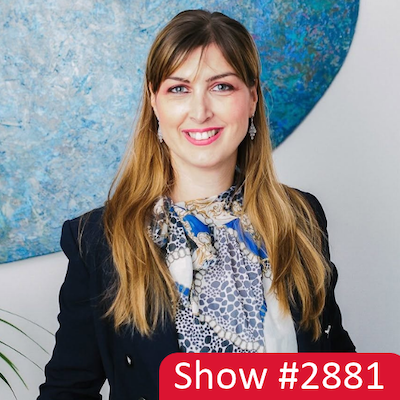
29 Oct October 30, 2026 – Public Speaking for Females Dr. Aleksandra Plazinic and BioElectric Therapy Dan O. Lopez
00:04 Intro 1: In the AM, radio network, broadcasting from AM and FM stations around the country. Welcome to the Small Business Administration Award-winning School for Startups Radio, while we talk all things small business and entrepreneurship. Now, here is your host, the guy that believes anyone can be a successful entrepreneur, because entrepreneurship is not about creativity, risk or passion, Jim Beach.
00:23 Jim Beach: Hello, everyone, welcome to another exciting edition of school for startups, radio. I hope you’re having a great day out there, running a business, growing a business, starting a business, taking control of your own destiny. I have 2 amazing guests today. First up, we’re going to learn to have or be better speakers, particularly if we are women.
00:46 Jim Beach: And then second, we’re going to have one of the most challenging interviews I have ever had, challenging in a sense that it makes my head go, it challenges what I believe, challenges. I makes me think I should get on an airplane and go and try this therapy. It’s a bioelectric therapy. You know, we look at our chemistry in our body all the time.
01:11 Jim Beach: They tell us all of the numbers, but we never look at the electric systems in our body, and maybe that’s the problem. He has our second guest, Dan Lopez, has some amazing stories. And so it’s just a real mind F. Anyway, let’s go ahead and get started and learn to be better speakers before that. Let’s get started with a great show. You know, speaking in public is one of the hardest things for people to do.
01:41 Jim Beach: And I guess it’s hard for women too. I don’t know. I’m a man, but we will find out. I’m excited to welcome to the show, Dr. Aleksandra Plazinić. She is an expert on keynote speaking and communications. She is a communications trainer and coach, and author of a new book From Fear to Fearless Female Speaker, overcome fear of public speaking and lead with impact, a proven path to confidence, clarity, and executive presence for women leaders.
02:10 Jim Beach: Dr. Plazinić, welcome to the show. How are you doing today?
02:15 Dr. Aleksandra Plazinić: Thank you so much for having me. I’m doing great. Thank you.
02:20 Jim Beach: So who is more afraid of speaking, men or women?
02:24 Dr. Aleksandra Plazinić: Well, usually it’s women, at least women that I work with, and um, the reason for that is um, coming from a little bit of the, the social expectations of what is expected for women and what kind of feedback we get from the early age to all the professional uh, careers. And women are actually more, um, prawn as well, um, to get the negative feedback and the criticism, both from men and women.
02:53 Dr. Aleksandra Plazinić: And um, this is all that is actually bringing this fear of public speaking. So not just in front of many people, but as well. Speaking up in meetings, speaking in front of your boss or having something to share for your team.
03:09 Jim Beach: All right, so you made 2 points there. The first point, I kind of wanted to, are you saying that women get judged by their appearance and their speaking ability and that their appearance means that they have to be pretty? I’m trying to kind of take your words and put them into my thoughts. Is that what you said?
03:32 Dr. Aleksandra Plazinić: That too, but the most criticism is all it comes to women’s intelligence and who they are. So men, they get more feedback. I’m not saying they’re not criticized, but they get more feedback on what they were trying to do or on the activities. And women, they get more negative feedback on who they are. And that’s why it gets you even more and it’s harder to change that.
03:59 Jim Beach: Who they are? Does that mean? Their career and their resume or are they successful at also raising kids? What does it mean who they are?
04:10 Dr. Aleksandra Plazinić: Meaning if somebody gives you a negative feedback on your intelligence or your credibility or your expertise. So it sounds more as um, as a constant, right? So that, um, You embedded this part of your identity and it is different if I if I share feedback and say, okay, this is something that you can change in your doings. You were trying, so this didn’t work, but maybe if you do this.
04:38 Dr. Aleksandra Plazinić: But if I’m criticizing your identity, professional or personal, um, then it’s, uh, it’s not that easy to change and there is not this path or I’m not giving you direction where to go, right?
04:50 Jim Beach: Yes, that makes sense.
04:52 Dr. Aleksandra Plazinić: Yes.
04:54 Jim Beach: All right, so how does this fear express itself differently for men and women? What do men do? For example, I sweat my forehead. That’s where I’m sweaty. It’s not my armpit is my forehead. And so it’s really visible. You know, I can’t put a jacket on my forehead, you know, and that’s what I do when I get nervous. Um, and I’ve learned how to deal with it.
05:22 Jim Beach: You know, I’ve learned some tricks, you know, and so, uh, what are some of the ways that this expresses itself in women?
05:30 Dr. Aleksandra Plazinić: You said it very well. It expresses differently for every person, but usually we have the body sensations. So the emotions are not easy to be suppressed. So even if you try to do that. It leaks out. So it leaks out to our body, as you said, sweating. That’s why people feel their heart is heart is rating or sometimes it leaks into their voice, right? They lose the voice or they feel it’s trembling. So we cannot really suppress our nervousness.
06:02 Dr. Aleksandra Plazinić: We have to learn to deal with it. So I’m not saying that we should totally eliminate that because nervousness as well can have some positive traits, but the trick is really to learn how to manage it.
06:16 Jim Beach: Yes. Very much so. So, how do you manage fear? What are your suggestions for managing fear?
06:23 Dr. Aleksandra Plazinić: So, first of all, we’ll see what is the level of the fear. So, if I tell you, um, from 0 to 10, if you can evaluate, uh, how high is your fear? So for some people, it can be 23, for some, it can be 6, for some, it is 8 or 9 or even 10. So, um, there is um, saying coming from the research, right, that um, some people were better die than speaking public.
06:54 Dr. Aleksandra Plazinić: So that means their fear is very hard.
06:58 Jim Beach: I’ve heard that. So good.
06:59 Dr. Aleksandra Plazinić: Yes, and then actually, um, what would happen if they would uh, publicly speak or show up with that higher fear, we we could um, actually see a lot of these physical sensations and they wouldn’t feel physically or mentally good. So, what we heard before, right? Just do it or you will push somebody and say, okay, you got this. It doesn’t matter how, you know, if you’re, if you’re fearing, it will work out, sometimes it does not, right?
07:30 Dr. Aleksandra Plazinić: If the fear is very high. But if your fear is around, let’s say, 6, that means that’s a good amount and because I want us to feel the emotion, right? With the public speaking, it’s always an important event and you want to communicate, um, to be to be able to influence people, you want to be motivated, you want to feel inspired, right? And this is where their nerves are helping us. So they lift us up a little bit.
08:01 Dr. Aleksandra Plazinić: Uh, and I like that even better than when somebody says I have zero fear. I can just whatever talk, right now? Uh, because that means maybe sometimes you don’t really care or, If you’re nervous and see 0, uh, that means you’re not really motivated and you can, uh, you can really project a little bit of the flat message. So especially if your audience is already flat, so you’re not really lifting them up.
08:30 Jim Beach: All right. And then, Okay, and what if your fear is a six. What are you going to do? Are there any exercises that you can do or anything to help get it back down a little bit?
08:45 Dr. Aleksandra Plazinić: Of course, yes. So what I share in the book and the method that I use, um, that I call the fearless method, and it’s the method that has different elements to it, so that we use our body, mind, emotions, and then we feed into the words, actually, and structure our content. So when we start from our body, actually it’s easier to convince our mind that everything is okay and that we can keep going.
09:13 Dr. Aleksandra Plazinić: And I think with the body, it’s the simplest, right? What I suggest is to keep your boat feet on the ground so that you feel grounded, you can Straight up your spine, look a little bit up. So what we learn is roll your shoulders and really sit up straight or stand up straight and already feel how that is different. So how do you feel differently? How do you think differently?
09:41 Dr. Aleksandra Plazinić: If, um, for instance, you can uh, always, um, just uh, tune into yourself and see where they feel the nervousness. So for some people, it’s in their head, for some, it’s in their throat, for some, it’s in their heart, or it’s in, um, their, um, stomach. So if you can just locate it in your body. And if you’re focusing on that spot and you can just exhale. Um, While thinking on feeling to that emotion.
10:10 Dr. Aleksandra Plazinić: So, That helps, right, to just release that emotion and help your body actually transform it. And then if we go into the mind, then it’s easier. We already prepped our body and our emotions, and you already start to feel more confident and calmer. And then uh, coming to your mind. Of course, with a deeper work, what I always ask is whatever you’re exactly afraid of. So that we know, um, what is it that we’re afraid of?
10:41 Dr. Aleksandra Plazinić: Usually, if you say fear public speaking, it’s something vague. And if we don’t have the right definition, then our mind, whatever is big, uh, it’s perceived as a threat. So because we don’t know how to solve it. But if we can define it more clearly, that is already a big step, and we know exactly what are we dealing with?
11:05 Dr. Aleksandra Plazinić: So if somebody says, okay, I’m afraid that actually on the stage, I will lose my voice, or I will forget my lines, that’s already very specific. And in that moment, then we know, okay, this is maybe realistic, um, result, but at the same time, we can think through the solution. So, okay, and I ask them, okay, what will happen if you lose your alliance on stage?
11:31 Dr. Aleksandra Plazinić: And then people, and this is our people in our mind actually help us with that. And then you think of the solution on the spot. You say, okay, I will take a couple of breads, uh, or I will take glass of water. Uh, some people share it with the audience. Whatever that is um, that is a remedy for you. So I think that…
11:57 Jim Beach: With the audience, Aleksandra.
12:00 Dr. Aleksandra Plazinić: Well, you can share, some people choose to share that they’re afraid or they say, okay, give me a moment or this is very important for me, sorry, for being emotional. So this can be a remedy for somebody. But what I want to encourage really, what I do with my clients and the audience here is to find their own solutions, right? To write their own recipes. So I think we always accept the remedies that resonate with us.
12:29 Dr. Aleksandra Plazinić: So I can always offer you, right? The, uh, the more um, solutions from my side, but with these questions actually come to what is important for me and how what I know what it works for me.
12:45 Jim Beach: Okay. One of the tricks I’ve learned, I want to see if you, like this, validate this, see if this works for you. I am. When I’m in the audience, the last thing I want to happen is for the speaker to fail. I want the speaker to do great because it sucks if they fail. It sucks for me. It’s a waste of my time. It’s embarrassing. And so I want them to do well.
13:13 Jim Beach: And I think everyone else in the audience feels the same way. So when you’re going up there, I try to encourage myself and others to embrace that positive energy that everyone’s giving you. They want you to do well, and they’re there for you. They are on your side. They don’t want to see you feel. They want you to be great. And you have a bunch of team members supporting you. What do you think about that?
13:44 Dr. Aleksandra Plazinić: I think that’s awesome. Dad, do you do that? first of the audience. And, um, You would be probably the person that I would tell my clients, okay, search for that person, that person that you can see on their face. They’re really cheering for you. They want you to succeeds. They’re the ones as well, nodding to everything that you say, just search for that phase and connect, and you will get as well, more energy, motivation to keep going.
14:15 Dr. Aleksandra Plazinić: So thank you so much for sharing that. Because a lot of people, they they see the audience as um, as a panel of judges, somebody who, or the group of people, they’re not. Usually they’re not.
14:30 Dr. Aleksandra Plazinić: Or simply, you know, some, they’re cheering as you do, some, they, they don’t, um, let’s say they don’t think deeply about the speaker, so they’re there to hear, um, some information, to get some content, but Afterwards, they will talk, they will talk about something else, or they will think about something else. Because we always think, right? When we have fear, we, uh, we’re catastrophizing it and we think that um, it will be worse than it than it is.
15:00 Dr. Aleksandra Plazinić: What the people will notice every single mistake or every single thing. But because of this spotlight effect, actually, what we think it’s grandiose or huge mistake, a lot of people in the audience, they don’t even notice that. Because everybody’s as well concerned about their daily things, what they have to do, right? And in the eyes of the audience, it’s not that big.
15:24 Jim Beach: Yes. Well, I’m on the that Amazon website for your book, and not only is it 5 star rated, but I’ve looked around in it, and the book has 40, 50 exercises for people to do. It looks very practical and hands-on, which I absolutely love. So this looks like just an absolutely great one. Um, that I’m going to recommend this to all the women out there. Do you recommend starting with a personal story?
15:53 Jim Beach: How do you do your plan your first one minute? And what do you teach others to do in the first one minute?
16:04 Dr. Aleksandra Plazinić: Well, coming from my fearless method, so coming back to the content, I think it’s important to uh, to know your structure and um, to answer main questions. So, I don’t know if you heard of the 4MAT technique. So here we have the 4 questions that it’s important that you answer in your speech because this is coming from educational psychology. Because we as people are interested in different things.
16:30 Dr. Aleksandra Plazinić: And with these 4 questions, you are actually covering all of the interests and needs of your audience.
16:37 Jim Beach: Okay, can you give us all of those slowly at first and so we can write them down and then we’ll go back through each one separately for us.
16:47 Dr. Aleksandra Plazinić: Absolutely. So it is why? Why the concept or information that you’re sharing is important. The second one is what? So what is the concept? What is a theory information that you’re sharing?
17:01 Jim Beach: Yes.
17:02 Dr. Aleksandra Plazinić: The third one is how? So people want to know the practices, the techniques, they want hands on, um, exercises that they can do. And the last one is what if. So you have to be prepared if your concept cannot be, let’s say, grasp or cannot be practiced for one case. So what if this does not work? So to offer as well. Uh, the remedy for that.
17:29 Jim Beach: And what does Matt stand for?
17:32 Dr. Aleksandra Plazinić: So these are the 4MAT techniques.
17:35 Jim Beach: What does the mat MAT stand for or mean there?
17:39 Dr. Aleksandra Plazinić: I’m not sure.
17:41 Jim Beach: Okay, I’m sorry. It’s important.
17:45 Dr. Aleksandra Plazinić: It’s just a four questions, so that’s how the technique is called. There is no acronym for that for anything.
17:52 Jim Beach: Okay. 4MAT.
17:53 Dr. Aleksandra Plazinić: So we’ll formatting as well our speech. What I usually would recommend is to start with Y.
18:00 Jim Beach: Yeah, let’s go back and talk about why. So the first one is why?
18:06 Dr. Aleksandra Plazinić: So that answers your question is what to talk about in the first minute because you want to give the reason for your audience to stay. And to actually be convinced that you have something to share that is important for them.
18:22 Jim Beach: Okay, give me an example of that. So our speech is on the importance of women, uh, going to school and uh, we need to focus more on the countries where women are not given the same educational access, okay? So you’re speaking on that topic, Aleksandra. Give me a Y there. So give me your first 30 seconds. Why you would answer, why is that important for them?
18:49 Dr. Aleksandra Plazinić: So why school is important, probably for them to get a better job, uh, to have a better life to, well, earn money to be independent. So here you want to really focus on their needs, their desires or maybe answer the question of some of their fears.
19:07 Jim Beach: Okay. I think, uh, I don’t know, I think that’s a, I would like to start with a personal story there. Before you do why, then say something about myself for 30 seconds and then say, and that’s why I care so much about female education. Does that make sense?
19:26 Dr. Aleksandra Plazinić: Yes, you can do that. Um, It depends. You know what? I don’t give my clients ready, sentences ready solutions.
19:34 Jim Beach: Oh, okay.
19:38 Dr. Aleksandra Plazinić: Um, because I think everybody should as well connect to their messages. What I’ve seen, a lot of women that I think they know exactly what they want to say and they have great ideas, but that’s why we use this framework, right? So they would find out the sentences that they, it will work for them, so it’s authentic. So it’s not artificial that somebody infused that. Yeah, you should say this. It is important to follow, right?
20:07 Dr. Aleksandra Plazinić: To, in order to, for your audience to get the answers, to, uh, the questions they need, but not the exact script because, um, I really want my, my clients actually to find their authentic voice.
20:21 Jim Beach: All right, I like that. Number two, what?
20:24 Dr. Aleksandra Plazinić: Number 2 is what? So some speakers start with this, and sometimes you can be cultural. I know in the United States, you want to start with Y, so you want to convince people why they should say, uh, in Europe, sometimes we start with this concept, what? So, uh, maybe it’s um, it’s just a different system, right? Education that we start with theory, with the concepts, with information.
20:51 Dr. Aleksandra Plazinić: So what is exactly that you’re talking about so that it’s clear for your audience. And this is 25% of your audience actually that are interested in the concept. So let’s say you’re presenting new information, you’re presenting the new products, system, right? You have to explain what actually it is, so that is clear for your audience.
21:13 Jim Beach: Number three, how?
21:15 Dr. Aleksandra Plazinić: How comes to all the practical aspects. So you have to give the tools, techniques, uh, strategies, uh, so how people can actually practically use uh, their concept. In education, we would use a lot of case studies, right? So that how we can apply the theory in the concept into particular company. Or let’s say a campaign, um, and as well, 25% of your audience is looking for that.
21:42 Jim Beach: Number four, finally, what if?
21:44 Dr. Aleksandra Plazinić: What if so, um, this is a little bit of the hecklers one, but you want to answer this one beforehand? So you’re not waiting for your audience to ask, okay, that’s great. Well, everything that you presented, but what if that does not work for me? Or what if that cannot be applied in my company? So you want to actually to give them this answer beforehand during your speech.
22:10 Jim Beach: Okay. As I said before, I love all of these exercises in the book and I really want to understand some of them. You have one exercise called pen between lips. Does that mean that you, what does that mean? You shouldn’t take a pen up there and eat on it? What are you saying?
22:33 Dr. Aleksandra Plazinić: So that is the one that you use before your speech. So for yourself to prepare.
22:40 Jim Beach: Uh-huh.
22:40 Dr. Aleksandra Plazinić: So you you take a pen and you put it between your lips. Our audience can try it. Uh, so this one helps actually widen your your mouth and um, it helps your voice to be fuller without uh, you shouting or without you making that much effort. Uh, so you can just put the pen between your lips and take um, take a book or uh, article and start reading it.
23:08 Dr. Aleksandra Plazinić: So I know when we called something in our mouth, it’s not very easy to, to read through anything, but here actually you’re making an effort, even though it is funny, it’s uncomfortable. And you will notice once you take out the pen, how your voice is just fuller without an effort, right? So, um, having this, um, massage as well for your, your thoughts just to as well, to flow in a, in a nice uh, voice projection.
23:38 Jim Beach: TV screen visualization. What is it?
23:41 Dr. Aleksandra Plazinić: Yes. Can you repeat? Sorry, I couldn’t hear.
23:44 Jim Beach: TV screen. Visualization. See, finger, civilization.
23:48 Dr. Aleksandra Plazinić: Yes. So there’s, um, my my book is interactive, so you can scan the QR codes. And there, you can see some of the videos where show some of the body exercises, but this one, yes. And this one that you mentioned is actually the audio meditation. That I guide you through your best experience. You can do it yourself. So TV realization is that you picture a big TV screen in front of you.
24:16 Dr. Aleksandra Plazinić: And they’re just, uh, imagine that you click on uh, the remote control and you are peer with your best, um, very best public speaking performance. And here is really the idea to watch yourself doing your masterpiece performance. So how would you stand, how would you project the voice, what would be your pace? Um, What is your posture, how you’re moving on the stage?
24:42 Dr. Aleksandra Plazinić: So here you’re giving already experience to your mind that it is possible for you and you’re giving these steps. So how to do that? Because visualization. So what we put in our mind actually equals our physical practice. And this is something that has already been proven. So whether you actually do this. Of course, if you have a chance to practice more, your public speaking work. Any uh, any activity that is great. But sometimes you don’t have a chance.
25:12 Dr. Aleksandra Plazinić: You can only practice at home. So this one gives your mind the same experience as you have done it a number of times. Uh, on the street.
25:25 Jim Beach: I love it. Great advice. Aleksandra, this is a great book and I love all of these exercises. I’m going to buy it just to ease, even, oh, wait, am I allowed to buy it, you know, because I’m a man.
25:41 Dr. Aleksandra Plazinić: Of course. It is from women, but men love it. I think.
25:45 Jim Beach: How do we find out more about you keeping touch, reach out and get a copy of the book?
25:53 Dr. Aleksandra Plazinić: You can always visit my website. So, aplazinic.com, and you can get my book on Amazon. So From Fear to Fearless Female Speaker. And of course, uh, we can connect on LinkedIn or Instagram, so it’s Aleksandra Plazinić, PhD. I usually post some tips and I give the practices there so you can always check it out.
26:17 Jim Beach: Yeah, taxes. Thank you so much for being with us. Great information. I hope the book sells really well for you, and thanks for being with us. I hope you come back.
26:30 Dr. Aleksandra Plazinić: Thank you so much for having me. It was a pleasure.
26:34 Jim Beach: We will be right back.
STATION BUMPER
26:36 Station bumper voice 1: Well, that’s a wonderful question, actually.
26:39 Station bumper voice 2: Oh, my gosh, I love the opportunity to do this.
26:44 Station bumper voice 3: Thank you, Jim.
26:44 Station bumper voice 4: Wow, that’s a great one.
26:47 Station bumper voice 5: You know, that is a phenomenal question.
26:51 Station bumper voice 6: That’s a great question, and I don’t have a great answer.
26:55 Station bumper voice 7: That’s a great question.
26:57 Station bumper voice 8: Oh, that is such a loaded question.
27:00 Station bumper voice 9: And that’s actually a really good question.
27:04 Station ID: School for startups radio.
27:07 Jim Beach: We are backing again. Thank you so much for being with us. How many of us. Have body aches and parts of our body that just don’t work as well. And we go to the doctor and they take all this blood work and give us more pills to maintain ourselves. It’s just ridiculous. I, of course, as you know, have got several chronic conditions, and I can’t wait to see what my next guest thinks about all of this.
27:37 Jim Beach: Please welcome Dan Lopez to the show. He is the founder and CEO of the bioelectric therapy center. They are in San Antonio, Texas, and his work focuses on taking some ancient Chinese methods and combining that with the laws of nature, electrical principles, advanced wellness scans, and AI guided assessments. And the pictures on his website, which is bioelectric therapy center.
28:00 Jim Beach: Yeah, bioelectricTherapyCenter.com are amazing, and some of the stories we’re going to ask him about are some of his patients who, I’ll just let him tell some of the stories, but they are amazing. Dan Lopez, welcome to the show. How are you doing today?
28:17 Dan Lopez: Thank you very much here, Mr. Beach. Doing well.
28:22 Jim Beach: Gotta call me Jim, Dan. We’re super casual here. So why don’t we start off? Tell me the story of Clarissa.
28:31 Dan Lopez: Okay. Well, I’ll tell you what, um, if I can, I’d like to tell you about uh, my therapy first if that’s okay, so you can kind of understand how I got to Clarissa.
28:44 Jim Beach: Okay, sir, I was going to go back there, but let you establish how cool you were first with Clarissa, but we can do it either way, whatever you want.
28:56 Dan Lopez: I’ll tell you what. Yeah, we’ll follow suit as you say, fit. And let me tell you about Clarissa.
29:04 Jim Beach: Okay.
29:04 Dan Lopez: That was very interesting. Uh, experience that I had with Clarissa. Her mother had found my website, and she contacted me and she goes, hey, you know, we, my daughter has had some success with PEMF, pulsed electromagnetic field. And I see that you do that. I was wondering if perhaps I could bring my daughter in to see what’s going on. And I said, well, PEMF is only really half the equation of what I’m doing.
29:34 Dan Lopez: I’m actually combining PEMF with bioelectric stimulation. So I went on to explain to her a few things. And sure enough, she said, well, I would certainly like to bring my daughter in because my daughter’s 22 years old and she’s dealing with lupus and is dealing in with so much pain that her mobility has suffered and she was quite depressed. Uh, you can imagine a 22 year old, you know, having to deal with these health issues.
30:04 Dan Lopez: So sure enough, uh, they they brought her in. And to my surprise, she was in a wheelchair. And I went, Oh my God, this is going to be interesting. So sure enough, I had the opportunity to work on her with my bioelectric therapy. And as I worked through her, you know, I discovered a few things. With bioelectric therapy. I’m able to determine and find where the inflammation points are in the body. And within her condition.
30:34 Dan Lopez: She had inflammation going up and down the spine. And uh, she, it was painful. Let me put it this way. When I hit an inflammation point in the body, it feels like a bruise, okay? So it can be kind of painful, but I’m able to monitor how much electricity. I apply to the body based on the communication that, you know, I establish what the clients as I’m working on them.
31:02 Dan Lopez: Okay, so I was able to work the session with her and typically a session will run about an hour. The 2 things that all electronic devices need to function optimally, okay? My background told me that, okay, if we’re an electronic device, all electronic devices need 2 things to function optimally, one is grounding, and the second thing is proper voltage. So my therapy is based on those 2 principles.
31:29 Dan Lopez: So getting back to Clarissa, after I worked on her, it was amazing. I, I, I was surprised on how well it worked that once I got her off the table and I moved over to the waiting room and and had follow-up discussion with her mother, uh, I, I noticed that her eyes had had a gleam in into him like, you know, life had come into her eyes and I, I kind of mentioned to uh, Clarissa’s mother.
31:58 Dan Lopez: I said, Rosanna, is it just me or I just see a gleaming in Clarissa’s eyes now? And she said, no, so do I. I see it as well. So then sure enough, you know, uh, we talked about, uh, you know, how often she should come in and given the acuteness of of her condition. I asked that she come in twice a week for the first 2 weeks. Well, sure enough, uh, and we were getting to wrap up.
32:29 Dan Lopez: I asked Clarissa this question. I said, Clarissa. Do you want to get back in your wheelchair? Or do you want to try to walk back to your car? And she looked at me and she kind of said, I want to try to walk back to my car. We were surprised, but at the same time, I grabbed one side of Clarissa and Rosanna, her mother, grabbed the other side, and we walked her back to her car.
32:59 Dan Lopez: And uh, Sure enough, a couple days later, they came back for the second treatment, and to my surprise, she came without her wheelchair. And her, her, her father was uh, uh, bringing, bringing her to the clinic. And sure enough, we worked on her again.
33:16 Dan Lopez: And to my amazement, uh, she was showing improvement every time she came in and uh, she came in uh, twice a week for 2 weeks, but then again, she after that, she came back once a month. And now it’s been about 4 or 5 years since I’ve worked on her. And if I see her once or twice a year, uh, that’s that’s basically. All that I see, Red, because she comes in, she goes, Dan, I need my charge.
33:47 Dan Lopez: I need a charge. So uh, at that point, I realized that uh, I was on to something uh, on how to treat the body with uh, the bioelectric therapy.
33:59 Jim Beach: There’s a picture of her on the website in the wheelchair, and then there’s a picture of her in a gym working out, it looks like. And then there’s a picture of her on the top of a mountain jumping and doing the Michael Jordan jump on the top of the mountain looking as vivacious as any 22, 23 year old could look. She looked like she just climbed a mountain and then jumped higher. On top of it.
34:29 Jim Beach: So I wanted to get all of that established. Show people how cool you are. I have tingles right now, as a matter of fact. I’m looking at uh, pictures of uh, Clarissa and I actually have, my hair is sticking up.
34:45 Dan Lopez: Well, I’m tingling right along with you.
34:48 Jim Beach: It’s just an amazing story. Now, what the hell you doing? How’s all this work? What is the bioelectric? Is my body a bioelectric machine?
34:59 Dan Lopez: Exactly.
35:00 Jim Beach: Okay, I never heard that before. No one’s ever told me that my body, we always talk about our chemistries. We go and get our chemistries done. We never talk about going and getting our electrics done.
35:14 Dan Lopez: Exactly. And really, before that, uh, chemistry can even take place, the electricity body is what plays the role for the cells to communicate. So bottom line is, is this, if you don’t have the electricity required for yourself to communicate, then, uh, you’re really missing the important element because before chemistry can come into play, electricity has to be in place. And that’s something I learned from my system engineering, network engineering background.
35:44 Dan Lopez: We could look at the higher levels of the issues. We could replace software, things of that nature. But fundamentally, if electrically, that network or that system is not sound and complete, then it’s not going to work right.
35:59 Jim Beach: Okay. So you did 30 years in IT before you started on this, right?
36:03 Dan Lopez: Yeah, that’s correct. And that’s where I kind of, you know, developed the end first before we, uh, you know, start messing around with things, uh, on the chemical layer of things, okay? And an analogy I like to use is that uh, in system engineering, network engineering, there’s a, there’s a thing called, you know, 7 layer system that’s called the open system interconnect, okay? And layer one is the physical layer. Okay?
36:32 Dan Lopez: If you don’t have the layer one physical layer, working soundly as it should, and every other layer, layer 2 through layer 7 is going to suffer because it’s layer one, the electrical layer, the physical layer is not in place. I now view, you know, uh, what I’m doing, bioelectric therapy as layer one and Western medicine, dealing with the chemistry of the body as layer 2.
36:56 Dan Lopez: So you can, you can, uh, you can work with layer 2 and hopefully it’ll address the symptom, but fundamentally, if electrically, everything’s not there as it should be, then you really haven’t addressed the problem.
37:11 Jim Beach: All right, so how do you measure a person and tell where they are? What is the test?
37:18 Dan Lopez: Okay, well, what’s interesting as well, because of my system engineering background, I realized, I said, you know what? I’ve got to find a device that I can measure the progress of what I’m doing with the therapy. Well, sure enough, I found a device in China, and I said, well, you know what, I’m going to bring it in, and I’m going to test it, and see how it works.
37:45 Dan Lopez: Well, to my surprise, it, it correlated with how things worked objectively, with how they were feeling subjectively. And I went, wow, this is fantastic. And sure enough, it’s a device that in one minute, it’ll scan you and give men 248 test results of what’s going on in your body from head to toe at a cellular level. And for women, it’s 256.
38:10 Dan Lopez: So I use that to monitor and track the progress objectively of what I’m doing to the clients with the bioelectric therapy.
38:18 Jim Beach: Okay. Great. And do you have to get any sort of FDA approval for this? Are you just out there shocking people?
38:27 Dan Lopez: Well, I have a home-based business, okay? So I started at home and I was, I was recommended to stay at the home so I can kind of bypass all of these, uh, uh, restrictions and and requirements for a, uh, business in a, in a brick and mortar location, okay?
38:45 Dan Lopez: So it gives me a lot more freedom to be able to work with the customer, or work with the clients, and I explained that to them, and I have them sign a waiver that, you know, allows me to do what I need to do because I have to apply the electricity using my hands, okay? I like to describe it as curbal charged, acupuncture, but without the needles. I actually provide the electricity, uh, using my hands.
39:17 Dan Lopez: I connect myself to the device, and I connect myself to the negative pads, and I give the client the positive pads. So what happens is that when I touch the client, anywhere in the body, they will feel the electricity that comes from my hands to the portions of the body.
39:35 Dan Lopez: And what’s very interesting is that, uh, because of the fact that I’m applying electricity to the body, I’m able to determine or the body tells me where they have blockages, blockages is basically, you know, a resistor when you think about it. And uh, getting into acupuncture, when you think about what the needles are actually doing, uh, when they apply the needles into the body, uh, with acupuncture, those needles are acting as little antennas. They’re picking up the electrical energy.
40:06 Dan Lopez: So that’s why when you go to an acupuncture, It takes a while. You know, you’re in there for about 20, 30 minutes while the little needles or antennas are picking up the electrical energy to get what, you know, the Chinese medicine calls the chi. Get the Chi moon.
40:26 Dan Lopez: And as I understand it that, uh, if the cheese not moving properly, then your blood’s not flowing properly, and then if your blood’s not flowing properly, then your, the organs are not getting the oxygen that it needs. So I hope that, uh, that kind of…
40:43 Jim Beach: When the electricity, when the plus and minus connections are made…
40:48 Dan Lopez: Well, I would say my goal is to make it a very comfortable experience. Okay, because uh, you can manage and you can monitor the amount of electricity that you provide to the to the uh, to the client, okay?
41:04 Dan Lopez: But, uh, My goal is to keep it as comfortable because believe it or not, once you feel the electricity go into your body, your body almost welcomes it, it could wear an electronic device and it’s just like, Oh my God, I’ve been needing this. I just know the first time that I experienced it. It was a sensation. I had never felt before. And I said, you know what, I need to know more about this.
41:33 Dan Lopez: And, uh, you know, uh, what happens, usually with, with people, even I’ve had people on, on the table, when I’m actually working on them, they get so comfortable and relaxed, they actually fall asleep. Okay? So, you know, a lot of it has to do with, you know, the anxiety that you kind of have to say, hey, everything’s fine. Everything’s going to work out just fine. Let me apply this electricity.
42:01 Dan Lopez: And a lot of people will say, wow, that feels good. So, uh, I would say, uh, does it hurt? No. If someone knows what they’re doing as far as applying the electricity, no, can it hurt? Yes. You know, it can hurt when we hit an inflammation point because it feels like a bruise, okay? Or if we hit a pinched nerve, it feels like a burning sensation.
42:27 Dan Lopez: But that’s all good information to know, to feel, so that you, you can determine as, as a therapist, uh, where exactly you need to, uh, apply the uh, biostimulation, the electrical stimulation tube, on the body.
42:41 Jim Beach: So what different diseases can this be used for, so we’ve established lupus, and you’ve mentioned inflammation several times. What, what, uh, group of…
42:51 Dan Lopez: I’ll just say this. You know, I’m not providing a cure for any of this. I would simply say I help people with improve the quality of their lives, okay? And if I think about the clients that I have worked with, I have worked with about 3 clients that have lupus, okay? One actually came in in a walker all the way from Houston and I live in San Antonio.
43:17 Dan Lopez: So they came, uh, when they found my website, uh, and they found the Clarissa story, they, the husband called me and asked me if I could work uh, on, uh, on his wife who’s had uh, Lupus for 9 years. Well, sure enough, she came in just out of the hospital and they came in for a session as well.
43:41 Dan Lopez: And by the time they drove back to Houston, she reported back to me that she wasn’t even using her walker to get back in. But to answer your question as to what conditions it had worked, I simply say this, I’m going to provide you. I’m going to provide your body the energy it needs so that it can heal itself. Okay?
44:05 Dan Lopez: And I’ve worked with people, like say, with lupus, with epilepsy, with depression, with insomnia, with chronic fatigue, and lately, I’ve been working with this one gentleman with Parkinson’s disease.
44:16 Dan Lopez: And to me, I am, the transformation that has happened with this gentleman in the last, uh, it’s almost been a year that he’s been coming to me at least once a month, uh, is, is, is beyond my, uh, belief that, you know, something like what I’m doing uh, could help him so much. But even his doctors ask him, he go, what are you doing? And he goes, we’ve never seen anybody improve with Parkinson’s as much as you have.
44:47 Dan Lopez: And he said, well, I go to bioelectric therapy, and they just simply say, well, whatever you’re doing, keep doing it. So I’m always anxious and eager to bring in new clients with new conditions because fundamentally, it comes down to this. When the body has the energy it needs, it can heal itself.
45:07 Jim Beach: I believe that. That’s a great line right there. We will tweet that out. How many people overall have you used this on, Dan?
45:17 Dan Lopez: Well, I’ve been doing it now for 6 years, and I would tell you that normally I handle probably around 200 to 250 sessions a year. Now, some of those sessions are repeat clients. Obviously as well. But if I think the number of people that I’ve actually applied bioelectric therapy due, it’s in the hundreds.
45:40 Jim Beach: Okay. Well, it’s getting up close to a 1000 looks like from those numbers, isn’t it?
45:46 Dan Lopez: Yeah, it is. And certainly, if I went back and added it up, I would say, yeah, I’m close to a 1000 sessions. Under my belt.
45:57 Jim Beach: And what are the, uh, bad things that can happen? What are some of the extreme negative consequences?
46:03 Dan Lopez: Well, the side effects that can happen are really detoxing that’s going on, okay? Some people will say they slept better than had slept in years, and others will say, I couldn’t sleep at all because of all the energy that was going on with me. And that energy, the way I see it is basically nervous energy that needs to get released, okay? So some people can have, uh, you know, like say. Some people can just want to fall asleep.
46:36 Dan Lopez: You know, they’re saying, look, my body needs a rest and a lot of it has to do is because the body, the blood needs to regenerate and it regenerates more when the body’s asleep. So it’s just doing its natural thing, okay? Some of the people will say, well, I had to go to the bathroom about 4 or 5 times and think of that nature. And if you think about that, that’s all detoxing, that the body I was thinking.
47:06 Jim Beach: Yeah, that’s a good sign. Yeah, rain comes out of you, though.
47:11 Dan Lopez: No, no, nothing grand. It just, you know, people say, what? I, you know, I had to go to the bathroom 3 or 4 times and and and I told him, that’s a good thing. Your body’s getting rid of the stuff that it needs, you know? And like you say, I’m surprised that it’s working as well as it is, but it came down to the fact that we’re an electronic device. And this therapy based on those 2 principles.
47:42 Dan Lopez: I provide grounding and then I provide the bioelectric stimulation because uh, you know, what’s really important here and let me go ahead and bring this out is, you know, I, I tell my clients, I said, listen, those 2 things you need to do. One is grounding. I said, that’s real simple.
48:01 Dan Lopez: Just go out on mother on mother earth barefooted for 30 minutes each day and get the medicine that the earth offers to you by just getting connected to the to the to the earth again. Okay? That’s a simple thing. The second thing is the proper voltage. If your cells need, let’s say, -20, the -25 millibotes, and your body’s only producing around 15 or 10 or things like that nature.
48:30 Dan Lopez: Well, obviously, you don’t have all the energy that the cells need so that when they regenerate, they can regenerate as healthy cells. If they don’t have the energy they need, then they regenerate as subhealthy cells. And, you know, with time, we just become less healthier, I should say, more subhealthy, uh, because of the fact that our voltage in our bodies is going down. So then the question is this.
48:56 Dan Lopez: Well, how do you determine how much voltage you have in your body? Well, it’s as simple as this. It’s based on your pH level. Okay? Whether you’re a sick or whether you’re alkaline. Now, for the longest time, I always got confused. Well, what do I want to be? Alkaline or acidic? I mean, I’m confused. I don’t know what all that means. Well, what I like to describe it is this.
49:25 Dan Lopez: And an acidic condition is like a dirty, murky fish bowl. If you look at the fish, which is representing of the cells, so to speak, in a dirty murky fish bowl, what do they look like? Well, they don’t look very healthy. They don’t look happy and they’re just, you know, swimming around just about to die.
49:47 Jim Beach: Yeah, about to die.
49:48 Dan Lopez: That’s what an acidic condition looks like, okay? Now, if you take a clean, pristine fish bowl, And you look at the fish there, boy, they’re vibrant and happy and, um, They’re happy to be alive. Simple as that. And that’s that’s an alkaline condition. That’s where we want to be, you know? And then people say, well, where do you want to be as far as the pH level is concerned? Well, you want to be between 7.35 and 7.45? Okay?
50:21 Dan Lopez: That’s what brings you the 20000000 votes and the 25 or -20 and -25 milligotes you need so that your cells can regenerate as healthy cells. Only problem is, is half, I would tell you, 80% of the people that I come in, and I test them, and one of the things that the test device does is measure the pH at the cellular level, and it tells me exactly where they are relative to the pH scale.
50:50 Dan Lopez: And if you think about it, what’s sad is that we care more about the pH level of the water in our swimming pools, and in our aquariums, then we do and of the water in our bodies, and we’re 70% water.
51:06 Jim Beach: That is so interesting. Why is that? What do you think? I was sitting here thinking, how am I going to test myself with a pool strip and you nailed me there? I do care more about the pH level of the pool than I do my body, Dan.
51:26 Dan Lopez: Exactly. Most of us do. I mean, we ignore how important that pH level is because really when you think about it. And I learned a lot of this from Dr. Tennant who wrote the book Healing Is Voltage. When I read his book, it helped me connect the dots between the traditional Chinese medicine, the law of nature, and electrical principles. But anyway, he, you know, he simply made it clear to me that.
51:54 Dan Lopez: The Ph level is basically the measurement of voltage and water. And I went, oh, okay. Then I get it. You know, I get it. So the fact that I found a device that can test test and measure the uh, the, the pH level uh, and then with everything else, it’s gauge. Now, there’s things that you want to do.
52:18 Dan Lopez: Also, not only get charged up, but you want to change your diet, you want to get rid of sugar, you want to do these things and process food, you want to get rid of that because all those things cause you to become more acidic. And once again, you want to be on the alkaline side.
52:40 Jim Beach: Great, great. And amazing information. You’ve opened my eyes to a lot of things. How do we find out more about you get in touch? See the website.
52:51 Dan Lopez: Well, my website is bioelectrictherapycenter.com. Okay? My contact information is there. Um, let’s say I’m always open and eager and excited to try what other conditions that I’ve had with because I’ve had some stories that, you know, for me to, to sit here and tell you, well, here’s my firsthand experiences that I had with somebody who had dementia, or here’s somebody, my 1sthand experience with somebody that’s had Parkinson’s disease, or insomnia, or depression, all these things.
53:20 Dan Lopez: So what happens is that once you get the blood flowing, then that’s key to the body is the circulation of blood in our bodies. And what happens is that we get stuck because of the toxic stresses that we have in our body that it impedes the blood flow, which then impedes the oxygen that all the organs need.
53:43 Jim Beach: Wow. Great information, Dan. Bioelectric therapy center.com. Thank you so much for being with us. We are out of time, but you know what we do? That’s right. We come back. Take care. Make a million dollars by now.
So we cannot really suppress our nervousness. We have to learn to deal with it.

Dr. Aleksandra Plazinic
Dr. Aleksandra Plazinic is an Executive Communications Coach, trainer, keynote speaker, university lecturer, and author who helps professionals and leaders communicate with greater confidence, clarity, and influence. With more than 20 years of experience spanning communications, business consulting, international organizations, and academia, she has worked with professionals across Europe, the United States, India, South Africa, and other global markets. Her coaching and training focuses particularly on overcoming fear of public speaking, strengthening executive presence, developing authentic communication, and helping leaders become more effective in high pressure professional environments. Aleksandra’s international career has included work with the United Nations and European Commission, as well as consulting and academic roles in several European countries. She has held senior communications positions and has served as an Adjunct Professor with the European Center for Peace and Development of the University for Peace established by the United Nations. She has also lectured at SAE Institute and Middlesex University in Brussels. Aleksandra holds a doctorate, two master’s degrees, and multiple professional certifications. Her doctoral research examined strategic communication in the context of European Union accession negotiations, while her graduate studies included international relations, international management, and marketing. Her approach to communication development combines practical presentation techniques with research from neuroscience, psychology, mindfulness, and human behavior. Rather than treating public speaking simply as a matter of memorizing a speech or perfecting delivery, Aleksandra works with clients on the internal barriers that can prevent knowledgeable people from speaking with authority. Her work addresses issues including imposter syndrome, anxiety, confidence, audience engagement, executive presence, and the ability to communicate authentically. She has delivered trainings, workshops, and presentations internationally, including programs and events in Europe, the United States, Dubai, and the United Kingdom. Aleksandra is the author of From Fear to Fearless Female Speaker: Overcome Fear of Public Speaking and Lead with Impact, published in September 2026. The book is designed especially for women who have expertise and ambition but find that fear, self doubt, or discomfort with public speaking limits their ability to be heard. Through practical strategies, exercises, and personal development techniques, she addresses managing speaking anxiety, developing an authentic presence, handling different audiences, communicating clearly, and building the confidence needed to lead with greater impact. Her central message is that powerful public speaking is not an ability reserved for naturally gifted performers. It is a skill that can be developed, allowing women to make their expertise visible and use their voices more effectively in leadership, business, and everyday professional life.
Dan O. Lopez – Founder and CEO of BioElectric Therapy Center
When the body has the energy it needs, it can heal itself.
Dan O. Lopez
Dan O. Lopez is the founder and CEO of BioElectric Therapy Center in San Antonio, Texas, where he has developed a patent-pending, non-invasive wellness system designed to support quality of life by focusing on the body’s natural electrical function. His work brings together his background in technology, systems thinking, Traditional Chinese Medicine, electrical principles, wellness assessments, and emerging technologies to explore a different way of understanding the body and its overall function. Before entering the wellness field, Dan spent approximately 30 years working in Information Technology. That experience shaped the way he began thinking about the human body. Rather than looking only at individual symptoms, he started viewing the body through the lens of systems engineering, where electrical flow, grounding, circulation, and clear pathways all play interconnected roles. Dan applies that systems perspective to his work at BioElectric Therapy Center, where he believes the body, like any complex electrical system, depends on proper communication and energy flow to function effectively. Dan’s interest in BioElectric Therapy became deeply personal after watching his father decline with Alzheimer’s disease. That experience motivated him to search for additional ways to support the body beyond symptom-focused approaches. His research eventually led him to BioElectric Therapy and to the development of a hands-on, non-invasive method that he describes as “advanced acupuncture without the needles.” His approach is intended to bridge traditional healing concepts with modern bioelectric principles in a way that is accessible to people interested in wellness, recovery, energy, and healthy aging. At BioElectric Therapy Center, Dan combines concepts from Traditional Chinese Medicine with what he describes as Law of Nature, electrical principles, advanced wellness scans, and AI-guided assessments. His goal is to give clients a clearer picture of their wellness patterns and a way to track changes over time. Rather than positioning technology and traditional approaches as competing ideas, Dan is interested in how they can work together to create a more complete understanding of the body. A major part of Dan’s work focuses on the idea that modern wellness conversations often emphasize chemistry, such as medications, supplements, hormones, and lab values, while paying less attention to the body’s electrical signaling and communication. Through his work, he explores how factors such as grounding, voltage, circulation, and pathway function may relate to issues people commonly associate with pain, fatigue, poor sleep, stress, recovery, mobility, and general wellbeing. His perspective is centered on helping people think about wellness at a broader systems level. Dan is also interested in making BioElectric Therapy more scalable and accessible. His longer-term vision includes practitioner education, guided self-care centers, and community access points designed to help more people learn about the approach and take a more active role in their own wellness. He sees education and self-care as important parts of the future of the field and wants to create systems that can be taught, measured, and applied consistently. Today, Dan continues to develop BioElectric Therapy Center around the idea that wellness can benefit from combining ancient principles, modern technology, objective measurement, and systems thinking. Through his work, he shares a perspective shaped by decades in technology and a deeply personal search for better ways to understand the body. His mission is to expand awareness of bioelectric wellness, develop a broader practitioner network, and create new ways for people to engage with approaches focused on energy, balance, self-care, and quality of life.