
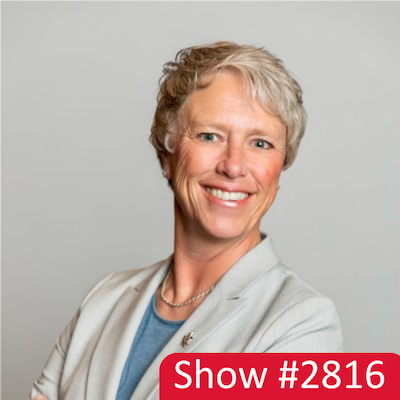
28 Jun June 29, 2026 – Rock Your Business Brandon Pipkin and Cannabis Nursing Elisabeth Mack
Intro 1 0:04
Broadcasting from AM and FM stations around the country. Welcome to the Small Business Administration Award-winning School for Startups Radio, where we talk all things small business and entrepreneurship. Now here is your host, the guy that believes anyone can be a successful entrepreneur, because entrepreneurship is not about creativity, risk, or passion. Jim Beach.
Jim Beach 0:26
Hello, everyone. Welcome to another exciting edition of School for Startups Radio. I hope you’re having a great day out there, riding the roller coaster life of being an entrepreneur, the ups and downs, the twists and turns, and all of the bumps and twists. It’s just not easy sometimes, but it sure is fun. It’s better than any other lifestyle we could choose. I’ve got a great show for you today. Two fantastic guests, I’m really excited to share with you. First up, we have Brandon Pipkin. He was one of the very first guests that I ever had on the show, 12, 1314, years ago, whatever it is, and I’m excited to welcome him back. He has some great information, and great information about getting rich, and how other rich people got there. And so I’m really excited to get an update on him and his career, and the number 21 He’s obsessed with the number 21 And then after that we have Elizabeth Mack, very traditional conservative nurse who had some pain herself and started seeing that pain was not being addressed adequately by the medical system, and she discovered cannabis and has changed her life and solved her pain problems, and a lot of people that she knows, and so we are going to talk a very serious adult conversation about medical marijuana and its benefits, its detriments, and all of the facts that we need to know as entrepreneurs. I support anything that’s legal, and so I’m excited to introduce Elizabeth, very interesting conversation. I think you will love her. I do. All right, so great show. We’re going to go and get started in just a second. We appreciate greatly you being with us. Tied
Real Environmentalists 2:27
to talk and no action on climate change. Introducing The Real Environmentalists, the bold new book by Jim Beach. It’s not about activists, politicians, or professors. It’s about the entrepreneurs, real risk takers building cleaner, smarter solutions, not for applause, but for profit. The entrepreneurs in the book aren’t giving speeches, they’re in labs, factories, and offices, cleaning the past and building clean products for the future. The real environmentalists is available now, because the people saving the planet aren’t the ones you think. Go to Amazon and search for real environmentalists. Thank you. Back
Jim Beach 3:00
in again, thank you so very much for being with us. Very excited to welcome back to the show Brandon Pipkin. He has had a really interesting career and has written two great books that we want to talk about. He was on the show on the first time, December 31 2012 Brandon, I looked it up, and this is your fourth appearance. He is now at the Auto Bond Consultant. I will ask him about that, and they just published a new book called Rock Your Business, subtitle Navigating the Road from 50 million to 500 million and Beyond. His first book was about 21 entrepreneurs that he asked 21 questions. That’s how we got introduced 14 years ago. Brandon, welcome back to the show.
Brandon Pipkin 3:47
Unbelievable, glad to be here, Jim.
Jim Beach 3:50
Likewise, glad to have you back. Congratulations on the new book, Rock Your Business. This is what do they call it, a compendium when 21 people participate, is that what it’s called?
Brandon Pipkin 4:01
I don’t know. I would call it an amalgam of different viewpoints, and yeah, compendium, perhaps. But one of my favorite things about it is you get different authors with different viewpoints coming together to refine and to refute each other’s viewpoints, giving you even more information. It’s great.
Jim Beach 4:20
I love the idea. What did you write about in there? What was your focus?
Brandon Pipkin 4:23
Yeah, my chapter is co-written with Deb Dixon. We both focus on the sales portion of our practice at Audubon, and our title is That Every Day Without a Sales Strategy is a tax-free donation or a non-tax deductible donation to your competition, so every day that you operate without a strategy and without coaching and without measurables within your sales function, you’re giving money away to your competitors.
Jim Beach 4:51
That’s true. So, how do we avoid that?
Brandon Pipkin 4:55
Well, first things first is a strategy, and I know that sounds so freakin. Simple, and in fact, as I was doing the read for the audio book just two weeks ago, as I’m reading my own words, I’m like, come on, is it really this simple? Am I promoting anything here that is of lasting value? And the answer is yes. The simple is often the thing that doesn’t get executed on. So, the first thing is to have a strategy to be clear on what that strategy is, why that is your strategy, and then be able to execute on it. And an important element along the way is sales coaching. Most organizations don’t sales coach very well at all.
Jim Beach 5:36
No, it’s very hard to do well, and it’s done well. It’s one of the most beautiful things I’ve ever seen.
Brandon Pipkin 5:43
Yes, where have you seen it? I’d love to know. Oh,
Jim Beach 5:45
you know, I’ve had guests on the show that you know just use the absolute highest, you know, best practices, where you get the buyer to say yes 15 times, and you use phrase like now, if I could show you that this new factory tool will save you 18% would you be interested in talking to me more? Okay, right here your competitor said they got 23% not 18, 23% that’s data from your competitor. Okay, so you’re ready to go to the next level with me? Okay, now if I could show you that I can save you $50,000 a month, would you take this to your president for me today? Okay, I did the run numbers, I’m gonna save you $60,000 a month. Actually, will you take it to your president today? You know, just that kind of stuff, where it’s entirely interactive, you tell them back what their feelings are, you affirm those get permission to move forward before you do anything, stuff like that. Does all that make sense?
Brandon Pipkin 6:47
Interactive and permission to move forward, those are two very important elements, and that is exactly what’s missing. If I pull it back to the sales coaching, what’s missing between the manager and the coachee? Oftentimes a manager will start coaching what they think is coaching, and a sales professional really is just deal coaching, or it’s telling them what to do, and what they’re not doing is doing it together and creating a journey together and getting permission to proceed, and that’s where a lot of sales coaching falls flat. So I love that you tied it to the sales process, because sales coaching is no different than the sales process, and again, that’s where a lot of organizations are falling down and missing it, and that’s why they’re making that tax, that non-tax deductible donation to their competition.
Jim Beach 7:33
Yes, so what grade would you give me for my impromptu quiz?
Brandon Pipkin 7:37
You rattled cut off so incredibly quickly, you pulled from real-life examples. That’s a solid A, right there, Jay. Wow,
Jim Beach 7:45
awesome. Thank you so much. The word is Compendium, C O M P E N D I U M. Luckily, nice information writings or contributions gathered into a single volume. Beautiful.
Brandon Pipkin 8:01
The word C O M P N D I U M Fantastic. We
Jim Beach 8:10
both learned after all the years that I’ve been doing this. Now my favorite word now has it was veritable plethora. Now neuro plasticity, the fact that you’re no matter how old you are.
Brandon Pipkin 8:26
Yes, I was just doing a presentation with an insurance company who uses Banny, the model created by Jamaica Casio, to look at the world. Are you familiar with the Banny model? B A N I,
Brandon Pipkin 8:41
tell us,
Brandon Pipkin 8:41
okay, so I believe it was in the early 1900s like 1910 the US Army came up with a model to look at the volatility in the world and understand the unpredictability of things, and they called it VUCA, it’s volatility, uncertainty, complexity, and the unknown, I think is the U, and then in 2017 2018 Jimmy created, call it a 2.0 of VUCA, and he calls it Banny, and it is a methodology for looking at the modern world we live in and ordering the chaos of it, so B is brittle, and it’s understanding that systems by design in our modern world are very brittle. If you think about a just-in-time manufacturing environment, that’s a very brittle thing.
Jim Beach 9:28
Look, and one now the entire world part, because one connection got closed,
Brandon Pipkin 9:34
right? Look at that. And so, if we understand the systems are brittle, he doesn’t argue for creating a system that is not brittle, he argues for resiliency and learning how to be non fragile. I love that book, so anti fragile, and so anyway, Where I’m going with all this is there’s brittle, there is the a. Which is, I’m blanking on it, because my mind was already racing forward to come back to the point you made. The A is anxious, the N is nonlinear, and the I is incomprehensible. And with the nonlinear, that’s where neuroplasticity comes in. So, in our modern world, things are not linear anymore. The smallest inputs could produce an outsized output, especially if you look at AI. We can input a little bit of information and get really great outputs or outsized impact from that very little input. So things are non-linear, and the way that you may argues that we should navigate that is to be neuro plastic and to be neuro adaptable to learn new pathways and to retrain our brains to operate in a world that is non linear. It’s a beautiful thought. It
Jim Beach 10:54
is very interesting. Tell us about Audubon Consulting. So, you, I’m having the most fun. A couple of years ago, right? Tell us the whole story. Yep, you were consulting on your own, right?
Brandon Pipkin 11:06
That’s right. Yep, I was doing sales training, and sorry, say that again.
Jim Beach 11:11
You joined up with a group also consulting, right? Yes, correct. Yeah,
Brandon Pipkin 11:17
yeah. So, for 15 years was doing sales training, sales consulting, having a blast. Love it. Absolutely love being in a classroom with people who want to get better, who are looking to do what they do better. And one of the reasons I love sales is it’s just simply communication, and it’s helping another human being. If I sell something that makes your life easier, reduces headache, helps you make more money, helps you have more time with the people that are important to you. That’s a fantastic thing. And so I really love doing sales training and helping people do that for their clients and make their lives better. So it was doing that, as I said, for 15 years, and then two, three years ago got introduced to this organization, Auto Bond Consultants, it was started by Jonathan Slain, a former investment banker and consultant who has really figured out the pathway for consulting with businesses in the middle market, 50 million to $200 million range, to help them nail down their systems, their processes, their people, all in service of creating a business that lasts, and I’m having the most fun I’ve ever had. There’s 20 of us there. I have to run harder and faster every day than I’ve ever run before in my career to keep up with these people. The mental horsepower, the get-it-done attitude, the GSD, the get stuff done of these folks, it’s just incredible, and the energy is fantastic. And again, all of it in service for our clients.
Jim Beach 12:55
And tell us the background of the business itself. Where’d it come from?
Brandon Pipkin 12:59
Yeah, so Jonathan was consulting with businesses and teaching them business operating systems, and started on his own in 2017 created Audubon Consultants, and has slowly been building the business, and we’ve hit a real growth spurt in the last two years, adding new people, new clients, new offerings,
Jim Beach 13:19
and do market through, I think the HR office training office at the big companies, or is the target 50 to 500 million, like on the cover.
Brandon Pipkin 13:31
Yeah, the target is 50 to 500 million, and we are going right to the CEO, the founder, the owner. We want to talk to the top executive and help them understand how we can be a founder slash owner relief engine and EBITDA expansion engine.
Jim Beach 13:49
Okay, and
Brandon Pipkin 13:49
then we work with them and their executive teams on strategic planning, on the strategic use of AI, and on placing talent. We have a talent division as well, a talent advisory firm within Auto Bonk.
Jim Beach 14:06
Excellent, very impressive. And so, what are the skills that most of your clients come in needing the most? Is it sales training or leadership, or what? What’s the number one need? Yeah, the client base, the
Brandon Pipkin 14:19
number one need is that the owner, CEO, founder can’t do it all anymore. They need an executive team that is highly functioning, and maybe the team is functioning very well right now, but lacks the clear direction that they need to execute at an even higher level, or maybe they grew really fast, and their processes didn’t keep up with them. They maybe outgrew their existing operating system, and now they need something custom for where they are. If I had to bottom line all of that, it comes down to leadership development, the right people in the right seats. Having the processes and strategies, and then executing.
Jim Beach 15:05
Okay, it is. It’s like a law firm where you need to go out and get your new clients, and you build up a portfolio of your clients, and what’s what I want to say. Yeah, the law firm is really competitive, and you compete against each other, and if you’re not getting enough hours or bringing in enough clients to kick you out, is it that kind of model,
Brandon Pipkin 15:26
you know, Jim? This is one of the reasons this is the best professional experience I’ve ever had, and the most fun I’ve ever had is that Jonathan and everybody else there is committed to the team. In fact, Jonathan just posted on LinkedIn today about the book that’s upcoming. It will be released june 30. Rock Your Business, and the post was about building something that lasts and building a house worth protecting, and that’s exactly what we’re doing at Autobahn. So to be too cliche and to be too cheesy in high school musical when they sang, we’re all in this together, that’s how I feel with Autobahn, is we are all one single entity building something really freaking cool together.
Jim Beach 16:12
Okay, very well said. And do you work together on projects, or is each person got a crew that does the work itself actually gets the operations done.
Brandon Pipkin 16:24
Yeah, we operate in a bit of a hybrid pod model, so a consultant will work with potentially another consultant, so we have one or two consultants on each engagement, and then we also have a project manager on each engagement, an assistant project manager, and then we are really heavy into the use of AI, so we use AI as our assistant project managers, so our APMs, assistant project managers, are using AI as a junior APM to help them, and then the project managers are overseeing the APMS. We also have a design team that helps out with engagements, and we pull in specialists for engagements when we need them as well. So it’s a really good team approach.
Jim Beach 17:13
I love it. Sounds fantastic. Tell the story of 21 and 2121
Brandon Pipkin 17:19
questions for 21 millionaires. Oh, thanks, Jim. I love, I love that that book, and the work is so dear to my heart. So, I grew up in really poor circumstances, single mom, four kids, had to rely on help from the church to get by. I think the church even paid for her schooling to become a bookkeeper, and growing up like that, I always thought to myself, when I get older, I’m going to be so successful, I’m never going to have to struggle with money, things are going to come naturally to me, I’m going to be really successful and never have concerns, and got married young, and was at a point in my life where I realized I am not going to be this overnight success and make millions of dollars like I thought I would, and I actually got involved in a network marketing company. In fact, that reminds me, Jim, what are you doing this Tuesday at 7pm I’d like you to come over to the house and meet some important.. no, I’m not inviting you to a meeting, I’m not involved in network marketing anymore. But what I did is, when I got involved in that network marketing company, I caught fire with personal development, and I started studying as much as I could about personal development, and I thought, “Oh, this is this really feeds my soul. And I started thinking about, I’d love to write a book to help other people and inspire them, but I don’t want to just regurgitate what other people have said. I want to do something significant. I want to find something significant. And along the way, this idea struck me that if you find your passion, you will find your success in life. I loved the thought, and I made it my goal then to interview 21 entrepreneurial millionaires to find out how they found their passion and parlayed that into their success, and then I’ll show the readers how they can do the same, and the whole world will be blessed, because everybody that reads the book will now know how to find their passion, they’ll live that passion, and that will bless the rest of us. And, oh, by the way, they’ll find their financial success because of it. Sounds like a great premise, right?
Jim Beach 19:12
Yes, if you agree with that thing about passion, but keep going.
Brandon Pipkin 19:16
Oh, well, that was the rub, Jim. And where were you when I was writing this book, in 2011 so on the third interview I was sitting down with Matt. He was a client who had become a friend of mine, and I asked, “Hey, Matt, what’s your passion? Without hesitation, he said, “I don’t know, I’ve never really had that conversation with myself. Also, in that interview, he said that he really didn’t have any written down goals that it was more like following the natural business progression as things presented themselves to him, and so it caused me to think a little bit more deeply about this connection between passion and success. If Matt, who had just sold his business for multi million dollars, didn’t know what his passion was, is this really the premise? For the book, he obviously didn’t know the subtitle for the book was going to be “Find Your Passion, Find Your Success, right? So, from that moment on, I just went on a fact-finding mission as I interviewed the rest of the millionaires to find out how and why did you do what you did, without the hyperbole, without the fluff, without the revisionist history, without the cliches of you got to be disciplined, and you got to be focused. Without all of that, how did you really do it? And what I found was that every one of these millionaires took their own unique path with four commonalities, and the four commonalities that I found are not necessarily those that are talked about in the business literature, in any other coaching programs, etc. but it’s how these entrepreneurial millionaires did what they did.
Jim Beach 20:49
Who are some of the cool people you talk to?
Brandon Pipkin 20:52
Heidi Ganahl is one she founded, Camp Bow Wow, which is a doggy daycare, went nationwide, lots of franchises. She later ran for governor in Colorado. Lane Nemeth was the founder of Discovery Toys, which was an at-home toy production and distribution company. She sold to Avon for lots of money. One guy, whose name you’d never even know, his name is Brian Willis, who works in title residential title for homes, and one of the cool things about him, and why his story resonates, is he consciously gives 10% of time, energy, money, and space at the company for people who need a hand up.
Jim Beach 21:36
That’s excellent.
Brandon Pipkin 21:37
Oh, so good. Yeah, yeah, lots of good Richard Zuschlag, who founded Acadian Ambulance, which is a 400,000 or $400 million ambulance company in the Texas and Louisiana areas. He, during Katrina, just marshaled his helicopters to go rescue people. He was told by the federal government he wasn’t supposed to be doing that. He said, “Well, damn you, I’m going to get these people, they need help, and he got his helicopters in the air and went and rescued people, so a lot of fascinating stories.
Jim Beach 22:08
Yes, I remember having the conversation, I guess that was 1213 years ago.
Brandon Pipkin 22:15
Unbelievable.
Jim Beach 22:16
Yes, but it stuck out to me. I remembered it ever since. I appreciate that. I think works as a memory tool, or it just makes it super easy to remember. And then having a weird name, too, like Brandon Pipkin,
Brandon Pipkin 22:30
isn’t that great? I got so fortunate with that. It’s not Jack Smith or something like that. No offense to any Jacks and Smiths that are listening to this. Yes, and the 21 for 21 idea is I then started interviewing Olympians, and I got through 14 of them, and I’ve kind of stalled out there on that project, and want to get back to that, and also 21 questions for 21 cancer survivors, and 21 questions for 21 golden anniversary couples, so the intention is that I’ll continue to, yeah. Thank you. I’ll continue to interview people who fascinate me, whose stories I think are worth telling, and find out from them, how are you looking at things? What created this? How did you get where you are? And back to the whole point of unexpected learnings, the Olympians didn’t follow the path that I had heard Olympians follow to get where they are, so it was a really fascinating learning, as well.
Jim Beach 23:26
You just brought to mind a cousin that I have, a first cousin once removed, I think, to be very official. He died about two months ago. He was an Olympian, and he, when he died, he was important enough that they mentioned it during Saturday Night Live, the desk part, you know, the news part. Wow, tell jokes from, yeah, weekend upstairs. And he had written a book called, and he was famous for his book, his methodology of run, walk, run, you get tired, walk to the next telephone pole, and then run to the next telephone pole and just do that, and it’s super simple, but he built an entire career on it, and so the Saturday Night Live joke was he got, he was doing it, and got what was it, run bus, run, he got hit by a bus, which is had an aneurysm, but he was important enough that he was on Saturday Night Live, which I thought was really cool. He also was famous in 72 when he was trying to get into the Olympics qualifying. He stopped in one of the races, so that his buddy could get in front of him, so that the buddy could go also. Oh my gosh, fantastic. What’s his name, Jeff Galloway. And listen to this entrepreneurial idea, Brandon. Every year he would hire a 747 not every year, for many years, hire a 747 to fly to Athens, and then take everyone up to where the, I guess, Marathon, the city of Marathon is, where the battle happened. And then Deputies ran from Marathon into Athens and announced we won, we won, and then flopped dead is the story, and so he had a running store chain named the Deputies, and every year he would take 500 runners the war site, and then they would run the marathon into downtown Athens with all the streets blocked and everything, and he would organize that event, and everything. It’s a great idea. People were paying like $12,000 and this is 20 years ago to go run a marathon with him in Athens. It’s cool, no kidding.
Brandon Pipkin 25:33
It’s a beautiful idea, experiential. That’s one of the things I’m learning more and more, especially as at Audubon, we work with YPO members, Vistage Forum members. These people are about experiences, unique experiences, and I’m reminded of just how important it is to create experiences and community together. That’s a fantastic idea.
Speaker 2 25:56
Yes, what’s your like
Jim Beach 26:00
business passion point, something that gets you riled anytime you see it, or you, the key to success as you see it. What’s what’s the number one business thing that pops into your mind the most?
Brandon Pipkin 26:12
Oh gosh, if we’re talking about sales, and when I’m doing sales training with our clients, it is to just slow down and listen, so few people in life actually take the time to listen to another person, and even if we know the right answer, even if we’ve seen this problem a million times before, the other person has no idea who we are, what we’re about, or if they can trust us until we listen to them and let them know that we’ve listened to them, so I will harp on that in leadership, I’ll harp on that in sales coaching, I’ll harp on that in a sales situation, sales leadership, I think that is just absolutely key, and then in a business sense I also get really passionate about what you had just mentioned, which is tied to experiences, but it’s connection. So, if there were a word that I really resonate with, and that I operate on, or at least try to, it is connection, real connection. I can’t do surface level, I’m not really interested in the humdrum. I want to go right to the real stuff with people and get into it.
Jim Beach 27:27
How do we find out more? Follow you online, get a copy of the book.
Brandon Pipkin 27:30
Sweet, I appreciate you asking. Autobahn consultants.com auto bond spelled the same way as the German highway, which is very two fellig, as the Germans would say it’s very fortuitous and serendipitous. I spent two years in Germany and Switzerland, and now have joined this company, Autobahn. So, Autobahn consultants.com You can find us on LinkedIn with that handle, also on all the other social media platforms. And the book is coming out june 30, so look for it on Amazon. Rock your business. Love to have you pick up a copy and let us know what you think.
Jim Beach 28:06
Thank you so much for being with us, and we look forward to again another 12 years.
Brandon Pipkin 28:11
Awesome, Jim, I’m looking forward to it too. Can’t wait. It’s great to connect,
Jim Beach 28:15
and we will be right back. Bye. well,
Intro 2 28:28
that’s a, that’s a, that’s a wonderful question. Actually, oh my gosh, I love the opportunity to do this. Thank you, Jim. Wow, that’s, that’s, that’s a great one. You know, that is a phenomenal question. That’s a great question, and, and I don’t have a great answer. That’s a great question. Oh, that is such a loaded question. And that’s actually a really good question. School for Startups Radio.
Jim Beach 28:50
We are back, and again, thank you so very much for being with us. Let’s go somewhere we haven’t been in a long time. I haven’t had a guest talking about cannabis in a couple of years now, so I’m excited to do that. You know, it’s legal in a lot of places, and if it’s legal, I’m all there to sell it. And let’s think about it that way. That’s my favorite way to think about marijuana. Please welcome Elizabeth Mack. She is the co-founder of several different organizations. One is called The Green Nurse. She is also the CEO of Bloom Hemp and the author of I Love This Title, Wine, Women, and Weed: A Memoir of Faith, Hope, and Love. Wow, what a great name. Elizabeth, welcome to the show. How you doing?
Elisabeth Mack 29:35
I am wonderful. Thank you for having me.
Jim Beach 29:37
So, how did you get involved with marijuana as a registered nurse, that’s quite an interesting choice.
Elisabeth Mack 29:45
Well, at the time, so 11 years ago I crashed my bicycle, and at the time I was running sales for Anthem Blue Cross for the County of San Diego, and I have been a nurse for 39 years. Years, but in 96 so 30 years ago I got my MBA in healthcare administration, and ended up in insurance operations, and then sales, and so I was running sales for Anthem, and I was out on leave having surgery after I crashed my bicycle, and I had a visit with my chiropractor’s office, and I was introduced to CBD there, so both internally taking some CBD capsules as well as a CBD topical, and I started to heal not only from that bicycle injury but also from things that I had been struggling with for 20 years, because this wasn’t the first shoulder surgery, it was my third, and I ended up healing from that. My stomach felt better. I was sleeping better. I felt less anxious. I didn’t need the ibuprofen. I didn’t need the muscle relaxants, and I was like, what is this? Like, I’ve been in healthcare for 30 years at the time, and I said nobody had ever talked to me about cannabis or CBD as an actual healing therapeutic option, and once I healed myself, and I started to feel better, I said, you know what, I’ve got to help others, and I want to do this part time, and, and that’s what happened. I ended up networking with some people in the industry, the person who gave me the medical massage that was using the CBD as a topical, her boyfriend owned a Prop 215 dispensary in San Diego. I started to intern with him, and then I ended up meeting a doctor that was writing recommendations for patients to get cannabis, and you know how that you get the medical recommendation, and then you can use cannabis, and, and so you know, I ended up down the rabbit hole of all of this, got my own card, ended up interning with that doctor, and going to dispensaries, and always asking them, well, how do I use it for xyz condition, how do I use it for managing pain, or specific things for sleep, or lowering blood pressure, or any of the things that people struggle with, and there was no answers and I said, well, this is what I want to set out to determine, not only for myself but for 1000s of people, because as a sales trainer for Anthem Blue Cross, I was training brokers and I had 1000 brokers that were under me in the county of San Diego, and I’m like, it’s the same model, so if I could learn this myself, then I can go back to nurses, which I think are the game changers in the system, and I’ll tell you why in a minute, but imagine 1000s of nurses that are now able to help patients, so that you know this is available all over the country now, but nobody is training people on the clinical side, and that’s what I set out to
Jim Beach 32:44
do. Okay, fantastic. Why nurses?
Elisabeth Mack 32:47
Well, because I am a nurse, you know. I ended up rectifying my license and going back into cannabis nursing, which has now become a specialty. You know, it’s I found the American Cannabis Nursing Association when I first got into this, which was a nascent organization back at that time. It was formed in 2010 but in 2023 the American Nursing Association adopted the scope and standards of nursing for cannabis nursing and designated it as a specialty, and nurses are really the only licensed medical professionals that are ushering in cannabis therapeutics with patient care. The American Medical Association is still seeing cannabis largely as a drug of abuse. Nurses are seeing that patients are using it and getting behind the scenes with them to educate and guide and advocate for patients who really want to use this as a therapeutic option, and honestly, the patients that are using, of course, there are, you know, people that are cannabis users and stoners, if you, if you want to say that that term, that you know, get the medical recommendation with a wink, so that they can just smoke pot. What we’re talking about is something very different. We’re looking at oils and capsules and patches and topicals and sublingual strips and all the other modalities that are not something that you smoke, but but something that you can take just like any other pharmaceutical option, and nurses are looking at both sides of that treatment plan. You know, I can look at a med list of a patient, and I’ll tell you what their diagnosis is, what they’re struggling with, what their goals and objectives of using cannabis are. And then we translate that into clinical application of these new cannabis and CBD products, and help them to be able to look at both sides and to maximize the benefits, minimize the harms or the side effects of cannabis therapeutics and be successful with it, and then formulate questions to go back to their prescriber and say, let’s look at a taper on some of these drugs that I’m taking that I might. I need to take anymore, and finding freedom from the pharmaceutical and medical trauma that we all suffer with from modern medicine that doesn’t really accomplish what we want it to anymore.
Jim Beach 35:14
All right. Very well said. Can you go through some of the conditions that are out there and that you’re treating with cannabis, and why that’s useful. So, for example, blood pressure – you just mentioned that a minute ago. I didn’t know that blood pressure had a cannabis solution. Walk me through some of the conditions you can help.
Elisabeth Mack 35:35
Sure, so really, you know just about anything. So, we have something called an endocannabinoid system in our body, and we found that through research into CBD and THC back in the 60s, and this system is sort of our master regulatory system. All of the other systems have endocannabinoid receptors, we call them CV one, cannabinoid receptor one, largely in the nervous system and the central channel, and then CV two in our immune cells and all of the periphery and our organs, and cannabinoids modulate these receptors throughout the entire body, so whether it’s our immune system, our cardiovascular system, our gastrointestinal, all of these systems are modulated by the endocannabinoids, and what happens as we age is just like we start waning in our vitamin D, our estrogen levels, etc. Our endocannabinoid tone falls off, which is why we can supplement with cannabinoids to bring us back into balance at the cellular level, so if we’re talking about blood pressure, as we age, our peripheral vascular system grows more resistant, and that’s what increases the blood pressure, and we want to dilate and relax those vessels, right, and so cannabinoids can be basal relaxants, and when you take CBD on a regular basis, it’ll start to over time lessen some of the resistance in that system, because you know the body is smart, we call it our smart body, it knows what to do when we are treating it right, when we’re living good life, and honestly, that comes back to nutrition, movement, rest, and connection, the four pillars of health. And what I teach people to do is to use cannabinoids in concert with lifestyle medicine, because that’s how you get that one two punch. So, CBD over time can help relax blood vessels and help to lower blood pressure, but if you complement it with nutrition, rest, movement, and connection, and you start to really pursue lifestyle medicine, you can really make much greater progress, but the other things you know, the number one reason people use cannabis as a medicine, period, is pain, and pain is, you know, one out of four adults have chronic pain as a diagnosis, and they’re looking at pharmaceuticals, ibuprofen is one thing, and said on the over the counter basis, but then we have, you know, some of the steroids, we have meloxicam and anti-inflammatories, we have opiates, and that’s really what you know pain management is utilizing, and cannabis is something that you go back to those CV one and CB two receptors, THC and CBD can modulate CV one to sort of turn the volume down on those pain signals that the brain is interpreting from the spinal cord, and then CB two is the inflammatory pathway, so modulating the immune cells that are spitting out cytokines that are keeping us inflamed, some of that can calm down when we are using cannabis therapeutics, and it’s a combination between CBD and THC that is needed to really help bridge those gaps, because CD one is activated directly by THC, CBD is more of a modulator for everything else, but CD one and CD two can be agonized by these compounds, and then also activating serotonin channels, which can calm the overall neurochemistry, soften mood, soften some of the anxiety, and stop you from thinking about the pain so much. So you see, it’s not just a simple go to the dispensary, get some THC chocolate, and have at it. There’s a typical way of methodically going about this, that is what we do as a practice at Holistic Caring, and the Green Nurse.
Jim Beach 39:52
All right. Absolutely fascinating. What about stomach diseases? Why does this help stomach diseases? I.
Elisabeth Mack 40:00
Well, if you think about this receptor system, we have CV one and CV two receptors in our stomach all along the digestive tract and gastrointestinal motility. So, if somebody is having lots of diarrhea, they have IBD, inflammatory bowel disease, they can take THC specifically to slow down some of that gut motility and soothe the pain. If somebody is suffering with IBS and constipation, they might want to use more of the CBD and CBG, which are phytocannabinoids from the plant that can actually mitigate some of the inflammation as well as speed up some of the motility, because a lot of times people suffer with constipation, and taking CBD on a daily basis can help balance that gut out. It also has to do with the secretions, the mucosal secretions that are, you know, acid, and the things that propel the gut contents through the digestive system. You know, when we’re looking at lesions, when you think of Crohn’s disease or celiac disease, and some of the other things, all of that is an inflammatory imbalance that can be rectified with cannabinoids. Now we don’t have the clinical trials. A lot of what we’re dealing with right now, with respect to research, is in lab studies and petri dishes, as well as animal studies, because up until this year, April 23 cannabis on the medical side has been rescheduled from schedule one to schedule three, and legally, what that means is that the researchers and clinicians across the country are going to be able to study cannabis therapeutics in people now without going through the DEA registrations to get schedule one research licenses, which has been prohibitive and very, very complicated. So now you know we’ll be able to start studying all of this, and people to see, you know, when it comes to managing gut inflammation and IBS and IBD, and you know all of that is going to be able to really take center stage, and I’m really excited on the pharmaceutical side, because once we have schedule three pharmaceuticals that are cannabinoid based, we’ll be able to have two pathways, one botanical, where patients can go to a dispensary and buy the nutraceutical type of compounds and formulas, and then we’ll have the pharmaceutical routes where companies are filing for patents to have schedule three medications that are comprised of cannabinoids that will then be able to get into the pharmaceutical channels, be paid for by insurance, and offer it to everybody, regardless of what state you live, because you know we have 50 states, there are 40 medical cannabis states, 41 now, actually, and you know, so there’s nine where they don’t have any cannabis laws, but when we have schedule three medications, people will be able to access that through their insurance coverage in all 50 states, so it’s an exciting time to really look at cannabis therapeutics in a new life.
Jim Beach 43:28
Tell me about the book Wine, Women, and Weed: A Memoir of Faith, Hope, and Love.
Elisabeth Mack 43:33
Well, so you know the title is really the theories and themes of my life, wine. I was married to a wonderful man for 15 years, Warren, and he was in the wine industry when I met him, you know, I was a new MBA in healthcare administration, and he was a mechanical engineer MBA and running asset management of power plants all across the country, but when Enron tanked and the energy industry sort of catapulted with it, he ended up going into the wine industry, and we always loved wine, and so he ended up creating a company with a gentleman in San Diego called Wine Steels, and we ended up having five wine bars and bistros and retail shops across the county, and it went really well until we over built downtown and Petco Park, where the Padres play, and that last restaurant sort of cratered the entire business, it ended up losing $10 million and he closed, and, and he died, and so you know it was, yeah, it was, it was a tragedy, but that was the end of my wine, you know, entity, and every, we lost everything, I lost my home, I lost my husband. And I lost all of my assets and money and everything, and it was really quite a tragedy, and so it was right at that time that I discovered cannabis, you know, it was two years after Warren’s death that I was introduced to CBD and cannabis, and I was limping along, you know, selling employee benefits for Anthem, and when I found cannabis, I fell into it with my heart, my body, my mind, everything, and it was something that I wanted to bring me out of my grief, and so the weed component, you know, really became my next decade, and so it’s been 11 years now working in cannabis therapeutics and developing the pathways, so that patients and providers are able to access this from a therapeutic stance, as opposed to just a recreational enjoyment, and so we became, you know, really my saving grace, body, mind, spirit, opening me back into something that was going to motivate me with the passion and intellect that I gave to benefits for 20 years. Now I’ve given that same professionalism to the cannabis therapeutics that I’ve been developing in my own companies, holistic carrying and the green nurse, and then, of course, Bloom have CBD, because you know you can’t find good options for patients and women. This is an interesting segue, because you know my company is called Holistic Carrying in the Green Nurse, and I had Holistic Caring in San Diego, and Sherry had the Green Nurse in Boston, and we met through cannabis nursing channels, and ended up merging our companies, and coincidentally, when I met her at a conference in person after working together for six months, that we traveled from Albuquerque at a cannabis nursing conference to Vegas for MJ BizCon, the biggest cannabis conference in the world with 30,000 people, so we went there for several days, and then we went hiking in Sedona, and for some team building, and we went back to Phoenix, where our master’s in education teacher, who helped me put all of my programs online, so we could train clinicians across the country spent a couple of days there, and then back to San Diego, where I was opening a dispensary and my nonprofit, Holistic Caring Inc, where we raised money to give away free care and free education for nurses, and so we were doing a breast cancer segment there on in San Diego, anyway, so I ended up spending nearly three weeks with Sherry. I put her on a plane, sent her back to Boston, and within five days I called her, and I said, “I don’t know how to tell you this, but I can’t stop thinking about you. I love you, and would you consider dating me? And if you would consider dating me, would you marry me, because I know what I feel, my heart has been closed since Warren’s death for 10 years, and it’s come back to life in a way that I want to explore, and she said, “Yeah, I’m open, I feel something too.
Elisabeth Mack 48:11
And a year later, we were married, and you know, so wine, women, and weed is literally the testimony of my life, and stringing together everything I’ve ever done in my life, from childhood and rising up as a phoenix rises through the ashes on so many different levels, and all of the trials and tribulations and the triumphs of my life, and telling this story, it’s definitely a full on autobiographical memoir, and it talks about me losing Warren and finding new, new purpose and life in the cannabis industry, and then meeting Sherry and falling in love with her, and marrying and blending with her family and her three kids who love me like a second mom, and having this new family, and then taking that and applying that going forward, we built a global clinic for an Australian team until they ran out of funds, but we trained providers in Australia and the UK and Germany and Holland and Canada and Jamaica, and manufactured and formulated products for global distribution, and all of these titles are in there, and how, when they ran out of money, we needed to have our own company here in America to have the best CBD, and that’s why we bought Bloom Hemp, and have continued to run that business into a thriving enterprise where we offer free nurse lines and free care plans for patients, and are doing things the right way, just like we wanted when we first got into this, both as patients, you know, Sherry and I both found cannabis in a vulnerable time medically for each of us, and ended up healing ourselves, and then building the path. Ways to a better day for all of the patients and the professionals that we have been training going forward, so this memoir, Wine, Women, and Weed, is a book that I hope you can’t put down. It is really like I said, it’s my testimony to how God had helped rescue me with so many different things, and how I play that going forward for hopefully millions of people to come.
Jim Beach 50:25
I look at your picture, Elizabeth, you look very conservative. Look like someone who would be associated with cannabis.
Elisabeth Mack 50:35
All right, I know I don’t have any tattoos. I just. I don’t have, you know, crazy hair. I am rather conservative, you know. I walk the middle road in politics. I love the Lord with all my heart, mind, and soul. But, you know, I am married to a woman, and I work in cannabis, so there.
Jim Beach 50:59
Oh, that’s funny. I love the attitude. So, there, anyway, my mother was a nurse for a decade and did some stuff with the most famous doctor in America, Dr. DeBakey, and so she’s actually got books and stuff, and you know, it’s been written about, and so I would love for her to meet you. You look like sure, same haircut as my mother did. You know, just look very conservative, like she was.
Elisabeth Mack 51:26
Okay,
Jim Beach 51:26
I’d love for you to meet her. That would have been interesting, though.
Elisabeth Mack 51:30
Okay, anytime, send her my way.
Elisabeth Mack 51:33
Well, you’re gonna have to wait till heaven. She’s already passed, so
Elisabeth Mack 51:37
I’m sorry.
Jim Beach 51:38
Well, you know, you have that too. So we all have those issues. Elizabeth, I love it. It’s been an amazing story. How do we find out more? Get in touch and get some of your services.
Elisabeth Mack 51:50
Okay, so if you go to Bloom hemp.com so B L O M H E M p.com you can find our products and services, click the services tab, fill out the intake form. We’ll give you a free email care plan with product recommendations, the rationale, and some research to substantiate why we recommended those products for you. And then we have a free nurse line where we can call and talk to you about how things are working. On the other side of things, we have Holistic caring.com which is our full-service coaching and consulting company, and our educational company, and so we have programs that teach people how to use cannabis for cancer, for autoimmune conditions, mental health, Alzheimer’s, dementia, Parkinson’s, MS, autism, epilepsy, chronic pain, etc. So we have programs to train nurses. All of our programs have continuing education units that are good across the country. Every state recognizes California as a continuing education nurse provider, and so we run all of our programs. We have a free plant medicine support group in our free network, and so we welcome everybody. Just go to Holistic caring.com click join the network right there on the homepage. There’s videos on the homepage where I talk about our cannabis nurse health coach program, which is our flagship program, and we welcome all nurses and lay people and other healthcare professionals that want to be educated on cannabis therapeutics. Come and take our programs.
Jim Beach 53:30
Fantastic, Elizabeth. Thank you so much for being with us. Great information, and I hope you continue your happiness. Thanks a lot for sharing this information.
Elisabeth Mack 53:39
Thank you so much. I honor the opportunity to be here, and God bless to you and all of your listeners,
Jim Beach 53:46
to you as well. We are out of time, but you know what we do. That’s right, we come back tomorrow. Be safe, take care, and go make a million dollars.
Brandon Pipkin – President of BrandonPipkin.com and Co-Author of Rock Your Business: Navigating the Road from $50 Million to $500 Million and Beyond Autobahn Consulting
Every day that you operate without a strategy and without coaching
and without measurables within your sales function, you’re giving
money away to your competitors.
Brandon Pipkin
Brandon Pipkin is a business strategist, leadership expert, speaker, author, and President of BrandonPipkin.com. He helps growth-stage companies improve performance through stronger leadership, more effective sales systems, strategic planning, talent development, and operational alignment. His work focuses on helping founders, owners, and executives build scalable organizations that grow without chaos while creating sustainable, repeatable results. Over the past fifteen years, Brandon has trained more than 12,000 sales professionals and over 3,000 leaders from hundreds of organizations. As the creator of the H3 Leadership and H3 Sales frameworks, he teaches leaders and sales teams how to align their head, heart, and habits to achieve long-term success. His practical approach emphasizes trust, communication, accountability, and consistent execution rather than relying on short-term tactics or heroic effort. Brandon is the co-author of Rock Your Business: Navigating the Road from $50 Million to $500 Million and Beyond and the author of 21 Questions for 21 Millionaires: How Ordinary People Create Extraordinary Success. His work as a social researcher has led him to interview high-performing entrepreneurs, executives, athletes, and other achievers to uncover the patterns and principles that drive exceptional results. He holds a bachelor’s degree in Organizational Leadership with a specialization in Human Resources and Organizational Development and an MBA in Healthcare Management. A sought-after speaker, consultant, and trainer, Brandon is passionate about helping individuals and organizations reach their full potential. When he is not working with clients, he enjoys spending time with his five children, traveling, riding motorcycles, and continuing his lifelong study of human performance and success.
Elisabeth Mack – Co-Founder of Holistic Caring & The Green Nurse, CEO of Bloom Hemp and Author of Wine, Women, and Weed: A Memoir of Faith, Hope, and Love
Nobody had ever talked to me about cannabis or CBD as an actual
healing therapeutic option, and once I healed myself, and I started
to feel better, I said, ‘You know what, I’ve got to help others.
Elizabeth Mack
Elisabeth Mack, RN, BSN, BA, MBA, is a healthcare entrepreneur, nurse educator, author, and advocate for integrating holistic and cannabinoid-based wellness approaches into modern healthcare. She is the co-founder of Holistic Caring and The Green Nurse, organizations dedicated to educating patients and healthcare professionals on the safe, effective, and evidence-based use of cannabis and hemp-derived products. She also serves as CEO of Bloom Hemp, a woman-owned and nurse-led company that provides premium organic hemp wellness products and educational resources for consumers and healthcare practitioners. With a professional background that spans nursing, healthcare administration, insurance leadership, and medical education, Elisabeth has spent more than two decades helping patients navigate complex healthcare decisions. Her corporate experience includes serving as a healthcare executive with Anthem Blue Cross, while her clinical and educational work has focused on helping bridge the gap between traditional medicine and emerging cannabinoid therapies. Inspired by her own personal healing journey, she became passionate about helping others explore alternative healthcare options that support quality of life and overall wellness. Elisabeth is an approved continuing education provider for the California Board of Registered Nursing and has authored comprehensive educational programs that train healthcare professionals to become Cannabis Nurse Health Coaches. Through her curriculum development, consulting, and training programs, she has helped equip nurses, healthcare providers, and wellness professionals with the knowledge needed to guide patients on cannabinoid use, dosing considerations, product selection, and safety. In addition to her leadership roles, Elisabeth has served in numerous professional organizations, including the Society of Cannabis Clinicians, the American Cannabis Nurses Association, Los Angeles NORML, and the Coachella Valley Cannabis Alliance Network. She is also the author of Cannabis for Health: Become a Coach and Wine, Women, and Weed: A Memoir of Faith, Hope, and Love, a deeply personal account of healing, resilience, and personal transformation. Through her businesses, educational programs, and writing, Elisabeth is committed to empowering patients and healthcare professionals with trusted information, compassionate guidance, and innovative approaches to wellness. Her mission is to help reshape healthcare by creating a more informed, personalized, and holistic model of care.