
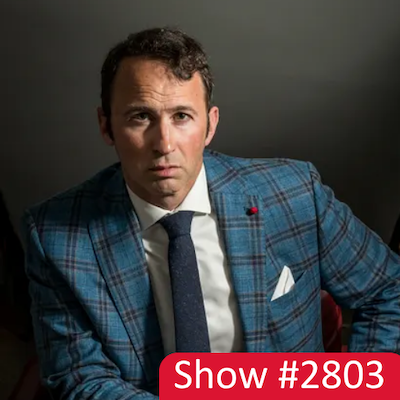
09 Jun June 9, 2026 – Radio AI Riply Jen Austin and American Financial History Joseph Moore
Intro 1 0:04
Broadcasting from AM and FM stations around the country. Welcome to the Small Business Administration Award-winning School for Startups Radio, where we talk all things small business and entrepreneurship. Now here is your host, the guy that believes anyone can be a successful entrepreneur, because entrepreneurship is not about creativity, risk, or passion. Jim Beach.
Jim Beach 0:26
Hello, everyone. Welcome to another exciting edition of School for Startups Radio. Boy, we have a fantastic show for you today. Two great guests and two very interesting topics. This is going to be one of my favorite shows. First up, we have Jen Austin, who’s going to talk about AI in the radio space, so our podcast. So, this is going to be right up my alley, and I think it’ll be up your alley too, because it’s got a lot about AI and marketing, and a whole bunch of other topics as well. So, whatever industry, this is going to be a great one for you with Jen Austin. And then we have Joseph Moore, who is going to talk about getting wealthy in America, and how that has happened historically over time. His book is a USA Today Publisher’s Weekly best seller, and he talks about Sky Valley. It’s not as nice as Cashers, just letting you know there’s one valley nicer if you go one more mile, 10 more miles to get the cashiers, anyway. Great show today. I’m fascinated by how we get wealthy right up our alley. It’s a good one. We’re gonna get started right now. We are back, and again, thank you so very much for being with us today. I’m very excited to introduce my first guest, and I hope I don’t embarrass myself, I’m going to display my lack of knowledge in my home industry, so I’m very nervous. Please welcome Jen Austin to the show. She is the founder and president of Ripley, which is an AI-generated newsroom for radio stations, the news, the weather, all that kind of stuff, and because it’s AI, I plan on getting fired within the next 10 or so minutes, because I’m just afraid, like all of us are, or AI replacing my job. Jen, welcome to the show. How you doing? 30 year veteran, I forgot to say that in the industry, tons of awards and stuff. Welcome, Jen. How you doing?
Jen Austin 2:21
I’m fine, Jim. Thank you. And I’m not going to fire you. And I was actually worried about that at first, too. Like, who’s going to lose their job because of AI? But you know what, I’ve figured out if we can just harness it and use it to our advantage and let it be a tool and save us time, then everybody’s happy. So nobody gets fired. We’ll live happily ever after.
Jim Beach 2:38
Yes. So it replay it creates content for the bottom and the top of the hour in between segments. Am I correct?
Jen Austin 2:49
Correct. Yes, it can be really anywhere a radio station wants it to be. They can say 6am they can say 7:30am 4:45pm but they select where they want the content to be, and then, like you said, it could be national news, it could be local news, it could be weather, sports, any form of content they want, but yeah, it’s really that’s what we want it to be, is just customizable for the station, because we feel like, you know, radio, it’s a radio problem with a technology solution, where radio just has short staff, and when I first started in radio, of 30 years ago, hard to believe, but we had people there 24/7 and now it’s shorter staffs and smaller staffs who still have a lot of pressure to do more with less, and so we wanted to give them some help with just, you know, saving time,
Jim Beach 3:36
right? So tons of questions, I want to dig in in lots of areas. First, though, will you give us your background? Walk us through the 30 years, what the industry used to be like. You know, you just mentioned 24/7 someone had to be there. Tell us some stories about the decades that you were there and what it was like back in the good old days.
Jen Austin 4:00
Sure, the good old 90s. I grew up in rural Nebraska, and so it was cows and corn fields, and very few people, and that was my upbringing. And then I went to college at the University of Nebraska in Lincoln, and got my first radio job there. And I remember, can I tell you a quick story, Jim?
Jim Beach 4:17
That’s what I’m asking for. Yeah, bunches of stories,
Jen Austin 4:20
bunches of stories, you got it, but my dad was still in rural Nebraska, and he, he put up a radio tower. I mean, he was too far away to get the signal from my radio station in Lincoln, Nebraska. He’s about three hours to the west, and so he somehow he found an old radio tower in a junkyard and put it up at his yard at the farmhouse, and he was able to get the signal all the way from Lincoln, Nebraska. It was kind of staticky, but it worked, and that’s how he would listen to me, his daughter, you know, the big time in Lincoln, Nebraska. But he would listen that way, and of course, now we have apps, and so it’s one example of how technology has changed. No need to find an old. Radio tower in a junkyard, you know, you can listen on an app. So technology has changed that way. And another story, while we’re at it, my grandmother lived a half mile down the road from my dad, very small town environment, and everybody kind of sticks together. But I would go to school in the day in high school, and I would go to her little farmhouse every afternoon, and have coffee, and walk in, and Grandma, how was your day? Well, fine. How was yours? She always called me Jenny, but I would tell her about school and science and basketball, and I would say, what’d you do today? Well, I heard that, like, John Smith fell off the tractor, and I heard that so and so harvested their corn and got x amount of dollars for their whatever you call it, bushels or something, truck loads, but she always had information. I had no idea where it came from. She never offered a source, never sourced it properly. But I realized that news travels so quickly in those rural environments if you ask the right questions, and I think the only thing faster than my grandma with that information now is AI, and she might have been the original AI, but she always had information, zero sources to offer, but it made me really realize how plugged in we would like to be, and how it feels good to have information, be the first to know about stuff, and so that really led me into communication and discovering information and journalism, and, and writing all that. I give a lot of credit to rural Nebraska.
Jim Beach 6:23
Well, that’s awesome stories. My mother grew up on a farm in the middle of nowhere. My mother remembers when they got electricity added to the farm, so imagine growing up with no electricity, and they had an outhouse and all that. And I remember my grandmother, she got up very religiously to tune into the local radio station, and you know that was their life link to the world, you know, because go to town was an afternoon adventure, you know, you didn’t just go to town, you know, that took a whole afternoon, and so, and that was just in Virginia, so I imagine some were even more rural than that, and the radio was really important, you know. Not only at all, here’s the biggest thing was the obituaries. Boy, did she live to find out who was dead.
Jen Austin 7:15
Same. Yes, and I can add to your story, there was a section in our newspaper next to the obituaries. It was called, I think, bits of news from the brace, and the brace was a neighborhood, and so they always had whatever happened in that neighborhood, anybody could write in a little blurb, like Sonya and Ed had x amount of people over for cards that night, on a Saturday night, they had a card club, or little Eddie, little Johnny came back after graduating from college, but some little two-sentence paragraph and bits of news from the brace, but that’s what people look for, that you’re not necessarily the score of the basketball game or the car accident outside of town. It was the bits of news from the brace that community vibe that really allowed people to connect and know what was going on, and it’s still important. Yeah, we all want to go to the radio and find out what’s happening, and I think radio is still very alive and well because of that.
Jim Beach 8:08
But radio has suffered, or has it? What’s the future of radio? What’s happened? What was the cause? Did podcast kill radio? I don’t know if I believe that. What are your thoughts? There’s like nine questions there. Go,
Jen Austin 8:22
I don’t know that podcast killed radio. I feel like, you know, people have a capacity for podcasts, and you know, I listen to different forms of entertainment too. And I think there’s a wide capacity for everybody to sort of pick their own, and, but you know, in the car, radio is very important. Getting ready in the morning, you want to be the first to know about news and weather, and sort of get your day going, and I’ve got a favorite morning show here. I live in Dallas, and I’ve got my favorite morning show, and I think everybody does, but just waking up with the radio is part of the routine. But it has, it does have problems. You’re right, it’s gotten smaller over the years. Newsrooms, especially, have been shrinking. I mean, I was part of a layoff, I think, in 2010 and you walk into the HR office, and you know what’s coming, and we wish you the best in your future endeavors, and then you pack your bags and go, and then you have to figure out something new, and I would think, you know, man, How can they do this without me, or how they could, how can they do this without the bulk of people that they just fired, and then there are more layoffs, and more layoffs, and I think it’s, you know, just business that is shrinking a little bit, but at the same time, the people who are left are required to do more with less, and they’ve got to figure out a way to do that. So, radio stations and anchors and personalities that are left are looking for ways to be efficient with their time, and I, you know, I’ll add one more quick story, if you don’t mind, but it’s like I’m always double tasking, and we always have laundry going while we’re cooking, and we always have, we’re writing an email while we’re thinking about something else, or you know, we’re eating and driving, but we’re always doing two things at once to try to figure out how to just manage our time, and you know, now that AI is here, radio is not the only industry that’s harnessing it, you just, you know, insurance and medical field. And podcasters, you know, I’m sure at some point, you know, AI is helpful, and as long as we have it as a human-led entity, then it can be very effective, I think.
Jim Beach 10:10
And what about profits? Are the companies still making any, are the stations still making any money? And it seems like there’s only three radio companies now, Cumulus, and those people, but on the other hand, almost every station that I deal with is independently owned. How many stations are there, and how do they break up and go?
Jen Austin 10:34
There are really 1000s of stations left, you know? I mean, it’s as Cumulus is Town Square,
Jim Beach 10:39
as you heard of.
Jen Austin 10:40
No, I would say 1000s. I mean, I don’t, I think 3000 I have it in my head, and I haven’t Googled it recently, but I think it’s around there. But you know, there’s some companies that do have hundreds, like Town Square has many, Cumulus, iHeart, they are there some big companies, but a lot of mom and pop stations, and you know, sometimes they’ll get together, a lot of the corporate radio companies will offer, sort of, you know, one feed or one option for their stations, and then mom and pop stations have more freedom to be more independent and put on different programming, and they’re all original in different ways. I don’t mean to make it sound generic or anything, but, you know, sometimes they do group their resources in a way that’s effective for them, but you know, I think they’re definitely the big players in the radio industry, just like in, you know, the car industry and retail and clothing, they’re the big brands, and then the smaller ones, and, and so far, you know, everybody’s working together,
Jim Beach 11:34
right? So, tell us about Ripley, you named it after my dog, we name all of our dogs and cats, so that goes with our last name Beach, and we had Sunny Beach and Wavy, and now we have Ripley as well. We use an e in our name, but I still think that it’s a trademark violation, so we’ll settle that quickly out of court. So don’t worry about that, Jen.
Jen Austin 12:02
Okay, I’ll just come on your podcast frequently, and we’ll work it out, and
Jim Beach 12:06
yeah, that’ll work. So, so, how’d you get the idea for Ripley? Let’s start right there. How’d you get the idea?
Jen Austin 12:14
Well, I’m a swimmer, and I love the water, and I love the ocean, and I love, I love your name, also, Jim, but, but it came out of the idea of just a swell of ocean currents, and this continuous motion of currents, and we, one of our taglines is currents all day, and so we wanted to just give the idea that that news and information is like an ocean, and the currents are swirling, and it’s not as vast and, you know, unhinged as it seems, as big as it seems, but you just point yourself to one area, and you can, it can be very customized and individual, depending on what you like and what you need. So, that’s where it came from. Ripley, my marketing team actually came up with that, and we whittled it down from a lot of names, but settled on that
Jim Beach 12:57
one. Okay, but go backwards even further than that. How did you recognize the I or the space for this business? How did you see the problem in you as the solution?
Jen Austin 13:08
Well, I’ve been in news, well, in radio, like I said, for decades, but I’ve done quite a bit of news, and I found myself writing and spending two and three hours a day writing news. I thought there’s got to be a faster way, and then AI came along, I like, oh, I can shorten my circuit if I use AI a little bit, and it’s still my original thought, and it’s still my, you know, my sourcing of material and my own creativity, but using AI to handle some of the mundane and the repetitive tasks, and so I used AI to help me write a little bit, and I would add in my own, you know, take on things, and that sped me up, and I thought this can be done on a larger scale. And now we’ve taken basically my habits and my eyeball, and we look around the internet for stories of the human wood, and and we find those stories and bring them back, and it’s really, it’s not AI unchecked, it’s very, it’s going down a very specific path every day, answering the same questions and answering the same well, the parameters going through the same parameters and bringing back the news that it needs, just as a human would, and we still have humans involved in every step of the way too, to make sure everything’s as it should be, but that’s where it came from, just wanting to be more efficient with my own time, and then meeting the right people, and having investors back us, and finding marketing and development.
Jim Beach 14:27
So you have to have a whole conversation about the money. So did you have to raise money at the very beginning, or did you bootstrap a little bit? When did you first realize in go get money.
Jen Austin 14:43
Well, I had a conversation with Elon Bluttinger, who is he’s done many things, hotels.com and he’s been with Great Wolf Lodge, and he’s done quite a bit of things in business, very successful, and he’s me loves news, and we connected on many levels, and his great. Company Alpine Consolidated. I decided to put the seed funding out for Ripley, and so no, I hadn’t. I had, I have involvement, definitely, but it’s been a huge blessing to have that backing from the beginning.
Jim Beach 15:13
Okay. And how’d you meet him? Was he a friend of yours to begin with, or did you reach out to him?
Jen Austin 15:21
We met through other, I have my hand is in many things in radio, and we met through another company that I’m part of, and we just started talking from there. So it’s kind of, it was a Zoom call, and we started talking after the Zoom call, and just brainstorming, and it was just a sort of lucky thing, like two and two came together, and and was magical from there, and it just, it was something I couldn’t, not like I had to do, you know, I couldn’t say no, and it was just, we just had great chemistry and the same ideas and pointed in the same direction, and so, and that’s how it happened, that was almost a year ago, so it’s been, you know, 11 months of testing and refining,
Jim Beach 15:57
okay, and what did you use that money for, was it to bring on staff or to pay for AI to buy AI tech.
Jen Austin 16:07
Well, there’s some cost involved in AI, but it’s pretty.. that’s not the bulk of the cost. The bulk of the cost is the development team, you know, got to come up with the engine to harvest the news into. and we’ve got human oversight, but to continue that process and give it the right, without giving away the secret sauce, give it the right commands and everything, and to help it do what we want it to do. So that’s a big poll, you know, the development team, and there’s marketing, a marketing budget, like any company, and then just, you know, the resources, the bookkeeping, the computers, and all that, all that too.
Jim Beach 16:44
And what are your marketing efforts, other than talking to me? What do you plan on doing?
Jen Austin 16:52
I’m sorry, say that again. What
Jim Beach 16:54
are your marketing plans?
Jen Austin 16:57
Well, yes, we’re podcasting. We have a lot of, quite a bit of press covered so far. The radio industry trades newsletters. We had a big interview yesterday in something called Barrett Media, but that’s part of it. There’s a lot of interviews and a lot of podcasting and networking, you know. I’ve got a huge.. I’ve been in radio long enough, and it’s a small enough industry that word of mouth and reaching out to contacts, and can you give me your feedback on this, and making it as personal as possible. We’re doing a lot of that too.
Jim Beach 17:26
Well, there’s only 3000 stations. I love that you don’t really need to market, you just need to get to those 3000 general managers. Does that make sense? That’s
Jen Austin 17:35
a tall task, too. Yeah, some of them are team, you know, like I said, some of them are together, and so you can reach out to one company and offer some ideas, yeah, yeah,
Jim Beach 17:46
but still, it’s a lot of word of mouth, Jen, that you know, it’s a fine, and a lot of them have the same title and stuff, you know, and so it’s not endless, you know, I had companies where we’re marketing to anyone with eyeballs, you know, and so that’s a little bit broader. It’s hard to get, you know, really precise target and really great marketing when you have an undefined market, but you have a very, very, very well-defined market. And so I like that you could just say our goal is to get to 250 of them a year or something, you know, mr. Salesman, you know, you see what I mean.
Jen Austin 18:22
Yeah, that’s yes, we will hire you, Jim, and plus your name is Beach, and so it goes right with Ripley, as we talked about. Well, you’re right, it is. Yeah, go ahead, define market, but at the same time, we can expand to podcasting and maybe television, you know, and provide information for those folks too.
Jim Beach 18:40
Yes, may I ask, the cost for something like this, or is that confidential? I have to buy a radio station to find that out.
Jen Austin 18:49
Yes, buy a radio station, but no, it’s that’s something we’ll keep confidential. But no, the cost is like any company, you know, it’s a startup, and there’s, there’s quite a bit of cost, and we’re keeping an eye on that monthly, but it’s, it’s working, and yeah, we’ll keep that confidential. So, don’t get in trouble with the CFO,
Jim Beach 19:07
okay? But it’s 1000s of dollars a month, as opposed to what, 30 bucks a month.
Jen Austin 19:13
Yes, yeah, there’s definitely some cost, and yes, 1000s. We’ll just leave it there.
Jim Beach 19:18
Yeah. And how successful have you been? Have you gotten your first three sales yet?
Jen Austin 19:24
We do. We have our first three sales. I just made another one today, right before this. Well, one is a network, and so it involves one sale, and then affiliates, and so that’s really positive too. And so I really feel like it’s been received well, and we’ve only been out for about 10 days with this project, so there’s plenty of time, and we have plenty of groundwork laid so far, but yeah, we’ve got sales so far, and people are subscribing and enjoying what they see, and so we’re just starting out. So hopefully I’ll have a really great report too, and then in a year or so, we’ll check in.
Jim Beach 19:56
I love that. I love to have the repeat guest, so say I’m in the more. In Iowa, the AI will feed me Des Moines weather. Des Moines sports is that the end of it? Will it also give me Des Moines local politics, or what? Would I expect
Jen Austin 20:13
exactly all of that? And you can tell it you only want Des Moines news. You can tell it you want Des Moines sports. You can tell it you want Iowa Hawkeyes in the sports. I mean, it’s very customizable, so it’s what you tell it. You can have national news, you can have state news, you can pick five minutes a day of that, 10 minutes a day, 20 minutes, depending on your needs and how much you want to spread it out through the day. But yes, and if you’re in Lincoln, Nebraska, where I used to live, we can point it that way. And so you just, you subscribe, you tell us where you are, and then it starts generating content, and you have family in Des Moines, don’t you? That’s where you are.
Jim Beach 20:47
No, I’m in Atlanta, Georgia, but I’m like 99% sure that I conceived a child in
Jen Austin 20:55
Des Moines. It was a guest, I guess it was a guest you had on from Des Moines the other day. But yeah, if anywhere you are, it can harvest. It can actually, we do have it running in Atlanta also. So, I’ll send some your way. And is it perfectly human with no errors, or is it AI sounding? Can I make it a woman one day and a man the next day? Can I make it Frank from Des Moines and give him personality, even though it’s a computer generating that you can do that. Yes, and we offer the scripts, yeah, the scripts by themselves. And so you know, if you have a staff of human anchors, they can read those scripts every day, or you can assign an AI voice, and it will just..
Jim Beach 21:36
the whole point of view is to fire them. So
Jen Austin 21:39
now we offer options to the stations that they don’t want to fire anybody, they don’t have to, but yeah, human anchors on the local end can read those scripts, the AI voice can do it, and then you just download the content, or we also have other human news anchors that will do it for people who are short-staffed for stage stations that don’t have the staff, so that’s an option too, it’s it’s customizable completely from the content to the type of voice that you have on, but yes, it could be Frank one day and Sarah the next day, if you want.
Jim Beach 22:06
So, lots of my guests have asked me, you know, we do things a little differently here. We do not edit, we do not clean well, you know, if there’s a hiss or something, we’ll try to get rid of that, but you know, we leave it pretty much as recorded unless we train wreck, and I tell people it’s going to air as we recorded it, unless you and I agree on air together, and then edit it together, you know, it’s going to air just like that. And I think that, you know, 15 years ago, when we started doing it that way, it was saved time, but I also think that it’s more authentic that way, and I think that it’s become even more authentic when people are now listening for AI slop. That when I pause and go like that, people go, “Oh, it’s a real person. Oh, they wouldn’t waste time with AI doing that, so at least we know it’s a real person. What are your thoughts on my US?
Jen Austin 22:58
I enjoy the US, and now I’m thinking about the train wrecks that have, I’ve already stepped on you a couple times, and think about that. No, I like the human, the organic nature of human conversation too, because that’s how we talk in real life. So, why not everywhere on a podcast, too? But I’ve noticed that some of the AI voices that I’ve heard, they do ad lib a script, they’ll rearrange words, I don’t know how they’re doing it, but they’re doing it, and so they’re becoming more conversational all the time. I do think people take great joy in, oh, that’s AI, and pointing out AI slop, and when it mispronounces something, they get very happy about hearing that, and that’s fine. We try to, of course, minimize that, but I think people are not numbing out to it, but also realizing that it does happen sometimes with AI, but at the same time it’s very good in a lot of ways, and it’s improving all the time, so it can ad lib, and we, I hear a lot with breaths in there, and they’re even, you know, inflections when they go to the next story, and so all of that’s happening with AI too, and you know, there’s always a place for humans, and we love humans, and I’m not trying to say that, you know, that AI is going to replace anybody. It’s an option, especially for stations that don’t have any content overnight or on Christmas Day. They just want a voice, or, you know, vacations. It’s definitely an option for them. But humans are a big part of the news, and we like hearing stories from humans, too. I do too. I’m right there with you.
Jim Beach 24:23
I think that’s important. Yes, we only have a minute or so left. Jen, what have we not covered that you want to throw into the mix?
Jen Austin 24:32
Well, it’s really for us, it’s about letting AI do some repetitive tasks, you know. It’s in, like I said, in every industry, and this is Radio’s answer to AI, and, and I will be hanging out there at Ripley media.com If you want to come and hang out and see more, but I, you know, school for startups is important to inspiring us all, and I hope that you know we keep talking about having these conversations about the next thing, and the next thing, and what’s new, and I’ve gained a lot of insight. Operation from what you’ve said so far, and your other guests, and, and you know, thank you for letting us be part of it too.
Jim Beach 25:05
Well, thank you for those kind words. Thank you so much. I’m just trying to stay connected with the world and throw out some stories, and maybe this industry is one you want to copy, so hopefully that people can learn from us doing that. So, anyway, Jen, it was a pleasure to get to meet you and to find out what you’re doing, and I wish you incredible success, and we’ll have you back in the year as you suggested.
Jen Austin 25:33
Well, thank you. I’ll look forward to that, and we’ll talk to you soon. Thanks for having me on. And enjoy Atlanta.
Jim Beach 25:40
How do we find out more and get all that kind of stuff?
Jen Austin 25:44
Yeah, go to Ripley media.com and there’s a lot of information there. There’s an actual phone number there too, if you want to call and talk to a human. I’m here for you. Customer service, human-led, but no, Ripley media.com and all the info is right there.
Jim Beach 26:00
Fantastic, Jay. Thank you so much. And we’ll talk again in the year. Thanks a lot. Great stuff.
Intro 2 26:18
Well, that’s a wonderful question. Oh my gosh, I love the opportunity to do this. Thank you, Jim. Wow, that’s that’s that’s a great one. You know, that is a phenomenal question. That’s a great question, and I don’t have a great answer. That’s a great question. Oh, that is such a loaded question, and that’s actually a really good question. School for Startups Radio.
Jim Beach 26:41
We are back, and again, thank you so very much for being with us. I am so excited to talk to my next guest. This is a topic that I just love talking about, and I hope that his data matches closely what I’ve been teaching for years. Please welcome Joseph Moore, PhD, to the show. He has just released a new book, How to Get Rich in American History: 300 Years of Financial Advice That Worked and Didn’t. I think this is his second book. He has also published a book called Founding Sins. He is a lecturer here in Atlanta at Kennesaw State University. Dr. Moore. Welcome to the show. How you doing?
Joseph Moore 27:23
I’m great, Jim. Glad to be here.
Jim Beach 27:26
Really cool book. How’d you get the idea for a financial history of the US?
Joseph Moore 27:31
Well, completely by accident. I, in 2005 was getting a PhD in history, and my wife and I were told that the lesson of history was clear: you renting was throwing your money away, and like everyone else, we nodded and got those no income, no verification loans you see in the movies. And about three years later, a friend at church was offering a financial class for families. They made us do a budget, and we went home and filled it out. My wife fell asleep, and I paced the house all night, didn’t sleep a wink, and said we have no, who gave us a mortgage, we’re graduate students, and so we sold our house, it sold on a Saturday in 2008 our neighbor put her house in the mortgage on the market the next Saturday, and it never sold, we were the last two people off the Financial Titanic in 2008 and
Jim Beach 28:18
there
Joseph Moore 28:19
I, we very much felt that way, and, and I knew it was not because I was so smart, and so I looked around and said, I, the historian, and we turned on and said, I have to know not just why did I believe what I was told, but why do we all believe what we’re told, and what were Americans told to do with their money for 300 years, and has it always been the same, or has it changed, and I went on a quest for over a decade to study and research what were Americans sold to do with their money, what worked, what didn’t, and that’s how that’s how the book came about.
Jim Beach 28:49
Fascinating. I don’t remember hearing much about the president’s wealth, or, you know, entrepreneurs, you know, very little about it, you know, that Washington was a very, very rich landowner, but mostly that was inherited or through his wife’s side of the family, and then you know that the Roosevelts were wealthy, and in between, I don’t really know anything about the financial status of our presidents, you know, Lincoln was a lawyer and not very wealthy, but other than that, I think that most Americans would draw a big blank on that whole conversation, that whole topic. I mean, just like I did. What do you think?
Joseph Moore 29:31
Well, I think Americans, we love to, we love to kind of think of our history in terms of our presidents, and so if you think about that, George Washington and the Roosevelts are good illustrations. Washington came into most of his money by being really good at dating the right girl, he understood that one of the great history lessons of finance is marry well, and Martha was loaded, and he knew that, and he took his first date with her very seriously. In fact, in the book I talk about how important his first date was to. Press Martha, the Roosevelts were terrible with their money, despite having lots of it. So, Teddy Roosevelt was so bad with his money that his wife took the checkbook away, because he kept bouncing checks, and she actually had to run the family finances, which is another great lesson of history. Women have always been actively involved and often in charge of the family finances, so there’s a lot of lessons we can learn there. This is a book that kind of looks at all the advice that all Americans were given, not just the Rockefellers, but you know, the Smiths and the Joneses. What were they being told to do with their money, and how did that change over time? And it actually changed quite a bit.
Jim Beach 30:38
It was 40 acres and a mule for a long time, go west free land. What else? How did I do on that one?
Joseph Moore 30:48
That’s exactly right. And one of the key lessons of American history, you know, I talk a lot in the book about financial advice that we think is very old. It’s actually pretty new, and there’s a lot of advice we think is new is actually very old, and mobility mattered a lot, so what you just talked about, go west over and over in every single generation, including today, those who won were those who went. If you were willing to go, or the opportunity was that you were highly likely to succeed compared to your peers. That is true in the 1700s 1800s 20th century. It’s true today. Children whose parents move out of state for a job or to start a business, those children will outperform their peers financially for the rest of their lives. So, mobility is one of the most important key drivers of success in America. Because you live in the largest, most successful free market zone in the history of the world, there is an opportunity for you somewhere, if you’re willing to go get it.
Jim Beach 31:45
That’s interesting about moving and giving you know, having such an advantage for that. Oh, I forgot to say that the book was a USA Today and Publishers Weekly bestseller. I don’t think I said that during the introduction. We gotta guess, okay? We were, and we’ll be always putting that in the notes.
Joseph Moore 32:03
Well, I was very humbled by that, and very, we’re very grateful that we were able to get so many people excited about an optimistic message in such a pessimistic age. Right, it turns out if you talk to people about how the American dream is still alive and give them the facts to show them it’s true, and that they can still get ahead, despite what the TikTok influencers in the news media are saying people respond to that, and we were very grateful that they responded that way.
Jim Beach 32:26
Very, in the very beginning, in the 1700s and 1800s was the American dream an economic dream or a religious dream?
Joseph Moore 32:36
Well, a little of both, but it was, but I don’t think they would have untied those two so neatly, right? The opportunity to pursue your fate and your family’s well-being were seen as one of the same thing, or at least tied together. So you know, when you think about Americans coming to this opportunity, land of opportunity, one of the things that stands out is we are not the first generation to be told that you got here too late and all the money was already made. I can find people saying the American dream is dead about 300 years before I can find the phrase American dream in the 16th. In 1676 this is 100 years before Hamilton is going to rap on Broadway in 1676 The colonists of Virginia burned the Capitol to the ground specifically because they said nobody can get ahead anymore. In the 1800s there were people giving these big speeches and rallies saying the rungs on the ladder to success were cut off by the people who went ahead of you, and I could find bestselling books in the 1980s saying that the baby boomers would never afford to retire that sold 100,000 copies. So we’ve heard the American dream is dead for a very long time, and yet over and over again, there’s nobody in the casket at the funeral, because the American dream refuses to die, because it continues to be the place that offers offers more people than ever the chance to get farther ahead than ever before.
Jim Beach 33:54
What about real estate? How has real estate performed? You know, it used to be limitless, free, give it away, and now, of course, it’s the only thing that matters. Scarlet Land,
Joseph Moore 34:06
exactly. So, there’s a lot of myths about real estate investing. I will tell you, in all honesty, like the I just on full disclosure, one of the things I did for this book was I thought if I was going to create a recipe book of financial advice for Americans. I needed to eat my own cooking, and so I tried many of the historical financial strategies of Americans for 300 years, one of which was, of course, real estate investing, and that ended up being very profitable for me, and it’s how I was able to have enough financial success to write books for a living, but there are a lot of myths about real estate investing that that recur over and over, one is that it always goes up, another is that it’s passive, and another is that it’s how really rich people got rich. Um, no, it doesn’t. No, it isn’t. No, they didn’t. There are plenty of times in American history when the value of real estate did not go up unless you did something to make it go up. There were investors who bought what is today all of West Virginia, and they died without profits, because some of that land to this day doesn’t have any humans on it. So, in order for land to become more valuable, usually you have to do something to that land to make it more valuable. Now, what’s happened then is something strange has occurred in our lifetime. A house in Pittsburgh or Atlanta or Houston, and many other American cities cost the same in the 1990s as it had in the 1890s So, for most of American history, land didn’t go up, and then, starting in the 1990s land value started to go up everywhere, and after 2008 they’ve gone up tremendously everywhere. So, we’ve lived with a historically weird time where houses go up in price just because the land gets more valuable, and that’s actually historically fairly new.
Jim Beach 35:49
Interesting, I would have thought that that was older than it was. Stock market, of course, we’ve had stock market be part of the impetus for the economic downfalls and depressions, and things like that. The stock market defined the 1920s I think, with the exuberance and silliness of the investors, and the dot-com silliness, and 2008 How has stock market and playing the market affected wealth over time
Joseph Moore 36:25
tremendously, and that’s a great question. As you point out in the question, there’s been so much that has changed, and so if I go back 100 years, very few Americans are going to be in the stock market, and they would have told you to be foolish to do so. They, by the way, would have been right, because the what the stock market is has changed over time. One of the great illusions that has been created is that the way that people got ahead for all the time was steadily investing in stocks. That’s only become true fairly recently. So one of the things about the stock market, is that it’s changed dramatically, even in our lifetime. So, let me give you an example of that. If, if your grandfather bought a stock, he was buying a share of future profits at today’s prices, because most of the value from the George Washington administration until Michael Jackson’s thriller album had come from dividends, like over 90% of returns came from dividends. Today, barely one in five stocks even bothers with dividends, for perfectly valid reasons. But what that means is everything since the 1980s has been price appreciation, and that means that what you’re buying when you buy a stock is not what your grandfather bought, you’re buying a share of future buyers at today’s prices, so right in front of us, in our own lifetime, history is being played out and change in the stock market has changed over time, but and as more and more Americans have trusted the stock market, the value that market has gone up and up, and so we’re seeing a very new thing. If I go back to the 1900s 1890s less than 1% of Americans own stock today. Well, over half do. I think it’s close to 60% So, we’re in a very new time in terms of stock ownership for everyday Americans.
Jim Beach 38:12
All right, how about some of the new things, the cryptos, and all of that? How has that affected
Joseph Moore 38:19
it? So, we think crypto is the future, I argue in my book. It’s the past. We have seen all of this before. If I go back to 1863 right about the dawn, dawn of to the middle of the Civil War, there’s about 10,000 separate self-issued currencies in America, which is just what a cryptocurrency is, right? It’s on the blockchain, but it’s issued as a currency without the authority of the government behind it, and that is exactly how all American money was issued before the Civil War. This is the law
Jim Beach 38:48
saying that there’s only one currency from now on.
Joseph Moore 38:52
They did in the American Civil War. This is where we get the greenback. The modern day green dollar comes out of that moment. What’s that,
Jim Beach 39:00
the black front? You mean,
Joseph Moore 39:03
so there was there was back green on the back to
Jim Beach 39:05
make a stupid joke.
Joseph Moore 39:07
So, but no, no, I think you’re totally right. This is the time when what we think of the dollar emerges, but most Americans before that would have told their kids and grandkids. In fact, I quote a grandfather in the book, telling his grandkids, whatever you do with money, don’t save it, because their money was very much like cryptocurrency. This would be like if you went to work and got paid in Ghosh Coin, and I went to work and got paid in Fart Coin, which, by the way, is a real thing. What are we going to do with that? Well, it might go up, but it’s more likely to go down, so we’re going to spend it as fast as we can, and that was what most people did with money, try to get it, was like a game of hot potato. So, the crypto, the rage for cryptocurrency, I argue in the book looks very much like the past. I tell the story in the book of a runaway slave from Kentucky, he gets stuck in Michigan trying to make his way to freedom, and the way he funds the rest of his trip is by issuing his own. Self-issued currency in Monroe, Michigan, which for a few years people start to use as regular currency, and that’s how he funds his trip to New York to get to freedom. The problem with that is that all of his money went to zero when he left, and that’s the lesson of history about crypto, is that all self-issued currencies eventually went to zero.
Jim Beach 40:21
So, are you predicting that for the crypto and those and bit and all the others?
Joseph Moore 40:29
I would. I’ll tell you, like personally, one of the experiments I did in the book was issue my own currency, called Billionairely, to show that you could make yourself a faux online billionaire, which I briefly was, for about a week, according to the exchange markets, but I’m, I am a crypto skeptic. In all honesty, I believe the lesson of history is pretty clear, that we have tried before to have self-issued currencies, and every time all they did was make the US dollar stronger, not weaker. I have an essay that I’m working on for my Substack that explains some of this. Why the lesson for Bitcoin is probably not that it’s going to the moon like its advocates believe, but that will eventually recede into the background of history.
Jim Beach 41:15
Very interesting. I have a lecture that I do go by Joe or Joseph.
Joseph Moore 41:22
I go by anybody, anything you call me. Joe’s and Joseph and Joe are five.
Jim Beach 41:25
Okay, I have a lecture that I do. I taught at Georgia State for 10 years and took a had a lecture about how to get rich in America, and we came up with 11 ways to do so, and then tried to put the percentages of each on each one of them, so we could figure out the best way to get rich. We used a lot of data from the Millionaire Next Door book by Stanley and Danko, Charles Stanley, and somebody, Danko, I don’t remember his first name, one of the definitive entrepreneurship and financial books of all time. What are your thoughts on those numbers, and how to get rich in America? Now we start the list with lotteries and divorce and marriage, so
Joseph Moore 42:22
well, you know, I first of all, when we’re done with this conversation, I’m going to email you, because I want to see those lists and those numbers and those percentages. I think that would be fascinating to see, so I may, I may be bugging you for those numbers. Here’s what I’ll tell you, I have in the book, I tried to lay out the lessons of history that survived the test of time, and those that failed in every era, and I have 25 things that work, seven things that didn’t. I could boil the things that work, though, down to five principles. Number one is you have to solve someone else’s problems, and I think that’s one of the great things about entrepreneurship in America, is that the real, we think of financial advice as solving our own problems, right? Should I drink a latte? Should I buy crypto? That’s all. All that does is solve you and your problems. The real money in America is made solving someone else’s problems over and over again. Those are the people who go the farthest the fastest. Number two is to take risks. We have never lived in a less risky age in American history, your spouse and your house can all be insured. Everything that can go wrong, you can bounce back from. That wasn’t always true. So take strategic smart risks, because the reward to the upside is so big. Number three is move more. We already talked about that. You live in the largest free market zone in the world, take advantage of it. Number four is marry well that survives every era, and by the way, this is irrespective of gender. I mean, married women at the age of 55 earn twice as much as single women at the age of 55 Married men are worth 10 times at retirement what single or married men, single or divorced men are. So marriage matters. If you have one, invest in it. If you don’t, don’t worry, you only need one good one. And then finally, believe that you can. Over and over, optimism gets over rewarded in American history, and it’s still over rewarded today. The Consumer Financial Protection Bureau did a study, and in that study they found that, to their own great surprise, by the way, that the single biggest predictor of financial wellness was a positive attitude, or what’s called an internal locus of control, believing that you could succeed when it was combined with some basic smart habits, for like saving, was a better predictor of financial wellness than income or inheritance. So solve problems, take risks, move more. Very well, believe you can. That’s the essence of how to get ahead in American history.
Jim Beach 44:48
Oh, that’s a great little unit. There you get to take it a step further from Stanley and Danko, very once don’t buy. Many houses stay in the house as long as you can, and drive used cars.
Joseph Moore 45:05
That’s yes, that’s, and there’s a lot of wisdom to that, but I think one of the things that over and over Americans who were trying to be upwardly mobile and think about how poor most Americans showed up to this country, and how much effort it took to climb. One of the first things they would do is focus on building wealth on a foundational level, not the show pieces of the middle class, and believe it or not, there’s plenty of that in every era, right? It’s the little surrey with the fringe on top. Every era has something that they think is cool and will attract a mate and will make their neighbors jealous of them, but over and over, the people who focus on wealth building for the long haul do better than those who show off the wealth they’ve made.
Jim Beach 45:49
So, just so I don’t get the emails, I’m going to go ahead and do it. The chances of getting rich from my lecture, and I will send this to anyone who asked me for it. Mary is the number one way, and the chances of that working are point oh 1% divorce, point oh 1% lottery, point oh 1% crime, point o 1% politician or preacher, point o 1% sports point 1% It’s the first time we make any jump, and that’s not just sports, it’s also movie stars, TV stars, and singers. CEO 2% like work your way up at Coca Cola, become the CEO of Coca Cola, 2% work for 40 years, save as any profession, 3% be a professional doctor, lawyer, something like that, around 4% around 7% for inheritance, and 87% first generation millionaire. So first generation, we’re calling that whatever you want to, I call it entrepreneurship? You could also call it, you know, movie star or whatever, but they took the reins in their own hands and made their own decisions and got there by themselves, irregardless of what they inherited. 87% thoughts on that, Joe.
Joseph Moore 47:15
The thought is that it’s completely correct, and I say this, and people scratch their heads and think that I either, you know either that I didn’t read all the material or that I’m reading the wrong material, but I tell them over and over, the lesson of history is clear: upward mobility is as alive as ever before. In the 1800s the percentage of people who leapt from behind to ahead was roughly 30% Now it changed by city and region and time, but let’s just say roughly three, three in 10 Americans were able to go from all the way to the bottom towards the top, middle class and above. That was the highest upward mobility rate in the history of the world. And today we’re twice set. Today, six in 10 kids weren’t the bottom get out, four in 10 become middle class and wealthy. One in 10 goes all the way to the top. And if I told your ancestors you had a one in 10 chance of starting at the bottom and ending at the top. They dropped to their knees in prayer and praise. So, I tell people over and over, American history lesson is that the American dream is alive and well and getting more achievable by the day. If you’re willing to do what it takes, small business, one of the primary ways people got ahead, small business ownership or becoming extremely good at their job and having upward mobility in their career, those two paths over and over outperform nearly everything else.
Jim Beach 48:29
I heard you wanted to play our little game, the quick 10.
Joseph Moore 48:32
Absolutely.
Jim Beach 48:33
Are you currently sober?
Joseph Moore 48:35
I think I am. Yes.
Jim Beach 48:36
Do you want to change that? You don’t have to be sober, we just need to know which you are. We want to know. No, I’m completely sober. Okay, you want to stay that way?
Joseph Moore 48:45
I do. Well, at least for the rest of the day.
Jim Beach 48:46
Okay? Do you want to accept the standard wager?
Joseph Moore 48:50
The standard way is it above or below $1,000
Jim Beach 48:53
I don’t know. It depends on what happens, and it could.. I don’t know.
Joseph Moore 48:58
I’ll take.. if you.. if you, I’m going to trust you that the standard wager is worth, is worth the risk. So, sure,
Jim Beach 49:05
there you go. Number one, your favorite creativity hack,
Joseph Moore 49:10
favorite creativity, read the newspaper backwards. I tell people who are, you know, investor interested or investor curious that if you open the newspaper or the news app to the front, all the news you’re reading is already old and you can’t make money on it. The future is in the back of the newspaper, where the tech section and the science sections are, because that’s where some of the best science writers in the world are paid to research what’s coming next.
Jim Beach 49:34
Number two, your favorite bootstrapping trick:
Joseph Moore 49:37
start a business like it’s a side hustle. I think, start small and prove that it works. You need proof of concept, and so starting a small business is a side hustle, and then building it out from there.
Jim Beach 49:48
Number three, name your top passions.
Joseph Moore 49:51
Top passions: great books, clear writing, Sky Valley, Georgia, one of the beautifulest. Beautiful overlooked spots on earth, girls’ basketball, because Caitlin Clark has cost me a lot of money, because I’ve got two girls who play basketball, and my wife.
Jim Beach 50:08
Number four, the first three steps of starting a business are
Joseph Moore 50:14
starts with believing you can, like if you don’t believe you can, you won’t, and over and over again optimism gets rewarded. Learn from somebody else who did it. So, once you believe that you can succeed, go find somebody who succeeded, learn from them. And then, finally, getting the cash, right? You got to find somebody, whether it’s you or your family or friends or a bank, somebody’s got to fund it. So, believe you can learn from somebody, and then find a way to get the money to get it going.
Jim Beach 50:37
Number five, the first, or the best way to get your first real customer
Joseph Moore 50:42
is you is makes the product so good that the people will brag they found it first.
Jim Beach 50:49
Number six, your dreamiest technology
Joseph Moore 50:53
is dreamiest technology. I wish I had a self-categorizing financial software that actually worked, and somebody finally hacks that. I will, I will sign up
Jim Beach 51:01
number seven. Best entrepreneurial advice:
Joseph Moore 51:05
the smartest people learn from books and experience, and don’t just learn from one or the either. I mean, I – someone said in the 1800s someone who only learned from books is greatly to be pitied, and I think that’s true. You’ve got to have real-world experience, and don’t get paralysis by analysis. But on the flip side, you also want to learn from other people, so learn from books and experience.
Jim Beach 51:24
Number eight, worst entrepreneurial mistake:
Joseph Moore 51:29
acting like depreciation is free cash flow, that it is there because deferred maintenance is real and can crush you.
Jim Beach 51:36
Number nine, favorite entrepreneur, and why
Joseph Moore 51:40
Henry Flagler, he bounced back from failure. People don’t remember that. He failed in his first business, bounced back and helped create Standard Oil, and then helped create Southern Florida.
Jim Beach 51:50
Number 10, he created the land of Southern Florida. Wow, I didn’t know that. No, he
Joseph Moore 51:54
created, he created the way to get there. There was literally not a road to Southern Florida for over 150 years of hero.
Joseph Moore 52:02
Professor
Joseph Moore 52:04
Charles Xavier, the Professor X, because he could build a great team.
Jim Beach 52:10
All right, fantastic answers. While we calculate the score and find out the winner of the wager, Joe, how do we get in touch with you? Find out more and get a copy of the book.
Joseph Moore 52:20
Oh, thank you. It’s called How to Get Rich in American History: 300 Years of Financial Advice for Condemnance for sale everywhere. You can find more about me at Joseph Moore books.com which is my Substack. If you go there, you sign up, I will send you chapter one of the book for free, so you can start to read and decide if it’s for you.
Jim Beach 52:36
Fantastic. Well, I’m just kind of pausing.. it’s. oh, Joe, I feel so bad for you. That’s bad. You got a 94 which is an excellent score, but you have to have a 95 to win. Apparently, one of our judges was from Cashers, North Carolina, and deemed you for your Sky Valley comment. I would have to agree that Sky Valley’s not quite up there with cashers. As a matter of fact, you can afford
Joseph Moore 52:58
to get, you can afford Sky Valley. That’s
Jim Beach 53:01
true. I was going to point out that Cashers has recently been listed as one of the highest per capita billionaires of any place in the United States. Anyway, 94 is excellent score, but you have to have a 95 to win, and so you owe us a Tesla. We always play for a Tesla, and you’re close by, so you can deliver that by person yourself, or we could just meet at the dealership in between our houses. So,
Joseph Moore 53:26
well, given that I’m in Atlanta and you’re in Atlanta, I think we can find a way to meet and settle that score.
Jim Beach 53:31
I look forward to a red Tesla. Please, Dr. Joseph Moore. Thank you so much for being with us, USA Today and Publishers Weekly, best-selling author. Thank you so much. And we’d love to have you back when you write the book on 400 years of history.
Joseph Moore 53:46
I look forward to it. Thanks so much.
Jim Beach 53:48
We are out of time for today, but back soon. Take care. Go make a million dollars, everyone. Bye now.
Jen Austin – Founder & President of Riply, the first AI-powered newsroom designed for local radio
As long as we have it as a human-led entity, then it can be very effective.

Jen Austin
Jen Austin is a three-decade radio veteran and on-air personality who has been heard on more than 100 stations across the U.S., reaching over 10 million listeners through Townsquare Media, Virtual News Center, Global 1 Media, Mountain Dog Media, iHeart, Baroka Broadcasting, and others. After decades in the business, Jen saw the same challenge again and again: shrinking staffs, tighter budgets, and local communities losing reliable news coverage. That experience led her to found Riply, a full-service, ready-to-air newsroom built specifically for radio stations, podcasters, and content creators. Riply delivers local and regional news, weather, sports, lifestyle, and entertainment content using a powerful blend of AI speed and human editorial oversight. Stations can choose human or AI voices, add new voices without new hires, and fill programming gaps across mornings, afternoons, nights, weekends, and holidays. Jen is not a tech founder who discovered radio. She is a broadcaster who built the platform she always wished existed. As president of Riply, she remains hands-on with editorial standards, sound quality, and ensuring every piece of content is natural, accurate, credible, and broadcast-ready. Riply was created to support local radio, not replace it. Its mission is simple: help stations expand their on-air presence quickly, affordably, and responsibly, while giving teams more time and flexibility to focus on the content that matters most to their communities.
Joseph Moore PhD – Author of How to Get Rich in American History: 300 Years of Financial Advice that Worked (& Didn’t)
The lesson of history is clear: upward mobility is as alive as ever before.
Joseph Moore
Joseph Moore is the author of How to Get Rich in American History: 300 Years of Financial Advice that Worked (& Didn’t). He is an author, historian, and investor whose research into America’s 300-year pursuit of wealth helped make him financially independent in his mid-40s. Moore spent more than a decade studying the financial strategies Americans have used to get ahead, from stocks and real estate to scams, speculation, crypto, and wild get-rich schemes. He even tested some of history’s strangest ideas himself, including buying land on the moon, founding a cryptocurrency, shorting Jim Cramer’s stock picks, and renting out every room in his house. His writing combines serious historical research with sharp humor and unforgettable stories, including tales like Teddy Roosevelt’s wife taking away his checkbook. His work has appeared through HarperCollins, The New York Times, Oxford University Press, and other major outlets. His first book was praised as “extraordinary” and “witty,” and his newest book has been described as one that “leaves you believing in the American Dream again.”