
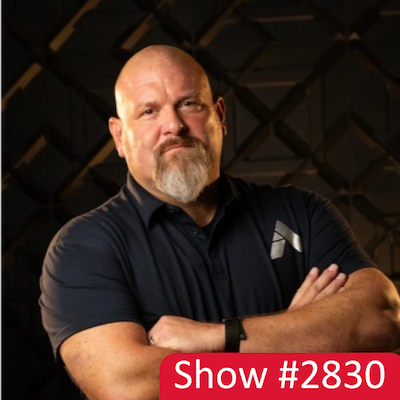
16 Jul July 17, 2026 – Light Years Ahead Megan Brown Bennett and Mindset Coach Kevin Voisin
Intro 1 0:04
The AMS and Radio Network, broadcasting from AM and FM stations around the country. Welcome to the Small Business Administration award-winning school for startups radio, where we talk all things small business and entrepreneurship. Now, here is your host, the guy that believes anyone can be a successful entrepreneur, because entrepreneurship is not about creativity, risk, or passion. Jim Beach.
Jim Beach 0:26
Hello, everyone. Welcome to another exciting edition of School for Startups Radio. Sure to appreciate you being with us. I try to put together a great show for you every single day, and today we have succeeded. First up today, I think we have Megan Bennett. That’s right. She is an amazing PR person, and we’ve done work together for several years. I think we try to figure out how long, but we have done business together for a while, and always been great to collaborate with. And not only do we talk about that and how do you get you some PR and how to help build your business through better PR? We then talk about her new business called Glam Your Pets. It is a really cool app that she built and is a lot of fun. Your kids will love it. Some of you adults will love it. My yeah. Anyway, we learned to build an app, and as a matter of fact, she taught herself to build an app. That is an amazing thing. So you hear these ideas of saying, “Well, oh, I’ll build you an app for 40,000 $50,000. Megan said, “No, I will go and build it myself. Great, great inspiration, and maybe you can do that too. You a lot of it once you get through that initial barrier is not as difficult as you may think. And so many videos are out there now on that YouTube thing that it’s really almost impossible not to be able to figure out how to do it yourself if you just give if you care enough. You know if you care enough, then we have Kevin Voison with us. He is a mental coach, and we go through all of the big ones: procrastination, perfection being a lie, excellence is unavoidable, fake it till you make it. We go through all the cliches and get down and deep with it, and have a great conversation. So I’m very, very excited for you to meet Kevin as well. So great guest today, and I hope you enjoy them. Also, wanted to talk a little bit about some things that were in the news that I heard about recently, and so I just thought I would comment on them. This week we have been talking about perfection. We’ve been talking about the human body and biohacking the human body and trying to live forever. And we, the other day when it came up, neither of us could remember the person who we were talking about. His name, the name of the guy who’s been sort of leading this charge is Brian Johnson. He is mid 40s, worth about 150 million dollars, I think, somewhere in that ballpark, and is spending $5 million a year making sure that he lives forever. Every single part of his body is monitored. He he goes to bed with sensors all over his body, so that they wakes up and tells him how many you know dreams he has. It’s just weird. He has a staff that’s with him. Well, maybe it’s not weird. Maybe I’m being rude. It’s what he is trying to do. I have argued all along during conversations with any of the lifestyle, not lifestyle, but life development companies. companies that the human body and soul and the whole human system is not designed to live forever. That we are designed to be here for a finite period of time, and so I’ve had a lot of arguments about that. You could think what you want to think, and you can think what I’ll think. What I want to think. Certainly, I say this. My prayers go out to Brian Johnson, and hope that he is healthy and doing as well as he can. So anyway, I think we’re designed to live 89 years. That’s it. We’ll be right back. Thanks for being with us.
The Real Environmentalists AD 4:35
Tired of talk and no action on climate change? Introducing the real environmentalists, the bold new book by Jim Beach. It’s not about activists, politicians, or professors. It’s about the entrepreneurs, real risk takers, building cleaner, smarter solutions-not for applause, but for profit. The entrepreneurs in the book aren’t giving speeches. They’re in labs, factories, and offices, cleaning the past and building clean products for the future. The Real Environmentalists is available now. Because the people saving the planet aren’t the ones you think. Go to Amazon and search for real environmentalist. Thank you.
Jim Beach 5:07
We are back, and again, thank you so very much for being with us. Very excited to introduce another great entrepreneur. Please welcome Megan Brown Bennett to the show. She has been a very successful PR agency owner for a couple of decades. She is the founder and CEO of Light Years Ahead. They are a boutique PR agency that helps consumer brands build visibility through storytelling and media relations. In addition to that, she has become a another layer of entrepreneur. She has become the founder of Glam Your Pet, an AI-powered app that transforms pet photos into over-the-top glam photos, like you know the crazy TikTok things and all the filters that the kids are doing. Megan, welcome to the show. How are you doing?
Megan Brown Bennett 5:57
I’m doing great. Thank you so much for having me on.
Jim Beach 6:00
It is my pleasure. I love your story and what you have done, and we’ve known each other for a long time, sort of, but never done a ton of business together. Is that correct?
Megan Brown Bennett 6:11
Yeah. Well, I mean, we’ve done business because I have gotten a lot of my clients on your show for interviews because I’m a publicist first and foremost, and so that’s sort of how we knew to reach out to you.
Jim Beach 6:24
Okay, how long have we? I’m I’m looking it up. See how long we’ve known each other because I was just curious.
Megan Brown Bennett 6:32
I feel like it’s been like a few years. When did you start your podcast?
Jim Beach 6:38
Are we connected in 2000 2019, I think. So yeah, we’ve known each other for a while.
Megan Brown Bennett 6:45
Yeah, yeah. Well, thanks for having me on again, or not again, but having me on. To
Jim Beach 6:52
one of my competing schools, I went to Middlebury, and we went to Skidmore. We played each other in sports all the time.
Megan Brown Bennett 6:58
Oh my gosh, that was like my first. I wanted to go to Middlebury and then change my mind because I thought I wanted to do languages and then change my mind because my sister went to Skidmore and I was like, okay, this is a little bit more relaxing environment and so I went to Skidmore. But I love Middlebury; it’s so beautiful.
Jim Beach 7:15
I loved Skidmore too. So anyway, they were both beautiful schools.
Megan Brown Bennett 7:20
Beautiful. All
Jim Beach 7:22
right. Yeah. Let’s talk about PR. We want to do PR pets first.
Megan Brown Bennett 7:28
We can do. I mean, I think we can do PR and then segue into pets. I guess because I’ve been doing public relations for like over 24 years, and because of my experience in promoting and working with editors and stuff-I sort of came up with this other idea on the side as a passion project. But based on the experience I had, it helped guide me through the process.
Jim Beach 7:54
That makes sense. That makes sense. So, in your PR work, what is your niche right? You deal with mostly consumer brands. Is that correct? Yeah,
Megan Brown Bennett 8:04
mostly consumer brands and experts and services. So we do a lot of consumer products, goods, and services. We work with beauty, health, wellness, fitness, technology. A lot of food experts. We do experts, and it sort of morphed in the years because it would before it was more like brands and then people behind the brands and then experts became you know more popular and more interested in getting publicists rather than just self promoting.
Jim Beach 8:35
Yes, I think we have too many experts. I think the the part of the problem is we don’t have a standard for becoming an expert anymore. One can claim that they’re an expert or a coach, and all of a sudden they’re out there selling product, and no one’s vetted it. You know they’re selling stuff.
Megan Brown Bennett 8:53
Yep, 100% And we’ve worked with some of those too as well in the past. You know, because I’ve been doing this a really long time, but this was like when the word coach kind of had just come out, so it was new. It was you know a new thing. Anyways,
Jim Beach 9:11
we’ve ruined a lot of good words. We’ve ruined yeah best selling. That used to mean something. That doesn’t mean anything anymore. Whole bunch of words have been ruined. Even
Megan Brown Bennett 9:21
even the word PR. I mean, because PR is public relations, and that’s what I do, which is you know getting earned media coverage and editorial for a brand rather than paying for it. But then, like if you go on TikTok and you see these influencers, they’re like, “I got a PR, and I’m like, “Wait a second, it’s not the same thing. Now they’re calling a PR like a package for them to review. So it’s like terms have been completely changed. PR.
Jim Beach 9:49
That’s a they got a PR. What what are they talking about though in real life? They’re
Megan Brown Bennett 9:53
talking about like if they got sent products from a brand.
Jim Beach 9:58
Okay.
Megan Brown Bennett 9:59
For them to review. But they call that a PR, and so it’s just kind of weird. I mean, I just feel like, like you said, terms are definitely changed and moved around.
Jim Beach 10:10
Yeah, well, like the word book used to actually mean something, and today anything even seven pages is a book, and best selling used to mean anything, and now it’s you know if three people buy the book in a year; it’s best selling. You know, they’ve done a good job of you know neutering a lot of the good words. So
Megan Brown Bennett 10:30
yeah, yeah, that’s true.
Jim Beach 10:32
What are your thoughts on self PR versus hiring a big agency? You know, we’re talking mostly to entrepreneurs here who might not afford a $5,000 a month retainer. What are your thoughts about this?
Megan Brown Bennett 10:48
I think if you don’t have the budget, don’t do it and start small. Find a small agency. You know we’re a boutique, so we’re way more affordable than the big agencies. But if you don’t have the budget even to use boutique, what I recommend is is that you either do it yourself, like find a way, or find somebody that works for you for your company that can learn how to do it internally. It’s a lot of work, but it’s worth it. And if you could have somebody that could dedicate some time to it, I can also help train them. That’s something we do. Is we help train people to learn PR internally, but it’s important because it’s different. If you have even a small budget, you’re going to have more of an impact getting a PR, a media third, like third-party earned editorial placement. Where let’s say somebody on the Today Show says, “Oh my gosh, your product’s incredible. This is my favorite dish soap I’ve ever used, and then you get like all the credibility, and you can say as featured on the Today Show, and you have this footage you can use now. If you pay for something like that, I mean, you’d have to do a commercial. It would probably be a million dollars, and and also people would know that you paid for it, so it wasn’t really their opinion, and so I think that that’s like the reason that PR is so important versus advertising, and it’s just the best bang you get for your buck because if you do have the budget, even a small budget to hire an agency, they might get you five to 10 placements a month where you might pay more than that for one advertising placement. So. yes.
Jim Beach 12:23
Well, I have always found that PR is a lot more useful. How hard is it to get the free versus the earned PR? You know, having someone write an article about me for free versus me paying someone-does it make a difference in the consumer’s eye?
Megan Brown Bennett 12:44
It does definitely because it’s harder to get now. It used to be easier for us to get those those coverages on people, but now everybody wants either for you to pay or to be an affiliate and have affiliate connection, so that when your brand or your service is is bought, then they get it a percentage, and so it is. But it is better to have more authentic, just because, like I said, like it’s it’s just if you’re a consumer and you’re looking at something and you know that it was as sponsored by the brand, you’re going to be less likely to buy it than if you see that an editor recommended
Jim Beach 13:20
it. Yep. All right. What are some of the tricks of getting earned? You know the good PR. I used to do a lot of this, and I found that you really had to have some sort of niche catch to your article. So when we would say, “Hey, here we are, a bunch of people running the successful business, we would get zero here, but when we came out and said, “Here we are running a successful business that’s helping this 12-year-old girl get a job at NASA, now that people run that article all day long.
Megan Brown Bennett 13:52
That’s it, and it’s. I think the importance is in the subject line. I mean, once in a while, I’ll call or text a producer, an editor that I know really well to ask for something, but most of the time it’s an email, and you have to have a provocative subject line, and you have to have a provocative, like first two sentences of the email that you send out needs to be the most important because most people that’s all that they’ll look at if they read it at all, and if they don’t read it, you just have to keep finding ways to resend with different angles until they do open it up, and it can take months sometimes. That’s just like how PR works. It’s a it’s a real massage process,
Jim Beach 14:30
and I think it’s one of the. I don’t know. I can’t think of another industry. It’s an industry. Well, maybe all of sales, but an industry where no does not mean no,
Megan Brown Bennett 14:43
exactly.
Jim Beach 14:44
So let’s talk about sexual harassment for a second. Obviously, we’re being facetious, but it’s not sexual harassment. But if you ask someone and they give you a no, that doesn’t mean you’re not allowed to ask them again in a month, right? A little different exactly. Woman, out.
Megan Brown Bennett 15:00
I mean, listen. They can always block me, you know, or put me on their black list if they really don’t want to hear from me. But yeah, if they say no, if someone’s really, really nasty, I usually put them on my black list. So I just make sure to not reach out again because I know that the person will never cover it. But if it’s somebody that I know would be a good fit and they’re saying no, I always like will follow up maybe in six months, or if I’m trying to get on that outlet and I know a different editor, then I’ll reach out to a different editor and pitch a different angle. So yeah, you can keep trying, and a lot of the times I’ve been told no, and then someone will come back and say, “Okay, now I have a spot for your spar treatment product that you’ve been, you know, stalking me about or whatever.
Jim Beach 15:38
Right. You know, one of the things I believe about hiring people that if you hired me to do something in my industry, I know five or six people that I could call now and get you on whatever. You know, I could get them to buy your stuff, get you an introduction, something. I know people in my industry close enough that I could get, you know, traction now. And then I have publicists call me and say, “Hey, I can help you. And I said, “Well, what five or six places can you get me on today? And they’re like, “Oh, I don’t know, you know. And I’m like, “Well, you’re not very good then, because I couldn’t answer that question and tell you there’s five or six places I can get you on right now. You understand what I’m saying? Yeah. Do you agree with me on this one, Megan?
Megan Brown Bennett 16:18
I don’t honestly, because when you do public relations, that it’s almost it would almost be like a scam if I was like I have guaranteed placements right now because that means that I’m either paying them, you know what I’m saying? Like if I have guaranteed stuff before, unless it’s like one of my best friends that I say I ask in advance, hey, can you cover this? Like you can’t guarantee anything in public relations, and that’s the beauty of it, and and the headaches. You
Jim Beach 16:47
can pretty much guarantee that I’m going to put your stuff on. If you called me, Megan, and said, “Jim, I need you to do this one as a favor, we’ve known each other for seven years, and I’ve sent you 18 good ones, and I’m going to send you a cruddy one, but I need you to air it. I’m going to air it.
Megan Brown Bennett 17:04
Yeah,
Jim Beach 17:05
don’t you think? I mean, don’t. That’s what I’m talking about. You know.
Megan Brown Bennett 17:08
Yeah, I mean, if I knew the person would do it in advance, yes. But I don’t. We don’t ever like steal a contract with like we have guaranteed this, this, this, and this. The only guarantee I ever give is that we’re going to build brand awareness for you, you know, and so. But I get what you’re saying, of course. Yeah, if you know beforehand that you can get into stuff, that’s great. But most publicists would be hopefully honest and say, “Well, I don’t have any guarantees because this is earned media, and you can’t pay for guaranteed coverage.
Jim Beach 17:39
Yeah, but then the next sentence is, “But I am close enough with these 12 people that I got 99% guarantee I can get you on there. You know, yeah, what I think. Yeah, that’s true. Offer.
Megan Brown Bennett 17:50
Yeah. Oh, that’s true. Yeah.
Jim Beach 17:53
I know. But I never even know too because a lot of these
Megan Brown Bennett 17:56
professions,
Jim Beach 17:57
you know. Oh, yeah,
Megan Brown Bennett 17:58
for sure.
Megan Brown Bennett 18:00
Yeah.
Jim Beach 18:01
And you and I have done enough work that I could say, you know, this one I can’t do, but you’ll say I have to, you know. And I don’t know. I just think that I expect more out of my publicist. Perhaps you know what we’re also doing. We’re also running out of time. Let’s talk about the important stuff. My pet. I don’t know if you knew this or not, but the president of PETA has been on this show multiple times, and he is certified that my pet dog names are the best named pets in America. How about that? Really? Yes,
Megan Brown Bennett 18:32
that’s amazing.
Jim Beach 18:33
Yes, so I have that going for me, which is nice.
Megan Brown Bennett 18:38
That’s awesome! Congratulations! What are your pet names?
Jim Beach 18:41
Well, our last name has so many opportunities. My last name is Beach, so there’s an infinite number of good names like that. You know, Sunny Beach, Wavy Beach, Ripley Beach, Coconut Beach. My favorite is C O, like the initials C O for clothing optional, or also B S for Black Sand Beach. You know, there’s just an infinite number of great opportunities. So
Megan Brown Bennett 19:08
that’s awesome. I love it.
Jim Beach 19:11
So tell me about Glam Your Pets.
Megan Brown Bennett 19:14
Okay, so Glam Your Pets is just something that I kind of came up with on the side. My sister and I were were like best friends, and we’re like only 20 months apart. And we were talking about these app ideas and how we started to do some like vibe coding. And I don’t know. I just was thinking about how I love to dress up my pets, and they will never sit still for me. And oh, wouldn’t it be fun if there was a pet like an app where you could make over your cat or dog or lizard or guinea pig, and put these crazy hair and like accessories on them, and so I just did it. I went on and I created this app just for fun, and I have the PR experience to promote it on the side to people like you and other media, and it got approved by Apple and by Google, you know, Samsung as well. So it’s out there and it’s free and it’s fun, and it’s just like basically you upload a picture of your pet and then you get to pick all these different accessories and then you hit you know glam your pet and it comes out as a before and after and it’s just it’s honestly just hysterical. It’s literally a product, an app that makes you laugh.
Jim Beach 20:21
My daughter is going. You have girls, two daughters, don’t you? Yeah, yeah. My daughter, who is 10, I think, is going to go bonkers with this.
Megan Brown Bennett 20:31
Yes. Oh, and I have a kid version too. I made one that was for because one of them is 18 plus, just because I had to add like martinis and cigarettes and cigars, just because it was too funny, but the the one for kids doesn’t have that stuff, so it has more stuff like Stanley Cups and like more teen and kid vibes. So yeah, definitely.
Jim Beach 20:53
I love it, but it’s been
Megan Brown Bennett 20:54
fun,
Jim Beach 20:54
a lot of fun.
Megan Brown Bennett 20:56
Yeah, and it’s been fun learning to develop an app because I’ve never done anything like this before, and just going through the process of projecting and having to resubmit and coming up with different ideas, and it’s different than like when you create a product. Because with an app, you can see the results immediately. Where you know when you develop a product, it takes a while, and this takes a while. But I’m saying like how fast if you’re coding or whatever, you can get results really fast, which is cool.
Jim Beach 21:22
So you taught yourself to do this for this project? Yes,
Megan Brown Bennett 21:25
yes, I taught myself to do it, and my sister and I are working on a bunch of different fun apps. But this was the first one that we released, and I just I used AI to help me, you know, and ask questions, and then and it was okay, but I had to resubmit a lot of stuff, and it took hours. But yes, I did it.
Jim Beach 21:44
That is so impressive because all of us, you know, perceive that that’s an unsurmountable mountain of challenge.
Megan Brown Bennett 21:53
Yeah, it’s not. It’s not anymore. It took me about two weeks for the whole. See, that sounds
Jim Beach 22:01
easy. I was expecting. It took me about two years, and I had to lose my hair, and I lost 14. No success. You’re like, oh, I did it in a couple of afternoons and a weekend while I was getting my nails done.
Megan Brown Bennett 22:12
I know. Well, I would say I did cheat though, because I used like an a Vive code builder, an app program that basically you tell it what to do, and it does it for you. Okay, well I use AI. That’s thank you. Okay, I didn’t cheat. Thank you, but I did use AI help. I need
Jim Beach 22:30
to have a conversation about what cheating is because that’s not cheating.
Megan Brown Bennett 22:33
Yeah, thank you. But you know, AI came up with ideas, then you revise, then you you know update, and it really doesn’t. The only thing you have to be good at is following the directions and being patient because sometimes when it tells you the
Jim Beach 22:48
men, okay, no men,
Megan Brown Bennett 22:50
yeah, no men.
Jim Beach 22:52
All right, I’m just blown away by that. So where did you start to build your app? What how if I want to build an app, our listeners do? Where should they start? To
Megan Brown Bennett 23:03
okay, so I used a program. It’s called Base 44 and my sister and I have a business account on it now. So it’s called Base 44 You go on. They ask you. I also made one just to do like our bookkeeping because we started a new little LLC, and I’m like, okay, well, it’s not like we really need to hire somebody because it’s you know this is these are free apps and so I started an app where you can just enter the stuff in there. So you do base 44 They ask you what’s your idea. You put it out and then it basically spits out different ideas. And then you use other like you use whatever AI you have. Whether it’s I’ve heard that Claude is the best. I use Chat GPT, but you can use ChatGPT to come up with better images, and because because the only thing with base 44 is it does kind of charge like per things that you do, but I think that it’s a great one to use, and it is like basically having your own personal assistant help build you an app.
Jim Beach 23:58
Right.
Megan Brown Bennett 23:59
So I’m sorry to all the app developers out there that that like spend hours doing all the coding themselves and stuff, but this is just was like a a much easier way to do it.
Jim Beach 24:11
Well, it’s so much cheaper too. I mean, that’s the number one thing is that you can now go and start a business with zero startup capital and actually have an app out there making money and bringing in revenue, yeah, and stuff.
Megan Brown Bennett 24:24
Yeah, I mean the costs is not so far. I haven’t spent that much money because the only thing you have to pay for is a website to host your app and the and the Vive coding, whatever app you use for that, and then you have to become an Apple developer and pay for that. But it’s not like I think if you had if you paid somebody else to do it, I would think it would be 1000s of dollars.
Jim Beach 24:44
Yes, easily. I mean, you could easily charge, you know, someone $10,000 to do that service, and a lot of people in Kansas City would go, “Okay, you know, that sounds like a good rule. You know, so yeah,
Megan Brown Bennett 24:57
which I get because a lot of people don’t want to do the work. I just, I don’t know. I was just wanted to use another side of my brain because I’m always doing, you know, pitching and that kind of stuff, and I wanted to do something more technical yet creative, and so it was just kind of a passion project.
Jim Beach 25:14
Yep. Well, I’m on the site right now, and looking at some of the things, I’m just going to have to interrupt my next call and tell my daughter about this. She’s going to absolutely freak out. So
Megan Brown Bennett 25:31
awesome!
Jim Beach 25:33
Yes, when I got married, I I I am a dog hater, and I had a horrible, horrible incident as a child, and so I just never recovered from that. And when I got married, I married a Megan. She she sent the dog first. She sent me a puppy. A Doberman was going to be my first dog, and it moved in before she did. And so I spent I don’t know two or three months living alone with Sonny, my first Doberman, and now I’m much much more in love with the dogs than the kids or the wife. So
Megan Brown Bennett 26:11
that’s great. I mean, you know what? Pets are just they’re like your babies. You know, same with me. I have I have four cats, so it’s a lot. But I do use the app all the time to make them look hysterical. The
Jim Beach 26:25
pets enjoy this or not? Do you think? What are the? They don’t even know. Like,
Megan Brown Bennett 26:30
I think that deep down they do enjoy it, but like they don’t really know because I’ll be like, okay, pose for a picture, or I’ll just grab them when they’re in a funny position. And in my mind, I feel like deep down they would be really proud of themselves how beautiful and glamorous that they look, but maybe not like my parents’ dog, who I keep dressing up in all these wild like biker outfits and like long Rapunzel hair, and and his name’s Winston. I don’t know if he would like it or not.
Jim Beach 26:59
I’m going to vote no that Winston does not like that. Do you take your daughters to the Bippity Bop boutique at Disney World, Disneyland? Have you done that with no,
Megan Brown Bennett 27:08
no?
Jim Beach 27:11
Are you a Disney?
Megan Brown Bennett 27:13
We went once, but they’re too old, thank goodness, to go back. How old are they now? 15 and 13, and we already went. And I’m like, okay, if you want to go again, you have to do it when you’re an adult. Oh,
Jim Beach 27:26
I disagree. They can still love it.
Megan Brown Bennett 27:29
Yeah, I know. I just shop
Jim Beach 27:31
boutique where they do the full glam makeover. The
Megan Brown Bennett 27:34
makeover,
Jim Beach 27:34
but yeah, they would enjoy the fun of it. It’s the fun. The rest of it’s fun too. Yeah, fun killer.
Megan Brown Bennett 27:42
I’m just not an amusement park lover, but but I love people that love them, so it’s okay.
Jim Beach 27:48
Where do you take your kids instead, then?
Megan Brown Bennett 27:51
Oh, if they want to go somewhere, we I live in Kansas City. We have like an amusement park here called Worlds of Fun, and it’s pretty. They have a lot of really scary rides that the kids like to go on that I just sit out. Yeah,
Jim Beach 28:01
but if you know, where do you go for family vacations? And since you’re not going to Disney, do you go river rafting, or do you go to the beach or the mountains? Or we go to the beach.
Megan Brown Bennett 28:10
We go to yeah, we go to the beach a lot. We go to Mexico a lot. We have a house in Mexico that we travel to, and so we stay there. And aren’t
Jim Beach 28:20
you afraid of cartels and stuff? No.
Megan Brown Bennett 28:23
What
Jim Beach 28:24
part of Mexico? No, it’s interesting
Megan Brown Bennett 28:25
because my mom was in Puerto Vallarta at the house when that whole thing happened, and it was very sensationalized. Like town opened up the next day. Are you saying that the
Jim Beach 28:34
news is sensationalized?
Megan Brown Bennett 28:36
Yes, because my mom was in town, like having lunch the next day, so yeah, it’s actually. I think it was overly, you know.
Jim Beach 28:47
Yeah,
Megan Brown Bennett 28:48
I’m glad I wasn’t there, but my mom didn’t seem to mind. But maybe that’s just my mom.
Jim Beach 28:53
Yes.
Megan Brown Bennett 28:54
So all right,
Jim Beach 28:55
we’re out of time, Megan. We need to wrap it up. So let’s see what have we learned. You can get a ton of PR by yourself for free, right?
Megan Brown Bennett 29:05
Yes. Well,
Jim Beach 29:07
you need to have a niche. What are our lessons we’ve learned today, Megan? Well, you can’t really get it for
Megan Brown Bennett 29:11
free. Well, listen, if you want to do it yourself, that’s fine. But you still have to pay for stuff because you’re not going to be able to get the contacts unless you subscribe to a like a database like Muckrack or Cision. Muckrack is the best where they give you the contact. So it’s not free because you still have to make that investment. But you can definitely do it yourself if you have the drive and if you learn how to do it and if you have the sort of personality where you don’t give up, you know, and don’t take no for an answer. And just want to make sure that you have a really compelling message and story, and that when you do pitch it, whether it’s text or message or email or whatever, that you put the messaging in the first few sentences because otherwise nobody’s going to read it. And that’s kind of what I would say is my advice.
Jim Beach 29:58
Excellent. Yes. How do we find out more about you? Follow you online, hire you for some PR, and make our pets look like rock stars.
Megan Brown Bennett 30:07
Yeah, you can go to lightyearsahead.com That’s my website, or you can go to glam dashyour dash pet.com or download it on the App Store on Apple or Samsung, or you can just email me megan@lightyearsahead.com
Jim Beach 30:22
Fantastic, Megan. Thank you so very, very much, and we’d love to have you and your guests back.
Megan Brown Bennett 30:27
Thank you so much. Thanks for having me on.
Jim Beach 30:30
And we’ll be right back.
Intro 2 30:48
Well, that’s a that’s a that’s a wonderful question, actually, Jim. Oh my gosh, I love the opportunity to do this. Thank you, Jim. Wow, that’s that’s a that’s a great one. You know, that is a phenomenal question. That’s a great question, and and I don’t have a great answer. That’s a great question. Oh, that is such a loaded question, and that’s actually a really good question. School for Startups Radio.
Jim Beach 31:10
We are back, and again, thank you so very much for being with us. You know, my greatest problem, my biggest number one obstacle in life has got to be my procrastination. I just love to procrastinate it, and I am so good at it. During graduate school, my roommate and I-we were number one and number two in our class-and we had a policy that I wasn’t allowed to start a project until he was done with it. We always got the same grade, an A. I’m just so good at procrastinating, and it’s my mind. I know that it’s a mental issue that I need to solve. I’m excited to welcome a great guest who can help us do exactly that. Please welcome Kevin Wazian to the show. He is a mindset coach and helps people get over problems just like this. He’s the head coach and chief operating officer at Apogee Strong, a mentorship organization, and through that organization, he has helped some 30,000 people get better at doing what I’m exactly talking about. He has also competed in the Ironman 70.3 I’m not exactly sure what that is. We will ask him that. Kevin, welcome to the show. How are you doing?
Kevin Voisin 32:20
Thanks. I’m doing really good. An Ironman 70.3 used to be called the half Ironman, but when you’re doing it, it doesn’t feel like half of anything. 70.3 miles is not a short distance, so they changed the name so that people didn’t feel cheated. But yeah, that is that is me, and I, you know, here’s why you procrastinate, right? It works. It works. Like a lot of times, if you procrastinate, you don’t have to do the job at all. The problem is when you’re procrastinating about external things, like let’s see if it’s going to rain or not. Fine. When you procrastinate with your own life and goals, you have a big problem because no one cares. No one is coming to save you. No one is coming to give you the life that you want, and so procrastinating just means you’ll never ever get it, and that that’s where you know procrastination is a it’s a great tool. It’s I lived in Europe for a few years, and there’s like an American way of fixing a problem in a European way, and the American way is like, hey, we want to move that mountain, and we need that mountain moved in three months, and the American way is: Do we have a shovel? No. I’ll start digging with my hands. You go find a shovel, and then as soon as you have a shovel, you dig with a shovel, and I’ll go find a bigger shovel. We just start right now. When I got to Europe, I got really frustrated because the European way of solving the problem was like, “Hey, we need to move this mountain, and we have three months. And people would pull out a chair instead of a shovel, and I’m like, “What are you doing? Well, we’re gonna watch the mountain to see if it moves on its own first. I’m like, that’s crazy, you know, like that’s ridiculous. What are you talking about? Yeah, yeah. Sometimes mountains move, and so you know, at first I was so frustrated
Jim Beach 33:52
moving mountains. You know?
Kevin Voisin 33:54
Yeah, no, it it. I was so frustrated when I was there, but then you know, it’s funny. It’s like sometimes just sitting there for a minute, and then the market shifts. You are like, “Oh yeah, okay, mountain’s out of the way. Let’s go now. And so, what I thought was inaction was actually just waiting for the right moment. And sometimes we get we get confused about that, right? But the thing is, if you are always waiting for the right moment, that’s inaction. If you are waiting for the right moment for a short period of time to see if there is a better moment, cool. That’s that’s being strategic. We have a generation of people who are quote unquote being strategic and optimizing while yet never having accomplished or done anything. Let me tell you a secret. If you’re trying to get the perfect workout, if you’re trying to get the perfect diet, if you’re trying to optimize your diet but you’ve never actually changed it, like you’re not doing anything. You can only optimize what you’ve executed. Once you have bad results, you can get better results. But if you have no results, you can’t optimize that. It’s nothing. It means you’ve taken no action. So first step, take some action. Right now, finding the right moment to take action. Cool. On a limited scale, that can be awesome. For your lifetime scale, that that’s a waste of a life.
Jim Beach 35:00
Well, you know, it’s taxes. They have to get done by a certain point. You know,
Kevin Voisin 35:05
eventually, yeah, eventually, eventually.
Jim Beach 35:09
I don’t know that there’s any value of setting them aside. You know, it just increases the tension, and it’s something hanging over your head, and just makes you unpleasant. Anytime you’re having fun, you’re like, “Oh, I should be doing my taxes.
Kevin Voisin 35:24
Yeah, two different times in my life, I put the taxes off to where I got almost a year behind both times. And here’s the funniest part is because I knew I had a loss, and I knew I wasn’t going to owe anything. And I really just, you know, the the truth is, I was afraid to look at the loss. I didn’t want to re-experience the loss I had that that year, right? And so I put off the taxes. I put off. Here’s the crazy part: I put off for almost a year a return. I had a huge tax return that came in.
Jim Beach 35:51
Yes, but
Kevin Voisin 35:51
what was that? But the whole time I was putting off the pain of the taxes. Well, you know, having several $1,000 flow back into my account is not painful. Actually, you know, if if you told me, “Hey, come on my show, and I’ll give you, you know, four grand. Well, that’s awesome, right? But I wouldn’t wait. I wouldn’t put that off, but because I had this perception around it that was painful, but then the actual result was actually positive. And again, this happens to entrepreneurs all the time. They put off looking at the books. You know, seeing the real problem allows you to fix the real problem, but we don’t think of it that way. And sometimes, looking at the real problem, you realize there’s not a problem. It’s like, oh, this isn’t the same problem I thought it was. But but you got to be willing to look. And you know, procrastination is just one of those things. It really does work a lot of times. If you put something off, someone else takes care of it, or you don’t have to, or the the details. I mean, shoot! Right now, a new AI model might come out, and what used to take five hours now takes three seconds. Right? Like, so procrastination. I remember in the in the ’90s, there was a computer programmer who had done a thing that said, “Hey, if you have to do these heavy, you know, video game creation tasks, and you have a deadline in two years, the first the best thing to do for six months is nothing because if you wait to buy your equipment six months, it’s going to be so much better that you it’ll run three times faster, and the remaining 18 months you’ll get more done. And that was an actual real fact. And I think with these you know AI models and the way they’re rolling out, some of that is true today too. That is an external stuff. And your internal life, though, like, hey, when do you want to have a great life? When do you want to enjoy your life? When do you want to create the life that you want? For me, it’s right now. I don’t want to wait. I don’t want to put that off and be like, well, I’ll figure out the life I want in six months. Well, because if I do that, then I’ve wasted six months of my life. Like, I think, people think money is value, but you know, time is what your life is really made of, right? Time is the is is the base unit of life, and when you give that away, it never comes back. And because we don’t know when our time will end, many of us imagine that that means it’s forever, which is a very bad calculation. It just means you don’t know. We can’t do the calculation. I can’t tell you, like, hey, this 20 minutes we’re going to spend together, it’s X percent of my life. I don’t know because I don’t know how long my life is. That will trick your little mind into thinking it’s infinite, but it’s not infinite. It’s far from infinite, and it could be over tomorrow. This 20 minutes could be 70% of what I have left. I could have a heart attack right after we hang up, and this 20 minutes was the 100% of what I had left in my life. We don’t know the answer to that, which makes life precious unless you’re lazy and then think, okay, well, then I have time. But nobody has time. Time is the one thing that never stops.
Jim Beach 38:42
30 years ago, we were building a house, and so we were getting to know the architect. And the architect sent us to this other house to you know sort of see what his work looked like and look at his resume of building. And we met with the couple, and the man was talking about his this, and he was going to do that, and they had this plan, and then they were going to build this, and the entire conversation was him talking about what he was going to do. We left, and as we were leaving, you know, this is in the middle of the country in the mountains. About 10 minutes later, we passed an ambulance with the lights on and everything. He had just had a heart attack and was dead by the time the ambulance got there. The last thing he did was spend 30 minutes talking to us about his future plans, and then he dropped dead.
Kevin Voisin 39:27
Yeah, I mean, and and and you know what? Here’s the fun thing: everybody right now is like, “Oh man, that’s bad for that guy. Guess what? Every one of us that’s going to happen to you. There’s going to be the last thing you talk about, all of us, and really none of us know when that moment’s going to be, right? I mean, I had a moment where I had a heart attack, and I ended up in the hospital, and I was laying on a table with my blood all over the place, and I knew I was dead. I just-I’ll never forget that moment of, oh wow, I die right now, and it was not what it seems like in the movie. It wasn’t dramatic. It was. It was very like, just shit. Okay, I mean, there was nothing to do. Like, I’m dead. I mean, it’s it’s happening. And then I passed out. Now it didn’t take. Thank God for me. I woke up, and that wasn’t the moment. But I I have that memory. It’s tattooed literally on my arm of you know August 25 2024 of that moment of oh shit this is over and then there’s just nothing else to do that when that’s true that’s true but right now that’s not the moment like if you’re hearing my voice right now that’s not the moment it might be in an hour it might be in a week it might be in 30 years the truth is though if you get about living your life if you get about doing the stuff that you know you want to do, and I’m saying want, and and we hide behind need. There’s so few things that you actually need. In fact, I would put out there that you need nothing. You don’t need any. You don’t even need air. People opt out of air all the time. Robin Williams opted out of air. You know, lots of famous people have said I don’t need air anymore because you only need air if you want to live. Everything that you’re saying, I need. It’s I need if, right? And and as entrepreneurs, it’s such an important concept to get through your skull. Everything you think you need, it’s you need if. And if you no longer want that thing, then you no longer need the thing you say you need. So then get into what do you want? What do you want to create? And what does it take to create that thing that you want? And and when you get into that, now you can get into the truly productive, powerful entrepreneur. Here’s the thing I see. Here’s the thing I want to create, and here are the steps to create that.
Jim Beach 41:33
Great information, Kevin. I love it. So, what are the other biggest mind problems, mental issues that people have, and I don’t mean mental issues as in a diagnosed schizophrenia or something. I mean procrastination. What are the other challenges in our own mind do we need to get over other than procrastination? So you’re working with 30,000 entrepreneurs. Give me the big buckets they fall into.
Kevin Voisin 42:00
Yeah, basically, the first thing that you need to understand is that perfection is a lie. If you want to be perfect, just lie. And look, look at Instagram, look at social media. Like it’s easy. Go ahead, lie to everyone, and then you’re perfect. Like there is no such thing as perfection. Now that doesn’t mean that excellence isn’t achievable. Excellence is achievable, but perfection is a lie. Okay, and why that’s important? Let me tell you a different lie that you have in your life. The horizon is a lie, right? You’re looking out over the ocean. You see the horizon. There’s this place where the air, you know, the sky touches the the water. Or maybe you’re in the Grand Canyon. You see the horizon where the land and the and the sky meet. Well, guess what? The land and the sky meet everywhere. Every single square inch of the planet, right? The the water touches air everywhere. The horizon is imaginary. Your mind creates this line to help you navigate. And if you walked all the way around the world, I’m going to assume you’re cool enough to be able to walk on water. If you walked all the way around the world, you would never touch or stand on the horizon because it’s not real. It’s it is a manufactured thing to help you orient your life. Now take that over to perfection. Perfection is the same thing. It’s not real. It is a it is a standard manufactured by your mind to help you orient the situation you’re in as a standard and as an orientation tool, perfection is awesome. Hey, what’s the perfect shot? Right, cool. That’s great that you know that because it gets you moving in the right direction. But the idea that you’ll ever actually hit it, it won’t happen. The more you gain mastery, and every entrepreneur does this, the more you, the more you know about accounting, the worse you are at it in a certain frame of reference, because the more things you know you’re deficient at. So that means the line of perfection is moving down in front of you. Cool, you’re still making progress, right? And that. So what do you do instead? You embrace powerful imperfection. Hey, I want to get things done. I want to be powerfully imperfect. Am I perfect? No, but am I moving forward? Am I doing this better than I did it last time? Yes. Guess what? That’s how all human beings learn everything. That’s how you learn to walk. Like you fell over, fell over, fell over. Then you didn’t fall over. Then you fell over a little bit, and you know it’s how we learn. But we forget this as adults, and we start thinking, “Well, I have to be perfect. Well, you’ll you’ll never be perfect. In fact, the closer to perfect you get, the more imperfect you’ll know you are. You meet someone’s a true master at something, and you ask them their list of deficiencies. It is far longer than the person who just started that discipline the day before. A 20-year black belt in jujitsu can tell you the things he’s not good at in 100 point list, where the person who started jujitsu yesterday will have five or six things they think they suck at, and that’s why perfection, like this perfectionism, thinking you need to touch it. Now use perfection. It’s a great standard. It’s a great way to orient, but don’t think that that’s the goal.
Jim Beach 44:58
I saw an article yesterday that. The number of black belts, or there’s an epidemic of fake black belts out there, and people claiming to be a black belt when they’re not. And the person pointed out that a true black belt can figure that out in about a half second.
Kevin Voisin 45:16
Oh, the mat! We say this in jujitsu. The mat doesn’t lie. Let’s wrestle. Let’s go. Let’s fight. You’ll in 10 seconds. You know the belt doesn’t matter much the second that you start to actually practice, right? And in entrepreneur, like being an entrepreneur, running a startup, running a company, it’s all the mat. The numbers don’t lie. The frank account doesn’t lie. The number of clients who walked in today doesn’t lie. The the costs on your thing, like look at the reality. That’s why I love jujitsu. It’s just reality. Because I go to an hour of jujitsu, I’ve experienced an hour of reality. I make a mistake, it hurts. I do something cool, I don’t hurt, right? And and yeah, the math doesn’t lie. And it’s the same thing. There’s a tape in every section of your life. There’s a way to take score. There are numbers that matter in business-they’re easy. It’s just money and customers, and you know, cost of acquisition, and all the different things we talk about. But you can set those same numbers up in fitness. You can set those same numbers up in relationships. You can set it up in your spirituality. You can set it up in your purpose and anything that you really want to make progress in.
Jim Beach 46:18
And we’re moving away from that, though, we’re becoming a less and less precise culture. I believe, and I think we see that most in the resume, where the resume these days, you know, I transcend multinational cultural experiences through my raft of, you know, it’s all just verbal masturbation. All these people claiming these great things, this perfection life that you were talking about earlier with TikTok perfection, you know, it’s just we’re becoming less and less accountable and more and more likely to market or sell a basket of feelings as opposed to a basket of results, I think. Yeah, and you
Kevin Voisin 47:03
know it’s funny. No, no, 100% Because AI has made it so simple to manufacture that basket of feelings, whether or not you know what you’re talking about. Right at my company now, we have this funny new thing where we don’t even care about your resume. We we we we say, hey, if you think you can do this project, awesome, come here. And then instead of a resume, here’s your sample project. It should take you about two hours. The people who finish this project in a way that we think is interesting, we will give an interview for you. And then when you come to the interview, guess what we do? We give you another project and we watch you do it. And trust me, if you don’t have the skill in that hour, you’re going to pretty much self-select out of the number of people who we hand them the project in person. They look panicked, and then they their Zoom feed just cuts off, right? Because they can’t actually do the work, right? But but I love it. Funny, but I’m so
Jim Beach 47:54
horrible at the same time, Kevin. But I
Kevin Voisin 47:57
but I yeah, but I love it because it’s just real. And then you know what else happens is these people who are totally unqualified, who don’t like I have right now on my team, and I think this is this is the upside of the AR world. The downside is everybody can bullshit and say that they they you know everybody can can say they’re the best and they’ve made global impact because they sent an email one time. But but the good side is I have two or three people on my team who were absolutely when they showed up completely unqualified for what they do. I mean, just one person. The only reason we interviewed this person is is someone told someone else they thought they were pretty. They’re like, “Oh, look at that resume. That person’s really pretty. And then someone else said, “Oh, look, they they’re from here. I’m from here. We should just give them a test, right? Because here’s the fun part: when you interview like we do, it’s all about like giving people a chance. They they get to do it. It’s not about what they say. So someone else was like, “Hey, let’s let’s let’s give her a chance. Let’s see what happens. She’s she is one of our most productive, powerful people because yes, was she unqualified? Sure, but she she has this get it done, figure it out mentality I’ve never seen in anyone else, and so she showed up to the thing. She literally said out loud, “I don’t know how to do this, but I’m going to try to figure it out in front of you. So I hope this is okay. Which, as an employer, is like, “Wow, that that’s pretty awesome. And then in the course of the next hour, she completely figured it out and dominated it. And I’m like, “Wow, you know what? That’s the kind of person I want. I want someone who’s going to figure it out. Like the AI is the tractor of the mind, right? Like when the tractor came out, the combine, the the solution to the tractor in in the market was not dig faster, right? It was learn to use the tractor. Right now, what you’re looking for is people who will learn to use the tractor, people who are innovative, people who can be proactive. Because guess what, knowledge is cheap. All that stuff you knew that no one else knows-they all know it now, and they all can process with it now. So you know, one of my favorite stories when I was young was John Henry. John Henry, the the steam engine came and the. Engine could could chip a tunnel away faster than a man, and John Henry decided to prove that men were stronger than machines. He picked up his pickaxe. He had head to head with the steam engine, and he beat it. He beat it. He chipped his way through stone faster than the steam engine. And the very next thing that he did after he beat that steam engine was to hand his pickaxe to someone with a warning, and he died. You know, and the steam engine. Guess what? It just kept going, right? And I love that story for where we are in this moment because for white collar, for the for the mind worker, the the information worker, yo, it’s here. Like you’re going to work with it, or you’re going to try to beat it and die trying. But the the the point is, it’s the mindset that has you using that thing correctly. It’s the mindset of, hey, I’m going to get started, I’m going to figure this out, and I’m going to get it done. And I’m smart enough to double check. I’m smart enough to fact check. That that’s how you win. I think you know, it’s just like I’m going to use it to fake like I’m cool like everyone else. I think yeah, okay, for a couple months that might work, but in the end we we have now entered finally. It’s so refreshing and terrifying. We may finally be able to enter the results economy that you can either do it or you can’t, and you get paid if you can, and you don’t if you can’t.
Jim Beach 51:18
When you mentioned the the implement the tool. I thought he was just going to throw it into the machine and break the machine.
Kevin Voisin 51:26
No, he he handled the pickaxe. It’s it’s a great story because it is like the human spirit is so happy that the the man won, but he didn’t. Did he win? He died. That’s not winning, right? That’s not winning. And and faking it until you make it, and pretending you’re going to get found out in day one. You know, just just go figure out how to do something. It’s it’s it’s the best time in the history of the world to learn how to do something and to know that your knowledge is totally worthless. Your ability to produce has a has a has a value. What you know that like no longer is what you know the thing that differentiates you from everybody else? It’s what you can do. Now that has always actually been true, okay? Because the people who knew something could then do something that other people couldn’t. But now it’s kind of cool, man. Like when I was little, like I don’t know, they they we used to memorize all these formulas in algebra, and I would I would get annoyed, like, well, why do we have to do this? And the teacher would say, “Well, it’s not like you’re going to have a calculator in your pocket the rest of your life, right? Turns out, not only do I have a calculator in my pocket, I have a supercomputer with all human knowledge at my fingertips at all times, right? That’s awesome. That’s awesome if I’ll use it, and if I can, I can actually accomplish something with it. Remember, like what’s valuable is what’s done, not what’s started, not what’s worked on, not what’s thought about is what’s done. Real value is in the finishing of something.
Jim Beach 52:51
Very, very well said, Kevin. Kevin, great information. I love what you are all about and what you stand for. And those 30,000 people have been really lucky to have worked with you. How do we find out more? Follow you online. Get in touch with Kevin. All that stuff, please.
Kevin Voisin 53:09
Absolutely, I am at It’s Coach Kevin on pretty much all social media. You can find me on YouTube. You can find me on Instagram, whatever, and you can also visit it’scoachkevin.com to get in touch and talk about how we could work together, I’d love to help you. If you’re someone who has gotten things done and you just feel stuck in one area of your life, we can we can take that previous success and turn it into a lifetime of of something you’re proud of.
Jim Beach 53:36
Great, great advice, Kevin. Thank you so much, and we’d love to have you back. Thanks a lot.
Kevin Voisin 53:40
Thank you much. Bye bye.
Jim Beach 53:42
We are out of time, but you know what we do. That’s right. We come back soon. Take care. Be safe, and go make a million dollars by now.
Megan Brown Bennett – Founder of Light Years Ahead and Founder of Glam Your Pet App
The only thing you have to be good at is following
the directions and being patient

Megan Bennett
Megan Brown Bennett is the founder and CEO of Light Years Ahead, a boutique public relations agency that has spent more than two decades helping consumer brands build visibility through strategic storytelling, media relations, and creative campaigns. Specializing in beauty, wellness, lifestyle, food, technology, and consumer products, Megan has secured national media coverage for clients in leading outlets including Good Morning America, Forbes, Bloomberg, Vogue, Today, Shape, Wired, and CNET. Known for her relentless approach to media outreach and her ability to spot emerging trends, she has built a reputation for helping brands break through crowded markets and earn meaningful attention. In addition to leading Light Years Ahead, Megan is the creator of Glam Your Pet, an AI powered app that transforms pet photos into fun, over the top glam portraits. The app combines her passion for creativity, technology, humor, and animals, offering pet lovers a unique and highly shareable experience. Through both ventures, Megan continues to explore innovative ways to connect brands and audiences while embracing new technologies that shape consumer engagement. A graduate of Skidmore College with a degree in Communications, Megan is also a frequent lifestyle expert on television and podcasts, where she shares insights on public relations, branding, media trends, and entrepreneurship.
Kevin Voisin – Head Coach & COO of Apogee Strong
You can only optimize what you’ve executed. Once you have bad results,
you can get better results. But if you have no results, you can’t optimize
that. It’s nothing. It means you’ve taken no action.
Kevin Voisin
Kevin Voisin is the Head Coach and Chief Operating Officer of Apogee Strong, a leadership and mentorship organization dedicated to helping individuals and families build lives of purpose, strength, and freedom through education, accountability, and personal growth. A sought after speaker, executive coach, and entrepreneur, Kevin has spent years mentoring men, women, and young people to develop resilient mindsets and excel in the areas of faith, family, finance, fitness, and fun. In addition to his leadership role at Apogee Strong, Kevin is the founder of Forge Legend, an elite coaching organization focused on helping individuals overcome adversity, embrace responsibility, and create lasting personal transformation. Throughout his career, he has coached more than 30,000 people, delivered keynote presentations on five continents, completed an Ironman 70.3, and drawn from his own life experiences to help others navigate leadership, relationships, and personal challenges with authenticity and confidence. As COO of Apogee Strong, Kevin leads the organization’s strategic growth while expanding its mission to equip families with practical tools for success. Known for his direct, compassionate coaching style and unwavering commitment to excellence, Kevin inspires others to reject mediocrity, embrace challenge, and build a legacy that impacts future generations.