

26 Jul July 27, 2026 – Unleashed Dr. Sarah Choudhary, True Crime Amanda Denise and Vet Support Erickson Gonzalez
Intro 1 0:04
Broadcasting from AM and FM stations around the country. Welcome to the Small Business Administration award-winning school for startups radio, where we talk all things small business and entrepreneurship. Now, here is your host, the guy that believes anyone can be a successful entrepreneur, because entrepreneurship is not about creativity, risk, or passion. Jim Beach.
Jim Beach 0:26
Hello, everyone. Welcome to another exciting edition of School for Startups Radio. I hope you’re having a great day out there riding the roller coaster life of being an entrepreneur. The ups and downs, twists and turns, the inversions, and the places where it splashes on you and gets you wet-all of the parts of being an entrepreneur. All right, we got a great show for you. First up, we have Dr. Sarah Chowdry, who has one of the longest resumes I’ve ever seen. We’re going to talk about AI getting unleashed and talking about quantum computing, and then we have a pivot, and also spend a lot of time talking about what’s capping you in your career. Then we have Amanda Denise, a true crime podcaster, and then Eric Gonzalez going to talk about getting back into the civilian life after being in the army. And thank you for your service. We will be right back with a great show. We are back, and again, thank you so much for being with us. Very excited to introduce my next guest. Her bio and resume could take up the entire 25 minutes that we had if I were to give you all of the information that she has done. Let me just say this: she has been at the center of some of the biggest AI implementations out there at Truist Bank and other Fortune 500 places like Ernst and Young. She has been one of the vice presidents or what you know senior managers of those incredible transformations, she has also written several books, and we’re going to talk about one of them today, called Unleashed. It is for us entrepreneurs. She holds a Ph.D. in data science and a bunch of other degrees. She is on the Forbes Technology Council, a finalist for the Implementer of the Year Award, two-time speaker at Quantum AI Conference, recognized by Mike Markey, who is who regular contributor to Entrepreneur Magazine, and it just goes on and on and on. Please welcome to the show, Dr. Sarah Chowdry. Dr. Chowdhry, welcome. How are you doing today?
Dr. Sarah Choudhary 2:42
Thank you so much. I really appreciate for your kind words. That’s that’s really great, and it’s a great introduction. Thank you so much. So yeah, I’m Sarah, and I’m a CEO and founder of Ice Innovations, where I’m building three ventures at once: a rideshare platform launching in North Carolina, a home cooked marketplace for life chef and education platform. There’s a nonprofit called Tarib. So my background is deep tech. You mentioned I have a 20 plus years in AI and PhD in data science. But what I have learned is that the technology is never the hard part. The people building it are. So that’s really what my books are about, including the one you mentioned, Unleashed.
Jim Beach 3:24
Yes, you’ve got three new books out in the the last month or two. My goodness, yes. You’re not using AI, are you?
Dr. Sarah Choudhary 3:33
So these books were basically the old ones, but I just rephase their front pages and add some more material. So, my first book was launched in 2023. The second in 2024, and one was actually in 2022. So, navigating in AI is more in 2022 when it initially started. I was working very initial projects in data and AI, and then second, unleash. And definitely, AI has a particular role in grammar, and also you’re creating some really good graphics out there. That’s why I changed the face of my, you know, the front face because the new graph is a really good one. So yeah, that’s the definitely AI help, and yeah, that’s and recently I launched the Circle in 2026, which is more about identity and your focus, and how how quantum science and the old wisdom merge together to build your goals where you want to be. All
Jim Beach 4:30
right, explain quantum to me like I’m a second grader and a stupid
Dr. Sarah Choudhary 4:39
one. Okay, so basically, quantum science has a multiple dimensions, right? So, is is is something like you don’t need to understand. There’s a multiple things. One is a scientific perspective. The scientific perspective of quantum science. Is like like I will give you as a like 5/5 grader. So imagine everything in the world as a made of very very tiny pieces, right? And they are smaller than anything, like a microscopic that you can see, right? So the thing is that like those tiny pieces, they do not behave like the little rocks around you. They behave more like possibilities. Like until you look at them, that can be in many places at once. And as you look at that, like you cannot look at, but let’s say you look at from the microscope, the moment you observe it, they pick one reality. And the quantum science, in a nutshell, at the smallest level, is that the word is not fixed; is full of potential, waiting to be decided. Basically, that’s exactly the whole point of quantum, the book that I wrote, and that’s exactly you know what happened because people work the same way. You are not fixed idle. We think that we this is our fate. This is how it should be go because this happened with that person, and I am going to see move. Right? You are full of possibilities, and what you focus on, what you observe about yourself, like your identity, is what exactly collapses into your reality. And the old wisdom tradition that I mentioned is say like this is for 1000s of years. Quantum science just gave us the language for it. So like this is a real science or metaphor, but but but but it’s kind of like it’s a the physics is real superposition, observation, or proven at the practice level. Where I am careful is this like I use it as a framework, not as a magic trick. The practical part is neuroscience. Your brain filters reality based on your identity, and that the quantum lens just helps people to see that they are not as fixed as the thing. I hope that I’m able to explain as as as as like for dummies.
Jim Beach 7:00
It’s I understand that you know I guess but then you put another word with it like computing and I just go oh god you know it’s just and so I think we’re gonna stick with that let’s go back to what we do understand and what our entrepreneurs will benefit from the most our listeners tell us about Unleashed, the 90-day field manual for the founder who keeps. What’s the last word? Starting.
Dr. Sarah Choudhary 7:32
Yeah.
Jim Beach 7:32
All right. So tell us. Tell us. Tell us. Tell me about the book. It it has. Yeah.
Dr. Sarah Choudhary 7:38
Yes. Starts
Jim Beach 7:39
with the letter. I read the letter from Sarah. Share that with us because I think that was really powerful.
Dr. Sarah Choudhary 7:45
Yeah. So basically, Unleash came out of the pattern that we should never ignore. I have been inside 150 plus organization, and I’m now I’m building the ventures myself. And everywhere I looked, I saw that the same founder, like smart, hardworking, they have a full of ideas. Somehow they stuck somewhere, not because of like they are they they don’t have strategy, because they are carrying some kind of a invisible caps. I would say like old habits, old identity, the identity that never belongs to us. That identity that is given by someone else-they are carrying that one. And decisions are basically depends on that. They kept differing. So I wrote is like a field manual, not a theory book. Honestly speaking, so 90 days because that’s the real operating window you have. It’s long enough to change something, but it’s also short enough that you can’t hide. Each part is designed to be executed, not as just to read over there. So basically, you identify what’s actually capping you. You rebuild how you operate, like every day, like day to day. It’s how you work on that. I better, and you are running your business instead of business running you. So the best feedback I have gotten is that like it doesn’t read like it’s written by a coach. It is like that it was written by someone in the in the trenches because because it was everything in there. I have had use myself bootstrapping companies at once. So so so what exactly? Like most founders, I understand they don’t need more information. They need 90 days of honest execution. So, yeah.
Jim Beach 9:31
What are the caps that you refer to that keep hold people back? Can you give me the top three or four answers? Like we’re playing Family Feud On TV,
Dr. Sarah Choudhary 9:41
yeah. So, so basically, the it’s a great question. By the way, in my experience, there are definitely three of the one. The first one is identity cap that I mentioned. Every founder has an internal picture of who they are, right, and their business will never outgrow. That picture for long. If deep down you see, still see yourself as a scrappy operator during everything by your own self, you will unconsciously sabotage this kind of like a sabotage a delegation and keep the wrong clients, underprice yourself. These kind of things. So your result always snap back to match your identity. For example, I will give you an example of lottery winners. They most of time they go broke for the same reason because of the identity. And the second is the decision cap. Most stock founders they are not short on options. They are sitting on a backlog of very different decisions. What is
Jim Beach 10:40
going to call it again?
Dr. Sarah Choudhary 10:41
It’s called decision cap.
Jim Beach 10:43
Oh, the decision cap. Okay.
Dr. Sarah Choudhary 10:44
Yes. So they have a different decisions. They the higher they know they need to make what offer they know they need to kill. They need to understand that every decision is is is an open loop that drain the energy. So I tell founder, you are not tired from working too much. You are tired from deciding too little things. And the third one is proof cap. I would say so. Sometimes we need like some. Sometimes we wait to feel ready before acting bigger. You know. So like confidence, it doesn’t come first. Evidence does. So you act as the next level. So you collect the proof, and the belief follows. Most people have it backward. So in this book, the 90-day structure around exactly the rewire the identity, clear the decision backlog, and stack proof through execution. And that’s when the things get unleashed, and it was like never about more efforts. It’s about like more understanding the identity.
Jim Beach 11:47
All right, I love that. Can we go through the day by day plan? I think that would be really useful
Dr. Sarah Choudhary 11:55
for
Jim Beach 11:55
people. We don’t have to hit every one of them, but for example, can we go through the three gates, like the one, two, and three. So the first gate is the first 30 days. Help me there, please.
Dr. Sarah Choudhary 12:09
Yeah, of course. So this is a blueprint. You started by understanding as as I focus more on identity to to make sure that the first 30 days, like what I is identity gate, and I tell readers or friends that this is a gate everyone’s want to skip because this is the this one this one open up a lot of things about your own self. The first 30 days are are brutally honest audit, not of your business. It’s actually of you as a creator. Like, for example, where does your time actually go versus where you say it goes? Which decision have you been like holding, and for how long? And any story or what story that you tell about you are stuck? Because the story is usually the cab itself, and there is a reason. It’s 30 days and not a weekend exercise because your patrons it doesn’t come, it doesn’t show up in a journaling session. They show up under pressure on different days in in real weeks with real fires, you know. So you’re running your business as a normal while tracking yourself, like you would be monitor any system. So I’m an architect by training. So you would never redesign a system without instrumenting it first. Same principle apply here. So by day 30, you have something most founder have never had. You will have an honest map of what actually capping you, not what a you know a guru or you Instagram or something tells you or your data or your patrons basically actually tells you, and then the gate two is a day 31 to 60 is a rebuild. That’s where you clear the decision backlog and redesign how you pray daily, and the gate three is approved the last 30 days where you deliberately act at the next level and instead the evidence until your new identity is is real and executed.
Jim Beach 14:11
I didn’t know that you were an architect. I my dream was to be an architect, and Sarah, I left architecture school. I was at Georgia Tech, and I left about a month before graduation with
Intro 2 14:26
schools in
Jim Beach 14:27
architecture. So,
Dr. Sarah Choudhary 14:29
but but but I am a data architect. I’m not kind of like a physical. Yeah, yeah, that’s the difference. But yeah, of course, the domain is kind of his theme. Yeah, for you, you are still architect. It says degree is not approved. Degree is just a discipline. But I think if you have done through and you have a passion, you are architect.
Jim Beach 14:48
I like that thinking. I’m going to do that. I’m going to adapt that, just like George Costanza on Seinfeld. Okay, so when we talk about the. The mental
Dr. Sarah Choudhary 15:02
here.
Jim Beach 15:02
How do I get my mindset ready for the inner game? And are you? What are you referring to there? Is this sort of like talking about your EQ, your emotional intelligence stuff like that?
Dr. Sarah Choudhary 15:19
So emotional intelligence. That’s that’s very interesting topic-and that’s and a lot of people ignore that, especially our leaders. Emotion intelligence is one of the vital thing to make your because your identity totally depends on what identity is. For example, I’m sitting right now in chair, right, and I know how my where my hands are, what my fingers are doing, how I’m talking, where what I’m wearing, everything. There’s an awareness. There’s a kind of like an EQ. I would say like it’s a part of us. It’s absolutely, but I would say like EQ is an output. It it can like my awareness is the output how I built my identity, and the inner game is what produces it. So, how would I explain it to some founder or some anyone? Like you already run your business on systems, your CRM, your financial, your pipeline. But there is a one system underneath all of them, and that’s the operator you. And that the system runs on code you did not consciously write beliefs about what is safe, what you deserve, how much success you are allowed. Most of it was installed years before you ever started a businesses, right? So the inner game is not positive thinking. It’s about what I would call system work on yourself. There are three steps. Like first, your identity, the pattern, say like you always hesitate on big ask, right? Then you understand where it come from, what is the belief behind it. Let’s break it because you cannot rewrite the code, you can’t read, and then you rewrite it through repetition and new experiences because that’s how the brain actually changes. It doesn’t change through willpower or or it’s actually changed through reputations, and the emotional intelligence, the EQ that people admiring great leaders is staying calm under pressure, reading the room, not taking things personally. That’s just what a well-run inner system looks like from the outside. So the founder instrument everything in their business, except that one system running all of it is is themselves.
Jim Beach 17:32
All right, can we go through gate two now? The engine, the second group of 30 days, day 31 through 60 points.
Dr. Sarah Choudhary 17:42
Of course, yeah. So this I mentioned about like first we go through the identity that how we build our identity as the first 30 days, and then second is angel. That’s the day 30 to 6031, to 60. This is where the work shifts from awareness to construction. So first gate give you a map that you have a map in your hand, and that’s what’s actually capping me. Gate two, gate two is where you rebuild. How do you operate? And it starts with with having a clear decision backlog. Remember those like holding decisions we talk about, like in in in in in two minutes, five minutes ago, is is the first week of the day too. So you close them. The higher, the offer you need to kill, the conversation you are being avoiding. Some of those decisions take 10 minutes once you finally face them. They have just been draining you for 10 months. So then you rebuild. You you’re operating rhythm, and I mean that literally because how you structure your days when you do your deep work, what you stop doing entirely. And I’m very honest in the book that this has to fit your real rhythm, not some screws. Like I’m a night person, right? My best strategical thinking happens when the world goes quiet. Honestly speaking, and for number of years I felt guilty about not being a five a.m. founder, until I realized the point is not when your engine runs, is that it runs on purpose, and by day 60 you are no longer reaching, or or you are not longer. You know, you are reacting like I would say, like your way through weeks. You have an engine, a repeatable way of operating, that that doesn’t depend on motivation because motivation is a weather. The engine is climate, and then set up the gate three, like where you take that engine and deliberately run it and to the next level. So, so again, motivation is a kind of like a weather, and Indian is your climate overall.
Jim Beach 19:48
Okay, the third group of 30, the last 30 days, gate three, the long game. What’s there? Bring us down to the last 90 days.
Dr. Sarah Choudhary 20:00
Hmm. Yeah. So we have done like like engine done done, and the third one is the final 30 days. Is a is a where the most basically you I would say like where more programs end with a celebration. Mine ends with a stress test. So is like by day 60, you have identified your caps. You have built your engine, but none of it matters if it collapses the first time, like life hits. So, so the last 30 days are about proof, deliberately operating at the next level until the evidence make it permanent. So, that means three things. Number one, you take the action that belongs to founder you are becoming, not the one you were. That’s the bigger ask. The price you were afraid to change always, or always you was like afraid to, or you’re scared to get charged on it, and and the room you did not think like you belonged in, like a boardroom or something. Definite level one up that you will climb over there. And secondly, you stack the evidence every time you act at the level and survive it. You log it because your brain doesn’t believe affirmation; it believes receives. Like 30 days of receives, the new identity stops being aspirational. It’s just who you are now, and then third, and this is why I call it long game because you built it the maintenance system, the weekly review, the trigger check, the decision hygiene. Because the cap don’t disappear forever, enough there will be under enough stress. Like old patrons knock on the door. It’s always happen, but the difference is like now you hear the knock, and you don’t have to answer. That’s the level where you are right now. So the day 90 is not a finish line. I would say it’s the day your new way of operating becomes becomes a default side of yours instead of the effort, so your brain again it doesn’t believe affirmation is a good thing to do. I’m not against it, but it believes and receives more than affirmation.
Jim Beach 22:13
All right, and I love the worksheets at the end of the book. Talk us about tell us how they can be useful on a day by day basis, I think the worksheets are one of the best values of the book.
Dr. Sarah Choudhary 22:25
Yes, exactly. So these worksheet, this first of all, thank you. So they actually are non-negotiable for me, and because I said this earlier that this is a field manual, so not a theory book, and and and field manual you only read is just is is a book, so the worksheet of what what is like it becomes yours. So so they mirror the three gates. For the gate ones, there’s audit tool, the time and energy tracker, the trigger log, the different decision inventory. So you’re not journaling just feelings and collecting the data on yourself that you never look back, the same way you would instrument any system, and for that I have an application is called Zora Z O O sorry Z U U R A dot app. So basically, what it does, you audit yourself, you put everyday log, and it make you a summarize AI version of yours. Like what have you done, where you are spending more energy and where you need to take the energy out. You really not not need to do these kind of things. So that’s that’s a really great thing. And gate two is like there’s a decision backlog worksheet where you list every open decision, put a deadline on it, and close it. And the operating rhythm builder where you basically design your week around your actual energy instead of somebody else routine, and the gate reader one readers tell me like they they keep use using long after the 90 days because that’s the evidence log. So every next level action you take, you write it down. It becomes this running record of proof. And on the hard days, and every founder has them. You don’t have to, you know, talk to yourself into confidence. You just open the log and read your own receipts. So one of the favorite thing that one of the reader told me that the book is a beat up, but written in is a coffee stain or something. So that’s how you know it’s working. It kind of like a pristine copy of unleash means like it it didn’t do this job. So it’s me like it’s a field manual. It’s a field manual. If it’s just a copy of something that’s already have done kind of a worksheet, so it’s come with a manual and then you basically do the worksheet.
Jim Beach 24:38
Great information. Great, Sarah. Is it okay if I ask you about your personal life? How, as an Islamic woman, have you been so successful and been able to have such great educational opportunities? Certainly, it’s a challenge. I think you were you born in Pakistan or yes, yeah. I
Dr. Sarah Choudhary 25:04
born and raised in Pakistan. Yeah,
Jim Beach 25:06
it cannot be easy. Would you? No, it’s never
Intro 2 25:10
been.
Dr. Sarah Choudhary 25:11
Sure, sure, of course. Yeah, it it was. I born in the country and I raised in the country where women are not the where the men are basically, you know, so and I’m honest. I had the challenges that was very real, and maybe not always the people the ones assume because what I had going for me was a family that believe education was non-negotiable. That’s a very positive thing for me. My mom and dad they came from a very educational background, and I’m deeply grateful for that because I know not every girl gets the foundation, but for the listeners and everyone, yeah, it was very hard. I remember when I went to my first IT batch class in bachelor’s in undergrad, my class had only one lady, and it was me among 30 other boys. So it was never easy in the male-dominating society, but I went through. I have a resistance, and I and I don’t lead with obstacles. Yes, I was the only woman in the room. I have been the you know the and and the only person with a you know specific background and all the stuff. But I made a decision. I was going to be no because I have a goal that what I built for, not what I overcame. So, honestly, my background became an advantage for me. When you grow up having to prove yourself, you develop your resilience. Most people have to learn later. When you have navigated between cultures your whole life, you can walk into any boardroom and connect. And when systems have never been built for people like you, you learn to build your own. That’s really where the entrepreneurship comes from. So, my story is not in spite of where I come from; it’s all over it because of it. So, I decided to be known for what I built, not for you know what I overcame. So, it was not easy. But yeah, as Islamic woman, as a you know Muslim woman in this in USA, I found in different kind of outlooks. I found very respected outlook as well. I really like majority is really good to me and stay like that. But if there is some confusion happen, I always being very open. I always being very you know love to you know explain who I am. And I think your gesture and your communication and how you behave is actually speak for better than yours onward.
Jim Beach 27:25
Very well said. How do we find out more? Follow you online. Get a copy of the book. Learn more from you.
Dr. Sarah Choudhary 27:32
So my website sarachodary.com is my full name or my linkage on Sarah Chaudhry. I live over there, so that’s the easiest easiest place is my website, and everything is there. My books, including Unleash, my ventures, and the way to work with me. The books is also on Amazon, and I’m active on the LinkedIn as I mentioned. And just search Doctor Sarah Chaudhry, and there I share a lot what I’m learning in the real time as a bill. So, and if you’re found or you’re serious about the inner game work. We talk about check out Rewire Institute, Rewire Institute AI. There is a free foundation assessment there, so that’s a great starting point as well. It will show exactly where your caps are, and and thank you so much. This has been like generally fun conversation, and you ask the kind of question that makes guests think that’s very thoughtful looking. I really appreciate it.
Jim Beach 28:25
Well, thank you for saying that. I appreciate that very much, and appreciate you and your insights. And we’d love to have you back. Thanks a lot, Sarah.
Dr. Sarah Choudhary 28:32
Thank you. Bye.
Jim Beach 28:35
We will be right back.
The Real Environmentalists AD 28:51
Time to talk and no action on climate change. Introducing the Real Environmentalists, the bold new book by Jim Beach. It’s not about activists, politicians, or professors. It’s about the entrepreneurs, real risk takers, building cleaner, smarter solutions-not for applause, but for profit. The entrepreneurs in the book aren’t giving speeches; they’re in labs, factories, and offices, cleaning the past and building clean products for the future. The real environmentalists is available now because the people saving the planet aren’t the ones you think. Go to Amazon and search for real environmentalist. Thank you. We
Jim Beach 29:23
are back, and again, thank you so much for being with us. You know, one of the most interesting and appreciated and loved types of podcasting is the true crime category. Now they’ve even made TV shows about fake true crime, and it’s just a really popular genre. I’m excited to introduce someone who can tell us more about it. Please welcome Amanda Denise to the show. She is an award-winning journalist and a North Carolina-based true crime podcaster. Her show is called Cold and Told. I think she also has a book by that name that explores. Of North Carolina’s most compelling unsolved cases, Amanda, welcome to the show. How you doing?
Amanda Denise 30:07
Hey, I’m good. How are you today?
Jim Beach 30:08
I am very well, thank you. What draws you to true crime? Why is that so interesting
Amanda Denise 30:16
to you? Yes, so my background is in television news reporting, and while working in local TV news, I was just drawn to cold cases because they were not receiving the attention that they still needed, and so I wanted to create a platform where families could share their loved ones’ stories beyond the case. And I always say that these family members they want all of us to know who their loved one was beyond the case itself, so while they may have disappeared or were murdered, these were family members who lived a life and who were cared for, and so you know, cold and untold kind of touches on that. But I also wanted to raise awareness about these cases. We know that if you stop talking about missing persons cases or unsaw murder cases, people forget them. People forget the faces and the names of these victims, and I want to remind people that these families still need answers and these victims still need justice. So I was just drawn to the fact that, you know, those cold case families were still depending on all of us, but especially the media too.
Jim Beach 31:14
Oh, very well said. I hadn’t thought about that angle of having the families on the show, is that something you do every show? Have family members of the cases?
Amanda Denise 31:26
Yes. So the family members are the heart of coding untold, and these are not my stories to tell. So I try to get the families on board, and many of the times they want to talk, right? Because they want people to know who their loved one was, and so if I really don’t necessarily have the blessings from the family, I don’t like to do the story, and then oftentimes I won’t because I want to hear from the families, and you all want to hear from the families too. It adds a voice to it, but it also humanizes the victim too beyond behind the case.
Jim Beach 31:56
Yes, I think it would. All right, what is North Carolina’s most famous unsolved case.
Amanda Denise 32:03
That’s a good question. I I don’t know North Carolina specifically, but I can say maybe you know in Raleigh, North Carolina, we have the unsolved murder case of Beth Ellen Vincent. So there are just a lot of unsolved cases in North Carolina, but I don’t know which one is like the major one that people say. I know it just depends on the area too, like the city.
Jim Beach 32:27
What are some of your favorites? What are some of the ones that you remember?
Amanda Denise 32:30
I mean, there are a lot that there are a lot that stand out to me, especially you know in the book that we have coming out. These cases date back to the 70s and 80s to more recent years. There’s a case out of Elizabeth City, North Carolina, of a 21-year-old college student. She was found murdered in her dorm room. She was strangled. She had a cloth belt tied around her neck. She was found nude, and she was just months away from graduation. Her name was Sharon Jones. This happened in 1984, and here we are now, 40 plus years later, and her case is still unsolved. There’s also a case out of Longberg, North Carolina, that’s also featured in the book. Her name was Christy Russell. This was the 2010 case. She was first reported as a missing persons case, but then she was unfortunately found in this shallow grave, and she had been strangled, and so you know there are so many cases that stand out to me, and I get to know these families on a more personal level, so they really do connect with me on a personal level.
Jim Beach 33:32
Isn’t it always the boyfriend, the husband, the the lover?
Amanda Denise 33:38
Well, you know, investigators typically look inside first. So, if it was somebody who was in a relationship, and you know, like the Christie Russell case, she had a history of domestic violence with her boyfriend at the time. So, investigators are going to look at him first. And so, it is always they start inside, they start with a partner, and they work their way out. And until they can really, you know, eliminate the partner as a suspect, that’s kind of who they may hone in on. You know, they look at the history and they look at everything and the factors surrounding the case. But yeah, it kind of starts from within,
Jim Beach 34:10
right? That’s so sad that that statistic is true.
Amanda Denise 34:15
Yeah,
Jim Beach 34:16
the you know the most person most likely to hurt you is the one you’re married to, so,
Amanda Denise 34:22
or the one that you
Amanda Denise 34:23
loved. I mean, we’re we’re also seeing too that it’s not just partner to partner situation. We’re seeing parents kill their children, and and we’re seeing children kill their parents. So you know, just think about that. These are the people that are supposed to love you and care for you, but then they’re responsible for your demise. So yeah,
Jim Beach 34:41
yeah, I can understand children killing their parents. Not really, but you know, I can at least come to terms with that. The parents that kill their children. Oh my gosh, I can’t think of anything worse than that. Do you have any cases like that?
Amanda Denise 34:58
No, I don’t. And it’s
Jim Beach 35:01
the one in South Carolina. That lawyer, the redheaded lawyer in South Carolina. Okay, so
Amanda Denise 35:07
I’m not familiar with that case.
Jim Beach 35:09
Yeah, you are
Amanda Denise 35:12
Murdaugh. The
Amanda Denise 35:13
oh yes, oh the world
Jim Beach 35:15
with his wife and son.
Amanda Denise 35:17
Yes, and you know there. I think he has a new trial too. That’s right. He
Jim Beach 35:21
is getting a trial.
Amanda Denise 35:23
Yep. Wow.
Jim Beach 35:25
But that’s in a different state. Do you cover outside of North Carolina? Are you going to grow just to become nationwide?
Amanda Denise 35:33
I mean, I hope to in the future. But you know, I’m from North Carolina, and so there is just so much work to be done here. And so I want to start where I’m planted, but not only that, it also gives me a chance to, if I need to go to the crime scene or go to the investigator’s agency or department, it makes it easier for me to do so or to travel to the families. And so that’s why I just like doing the cases here in North Carolina. But I’ve had people reach out to me in other states. I believe one person was from Canada, and he reached out to me to do a story, and so we may break out in the future for sure.
Jim Beach 36:06
Okay, yeah, you might as well, and eventually you’ll run out of crime in North Carolina. Let’s hope. Let’s hope. What do you do? One show a week.
Amanda Denise 36:16
So the podcast right now is on hold. Season two is in the works. We will be releasing that. Yeah, I do buy seasons, but right now we’re just focused on this book. You know, quoting untold, unresolved stories of the vanished and murdered in North Carolina is just another way to get these stories out there. And people are still reading books. You know, people are listening to podcasts. They’re getting their news on social media, but people are still picking up a book. And I mean, if we can get attention to one of these cases, I feel like I’ve done what I needed to do. But I just want families to not be forgotten, and these victims to not be forgotten.
Jim Beach 36:51
Well said. What are how many cases are in the book?
Amanda Denise 36:55
So there are about 15 cases in the book, but you also hear from investigators too. So you hear from investigators about their experiences with investigating cold cases. There’s a chapter in there on FGG, so forensic genetic genealogy, and it just expands on you know this world that we live in of unsolved crime, unsolved cases,
Jim Beach 37:21
right? What’s probably the most famous unsolved case in all of America or the world? Is there sort of one that’s
Amanda Denise 37:32
the well? One that comes to my mind is the John Benet Ramsey case. I mean, I think everyone is number
Jim Beach 37:37
one case. Yes,
Amanda Denise 37:38
yeah, everyone is familiar with that case, and that case I know has had its leaps and bounds. And you know, I attended Crime Con in Nashville, and her father, you know, was on stage, and he was talking about the case in the police department. So that is one case that I feel like everyone wants to see solved, but I don’t know. It’s been so long.
Jim Beach 38:04
Yes, I have had run-ins with that family myself. The son was at one of my summer camps. I used to run summer camps for a living, and the son was at one of our camps, And we, they to sign up, they had to have a waiver for photography. Just that was part of the standard release. They couldn’t come if they didn’t waive their photography rights. And one day, a picture was taken of him playing a game, and lawyers started calling about an hour later and saying, “You’re not going to run that picture, you better destroy it right now. You know, I mean, it was unbelievable how quickly the lawyers came down on us for taking a picture which the parents had approved. They probably hadn’t noticed that or read it. You know, they just signed it. But
Amanda Denise 38:59
wow,
Jim Beach 39:00
weird, ugly case.
Amanda Denise 39:01
Yeah, I mean, it’s it’s such a high profile case. So,
Jim Beach 39:04
what does your gut tell you on that one, Amanda?
Amanda Denise 39:07
I I don’t know. I don’t want to speculate. I don’t want to say anything because I haven’t really. I mean, I have followed it just because I’ve seen it like in the media or on social media, but I haven’t really done a deep dive into that case. So I don’t know.
Jim Beach 39:24
I think I do. I think a lot of.
Amanda Denise 39:28
I think a lot of people are leaning towards somebody in the family, and that’s been the consensus that I’ve been hearing. But I know she was in those pageants too. So what does that look like? Who was in her world at the time, so I know it’s very, it’s very, it’s one of those cases that still haunts me, and I think it haunts a lot of people.
Jim Beach 39:49
Yes, I feel so bad for that poor girl.
Amanda Denise 39:53
Yeah,
Jim Beach 39:54
but anyway, yeah, that is a good example of of a case. Yes. So is the show making money yet and getting sponsors? How are you turning this into a business?
Amanda Denise 40:06
No, I don’t do sponsors. I rather and the podcast is a short form podcast in a way, so it doesn’t make sense to have sponsorship. And I’m not in it for the money. Like I know a lot of podcasters have grown to the point where they do have sponsors, but that’s when I do the podcast episode. I’m just really trying to get the story out there. That’s why I started it. It was just an extension of “Cold and Untold” in general, and so it’s a short form podcast. The episodes aren’t longer than probably like 15 minutes, so one, it doesn’t make sense, and two, I just don’t like to have them in have them in there.
Jim Beach 40:42
That makes a lot of sense. They can be quite demanding and difficult, so I can understand that. Where do you find the cases in the first place? Is there like a North Carolina database of crime that you can look at, and where do you find the cases originally?
Amanda Denise 41:03
Yeah, I mean, there’s so many databases. One in particular is called the Charlie Project, but also on social media, I do a lot of searching on social media. Many of these family members have pages set up and dedicated to their loved ones, whether it’s a missing persons
Jim Beach 41:20
oh yeah
Amanda Denise 41:21
page or like you know, and so I kind of start there, and I just reach out to the families. I let them know who I am, what it is that I do, and then like I said before, many of these families do want to talk to you, and so I really haven’t had a hard time getting voices, and so that’s typically where I start. But Charlie Project is a good database. They house so many unsolved cases throughout the United States, and so you just kind of narrow it down based on the state that you’re in.
Jim Beach 41:48
Yeah,
Amanda Denise 41:49
yeah.
Jim Beach 41:50
Amanda, I love it. I love the topic and what you’re doing with it, and congratulations on your success. I can’t wait for season two. I know North Carolina really well, so I’m going to listen because you know I have family in North Carolina, so it’s all interesting to me. How do we find out more? Get in touch with you, follow online, all that stuff, please.
Amanda Denise 42:09
Yes, and thank you again for having me on. I do appreciate it. So they can follow me along at Cold and Untold. I am on Instagram, Facebook. You can search that on major podcast platforms as well, and again, the book is coming out. We hope that it’s released at the end of this month. You can go to Amanda Denise speaks.com to go ahead and get your order early. The presale window has closed, but you can still reserve a copy, or you can wait until it’s published on Amazon.
Jim Beach 42:38
Fantastic, Amanda! Thank you so very much, and we’d love to have you back. Great stuff.
Amanda Denise 42:42
Yes, thank you so much. You have a great day. You
Jim Beach 42:44
too. We’ll be right back.
Intro 2 43:03
Well, that’s a that’s a that’s a wonderful question, actually, Jim. Oh my gosh, I love the opportunity to do this. Thank you, Jim. Wow, that’s that’s a that’s a great one. You know, that is a phenomenal question. That’s a great question, and and I don’t have a great answer. That’s a great question. Oh, that is such a loaded question, and that’s actually a really good question.
The Real Environmentalists AD 43:22
Go for Startups Radio.
Jim Beach 43:26
We are back, and again, thank you so very much for being with us. One of the great challenges our country has is returning our servicemen back into the workforce. I’m excited to welcome someone who’s going to help us do that. Please welcome Eric Gonzales. He is a captain in the United States Army Reserves and is the manager of global enterprise affairs at Capital One. He had a very distinguished service in the Army and is part of the Reserves. Now we want to thank you, Ericsson, for your service. Capital One is very interested in making sure that we get these men and women back to work. It is recently we just celebrated Hire a Veteran Day, and we will be talking about that more in the next week or so. Erickson, welcome to the show. How are you doing today?
Erickson Gonzalez 44:18
Hey, thank you. I am super excited to be here. I love talking about our veteran community and doing everything I can to get them the resources that they need to help find their next career in life. So, thank you again for just having me here.
Jim Beach 44:31
What are the challenges that veterans face as they reintegrate back into the normal workforce?
Erickson Gonzalez 44:39
Yeah, I think there’s definitely a few things. I’ve I’ve helped dozens of veterans over the years when they you know come to me asking for help on how to find the next role and transition out of the military. I think number one is just notifying them that there’s multiple ways to serve your community or contribute to causes that you’re passionate about. Finding that in. Or outlet with the right culture, it can be just as important in finding the right job. Essentially, finding what your new mission is, and then just translating your skills from the military over to a civilian career can be very difficult. The leadership, adaptability, and the core skills that you gain in the military are highly valued. It’s just a matter of how you talk about that when you’re talking to potential employers. So my recommendations there are to make sure that you’re leveraging resources. You start building that civilian network early and exploring all the options before you leave the military. Make sure you leverage resources provided for transiting service members like SkillBridge or the Hire Heroes program, so you’re ready for the job market.
Jim Beach 45:42
All right, tell us about what Capital One is doing for National Hire a Veteran Day. We’re going to just make it a whole week here, since we’re not going to air it exactly on that day. So let’s the whole week. What are we going to do from Capital One for National Hire a Veteran Week?
Erickson Gonzalez 46:00
Yes, for National Hire Veterans Week, I would love to change that into National Hire a Veteran Year that we celebrate all year long. I think it’s super important to get the message out of the available resources and opportunities for veterans. This is just you know one day we were focusing on hiring veterans, but we want to make sure this message is consistent all year long. So one of the things we do at Capital One, we are a very proud partner of the Hire Heroes program since 2011 to support veterans and military spouses. So this is a fellowship program that helps participants gain that hands-on experience and build their professional networks while they’re still in uniform. So that way they can land that full time role once their service ends.
Jim Beach 46:45
What are the industries that veterans are the best suited for? I would think of logistics and communications, things like that. Are there certain industries that our veterans should look at when they make the transition?
Erickson Gonzalez 47:00
I I think for any veteran, right, you can always try to get into an industry that is very close to the job that you had in the military. But I always encourage people to lean on those skills I mentioned earlier: leadership, your capabilities to be very adaptable, and some of the other skills to branch out into different industries that you might not be thinking about. Another one is you know as a veteran as a service member often the path we’re driven to is to do something that is DoD or government oriented so often veterans will focus into that sector but don’t be afraid to look in the private sector I think there’s a lot of opportunities opportunities there and corporations that really care about supporting veterans and leveraging that core skill set into different areas can actually be very rewarding.
Jim Beach 47:49
What is hiring our heroes? Is that one of the resources?
Erickson Gonzalez 47:54
Yeah. So as mentioned, hiring heroes is a fellowship program. So Capitol will be partnered with them for a long time, and it’s a fellowship program. So we actually place serving military members into positions as a temporary role here at Capital One, and similar companies do the same thing. So essentially, have a trial period to learn how to be in a corporate environment, gain the real hands-on experience, and then build their professional network, and then after they’re done with the program, they have opportunities to apply for for full time roles.
Jim Beach 48:28
What are some of the suggestions of building your network while you’re still serving? You mentioned this twice now. Getting ready to leave, you need to start your network. What are some of the things people can do to build a network.
Erickson Gonzalez 48:43
Yeah, so with building a network, I think one of the best things about the veteran military community is just our willingness to help each other. So really lean on that. Do the searches on LinkedIn or other job platforms. Talk to other people who have done it before, so that way you find someone who’s in the industries that you want to target, it’s much easier to you know get a referral once you know somebody than to just do a random apply into a company where you don’t have anyone that’s familiar. So just make sure that you’re going out, leveraging the different job job boards and career fairs that are offered to you through the military, or in your local community, and then also think about where you want to work after you’re done with the military. Often, you’re moving around to a lot of different locations, so just make sure you keep that in mind of where you want to locate and have a few different cities or region in mind when you’re looking for your job.
Jim Beach 49:38
What is Salute? Is that a another one of the programs?
Erickson Gonzalez 49:43
Yeah, so love to talk about Salute, which I’m a proud member of. This is Capital One’s internal business resource group for military members, and it you know has over 6000 people in it from Capital One, and it has a wide range of representation. It includes veterans. Actively serving reservists or guardsmen, military spouses, and civilians, and it really acts as that thriving internal network to make sure that we’re providing peer support, mentorship, and programming all year round. So when I mentioned talking about the familiar faces, this is that resource to everyone in Capital One to be able to help each other and make sure that you have someone to talk to and work with.
Jim Beach 50:24
With all of the things going on and all of the demands that are placed on the military right now, are we having more or less people leave the services right now? It seems like now would be a bad time to leave the services.
Erickson Gonzalez 50:39
Well, I think you know across the nation, there’s about you know 200 veterans entered the workforce, are trying to get a job outside the military every single day. 200,000. Is that
Jim Beach 50:49
200? 200,000. Okay,
Erickson Gonzalez 50:51
yeah, 200,000
Erickson Gonzalez 50:53
a year. So, I think no matter what contracts continuously end, people decide when their time is up with the military to move on to their next career journey, so I would say that even though there is a lot going on with the military right now, we still need to be prepared to offer those services to military members and prepare them no matter where they’re at in their stage of career. Is
Jim Beach 51:17
the biggest challenge learning a new discipline style, or what kind of challenges do veterans face when they they leave the services? Is it just finding a job like everyone else, networking, or do they face face additional challenges, the PTSD and things like that?
Erickson Gonzalez 51:37
Yeah, well, while there definitely could be some challenges that you had from the army, whether it be you know physical, mental health. I think the number one thing is just figuring out how you are a cultural fit in some place that’s completely different. Being in a military environment, you are exposed to a wide range of people to work with, and one of the best things that the military does is getting people from all backgrounds, walks of life, and areas across the country and the world to work together. So my advice to veterans is to make sure that you’re leaning on that experience, and just making sure that you’re doing the right things, learning from other people who are in the company that you want to work for or are currently working in, to make sure that you’re using your skills that you gain in the military to its best advantage, a lot of time veterans, when they’re looking for their job, they can get imposter syndrome, right? Thinking that what they’re doing is so much different from what they do in the military. But I just know that core skills, your adaptability that you lean on the military can make you be just as successful outside the outside of the military in your civilian career.
Jim Beach 52:47
All right, great advice, Erickson. How do we find out more? Find out about the programs. Reach out so that we can get some help.
Erickson Gonzalez 52:55
Yeah. So anyone who’s looking for more information, like I said, the first thing is to find someone who’s done it before, grow that network, find relatable mentors and industries that you want to work in, and I encourage everyone to go and visit the CapitalOneCareers.com page. We have a whole page dedicated to military and providing resources, tips and tricks for transition service members. On there is a great military skills translator tool that can help connect that military background to open positions and civilian roles, so definitely check that out and do the work now, so you’re ready for your next opportunity.
Jim Beach 53:27
And that website is capitalonecareers.com/military, right? Yep, that’s correct. capitalonecareers.com/military. Erickson, thank you so very very much for your service and what you’re doing now, and we’d love to have you back. Thanks a lot. Great stuff.
Erickson Gonzalez 53:46
Thank you. I appreciate y’all.
Jim Beach 53:48
We appreciate you. We are out of time, but back tomorrow. Be safe. Take care, and go make a million dollars by now.
Dr. Sarah Choudhary – Founder of ICE Rideshare and Author of Unleashed: The 90-day field manual for the founder who keeps starting
You are not tired from working too much.
You are tired from deciding too little things.

Dr. Sarah Choudhary
Dr. Sarah Choudhary is a technology executive, AI strategist, entrepreneur, and founder of ICE Rideshare, an AI powered transportation platform developed through her innovation company, ICE Innovations. With more than 20 years of experience in artificial intelligence, data science, and enterprise technology, she has led large scale digital transformation initiatives for global organizations including EY, Truist, and Pearson. Today, she serves as a Senior Principal Architect at Pearson, where she helps shape enterprise AI and generative AI strategy while building solutions that deliver measurable business results. Throughout her career, Dr. Choudhary has combined deep technical expertise with hands on entrepreneurial experience. She has built and led high performing data organizations, developed AI systems that have reduced costs and improved operational performance, and created multiple technology ventures spanning transportation, food delivery, and AI powered software. Her work focuses on connecting AI strategy to real business outcomes while ensuring solutions are scalable, ethical, and practical. She is also a member of the Forbes Technology Council, a frequent speaker on artificial intelligence and emerging technologies, and a contributor to Entrepreneur. Dr. Choudhary is the author of Unleashed: The 90-day Field Manual for the Founder Who Keeps Starting and several other books on entrepreneurship, leadership, and artificial intelligence. She holds a PhD in Data Science, a MicroMasters in Statistics and Data Science from MIT, an MBA, and multiple cloud certifications. Passionate about expanding access to technology and education, she also founded the nonprofit Taleem, which supports educational opportunities for women and underserved communities. Through her work, she helps organizations and entrepreneurs turn bold ideas into innovative, scalable businesses.
Amanda Denise – Journalist & NC True Crime Podcaster of Cold & Told
People forget the faces and the names of these victims, and I want
to remind people that these families still need answers and
these victims still need justice.

Amanda Denise
Amanda Denise is an award winning journalist, former television news reporter and anchor, and the creator and host of the North Carolina based true crime podcast Cold and Untold. With academic backgrounds in criminal justice and new media journalism, she combines investigative reporting with compassionate storytelling to bring renewed attention to unsolved murders and missing persons cases. Through her work, Amanda provides families with a platform to share their loved ones’ stories while encouraging the public to help generate new leads and keep long forgotten cases in the spotlight. In addition to hosting Cold and Untold, Amanda serves as a civilian cold case investigator for the Kinston Police Department and is a member of the North Carolina Crime Stoppers Board. Her reporting emphasizes facts, firsthand interviews with victims’ families and law enforcement, and carefully researched case records rather than speculation, helping to raise awareness and support ongoing investigations. Amanda is also the author of Cold and Untold, a book that explores some of North Carolina’s most compelling unsolved cases. Through her journalism, podcast, and investigative work, she is committed to advancing justice, preserving victims’ stories, and giving hope to families still searching for answers.
Finding what your new mission is, and then just translating your
skills from the military over to a civilian career can be very difficult.
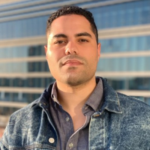
Erickson Gonzalez
Erickson Gonzalez is a Manager in Global Enterprise Affairs at Capital One and a Captain in the U.S. Army Reserves. He brings together experience in corporate strategy, public affairs, and military leadership to help organizations solve complex challenges through thoughtful planning, collaboration, and execution. At Capital One, he supports initiatives that strengthen the company’s community impact and enterprise affairs efforts, while helping drive strategic programs that create meaningful value for customers and communities. Throughout his career, Erickson has built expertise in program and portfolio management, organizational change, and business technology platforms, including SAP, Salesforce, and ServiceNow. Known for simplifying complex problems into practical solutions, he has led cross functional initiatives and strategic projects that improve organizational performance, stakeholder engagement, and operational effectiveness. His leadership experience spans both the private sector and military service, giving him a unique perspective on leading teams in dynamic, high pressure environments. In addition to his professional responsibilities, Erickson is passionate about mentoring emerging leaders and helping others reach their full potential. He combines a commitment to lifelong learning with a servant leadership philosophy that emphasizes adaptability, continuous improvement, and developing people. Whether serving his country, leading strategic initiatives, or coaching others, Erickson is dedicated to building stronger organizations and empowering those around him.