
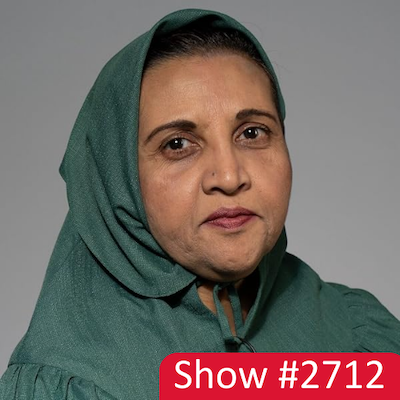
29 Dec December 30, 2025 – Niche Navigator Dr. Munira Zahabi and IPO Guru Mike Gould
Transcript
0:04 Intro 1
Broadcasting from AM and FM stations around the country. Welcome to the Small Business Administration award-winning School for Startups Radio, where we talk all things small business and entrepreneurship. Now, here is your host, the guy who believes anyone can be a successful entrepreneur, because entrepreneurship is not about creativity, risk, or passion: Jim Beach.
0:26 Jim Beach
Hello, everyone. Welcome to another exciting edition of School for Startups Radio. I hope you’re having a fantastic week, a little bit off, a little bit on, a little bit New Year’s excited, planning who you’re going to kiss on New Year’s Eve. I just hope you have big fun plans for the evening, and here we are at the end of the year. Did you do well on your goals? Did you achieve everything you wanted? And how are you going to move forward with your goals? Again, I have always said, take a business card and, on the back of it, write down the categories that are important to you: work, growth financially, workout and exercise, spiritual routine, and your personal life with your wife and family. Write down those categories. There should be seven or eight of them, and then make one tiny little goal for each of them. Like for spirituality, say, go to church once a month more, or something like that, and then give it to your spouse or a friend and say, “Hold me accountable.” That’s all we want to do, and that will be a great way of marking your progress, holding yourself accountable, and having someone help you with that. We have an amazing show for you today: the Niche Navigator. Dr. Munira Zahabi is with us. She is a big-time coach and podcaster and a voice in the community, and we have a great conversation that’s really a fun one. I’m looking forward to you hearing it. And then we have Mike Gould as a greatest hits. We are again rebuilding our catalog of files that got lost online. And you want to hear this one. He has a job title like this. Listen to this job title: Lead Client Partner, IPO Services, Senior Partner. He’s in charge of IPOs for a little company called PwC, PricewaterhouseCoopers. In other words, he is the head of IPOs, going public, for one of the top three or four accounting companies in the world. I think there’s four now. There used to be seven. There’s four now, I guess, and no one can tell us more about it. So this is a greatest hits you will want to catch up on and learn from. Mike is an amazing resource, and we were honored to have him. Thanks for being with us. Happy New Year. We will talk next year.
3:02 The Real Environmentalists Ad
Tired of talking, no action on climate change? Introducing The Real Environmentalists, the bold new book by Jim Beach. It’s not about activists, politicians, or professors. It’s about the entrepreneurs, real risk-takers, building cleaner, smarter solutions not for applause, but for profit. The entrepreneurs in the book aren’t giving speeches. They’re in labs, factories, and offices, cleaning the past and building clean products for the future. The Real Environmentalists is available now, because the people saving the planet aren’t the ones you think. Go to Amazon and search for The Real Environmentalists.
3:32 Jim Beach
We are back at it again. Thank you so very much for being with us. This is take two. I bit my tongue on take one. How about that? I’m very excited to introduce my first guest today. Please welcome Dr. Munira Zahabi. She is a very recognized figure in the coaching and podcasting space, and also at the intersection of those. Her number one thing is to give your business a voice, and she is known as the Niche Navigator. That’s it, and her website is thenichenavigator.com. She started off in pharmacy and was enjoying that career, but decided she wanted to transition out of healthcare, and so she started working on other things, and that has developed and grown into the Niche Navigator. Pretty cool. Dr. Zahabi, welcome to the show. How are you doing? Zahabi, I’m sorry. Dr. Zahabi.
4:29 Dr. Munira Zahabi
Thank you so much. I am very honored and humbled to be on your show.
4:35 Jim Beach
Well, thank you. Thank you. So tell us about what you’re doing in the podcast. And I love where you’re from. Tell everyone where you’re broadcasting from.
4:43 Dr. Munira Zahabi
Today, I am in Chicagoland. So greetings from Chicagoland, everybody.
4:51 Jim Beach
Tell us about what you’re doing.
4:53 Dr. Munira Zahabi
I am currently helping coaches, authors, entrepreneurs, anybody who doesn’t have a voice, to give their business a voice. Now, what that means is that many people that I’ve talked to don’t usually come out right and tell us what they are doing and why they’re doing it. They’ll tell you, many people that I’ve spoken to, you’ll say, “I’m an accountant.” Doing what? Or, “I’m a doctor.” Doing what? And they don’t talk about their specialty. So I give them that platform where they can come on and talk about their specialty, their niche, and tell us exactly what they are doing and how they are doing it. I’m very passionate about the fact that you have to give your business a voice.
5:48 Jim Beach
Well, what’s wrong with just saying, “I’m an accountant”? I know what that means. I know exactly what you do. Now you’re an accountant, and since you didn’t tell me anything special, like, you know, “I am an NBA sports accountant,” I assume you’re just a generic accountant, and that’s probably what they are. What’s wrong with that?
6:08 Dr. Munira Zahabi
Yeah, there’s nothing wrong with that. It’s just that then they complain that I’m looking for visibility in my business, but you’re not giving the whole picture.
6:18 Jim Beach
Yeah, well, the reason you’re not visible is because you’re just a boring accountant, right?
6:22 Dr. Munira Zahabi
So you need to tell me what interesting things you have done, right? Like, what exactly are you? What kind of an accountant? I mean, within the same field, there are so many things. You could be a forensic accountant. You could be an accountant for a healthcare facility. You can be an accountant for just women, you know, and what are the mistakes these people are making? So you have to tell us, because how do we know how good you are unless you share that with us?
6:55 Jim Beach
That’s right. That’s right. Well, more than that, if you just… let’s go to a Chamber of Commerce meeting. Okay, we’re at the Chamber of Commerce, and we meet 10 people, and we take their hand for about 10 seconds, and we talk to them for maybe 60 seconds. At the end of that day, will you remember any of those people? I know one of them was an accountant, but I can’t tell you which guy it was. It might have been a woman who was the accountant. I don’t know. I don’t remember any of them.
7:20 Beach
Isn’t that how you normally end up from a Chamber of Commerce Meeting?
7:24 Dr. Munira Zahabi
Yes. So networking is just that: go meet people, take their cards, go home. But if you tell me something interesting about yourself, and you tell me what it is that you’re doing or what you want to achieve, then you are a memorable figure, and you remember that person. So if I get a client who wants to look for an accountant, it’s my duty to then recognize this person that I’ve met two weeks ago and say, “You know what? I have a name. Here’s a card. Go talk to them. Maybe they can help you.” So the idea of giving your business a voice is that you want to, one, become a memorable platform person, and then be on a platform where people can refer business to you. We go to a Chamber of Commerce meeting, or any networking event, hoping that something is going to happen. It doesn’t happen if you don’t give your business your voice.
8:24 Jim Beach
All right, is there a process that you use to help do that for a client? How do you make that happen?
8:33 Dr. Munira Zahabi
Well, most of the time, I sit with them and talk to them. And one of the ways, the best way that I think, is that if you get on a podcast, on somebody else’s podcast, and talk about your career, your aspirations, then you’ve gone one notch up. And all you have to do is find podcasts, or find a platform where you can just keep talking about it. And I believe that podcasts are the one way you can just advertise yourself, in some ways, for free, and you gain access to the host’s audience.
9:17 Jim Beach
Yes, and it’s a lot easier to get on a show if you have a particular memorable niche or tagline, right?
9:32 Dr. Munira Zahabi
Not always. Sometimes people don’t have a tagline, but they just come on the show just to be there, to be able to see what audience is there. See, here’s the thing: I’ve been in the personal development field for almost 10 years now, and every time you turn around, any coach is going to tell you, you need to find out who your ideal client is. You need to know where they are hanging out, and there’s no formula to figure that out. How do you do that? Well, I started a podcast just to ask other people what their ideal client was. That was the reason I started my podcast. And what happened was several people came on my podcast, and one of them was asked to be an emcee at the ceremony. One of them was asked to go speak at a university, and one of them decided he liked it so much that he kept getting on different podcasts, and he got visible on different podcasts. So that’s what happens. You know, you have to figure it out. And one way to figure out where your ideal client lives or hangs out is you have to find other hosts who have already created that array of people, because they already have a good audience. All you have to do is present yourself and do that, exactly what I’m doing with you today.
11:07 Jim Beach
So how do you find out what shows to be on and/or how to get on the shows?
11:13 Dr. Munira Zahabi
There are 8 Billion people on Earth right now, and there are 247 million podcasts in every language and every country, and there’s almost 250 million people who are listening to a podcast at any given time in the world. So there’s a podcast for anything that you want to look for. First, go look for the podcast. And two, of course, there are softwares out there that can help you figure that out. But join Facebook groups with podcasts and tell people that you want to be a guest. There’s so many people looking for a guest, because if I was just going to talk myself, then that’s boring. I need somebody else to give me a voice on my podcast, too, because then it’s two ideas merging together instead of just one.
12:13 Jim Beach
That’s very true. Makes a lot of sense. It’s a lot easier to have a conversation than to just do a dialogue for an hour or something like that. So you do coaching for all… Are you a podcast coach, or is that just a branch of your business?
12:35 Dr. Munira Zahabi
I am actually a communication and marketing coach, and one of the ways I help my clients market is to be on a podcast but I can also help people figure out their DISC styles, which is a test that you take that takes about seven minutes. You talk about yourself, you just choose the right answer, and we can figure out what personality you have.
13:07 Jim Beach
Let’s do that right now, and the people at home can do it for themselves.
13:11 Dr. Munira Zahabi
Although they have to fill out a form that I have. Reach out to me, I send them the form, they fill it out, I do the work behind it, and then send them the results.
13:22 Jim Beach
Okay, can we do me? Do you want to do me and see what my personality is?
13:28 Dr. Munira Zahabi
I can do it offline, if you don’t mind. It’s going to take about seven minutes.
13:33 Jim Beach
Seven minutes. We have seven minutes. Let’s do it online. Okay, give me one second. Okay, so this is a DISC. D-I-S-C. What is it going to test for?
13:43 Dr. Munira Zahabi
Your personality.
13:47 Jim Beach
Like a good person or a bad person?
13:49 Dr. Munira Zahabi
No, it tells you what kind of personality. It’s a personality test. Are you a dominant person? Are you a fun-loving person? Are you very meticulous? Or are you an attention-to-detail kind of guy?
14:03 Jim Beach
I like detail. I like to pay attention to the details, for sure.
14:09 Dr. Munira Zahabi
Who doesn’t, right? But everybody has the four. It’s not like you’re separate. It’s not like you have all these energies separate. But what is your dominant personality? So let me ask you this: what is your ideal client’s current identity? What are they doing? Are they a part-time, struggling writer, or a beginner investor? What are you?
14:44 Jim Beach
Me or the client? You? So you’re asking me… I don’t understand the question then.
14:54 Dr. Munira Zahabi
What is it that you are doing if you are looking for your ideal client, and what would that ideal client look like? Is he a customer? Is he a writer? Is he an investor? A real estate agent?
15:09 Jim Beach
No, he’s a business owner.
15:11 Dr. Munira Zahabi
Okay. So, what is your client’s real identity? What does he want to do? What do you want to do, finally? I mean, you’re a business owner right now, but you have a radio show. If you grow up and move out of this, what is it that you want to do?
15:32 Jim beach
Me personally, or my client? My client? Well, I don’t want to change what I’m doing. I’m going to stay this forever.
15:48 Dr. Munira Zahabi
Okay. All right. So you are a radio show host and a business owner, right?
15:51 Jim Beach
Yep.
15:54 Dr. Munira Zahabi
What is your client’s most important area of focus?
16:00 Jim Beach
Becoming famous.
16:03 Dr. Munira Zahabi
Okay. All right. And right now, your ideal customer wants to do what? So what does your ideal customer want to do? I mean, we’re talking about you, but that would be the question for everybody, because you’re looking for your ideal client, right? Right. Oh, wait, wait, wait, wait. Hang on a second. That’s not right. That’s not right. I am sorry. We have to do something else here.
16:31 Jim Beach
I am very sorry. We don’t care. We’re learning as we go. So that’s cool.
16:38 Dr. Munira Zahabi
Okay. Here, so let me ask you a question. In a group setting, I am more likely to either: one, take charge, lead the discussion, energize and motivate; two, listen and maintain harmony; or three, pay attention to details and procedures.
17:04 Jim Beach
The third one, listen and maintain harmony. Yes. Well, that was the second one, wasn’t it? Yes, second one. No, the third one. I wanted the third one. What was the third option again? Pay attention to details. Details. Yes. All right.
17:20 Dr. Munira Zahabi
When faced with a problem, my initial reaction is: one, analyze the data and consider all possibilities; two, seek input and ideas from others; or three, find a compromise and avoid conflicts.
17:39 Jim Beach
I like that last answer.
17:41 Dr. Munira Zahabi
Find a compromise and avoid conflict. Okay. In social situations, I tend to: speak confidently and assertively; be outgoing and enthusiastic; be patient and a good listener; or be factual and detail-oriented.
18:02 Jim Beach
Third, be a good listener. Okay. I like that. Thank you. All right.
18:10 Dr. Munira Zahabi
Number four: I am motivated by recognition and appreciation from others; accuracy and following established rules; achieving results and winning; or stability and maintaining relationships.
18:28 Jim Beach
What was the first one again?
18:30 Dr. Munira Zahabi
Recognition and appreciation from others?
18:33 Beach
Sure, let’s go with that one. Okay. Number five.
18:37 Dr. Munira Zahabi
When working on a project, I prefer: one, taking charge and making decisions; two, collaborating and working with the team; three, promoting cooperation and avoiding conflicts; or four, ensuring precision and following guidelines.
18:54 Jim Beach
First one, taking charge.
18:57 Dr. Munira Zahabi
Okay, My communication style is typically: calm and understanding; enthusiastic and persuasive; precise and focused on details; or direct and to the point.
19:00 Jim Beach
The second one, enthusiastic and persuasive.
19:03 Dr. Munira Zahabi
Yes. Okay. Number seven: I feel most comfortable in a work environment that: one, provides opportunities for leadership; two, encourages teamwork and social interaction; three, offers stability and a supportive atmosphere; or four, emphasizes organization and structure.
19:36 Jim Beach
The first one. Okay.
19:39 Dr. Munira Zahabi
Number eight: when faced with a challenge, I tend to: one, maintain peace and avoid conflict; two, confront it head-on and take risks; three, seek input and collaborate with others; or four, follow established methods and procedures.
19:59 Jim Beach
Second one.
20:00 Dr. Munira Zahabi
Number nine: I prefer tasks that: allow me to take control and make decisions; involve working with and influencing others; promote stability and require patience; or require attention to detail and precision.
20:18 Jim Beach
First one. Okay.
20:21 Dr. Munira Zahabi
Number 10: in a conversation, I am more likely to: provide facts and information; engage and entertain others; interrupt and assert my opinions; or listen attentively and empathize.
20:38 Jim Beach
Second one, engage. Okay.
20:41 Dr. Munira Zahabi
Number 11: when working under pressure, I: stay focused and strive for results; thrive on excitement and adrenaline; remain calm and avoid conflict; or pay attention to details and follow procedures.
20:59 Jim Beach
Second one, adrenaline. Okay.
21:03 Dr. Munira Zahabi
Number 12: I enjoy receiving recognition for: my ability to maintain harmony and cooperation; my precision and attention to detail; my influence and ability to inspire others; or my accomplishments and achievements.
21:22 Jim Beach
Fourth one, accomplishments and achievements.
21:25 Dr. Munira Zahabi
Number 13: I approach deadlines by: taking charge and driving progress; motivating and involving others; seeking consensus and avoiding conflict; or planning and organizing the necessary steps.
21:43 Jim Beach
First one, take initiative. Okay.
21:47 Dr. Munira Zahabi
Number 14: I find it easy to: adapt to different personalities and situations; connect with people and build relationships; follow rules and adhere to established procedures; or make decisions quickly and take risks.
22:05 Jim Beach
Ooh, I liked number two, but four is better, so I’ll do four.
22:09 Dr. Munira Zahabi
Okay. All right. Number 15: when dealing with criticism, I tend to: defend my position and assert myself; look for common ground and find solutions; stay calm and try to understand the other’s perspective; or analyze the feedback and consider areas for improvement.
22:32 Jim Beach
Second. Okay.
22:35 Dr. Munira Zahabi
Number 16: I value a work environment that: fosters teamwork and collaboration; rewards individual achievements; emphasizes accuracy and quality; or maintains a peaceful and supportive atmosphere.
22:53 Jim Beach
Second one, achievement. Okay.
22:56 Dr. Munira Zahabi
Number 17: I enjoy tasks that involve: overcoming challenges and taking risks; persuading and influencing others; promoting cooperation and building consensus; or organizing and paying attention to details.
23:37 Jim Beach
I like number four for a meeting, yeah.
23:41 Dr. Munira Zahabi
Number 19: I handle change by: adapting quickly and seeking new opportunities; influencing others and creating excitement; maintaining stability and finding common ground; or assessing the details and potential impact.
24:00 JIm Beach
First one. Okay.
24:03 Dr. Munira Zahabi
Number 20: I am motivated by: social recognition and appreciation; challenges and achieving goals; precision and maintaining high standards; or creating a harmonious and supportive environment.
24:18 Jim Beach
First one. Okay.
24:21 Dr. Munira Zahabi
It takes a minute for me to figure these answers out. Do you want to do something else in the meantime?
24:27 Jim Beach
Why don’t we just pause for a second and you can do that?
24:31 Dr. Munira Zahabi
Okay. Give me a minute. I’m going to put myself on mute.
24:42 Jim Beach
Okay, so…
24:47 Jim Beach
Is it possible that you could find out that I’m a psycho killer from this test and that I need to be put away?
24:53 Dr. Munira Zahabi
No, of course not.
24:57 Dr. Munira Zahabi
No, no, but you have a high…
25:00 Jim Beach
High D? All right, what does that mean? Okay, so you are…
25:08 Dr. Munira Zahabi
You are a high D. This profile is an assessment that reveals your behavioral style. It’s dominance, influence, steadiness, and conscientiousness. What it measures is D-I-S-C. So you are a high D that focuses on results, action, and directness.
25:33 Jim Beach
Yeah, I agree with that. Okay.
25:35 Dr. Munira Zahabi
See, it’s very easy. And the thing is, once you know your personality, you can take this test and understand other people’s personalities. So this is so wonderful, if you know who you are, and how you can, one, recognize other people’s personalities, and then learn how to talk to them in a language, or in a way, where they are comfortable and you’re not just assertive. You know, there are some people who are meek, and then when they find a high D, they just want to go and hide and say, “Oh my God, this guy is really mean.” So you learn how to deal with other people’s personalities.
26:19 Jim Beach
Yes, I’ve been told that. I mean…
26:25 Dr. Munira Zahabi
I didn’t mean to say it that way, but…
26:27 Jim Beach
Well, I’ve told stories on the show here. Good, loyal listeners will remember some of my stories. Probably the most famous is the Caroline story: my entire office went to lunch one day, and Caroline was the receptionist, and she’d only been there two weeks, probably. And we came back and she said that the VISA credit card company had called, and long and short, she answered questions that she shouldn’t have answered because she just didn’t know. It wasn’t her fault. We had never told her, “Don’t answer questions to the VISA credit card company.” She was just trying to be helpful. It ended up costing me about $700,000, and I said to her, “You’re taking the food out of my children’s mouth.” and she cried and she cried and left and never came back. Oh, that was 30 years ago. I want to point out: more than 30 years ago, actually 32 years ago. So I haven’t done that since then.
27:40 Dr. Munira Zahabi
To understand that, people like high D people are the ones that you want in charge when the ship is going down, right? Because they’re the ones who step up and say… you know, they’re the ones who organize very fast, and they are the no-nonsense people. If somebody is crying and the ship is going down, you say, “Just go away from me and don’t mess my head,” things like that. But these are the ones that are pretty… you know, they’re taking charge. The people who don’t think twice. They are the people who say, “Where do I sign? Don’t give me the fluff. Just give me real time.” “I already told you I want that,” right?
28:23 Jim Beach
I love it. So yeah.
28:27 Dr. Munira Zahabi
And because we did this, I’m going to send you the whole report in a few minutes.
28:33 Jim Beach
Oh, okay, great. Then I would love that, and I’ll send you a check. Thank you. So back to you, though, that was fascinating, and thank you so much for doing that. That was really interesting. And I think I’ve done that before, like in graduate school and stuff like that. Again, that was 35 years ago as well. But that is interesting to learn, and I think everyone should do that. So I hope people do that. How many different shows or podcasts are you involved with now?
29:03 Dr. Munira Zahabi
Personally, I’m involved with my own show. My show is called Munira’s Musings, and I’m everywhere you can find a podcast. But I often try to get on somebody else’s show, because I just want to, one, connect with the host, and two, just want to see if their audience can resonate with me, right?
29:27 Jim Beach
Yep, that’s what it’s about. What are your thoughts on hiring someone to get you on a bunch of shows? What should that cost? How many interviews do you think? What do you think the market rate for acquiring interviews is these days?
29:47 Dr. Munira Zahabi
Well, I haven’t paid anybody, but I know somebody who puts you on 50 shows for $17,000.
29:57 Jim Beach
Shows for $17,000?
30:00 Dr. Munira Zahabi
Dollars, right? And they do this because they think that this is something that you should do. And there is a market out there because people don’t have the time. There are others who are going to put you on a show for, you know, $50 per show. If they pitch you to a show host and they take you, then you pay the bucks each. Yeah, $50. And then, of course, if you do many, then, of course, there is a breakdown, right?
30:31 Jim Beach
Very, very interesting. All right. Well, how do we find out more, follow online, and listen to your shows?
30:39 Dr. Munira Zahabi
My podcast is called Munira’s Musings, my first name and then Musings. And if you go to The Niche Navigator and Google me, there’s only one Munira Zahabi in the world. So that would be me.
30:53 Jim Beach
Thank you so much for being with us. That was a fun game to play, and we’d love to have you back. Thank you so much.
31:00 Dr. Munira Zahabi
Thank you. Thank you, James. Bye-bye.
31:20 Intro 2
Well, that’s a wonderful question, actually. Oh my gosh, I love the opportunity to do this. Thank you, Jim. Wow. That’s a great one. You know, that is a phenomenal question. That’s a great question. And I don’t have a great answer. That’s a great question. Oh, that is such a loaded question. And that’s actually a really good question. School for Startups Radio,
31:40 Jim Beach
And welcome back to School for Startups Radio. Again, thank you so much for being with us today. You know, the absolute mecca of being an entrepreneur, the home run, the pinnacle of success, is the famous IPO. Everyone wants to take their company public, have the initial public offering, and get out there and become a billionaire, right? That is the dream that we all have. And so I’m very excited today to introduce you to my first guest. His name is Mike Gould. He is the Capital Markets Partner at PricewaterhouseCoopers, PwC. He’s been doing that for 25 years, providing accounting and financial reporting advisory services here in the United States, also in South Korea and the United Kingdom. He is the head of PwC’s public offering services practice, and he travels around the country advising big businesses, and businesses that hope to get big, on how to go public. Mike, welcome to the show. How are you doing today?
32:41 Mike Gould
Good morning. Thanks very much. Yes, happy to be here.
32:44 Jim Beach
That is the ultimate dream, isn’t it? Aren’t you the seller of the ultimate drug on Earth, Mike, the IPO?
32:53 Mike Gould
That might be true. I have to say, the best thing about my job is I get to travel the country and talk to businesses that hope to launch their IPO. Many, many times I’m talking to sort of the next big thing and hearing about how these companies have grown. Their businesses are fantastic.
33:11 Jim Beach
I imagine you run up against some amazing stories, so that does sound like a fun job. What are the characteristics that you look for, Mike? Is it as simple as a billion-dollar industry, a company doing $100 million in revenue? Are there certain parameters that you look for? Is it just the coolness of the story? What are you looking for?
33:32 Mike Gould
Yeah, it really depends. There’s been, you know, a lot of good stories come to market over the last few years. As you probably know, 2014 was really a bumpy year for IPOs. We had 300-plus IPOs. It’ll be slightly less this year, probably around 200. A lot of those companies, though, in the last couple of years, have been in the technology and the biotech space. You know, some of the technology stories that I get to hear are fascinating. But, you know, quite frankly, what we’re looking for is the good fundamentals. Do they have the right management team? Do they have the right story? What’s their income trajectory? What’s the growth trajectory? And, quite frankly, are they ready to be a public company? And so there’s probably no one deciding factor, and certainly no bright line around income and revenue. It’s more about the overall story.
34:23 Jim Beach
Okay, are there any very sketchy rules of revenue? If I’m doing $10 million in revenue, that’s not big enough to qualify. Is it my rule of 100?
34:36 Mike Gould
It really depends. It really depends on the sector. I mean, if you look at the wealth of biotech companies that came to market in the last couple of years, many of them have been pre-revenue. But, you know, what makes them stand apart is that they’ve got a good story. You know, they’re obviously expecting to achieve revenue, expecting to achieve approval or profitability in the near future, and on their company’s growth curve, they’re at the right inflection point in terms of being able to go to market. On the other side of the spectrum, if you look at, you know, a mature industrial company, yeah, that company is expected to have, you know, a significant amount of revenue and profitability, and investors are looking at different reasons to invest in a company like that. So there really is no bright line around, you know, income, profitability, etc. We’ve really seen different types of companies come to market over the last few years.
35:28 Jim Beach
Mike, I am, I guess, about as old as you. I think you and I are roughly the same age, and so both of us remember the silliness of 2000, you know, all of 99, when people could literally go public on the back of a napkin, it seemed. It seemed like everything was crazy. And, of course, the market crashed. There, I see some deals that I look at and I go, that just doesn’t make any sense to me. You know, I just don’t get it. Where would you put today, early 2016, in relation to historical standards? Is the market frothy right now? Does the market make sense to you? Is the market slow and deals that should be getting done are not getting done? Give us a historical perspective on where we are today.
36:17 Mike Gould
Yeah, I think you did a nice job of sort of setting the scene there. Back in, you know, 99, 2000, you know, the volume of IPOs was, quite frankly, off the charts. Things dropped off dramatically after that, picked up slowly up to about 2008, and then there was another sort of drop-off. And then IPOs picked up again. Nine, ten started to look good. Eleven, twelve, thirteen, fourteen was the bumper year. Like I said, about 300-plus IPOs in 14. This year, 2015, ended up being, you know, around about 200 IPOs. And I think of that as sort of a new normal. I don’t think 200 is unrealistic to expect for 2016, but, you know, it’s early days yet. You know, who knows? There’s a natural cadence to how these IPOs tend to price throughout the year. You know, we tend to see December, January is fairly quiet. Companies, by the time they get to sort of a January, February timeframe, investors want to see year-end numbers, and things tend to pick up again in March, April, May, June. You know, May, June tend to be really good months for IPOs. July and August, it quiets down. And then September, October picks up again. So as we look out into the rest of 2016, you know, I’m expecting us to sort of return to what I would describe as the new normal. The 200 IPOs that we saw in 2015 is a good benchmark. Obviously, I don’t have a crystal ball. No one can really tell exactly where we’re going to go. But, you know, it’s all about market windows. It’s all about being ready. It’s all about getting your business ready to operate as a public company, so that when the market windows open, you know, you can launch. And that’s what we do at PwC. We help companies get ready. We work with companies as they think about approaching the public markets many times two, three years in advance of that transaction. And our goal is to help these companies with their story, help them get ready, so that when those market windows open, they can launch and they can maximize their value.
38:29 Jim Beach
All right. Mike, you said the words “ready” three or four times now, and so I’ve got to ask: what are the basket of things that we need to be, quote-unquote, ready? Do we have to have a full-time CFO? Do we have to have profit? Obviously, if we’re a bio, we probably don’t need profit. Do we need to have a certain legal structure? What are things in the basket that define ready?
38:55 Mike Gould
Yeah, that’s a great question. At PwC, we think of that really in two buckets. We think of what I would describe as the going-public process, which is the immediate working with the bankers, the lawyers, getting your story straight, putting the registration statement together, working through the SEC and the roadshow, and finally getting the money in the door. The second bucket of topics is probably what you’re addressing here: what we call being public, getting the company ready to operate as a public company. And that’s things like, you know, in the finance department, getting a CFO, getting a finance team that can close their books in 45 days. As a public company, they’re probably going to have more to do and less time to do it. To get those financial statements ready, they need to be able to forecast. Generally, the FP&A function needs to get enhanced. They need to have, you know, a robust ability to predict their results going out, at least for a couple of years. Internal controls tend to take center stage as well, as you’re probably aware. You know, public companies have to do a number of things around internal controls to get their internal control environment ready to be a public company. Tax structuring is another one you mentioned, sort of legal and tax structuring. We see a lot of companies having to put in a new tax structure that’s the right or the optimal tax structure to take the company public, and that’s something, quite frankly, that catches a lot of companies by surprise. And then you’ve got things like employee benefit plans. You’ve got governance, leadership, a new board. Frankly, there’s a long list of things that companies need to worry about as they start to think about what does it mean to operate as a public company.
40:35 Jim Beach
What was the sexiest deal of 2015, and can you give us some of the companies that the industry, the market, is looking at for 2016?
40:48 Mike Gould
Yeah, we can’t typically comment on specific companies, you know, for 2015 and 16. What I would say is, you know, in 2015 we had a couple of themes around sectors. So you’ve seen, historically, the last few years, biotech and technology have really been popular. 2014 energy was hot. That sort of cooled off in 2015. For 2016, I would imagine that, you know, technology will continue to pique investors’ interest. And when I look at the returns that you’ve been getting from IPOs compared to just, you know, a standard sort of S&P-type index, investors are being rewarded for investing in those particular companies. So technology companies, retail and consumer, some FinTech, financial services-type companies have had great rewards to investors that have invested in them. So I expect that to continue into 2016.
41:52 Jim Beach
Why did 2015 decline? Was it because of interest rates? Was it the market conditions at a macro level? Why are you saying that 2015 there were a little bit fewer IPOs? Is there a fundamental reason for that that we can learn from and extrapolate what will happen in 16?
42:14 Mike Gould
Yeah, 2015 was almost a tale of two halves. The first half of 15 was very strong, and I’d say we were roughly on pace for 2014 comparable volume. Then, in the summer, as I mentioned, IPOs typically slow down in the summer. July and August was quiet, as it usually is. But there was, you know, a number of sort of macroeconomic type factors that happened in the summer. Volatility picked up. You know, quite frankly, an uncertain environment. And then when everybody sort of came back after the break in September, really the appetite just wasn’t there anymore. Volatility had picked up, and there was a number of things that were going on sort of outside of a company’s control that pushed the IPO market windows. I wouldn’t say closed, but it certainly made it harder for companies to get out to market in the second half of the year.
43:06 Jim Beach
And will an election and possible changes at the Federal Reserve with interest rates, will those sort of things lead to a hot 16 or a cool 16?
43:19 Mike Gould
Yeah, I mean, I think we’re going to see more of the same that we saw in the second half of this year. Those comments I made about market volatility and the uncertain environment are certainly going to continue into the rest of 16. You know, interest rate speculation, the election, all of those things make it a little harder to predict where the economy is going to go, and that makes it harder to sort of get out and price around an IPO. The other thing that we’re seeing that I sort of see as a theme for 2016: you know, very often, companies that go public, or that put themselves out there to go public, go down what we call a dual track. So it’s not just a public offering, but they’re also considering some sort of company sale, corporate sale, whether it’s a financial investor like a private equity or venture capital, or, you know, something more strategic, where it’s a similar company that comes in to buy. I think we’ll see that as a continuing theme in 2016, and that the volume of M&A transactions that sort of picked up in 2015 I think will continue into 16. Yeah.
44:29 Jim Beach
But M&A is just not nearly as sexy, you know, which is strange to me, because you get the money and you take it off the table with an M&A, usually, right? If you get bought, you should normally get paid, whereas if you do an IPO, you’re under restrictions for… it can be years, right? Do you agree with me that M&A just isn’t as sexy to the entrepreneur as the IPO?
44:52 Mike Gould
Well, you know, I’m the IPO leader for our service. I live and breathe IPO. So, yeah, I think IPOs are sexy.
45:00 Jim Beach
Very, very politically said, Mike. Very good. Let me ask you this from an entrepreneur standpoint: how much time and money should they plan to take their company public? So let’s say I’m doing… I did a billion dollars this year in revenue, made a couple hundred million dollars in profit, I’ve got all of the things in place, I’m looking good, and I decide that I want to try to go down this path. How long, how much money should I plan for all of this to take? Can I get public in 2016 if I haven’t started yet today?
45:41 Mike Gould
You know, obviously the classic answer is, it depends. The best answer is, call me and I’ll walk through your scenario and we’ll figure it out. I will say, though, that, you know, most companies that I talk to, you know, that I’m talking to right now, that are kicking off the process, if they say they’re trying to get effective in the summer or before the summer, I say that’s a slim, slim chance of that happening by the end of the year, maybe. But most of the companies we talk to are a couple of years out, and there’s a couple of reasons for that. As you go down the IPO process, maybe 10 years ago, companies would phone up and sort of say, “I want to file a document,” but that ends up being very costly, very inefficient. It’s not the best way to get to market. And I think CFOs and companies have just gotten smarter over the years. Now what happens is, they call us up and they say an IPO is on the horizon. We think it’s, you know, a couple of years away. And the first thing I say is, that’s great. Let’s do an assessment. Let’s figure out all of the things that you need to do to go through those two processes I talked about before: going public. What issues are going to come up? What are the questions that are going to come up from the SEC? What’s the bank going to expect? What are the diligence questions that are going to come up? And then, from a being-public perspective, what are the gaps in the organization? Do you need to hire a new CFO? Do you need to put an HR team in place? Do you need to hire a general counsel? Do you need to do a tax structuring event? Do that readiness assessment, put all those things down on a sheet of paper, and hopefully plan it out for the next couple of years. That’s a much smarter, much more efficient, and, quite frankly, in the long term, a less costly way of going through the process, because you focus on the risk and you focus on exactly what you need to do to build the business. And many times, that’s the same things that you need to build the business, regardless of whether you were doing an IPO or an M&A event or you were just seeking capital from elsewhere. So, you know, the short answer to your question is: start early, do the readiness assessment, and then take a cautious and conservative approach, and a planned approach, to plan for that IPO event.
47:48 Jim Beach
What’s the biggest hurdle that an entrepreneur will face during this process? What is the thing that prevents deals from happening the most?
47:58 Mike Gould
Yeah, the biggest hurdle, quite frankly, is this ends up being an all-encompassing exercise, and if you’re not careful… And what we see, so the worst-case scenario is a company gets wrapped up in a process like this, and they take their eye off the ball. The most important thing through a process like this is to meet your numbers, continue to operate, continue to be successful, and continue to focus on the business. The challenge is that a process like this is a complex process. It’s a long process, and it can be, you know, all-inclusive. And I think the biggest challenge is to make sure that you still focus on those fundamentals of what got you to be successful in the first place, and you focus on running the business.
48:41 Jim Beach
All right, great advice. I have never come close to the IPO. I haven’t gotten that far yet, of course, Mike. But I have raised venture capital, and when I raised venture capital, that’s all I did, right? I, as the CEO, basically had to turn the rest of the company over to my employees, my executive team. Is that the same sort of mentality that I should expect: that me and my CFO are going to spend the next two years, year and a half, getting ready for this IPO, and we better have a damn good team behind us to actually do what you just said, continue to make sure we hit the numbers?
49:23 Mike Gould
Yeah, that’s absolutely right. You need to have that team. You need to rely on your people, and you need to build that team so that you can start to focus on the longer-term strategic objectives, which might be to raise capital and do the IPO. As you go through the IPO process, there’s going to be, obviously, peaks and valleys, but certainly there’s going to be periods of time when the CEO and the CFO are on the road, they’re talking to investors, and they’re wholly concentrated on this process of raising the capital. And obviously, to make that successful, you have to build the team below. You have to rely on the people below you: strong finance team, strong COO, strong leadership team underneath the key executives.
50:10 Jim Beach
Is the IPO market… and I don’t know if this makes sense or not… is it investor-led, or is it company-led? Are investors out there calling, you know, their stockbrokers and saying, “I want an IPO. I want an IPO. Put me into an IPO,” and they don’t really care what the IPO is? Or is it more companies are pushing these IPOs out into the marketplace because they want the benefits, the wealth, of being public? You understand what I’m asking, Mark. Is this more of a push or a pull situation?
50:43 Mike Gould
I definitely understand what you’re saying. I think of it more as supply and demand, right? So there’s always been sort of a strong supply of companies. There’s lots of companies out there. And when you look at the pipeline, you look at the number of companies that are on file with the SEC, there’s always been, you know, a strong pipeline. And when we look at the sort of success of the market, and we look at that chart that sort of spans back to 99, 2000, it’s more about, you know, what’s the demand from investors. And the things that have changed over time: the volatility, the uncertain environment, the returns, quite frankly, from prior IPOs. I think that’s what changes the investor appetite. But, you know, we certainly see, and I continue to see, and I continue to get calls from my clients where, you know, they are providing the supply. They’re providing that demand for capital. They want to take their companies on the road. They want the capital to be able to invest and grow their businesses. So I don’t think over the years, and like you said, I’ve been doing this 25 years, I’ve seen a consistent supply of companies that want to get out. And I think the volatility, or the sort of changes in volume of IPOs, is a little bit more investor-led, in terms of, you know, do they have the appetite to invest in IPOs, which, quite frankly, are a little bit more risky than investing in a sort of more established company when you have a lot more history, right?
52:19 Jim Beach
Mike, how can we find out more? Hire you to take us public, all of these sort of things. Follow you or PwC on social media, read some of the articles that you have written about getting ready for IPOs. I notice on your LinkedIn account you’ve got quite a few publications out there that would be great reading for our entrepreneur listeners. How can we do all of these things?
52:44 Mike Gould
Yeah, I appreciate that. You can clearly contact me, Mike Gould, or you can reach out to our website, pwc.com. I think we have a lot of materials made available to your listeners. We have a lot of great publications around the IPO process and specific issues within the IPO process. We’d love to talk to any company, quite frankly, that has an IPO on their radar screen.
53:09 Jim Beach
Mike Gould, thank you so much for being with us today. I hope you have an incredibly prosperous 2016, and I hope the market is, of all things, stable. Isn’t that what we really want? Just stability?
53:24 Mike Gould
Yes, stability and low volatility is a very good indicator to price an IPO. So, yeah, we’re looking forward to that in the rest of 2016.
53:35 Jim Beach
Thank you, Jim. We are out of time. Have a great day. Take care, and Happy New Year’s, if that hits your way.
Dr. Munira Zahabi – Marketing strategist, Author, Coach, and Host best known as The Niche Navigator
So the idea of giving your business a voice is that you want to one,
become a memorable platform person, and then be on a platform
where people can refer business to you.

Dr. Munira Zahabi
Dr. Munira Zahabi is a marketing strategist, author, coach, and host best known as The Niche Navigator. She helps entrepreneurs, coaches, and service providers uncover their ideal niche, define their unique message, and amplify their brand through strategic marketing and podcast visibility. Through her work she focuses on giving businesses a clear voice that connects with the right audience and drives growth using proven niche discovery and podcast guesting techniques. Her podcast Munira’s Musings features authentic conversations with thought leaders, entrepreneurs, and change makers that reveal practical insights and inspiring stories listeners can apply to their own ventures. Dr. Zahabi is also an international speaker and mentor whose coaching programs and resources are designed to help clients stand out in crowded markets and build sustainable success by aligning their message, niche, and marketing strategy.
Mike Gould – Initial Public Offerings (IPO) Leader at PwC
The biggest hurdle, quite frankly, is this ends up being a all encompassing exercise, and if you’re not careful and what we see and so the worst, worst case scenario is a company gets wrapped up in a process like this, and they take their eye off the ball. The most important thing through a process like this is to meet your numbers, continue to operate, to continue to be successful and to continue to focus on the business.

Mike Gould
Mike Gould is a repeat guest too, back with the quarterly IPO update from PwC! He is a Capital Markets partner at PwC. He has twenty five years of experience providing accounting, financial reporting and advisory services for the United States, South Korea, and the United Kingdom markets. Mike leads PwC’s Public Offerings services practice in the US, where he helps his clients access the debt and equity capital markets in the US, by providing them with technical and project management advice on accounting and financial reporting issues associated with the SEC registration process, Initial Public Offerings (“IPO’s”), 144a debt and equity offerings, divestitures and carve-outs, and conversions to and from IFRS and US GAAP. Mike’s specific technical knowledge focuses on accounting for carve-outs, purchase accounting, pro forma financial statements, stock compensation, principles of revenue recognition, segmental reporting, the SEC registration process and private equity exit strategies. As a result, he frequently takes on the role of an “IPO Advisor” to help his clients both with their initial registration process, and also with the process of preparing to operate as a public company.