

13 Jul July 14, 2026 – Manufactured Housing Nasir Ali and Correct Your Life John Bielinski
Intro 1 0:04
The AMS and Radio Network, broadcasting from AM and FM stations around the country. Welcome to the Small Business Administration award-winning school for startups radio, where we talk all things small business and entrepreneurship. Now, here is your host, the guy that believes anyone can be a successful entrepreneur, because entrepreneurship is not about creativity, risk, or passion. Jim Beach.
Jim Beach 0:26
Hello, everyone. Welcome to another exciting edition of School for Startups Radio. I hope you’re having a great day out there, riding the roller coaster and having some fun. The rest of the theme park too, because all of entrepreneurship is an experience. It’s a fun one, a bad one, a scary one, and a thrilling one-all rolled into one big ride that we call life. I hope you’re having a good one. Right now, I am excited that we have two great guests for you to learn from. First up, we have Ali Nasr. He is in the manufactured housing community industry. I know nothing about this, but boy, did I learn a lot in this interview, and it was really information that I’m glad I have. It’s a whole new industry for me, and so I think it’ll be useful to you as well. Then we have John Balinsky. He has been in multiple industries, a really interesting career switch, kind of in the middle, and now he is going to help us correct your life, which is all about what he’s doing. So we got a great show. Let’s go ahead and get started right now. Here we go. Very excited to introduce you to Nasr Ali. Ali is his last name, but he is actually so famous in his space that he just goes by that Ali, just like Madonna and everyone else. He has for his entire life. He’s actually second generation. Been in the manufactured housing community and has built quite a empire there for the last four decades. He has worked in helping build manufactured housing communities and leasing them out and selling homes there. He actually started at the age of 16 in the space and has worked with some 1,600 different projects exceeding $2 billion He’s also been very active in continuing his education and attended the Harvard Extension School. A lot of our guests have done that. Welcome to the show, Oli. How are you doing?
Nasir Ali 2:28
Hey, Jim. Thank you very much for having me. I’m doing great, and I’m so excited to be with you.
Jim Beach 2:33
All right. Tell us about your industry. Exactly what kind of manufactured homes are we talking about?
Nasir Ali 2:39
We’re talking, Jim. We’re talking about your great grandfather’s trailer that became a mobile home that then has evolved into a manufactured home. Homes that are just as built as just with the same quality and esthetics and appealing as as a six six built home that you find today. In fact, I would argue that they’re built even more durable. But the difference is the business that I’m in is rather than these homes being on an individual lot somewhere, I invest in communities. We acquire existing what we’re called trailer parks or mobile home parks, and we try to refer them to now as manufactured housing communities and focus on the strengths of those communities rather than than otherwise. And so we invest in in and I’ll use these interchangeably: mobile home parks, manufactured housing, community, because I’m still getting used to it. But MHCs, for short, and and we’ve been doing this. Like I said, as you said, actually, thank you for the intro. I might add, Jim, I’ve had the privilege of being I’m eighth generation in commercial real estate investments, second generation in mobile home parks or man-made seas, and so we’ve been at this since 1981, and I’ve learned a couple things along the way.
Jim Beach 3:46
I would imagine. So those these are still the things that we see on the highway being moved like an 18-wheel truck, right?
Nasir Ali 3:57
Absolutely. And what you’re seeing is is the the essentially the skeleton, right? You’re seeing the home, a home that may look like a regular stick building, even a two-story. I might add, Jim, with roof, with pitched roofs, and and island kitchens, and all of that. But what you see on the road is a section of that home, typically, and then multiple sections are put together, and it’s finally kind of assembled, if you would, or installed on site. And like I said, some of these new ones you just can’t tell the difference at all,
Jim Beach 4:24
right? And when you put two together, it’s called a double wide. My family loves to joke about that. Can you get past just two put together?
Nasir Ali 4:33
Oh, you can think of it as just you know almost like containers, if you would. I mean, you can stack them high and wide. Typically, double wide is what you’ve seen historically. Most communities, you’ll see often enough. You’ll see triple wides. You won’t see many beyond triple wides, not at least not in the residential application. But it can be done. And now you’re starting to see some vertical, so two-story homes that. That that that go up as well.
Jim Beach 5:02
Is it about 1000 square foot per trailer?
Nasir Ali 5:08
So so a double wide would be 1440 1400 40 square feet. You know, so 720 for a single. And yes, you’re typically going to see mostly double wide, so you’re going to see over 1000 square feet for an average manufactured home.
Jim Beach 5:29
Yes, your normal two bedroom, two bath condo is 14, 1500 square feet, so it’s almost identical to that. So
Nasir Ali 5:39
yes, and sometimes more often than not, they’ll squeeze in an extra a third room. I don’t like to call it a bedroom. Most most people do call it a bedroom, as you may agree. A bedroom is one that also has a closet and a door, a separate door. Some of these homes actually get a third proper bedroom in. Most of them get at least another den, so to speak. So, and you get you know two or two and a half baths. So I, I think you get a better footprint in a manufactured home than you do a comparably sized, you know, regular home or apartment.
Jim Beach 6:09
Right, and you know, I’ve done stick construction. My first job out of graduate school was actually in the construction space, and I love it. And you refer to stick construction. You know, if if it’s not done well, it can just be an absolute disaster. And you see the YouTube inspection videos all the time where horrible construction was used. I would think with an MHC that factory construction would allow for much better construction. You’re doing it indoors and not fighting the elements, right?
Nasir Ali 6:42
Absolutely. Not to mention speed and accuracy with all the machine-based, which is only going to improve, right, with technology and AI. But more importantly, I would argue that these homes are actually built. And I’m so glad you brought it up, Jim, because as you may remember from your days, you know the studs used in regular stick-built homes are typically two by fours. The studs used in manufactured homes are two by six. So the sturdiness, you know, we get a bad rap with all these tornadoes and hurricanes or whatnot because the it serves for a great, you know, news clip and gets the audience. It serves as bait, but in reality, try taking your sick belt built on with two by fours down the freeway, 60 miles an hour, and see how it holds up. That’s a good,
Jim Beach 7:25
yeah,
Nasir Ali 7:27
yeah. So, so we get the bad rap, and you know, because of the stigma and all these. So, but the reality is, it’s actually a better in terms of integrity and structural components. It’s it’s a better built home,
Jim Beach 7:38
and the finishes, as you pointed out, you even have islands in your kitchens now. The finishes can be top end, can’t they? How much does a decked out, totally nicest could be double wide get up to? Can you get a million dollar double wide these days?
Nasir Ali 7:57
You you probably yes, you can. The answer is yes, but but you know I mean even at half a million or 600,000 or so you’re going to get. So if I use cars as an analogy, it’s the same in in our in our industry, right? You can you can. I don’t mean to be biased in brands, but here I go. You know you can you can you can get a quality Kia level car, an economy car like a Kia, perhaps. You can get a quality, you know, midsize sedan. You can get a quality luxury, and you can get a quality exotic vehicle, right? So just like you can in all of those classes and vehicles, the same is true with with manufactured homes. Quality is there throughout the board, but then but then it’s of course better quality and some extra extra amenities, luxuries in the higher the higher brands that go up to five 600k You could easily you can spend a million dollars. I just think that’s rare for a double wide. You could you could probably do that easily for for a triple wide or beyond, and I would say even up to four sections, Jim, on or maybe on a private lot. I’ve seen it a few times, but typically I would say 500 to 600k is the high end for a good quality luxury home. Double one,
Jim Beach 9:11
and let’s take it to this next level. You’re more interested in the community. So, how many communities are you active with now? What is your role in them, and how many different homes would be in a community?
Nasir Ali 9:28
So that’s a great question. The number of let me start with the latter first. The average number for us that we look at in terms of communities, we want to see at least 100 plus units. We will invest in communities that that are at least 50 plus, and I would strongly suggest any of your audience members looking at investing in communities to to keep that number in mind as a benchmark, because that’s where you’ll see the economies of scale, the the efficiencies, the you know all the benefits of the density that you have versus you know maybe single family home investments where you’re. You’re scattered and spread out, and you have much harder difficulty with the efficiencies. So 50 plus, you know, I’ve touched over 10,000 units in this asset class over the decades, on average. And because I buy distressed and then stabilize, and most of the time we we exit, we flip, and we trade up. That’s what we’ve done in the family business, as a family office for the decades. We didn’t really hold them, Jim, long term. Although that’s changing for the family now. But at Rice 360 Ventures, we’re relatively new, and we’ve got our you know in in this as as a fund. So what we’ve done is taken my 45 years experience, and rather than having passive investors try to go you know reinvent the wheel and spend all that time doing that. I’m bringing that playbook that we’ve developed over the 45 years to the fund at Rice 360, and so we have one community under our belt here. But on average, I would say so far that is, and we’re in in a acquisition mode. But we and we’re looking at a couple of really exciting deals. Ones in the 50 million dollar range. Another one’s a very much a smaller deal that we’re going to announce soon. But in any case, I think to answer your question, on average, I hold somewhere between two 2000 to 3000 units at a given time. And like I said, I’ve touched over 10,000
Jim Beach 11:17
units. Does that mean 2000 times 50 because they have 50 units in each community.
Nasir Ali 11:26
Thank you. Yes, yes. Units. I’m using interchangeably. Do you mean the actual pads?
Jim Beach 11:30
Unity. A whole. No,
Nasir Ali 11:32
no. The units are in a community, so I might have 100 unit community. So 100 homes, 100 pads, etc.
Jim Beach 11:40
All right. Yeah. And you call them pads, and I rent a pad from you.
Nasir Ali 11:44
Yeah, I’m using these words interchangeably. Pads, we use a lot in the industry, but some people call them lots, units, homes, all interchangeable. There you go. We’re renting dirt, Jim. That’s I’m glad you brought that up.
Jim Beach 11:58
What does that cost a month?
Nasir Ali 11:59
So, and I’ll I’ll give you California as an example. I’m sure your audio station wide will have extreme you know different examples, but but in a tertiary market in California, we’re looking at five to 800 in a secondary market, 800 I would say 1200 and a primary market can easily be from 12 to you know $3,000 in some unit cases on the on the coastal communities. Now again, this is California. You can probably half that for each tier outside of California,
Jim Beach 12:28
right? Okay. I read about a place in California that’s I think it’s really close to Santa Barbara that each pad sells for a million dollars because it’s so exclusive and stuff, but it’s still manufactured homes. Do you know what I’m talking about?
Nasir Ali 12:45
Oh, absolutely. The coastal communities are just unbelievable. You know, I don’t know why I’m thinking of AI as kind of as a comparison. Like, you know, this technology that we’re seeing with AI is just crazy, unbelievable, and ridiculous and overwhelming. And I’m overwhelmed by the values placed on homes on coastal communities in California. You know, just because location-it’s all about location, right? And so, if you can have a a home in Malibu, for example, or Santa Barbara, locked in with a lot rent that’s much lower than than what you might pay for to live in a comparable sized home in Malibu. Otherwise, for example, you know, living in a if you have to live in a $5 million home and have a mortgage on a $5 million home versus being able to buy a mobile home for 500,000 or a million dollars and have a lot rent of you know maybe 1500 or 2000 a month, maybe even 3000 a month. That’s a lot cheaper than what your debt service is to live in Malibu for the same square footage in a regular stick build, and people have figured that out. And so these communities are always full and in demand, and those home prices keep going up.
Jim Beach 13:52
Is there a sense of community in our communities that we’re talking about? Do they become friends? Do they have cookouts, hang out at the pool together, usually or not.
Nasir Ali 14:03
This is exactly yes. The this is exactly why we wanted to move away from trailer park and mobile home park. Aside from the fact that these are quality built manufactured homes according to HUD code requirements. Now, aside from that point, I think the the emphasis was on community. That’s why we rebranded the industry or the asset class. These are thriving communities, probably more than than our today in our subdivisions, in our regular sick build subdivisions, because you know of the distance, just the distance alone between your sick build homes in a regular subdivision versus the proximity with your neighbors. You know, in a in a mobile home park community, there’s just force. There’s just more force interaction and and and and seeing each other. And so I think by default, just because of that, but also because there is more of a desire to watch out for each other, to look out for each other. You know, in these communities. And then and then grid management companies just. They do a great job of of promoting a community environment, right? So they’re holding events, they’re providing a dog walk, or maybe a vegetable garden, like we did in one of our communities recently, where where residents can actually grow vegetables there and share and exchange, you know, things like that as an example to build community. So it’s absolutely a vibrant one in our in our communities.
Jim Beach 15:23
All right, and you only go for distressed. Tell us the story of distressed, and how do you repair them? Aren’t they distressed because of the neighborhood that they’re in or the tenants that are there? How do you change those things?
Nasir Ali 15:38
So, so I historically only went for distressed, and I would I would I would use another description now to say yes, we’ll still do distressed, but more more value add plays, not necessarily completely distressed, but where there’s still an opportunity to improve the quality of the park, which of course means improving the revenue and the bottom line, and of course that leads to increased asset value, and so it’s not so much about what the neighbors outside of the community are doing, like you would experience with single family and maybe even some traditional multifamily. But it is, and it is about what the residents are doing within the community. If the and essentially what the management hasn’t been in control of, that’s provided a distress or a value-added opportunity. So, and sometimes, by the way, Jim, the community might just be fine. It may not be an issue where where you have residents doing anything perform. Excuse me, performing poorly. I couldn’t get that out. It may just be a situation where, and and most of the time, it is a situation where, for example, I buy communities that may be defined as distressed or value at place, but really the only challenge I’m dealing with is you know they’re half full instead of instead of fully stabilized. And if they’re half full, that means essentially I can buy the I can acquire the community at half the stabilized value, give or take, right? And so and and they’re only half full, not because of a lack of demand for affordable housing. I mean, I think we all understand that that demand is only increasing. I think the number these days they’re pushing around is a shortage of at least 4 million units, and I hear I hear easily upwards of double that number as we in 2026 now of the the shortage, so the demand has always been there. But many of these communities should have full gym just because of the upfront costs for a resident to to move a home in. So you can get financing for a home, but you can’t necessarily finance the the installation costs or the transportation costs to get that home there. And so that for that reason, these spaces often sit vacant, and we’re vertically integrated at Rice 360 Ventures. So, essentially, we have a dealer arm that buys and sells homes, buys them wholesale, sells them retail. Where we’re permitted, we’re looking into you know we’ve done in the past when it was easily done, and we’re doing it or looking exploring again. And I would tell your audience to be careful about this. Get your own legal advice, but you know where it’s permissible. You can actually be a lending arm and provide financing for residents who are buying the home. And of course, we’re doing asset management and property management in house, so we’re vertically integrated. The point is to go from being half full to being essentially, dare I say, 100% occupied or close to it in most cases because the demand’s always been there. But now you just made it seamless. You made it easy for those units to get filled up by by making it providing a home turnkey that’s readily available and easily financed. So there you have it.
Jim Beach 18:35
What about building a new community? It seems like that would be an easier thing to build than any other real estate class,
Nasir Ali 18:44
you would think it’d be easier, but it’s actually been the most difficult thing to ever do. And until you see, because the zoning primarily, but also just it’s cost prohibitive, you know. And the zoning, the red tape, and the cost; those are the three reasons why you haven’t seen it. And then the other reason you haven’t really seen it. Is my point about absorption. When you have communities that are half full, you already have acquisitions you can make that have a proof of concept that people actually want to live there. You can already mitigate your risk because you can probably service the deck with half full a half full community. So why would I go develop when I can already go just go acquire existing communities and take less risk, right? So until those are fully occupied, you don’t you won’t see as much development. Now that said, Jen, I’m so glad you brought it up because for the first time in 45 years, I’m actually starting to see some development because it’s actually you know making sense in some markets. So we’re seeing it a little bit in Texas, and there’s rumblings in Florida. There’s rumblings about happening happening in California, but I don’t think. I mean, I’ll be really surprised if it happens anytime soon in California, just because it’s so cost prohibitive.
Jim Beach 19:50
You know, I’m thinking it, taking it a step further. Go ahead and build the neighborhood, and because it seems like one of the bigger issues is the transport. And stuff. Go ahead and build an entire neighborhood of 100 manufactured homes, and put a swimming pool and tennis court in the middle. And instead of having $400,000 homes like across the street in their subdivision, have a subdivision that comes in at 200 or 150 or something like that. Has that been tried?
Nasir Ali 20:20
Yes, that’s exactly the kind of thing they’re doing in Texas right now, and and has been done a couple of times over the years in Texas that I can think of in Houston in particular. So yes, I think you’re going to start seeing more and more that. I was approached by a builder recently in California who who built out 1000s of units in a suburb of the Bay Area here, and said, “Hey, you know, I’ve got about 1,200 units, or at least three to 500 units, if you want less than 1,200, that I could give you that are, you know, essentially turnkey ready with permits, and you can use them to build out a subdivision. So he sold a subdivision of manufactured homes, and he’s he’s already done single family. He’s done multifamily there. He’s I think done some townhouses and he still has some units left over. This is I think over five to 7000 units that he has there or permits. And anyway, he offered me to do exactly what you just suggested. So I think you’re going to start seeing more of that soon.
Jim Beach 21:17
I just think it would be a great idea. You get all of the benefits of a subdivision, but at the cost of a you know a manufactured home community. Don’t have to deal with all the hard part yourself. You just walk in and it’s already ready for you to put your toothbrush in. You know.
Nasir Ali 21:35
Yes. Yes, and it actually and it it won’t completely address the issue with the municipalities about tax revenue, you know, which is why it’s so hard to get zoning information because they just don’t make enough money off these versus vertical development, right? Vertical developments, but but I think that does get us closer. It gives us more curb appeal, certainly, but it also gets us to a point where we’re and of course we’re solving this, helping solve this housing shortage crisis, but I think with the numbers that we can provide, we get closer to the tax base or tax revenue that these municipalities want. So, all around, I think you’re absolutely right. It’s a good strategy.
Jim Beach 22:14
How is this as an outside investment? So, is that are there funds that are 100 million dollar funds where I invest my 50,000 and get participate.
Nasir Ali 22:27
Yes, it’s only been possible now in the last 10 to 15 years, give or take. So you’ve seen REITs come in where you can invest in in institutional players’ funds and and and get a return. You could probably do that with some large private equity groups, and then you can also do that with more specialized, you know, syndicators and funds like Rice 360 Ventures, where we can actually, I think, offer a premium compared to some of the institutionals because you know you’re closer in touch with the actual investment versus being completely absent, I don’t know if this is accurate, and it’s not legal advice, but I almost I think of investing with with you know institutional investing as much much like you would in the stock market. I mean, you have little or no control, and you’re not participating in anything. Whereas you know you can be a little bit more involved with a smaller boutique group like ours that specializes in the space, and as a result, get a better return. Not to mention, smaller groups are more lean, right? Whether it’s us or anybody else, they’re just leaner in their operations and and and less less bureaucracy, less delays, and therefore we can we can just be more efficient and and offer higher. I think as a result, a greater portion of the of the return. So yes, it can be done, and I think that’s that’s what that’s what a lot of people are wanting to do now. Is essentially in this market, Jim. I might just let me add a little tangent. You know, I think we’re seeing another what I call another a CRE. It’s it’s actually not my term, but I you know when people think of CRE, of course we’re talking about commercial real estate investments. But I but I think there’s another definition that commercial real estate investors need to think about when they talk about CRE, and that’s a capital rotation event. And we’re experiencing. I think we’re entering a capital rotation event right now, like we did after the dot-com bust, like we did in the late or mid ’70s, I should say, during the original Iran war crisis, and like we did, like we saw in the Great Depression. And I think it’s because of a number of factors: the you know stagflation, domestic issues, but also global impacts. And so, which we can expand on if you want at some point, or maybe on another call, but we’re entering this capital rotation event, which means I believe you’re going to see a large shift from investing in the stock market away into hard assets like real estate, and then within real estate, you know, commercial real estate, you’re going to see more and more investment in essentials because you know when when the market gets uncertain. And when there’s all these kind of volatile shifts, people want certainty. So you go to hard assets, and you go where the stability. And there’s always stability in affordable housing. And then within affordable housing, I think manufactured housing is the most affordable, right? So so that’s where we see, and we have seen over the over these cycles. Whenever there’s a CRE event, we actually do even better in our space.
Jim Beach 25:24
Yes, very interesting. Somewhere I saw this in the news just a day or so ago. I don’t remember where it was. It might have been Miami has suspended the construction of all new storage unit commute or facilities. Have you heard anything about that? You know what I’m talking about.
Nasir Ali 25:44
I I don’t. I’m not. I’m not surprised, but I’m not familiar with it.
Jim Beach 25:48
Why are you not surprised by that?
Nasir Ali 25:50
I’m not surprised because again, it’s probably the same issue that we face as a mobile home park space. And by the way, to me, I’m very fond of storage and parking as well. Although I prefer, I only invest in manufactured housing communities for a good reason. But basically, the same-it’s the same business model, right, Jim? It’s small areas of real estate leased for short periods of time, relatively speaking, for the highest revenue per square foot, for economies of scale, for hedging inflation, having density. All those things are the same in storage, and but but they are not necessarily the the greatest revenue source for municipalities, much like manufactured housing communities. And so, you know, I’m not surprised when you see Miami or other places also steering away from storage like they have MHCs.
Jim Beach 26:35
Right. Absolutely fascinating. And final question: What about taking storage-not storage, shipping containers, those 40-foot metal things that we see stacked up on boats and in the docks and stuff-and turning those into houses? I’ve seen three or four times where they’ve done that. Have you ever seen any really cool architects use those shipping containers as the infrastructure, the strength of a house.
Nasir Ali 27:07
I have. I’ve seen it more online. I don’t think I’ve actually seen it in person, but I have a couple years ago. I remember seeing this done well somewhere in the world. I don’t even recall if it was in the states. So maybe that’s not a very helpful answer, but I do believe in that concept. I do, you know. People ask me all the time, “What about ADUs? What about tiny homes? What about what about storage container homes and 3d printed homes and all of those, you know, different modular homes or whatever? And the reality is that most, at least for manufactured housing communities, you know, we’re regulated by state agencies, like in California, the HCD Housing and Community Development, and HCD says right now you can only put, you know, I think the official rule is still, and you can we can have this. It’s going to get updated at some point, but you can only put mobile homes and trailers, manufactured homes, mobile homes, and trailers in these MHCs. I hope to your point that that actually changes, and there’s been a huge accomplishment recently by MHIR, one of our national associations. A bill, I believe, has has passed that allows vertical, you know, building. Which has the the challenge there, Jim, has been largely that that you know these manufactured homes have chassis still because of the traditional way they’ve been built in factories and and what this bill allowed was to remove the chassis on and on any additional levels above the ground level. Well, if you remove the chassis from the manufactured home, then then I would argue that that the possibility of using a container home, a storage home, a container home is also comparable, and and I think it just makes it more feasible to to present that to the state agencies as another option to put in our communities. And if we can accomplish that, that would allow us, I think, to your point, to go vertical and maybe have 234, stories mid rises at least, if not higher, where we can actually solve the housing crisis even more so. So I would be very excited to see that come to life. I haven’t seen it in a manufactured housing community, and that was a long-winded way to answer your question. But I, I’m hopeful that you’re going to see it soon.
Jim Beach 29:18
How do we find out more? Get in touch. Follow you online. Get in touch with Rise 360
Nasir Ali 29:23
You can find us online and social media just anywhere. Rise 360 ventures.com is the website. Find us on LinkedIn, YouTube, and you know we have a detailed report. If anybody wants a complimentary detailed report on the asset class on the MHCs, you can pick that up on the website, and you can also schedule a call with any one of our team members if you’d like.
Jim Beach 29:44
Fantastic, Oli! Thank you so much. Great information, and we’d love to have you back. Great job!
Nasir Ali 29:48
Thank you so much, Jim. It’s been a pleasure, Mike.
Jim Beach 29:52
For me too. We’ll be back in just a second. We are back, and again, thank you so very much for being with us today. Very excited to introduce another great story to you. Please welcome John Bolinsky to the show. He started off in high school, not really enjoying school and not fitting in, and discovered later that he had some learning issues, ADHD and dyslexia. Luckily, he joined the Marine Corps, where they were able to help him with that, and he discovered a new way of learning. He was very successful during Desert Storm, and thank you very much for your service. And after he left, he realized that he could help other people the same way the military had helped him. He started a company called CME for Life, Continuing Medical Education for Life. It’s now an Inc. 5000 Education Company that helps professional physicians’ assistants, the PAs that we’re all meeting now, helping them get the required education that they need. He’s taken all of this knowledge and these stories and put it into a new book called “How to Correct Your Life: Practical Tools for Those Who Lead, Fight, and Build. John, welcome to the show. How are you doing today?
John Bielinski 31:16
I am fantastic, and you know it’s so funny when I engage with other entrepreneurs and talk about my background. It’s impressive how many other entrepreneurs have some form of dyslexia or ADHD that that have them struggle academically but help them to thrive in business. So it’s just a very interesting common denominator I’ve observed.
Jim Beach 31:37
You know, I would take it a step further, John. Entrepreneurs have something that they’ve had to overcome. Maybe it’s a chip on the shoulder they were teased as a teenager, or maybe it’s a learning disability, or maybe it’s being told you’ll never succeed or something. I think that entrepreneurship inherently is about overcoming being told you’re not good enough a lot. What do you think?
John Bielinski 32:01
I think that’s interesting. I know that adversity, growing up, the right kind of adversity, can definitely propel success. So that that’s interesting. Let me. I’m really curious of this question for you because I’ve always been interested. I know you have a tremendous experience interviewing. Do you feel being an entrepreneur? It’s either you have it or you don’t, and it really can’t be taught. Or could someone who doesn’t have an entrepreneurial mind be taught to be an entrepreneur? What are your thoughts on that?
Jim Beach 32:34
Well, I definitely think you can be taught to be an entrepreneur. The question is, do you have the resilience and the ability to be told no 100 times and still keep fighting, you know, and you can’t teach that. You know that that’s why I, you know, so many entrepreneurs only succeeded because they were really down and out, and had these horrible things not happened, they might not have been able to achieve great things in other spaces. So I definitely believe that. What are your thoughts on that?
John Bielinski 33:06
You know, it’s just an interesting thing that the people who I’ve met, and I was part of an entrepreneur, an international entrepreneurs group, and all the entrepreneurs are really that I’ve engaged with, they seem to know they had something about them, a little edged, like I felt like I was a Marine before I joined the Marine Corps, and I feel like I had this entrepreneurial spirit even before I had my first business.
Jim Beach 33:30
Well, I I never thought of being an entrepreneur until I was removed from Coca Cola and told I was no longer welcome there, and the reason they said is that they thought that I was too entrepreneurial, and in my life I had never thought that I had never once considered that. And started my first business a couple of months after that, simply because I couldn’t find a job. It was easier to start a business than to get a job. And since then, you know, all the stereotypes seem to have been proven true.
John Bielinski 34:03
You know, my friend, for for myself, when I was in high school, I felt stupid. Okay, I just I didn’t read very well. If I was asked to read in front of the class, and I’m 12 years old, and I mispronounced very basic words, I mean, I felt stupid in high school. And we all have these scars from our youth, these traumas, and like it didn’t make any sense to me because I could play chess well, I could read people well, hear lyrics from a song twice, and memorize the song. I just couldn’t do well in our academic system. And then the Marine Corps, my friend, listen. I actually learned how to learn in in Desert Storm, so I was I got an 810 on my SATs, which is a pretty crappy score when you look at just arithmetic and reading comprehension. When you go to the Marine Corps, you have to take a different test called the ASVAP, which is way more about practical knowledge. And I scored really high on the ASVAP, and the Marine Corps will assign you to a position based on capacity. So I want to just like. Infantry and and I scored so high they said hey do you want to do security forces and I’m like I don’t know what’s that it’s like an infantry billet but you do it at like cool areas like anti-terrorism work and I was assigned at NATO headquarters and then when you became an infantryman they assign a weapon based on your aptitude so if you’re not very smart they give you an M16 a little smarter machine guns, a little smarter mortars. Well, they assigned me a Dragon missile, which was a shoulder-fired missile that destroyed enemy tanks and armor. And in Desert Storm, we were a front-line unit, so anything that crossed in front of us, I had to do an assessment: is that a friendly vehicle or is it enemy? And if I made a mistake, people would die. So my friend, they gave us a stack of flashcards, about 60 cards. Showed a picture of the armored vehicle of the tank. On the other side, it says what country are they from, how thick their armor, how far they shoot. And after going through those flashcards a couple times, I knew like the back of my hand. And they never taught like that in high school, so all of a sudden, you know, kinesthetics and spaced repetition, I could learn anything, and that allowed me to be successful academically and to go to a very good PA program and thrive clinically.
Jim Beach 36:15
I love it. I just love that. Eventually, you discovered your system, your ability to learn, and it’s fascinating that it happened in the army. So, why’d you leave the army? What sounds like you were pretty happy there and successful there. Why not fulfill the entire career?
John Bielinski 36:32
Correction, Marine Corps. I was in the Marine Corps.
Jim Beach 36:34
I’m sorry.
John Bielinski 36:35
That’s all right. That’s all right. As soon as I went into the Marines, I knew I was going to be under a four-year plan. I wanted to go to college. I really wanted to make something of myself, so I went into the Marines knowing I’m going to do four years, stay out of trouble, get some money for college, get a little maturity. But I never had any kind of a vision. Like I always knew young, like that entrepreneurial spirit. I wanted to make something of myself, I mean, at eight years old, I started selling worms for fishermen and mowing lawns and snow plowing driveways because in Buffalo. So I knew I wanted to build something bigger than just not total respect for the people who served our country, especially outside of their initial term. That just wasn’t my calling.
Jim Beach 37:21
I understand. I love the fact that you were able to do the four years and get the help. Talk to me about the decision to become a physician’s assistant and that part of your life, and then we’ll transition into the education piece.
John Bielinski 37:34
Sure.
Jim Beach 37:35
Why did you become a gay?
John Bielinski 37:37
So I got into the Marines and I moved in with my brother and a buddy, and back in you know the early ’90s, we had an illegal cable box, so we could watch movies 24/7 that traditionally have to pay for. Well, the movie Backdraft came out, so it was on kind of a repeated loop in our apartment, and it became very clear after watching it a few times if we became EMTs, we would be chick magnets. Like women could not say no, and I’m like, that’s a pretty good incentive to to start that route. And my friend, I took the ENT course and I fell in love. Like right away, I’m like, I want to help people. Like I want to serve people. I didn’t care about fires or cutting people out of cars. Give me someone who’s sick. You know the Marine Corps taught me to become under pressure, and it was working with people acutely sick on the ambulance that I would thrive in that environment. That’s a big reason why this book is really helpful for those people who they want to make decisions and changes rapidly. But we’ll talk more about that in a little bit. But it had to do with wanted to pick up chicks, and then all of a sudden, realized I really felt my found my passion
Jim Beach 38:47
in picking up chicks.
John Bielinski 38:49
Yeah, well, both. There you go. I like that. I like you know, you know, killing two birds with one stone. All
Jim Beach 38:56
right, and describe to me the continuing education requirements. So a lot of people might not know this, but all of those fields-lawyer, CPA, doctor, PA-all of these fields require some form of continuing education. I think that it used to be just a pure boondoggle. I remember when my dad always did his continuing education. For some reason, it was always in Hawaii, and you know he would do two hours in the morning and be done by 10 o’clock, and we’d go have the rest of the day for family fun. Yes, and I think they’ve kind of outlawed that and cleaned that up a little bit. Is my understanding? It’s
John Bielinski 39:37
it’s still done. They still do this destination educational conferences that are half days, so it’s still, you know, there there are a lot of things that have been cut back, but that’s still an acceptable practice.
Jim Beach 39:48
All right, probably not the way they did it back in the 70s, because I remember. No, I’m
John Bielinski 39:52
sure it’s not. Not with those incentives.
Jim Beach 39:54
Yeah. All right. So, talk to me about how you realized that this was a need and. An entrepreneurial opportunity.
John Bielinski 40:01
Yeah, so so I started taking care of very very sick people. So most time a PA works right with a physician, and it’s like Batman and Robin. Batman takes care of the tough stuff, the hard stuff. The the Robin takes care of the the lacerations and the ear infections. Well, for the majority of my career, almost 20 years, I worked critical access as a physician assistant, where they didn’t have the money to pay a board-certified ER doc, so they got guys like me who were critically care-trained to take care of very sick people. So if you ask me how many people have I taken care of that were in cardiac arrest, my friend, I’d say I have no idea, hundreds, hundreds. Now, as I started doing that clinically, I realized, okay, wait, there’s some stuff that you have to memorize, and you can’t waffle on it when shit’s hitting the fan. If there’s someone sick, you better know the answer because lives are at stake. And I would start coming up with memory tools that I call cheat codes, ways to assess someone really quickly, cut out all the fluff things that aren’t necessary. What do I need to do right now that fulfills engaging the highest priorities of life? Okay, so I started coming up with all these tools on how to interpret an EKG or interpret lab values or take care of someone with chest pain or shortness of breath, and I came up with memory tools for all of them. So when someone would come in, like with chest pain, I would say, “Anybody chest pain? I’d say, “Who’s your papa? P-A-P-P-A, which means the five causes of chest pain are pericarditis, acute corneal syndrome, pneumothorax, PE, and an aneurysm. Those are the big five causes. Those are what’s going to kill your patient right now. So you better figure it out. So as I started practicing this, I had the opportunity to start teaching at colleges. So I started teaching at a couple different PA schools in Buffalo, teaching lab medicine, EKG, radiology, and then I became a national circuit speaker, and then I started this company teaching it, and and the big differentiating factor is lots of medical educators they get up in a three-piece suit and a laser pointer and point at a lot of graphs, and the audience fall asleep. And I’m like, no, no, that was absolutely not what I wanted to do. So when I was at college, I said, “Well, let me practice delivery. I wanted to almost be like Anthony Robbins, keeping people engaged, and Garth Brooks keeping the you know intimately connecting with other through vulnerability. And then I wanted to be like Andy Kaufman, always keeping people guessing where I was going.
Jim Beach 42:38
There’s a mix of people right there, Andy Kaufman and Tony Robbins keep going.
John Bielinski 42:44
Well, all of a sudden, people weren’t used to a guy like me coming up and singing songs and having people stand up and do kinesthetics to remember key points, because it’s all about where the rubber meets the road. Like when you go back to work, are you able to apply what you learned? There’s lots of conferences people go to and say, “Wow, that was really good, but it doesn’t change anything when they go home. And that’s the opposite of how I teach. I’m going to teach in a way that you can’t help but remember the key concepts because I’m going to say it multiple times. I’m going to show it to you in a dance. I’m going to have you move your body so you memorize it. So again, if you, what’s it between learning something and not remembering it and not learning anything at all? The answer is it’s exactly the same. So I make it entertaining and very memorable. That’s been what’s allowed this educational company to grow into an Inc. 5000 company two years in a
Jim Beach 43:42
row, right? But you go, you can’t do all of the classes yourself, right? You have to have a team with you, correct?
John Bielinski 43:49
I have a couple adjunct instructors, but we go to a lot of colleges, and if the colleges have had me in the past, they prefer my lecturing style. But I have a wonderful group of instructors that I have trained, and they go teach the content, and we found it to be very effective. But yes, so I have trained people to teach my content.
Jim Beach 44:12
All right, congratulations on the huge success of that. That is fantastic, and I love it that the people taking care of me in the ER are going to be, you know, up to date and qualified. Do you like medical television? For example, the TV show The Pit. Have you ever watched that, or does that just make you laugh in disgust?
John Bielinski 44:37
No, you know what? It’s so funny being in combat action in the desert. I have a tough time watching desert war shows, more war movies, and you know, same thing. I think probably with a cop watching a police drama, like being in the air guy at the depth that I have been watching a movie like that. My brain can’t help but be critical and not really taking the entertainment value. So I typically don’t watch that.
Jim Beach 45:01
I can understand that for sure. Absolutely. All right. Tell us about the new book. Love the title: How to Correct Your Life: Practical Tools for Those Who Lead, Fight, and Build. What was the inspiration behind writing the book, John? My
John Bielinski 45:17
friend, I woke up nine years ago, and I had inspiration, and like the Seven Habits of Highly Effective People is, I think, one of the best books ever written. But it’s very difficult to remember all the habits. Okay, and so I’m like, there’s so much good self-help, motivational, inspirational, leverage your life kind of content out there. I’m like, can we somehow put this in a way that’s very easy to remember. So I woke up one morning, and I grabbed a poster board and some markers, and I wrote for almost six hours straight. And my friend, I feel like this was divinely inspired work. Like, let’s show people how to really leverage their life that makes a real difference. So I, I brought this out, and I said, “All right, well, I started writing it over nine years. Had multiple different writers help me with it. At one point, I had it finished, and I’m like, “It’s just not good enough. So I scrapped it, started over. Interestingly, I actually hired a guy named Mark Levy, and he was the marketing genius behind Simon Sinek’s book, Start with Why, and he helped him with that Golden Circles. So he helped me differentiate this book. He’s an absolute genius, and really came up with this book. Now, the whole goal of the book. This book is for people who are just lukewarm in their life. They’re not obsessed or disgusted with anything, but they realize they’re not living to the potential. And this book is designed to grab them by lapels, shove them up against a wall, and say, “Hey, wait, wait! Let’s look at some of these deficit areas, and let’s make it urgent and give tools on how to correct that. So this is for people who, yeah, they want to make a change, but they want it rapidly. They don’t want to sit around 610, 12 months. I need tools I could apply right now because I’m having a crisis with my wife. I need tools right now because okay I’m not engaging my employees very well, or as an employee and you’re going to work and you’re pissed off and you hate going to work. I need some tools to kind of help with my mindset, and that’s what this book is about.
Jim Beach 47:12
All right. So what are some of the problems that it addresses? You just mentioned wife. What does it talk about? Help with
John Bielinski 47:21
yeah the the biggest thing that changed my life in this book and the people who I presented this to is early on this book we talk about legacy and and so like I’d ask you this question and anybody who’s listening think about this for a moment if you died today, what would you regret? What would where would be your deficits? Like, what would you wish you would have done different if you died today? And put that into about seven to 10 bullet points. And I have them look at the seven domains of their lives. And if you want to live a life you cherish, there’s seven areas you got to look at, and the cheat code for that is cherish. So C is your career, H is your health, E is your ego and emotions, R is your relationship, especially with your spouse, I is your integrity, S is your spiritual life, and H is your level of happiness on a day-to-day basis. So we ask people in those areas, what would you regret if you died today, what do you wish you’d do different? And you come with these bullet points, and then with a particular prompt, I ask Chat GPT to draft for me a regret eulogy and put it in first person. And when I have people do this and stand in front of the audience and read what they wrote, everybody gets very emotional. Have a tough time reading it, and all of a sudden you’re like, I don’t want to die without becoming closer to my kids. Like I’ve squandered that relationship or my health. You know, everything is good. I’m 30 pounds overweight, and I keep rationalizing it. So this book starts out with, let’s get some real leverage on your life and look at the deficits, and then let’s look at what if what if you apply the principle of the book and you live your best optimal self for the next 20 years. What does that eulogy look like? So you get the pain of regret, and then and then the leverage of wait a second! I can live so much higher than I’m living now. It motivates people to really take action, and then the book is loaded with tools on how to bring that to fruition.
Jim Beach 49:33
Okay, I love it, and I love these categories too. These are almost, but not 100% the categories that I use for my goal setting every year. So every year I write on the back of a business card my goals for the year, and I always have career, health, personal relationships, you know, wife, you know, family relationships, religion. I don’t remember all the cat. I think that might be all of them. But I love the way that you’ve focused on each one of these, and I love the the chair of cherish matrix. So let’s go with ego and emotions. And let’s say I look at myself and go, my egos and emotions are wrong. I’m yes yelling at people too much and snapping. So, what kind of practical tools would you introduce for that?
John Bielinski 50:25
Okay, so with that particular one, let’s just say whether it’s at work or at home, someone comes to you with an issue, and yeah, you’re snappy. You’re snappy. We we as entrepreneurs like to react at times. We got to fix stuff, and realizing that that absolutely disconnects us from the other person when they come to us with something of value, and we don’t treat them like a real person. So, if we want to save the relationship, if we want to save that relationship with an employer or your child or your wife, if I want to save it, well, the cheat code you’d immediately apply is save S A V E. So, your wife comes to you with something heavy, something that you normally are listening to respond, or you’re listening to fix. I’m going to suggest a different way to listen: save the relationship. S when she’s talking to you, summarize what she just said. Just repeat back to her. The A. Ask clarifying questions. Don’t jump to a solution. Make sure you thoroughly understand what she’s saying. V. Validate how she’s feeling. It’s incredible how the tension goes down in the room when you say to someone, “Listen, I validate how frustrating this must be for you. Then the E is empathy. Now, the wisest man in the world. I asked him the one time. His name’s Chuck. I said, Chuck, what’s the difference between sympathy and empathy? And he said, Sympathy is where someone comes to you with an issue and you try to mitigate the pain or fix it, and ultimately sympathy separates us. He said, Empathy is where you don’t try to fix anything and you don’t try to dodge the pain. You sit with them in it, and you just hold them. You just hug them and say thank you for sharing them. So, one of the tools for you in motion, one of the cheat codes is save summary. Summarize what they said. Ask questions, validate, and then don’t try to fix this. Sit with them for a while, and then you can come to solutions. But that initially starts the conversation, and my friend, if you have struggles with your wife or anybody listening struggles with someone, adopt the save cheat code. Try it two or three times, and watch how every single time you do it, the conversation goes fantastically. And all of a sudden, you’re not repelled from the person; you’re actually closer to him after.
Jim Beach 52:41
Well, congratulations on it, and it is five star rated on Amazon and selling. Well, John, we are out of time. How do we find out more about you? Follow you online. Get a copy of the book.
John Bielinski 52:51
Yeah. Hey, if you if you realize you only live once and you want to be a sage about it, if you want Yolo Sage, you can go to that website Yolo sage.com You can get more information on our live conferences. We have an app so you can track your progress on the cherish matrix, and you can set goals and look at a mission statement and actually do that regret eulogy. All this is free. All that you can access through Yolo Sage. And if you have any need at your business for a way to really leverage the employees and really get them more committed to, you know, their their role, we do a lot of coaching of businesses, and we come into business and put on, you know, conferences that are directed by the entrepreneur to their outcome. So we do a lot of that, and we can find out more of that about that at YOLOSage.com.
Jim Beach 53:39
Fantastic, John. Thank you so much for being with us. Congratulations on the book, and we hope you’ll come back.
John Bielinski 53:44
All right, brother, thank you so much for your time. I really appreciate it.
Jim Beach 53:46
Well, likewise, likewise. We are out of time for today, but you know what we do. That’s right. We come back tomorrow. Be safe. Take care, and go make a million dollars by now.
Nasir Ali – Managing Director at Rise360 Ventures
When the market gets uncertain and there’s all these volatile shifts,
people want certainty. So you go to hard assets, and there’s
always stability in affordable housing.

Ali Nasir
Nasir Ali is the Managing Director of Rise360 Ventures and a second-generation manufactured housing community specialist with more than four decades of experience in the industry. Raised in his family’s first manufactured housing community, Ali began leasing and selling homes at the age of sixteen and has spent his career developing a deep understanding of one of the nation’s most resilient and affordable real estate asset classes. Combining hands-on operational expertise with institutional-level analysis, Ali has managed thousands of home sites, worked as a manufactured housing community appraiser, and developed systems for transforming underperforming properties into stable, high-value communities. His experience spans acquisitions, operations, valuation, and asset optimization, giving him a unique perspective on both the business and investment sides of the industry. Throughout his career, Ali has worked on projects involving hundreds of communities and has participated in the valuation of more than 1,600 commercial assets with a combined value exceeding $2 billion. He has also pursued advanced studies in entrepreneurship, leadership, and real estate, including coursework through Harvard Extension School. Today, through Rise360 Ventures, Ali helps investors access the manufactured housing community sector by identifying opportunities that combine strong financial performance with long-term housing affordability. Known for his practical insights, disciplined approach, and lifelong commitment to the industry, he is a trusted advisor to investors seeking stable cash flow, downside protection, and sustainable growth. Based in the San Francisco Bay Area, Ali enjoys spending time with his family and pursuing his passions for music, cigars, and lifelong learning.
John Bielinski – Author of How to Correct Your Life: Practical Tools for Those Who Lead, Fight, and Build
Empathy is where you don’t try to fix anything and you
don’t try to dodge the pain. You sit with them in it.
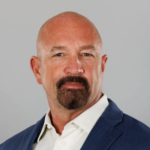
John Bielinski
John Bielinski is a U.S. Marine Corps veteran, entrepreneur, medical educator, keynote speaker, and author dedicated to helping people unlock their full potential through better learning, stronger leadership, and intentional living. After struggling with undiagnosed ADHD and dyslexia that led him to leave high school without graduating on time, John joined the Marine Corps, where he discovered a learning approach built on repetition, visualization, and practical application. His experiences during Operation Desert Storm, serving as a Dragon gunner responsible for identifying and engaging enemy armored vehicles, shaped the teaching philosophy that would define his career. Inspired by the military’s highly effective training methods, John founded CME4Life, an Inc. 5000 medical education company that has transformed the way physician assistants and other healthcare professionals prepare for certification and recertification exams. Through his Active Engagement Learning system, which combines storytelling, audience participation, memory techniques, and critical thinking, CME4Life has become one of the nation’s highest rated medical education organizations and now partners with more than 50 universities and colleges across the United States. John is the author of several books, including How to Correct Your Life: Practical Tools for Those Who Lead, Fight, and Build, Before the Calm, Elemental Medicine, and Surviving PA School. Drawing on his experiences in military service, emergency medicine, entrepreneurship, and personal recovery, he equips leaders and high performers with practical frameworks for building resilience, overcoming adversity, and living with greater purpose, discipline, and gratitude.