
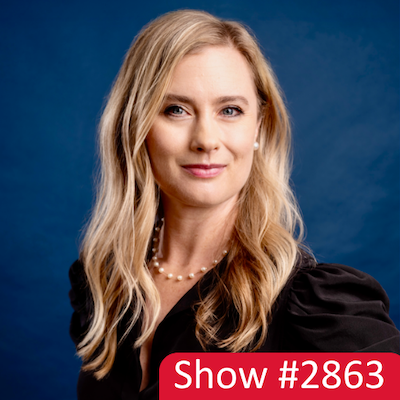
20 Sep September 21, 2026 – 3-Star Leadership Lieutenant General Leslie C. Smith and Bliss Science Dr. Jessica Gold
00:00 Intro 1: In the AM, broadcasting from AM and FM stations around the country.
00:06 JIM BEACH: We are too busy to have the rest of the introduction. We need to go ahead and get started. Welcome to School for Startups Radio. Thank you so much for being with us. We do have a cram packed show. It’s just a great one. First up, we have General Leslie Smith, 3 star retired general, and we’re talking about his new leadership book, and I’m very sorry, but the 1st minute of the introduction, and 1st question of him saying, thanks for having me and all that stuff got cut off, and I have no idea what happened. And so general, I am very, very sorry that that happened.
01:00 JIM BEACH: And I apologize sincerely, but that’s what happened. So in just a second, we’re going to just jump into the 2nd minute of the interview. After General Smith, we have Dr. Jessica Gold, she is a relationships expert and has amazing software to help with scheduling. We have a really interesting conversation and go all over the place and talk about all sorts of things. So it’s a great interview as well. I apologize again to the general for missing the 1st minute, but here we go with the 2nd minute of the interview.
01:46 LT. GEN. LESLIE C. SMITH: I don’t judge a question when somebody’s in the seat because when you’re in the position, you serve during that time frame. So during my time frame, I was during COVID, during George Floyd, during January 6th, and so many other different things, and I was also the Army Inspector General. So there’s a lot of things going on, but we got good leaders in place during the missions that, um, that they’re being called to do. So our job, as a vice president at the Association of the United States Army, is to support them by helping to tell the story.
02:27 LT. GEN. LESLIE C. SMITH: And that’s part of what we’re doing not only with the book, but what I do at USA.
02:34 JIM BEACH: All right. A lot to follow up on. Absolutely so important that all of these functions happen. And I’m just so impressed with people who are willing to give their lives to this service. Leslie, why did you decide to join the army? What was the reason for you?
02:53 LT. GEN. LESLIE C. SMITH: Yeah, it was in my family. I, um, it’s a great story. Some of the stores I makeup. But this is a true one. Uh, my dad was in, was in the, uh, Korean War, uh, and his brothers served in World War 2 because they were all drafted. He died when I was five. Um, and so we all wanted, and all of my family, my brother and my sister, my sister was in the Marine Corps. My brother was in the army. So we all decided we wanted to serve.
03:29 LT. GEN. LESLIE C. SMITH: I just stayed in 35 years because once I stepped into it, I saw what the opportunities were to do things and it also was, it was like the village I grew up in. You know, we’re going to talk about that as part of the book, but the village thing is important, which is something I think has been lost today. And that’s what all the difference is about.
03:56 JIM BEACH: Yes. Well, I appreciate your service and all the other people who have done it. You mentioned that you were. Advocate general. I’m sorry, I didn’t catch the title exactly.
04:08 LT. GEN. LESLIE C. SMITH: The inspector general.
04:09 JIM BEACH: Inspector General. What does that mean? What do you expect in? What does that mean? What does that mean?
04:17 LT. GEN. LESLIE C. SMITH: So the inspector general is responsible for inspections, assistance, and investigations for 120,000 soldiers and civilians. So if you think about it, it is not like the Judge Advocate General, somebody who gets in trouble legally. It’s like for efficiency, effectiveness, uh, and readiness of the army. Uh, and normally they don’t pick lawyers. Lawyers work for the IG. They don’t pick somebody with operational, that would pick somebody with operational experience, somebody that commanders relate to you, because the job is to help keep them out of trouble by showing them things and trends underpass, so they can help in the future what they needed to do.
05:01 LT. GEN. LESLIE C. SMITH: I was trained by great inspectors generals when I was a young captain in the 82nd. And so I’m like, wow, who are these great non-commissioned officers? So I had a great experience at a young age. So when I was asked to be the deputy inspector general first, I wasn’t fired up about it, but I was excited to see what the opportunities were.
05:27 JIM BEACH: No one wants to become Inspector General. Because it’s a hard job. Call the deputy. Is it hard politically? You make a lot of enemies?
05:37 LT. GEN. LESLIE C. SMITH: No, it’s not hard politically. It’s hard, um, because a lot of people don’t understand what the inspector general’s for. But if you take the time to help explain what the IG does, those leaders will understand it will use it. It’s a resource to help you see yourself. The equal opportunity, Inspector General. Those organizations are there to help the commander see themselves and the higher you go, the more you need the team of people to help you see yourself. Uh, and you know, that’s what this book about all the differences about, about those leadership actions, to bridge their perspective, strengthen the teams and create value.
06:21 JIM BEACH: Let’s go ahead and talk about the book. All the difference. What is all the difference referring to?
06:29 LT. GEN. LESLIE C. SMITH: It’s a great. Let’s back up a little bit first. So, so the book is about 3 authors that get together from a failed Startup. That makes something successful out of that. So we all came together from a startup that failed. Uh, and uh, our senior, uh, author, Susan MacKenty Brady. Um, said, hey, you guys are pretty smart. [unclear phrase in raw transcript about Susan MacKenty Brady’s prior books and audiences].
06:58 LT. GEN. LESLIE C. SMITH: All types of audists, not just female artists, and so she picked me and my other co-authors, Stuart Kliman, who is part of the development of the book, Get the, yes, you remember the Harvard Negotiation project?
07:13 JIM BEACH: Sure.
07:14 LT. GEN. LESLIE C. SMITH: Yeah, so it was part of that. So that’s how this book came together. And what’s happening is as we were developing this book, we were… Going through all the difference at the same time because what we’re talking about is those 6 leadership actions to bridge perspectives to strengthen the teams and to create value. We think that the new lexicon should be difference intelligence. What’s your thought about difference? Is difference good or difference bad?
07:45 JIM BEACH: Are you asking me?
07:46 LT. GEN. LESLIE C. SMITH: Yes, sir.
07:47 JIM BEACH: Difference in what? Different. I’m still not difference. Difference in the difference in viewpoints, difference in opinions? Is a good thing or a bad thing? Well, as long as your opinion is the same of mine, any difference is good.
08:03 LT. GEN. LESLIE C. SMITH: No, no, that’s the point. The point we’re saying is, leading today requires a different way of showing up because if all you have on your team are people who think like you, you can’t get to the solution. That that’s needed today. Right?
08:21 JIM BEACH: I’ve had so many instances where the person, not like me, had the right answer that I’ve definitely had to learn that diversity is the only way to go because half the time they’re right, you know, or more than half the time they’re right. So you just need to pay attention and learn from everybody. They shouldn’t hire people that look like you necessarily.
08:47 LT. GEN. LESLIE C. SMITH: Yeah, and it’s, and it’s, it’s not necessarily okay. So, you know, you mentioned term diversity. I’m telling you, today, you don’t necessarily get a chance to pick who’s on your team. Who’s on your team and who’s on your team? Your job is to look at difference as a value creation opportunity. Just like we had the conversation before we start the video. We establish a rapport because I said, hey, I’m in Atlanta. Oh, you in Sandy Springs.
09:19 LT. GEN. LESLIE C. SMITH: If I really would have been thinking about it, I could have come to your location to do this this session, which but it’s going to be nice now, but it’s been even better, you know, face to face point to point dealing with with 2 people. But we got to look at the differences as an opportunity to create value in everything we do, both in business, industry, and in our personal lives.
09:48 JIM BEACH: Tell us about the startup that failed and how the 3 of you ended up at that startup. Tell us that story and how that led to the book.
09:59 LT. GEN. LESLIE C. SMITH: It’s a great story. So I’m on a flight. I had just retired from the Army after 35 years, and I am on a flight. One of the founders of this company, [unclear name], was on the flight with me, and he is like, who is this guy? And I’m like, who this guy? What are you working on? I’m working on this company called I love. I’m like, what? What is this? It’s how you develop love. Better with your couples and partners. I’m like, what a great idea. It was 2021. Back in 2021, starting at 22. You know what was going on then, right?
10:41 JIM BEACH: COVID.
10:42 LT. GEN. LESLIE C. SMITH: So the concept was great, but it just could not get traction. Uh, and it was an app that people would use. So that company, um, did not uh, it failed. And but what we found out was, um, Susan and our other uh, stu, we said, hey, there’s something here that we’re finding. And once we started talking to each other and doing some review, we’re like, there’s something that we need to talk about. The 1st title was, um, strife to strength. And then when we took it to the different office and, you know, for your listeners, Developing a book is a job in itself.
11:23 LT. GEN. LESLIE C. SMITH: So you’d come up with a concept, you come with the idea, and then you shopping with different places. The fact that Harvard Business Review Press, uh, Took, took the book and said, we want to publish it, was great, but that’s when the work will they start. So Harvard only does 30 titles a year. [unclear brief phrase]. Most publishers do 100s of titles a year. They only do 30 a year, and then they came back with the idea of all the difference. And if you remember the poem from Robert Frost. Well, I took a road, less travel, and that has made all the difference.
12:06 LT. GEN. LESLIE C. SMITH: And we’re like, ding, ding, ding. But a great idea.
12:10 JIM BEACH: I was thinking about Robert Frost and writing about him yesterday, as a matter of fact, I went to Middlebury College in Vermont. And Middlebury bought his farm. Middlebury and Robert Frost very close. He taught there for 40 years and my favorite poem in the world is stopping in the woods on a snowy evening. My horse must think it queer. I just absolutely love that poem.
12:37 JIM BEACH: I, in English class every year or every week we had to memorize one poem and I cheated most of the time and brought the poem pre-written on a sheet of paper and I would pretend that I was writing the poem and then turn in the sheet of paper that I had already done. In one week, general, I decided I would learn the poem. And actually do it, and it was stopping in the woods on a snowy evening, and about 2 or 3 years later, I had my 1st, you know, kid job.
13:15 JIM BEACH: I was working as a bartender, Nakado Japanese restaurant over there on Cheshire Bridge Road, and I had a, my patron was an English professor. He had the patches on the elbows and the tweed jacket. I mean, it was the stereotype, and he and his wife were complaining that no one could quote poetry. And I said, well, I can quote poetry. Who do you want me to quote? He said, give me some Robert Frost. [partially unclear Robert Frost quotation]. My little horse must, they get queer to stop without a farmhouse near. Got a $300 tip. That was 1987. So what was like a 1000 bucks?
13:58 JIM BEACH: That was like a 1000 bucks. Yeah.
14:00 LT. GEN. LESLIE C. SMITH: Yeah, but if you think about what you just said. Is that. The people who you were serving that night were interested in you more than just you being a server. Think about that.
14:14 JIM BEACH: Oh yes.
14:15 LT. GEN. LESLIE C. SMITH: So so what we’re talking about, this difference is a value creation opportunity. And that difference feels better decisions. More innovation, more performance. And on the other side, we’ve seen it in companies too, where pulled amount of difference has a direct cost, right? Silence, disengagement, miss ideas and misalignment. So think about if you could take, if you our listeners could take, these concepts that we’re going to talk about and increase their engagement by 10%. What would be the 1000000s that they would make if they could do that?
14:52 JIM BEACH: I want to talk about the book in detail. First, I also was thinking about a love startup. I was proposing that couples write a contract and that the couples have a contract about their relationship and says here’s how we will fight. We will not yell when we fight and or whatever else, you know, here’s the operational contract between us as a couple. And the app would walk you through all of the scenarios. Um, do you get upset if he’s going out on Friday night with the boys? Is that a reason for a fight or not?
15:31 JIM BEACH: You know, we went through all of this stuff, I just didn’t get far enough along with it and got occupied with someone else. But I think that a contract would make it really interesting. Um, I actually stole the idea from the Big Bang theory that television, comedy show. What do you think? Do you think a contract with you and your spouse would make marriage easier?
15:58 LT. GEN. LESLIE C. SMITH: Uh, we, you can’t already have a contract. It may not be written, but it’s it’s, it’s a contract. You know, when you take your vows, right? That’s your contract. Is it not?
16:11 JIM BEACH: Yeah, but no one treats it like that. No one has it written down in the house, in the bedroom where they get it out and say, honey, you’re not allowed to do this. Remember? Yeah. This is what hurts me. You know you’re not allowed to do this. You haven’t given me a rubbing 6 months. The contract is you have to once a month.
16:37 LT. GEN. LESLIE C. SMITH: Yeah, let’s let’s see what it says, but you know, the, uh, are you single to Mary?
16:43 JIM BEACH: I am currently single, though I have been married.
16:47 LT. GEN. LESLIE C. SMITH: Okay, so you know I know what I mean. So your spouse changes over time. So the contract would be only as good as that period in your relationship.
16:58 JIM BEACH: Well, just like have a constitution. Just like the conversation. We have to make up.
17:04 LT. GEN. LESLIE C. SMITH: You’re right, you’re right. And a different article to the constitution.
17:09 JIM BEACH: Okay. Amendment to the Constitution, so that’s pretty good.
17:13 LT. GEN. LESLIE C. SMITH: Yeah, that’s great. That’s great.
17:15 JIM BEACH: All right, let’s talk about the book. What makes managing this difference so difficult? You talk about the land mines of managing difference. Yeah, with me.
17:25 LT. GEN. LESLIE C. SMITH: Yeah, so interesting. So there are a lot of metaphors here and, you know, me being a retired general. I was trying to explain, we were trying to figure out this concept of, What would be the things that would stop you from achieving the goals of strengthening change, building perspective and creating value? I said, Eureka, let’s talk about landmines. And landmines figuratively, and actually stop you from accomplishing your mission. And the enemy, puts these landmines in place to stop you from accomplished admission. And so we say there are 4 landmines that’s going to stop you from accomplishing that mission of creating that value.
18:09 LT. GEN. LESLIE C. SMITH: And the 1st line of mine is certainty, right? The 2nd is inconsistency. The 3rd is reactivity and the 4th is justification. Now, certainty, which is, I think, is my most difficult mind. Um, It’s confidence. Um, It’s, I’m right because I’m going to retire 3 star general. I know what I’m talking about. And think about the numbers of times that if you said that to somebody, they were like, okay, whatever he says is right because he’s certain that it’s always right, even if you know it’s wrong. Think about how that could stop an organization from accomplishing that mission. If that leaders there or inconsistency.
18:52 LT. GEN. LESLIE C. SMITH: Your audio and video don’t match. Right?
18:55 JIM BEACH: Yep.
18:56 LT. GEN. LESLIE C. SMITH: What they say or reactivity and emotional trigger. Hey, I step on your foot and you just like go off. Like I just stepped on your foot and I told you, I was sorry. You know? You, you, you react differently to the same type of stimuli and then justification. We think that this one is the most insidious because anytime that you’re justifying your actions, because of what your background was or what those things were. Um, it can really fuel the other 3 landmines. Because we’re reasoning to the fact of what we have done, how we have the ability to do. Does that make sense?
19:38 JIM BEACH: Yes, it does. Know yourself and unlock your best self. How do I know myself better? I’m 58. There’s not much left to learn, is there?
19:48 LT. GEN. LESLIE C. SMITH: Yeah, I disagree. I disagree. And so, so the remedies for the, for the, the landmines are the 6 target actions. And so the 1st one is, again, if you look at the picture, it is a target, and the outside of the target is target action one is know yourself. You know, uh know, know thyself. Self awareness is the foundation. We think that difference doesn’t derail teams. Unaware leaders do. And is it okay if I tell a story?
20:20 JIM BEACH: Please.
20:21 LT. GEN. LESLIE C. SMITH: Okay, so when I became the Army Inspector General. I’m a big-picture guy. I want to give you the vision, you know, the mission of the organization, what things you’re going to do. Uh, and I saw that it was, it would have been so easy for me to just say, I don’t want to be bothered with the details. I’m a big picture guy, but it was important to have people around me that would dig into the details because I had to have the details to go talk to my boss’s boss.
20:58 LT. GEN. LESLIE C. SMITH: But anytime you’re talking to the Secretary of the Army, the Chief of Staff of the Army, you got to have the details at hand. I might not need to keep them there, but that’s what I need to have people around me to help you. And if I didn’t know myself. Then I would say, oh, I got it. I don’t need you guys in the room for the discussion. Uh, I could take care of it myself. Does that make sense?
21:30 JIM BEACH: Yes. Yes it does.
21:31 LT. GEN. LESLIE C. SMITH: Right. And so, you know, so the landmark rest of that, all 4 of them, especially certain justification, operate below the level of awareness of who you are. And then once you conquer the target action of knowing yourself, the 2nd one is return to respect. So anytime there’s a critical thought as you’re dealing with people, you got to take the time to pause. Right? If somebody says something to you, you can’t just go off and say, you’re wrong. I’m always the right guy. Your ability to return to respect as a leader. You really bring the weather. You bring the atmosphere when you’re interacting with people.
22:15 LT. GEN. LESLIE C. SMITH: So that target action helps you not only know yourself, it helps you return respect so you can get to the value and go from there.
22:25 JIM BEACH: I love that. You bring the weather. That’s a great line. You bring the weather.
22:31 LT. GEN. LESLIE C. SMITH: You bring the you bring the I mean, the leader is a thermostat, right? You’re not a thermometer. You turn it up and turn it down by your ability to interact with people. Uh, I tell leaders all the time. Everybody wants to have. Do, you know, have this aura around them, right? When they walk into the room, they want to be be respected. But the leaders, P-R-E-S-E-N-C presence only matters when you’re present. P-R-S-E-NT.
23:05 LT. GEN. LESLIE C. SMITH: So you got to be present in every situation, even if you, if it’s not a big deal to you, it’s a big deal to the people that you’re interacting with.
23:17 JIM BEACH: Yes.
23:18 LT. GEN. LESLIE C. SMITH: So after you accomplish that, you got to focus on activating honesty. Right?
23:22 JIM BEACH: Yes.
23:23 LT. GEN. LESLIE C. SMITH: So, uh, once you conquer, work in the 1st two, uh, truth telling and real listening happens, where trust begins, I think that trust is the bedrock of every profession. So when I was a commander general of Fort Leonard Wood, we had to do a, a, um, A furlough for about 2,000 employees. You know, furloughs happened in the government sometimes. Um, and some of my peers let the chief human resource officer or their, uh, deputies do it. I thought it was important for me to do it. Now, these people were mad at me only because I was the government person.
24:04 LT. GEN. LESLIE C. SMITH: But even today people come up to me and tell me, hey, I appreciate your honesty. You told us what you could tell us. You gave us feedback to where we were and then you listen to us and not just say, I don’t have time for this. And that’s what the leader has to do. And we’re talking about how we’re developing leaders, uh, but everybody can learn from this because if you listen to your employees or listen to the folks that work for you, they’ll take the time to understand where you’re trying to come from. Because you’re activating honesty by telling them what you know.
24:47 JIM BEACH: That is so true. I was in a startup that was failing and we had a bunch of employees and they stuck around as long as we told them what was going on. We had a meeting every other day or so and here’s the status of our fundraising. Here’s what we’re doing to save the business. They would stay. Even without pay, you know, sometimes, but they uh, they needed to be told. They wanted to be on the inside. So critical. We have time for one more from the book. Sir.
25:24 LT. GEN. LESLIE C. SMITH: Sure, sure.
25:25 JIM BEACH: Let’s do the last one. Commit to action.
25:28 LT. GEN. LESLIE C. SMITH: So, you know, we talked about seeing the full stories, the next one, the night together, and then the last one is committing to action. So accountability modeling the way is so important. I can’t hold other people accountable if I don’t model how it’s supposed to act. Those who lead must 1st serve. And I think it’s so important that we as leaders, we commit to asking about how we operate, how we direct, um, how we focus to do the mission.
26:00 LT. GEN. LESLIE C. SMITH: And it’s so important because all of these are tied together, but this is about how we as leaders get curious about people and then demonstrate what we expect from others. And it is it’s so simple, but it’s so hard. Because if it was if it was simple, everybody would do it. But why do some companies do it well versus others, it has to do with the leaders. And it’s not just us 3 talking. We have 22 contributors from all different backgrounds, from Disney, from Nintendo and from others that bring all these stories to life. [unclear closing phrase about the book’s contributors and value to listeners].
26:44 JIM BEACH: Fantastic. How do we find out more? Follow you online, get a copy of the book, visit your website, sir.
26:52 LT. GEN. LESLIE C. SMITH: That’s all good. Leading all thedifference.com. Uh, where you find it, uh, and you can find it on Amazon Porch Live books, every, any place that you, uh, find the book, all the difference, and you can even look it up under our co-author, Susan Brady, MacKenty Brady, Stuart Kliman, or myself, Leslie C. Smith.
27:15 JIM BEACH: And it is 5 star rated on Amazon. Very, very impressive. Sir, thank you so much for being with us and we’d love to have you back. Thanks a lot.
27:26 LT. GEN. LESLIE C. SMITH: Thanks, sir.
27:27 JIM BEACH: And we will be right back. We are back, and again, thank you so very much for being with us. Very excited to introduce another great guest. Please welcome Dr. Jessica Gold. She is the co-founder and CEO of Digital Wisdom and the CEO of Bliss Science coaching. She has her bachelor’s in chemistry from MIT and a minor in neuroscience and got a PhD in chemistry from UC Berkeley, did all of her post-doc research on neuroscience. And now she’s running a dating app. Jessica, welcome to the show. How you doing?
27:59 DR. JESSICA GOLD: I’m great. Thanks for that.
28:01 JIM BEACH: Why do you get it at PhD and then become a dating app? It seems like you have so much education in areas that you’re not pursuing now. As do I. I have my masters of Japanese can’t stand it. Don’t ever want to go back.
28:16 DR. JESSICA GOLD: Yeah, it’s a great question. It’s definitely when I asked myself at the time and felt a little embarrassed about, and many great people who have accomplished great things in the world have changed careers. So we’re in good company. Um, and just to correct you, I was studying.
28:33 JIM BEACH: That’s all right.
28:34 DR. JESSICA GOLD: Not a dating app. I run a coaching business. I actually work with people in relationship, men and couples. So in relationships.
28:41 JIM BEACH: Relationship chemistry.
28:42 DR. JESSICA GOLD: That’s right.
28:43 JIM BEACH: How did I get dating app out of all…
28:46 DR. JESSICA GOLD: Well, that’s understandable. So I studied molecular bonding for 10 years and at the end of it, I came to a point where I knew I had something had to change. Things weren’t working in my career or my life, so I went on a very unexpected journey and ended up studying romantic bonding instead of molecular bonding.
29:05 JIM BEACH: Well, that makes sense. I can understand that. So tell us the ideal client or the normal client that you work with.
29:12 DR. JESSICA GOLD: Right. Well, for my bliss science coaching business where I do relationship chemistry, I work with high achieving couples where everything else in their life is going well. Maybe they’ve built and sold a few companies. I often work with founders after the sale. Um, and they really want their romantic chemistry to work. They want to build a relationship of depth and passion and have the best relationship they possibly can.
29:37 JIM BEACH: Okay. And what are the problems they’re usually having? What are the problems that are creating the issues?
29:43 DR. JESSICA GOLD: So it’s the same thing that happened to me in my 1st marriage. I realized I had learned everything about molecular bonding, but I’d never had a single class in how to have healthy relationships. And those of us in science fields, STEM fields, um, high achieving fields, we often don’t study relationships. And so I simply didn’t know what was the right way to approach love, to approach bonding every day. It takes a bit of finesse.
30:09 DR. JESSICA GOLD: And so it’s usually just not knowing the right tools, not having the right tools, um, or pushing harder on levers that aren’t giving you the right results according to the science of relationships.
30:21 JIM BEACH: Okay. So the levers of relationships, are those like honesty and things like that?
30:26 DR. JESSICA GOLD: Yeah, so if you look at your marriage as a system, we know from systems theory, there are higher leverage moves to make and lower leverage moves to make, and some of the lower leverage moves are the common ones like buying more flowers are going on more date nights together. Whereas higher leverage moves are things like learning the skill of repair. Thinking about what is your vision for this relationship? Like, what is this for? What are we doing here together? And what does marriage mean to us? What does passion mean? Um, thinking about the paradigm level shifts you can make together?
31:01 DR. JESSICA GOLD: So those are some of the different levers you can pull and people usually default to pushing on, like I said, the lowest, um, level moves because that’s what’s more obvious to our brains.
31:13 JIM BEACH: Right. Do you believe in love languages? Do you talk about that?
31:17 DR. JESSICA GOLD: You know, it’s it’s really fun and an easy thing for people to understand, but there’s no scientific underpinning of it. That doesn’t mean it’s not helpful. It’s just not the most helpful thing to talk about.
31:29 JIM BEACH: Okay. Uh, what’s wrong with it? I mean, how is it unscientific? It seems to I read the book. And seems to make a lot of sense to me. I have a love language. That does resonate with me. What’s wrong with that?
31:43 DR. JESSICA GOLD: Yeah, I love your question. So, There’s nothing wrong with that. Like I said, it makes sense to a lot of people. I just come from a research background and this just wasn’t developed based on research. So I would be careful in saying, I have this one love language and that’s the only thing it’ll ever be and this is the most important thing to understand about me. I think love languages often help us see like where we want more of something in a relationship.
32:13 DR. JESSICA GOLD: A lot of people have a hard time speaking what they actually want because there’s a belief that having needs or desires makes you selfish. And I think love languages can give you, um, Uh, a framework for being able to say, oh, actually, I want more touch and it’s okay for me to want this because it’s a love language. And that’s how you can love me better.
32:36 JIM BEACH: All right. Oh, well. Another… Go ahead, another.
32:38 DR. JESSICA GOLD: Another way to think about this is that something that is really fun to do in a relationship is to learn each other’s operating manuals. So, like, maybe I operate in a particular way, but my husband operates in a totally different way. Like, he wants his love language might be touched and mine might be words of affirmation. And so if I go along giving him words of affirmation, he’s not going to feel loved, I haven’t learned his operating manual. So I think the deeper thing that love languages is pointing at is have you learned your partner’s operating manual?
33:13 JIM BEACH: What does that include? Is that sounds like operational issues, like, what time they get up and one time they go to bed and that kind of stuff? Is that what you mean by operational?
33:24 DR. JESSICA GOLD: Yeah, well, how do you best operate this person? What does their nervous system respond to? Like, if you do something for them? What feels like love to them? If you make a mistake, how do they like to be repaired? Um, what kind of compliments do they enjoy? How do they like to be flirted with? Like, what lights this person up inside? What makes them happy?
33:47 JIM BEACH: All right. That sounds a lot like love languages to me.
33:51 DR. JESSICA GOLD: Sure, I’ll give you that, Jim. If you want to run with that, and it works for you. You know, that’s part of me learning your operating manual. Yes? This concept really works for you, so let’s use it.
34:03 JIM BEACH: Yeah. I uh, I think that couples, I think they should have a contract, a written contract that says, you will have, you know, you’ll make dinner 3 times a week and I will make dinner once a week and it should, I, have you ever tried that? What are your thoughts on that, Jessica?
34:22 DR. JESSICA GOLD: Well, I think that is part of making implicit assumptions in a marriage explicit, and that can be very, very helpful for couples when you sit down and really define. What are the roles we’re playing out? What are our expectations? And again, it gives you a vehicle for stating your desires. What do I want to see happen here? And the idea, how the thing to be careful of in that is that this can change over time, right? And it shouldn’t be seen as like handcuffs or a strict thing where then you’re monitoring people’s behavior and scoring them.
34:55 DR. JESSICA GOLD: Like the transactional nature of relationships is where people really get into trouble. So it should be more like a living.
35:03 JIM BEACH: The transactional… What does that mean? Does that mean keeping score?
35:06 DR. JESSICA GOLD: Yeah, keeping score.
35:07 JIM BEACH: Okay. Like, we don’t have to, it’s keeping score if, you know, I don’t care if I get, you know, words of affirmation, I just have to have my feet rubbed, right? So it’s not keeping score A and B. It’s, uh, or A and A. Keeping score off of the contract or the agreed upon.
35:26 DR. JESSICA GOLD: Yeah, you know, like I said, humans are, although I haven’t said this yet. Humans are diverse and wily and the ways that we relate are too. So if you want to have things written down in a contract and that doesn’t devolve into scorekeeping for you, then go for it. But I would suggest what works much better in a relationship is where you both focus on giving what you can with generosity while maintaining your sense of self and healthy boundaries. So instead of thinking, did you do exactly what you said you’d do?
35:58 DR. JESSICA GOLD: It’s like, are we in this relationship from a place of generosity and care for each other along with care for ourselves?
36:05 JIM BEACH: What happens when, uh, something catastrophic happens in the marriage? Uh, a parent, death, or a child, death, or uh, cheating, or, uh, I’ll tell you what I did to, I am currently divorced. Got divorced about a year and a half ago. And I did, I, I have to think the worst thing that I could have done to her was, uh, we were inside a three-year federal investigation where I was looking at 20 years in jail, uh, for 3 years. In the end, they didn’t charge me with anything. You know, I it took them 3 years to figure out that I hadn’t done anything.
36:41 JIM BEACH: You know, so we had the house raided by the police. You know, all of her records were gone through, her work computer was seized, um, all of that, you know? How do you recover from something like that?
36:54 DR. JESSICA GOLD: Mm-hmm. So things like a death in the family, elder care, a tragic event like you’re talking about. These are some of the hardest things that couples go through. And that’s where the rubber meets the road, where the skills that you have in place as a couple are tested, and you will see immediately if you’re lacking certain skills together. So a lot of couples don’t have good ways to communicate about things that bring up a lot of emotions. Also, don’t have good emotional regulation skills and don’t have good repair skills.
37:26 DR. JESSICA GOLD: Um, So, if you’re lacking in the skills, I would say definitely don’t go through something like that. Without help, if you can have a counselor, an advisor, someone you meet with regularly to create a safe space where you can talk about hard things, and you 2 don’t have to be each other’s primary emotional regulation, uh, person in that moment, then that’s going to go a long way to help.
37:50 JIM BEACH: Jessica, after the police left, they’ve been there about 8 hours. Seven hours. After they left and we dealt with the kids and everything, we went in bed and I looked at her, I was like, do you want to talk about it? And she said no, not tonight. And I said, good. I don’t want to talk about it tonight either. We never did. It never came up again.
38:13 DR. JESSICA GOLD: Wow. [unclear brief response]. [unclear brief response].
38:16 JIM BEACH: Didn’t talk about it with each other. We didn’t tell our parents, didn’t tell our friends. You know, we told absolutely no one that we were going through this. And the weirdest thing Jessica was that when we found out that I wasn’t going to be indicted and had never done anything wrong in the 1st place and when they were completely wasting their time, we had no one to celebrate with either. We were like, oh, let’s celebrate. Oh, we can’t. We didn’t tell them in the 1st place. You know, it’s hard to celebrate when they weren’t there for the pain part, you know? Yeah.
38:52 JIM BEACH: So that was definitely a big part of it. I know you’ve done a TED talk on sex starved marriages. What is the chemistry solution for your sex starved marriage?
39:02 DR. JESSICA GOLD: Yeah, that’s a $1 million question that everyone wants to know. And what I will say is that I use the same habits of mind that a scientist used in lab to help people have better bonding in their marriages. So the solution there is not a one size fits all. It’s usually getting a chance to talk about, like I said before, what is the meaning of sex to us? What does it mean to us? What are our goals with our erotic life? And what are our goals with our marriage? How do we want to be on the same team here?
39:36 JIM BEACH: Some of the other one. Physical requirement. Is it, you know, men talk about, oh, God, I get laid. Got to get late. Or the, you know, the Jeffrey Epstein guy claimed that he physically couldn’t operate if he didn’t orgasm twice a day. Is that a complete BS that men make up? I mean, do we really go like, if we don’t have sex for a week, can we really, truly get crazy? You laugh at me a lot, Jessica. You must think I’m an idiot.
40:04 DR. JESSICA GOLD: I’m laughing with you, Jim, because you’re very good at talking about the human condition. So I think that, like I said before, everyone is different, and you ask 50 different men, how they approach this, and 50 different women, and you will get many different responses. So every marriage is unique in its way. And what I’m interested in is figuring out what makes this connection work for you? What makes this bond stable for both of you? Some people don’t need to have an active sex life and have very beautiful marriages. Others do. It really depends on who you are and what your connection is like.
40:41 JIM BEACH: Okay. I feel like if they have a wonderful marriage with no sex that the man’s lying. Hmm.
40:47 DR. JESSICA GOLD: I know that’s hard to believe and it might be rarer, but I have worked with 1000s of men over the last 10 years, and I’ve heard all sorts of different stories, so I had caution about applying a one size fits all.
41:01 JIM BEACH: So pretty much whatever I feel is pretty much the rule. Okay, so back to the non-sex marriage part. Go back to the TED talk on non-sex marriages. So how do we? If it if it’s an issue, it needs to be fixed. How do we know if it’s just a man issue and he’s just being unreasonable or something? How do we solve it? Get toward the solution?
41:24 DR. JESSICA GOLD: Well, a marriage is a system. So they usually both people have a role to play in what’s going on. There are a lot of pressures on women. There’s a lot of purity conditioning and shaming of sexuality from the woman’s point of view, the pressures of being a mother and body image and all of these things. And so, It’s really a question of, are you 2 willing to get on the same team and talk honestly about what is preventing you from having the sex life you want. And just put all the things on the table.
41:57 DR. JESSICA GOLD: And there’s going to be some things from her end and something from his end as well. But you need to be able to have that conversation of like, what is it that I don’t want when I don’t want sex with you? And that’s a quote from Emily Nagoski, who’s an amazing sex researcher. Um, so I would say…
42:17 JIM BEACH: What do I want? What is it? I don’t want sex. What is it that I don’t want when I don’t want sex with you? Oh, yeah. By the way, I found something that AI doesn’t know. I had a reference in something to changing the sheets and AI had no clue what I was talking about. They just didn’t get it. No one’s explained that to AI yet. Amazing.
42:40 DR. JESSICA GOLD: And I wanted to talk about something that, you know, something I’ve gone through in my own marriage, which is I co-founded a tech company with my husband.
42:49 JIM BEACH: The AI company. We haven’t gotten there yet. So let’s go ahead and segue into Digital Wisdom.
42:55 DR. JESSICA GOLD: Yeah. Awesome. So after running my own personal brand for almost a decade, I asked my husband if he’d co-found a tech company with me because I saw a problem in my own business that I thought we could use some tech to solve. And he said, yes, but talk about going through something deep in a partnership, you know, co-founding a business with your husband is certainly a challenge.
43:19 JIM BEACH: Yes, I had a business in my 20s and I had my wife come for the 1st time. We were 3 or 4 years old, and she came to the, to see it, you know, really for the 1st time, and within 10 minutes, I had people quitting, or either she leaves or I’m out of here. I had like 5 people threatened to quit within 10 minutes.
43:41 DR. JESSICA GOLD: I hope that was a good thing. Perhaps it shook things up in a good way.
43:46 JIM BEACH: No, she was… I, I, that, uh, yeah, let’s just not even go there. Some people shouldn’t be married to entrepreneurs. So tell us about the business that you and your husband started and why it was so iffy to start it together. What does it do? Tell us what it does.
44:03 DR. JESSICA GOLD: Right. Well, right now our current product is called WonderCal, and we created a system to solve challenging scheduling workflows for busy people. So that can look like group scheduling. Um, whether your co-founders trying to book sales calls with multiple external parties, or you’re just trying to coordinate a group of busy parents to talk about their kids going on a trip together. We created WonderCal to allow you to have a flexible platform to schedule those things. And we also customize it to anyone’s particular scheduling workflow. So we just customized a workflow for a recruiting agency.
44:38 DR. JESSICA GOLD: For example, because in our own lives, we were tired of losing deals and time and being frustrated, trying to get these meetings to work while watching our funding runway run out. Uh, so, We’ve been loving WonderCal. It’s evolved into an easy way to get everyone’s availability and then automatically find the best time to meet.
44:57 JIM BEACH: Okay, so a group of 5 or 6 people can say when they’re available and it finds the commonality of time, right?
45:05 DR. JESSICA GOLD: Exactly. And there’s no polls. There’s no email back and forth, it automatically finds the time that everyone’s free.
45:11 JIM BEACH: Okay, does it go into a calendar or do you have to input the times that you’re free?
45:17 DR. JESSICA GOLD: You can connect your calendar? Yep. And that’s the easiest way. If you don’t want to do that, you can enter manually the times that you’re free.
45:26 JIM BEACH: Okay. Does scheduled sex ever work?
45:28 DR. JESSICA GOLD: I like your real questions that you keep coming back to you. Yes, absolutely, it can work. Uh, it’s a beautiful thing to set aside time in your calendar to explore that side of life. It’s so much easier to do chores or tasks. But when you get to step into your erotic animal, your erotic self, you can look forward to that time and prepare for it. It’s the time when you get to play together, when you get to be in this space, this mindset, this emotional space that’s really rare in the rest of our lives. And so it can absolutely work.
46:03 JIM BEACH: Okay, you should write a book on that because I’ve never been able to get it to work. You know, it’s just so much of it’s mental and even if you’re like, okay, we got the kids out of the house for an hour and blah, blah, blah. Just the fact that there’s an hour, you know, just the fact that you’ve said, okay, we have an hour for this, you’ve already got me. Okay, what do we have to do at the end of the hour? You know, what happens if the hour is not done yet? Or, you know what I mean?
46:37 JIM BEACH: It’s just, That’s how you feel about it. Yeah, I just never, you know, I always feel like there’s extra pressure and it’s, uh, you know, it’s just a, it’d almost be like saying, okay, we’re going to start off. We’re going to do this move 1st and then we’re going to do 6 minutes of this move and then 3 minutes of this move. You want to have sex like that?
47:00 DR. JESSICA GOLD: Yeah, that doesn’t sound fun at all, Jim. And pressure really kills eroticism. So I would ask you, what would make it fun for you? What would sort of rules or structure would you need to put in place that would sound fun for you?
47:15 JIM BEACH: I guess it just has to start with, uh, the making out, you know, and passion. It has to start with real desire. Um, You know, we’ve all seen that movie where they’re in the elevator and they’re ripping their clothes off in the elevator and we expect our elevator to be that sexy and, you know, and when you time it, you can’t time elevator sex, you know?
47:38 DR. JESSICA GOLD: So my question to you would be, what if you just start with playfulness and fun instead of passion? Like, maybe you play a game together that’s really silly, or maybe you start dancing together, and there’s no expectation, like it doesn’t have to end up in sex. You just get to be playful together for an hour.
47:57 JIM BEACH: All right. How do you build a business based on this? So how do you let clients know what services you offer and don’t offer? I’m sure there’s some weird requests and how do you market and decide on prices and talk to me about the operational issues of this, Jessica?
48:14 DR. JESSICA GOLD: Yeah, well, you know, the coaching industry is um, a well-established industry at this point, so it really depends on who your target market is, and I really like working with analytical people, scientists, engineers, founders who’ve built businesses, and high achieving couples. Because of my background as a scientist, a lot of people find me who don’t want more therapy speak and want something different. Um, I speak a lot to logical minds and I really give the mechanism underneath why different things work. Um, so there’s different growth channels for a personal brand, right? There’s relational marketing, like going to conferences, um, meeting people in person.
48:52 DR. JESSICA GOLD: Of course, there’s all the social media channels, um, and you can run ads. There’s all of the usual growth channels available to you. You just have to pick the one, of course, where your target market is likely to hang out. Same as a software business, actually.
49:08 JIM BEACH: All right, so where do people who are interested in sex hang out? Every single human is interested in sex? So you can’t go hang out on like a porn site. You have to hang out on a relationship site or something, right? I mean, I’ve never even looked for that. Are there sites that talk about this that you could advertise on or something like that?
49:30 DR. JESSICA GOLD: There are, there are aggregator sites, but those generally speak to a different demographic than my target. You know, I work with very successful, affluent people often, and there’s 40s, 50s, 60s. I’ve had a client in his 80s. So, you know, I write a lot of articles on substack and medium. I started my business by using Facebook to talk about what I was doing, but that was 10 years ago. But that… Well, it depends, but that got me a lot of momentum, and to be honest, because of the subject matter that I work with, my business works mostly on referrals.
50:05 DR. JESSICA GOLD: So I’m like a best kept secret.
50:07 JIM BEACH: Oh. And women talk about sex tons more than men, right?
50:11 DR. JESSICA GOLD: Well, to each other, but you’d be surprised, you know, men are searching for this. A lot of people are searching. If you’re a founder, it’s probably happening at 2 AM and you’re asking ChatGPT. Like, why doesn’t my wife desire me anymore? So people do search in all kinds of ways. I also pursue PR channels, so media like this and articles in places like the Guardian and SFGATE where I’ve been featured.
50:36 JIM BEACH: Yeah. Excellent. Those are great sources. I read the other one, not the Guardian, but the other one. What is it? The Daily Mail or something, the other UK paper.
50:46 DR. JESSICA GOLD: Ah, yeah, the Daily Mail is another one.
50:48 JIM BEACH: So at the very beginning, you talked about repair. How do we come back from a bad situation? What do we do to fight back? I don’t mean fight back. I mean, to get back to the good.
51:01 DR. JESSICA GOLD: Well, this is one, I mean, I’ve had to learn all of these things so deeply in my life, which is why I teach them because I was like, wow, I can’t believe I never learned this. I could have really used it in my marriage before I got divorced. So, I’m speaking from a place of really having to go through this myself. And one of the best ways to repair one of my teachers, Terry Real, he says it this way. He says, remember that you love this person. Um, Because feeling misunderstood or admitting that you were wrong. Oof, I know that can be really challenging.
51:37 DR. JESSICA GOLD: Like there’s so much burning inside and there can be a reticence, right? Wanting to avoid a hard conversation like that, feeling ashamed, feeling embarrassed, right? So I say, number one, you need to learn some tools to deal with the emotional turmoil inside of you that might prevent you from repair. And then the 2nd thing is find something that inspires you, that you helps you lead with an open heart, being centered in the part of you that’s wise, that’s adult, that knows that you want to build an incredible life with the person next to you. And come from that place of like, I love you.
52:13 DR. JESSICA GOLD: I love me. I screwed up. It’s human. It’s really normal to screw up. I want to make things better and I don’t want that to happen again.
52:23 JIM BEACH: What about people in their 20s, the youngsters? You know, I’m old and a curmudgeon. What are the 20 year olds like? I hear the 30 year olds, I hear that they are not really dating so much per se, you know, calling someone, hey, let’s go get a beer together or see a movie together. Is it all online? What’s going on with the youngsters?
52:44 DR. JESSICA GOLD: Oh, you know, that’s a great question, Jim, but I don’t work with the youngsters. You know, I work with people who have been married for 30 years. You do on the street, you know? I really don’t study that demographic. I stay in my lane. I work with people, mature individuals, 40s, 50s, 60s, and who have been together a long time or who are trying to rebuild their self-esteem after a challenging divorce.
53:10 JIM BEACH: Yeah. Do both parties suffer with self-esteem issues after a divorce or is it just one?
53:15 DR. JESSICA GOLD: If we look at what the research shows, um, both people are impacted while going through it and in the time, the months afterwards, it seems that women sometimes bounce back more readily and it can really hit men harder, though.
53:29 JIM BEACH: I think that’s true.
53:31 DR. JESSICA GOLD: Yes.
53:32 JIM BEACH: Well, women are initiating so many of the divorces now. Hmm. Like 70% of the divorces now are started by the women.
53:38 DR. JESSICA GOLD: Yeah, it’s true. I know that one thing I’ve learned about men in my work over the past 10 years is that is how loyal men can be and how much you love to love. Like how much when you get a partner who you have chosen and who you are in love with, you fight for that. You really want that to continue. That’s what I’ve found in my work.
54:01 JIM BEACH: How do we find out more? Follow you online. Get in touch, Jessica.
54:06 DR. JESSICA GOLD: Thanks, Jim. Well, I’d love to play the game when we’re done with this.
54:10 JIM BEACH: Oh, we have to do that. Beforehand. Okay. Let’s do that right now All right. No, we’re going to do it separately. We’re going to do it separately, Jessica. How do we get in touch?
54:22 DR. JESSICA GOLD: Okay, so you can use WonderCal for all of your scheduling needs or get us to create a custom scheduling workflow for you at WonderCal.com. That’s WonderCal.com. And you can find out all about my coaching business at bliss-science.com. And find me on subs, yeah, find me on Substack as Dr. Jessica Gold.
54:41 JIM BEACH: All right, Dr. Gold, thank you so much for being with us. Great conversation and we would love to have you back. Thanks a lot.
54:49 DR. JESSICA GOLD: Thanks, Jim.
54:50 JIM BEACH: And we are out of time for today, but you know what we do? Right. We come back tomorrow. Be safe. Take care, Aaron. Go make a $1 million. Bye now.
Lt. Gen. (Ret.) Leslie C. Smith – Vice President Leadership and Education at the Association of the United States Army and Co-Author of All the Difference: Six Leadership Actions to Bridge Perspectives, Strengthen Teams, and Create Value
Self awareness is the foundation. We think that difference
doesn’t derail teams. Unaware leaders do.
Lt. Gen. (Ret.) Leslie C. Smith
Lieutenant General Leslie C. Smith, U.S. Army Retired, is Vice President, Leadership and Education at the Association of the United States Army, where he works across the Army, industry, academia, and AUSA’s national network to strengthen leadership development and support soldiers, Army civilians, and their families. He is also the Carter Chair for Leadership at Georgia Southern University and CEO of LV Smith Corporate Group, where he advises organizations on leadership, strategy, and organizational development. His work today draws on nearly four decades of military service and senior leadership experience in complex, high consequence environments. Smith received his Army commission through Georgia Southern University in 1983 and graduated in 1985 as a Distinguished Military Graduate with a bachelor’s degree in accounting. He began as a Field Artillery officer before transitioning to the Chemical Corps. Over the course of his Army career, he held a series of increasingly senior commands, including serving as the 25th Chief of Chemical and Commandant of the U.S. Army Chemical, Biological, Radiological, and Nuclear School, Commanding General of the 20th Support Command, and Commanding General of the Maneuver Support Center of Excellence and Fort Leonard Wood. His final active duty assignment, from 2018 to 2021, was as The Inspector General of the Army, making him the first Chemical officer to serve in that role. Throughout his career, Smith became known for leading organizations made up of people with different backgrounds, specialties, experiences, and perspectives who still had to accomplish a shared mission. That experience now shapes much of his work on leadership, trust, teamwork, and organizational performance. His approach emphasizes integrity, clarity, accountability, and the ability to create unity without requiring everyone on a team to think or work in exactly the same way. He argues that differences within teams do not have to become sources of division. When leaders understand and manage them well, those differences can improve judgment, strengthen relationships, and produce better results. Smith is the co-author, with Susan MacKenty Brady and Stuart D. Kliman, of All the Difference: Six Leadership Actions to Bridge Perspectives, Strengthen Teams, and Create Value. Published by Harvard Business Review Press in July 2026, the book argues that the differences among team members can become a competitive advantage rather than a source of friction. Drawing on research, interviews with leaders, and lessons from business, education, and the military, the authors present six practical leadership actions for building trust, understanding different perspectives, strengthening collaboration, and converting disagreement into better decisions and greater value. Smith brings to the book the perspective of a military leader who often had to achieve results with the people, resources, personalities, and circumstances already in front of him. Smith holds a Master of Science in Administration from Central Michigan University and a Master of Arts in National Security Strategy from the National Defense University. He has continued his service beyond the Army through education, corporate and nonprofit board work, mentoring, and leadership development. Across those roles, his central message remains consistent: effective leadership is not about eliminating differences. It is about creating the trust, shared purpose, and disciplined action that allow different people to contribute their best toward the same objective.
I think the deeper thing that love languages is pointing at is have
you learned your partner’s operating manual?

Dr. Jessica Gold
Dr. Jessica Gold is the CCO and Co-Founder of Digital Wisdom and the CEO and Founder of Bliss Science, where she works with high achieving founders, executives, and couples on relationships, communication, and personal growth. A scientist turned entrepreneur and relationship coach, Jessica brings an unusually analytical perspective to human connection. She earned her bachelor’s degree in chemistry from MIT, with a minor in neuroscience, completed her Ph.D. in chemistry at the University of California, Berkeley, and conducted postdoctoral research in neuroscience at the University of California, San Francisco. After roughly a decade in scientific research, she shifted her attention from molecular bonding to what she calls romantic bonding. That transition eventually led Jessica to create Relationship Chemistry, her approach to helping analytical and high performing people understand the patterns that shape intimacy, communication, trust, and partnership. She has trained in several coaching and relationship methodologies and holds the Professional Certified Coach credential from the International Coaching Federation. Her additional training includes Relational Life Therapy, Gottman based relationship education, applied neuroscience, process oriented psychology, and other coaching approaches. Through Bliss Science, she has worked with more than 500 clients, including entrepreneurs, executives, engineers, investors, and couples who often find that the problem solving skills that serve them extremely well professionally do not necessarily translate into stronger relationships at home. Jessica is also an entrepreneur in the artificial intelligence space. She co-founded Digital Wisdom with her husband and business partner, Tevye Krynski. The company develops AI based tools designed to make the knowledge of coaches, educators, experts, and other professionals available through personalized digital experiences. Digital Wisdom has created AI mentors and assistants that can be trained on the expertise and content of specific individuals rather than relying only on a generic chatbot experience. Jessica brings her background in coaching and human behavior to the company while also experiencing firsthand the unusual challenges of building a business with a romantic partner. Jessica’s work has been featured by outlets including SFGATE and The Guardian, and she delivered a TEDx talk titled “Chemistry for Your Sex-Starved Marriage,” exploring parallels between molecular bonding and human relationships. Her broader message is that successful relationships require skills that many ambitious people were never formally taught. She encourages founders and high achievers to bring the same curiosity, experimentation, and willingness to learn to their closest relationships that they routinely bring to business. Her work is particularly focused on helping people recognize that leadership, entrepreneurship, and intimate relationships may all depend on communication and trust, but the behaviors that create success in one setting can sometimes create distance in another.