
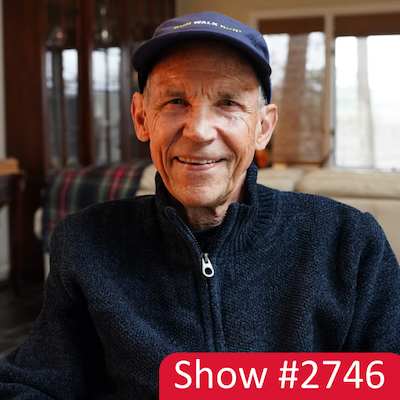
03 Mar March 4, 2026 – RIP Olympian Jeff Galloway and WSJ #1 Author Faisel Hoque (and a Quick Ten!)
Transcript
0:04 Intro 1 : From the am FM 24/7 Radio Network broadcasting from am and FM stations around the country. Welcome to the Small Business Administration award winning school for startups radio where we talk all things small business and entrepreneurship. Now here is your host, the guy that believes anyone can be a successful entrepreneur, because entrepreneurship is not about creativity, risk or passion. Jim Beach,
0:41 Jim Beach : hello everyone. Welcome to another exciting edition of School for startups radio. We’re doing something unusual today. Both of our guests are repeats from 2014 the second guest Faisal Hoke, one of the most accomplished men out there, an absolute superstar. So you need to hear that interview. Think he was a Wall Street Journal, number one bestseller. I’m not gonna, don’t quote me on that. And then after that, we have a quick 10, but before that, we’re going to replay my interview with my second cousin Jeff Galloway. He died over the weekend, 80 years old of a brain aneurysm. He was an Olympian, and 1972 he did not win any medals. I think he came in seventh, and then he spent his entire the rest of his life building running businesses. It’s an amazing story. As an entrepreneur, if you are a passion person, this interview is for you. No one was more passionate about their thing than Jeff Galloway was about running. He’s written 30 something books, had running stores, a whole brand of running stores called fidipity, who was the first person to ever run the marathon. And I wanted to replay this interview to sort of honor him and just let you hear someone who is absolutely first class person during the Olympic trials. He was in third place, and therefore would have gone to the Olympics. In that event, his friend was right behind him, and he actually stopped let his friend get ahead and get on the team. Jeff had already qualified for, I think, the 10,000 meter and this would allow his friend to go to the Olympics as well. Imagine that. Imagine stopping running so that your friend can beat you, so that he could go to the Olympics as well. I’ve known Jeff my entire life. My father used to babysit for him. I went to Galloway school, created by his father, another one of the greatest humans ever lived. Jeff was an incredibly strong Christian, and we know he is in heaven. And so I hope you enjoy this interview with Jeff, just one of the classiest men to ever live. It’ll be back in just a second with that interview.
2:57 Jim Beach : Welcome back to school for startups Radio. Thank you so much for being with us today. I appreciate you tuning in. I am very excited and honored to introduce you to my next guest. His name is Jeff Galloway, and he is an Olympic runner. He was in the 1972 Olympic team in the 10,000 meters. He in 1973 he set the American record for the 10 Mile Road Race, I think. And since then, he has been a running entrepreneur. He has organized races. He has won the first Peachtree road race here in Atlanta, which is our big super race. He has had running stores. He has run running events and running camps and fitness camps and all sorts of different things. And he now has a company called Jeff Galloway productions, and he is my second cousin, I think, something like that. Jeff, welcome to the show. Thank you so much for being with us today,
3:56 Jeff Galloway : Jim, it’s my privilege to be here. I’m looking forward to it.
3:59 Jim Beach : Well, thank you. Thank you for saying that your mother and my mother were almost best friends, and my mother just loved your mother so much, and your mother was the one who would tell us exactly how you and I are related. She was the expert at that, wasn’t she?
4:16 Jeff Galloway : Well, my mother is a cousin to your father.
4:24 Jim Beach : So that makes us second cousins, or second first cousins, once removed, or I don’t see your mother is the person we need to ask.
4:32 Jeff Galloway : Yeah, you know, you’re right, and sadly, she is not here with us anymore. But the fact is, we’re darn good friends, and we are connected, Jim
4:41 Jim Beach : and I think my father used to babysit you. Is that true? That is correct. Oh my gosh, unbelievable, Jeff. Tell us about being an Olympian was and in your love of running and all of the things that were going on with you in the early 70s. Take us back and tell us some of that briefly. Please.
5:00 Jeff Galloway : Olis, well, I started running 1958 when there were virtually maybe a dozen runners above college age in the whole state of Georgia. It was just something that was running, was done at the high school and college level, and then after that, only a few people continued. I got hooked early as a 13 year old, a fat 13 year old, I was forced my family moved to Atlanta, and at the new school, I was forced to choose sports every quarter. Never had to do that before. Had been lazy, had gotten totally out of shape, gained a lot of weight, and hated exertion because it hurt, and then was forced to do this. Fell in with a group of kids that were lazy also, and they they were going to go out for one across country during the winter quarter. I said, that doesn’t sound easy. And they said, well, it is because the coach, Paul kashwa, is the most lenient in the school, and so you can just tell him that you’re going to run on the trails in the woods and go out in the woods and hide out. And I, I did that for the first two days, and then I I was asked to run with a group of runners that I really liked, but they were real runners, and they were funny. And everything changed during the first run, as jokes flew and as we got to know one another and the honesty statements came out and and we became friends very quickly, still friends to this day, I discovered mostly that things were happening in my mind and spirit that I’d never had before. I felt better after even a very hard run than I had ever felt in my life, the personal empowerment that comes from that. And so my mission from that point on, actually, was to find out more about this running thing, what, what is going on? It’s not just a sport, it’s it’s something that energizes you. I was not a talent in running. I improved a little bit each year. I went into the Navy in 1967 because I had a draft number that would have dictated the draft. And during that time, I crystallized my focus and decided, when I got out that I would try to just qualify to get into the Olympic trials. And that was a stretch for me. A big improvement was needed. I worked very hard for two years. Learned a whole lot more about running and unexpectedly, totally unexpectedly made the Olympic team in 1972 and that further changed my life, because I started looking at opportunities to make a living out of running, which brings us to entrepreneurship, because there really weren’t any opportunities. And the interesting thing about it is, because in my preview, thoughts before the show sort of drifted back and forth around the profit motive, and profit motive was never there. I simply just wanted to make enough so that I could support myself and continue running and my mission in the store was to match people up who came in the store with a shoe that fit their foot and worked best for them when they ran. And it was, as far as I can tell, the very first running exclusively specialty store in the United States and maybe in the world, and it was premature, and indeed, we didn’t make enough money the first eight to 10 years to really make a profit. So that brings us to level two of entrepreneurship, because I wasn’t making enough in the store, and I wanted to keep the store, I started holding clinics and training programs and retreats in various parts of the country to help people get into this wonderful activity that changes their lives in a positive way, and the rest is history.
9:39 Jim Beach : It’s been an amazing story so far. Jeff, I didn’t even need to ask you a single question. It’s amazing. So the profit motive is that a good motive, a bad motive? You’ve certainly done pretty well for yourself. What are your thoughts on the profit motive now?
10:00 Jeff Galloway : I have to be honest with you, profit per se never had been a focus of mine. Again. My whole vision of this thing was to get a store running so that it would serve the community. It would make enough money to keep me doing other clinics and things that would bring other people into the sport and that it would just sort of feed on itself. So I really never did look at projections of, you know, sales and what we’ve got to do and all this sort of stuff. I had a good team of people that did this, but at this point in time, simply have to look at the profits that will keep us afloat. That’s number one. Any entrepreneur has to do that. But secondarily, profits are certainly not a dirty word. They have allowed us to open up our other events and train Galloway training programs and PHE deputies free run to other people, simply because we were able to make a little extra over the sale of the shoes.
11:25 Jim Beach : How many different revenue streams do you have now?
11:28 Jeff Galloway : Jeff, the major projects are the store our Galloway training programs, which are around the world now, mostly in the US. We have 100 of those programs that are located around including programs in Germany, Italy and Israel and in England. And they’re they’re growing. We’re soon to go into China. But the other major revenue streams are the coaching and writing areas. I have now written 28 books, and we have online and other forms of training programs that people can purchase if they can’t go to one of our sites. And then I do a lot of consulting. I am the official training consultant for the run Disney series, meaning that I set up all the training programs for their currently eight events, either in Disneyland or Walt Disney World and I go to the events, giving clinics and answering questions all day, and it’s just a wonderful Association. Disney has truly changed the way a good portion of the American populace thinks about fitness. This part is an integral part now, of our way of life, and Disney has has had a good role in that.
13:10 Jim Beach : Well, Jeff, I talk about Disney on the show all of the time. I love it there. And so to me, the fact that you work there is really cool. I didn’t know that. You know, what’s interesting to me, I think the most Jeff, is that here on the show, we talk about being a thought leader all the time. We talk about, you know, developing yourself into a position of authority so that other people, you know, hire you as the big ticket consultant. You did that 30 years before it was cool. You became one of the first truly brand name thought leaders in the United States. Have you ever thought about that? Did you realize that you were creating a whole new industry in addition to the you’re running stuff, you’re in the industry of being a thought leader, which right now is one of the trendiest things out there. Did you realize this?
13:58 Jeff Galloway : Oh no, I never focused on that at all. As a matter of fact, I was surprised about a year ago when USA running, which is our organization that promotes running and promotes our Olympic approach every four years, when they did a survey of more than 30,000 and I was picked as the most recognizable person in running in the United States. And, you know, I really fully expected there to be some of our current Olympic athletes that would have gotten that honor, and I was very honored to have gotten that. But the bottom line is that when I started in the store and I started giving clinics in the store, my whole approach was to help people improve. The quality of their life through fitness, running and nutrition, and then some other side things too. And so the whole approach was to help people. And as a result of that, I just started immediately to get feedback. Oh, I didn’t know that. Oh, can you tell me this? And over the years, I have heard back individually from more than 300,000 people that I’ve given advice to. And I love it, it. It takes me five or six hours a day just to go through the emails and answer those emails, but it has given me a touch with what is going on there. What are the problems? What is working? 90% of these folks get back to me, so I really have a good handle on what’s going on.
15:58 Jim Beach : Well, Jeff, it’s amazing what you’re doing in that respect. And you’ve also fully embraced social media when probably many in your industry and your space have not. You’ve been very active there from the beginning, too, haven’t you?
16:14 Jeff Galloway : Yes, we realized as as most folks that had been in business as of 1990 that the internet was going to be a major deal, and so we immediately started finding ways to keep people that we had been in touch with in our network, and to continue to stay in touch with them, and, of course, with Facebook and and Twitter and all that, it’s just rampant. The amount of info that’s flowing in, we can’t corral all of it, but we do get the major issues that are just really coming across right and left. And my I’m very pleased in that my son, Brennan, has joined our company. He is a specialist in the social media area, video production and other things. So he’s really enhanced our efforts dramatically in that whole area, and particularly with our new race, the Jeff Galloway 13.1 and the barb Galloway 3.1 that’ll be taking place in Atlanta Next month, 13th and the 14th of December.
17:32 Jim Beach : Well, it’s awesome. You know, one of the things that I’ve always enjoyed seeing about you and your family is that you did so many things together. You and your wife have traveled to so many different races as a team. Can you comment on the lifestyle that entrepreneurship has allowed you and your family to enjoy Jeff and one of the things that I say on the show is, you know, you’re incredibly fortunate to love what you do. Love, love, love it. But a lot of people who are sitting on the sofa don’t necessarily know what their passion is. Haven’t found something that’s going to get them up at six in the morning to go run 10 miles, but they still want to get off the sofa. And so we say, even if you can’t find a true passion, get off the sofa. Can you comment on the role that passion has played in entrepreneurship and your lifestyle that you’ve enjoyed because of it.
18:26 Jeff Galloway : Well, again, I go back to my original idea for the store, which started everything my fidipity store in Atlanta. And that idea was, how can I help people to get all of these amazing benefits that that I have gotten from running and fitness and without aches and pains, and I’ve been working on that for more than 40 years now, and I’m very proud to say that the research now is is just rampant, and showing the brain benefits from regular running, and to some extent, fitness in general, the brain circuits that are turned on for a better attitude, for more vitality, so that you have more energy to do things, and personal empowerment, to be able to go on and face challenges are more pronounced in running than in any other areas that have been studied. So it’s really exciting to have identified these things early, and then have been somewhat preaching this as we’ve worked with people who wanted to get into it, and we found ways to keep people from getting injured so that they can just enjoy all the good stuff and not have to put up with the bad stuff. But getting back to your question about passion, if you. To find something that you can do that will help others improve the quality of their lives, then it will take on a life of its own.
20:13 Jim Beach : That is the Twitter moment of the show, Jeff. We will tweet that out at the appropriate time. A great line. What about your future plans for growing your company, retiring? What do you want to do with the rest of your life?
20:29 Jeff Galloway : I don’t expect to retire. I I love what I do. I keep fully engaged, mind, body and spirit every minute of the day. I mean, I’m just clicking, and it’s wonderful, and it’s involving. There are challenges and so forth. Now, in terms of business expansion, or any of this sort of stuff, we have a solid core of things we’re doing that people love and people benefit from. Our retreats at Carmel and on the panhandle of Florida, Lake Tahoe and Italy and so forth. These people tell me, allow them to be motivated for months or a year, and so I’m getting this constant feedback, and I don’t have any desire to go out and and do hundreds of these and, you know, make myself totally exhausted. I want to focus on a few good ones and help people individually at each one of these sessions for the masses, we are able to help a lot of people at once. We have a newsletter, a free newsletter, that folks can sign up with at Jeff galloway.com that goes out to more than 100,000 folks, and I get just amazing feedback on that because it, you know, relatively speaking per person, I don’t spend a lot of time in composing that newsletter each month, but, but a lot of people tell me that they benefit from the various tips and nutrition and how to avoid aches and pains and how to push through barriers. And, you know, I’ll do things that people never thought they could possibly do. So it really is a entrepreneurial moment as I sit down to each one of my projects every day, and it hits a certain part of the brain that gets me focused. And I’m mainly focused on who can I help with this? Wow.
22:52 Jim Beach : Great words. Best piece of entrepreneurial advice. Favorite, you know, entrepreneurial thing you’ve ever heard, if you can only pass on one or two phrases, what would it be?
23:05 Jeff Galloway : Well, the first is, you’ve got to find something that really turns you on, that other people can benefit from, so that you know it has to be some substance there. Secondly, you need to want to keep learning in that area. It’s a key thing. I’ve seen a lot of business people who have simply wanted to set things up and just let them run, and they don’t tend to do as well as the years go by. Third, if you really believe in it, and you are active and learning and and helping people, then you’re going to attract people who want to help you, who want to be a part of this thing. And you’re going to need them, because you if you really do want to expand the benefits to people that you’re serving. You’ve got to have good people, and you can really make major inroads in any field that you’re in with the right people.
24:14 Jim Beach : Fantastic, fantastic. Jeff, how can people find out more about you? Buy one of your 28 books, sign up for your newsletter or run in one of your races.
24:24 Jeff Galloway : Well, the newest thing that we have put out with our race is the the 3.1 miler and the 13.1 miler next month, 13th and 14th. That’s going to be in the Piedmont Park area of Atlanta, beautiful area, but a lot of people want to come but but cannot and would like to be an original person in our one of our originals. And so we have set up a virtual run in which people can enter another event or send. Us a measured course, and they can qualify to win the medal, the t shirt and be put on the status of an original heritage runner. And then they’ll be eligible for the ongoing incentive awards among those that stay year to year in this event. What has happened to events is that folks have focused on these as a motivational device to get them out the door in between. So that website is Jeff Galloway, 131, dot com, and our original website, which has all the content and everything, is Jeff galloway.com,
25:42 Jim Beach : fantastic, Jeff, thank you so much for being with us today. I hope you have a fantastic holiday season.
25:49 Jeff Galloway : Well, same to you, Jim and all of yours, and let me know when I can help you.25:54 Jim Beach : I appreciate it all right. We’ll be right back with more of the show right after this.
26:06 Jim Beach : Welcome back to school for startups radio. I hope you’re having a great day today and using today to make yourself a better person, someone more likely to go out there and solve the problems of the world. I am very excited to introduce you to my next guest. He is someone doing just that, trying to solve the problems of the world. He left Bangladesh at 17, but has had one of the careers that you just read about. He was with General Electric and went out on his own and has been writing for Fast Company, Huffington Post, Wall Street Journal, Forbes, a whole bunch of fantastic places. He’s just published a new book called everything connects. And if you go online, you will see that not only is it selling well, but some of the people who gave him quotes, blurbs, recommendations about the book were unbelievable, including Nobel Peace Prize winner, the man who started Grom and bank, just unbelievable accolades. He is also running three companies, and we will find out about those. I’m very excited to introduce Faisal Hoke Hawk to the show. Faisal, welcome. How are you?
27:16 Faisel Hoque : Thank you for having me. I’m doing well. Thank you.
27:19 Jim Beach : Well, I’m very excited to learn about all that you’re doing. You’re a busy man.
27:24 Faisel Hoque : I am indeed a busy man. Yes, I’m trying to do a lot of different things.
27:28 Jim Beach : All right. Well, let’s start off with the most important thing, your new book. It was just published by McGraw Hill, my publisher as well. Everything connects. What is the thesis of this book, Faisal.
27:43 Faisel Hoque : Well, you know when you want to do something, first you have to kind of know yourself in the sense that you have to find what is it that you want to do and what satisfy you. And once you figure that out, then you can figure out what is it that you want to do for others, and how to motivate and recruit other people for your ideas. And once you have yourself and few people that supports you, then you can go into creating whatever that that is that you want to create. That creation could be a financial gain. A creation could be that you want to change the world, whatever the case may be, unless you know and connect with yourself and connect with other people, you cannot certainly connect with your creation and the creation that actually creates value. So that’s basically the thesis of the law.
28:33 Jim Beach : Okay? Is this have anything to do with, say, emotional intelligence, or anything like that?
28:41 Faisel Hoque : A great deal. Because, you know, I mean, if you really talk about, how do you get to, you know, find your calling, or find your passion, you have to, you know, very much, get in tune with your soul and your mind. And you know, we use this term mindfulness, which has been around three, 400,000 years, in many ways. And so we use this notion of being very much aware of your thought process, your emotions and mindfulness. And that’s that we drive that concept all the way how you create a new innovation so mindfulness and emotional intelligence, you know, relentless devotion to your craft, those are underlining themes throughout the world.
29:34 Jim Beach : Okay? Well, I certainly believe in all of those. So that’s easy to do. I i 100% agree. What do you mean by the phrase that we are now living in the age of creativity, innovation and sustainability?
29:51 Faisel Hoque : Well, I mean, if you look at what’s going on today, today’s world, I mean, we have much better access to some. Technologies than ever, so that’s driving huge portion of innovation. Even most disadvantaged locations now have access to a cell phone as an example. So and then that that allows us to be more creative in the sense how we come up with ideas by collaborating with others, and how we, you know, take those ideas and distribute those ideas. All that is changing a different kind of social behavior that we never had before. So and when we can bring that together that allows us to be, have a hope to be more sustainable, personally, professionally and as a as a result socially, is
30:50 Jim Beach : innovation and creativity changing?
30:55 Faisel Hoque : Yes, it’s definitely changing. I mean, take a very simple, mundane example, like you know, you mentioned very early on in the interview that I originally come from Bangladesh. I mean, you know, farmers now use mobile devices to understand the weather, weather pattern, which they were not able to do even 510, years ago. And as a result, now they can figure out how to deal with their farming activities and where to take that product they’re creating, meaning the you know, the crops they’re creating, and where to distribute and get a better price and whatnot. So those are not very sophisticated application or uses, meaning you’re not launching a new rocket ship, or you’re not controlling some, you know, drone from your cell phone. You’re talking about very basic human functionality. So I get excited about those basic human functionality, and that’s what I mean by creativity and you know, and and that creative activities can be nurtured by a farmer, a artist, an author, an entrepreneur, or somebody who’s sitting in MIT Media Lab and trying to come up with next generation technology.
32:14 Jim Beach : All right, I know that in the book, you talk about how the roles of a group are changing, and you come up with four types of personality, I guess, four different roles that are in a proper organization. Can you tell us about that?
32:32 Faisel Hoque : Sure, you almost have to understand, you know how people work today, right? So you know the best and brightest people necessarily does not work inside one organization anymore. We are forced to collaborate with many different types of people around the literally around the globe. So if you look at from that point of view, we almost have to think about how to get better organized so that we can take advantage of the motivation, intrinsic motivation, that drives people’s activity towards creation and innovation. So from that point of view, you know, you can almost look at like, you know, I love movies. I’m sure most of your audience love movies and and if you look at movie creation, or if you look at music, you know, I mean, when people create a band, or you come up with a symphony, many different people place different role based on the movie and the role and what they’re trying to accomplish in the part of that movie. So from that point of view, you know, what we’ve done is that we looked at, well, you know, when you talk about creation and innovation, you’re talking about somebody who comes up with idea, somebody who then takes that idea and try to build that idea, and then, you know, some, some somebody who takes a product or something that you have created, tries to Take that out in the market. And then somebody tries to, you know, expand the footprint of the market. So if you start looking at from those kind of role, and we use those four roles as a as a, you know, skeleton structure, you can expand in many different ways. You can start looking into people’s expertise and apply those people different ways in different projects, versus a traditional role of you’re a finance guy, you’re a marketing guy, you’re a you know you are. You’re a graphics person, and you are a developed software developer, and that’s your role for rest of your life. That doesn’t really allows us to extract the best talent each of us possess within us and contribute to creating a new and different things.
34:52 Jim Beach : All right, that’s really powerful, because I’ve always thought of myself as a marketing guy, or one of those phrases and you’re saying we. Need to redo that and rethink it all together,
35:03 Faisel Hoque : absolutely, because, I mean, look at your own career, right? So you’re a marketing guy, wrote a book and now you’re running a radio show. Teach entrepreneurs how to become a better entrepreneurs, right? So, so look at all the different things you already done. Yet you’re saying you’re a marketing person, right? So that it’s actually limiting thought process when we put a label around somebody, obviously we need to focus, and that’s where the mindfulness comes in, which we talk about to accomplish it one task at a time. But that one task at a time does not define what who we are and what we can accomplish in our lifetime, and we’re constantly transitioning from one stage to another stage, and that applies in life as well as in business.
35:51 Jim Beach : All right, how can I now and how can the entrepreneurs listening take this information and use it to our benefit?
36:02 Faisel Hoque : I would say that, you know this is very fundamental in the sense that you have to really cultivate your, you know, your desire and your passion, and what is it that you want to do and and even though you want to do many different things, you have to kind of have a focused thought process. What is it that you want to do that particular moment in time, and take that moment and time, goals and aspiration and then manifest that into a product or service that creates value for yourself, or whatever value you want to carry for others by recruiting what I call the right traveling partners that can help you to execute what you want to do. So in a very high level, you know these three part approach, meaning figuring out you know, how you connect yourself, and then figuring out how to connect with other people at an emotional level so that you can motivate and inspire them. Because entrepreneurs job, first and foremost, aside from knowing what they want to do, is really inspire other people. And the third is that you know, once you get that your traveling partner and your and your calling then create the ideas and the platform and the value that you want to put on that to take it out of the market. So these three part plan is what we tried to outline in the book, so that anybody can take advantage of it.
37:40 Jim Beach : All right? Well, that’s fantastic. I love that, and I love the three step process. It just makes it a lot easier for us. Let me ask you this. Can you give us a big, big business example of where this philosophy has been true? Can we see this at any of the Fortune 500 companies and look at an example.38:03 Faisel Hoque : I would say that, you know, I have seen bits and pieces of this throughout my career, small and large corporations, as well as, you know, some of the public sector organizations that some of my companies have served. But the key is that whether you’re small or large, you know, this is really a individualistic way of manifesting your organization. And you mentioned emotional intelligence right up front in the beginning. I mean emotional intelligence starts with a person who then becomes a leader, and the leaders reflection becomes a culture of an organization. And I can’t pinpoint one example that says, Okay, here’s GE or he is, he is Pepsi or is not programmable that practice this through and through. And my argument to you, or whatever you want to call it that, unless and until we do that, we’re not going to create long term value. And you can see that example when you look at when companies comes to an end. I mean, you know, I’ve gone through that myself, but I’ve also seen, seen that in large organization, where, if you look at daos, listening today on original Dow, listing the companies that were there, most you know, FSM, G No, no one is there. So that, since it all came to an end, right? So unless and until we take a holistic look about how we look at ourselves and how we want to translate that into our organization and culture to create value, you know, it’s really put us at a disadvantage.
39:59 Jim Beach : Can you talk to. Us about what you see the differences between qualitative and quantitative, sure.
40:07 Faisel Hoque : So, I mean, you know. So the qualitative is, you know, you can look at it from a financial point of view. You can look at it impact point of view, right? So as a society, we have been very much in Vincent with this idea of, you know, what is, was the output of the next quarter? What is the output of the next quarter? So what happens is that even though we may meet numbers or we make a sales goal, or we sell a particular unit of product or service that we want to sell, excuse me, you know, that’s a very much of a short term view. That’s what we mean by quantitative outlook. The qualitative outlook is that when you say, Look, if we came up with this product or service, this is going to have this type of human and impact on a long term basis, that we’re going to do the right thing so that it does have the ability to make an impact. So when you look at that long view of quality, you know, the your your impact, not just social impact, but your financial impact, also increases a great deal. And you constantly are able to reinvent yourself with that kind of value system, versus, hey, I’m going to create a company, you know, talking like, you know, talking from an entrepreneurial point of view. I want to create a company. I’m going to run it for a couple of years, and then when I’m going to exit out of it, and then whatever happens to that company, whatever happens to that company, right? So we’ve seen those kind of bubble centric mentality doing.com and we’ve seen, seen this in oh eight and oh nine. We’re in the financial industry, and I’m sure that was not only you know, we will see it again, but when you look at those kind of short term impacts, you forget about value creation. Actually, you do more harm than doing any good for society in general.
41:57 Jim Beach : That’s true. That makes a lot of sense. Can you talk to us about Leonardo da Vinci and how he embodies all of this in your mind?
42:07 Faisel Hoque : Well, I mean, you know, obviously, you know, Da Vinci was, was a renaissance man, and he was lot of different things, just like we talked about, he didn’t have one role, he had many roles, and he has long different passion. When he was a painter, he was a sculptor. You know, he created sculpture. He was an engineer. He also was an entrepreneur, because for each of his projects, he had to actually go get funding and create the economic model that will allow him to create what he wanted to create. So, so. But he was also, you know, so. But if you really analyze how he looked at things and how he created things, he was very in tune with with himself and the nature and how he observed thing. I mean, he used to walk around near the beach, and he would analyze a shell to look at how the shells are, you know, crafted, and then he will take those learning and apply to the things that he was creating. So as an example, you know, in his blueprints or in his diary, you know, he had all these diagrams and hand sketches that we all know about. You know, he would look at light. When he would observe life, he would not look at how the light works, but rather how our eyes works to translate that light, you know, from an image translation point of view, right? So that’s a very different way of looking at it. It’s a way of being in tune. What is it that you’re looking at, but also what is happening around you? It’s this awareness inside and outside that allowed him to be such a prolific person with everything that he did, right? Well, it’s
43:59 Jim Beach : certainly I love that. I love that analogy too. It makes it really clear to me. I think that’s the best way to understand it, simply because of all the variety and the things that he was doing, we are about to run out of time, unbelievably. And we haven’t talked about your businesses yet. I’d love to learn about them. Tell me about shidoka.
44:20 Faisel Hoque : So my company is a venture company. I’m incubating and creating new ventures I’ve got. So we just started this about six, eight months ago, and we already have two, three portfolio company. One of them is a company that focus on providing a software platform that focused on education and learning and research data collection. We just rolled this out to the third largest Indian tribe called Choctaw tribe. Over 10,000 people are using this platform to learn the program that will actually help them. To improve their lifestyle, from education, healthcare, et cetera, et cetera. Point of View, I’ve got another company that called BW foresight, which is focused on providing a platform to analyze entrepreneurial opportunity, and how do you manage those entrepreneurial opportunities, from a long term value creation point of view, so it has analytical and a learning component to it that allows you to kind of analyze the potential of the opportunity or ideas that you’re evaluating. So these are some of the things that I’m working on. So I moved away from your classic, large enterprise software business that I was for many, many years, and because I’m an entrepreneur and I love the education aspect of life more, and for more and more, being focused on those kind of areas,
45:51 Jim Beach : well, it makes sense, and it certainly seems to fit in overall with what you’re doing. So makes a lot of sense altogether, what’s in your future now? What are you going to be doing next?
46:06 Faisel Hoque : Well, you know, I mean, I have, you know, as a venture, my role is to create new companies. So I’m going to look into create new company, newer companies, and work with other entrepreneurs and other investor pools and but also, you know, I’ve developed writing as a passion, so obviously, there are more books in the call, you know, in the future, so I’ll be doing what I do. It’s almost I look at this stage as a next stage, or next phase of my life. You know, as I said in the book and during this conversation. I mean, we are constantly transforming and reinventing, and let’s talk about reinvention and transformation of others and companies. I have come to believe that reinvention process starts with yourself. You can’t reinvent a industry or a company or is area that you focus on, unless, until, you reinvent yourself. So I think I’ll be keep reinventing myself as I go through.
47:11 Jim Beach : I love it. I love it, all right. Well, we are now officially out of time. How can people follow you circle you get in touch with you and buy your book.
47:22 Faisel Hoque : Well, I mean, the book is available everywhere. I mean, you can get it from Amazon or van der Noel or 800 C or read or anywhere as far as finding me. I mean, you can go to my website, which is five Hawk calm, or you can find me on Twitter, which is Faisal underscore Hawk, or just Google my name. It’s a draw, so it’s easy to find me and easy to connect
47:45 Jim Beach : with. Well, that’s because everything is connected.
47:49 Faisel Hoque : That’s exactly right. That
47:50 Jim Beach : was stupid anyway. Faisal, thank you so much for being with us today. Best of success with the book. Hope it sells tremendously, and I hope you’ll come back soon, when you publish again. Thank you so much. Thanks for having me. All right, we’ll be right back with more school for startups radio.
48:14 Jim Beach : We are back and have another brave contestant willing to play the quick 10. Please welcome Dave Burnett. He is the founder of a okay marketing.com you’re interested in starting to talk about internet marketing in an AI world. Dave has got to talk to Dave. I heard you were willing to play our little game, the quick 10 Absolutely.
48:37 Dave Burnett : I don’t know what I’m getting myself into, but let’s bring it on. I’m excited for
48:41 Jim Beach : it. All right, do you want to accept the standard wager?
48:53 Dave Burnett : Say yes, then I would like to accept the standard wager.
48:55 Jim Beach : Yes, you would like to accept the standard wager. Great. Are you currently sober? I am currently sober. Yes. All right, great. Number one, your favorite creativity hack,
49:06 Dave Burnett : my favorite creativity hack, honestly sounds sounds boring, but reading something I’m not familiar with just gets my mind expanded. That’s what I like to do
49:16 Jim Beach : there. Number two, favorite bootstrapping trick.
49:20 Dave Burnett : My favorite bootstrapping trick is to get other people to pay for my client acquisition costs. So that means spend a little bit of money, making so much money off of them after, you know, I get my first client that they pay for the next clients. We acquire and acquire and keep acquiring clients. It’s called Client financed acquisition. It’s a great, great
49:41 Jim Beach : trick. Number three, name your top passions.
49:45 Dave Burnett : My top passions are learning family and spending time on a lake wherever I can.
49:53 Jim Beach : Number four, the first three steps in starting a business are
49:58 Dave Burnett : give someone away for free. Once you’ve figured out what that free thing is, then you execute on that thing. Tell the people that you are executing on that you suck at it, and all you want from them is a referral and or a review. And then once you’ve done that for five people, or five or 10 people, they got five or 10 favorable reviews, then you start to actually charge money for that thing that you’re doing. So those are the first three steps, give away something for free, get referrals, and then start charging.
50:28 Jim Beach : Number five, the best way to get your first real customer
50:32 Dave Burnett : is that same whole process I just talked about, give them
50:35 Jim Beach : away for free. Number six, your dreamiest technology is
50:40 Dave Burnett : something that answers questions that before I even ask them, it knows what the next question is.
50:47 Jim Beach : Number seven, best entrepreneurial advice.
50:51 Dave Burnett : Know that it’s going to be hard.
50:55 Jim Beach : Number eight, worst entrepreneurial mistake.
50:59 Dave Burnett : I didn’t get it in writing that was a huge mistake. Always get it in writing. Number nine, favorite entrepreneur, and why? Warren rustand Is his name? Favorite entrepreneur. He’s my mentor. He’s an amazing guy. He’s everybody should look him up and follow everything that he says.
51:17 Jim Beach : Number 10, favorite superhero.
51:20 Dave Burnett : Well, not really a superhero, but I’m a big fan of Speedy Gonzalez. If you remember him from those old, those old cartoons that we used to have, and the reason why is my grandfather used to call me speedy when I was a kid. So he’s my he’s my favorite. He always used to win whenever he was running away from things. Fantastic.
51:38 Jim Beach : Great answers. Day. Very interesting. While we calculate the score and find out the winner of the wager. How do we get in touch with you and find out more about a, okay?
51:46 Dave Burnett : Yeah, just go to a Okay,
51:48 Dave Burnett : marketing.com Do you want to find out more about me? Happy to connect on LinkedIn. So just find me. Dave Burnett on LinkedIn and yeah. Otherwise, find me on x. I got some thoughts there, but nothing, nothing earth shattering, but that’s the other place where I’m at
52:01 Jim Beach : fantastic Dave and I had a really interesting conversation trying to figure out, what do you call search engine optimization for the AI world? And we, you know, the market is sort of coming up with geo for generative engine optimization. It’ll be interesting to define that out. Dave and I had a great interview talking about all sorts of things, including his cool stories. He bought 3000 URLs one day. It’s a story worth listening to. In the longer interview, I’m just kind of pausing Dave while we count. Oh, oh, oh, I’m so sorry. Dave, you got a 94 which is an excellent score, but you have to have a 95 to win one of our judges from Minnesota. Ding do, I guess that’s some sort of Lake rivalry or something. I don’t know what that is. So you being Canadian and all you got, ding. So I’m very sorry that you did not win. Excellent answers, though. So you do owe us a Tesla. As always, we’re playing for a Tesla, so I’ll look forward to you sending that real soon. Yeah.
Jeff Galloway – U.S. Olympian, Best-Selling Author, Race Director, President at Jeff Galloway Productions and Fitness Expert
If you find something that you can do that will help others
improve the quality of their lives, then it will take on a life of its own.

Jeff Galloway
Jeff Galloway was a U.S. Olympian, best selling author, race director, and internationally respected fitness expert whose influence on the running community spanned more than five decades. A member of the 1972 U.S. Olympic Team in the 10,000 meters, Galloway competed among the top distance runners of his era before dedicating his life to helping others discover the benefits of running and lifelong fitness. Through his company, Jeff Galloway Productions, he created training programs, seminars, and events that guided runners of all ages and abilities, inspiring hundreds of thousands of people to pursue healthier and more active lives. Jeff Galloway passed away on February 25, 2026, leaving behind a lasting legacy in the world of running and personal fitness. Galloway was widely known as the inventor of the Run Walk Run training method, a revolutionary approach that allows runners to alternate running and walking intervals to improve endurance, reduce fatigue, and lower the risk of injury. The method opened the door for countless people who once believed running was beyond their reach. He was also the author of 19 books about running, walking, and fat burning exercise, including The Run Walk Run Method, the title book behind his widely adopted training philosophy. Through his books, coaching, and encouragement, Jeff Galloway helped transform the sport of running into a welcoming community where anyone could participate, and his impact will continue to motivate runners for generations to come.
Faisal Hoque – #1 Wall Street Journal and USA Today Best Selling Author, Founder and Chair at NextChapter, Founder and Managing Director at Shadoka, Author of Globee Awards winning 2022 Publication of the Year for Best Business Book called Lift: Fostering the Leader in You Amid Revolutionary Global Change
Unless you know and connect with yourself and connect with other
people, you cannot certainly connect with your creation and the
creation that actually creates value.

Faisal Hoque
Faisal Hoque is an accomplished entrepreneur, noted thought leader, technology innovator, advisor to CEOs, BODs, and the US federal government, and an author with more than 25 years of cross-industry success. He is the founder of SHADOKA, NextChapter, and other companies. They focus on enabling sustainable and transformational changes. He also serves as a strategic partner and a thought leader for CACI, and works extensively with US Federal Agencies. CACI is a $6 billion public company who plays a vital role in US national security. He is a 3 times winning Founder and CEO of Deloitte Technology Fast 50 and Deloitte Technology Fast 500™ awards. At the age of only 14, he began what would be the first of many businesses; cobbling together stereo components to sell from his father’s home in Dhaka, Bangladesh in order to save the money he would need to support his plan to study in the United States. He built his first commercial software product at the age of 19 while studying at the University of Minnesota, and went on to hold management positions in Pitney Bowes and then Dun and Bradstreet. In 1991, Pitney Bowes recruited him to join one of their R&D groups before he finished his undergraduate degree. As a serial entrepreneur, he has raised venture capital from angels, strategic partners, and institutional investors to fund his innovative business-to-business startups. Over the decades, his companies innovated products and solutions that: provided middleware software for complex, secure transaction processing; created industry’s first set of re-usable software components for integrated B2B e-commerce; and pioneered comprehensive business value management frameworks and platforms. As a thought leader, he has authored a number of award winning books on leadership, innovation, mindfulness, resilience, organizational transformation, and entrepreneurship, including the #1 Wall Street Journal and USA Today bestseller Lift – Fostering the Leader in You Amid Revolutionary Global Change (Fast Company), and the #2 Wall Street Journal and USA Today bestseller Everything Connects – Cultivating Mindfulness, Creativity, and Innovation for Long-Term Value (Fast Company). His work has appeared in Fast Company, Business Insider, Wall Street Journal, BusinessWeek, Fox, CBS, Financial Times, Mergers & Acquisitions, Forbes, Leadership Excellence, and Huffington Post among other publications. He holds a strong belief that it is through knowledge sharing that we may provide the greatest clarity on how to improve our collective future. As a globetrotter, he is passionate about nature, people, culture, music, and design, and he loves to cook.