

13 Sep September 14, 2026 – Small-Business Money Game Robinson Aquino and CEO of Studyville Amanda Martin
00:00 Intro 1: In the AM, broadcasting from AM and FM stations around the country. Welcome to the Small Business Administration Award-winning School for Startups Radio, while we talk all things small business and entrepreneurship. Now, here is your host, the guy that believes anyone can be a successful entrepreneur, because entrepreneurship is not about creativity, risk, or passion, Jim Beach.
00:20 Jim Beach: Hello, everyone. Welcome to another exciting edition of School for Startups Radio. I hope you’re having a great day out there, living the life, dream of an entrepreneur, and making yourself rich in your generations to come wealthy. There’s nothing like being an entrepreneur to fix your family for generations to come. Just changes everybody. I have a fantastic show today. And I really relate with both guests. They’re both very interesting to me. First up, we have Rob Aquino. He grew up in the neighborhood where my best friend from college grew up.
00:59 Jim Beach: So we know lots of the same things and we reminisce about the floods of the past because they’re actually relevant to our great conversation. Rob is building a money game. Small business money game. And we also have an in-depth discussion of my thesis. You know, you heard it in the intro. I don’t talk about it enough. I have the guest and I hope they tell the story. But the thesis is very clear. We don’t believe in creativity, risk or passion. They’re all awesome if they’re there, but none of them are a requirement to be a successful entrepreneur.
01:41 Jim Beach: All you have to do is go out there and find an idea to copy, don’t spend more than $5,000 to test it. And passion is for the church synagogue, the mosque, and, you know, the family and your spouse and stuff. You don’t need to love your business idea. You just need to like it more than working for the man. And so Rob and I have a great discussion of that. And it’s just a great interview. I’m excited for you to meet him. And then after that, equally impressive and exciting, we have… Amanda Martin.
02:22 Jim Beach: She has built a company called Studyville, which started off as tutoring and now has grown into taking care of whole school systems for parts of their curriculum and things like that. It’s an amazingly impressive story. And I’m so impressed with what Amanda has done. As you know, I started in the kid business. My 1st business was summer camps. We were at Stanford, MIT, Georgetown, UCLA, SMU, 89 locations around the country. Our model is very different from Amanda, but it’s all kids.
02:57 Jim Beach: And when you sell to kids, there’s just so many different issues, you have to think about in terms of how do you market when you really have an adult message that you want to share with the audience, but you still want to be attractive and interesting enough so that the kids will want to come there. You know, it’s a very tricky thing, particularly when a lot of the customers are not necessarily happy with academics or social life or things like that. So what Amanda has done is, I think, just amazing. I’m excited for you to meet her.
03:39 Jim Beach: And then after that, all week we have incredible guests, just one after another, some new industries that I’ve never met before and things like that, we’re going to have a great conversation about confidence. We’re going to meet the number one Sandler training associate in the world. We’re going to talk about relationships and AI. Some great stuff coming up and I think you will enjoy all of it. So anyway, thanks for being here today and every day, tell your friends, and we’ll get started in just a second. Oh, and go buy my book, The Real Environmentalists, nominated for another award.
04:21 Jim Beach: It’s a great story of how us capitalists will save the world’s environment.
04:27 The Real Environmentalists ADs: Tired of talk and no action on climate change? Introducing The Real Environmentalists, the bold new book by Jim Beach. It’s not about activists, politicians, or professors. It’s about the entrepreneurs, real risk takers, building cleaner, smarter solutions, not for applause, but for profit. The entrepreneurs in the book aren’t giving speeches. They’re in labs, factories and offices, cleaning the past, and building clean products for the future. The Real Environmentalists is available now, because the people saving the planet aren’t the ones you think. Go to Amazon and search for The Real Environmentalists.
05:01 Jim Beach: Thank you. We are back and again. Thank you so very much for being with us. Very excited to introduce another great guest. Please welcome Robinson Aquino to the show. He is the CEO of JBS Corp, which is a family neighborhood tax practice that he has transformed into a modern financial leadership firm. He is also the author of a new, I’m sorry, The Small-Business Money Game: The Hidden Strategies That Turn Survival into Scale. Rob has advised over 4000 entrepreneurs and business owners and helps companies navigate all of the issues that pop up as they grow into a multimillion dollar enterprise.
05:34 Jim Beach: He is also an angel investor, and it’s going to invest in your business today. He made me that guarantee. Every business that listens today, he’s investing in. Welcome to the show. How you doing today?
05:46 Robinson Aquino: Good to be here, Jim.
05:48 Jim Beach: I’m doing really well So I actually know the town that you grew up in and it’s not a great place. It’s a hard place to grow up. What was it like for you to grow up there? Did you want to be an entrepreneur from the very beginning? Did you grow up and stay at home to try to, you know, get out? Not too far to Boston. Not too far to cheaper New Hampshire as well.
06:16 Robinson Aquino: Yep, yep. Great questions. And it was actually 2 strong towns because I was born and raised in the Bronx. So I spent the 1st half of my life in the Bronx in the 90s. Tough place and my mom had businesses all across New York, primarily in the Bronx and in Harlem. Um, so I grew up surrounded by entrepreneurs in tough cities, uh, you know, with a lot of people and not a lot of economic opportunity. And so actually when we moved to Lawrence, it was a bit quieter than the Bronx, believe it or not.
06:51 Robinson Aquino: Um, but, you know, I was very fortunate to have a mom who was very focused, who made us focus in school. And so I got to go to St. John’s prep, a great preparatory school here in Mass and then got to go to Providence College on a full ride, studied finance accounting, um, and was just always fascinated considering what my upbringing looked like. From having to struggle a lot as children and then having my mom do really well when I was about high school age. So I was just always fascinated with with economic mobility and how money worked.
07:28 Robinson Aquino: Um, and to this day, it just still consumes my my interest.
07:32 Jim Beach: Well, as I told you, my best friend from college lived in Lawrence. And what you just said about economic mobility and your mother made me think of his mother. She never graduated high school. I did graduate secretary school and worked for 30 years at Raytheon and worked her way up to become the head of the secretary pool at Raytheon with, I think, 3000 secretaries reporting to her. And I’m making that a number up. I have no idea. She was the scariest woman.
08:03 Jim Beach: I am, she raced, 3 boys, all big football players who got to school full rides on football scholarships, and she was tough, you know, to put up with that in her house and everything. And one day, well, let’s see, right after Christmas, my friend had borrowed my car over Christmas, and he picked me up at the airport in Boston, and we were going to drive back up to school and he wrecked my car in the Sumner Tunnel leaving Boston airport, and we drove to his house in Lawrence with this, you know, now freshly wrecked car, and his father was like, I can fix it.
08:41 Jim Beach: I can fix it. I can fix anything. And so he plexiglassed up the truck and so that we could keep driving it and everything and we went back to school. And then 3 or 4 days later was the famous Lawrence Flood of 1987, which I’m sure you don’t remember, Rob. But you can look it up in the books. And Bill wanted to go see the flood because it was so bad. And he drove down to Lawrence in that car and Jack’s checking out the flood. And of course, his mother saw the car, knew that he was in town and called me and was like, Jimmy, where’s Betty?
09:21 Jim Beach: I was like, well, Bill’s in the law, the library. You know, Mrs. Belargent. And she was like, you’re lying to me. I know you’re lying to me because I just saw that car. And so I got busted by the meanest woman. Nicest woman on earth.
09:38 Robinson Aquino: Ouch. Ouch. Yeah. I actually read all about that growing up in school about the flood of 87.
09:45 Jim Beach: Oh it was unbelievable. The whole mill downtown was underwater. Anyway, all right, so… Tell us about taking over your practice or the JBS, but did you have, just talk about that. Birthing of the business. Where did you do it?
10:00 Robinson Aquino: Yeah, so I actually left college and went into the wealth management space. Um, you know, my fascination with money. I don’t think it’ll ever end Jim. So I figured, I need to understand what the top 10%, what the top one% are doing with their capital. So I got an opportunity to intern at a firm in college, went full-time after, started my career there. And while I was there, I was trying to help the family firm grow. Um, so, you know, I started stabilizing pricing, started building hiring strategies. There’s a lot of things that entrepreneurs have to figure out on their own.
10:38 Robinson Aquino: Um, 1st of all, I think those are some of the bravest people in the world to just decide one day that you’re going to start working for yourself and then to functionally figure out how to acquire clients, price clients, bill, collect revenue, hire people. It’s a lot of responsibility. I personally think professionally, financially. It’s the most difficult thing anybody can do. And I think that if anyone understood what it takes to run a company prior to starting their 1st company, they would never start. So I started advising. I helped the firm double in a couple of years advising my brother, who’s one of the co-founders.
11:17 Robinson Aquino: It’s a family business, so he started with my stepfather in 2005. And for a few years after that, he was trying to poach me, essentially for my practice. And I kept saying no over and over. And then 2020 and COVID was ultimately the catalyst for me coming on full time.
11:35 Robinson Aquino: Um, so, you know, when the economic shutdown hit, there was a lot of stimulus relief for all sorts of businesses, large and small, but for the small ones, and this is a common theme that I work on and talk about in the book, uh, they had so much administrative work to do and so much financial reporting to do in order to get the federal funds, that as soon as I saw our community, I thought there’s no way our community’s going to get this funding.
12:06 Robinson Aquino: So I put my practice on pause, and I just went to my brother and I said, hey, we have to start up a bookkeeping administrative practice so we can help these hundreds of businesses actually get the government funds. And that was, you know, 12 hour days, 7 days a week. Yeah, it was insane. Um I never worked so hard in my life. We got, I think, about 350 businesses, relief efforts, just with JBS. We also taught a bunch of other accountants in the space how to do that work and how to like hire the administrative support to do that work.
12:43 Robinson Aquino: Uh, and that effectively started our accounting practice. That has now grown larger than the entire tax business was prior to that space.
12:52 Jim Beach: Fantastic. I love it. Um, Are you like part of the community now with your name on the outfield, at the local ball, park and stuff like that?
13:02 Robinson Aquino: No, not just yeah. I’m actually a pretty quiet person. I’m, you know, I love data analytics. I love financial planning. So I’m not too out there. I also have 3 young children ages one to five. Um, so it’s been a very busy 6 years for me, Jim. Um, but you know, the the reason I ended up working on the book is because I love helping small businesses, but there are only so many small businesses, I can help directly and through the firm. Right now, we work with a couple hundred. But there’s 30 million out there.
13:38 Robinson Aquino: Um, so I just wanted to be able to do my part in educating businesses and areas that I feel like no one’s properly educating them in. So a lot of this for me comes back to financial literacy. And I’ll continue doing that, um, doing that now at the high school level, at the college level, across chambers. Uh, and I imagine this is going to be a big part of my future.
14:03 Jim Beach: It was published by Entrepreneur Books. Is that part of Entrepreneur Magazine or is that part of Witty?
14:11 Robinson Aquino: That’s entrepreneur magazine.
14:12 Jim Beach: Down in South Carolina. So that’s Entrepreneur Magazine, and Witty does partner with them, Mark. Entrepreneur Magazine, right?
14:19 Robinson Aquino: You got it.
14:20 Jim Beach: What’s his 1st name? I’m drawing a blanko on his 1st name. Adam, that’s Adam Witty. Yeah. Yeah. Yeah, great guy.
14:27 Robinson Aquino: He is a great guy.
14:28 Jim Beach: And they have, just to let people know what we’re talking about. So Adam Witty was running a company called Advantage Media or something. Do you know the name of that company? Authority? Authority. Authority advantage or something. So what was it? Authority marketing or something? Anywhere, where he used brand names to help companies and clients get ahead. And he ran into the Forbes people who run the magazine and they didn’t really have a book, so, you know, division, so, you know, called division. And so he said, can I do that for you? And they were like, sure. And so he did it for them.
15:08 Jim Beach: And as the Forbes books title or that name, that license. And then he also got it with entrepreneur magazine. And those are different price points. So if you want, you know, Forbes quality or that kind of prestige, you pay X, and if you want entrepreneur, it’s actually a little bit less, I think, than Forbes magazine. So Adam Whitty has built a really cool business there in South Carolina. And you were really smart to hire them to get the book out and you were really happy with them.
15:40 Robinson Aquino: Very happy.
15:41 Jim Beach: Yeah, and he’s actually also brought on South by Southwest recently.
15:45 Robinson Aquino: That’s right.
15:46 Jim Beach: As a brand partner.
15:47 Robinson Aquino: Yes.
15:48 Jim Beach: Yep. So he has 3 great brands now that he can associate with. Fantastic. Did you think about going with Forbes or…
15:56 Robinson Aquino: Yeah, so we discussed all the brands and ultimately with the message that I want to deliver and the fact that Entrepreneur magazine already focuses on the, you know, micro small business community. We felt that this was the better partnership. Um, there are so many small businesses in the US, Jim. And I know you know that we consider them the backbone of America. And I know you know that we consider them the backbone of America. I see the data as a small business being the economic backbone, but I just don’t see the policy around it. I don’t see how large corporations do anything to support small business.
16:35 Robinson Aquino: No one knows. Government’s against us all the time. I mean, being small business is the hardest of the businesses. And, you know, businesses and their reliance on governments and consumers, I think there’s a massive correlation between how much dependency we have on an institution and how important that an institution is deemed. So, you know, in the book I write, and I studied a bunch on the 2008 recession. Um, and this concept of too big to fail.
17:05 Robinson Aquino: So the reality is what we’re saying when we’re saying that a bank is too big to fail, our insurance company is too big to fail, is that we’ve created too much dependency on them in our economic system. And what I think is interesting is we have an incredible amount of dependency on small businesses, but because they’re scattered and not very organized. Uh, there’s no dependency risk associated to it.
17:29 Robinson Aquino: Which means that, and I make the argument that, if there are companies too big to fail because of the government’s dependency on them and the economic environment’s dependency on them, then there have to be, and there are, millions too small to succeed.
17:45 Jim Beach: That’s a great point. That a great line. I like that.
17:49 Robinson Aquino: Yeah.
17:50 Jim Beach: Is that your tagline or for the bumper sticker?
17:53 Robinson Aquino: No. I’m no bumper stickers here, but honestly, I thought about it as a potential title of the book.
18:00 Jim Beach: Excellent. Did they force a title on you?
18:02 Robinson Aquino: No, no, no. I like the money game a lot. I open up with an allegory of the game of Monopoly.
18:10 Jim Beach: [Unclear phrase in raw transcript.] So tell us that Monopoly link, please.
18:14 Robinson Aquino: Yeah, so I grew up as a gamer and I love playing games. I thought I’d be playing games my whole life. I wish my mom knew that that was going to be a career, but of course, you know, hindsight’s 2020. And so I just ended up finding entrepreneurship and financial planning as my favorite game. And if you get, I won’t bore you with the details of the history of the game, but you’ve played Monopoly. It’s a very interesting money game. World champion right now. Amazing.
18:47 Jim Beach: Amazing.
18:48 Robinson Aquino: Actually, my brother, my brother is very good. And I used to throw me off as a kid. My brother’s 9 years older than me because how could someone… Well, he absolutely cheated, but even when he wasn’t cheating, he was winning. And I’m thinking to myself, how is someone consistently winning in a game of chance and luck where we’re all rolling the same dice? And my belief is it has to do with your understanding of the underlying rules of the game. And so you know in Monopoly Jim, that if you don’t buy assets, you can’t win the game. Yes.
19:24 Robinson Aquino: And it blows my mind to think of something that simple. I think everybody who’s ever played that game ages 8 and up, understands that. But, you know, we’re 130 million consumer households in the U.S. And very, very few of them own any assets. And so my argument is that the game we’re playing in the real world and the game of Monopoly are actually very, very similar. The reason being is the game of Monopoly was built on economic foundations of some of the world’s largest economists of the 19th century. So it is truly based in reality.
20:00 Robinson Aquino: And it just blows my mind how many people are unaware they’re playing or playing by the wrong set of roles.
20:07 Jim Beach: Great analogies. I love all of them. And by the way, I challenge you and your brother to a game of monopoly, we can arrange a three-way online somehow and play for a Tesla or something like that.
20:21 Robinson Aquino: That’d be a great time.
20:23 Jim Beach: Listen, the way the way to win Monopoly is focused on orange and red. These are games of probability. So this is all rooted in game theory. And business is the same way. If you talk about game theory in the book, right?
20:38 Robinson Aquino: Yep. Yeah, I do.
20:40 Jim Beach: Monopoly?
20:41 Robinson Aquino: That’s it. And in relation to what I’m calling the money game.
20:45 Jim Beach: All right, define please.
20:46 Robinson Aquino: So the money game to me, we take a game like Monopoly, being a finite board game, very simple, beginning and limited amount of players, there’s only really one way to end, which is one person wins everybody loses. The real world is more of an infinite game. And so this is what I call the money game. The money game is made up of specialties, the way that you build skills inside of a free market. There’s this wonderful line, I think, by Jim Rohn where he says, we are all equals as souls, but we are not all equal in the marketplace.
21:23 Robinson Aquino: And I think that a lot of people sit here and either complain or boast on how well they’ve done in this economic money game. Um, and the reality is, is that this game has some pretty simple functions on how it works. So your specialty, you know, what, the area you decide to focus on and gain expertise in and the amount of time and expertise that you spend in that place is directly correlated to how much money you’re going to make in the money game. That said, doesn’t matter how much income you generate. Specialty.
21:58 Jim Beach: Yep, in your specialty. Keep going.
22:00 Robinson Aquino: Now that’s for income. But that said, no matter how much income you generate, I work with doctors who make two, three million bucks a year and are broke. If you don’t own assets, you cannot win this game. And so part of the focus for me on educating people on playing the money game is to teach people that while we’ve been trained and conditioned to focus on income, this is an asset game, just like Monopoly. And if you’re worried about when you’re going to collect go and how much you’re going to collect from go, they’ll never win.
22:35 Jim Beach: His go is your monthly…
22:38 Robinson Aquino: You got it.
22:39 Jim Beach: Your monthly paycheck.
22:40 Robinson Aquino: Yeah.
22:41 Jim Beach: Right. But you didn’t do anything extraordinary to earn that. That’s just going to keep the lights on.
22:47 Robinson Aquino: That’s right. And eventually your income is going to go to others who own assets. So, you know, again, not to get into the details, but if you understand anything about fractional reserve banking and the way that money is created via debt. Though if you think about it as plumbing. The money has nowhere to go except for assets at some point in time. And so if you think about the flow of a dollar, at some point that dollar has to end up on someone’s balance sheet as an asset.
23:19 Robinson Aquino: And if you don’t have any of those on your balance sheet, you’re just never going to be able to build wealth functionally.
23:27 Jim Beach: So how do we, or someone who lives in Lawrence, start that part of the game, Rob, how do we get in the game?
23:36 Robinson Aquino: That’s a great question. Money game. There’s so there’s so many ways. The best way to get in, though, the hardest is to build a sustainable operational business. It’s the best way because it has the highest ROI, but it’s the hardest because it has the highest failure rate. The easiest way is quite literally to open up an IRA and a 401(k) and start buying stocks. Because those are assets too. What you need to realize is the amount of risk, time, and energy that goes into an asset will be directly correlated to the amount of return that that asset can provide to you.
24:14 Robinson Aquino: So if you want the easy way out, you can do really well for yourself in the stock market, it’s just going to be slower and take a lot longer, but more guaranteed to work.
24:27 Jim Beach: Rob,
24:28 Robinson Aquino: Yep.
24:29 Jim Beach: Can I insert my little spin on that and see what you think before you come back? What were you about to say?
24:36 Robinson Aquino: Uh, what do you mean?
24:38 Jim Beach: You were about to say something to go on a new topic. You were about to say something, weren’t you? You don’t.
24:45 Robinson Aquino: No, I was just going to go back to the analogy of the business. If you can go through the pain point of starting and growing a business, there’s really no better return in the money game than that.
24:59 Jim Beach: Okay, perfect. So I want to add to the conversation, the thesis of this show. We don’t talk about it all the time. It, in the introduction and stuff, but I want you to evaluate this, please, Rob. We have a 3 prong belief system here. One that creativity cannot be your reason for inertia, that 93% of entrepreneurs copied their business and you should just go and find a business to copy. Rob, you are not the 1st CPA running a business, consulting business.
25:30 Jim Beach: But yeah, you are still an entrepreneur and you, your creativity spin was we’re going to specialize in the beginning on helping people get this government money during this crisis. And, you know, so, you know, you actually had a little creativity. You put a spin on it for your neighborhood. Risk. We hate risk. We’re not going to try to spend more than $5,000 to validate our idea. And that means doing things differently. It means bootstrapping and going straight to customers and not spending that money to the cons. I mean, to the convention in Vegas, that’s perfect convention for you.
26:07 Jim Beach: Yeah, but you don’t get to go this year. You get to go next year if you can afford it. And then passion, we don’t really have a passion for our business. I mean, I can assure you that you would rather be at Disney with your 3 kids than with 3 clients, right? And so passion is awesome for your business, but it’s not a requirement. All you have to do is like it more than the status that your life is now, working for the man or being unemployed or whatever. And so don’t use passion as a reason for inertia as well. And so when you combine that altogether.
26:47 Jim Beach: What we’re saying is go copy someone else’s idea for 5 grand and make it a little better and, you know, and create a sustainable business in paving or something boring as hell that we’re always going to need HVAC, you know? Consult, you know, just mortuaries. You know? Do something that is never going to go away that’s boring as hell. The richest person that I know, Rob. Paver. He was paving. He has 75 trucks. The richest person I know does car financing. Uh, and and they do the majority of the car financing on the eastern region for Toyota Lexus. Yep, but it’s car financing.
27:25 Jim Beach: Nothing sexy about that at all. Right. And nothing techie about it either. They didn’t have any… Oh my god. Oh, tech explosion moment. You know, they didn’t have create Google moments, you know, they’re just doing a, they might may use the latest technology to make it better, but it’s still an old-fashioned business.
27:45 Robinson Aquino: Yep. And, you know…
27:46 Jim Beach: Go ahead, go ahead.
27:48 Robinson Aquino: I love those principles, by the way. I agree that…
27:52 Jim Beach: Give me a feedback on that.
27:55 Robinson Aquino: Yeah, so one, I agree. And though, you know, what I think is interesting about entrepreneurship, I’ve studied it so much, is that there are infinite amount of ways to win the game, but there are only a handful of ways to lose the game. And so a lot of the work I work on is really on the risk management side of what can we avoid to ensure that we don’t get eliminated from this game. And so what you’re speaking to right now and focusing on industries that have proven demand that are defensible.
28:28 Robinson Aquino: That’s just the same analogy of me going back to buying orange and red on the monopoly board. It’s like, buy the properties where people are actually going to land. Right? Build a business where people are actually going to need services as opposed to you thinking that they may be interested in your product or service. I think that’s one of the biggest difficulties that restaurants face, and that’s why they have such a large failure rate. Um, But I agree with you 100%. Um, and again, I will just say that business is highly nuanced.
29:03 Robinson Aquino: So I try not to focus on like 3 core areas like that because I think that covers maybe 70, 80% of entrepreneurs, but we could speak on and on about the entrepreneurs that don’t follow those rules. That become very successful.
29:18 Jim Beach: Yes.
29:19 Robinson Aquino: So, ultimately, I think it’s about understanding a true market need. Like what are people trying to get accomplished that for some reason isn’t being done well or at all. And can you fill that need? You know, I run a tax firm. Most of what we do is provide tax filing services. The other side of what we do is provide bookkeeping and accounting support for small businesses, you know, startup all the way to $500,000 in revenue. And the little niche that I found is that around $2 million to $10 million in revenue,
29:53 Robinson Aquino: a business is large enough where they have an incredible amount of need for understanding their financial data, but not large enough to be able to build a team in-house that can support that need. And that’s really been the sweet spot for us.
30:08 Jim Beach: Perfect. Great recognition.
30:09 Robinson Aquino: Yep. So it’s just, you know, I didn’t create anything new. I just saw a small need in the marketplace in a massive marketplace where there are quite literally 100s of 1000s of companies across the country that do not have a proper solution for this. Like how do I build a finance and accounting department? If I don’t have a $300,000 budget to hire the right people. And we’ve solved for that need.
30:36 Jim Beach: One of my favorite movies of all time, and perhaps the best sports movie of all time is Moneyball, you refer to it in your book, what’s the Moneyball analogy? You’ve had great analogies so far, Rob. Wrap us up with a great Moneyball analogy.
30:52 Robinson Aquino: Yeah, I like telling stories. Phenomenal analogy, phenomenal focus on data analytics. Um, Bill James back in the 80s, I believe, don’t quote me on this. Math nerd, who was also a baseball nerd, just realized, man, we’re capturing a lot of statistics in baseball, but we’re not really doing anything with it. And so he just started running a bunch of formulas and he realized, uh, some very interesting correlations between things like run scored, and basses hit, and strikeouts. And so he wrote this book that nobody read or paid attention to.
31:26 Robinson Aquino: And then a couple decades later, the Oakland A’s hired a gentleman who was also a data nerd who realized now that we had computer to run algorithms that we could put together teams based on data as opposed to based on how well someone swung or how many home runs they hit. Uh, and you know, I’m sure the story of the Incredible 2002, 2003 Oakland A’s, who with the smallest budget in the league, almost won the World Series, just leveraging data. And that’s an amazing story. I think everybody should watch the movie.
31:59 Jim Beach: Well, most people don’t know, and I was living in Mass at this time. So I was a Yankee who turned Red Sox fan. After that year, the Boston Red Sox actually hired Bill James, the author of that book. And they made him a head of analysis at the Red Sox. And the very next year, using the Moneyball strategy, paying a lot of attention to data. Uh, the Red Sox broke the curse of the Bambino. After 85 plus years.
32:29 Robinson Aquino: And so the moral of the story is, just like in baseball, a lot of small businesses, they operate their business, especially the owner of the business, on gut feeling, on the way they feel that day, on what that one customer told them today, even though they have 1000 customers, on what that one key employee thinks, as opposed to focusing on hard metrics, especially financial metrics. And that almost always leads them astray at some point in time. That’s typically where I find a lot of my clients, they used to do well. Now they’re not doing well anymore.
33:04 Robinson Aquino: They have no idea why, and they don’t know how to look at the analytics.
33:10 Jim Beach: Right. Well, we haven’t been shown yet. And when we are shown, Rob, you ain’t ever going to convince me that those 2 columns are going to equal each other or some places equal each other, you know, it’s just, it’s just, and that you, how do you make them equal? We can make up a number. Yeah, we put it in there. So the people who are supposed to be the most dedicated to numbers are making up a number and putting it in my P&Ls. You understand what I’m saying?
33:43 Robinson Aquino: Oh yeah, accounting is a very tricky language that most people don’t speak. We don’t try to teach accounting to our clients because I think that’s just a very hard thing to do. We try to simplify it into a couple numbers that you can hold onto. So, I’ll give you one example for professional services. Nothing is more important than the percentage of your revenue that goes to labor. And the more you can focus on that and the more detailed you can get on that. Like if you just control your labor costs on a professional service business, you’re going to have a good business.
34:20 Robinson Aquino: But most people don’t know how to do that. And a 30 to 50 line PNL isn’t going to do that for you. So we just build very simple analytic dashboards that people can actually look at.
34:34 Jim Beach: All right. Give me one more learning tip from the book, please. One more tip.
34:40 Robinson Aquino: So one of the best things I found in analyzing almost 4000 businesses, and remember, I have access to their tax returns and financial statements, as well as the owners, is that there are 8 clear breakpoints that businesses hit, in my opinion, from 0 to 25 million in revenue. And depending on the band that you’re at, there really is one skill and one focus that you have to hit. So to give you one example, between $250,000 and $500,000 in revenue, I call that the hiring challenge.
35:12 Robinson Aquino: This is the point where you’ve run out of time, and if you don’t understand how to hire people to do the work that you know how to do. You’re never going to get past this. And so there are 8 predictable ceilings that people continuously hit. It doesn’t matter the industry. Uh, and I think that if you can learn those and understand how to either build the skill that you need next or hire for that skill, then you can be successful in growth.
35:42 Jim Beach: Now, are those in the book somewhere?
35:44 Robinson Aquino: Absolutely. Chapter 4.
35:46 Jim Beach: Chapter four.
35:47 Robinson Aquino: Yep.
35:48 Jim Beach: Okay. Well, can you give me 2 or 3 of them, not the eight?
35:53 Robinson Aquino: Yeah, absolutely. So that’s the 1st one. The second one where I see a lot of businesses who are quote-unquote successful start to fail is the $2 million to $5 million band. That what I call the leadership team. This is where you need to start building functional leaders. You know, HR finance. It really depends on the business that you have. Um, sales, but this is the point where just having a bunch of employees, technicians, and yourself isn’t going to cut it anymore. You need people to be responsible for a function or a workflow. Uh, and that’s one that I’ve I’ve seen people struggle with over and over.
36:32 Robinson Aquino: You know, people hardly know how to hire staff. They certainly don’t know how to recruit leaders, and that’s a big challenge. The other one that I love that also sees high failure rates is $10 million to $25 million. Because if you go that far and now you’re trying to swim to middle market, you’re basically redesigning your business from scratch all over again. And most people who have now achieved 10 million bucks and want to continue to grow. The last thing they think about is I’m essentially starting over. But that’s functionally what it feels like.
37:07 Robinson Aquino: Uh, and and I think that once you know that going in, you’re much more successful coming out.
37:14 Jim Beach: Rob, I started off in my 20s growing a summer camp business, seasonal business. So you get one chance at it per year. And we started 2 locations at Stanford and MIT. And there’s another Lawrence connection there. That’s we got into MIT by using connections out of Lawrence, actually, believe it or not. And then the next year we went to six locations. We added SMU, Emory, Georgetown, and UCLA, then the next year we went to 27, then the next year 56, and then the next year 89. And so every year we discovered, oh my gosh. You know, we just ran the numbers.
37:51 Jim Beach: We have to hire 280 employees in the next 2 months, you know? We have 2 months to hire 280 employees. My goodness. Or the year, you know, we have 2 months to get 6000 computers, you know, or, uh, you know, you mentioned executive year. We have to get some vice presidents in here. So people who know what the hell we’re talking about, who know business on computer camps. And every year we were just hit over the head with one fundamental crisis that we had to solve.
38:24 Jim Beach: And I thought for a while it was just like every year in MBA school or something, you know, we had to get through that year of school, but anyway.
38:34 Robinson Aquino: Yeah, no, that’s that’s how business building looks as you as you grow half of everything breaks. And honestly, it’s just a problem solving. A lot of entrepreneurs, they think that once I get large enough, the problems stop appearing, but really what happens is you can afford problem solvers. And you’re now you’re no longer the only problem solver.
38:55 Jim Beach: Very well said. Rob, how do we get in touch with you? Find out more, get a copy of the great book.
39:03 Robinson Aquino: Yeah, so robinsonaquino.com is my personal site. The Small-Business Money Game is available everywhere now, Barnes & Noble, Amazon, smallbusinessmoneygame.com. I have a lot of the resources from the book as well. And I’m just hoping that this helps a lot of the entrepreneurs fighting out there.
39:21 Jim Beach: Thank you so much for being with us, and we’d love to have you back in a year and get the update.
39:29 Robinson Aquino: Awesome. Thanks a lot, Jim.
39:30 Jim Beach: And we will be right back. We’re going to be learning about an incredible teaching organization that’s providing incredible tutoring and after school opportunities. We will be right back for that.
39:42 Intro 2: That’s a great question. Well, I think it’s a great question. It’s great. Great question. Yeah, that’s a really good question. Okay, that’s a great question. Yeah, it’s a great question. Those are two great examples. Oh, great, Jim. Um, Jim, I think that’s absolutely perfect. That is exactly it. School for Startups Radio.
40:04 Jim Beach: We are back and again. Thank you so very much for being with us. Very excited to introduce another great entrepreneur. Please welcome Amanda Martin to the show. She is the CEO of a company called Studyville Academic Workspace, and author of a book called Henry, the Star-Spangled Spaniel. During the pandemic around 2020. Actually, a little before that, too. She recognized that there was a need for more tutoring opportunities, more homework help. She has 2 teenage boys of her own. So she set out to develop an environment where they could get that kind of academic support. Amanda, welcome to the show. How you doing?
40:47 Amanda Martin: I’m doing great Thank you so much for having me, Jim.
40:51 Jim Beach: So tell us what the platform does now. What are the things that you offer?
40:56 Amanda Martin: Oh goodness. Well, you hit on it. You know, we opened Studyville in 2020 and literally opened my doors August of 2020 when kids were starting to go back to school after the pandemic and the shutdown. And so it was a wild time to start any business, but the tutoring business, especially was, you know, there were a lot of unknowns as to what the impact of closing schools was going to be on students and academic success. So, uh, we, we started as an after school tutoring center, kids can come anytime they want. They, it’s a membership basis. They don’t have to be a membership.
41:37 Amanda Martin: Uh, they don’t have to have a membership, but they can see private tutors anytime they can drop in. And have access to homework support and test prep and anything they want. And it’s, you know, a cool space with a coffee bar and whatnot. So the kids actually enjoy being there. But what happened is we started getting, uh, requests to help schools and support tutoring in the schools to help the kids who didn’t have access to transportation after school or didn’t have the means to get tutoring after school.
42:11 Amanda Martin: And something called high-impact, high-dosage tutoring, we started doing a lot of that shortly after we opened, uh, 2021, 2022, it really took off. So we are now in schools all across the southeast, Georgia, South Carolina, Florida, Tennessee, Texas, in addition to Louisiana. And we started a micro school at some of our locations. We’re in a process of franchising. We started, we wrote a literacy curriculum, and we have a data platform. So we’re doing a lot.
42:40 Jim Beach: Wow, yes. Are these in public schools or private schools or mixture?
42:45 Amanda Martin: It is a mixture. So, I’ll use Louisiana as an example, um, because they had the 1st law for high-dosage tutoring, and it really is a good model. Uh, that other states are replicating, but they mandated high-dosage tutoring to all public school students who fell below benchmark in reading or math in grades K through 5. So if they were below benchmark and were not in a classroom with a highly effective teacher, they needed this extra support. So we started doing a lot of that. Uh, now, there are other programs, uh, where we’ll tutor in private schools and those, that’s a different, uh, that’s a different program.
43:26 Amanda Martin: We’ll do ACT prep. We’ll do private tutoring as well, but it’s it’s just a completely different program.
43:33 Jim Beach: Okay, and the original Studyville, that’s a facility in a shopping center or something.
43:38 Amanda Martin: Yeah, so we’re in a place called Perkins Rowe in Baton Rouge, and we’ve got, you know, there’s a Fresh Market. There’s an Anthropologie, there’s a Kendra Scott, a Barnes & Noble, Starbucks, pizza places, movie theater. So it’s a safe place here where, you know, you can drop your middle schooler off and feel comfortable that, you know, they’re in a good spot. They can leave and go grab pizza or coffee or whatnot and then come back to us.
44:08 Jim Beach: That’s cool.
44:09 Amanda Martin: Yeah. Yeah, yeah, yeah, yeah. So we only have a couple of locations right now in Louisiana, uh, looking to expand those, uh, so we can actually have physical locations in the other states where, where we are also tutoring. But right now it’s just Louisiana.
44:26 Jim Beach: All right, and do they work one on one with a tutor or how does the model work? So I need math tutoring for my kid. How does that work?
44:38 Amanda Martin: So if you need math tutoring for your kid, you would call Studyville, um, or sign up online and just book a session. And if it’s last minute, we’ll do what we can, but also if they’re a member and it’s last minute, they can just walk in and tutor with us anytime.
44:57 Jim Beach: Okay, wow. So what is the price for that?
45:00 Amanda Martin: So it varies by location, but our membership is, uh, the most popular one is about $250 a month. It includes a couple of tutoring sessions and they can come to the space every day for any kind of homework help. So, um, bring their snacks, their food and whatnot. Otherwise, tutoring rates for our members, If they book extra, it’s about $60. If it’s just someone walking in, it’s 80.
45:26 Jim Beach: Okay. And what is the parent response been to those price points? You have, that’s a weird mix of price points, Amanda.
45:34 Amanda Martin: Yes, it is.
45:36 Jim Beach: The hourly is too close to the monthly. The hourly is too close to the monthly. Price point for what is that? What is that? One-on-one tutoring?
45:47 Amanda Martin: That is, that’s one-on-one tutoring. Yeah, so they will, um, yeah, if they are not a member, they’ll come in and book, you know, some don’t want to be a member. They only have an hour a week. And the membership only includes a couple of private tutoring sessions. So anything outside of that. We have some kids that need tutoring 3 times a week. And so they become members. They get a couple and we have bulk discounts for if they’re buying a bunch of sessions.
46:20 Jim Beach: And then tell me about the school model. What is that? So you go into a school, how does it work there?
46:28 Amanda Martin: So with high-dosage tutoring programs, um, we train our tutors here in the science of reading or um, math, any kind of uh, whatever the curriculum that particular school is using for math or reading. We follow that. And they will get the intervention schedule from each individual school. We will upload that into our data platform, StudyTrack, and connect to their rostering system, roster all the students, get them scheduled, find the tutor that matches that school, and the tutor will actually go to the school during scheduled intervention time and work with the students in groups of one to four.
47:05 Jim Beach: Okay. And they teach, they tutor. Maybe uh, so your tutors are able to tutor any subject, it sounds like.
47:14 Amanda Martin: Yes, I mean, we have a, yeah, we have a couple 100 of tutors on our payroll that and they’re trained in all kinds of different things. We have more literacy tutors. Uh, just because that’s a great need and we do a lot of it uh, for the after school program. We’ve got ACT, SAT, chemistry, AP, um, you name it. If you can take it in high school, we’ve got a tutor for it.
47:42 Jim Beach: Right, but on Saturday afternoon at the local Studyville, if someone comes in, there’s going to be one or two tutors working those hours, right?
47:52 Amanda Martin: Yes. Well, or several.
47:53 Jim Beach: Okay, then they would be expected to tutor well on whatever subject I need. But again, if they’re college educated people, they should be able to tutor math in English pretty easily.
48:05 Amanda Martin: Yes. Yes.
48:06 Jim Beach: Okay.
48:07 Amanda Martin: Yeah, that’s it. You got it.
48:09 Jim Beach: And then how do the schools pay?
48:12 Amanda Martin: Uh, well, it, it, they usually get grant money to do it, or they have it within their budget, and so, um, That’s how?
48:21 Jim Beach: I can, you know, my kids go to a public school and they have a tutor every day available for free. Um, is this a, uh, district by district problem? Because I get an email every single day for my kids’ school saying we have tutor time tomorrow from 8 to 4 and, you know, every day. So I’m wondering, Yeah, is it a district by district problem or school by school problem?
48:48 Amanda Martin: Well, it depends on what’s happening and uh, not knowing a whole lot about your kids’ school. Uh, if it, if there is a law in place in that particular state and department of education. Uh, they will have funding for a program like this. Uh, if it’s, it could be district by district. It could be school by school and they use some discretionary funds to fill their needs, you know, just like they are able to purchase equipment and computers and programs. Yeah, they can purchase tutoring. So it just depends on where the need is and what the school is looking for.
49:27 Jim Beach: Yeah, because I am in Georgia, which is one of the states you listed. I don’t know if it’s a statewide thing that they provide for tutors or I don’t know. I also see the little signs at the exit of the schools that say tutoring and that kind of thing too. Um, I guess that would be your competition. Are you finding that most of your competition is just one off people who say I’m going to be a tutor this month?
49:58 Amanda Martin: No, there are several tutoring companies. Uh, there’s a lot of, um, there are a lot of digital platforms that will do, uh, asynchronous tutoring or they’ll have a tutor online. We believe in doing in person. We will provide an online tutor if that’s requested. It’s just not our favorite thing to do. But sometimes it’s easier. So, yeah, there are a lot of companies out there that tutor.
50:24 Jim Beach: Yeah, but those are for high school ACT and SAT mostly, aren’t they? Are there little kid tutoring programs?
50:31 Amanda Martin: Oh, they’re tutoring for everything. Yes, yeah. Yeah, it’s a big business.
50:36 Jim Beach: Okay. I guess I’m just thinking that this is what the school should do. You know, I’m kind of flummoxed that the schools aren’t our American schools aren’t better. So, Then it provides opportunities for us entrepreneurs. So there you go. I mean, good grief. What is your, uh, biggest issue. What are your biggest problems that you’re having to deal with?
51:00 Amanda Martin: As a business owner or? Um. I would say, 0 gosh, there’s so many, so many opportunities as a business owner. Uh, we hire a lot of, uh, younger workforce and we can see firsthand and any other business probably can do like the, the soft skills that these kids coming out of college just do not have. Um, we, for me to say, you know, do a mail merge and they don’t know what that is. Or, um, you know, just how to answer the phone, how to communicate what you can say and whatnot to say, how, like, things that I think are very intuitive.
51:40 Amanda Martin: Like when I send you an email, don’t forward it to the customer, you know? Uh, that just doesn’t really cross their minds. You know, they, uh, we’ve had new hires come in and like put something on the wall in a really cool space that, uh, we spend a lot of money on architecturally and with design. We’re like, you can’t just add things to the wall. We didn’t think in our training.
52:07 Amanda Martin: I don’t do, don’t do this, but now we have all these little things that we have to keep adding to the training because it’s like in college, they’re not learning how to be good contemporaries to their peers, how to do basic communication, what to do, what not to do. And I’ve just been surprised about the, you know, questions that I get because it’s like, you know you can Google this. And we have AI now that can, before you ask me, there are a lot of people you can go to first. So, just those soft skills.
52:45 Jim Beach: Yeah, it’s amazing what college isn’t teaching, but uh, the entire system. Where do you get your employees? Are they uh, just smart kids are in the neighborhoods or where are they coming from? Teachers?
52:57 Amanda Martin: Uh, it’s all over. You know, we have an ATS platform and so they apply there and we have a very strong filtering system, so they have to have certain credentials and requirements. So sometimes they could be a retired teacher. Sometimes they could be a college students, sometimes they’re something completely different, an engineer or whatnot.
53:18 Jim Beach: Okay. Amazing. Amanda, you’ve done a great job. I love this model and it’s amazing how quickly you’ve grown. It’s incredibly impressive. How do we find out more? Get our kids involved. [Unclear closing phrase.]
53:32 Amanda Martin: Studyville.com.
53:33 Jim Beach: That’s easy. Good URL.
53:35 Amanda Martin: Yeah, yeah.
53:36 Jim Beach: Fantastic. Well, Amanda, thanks for being with us and congratulations, and we’d love to have you back as you continue to grow.
53:44 Amanda Martin: All right, thank you so much.
53:46 Jim Beach: We are out of time for today, but you know what that means? We’ll be back tomorrow. Be safe. Take care and go make a million dollars. Bye now.
Robinson Aquino – CEO of JBS Corp and Author of The Small-Business Money Game: The Hidden Strategies That Turn Survival into Scale
There are infinite amount of ways to win the game,
but there are only a handful of ways to lose the game.
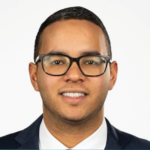
Robinson Aquino
Robinson “Rob” Aquino is an entrepreneur, financial strategist, and the CEO of JBS Corp., where he transformed his family’s neighborhood tax practice into a modern financial leadership firm that helps entrepreneurs build the systems, strategies, and financial infrastructure needed for sustainable growth. After beginning his career in wealth management, Rob combined financial expertise with firsthand entrepreneurial experience to help business owners move beyond bookkeeping and compliance toward using financial data as a strategic tool for decision making and long term success. Over the course of his career, Rob has advised more than 3,500 entrepreneurs and business owners, helping companies navigate the challenges that arise as they grow from startup to multimillion dollar enterprises. As an angel investor and serial entrepreneur, he has worked across multiple industries, giving him practical insight into the financial, operational, and leadership challenges that determine whether businesses plateau or continue to scale. His approach emphasizes building strong financial systems, data driven decision making, profitable pricing, and leadership structures that allow companies to grow beyond dependence on their founders. Rob is the author of The Small-Business Money Game: The Hidden Strategies That Turn Survival into Scale, where he introduces practical frameworks such as the Breakpoint Ladder and the Moneyball Strategy to help entrepreneurs overcome predictable growth barriers. Through his writing, speaking, and advisory work, he equips founders with the financial knowledge and operational discipline needed to transform growing businesses into scalable, resilient organizations.
Amanda Martin – CEO of Studyville Academic Workspace and Author of Henry the Star-Spangled Spaniel
We hire a lot of younger workforce and we can see firsthand and any
other business probably can do like the, the soft skills that these kids
coming out of college just do not have.

Amanda Martin
Amanda Martin is the Founder and CEO of Studyville, an education company she launched in 2020 to rethink the traditional tutoring experience. The idea grew out of her own experience as a mother of two teenage boys and the frustration that homework could create for an entire family. Amanda set out to build an environment where students could receive academic support, develop greater independence, and complete their work outside the home. Studyville has since expanded into a multi state operation providing in person and virtual tutoring through its Academic Workspaces, private programs, and partnerships with schools and districts. Under Amanda’s leadership, Studyville has increasingly focused on combining personalized instruction with measurable academic outcomes. The company developed StudyTrack, a FERPA compliant platform that records tutoring sessions, attendance, skills, assessments, and student progress. Studyville says the system is currently used across partnerships involving 14 Louisiana school districts, 107 schools, more than 8,600 K through 5 students, and more than 300 trained tutors. Amanda has also championed ReadingImpact, Studyville’s literacy program built around the Science of Reading and its core areas of phonemic awareness, phonics, fluency, vocabulary, and comprehension. Studyville’s growth has earned Amanda recognition as both an entrepreneur and an education leader. In 2023, Studyville was selected as one of 70 honorees in the U.S. Chamber of Commerce’s America’s Top Small Business program from more than 15,000 applicants nationwide. Amanda was also named one of Baton Rouge Business Report’s Influential Women in Business for 2024. Her broader work reflects a belief that academic support should give parents greater choice while giving educators clearer evidence of whether tutoring is actually improving student performance. Amanda is also the author of Henry the Star-Spangled Spaniel, illustrated by Zoya Malik and published by Forefront Books in June 2026. The children’s book follows Henry, a spaniel who discovers that his Fourth of July birthday is shared with the United States and travels through important moments in early American history, including the Declaration of Independence, the Revolutionary War, and the creation of the Constitution. Amanda created Henry as a way to combine children’s literacy with history, civic understanding, and a sense of curiosity about America’s founding. The character has also become part of Studyville’s ReadingImpact literacy program. Across her work as an entrepreneur, educator, and author, Amanda is focused on a common goal: giving students the structure, instruction, and tools they need to become stronger learners while reducing the stress that academic struggles can create for families. What began as her effort to “Take the Homework Fight Out of the Home” has grown into a broader effort to make tutoring more accountable, literacy instruction more effective, and academic support more accessible to students and families.