
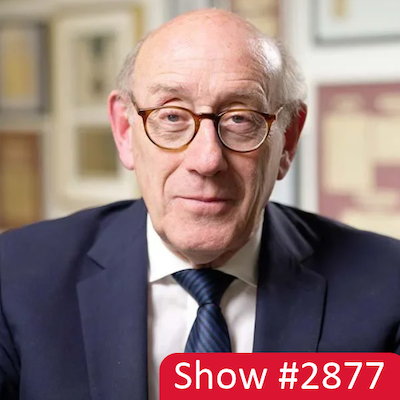
20 Oct October 21, 2026 – 6,500 ATMs in UK Mark Mills OBE and 9/11 What Is Life Worth Kenneth R. Feinberg
00:04 Intro 1: In the AM, broadcasting from AM and FM stations around the country. Welcome to the Small Business Administration Award-winning School for Startups Radio, while we talk all things small business and entrepreneurship. Now, here is your host, the guy that believes anyone can be a successful entrepreneur, because entrepreneurship is not about creativity, risk or passion, Jim Beach.
00:22 Jim Beach: Hello, everyone, we got a great show for you today. I need to kind of condense this. Mark Mills is with us. He’s the man that brought ATMs to the UK. Just think about that. And then Kenneth Feinberg. You’ve probably seen them on TV talking about 9/11. He was the man after 9/11 who had to get everyone paid and run all of that. And so it’s a really, really great show. Some emotional stuff at the end. We have some emotional issues to talk about today, but it’s one of those great shows. I appreciate you being with us. The Mark Mills story here is so cool. He gets knighted. And so we will find out about that as well.
01:11 Jim Beach: I secretly wish I could get knighted. I’m teasing. Here’s a great show. Very excited to introduce another amazing entrepreneur, and he is an incredible example of one of the things I’ve always pointed out: that if you want to become more creative, One of the things to do is to go overseas and study and see what that new culture has that maybe your home country doesn’t. Mark Mills, OBE. I checked what OBE stands for: it’s Order of the British Empire. It means that he’s next in line if King Charles dies that he’s the guy who replaces him. Anyway, Mark Mills is author of a new book called Making Your Mark: How I Built a Fortune from £1.50 and You Can Too.
02:00 Jim Beach: He came to the United States early in his career and saw ATMs and he took ATMs back to the United Kingdom and turned that into 6,500 locations, 300 employees, more than a £100 million in annual revenue. I forgot to tell you this. He started his first business when he was 8 years old, taking broken biscuits from his aunt’s factory and turning them into something that he sold at school. Since then, Mark has been very active in giving back and teaching others how to sell their businesses and have some of the same rewards as he does. And of course, the book is to that end as well. Mark Mills, my lord, welcome to the show. How are you doing?
02:46 Mark Mills: Obviously, fantastic, Jim, and thank you for, since you wouldn’t a full introduction, I’m very honored to be featured with you, I’m so grateful.
02:55 Jim Beach: Thank you. OBE is a huge deal, isn’t it? Obviously, I teased you a little bit. It doesn’t put you in the line of succession. Of course, but uh, I mean, that’s something to really be proud of, right?
03:09 Mark Mills: Oh, hugely. It’s a great honor, and actually, and people sometimes say this, it’s a little cliche, but it is extremely humbling because you receive a lovely letter through the post saying that, um, it’s been recommended to his Majesty King Charles, that you be honoured in this way for your contribution to business and charity in my case, and you genuinely sit there and think, gosh, you know, all I’ve really done is worked hard, tried to provide my family, hopefully given a good experience to people.
03:44 Mark Mills: I’ve worked with, et cetera, looked after customers, looked after suppliers, and then somebody—and I don’t know who to this day—puts you forward, and it goes through this huge process, and then before you know it, because Buckingham Palace was being refurbished, I was standing in Windsor Castle, which is sort of the next best thing, with a, with a medal being pinned on my chest, so very, very humbling, and in, in the UK, particularly, you know, recognized, that recognition is a great, a great thing for people. So yeah, very, very flattering and uh, yeah, a wonderful thing to happen and a, and a lovely day out standing in the castle. You know, there are there are worst days to spend a a Wednesday.
04:34 Jim Beach: And who actually pins you?
04:35 Mark Mills: Yeah, it’s a good question. So he’s done on… There’s a little bit of a rotation apparently. So I got the King’s sister, Princess Anne.
04:45 Jim Beach: My favorite, anyway. I like her a lot.
04:49 Mark Mills: Yeah, well.
04:50 Jim Beach: And everybody does. Most down to earth one and she was the Olympian and she was the one, someone tried to kidnap her and she fought back. I just love that.
05:01 Mark Mills: Yeah, so she is, honestly, if you survey most people, she comes out on top, she’s the hardest working rule. Every year, the press rank, how many things that each member of the royal family have done and how many places they’ve been to and she is non-stop. So she is, you know, the nation’s sweetheart. And she’s actually, when you get to speak to, they play music. There’s an orchestra in the background, lightly playing away, so no one can actually hear what you’re discussing, and you’re not supposed to say that’s part of etiquette. But I can assure you, she’s very knowledgeable, very funny, very down to earth, but at the same time, very regal.
05:45 Mark Mills: So you definitely know you’re in the presence of the late Queen Elizabeth II’s daughter and King Charles sister. So, uh, yeah, so she’s, she’s absolutely wonderful.
05:56 Jim Beach: Yes, what an incredible experience for you and congratulations.
05:59 Mark Mills: Thank you.
06:01 Jim Beach: Tell me about your trip to the United States and discovering ATM machines.
06:06 Mark Mills: Well, Jim, I really hope your listeners like this story because it really is the way we think in the UK and it’s flattering and rightly so to the US. So it’s 28 at the time, and I’ve actually never traveled to the US, and my brother who I was in business with Nigel and I, we’d sold a small business, and that really meant that we had, We had an office, we had cars, we had computers, but we didn’t actually have a business, and we were sitting there on a Thursday in July 1999, which does make me look a bit old, but, um, and I basically said to him, you know, all great ideas do seem to originate in the US.
06:52 Mark Mills: So why don’t we go and look for an idea? So we literally booked 2 really cheap flights to go come to the US on the Monday. I went home that evening, and I said to my wife, I’m going to America next week, and said, what for? And I said, to look for an idea, and she genuinely thought we were mad. And I said to my brother, let’s just go and walk round. And the interesting part of the story. I think is not so much the thing we found, but the number of opportunities we actually miss. So when people sometimes say to me, looks like you’re pretty good at finding ideas, Mark. I’ll say, well, let me tell you quick stories. So every day in 1999.
07:44 Mark Mills: We sat in this coffee place in the bottom of our hotel called Starbucks, which we’d never actually heard of, and we didn’t have coffee shops in the UK, and every day my brother said to me, you know,
07:58 Jim Beach: I know exactly where the story’s going. Keep going.
08:01 Mark Mills: My brother said to me, this is a great idea. We should take this back to UK and he looked into getting like the European franchise for about $50,000 and I managed to persuade him. I insist. I managed to persuade him that it’d never work in the UK because they were a nation of tea drinkers and be no one’s ever going to pay $4 for a cup of coffee. Now, I’m kidding, you’re not, Jim. 26 years later, he still mentions it most time. Times I see him. So that just proves how bad I am at ideas. But fortunately, because it was warm, we were walking around and we went in a…
08:45 Jim Beach: Stop, stop, stop. Before you go on to the walk, did coffee ever take off in the UK?
08:53 Mark Mills: Okay. Right. Yeah, I mean, I missed an absolute standout there. I mean, we have, you know, Starbucks is a one called Costa one called Caffè Nero on every street. I mean, yeah, it’s as big as the US. And, you know, I really need to have a long, hard look at myself over that one. But hey, we move on as entrepreneurs. The good news—on the walk now. We’re on the walk. My brother’s paying for 2 Diet Cokes in this corner store. And there was an ATM inside about the size of a filing cabinet and it charged me $3 to get 50 and I said to my brother, that’s a great idea.
09:37 Mark Mills: So basically, we then spent the next nine months figuring out how to do it in the UK, because we didn’t quite have the regulatory and legislative framework that was available in the US and we were trying to connect them back to the US to authorize the cards and things like that. But we finally broke through and in March the 17th 2000. We got our first 3 machines live, and after 14 days, we dispense £30,000 across 3 machines, and we considered that a great success. Now there’s the sort of end to this story, which can either tell you now or towards the end.
10:18 Mark Mills: If you want your listeners to wait with bated breath, I’ll save that till the end and see, if you can remember some of the statistics. So it’s 14 days 3 machines 30,000 pounds.
10:32 Jim Beach: No, I’m impatient, Mark. I don’t want to make my listeners be like, man, I’m impatient. Give it to me, buddy.
10:40 Mark Mills: Okay, I’ll give it to you. So, roll it forward 6 years. And as you mentioned in the intro, we’ve got up to 6,500 machines in 3 countries. And we were dispensing about half a billion a month. And our income, yeah, so we’d bill, it’s great business, through acquisition organically, we were sort of the biggest independent in the UK and to some degree Europe. So we had a really great offer for the company and I’d spent a lot of time trying to get to the point where we’d have an offer for the company and we could, you know, ride off into the sunset.
11:21 Mark Mills: And the thing about this off was, I couldn’t really explain it to anybody, confidentiality, you know, but the advisor said to me, I could tell my wife. Do I went home in the middle of the afternoon, which was unusual, because by this point I’m working ridiculous hours. We’ve got 300 staff, et cetera. And I said to my wife, right, I said, do you remember back when we had 3 machines in the first 14 days we dispensed 30,000. I said, we’ve now got 6,000, we’re dispensing half a billion, 300 staff, three countries, and she’s like, yeah, yeah. I said, I’ve had an offer for the company. I said, we’re home and dry now. You know, all the years you’ve hardly seen me.
12:11 Mark Mills: I hardly been at home, hardly seen the children in you for this 6 or 7 years. I’ve been all over the world building this business. And I said, you know, transformational. It’s an offer of $250 million, and I had a still a decent stake in the business at this point. And she looked at me and I thought, she’s going to say something really profound now that I’m going to remember for the rest of my life about how clever I am, what a great business of it, et cetera. And I could really feel my heart pounding in my chest.
12:50 Mark Mills: And I walked, and she walked towards the kitchen window and I thought, she’s going to say it now, and she looked out into the garden and she said, it looks like it’s going to rain. Will you bring the washing in? At which point, I realized that my wife is not faced by my success, and I think most entrepreneurs have a great journey, but they also have somebody that keeps their feet truly on the ground, and my wife is a master at that, shall we say?
13:25 Jim Beach: Yeah, but once in a decade when you sell a business for $85,000,000,000, your wife should jump up and down and go crazy. You know? I’m kind of, I would get a little mad at her, to be honest with you. I mean, I didn’t put up with that. I would get mad.
13:45 Mark Mills: Not like that. So, yeah, we’ve been together a long time through thick and thin. She’s definitely was with me when I’d listen, and she’s so seen, you know, the ups and the downs, so she’s not faced by the downs, fortunately, and she’s not faced by the ups. So I think she’s my calming presence when I get overexcited or a bit miserable about things, which again is just part of the journey, isn’t it?
14:16 Jim Beach: Yes, but, I will tell you, in my marriage, I have complained that, uh, some of my successes were not honored enough and, you know, she didn’t tell her mother and, you know, that that has upset me in my life. So I will admit that, that, uh, I get upset if my spouse, you know, when you do something cool and significant, you deserve to, uh, have your spouse, you know, take the family to dinner or something, you know? So anyway, that’s my opinion.
14:49 Mark Mills: We’re pretty understated, the British, aren’t we? We struggle with that, yeah, we do. It’s a funny thing actually too. On an interesting point because I was at an event last night and entrepreneurs in the UK, we’re still not celebrated particularly, and it’s almost like we’re uncomfortable with success, if that makes sense, with what I love about the US, and I come a lot is, you know, people want you to be successful and it’s that get, get a head attitude, and we can all be successful together, but our, the British Reserve is, is probably quite frustrating. So in your case, I wouldn’t suggest waiting with, you know, I wouldn’t hold your breath for too many compliments when you achieve too much. Jim.
15:36 Mark Mills: It doesn’t kind of work that way, sadly.
15:40 Jim Beach: You have a child named Christian.
15:42 Mark Mills: I have a child named Christian.
15:45 Jim Beach: Oh, wow.
15:46 Mark Mills: Yeah. I’ve got Oliver and Isabella as well.
15:49 Jim Beach: And Angela. I’ve got I know everything about you.
15:52 Mark Mills: There you go.
15:53 Jim Beach: The twins and everything.
15:56 Mark Mills: That’s it, and I’m a twin as well.
15:58 Jim Beach: Really, I did not know that. That’s interesting.
16:01 Mark Mills: Yeah.
16:02 Jim Beach: Oh, does it run in your family for more than, are you, are you the first twin or are you the 10th twin?
16:09 Mark Mills: No, my father had twin brothers, but interestingly, when my wife, when we found out, the midwife said to my wife, actually, it’s not hereditary, it’s just one of those chance things, but it’s certainly interesting for me to have been a twin and I’ve had that upbringing where there was always somebody with me, and then with our twins, they’ve definitely always been sort of kindred spirits really, albeit they’re both close to their older brother as well. But yeah, it just makes for, uh, I, I just found it an, an endurable way to grow up that yours has somebody in your corner and, you know, somebody that understood, you know, your upbringing, et cetera. And we’ve got an older brother as well. He’s actually interesting.
16:59 Mark Mills: I never was in business with my twin. It was with our older brother because we sort of gelled over business.
17:09 Jim Beach: Oh, interesting.
17:10 Mark Mills: Yeah.
17:11 Jim Beach: You said that it’s not hereditary?
17:12 Mark Mills: Apparently not.
17:13 Jim Beach: But it runs in families.
17:14 Mark Mills: Exactly, it’s weird, isn’t it?
17:15 Jim Beach: That’s the biggest, you know, I have Crohn’s disease and my mother had Crohn’s disease and they said the exact same thing to us, that it’s not hereditary, but it runs in families. I’m like, well, that no, you’re just lying to me, doctor. So that’s one of the things that I just can’t understand. Let’s talk about the book, Mark. Make your mark, how I built a fortune. What are some of the lessons, some of the stories in here, um, and why did someone spray paint your ATM machine?
17:51 Mark Mills: So the thing I found is that when I, so I, I didn’t go to university, I literally am sort of self-taught in the business sense, but I did most of my learning either by actually going out and doing stuff and getting it wrong many times until I figured out how to do it the right way. And secondly, by reading lots of interesting books. I particularly like books that have been written by people who’ve been successful. So, uh, you know, my success is, you know, to some degree. But what I thought was, if I could write a book in a way that was just literally all the stories about things that happened, but woven in were my rules for business as I see them.
18:40 Mark Mills: So what constitutes success in a business sense. Then that would be hopefully useful to people if they’re considering an entrepreneurial journey. So, what I enjoyed about it was being able to put it down on paper. So, there’s a sort of record of, I think if you do this, you do that. And what I found to be particularly good feedback is. And I don’t know how prevalent this is in the US, but over in the UK, we now have this culture where people are so risk averse when it comes to advice. So if you go and see a lawyer and you say, should I do this, this, or this, or this, this is my problem.
19:24 Mark Mills: They’ll typically say to you, well, you could do this or you could do this. You say, well, actually, I was asking you for advice, and now you’re giving me choices. So what I’ve deliberately done in my book is say, look, if you want this to work, whatever business you’re in, then if you follow this rule and do this and do this, this way, and do this and do this, then you’re more likely to succeed, then not, because these things really work, because I’ve tried them in my own businesses, and I’ve taught them to other people in its work. So, of course, they’re not exclusive and there are other ways of doing things and the world moves on with AI.
20:13 Mark Mills: But what I really wanted to achieve with the book is a sort of how-to, how to help people in business, not how to run their business, if you follow me.
20:25 Jim Beach: I do. Yes. So are there some lessons that you can share?
20:30 Mark Mills: Absolutely.
20:31 Jim Beach: Give us a couple.
20:32 Mark Mills: Yeah, so number one, and sometimes people challenge me on this, which I do enjoy is every bit, the strongest businesses in the world basically have recurring income. But the thing is, with most businesses and most businesspeople, they say, ‘Ah, well, recurring income’s really difficult to generate in our business.’ You know, we sell a product or we sell a service and that’s kind of it. And I’ve taken a challenge many times and turned it round and shown them how to generate recurring income or at the very least reoccurring income. And that does 2 things.
21:10 Mark Mills: First, it makes your business easier to manage scale and run because you’ve got, you know, income that’s going to come in weekly, monthly, daily, whatever it is, and secondly, if you’re looking to sell your business, that definitely enhances the valuation, so you’re going to get more for your company when you come to sell it. So that’s number one. And then number 2 is things like location independence. So, there are many horror stories where people have literally built a business that is, you know, located in one place or whatever, that, you know, that then works against them rather than for them. So if you can build your business that it’s not dependent on certain locations or one specific location, that’s obviously strength.
21:58 Mark Mills: And then there are things like, which now seems to be what everybody’s talking about, you know, not founder-dependent, which is a bit obvious, but number four probably is: If you want to grow a great business, and again, I, I tip my hat to my US counterparts in this. In the UK, we’re not that good at selling things to people, we’re too reserved, but you guys are, you know, 20 times better. But one of the big lessons, if you want to grow your businesses, learn how to sell, and specifically, learn how to sell to strangers, i.e. People who don’t know your business, don’t know what you do, don’t know any reference points, that you could literally bump into and sell them your service.
22:47 Mark Mills: And I think if you start to wrap these rules together, and then you understand probably number 5 which is, it, it is a numbers game, so you have to do a lot of everything to be successful, so, you know, prospecting and getting customers. Then, if you put, well, by the time you’ve read the book and put all these things together, it kind of makes sense to every business, you know, make sure your business model works and got recurring revenue. Make sure you’re not dependent on just the founder or location.
23:24 Mark Mills: Make sure you can sell your products or service to people, and make sure you understand that you’re going to get a lot of rejection, but within that you’re going to get a lot of positives, and that’s how you build a great business. So really, the book is just that sort of back up to what you probably know intuitively, but underlines what you need to know to run a successful enterprise.
23:50 Jim Beach: All right, I want to talk about lots of these, but I want to go to location first. My very first business mark when I was 23. I started a summer camp business and we were at MIT, UCLA, Stanford, uh, SMU, Emory, all over the United States at the very best schools in every city. And then we also were at Royal Holloway and 3 or 4 other schools in the UK. And our entire business model was related to the fact that you get to go to MIT for the summer as a kid.
24:27 Mark Mills: Sure.
24:29 Jim Beach: So we were 100% location dependent.
24:31 Mark Mills: Sure. How successful was it?
24:33 Jim Beach: We got to 89 locations.
24:34 Mark Mills: Wow. Yeah, so you are location dependent but not on one location. Do you see me?
24:41 Jim Beach: Oh, okay, okay.
24:42 Mark Mills: Yeah, so you, you have done the rule because you’re not low, one is sort of, you know, singularly location dependent. So if, if MIT had a big problem, you know, whatever, you’ve got all, you’re 88. So that, yeah, you’ve followed the rule that way. Sorry, I probably didn’t explain it very well.
25:03 Jim Beach: Uh, no, you made it. I don’t know, I, I, maybe I just went to my own personal story too fast. Also, I was thinking about being, you can’t be, I don’t remember what you’re reliant on the founder or what was that word you used?
25:21 Mark Mills: Yeah, founder-dependent.
25:22 Jim Beach: Founder-dependent.
25:23 Mark Mills: Yes.
25:24 Jim Beach: I remember I went on vacation once, and we went to Hawaii, that same place, the resort that Bill Gates got married at. And when we checked out, my telephone bill was bigger than the room and food bill. This was obviously before cell phones. You know, so I had spent the entire vacation on the telephone. And then and the business was still screwed up when I got home. And then a couple years later, we went to Greece and Turkey, and I came home and they were, you know, kind of upset that I had come home. They were like, stay away. We enjoyed it, you know. And it was so nice that in those couple of years in between.
26:09 Jim Beach: We had created the systems that made me irrelevant, which I was happy. There’s the moral of the story for me.
26:17 Mark Mills: Yeah perfect. Yeah, it’s the same thing. So, and you know, it’s unavoidable at the beginning. Of course, the bit’s going to be founder-dependent because you’re the decision maker, you’re the key stakeholder. But actually, it’s on the founder to make sure they make themselves as redundant as possible, and or refine their role to be the most effective. So I sold a business for a gentleman a couple of years ago. And he was basically an inventor. Do all the other stuff he did where he was, they were relying upon him. He didn’t like doing anyway, and actually, in truth, wasn’t that good at. But what he was good at was inventing the products that then went on to be sold in their millions.
27:05 Mark Mills: So I said, yeah, what you need to do is surround yourself with people who love doing the other stuff you don’t like doing, and do more inventing because you’re not doing enough inventing because you’re doing all this other stuff. And actually then we sold the company because it wasn’t relying upon him for every mini decision. He was just more involved in the macro stuff, and he was more productive and effective because he was in a better, more refined role. So yeah, you, you’re, you’re on the absolutely same page as I am with. These are things that make A, your life easier. Be your business more profitable and see, you’re more likely to sell it because it’s in a better shape.
27:53 Jim Beach: How do you learn to sell if you’re an introvert and a shy person?
27:58 Mark Mills: Yeah, well that’s a good question. Uh, but it is literally, um, it’s just, it’s just a thing you learn, isn’t it? So, you can actually learn that when somebody says this, you need to say that. And if they say this, say that. So actually, anybody that I’ve sorted to, is it introverts? So I, I did a stint with a, uh, uh, an accountancy firm, so they were all accountants, and they really didn’t want to sell because it was just against their nature. But what I did with them was I did a lot of rehearsals and role play. So when they actually sat in front of a potential client, The feedback was, actually, it was easier than I thought because I’d done it so many times.
28:50 Mark Mills: But actually when I did it in real life, it felt a bit like the rehearsal. So I say to people, if it’s not your inclination, understand what you need to say, and then practice, practice with family and friends practice with colleagues, and you know, have a laugh, do some role play, and say, you know, what if somebody says this, what if, what would I say this back? And by the time you’ve done it, It’s interesting. People become a lot more natural with it and actually normally quite enjoy it.
29:24 Jim Beach: I’m a huge shy introvert in when I started my first business. I was there every day, every night, meeting the parents every morning, every night, and luckily got to spend time talking to them and learning what they liked the most about our business and what they wanted us to change. And it was a great way to learn, what to do and how to grow our business. But it also helped me learn to sell to them and realized that, you know, since they were our target customer and they saw our message already, before I even got them on the phone, that they were already a friend of mine.
30:07 Jim Beach: And so I could really open up with them and tell them, you know, what our secret sauce was and uh, treat them like a friend and then sales got a lot easier after that.
30:21 Mark Mills: And so, what did you upsell to them, Jim?
30:24 Jim Beach: Summer camp. You know, I was selling summer camp. Uh, uh, you know, come next week. Tell your friends.
30:32 Mark Mills: Right.
30:33 Jim Beach: And so, you know, I got to see what kind of car they drove and learn the avatar for our parents. And when we would go into another city, we were actually very effective with unsolicited male, junk male, because we were able to get such a precise list that our, you know, one or 2 lines on the outside of the envelope sold them before they even opened the envelope. So we had about a 12 or 14% sales rate off of unsolicited mail.
31:05 Mark Mills: You’re lucky we get a one% response.
31:08 Jim Beach: We were getting 12% sale, not response. Yeah, it was.
31:12 Mark Mills: So very similarly, a private school that my children went to, the headmaster approached me and said, we need more pupils. What would you do? And I said, well, exactly that, although I didn’t use the word avatar, but you’re exactly right. I said, work out your ideal parent profile and where they live by their zip code or postal code. And then you can buy the data of the other parents and children, you know, children’s ages around them. I said, and write to them and say, your neighbour’s children come to our school. This is what we can offer. And he had, similarly, he had a really good response rate because it was, he understood his ideal parents, very similar to you.
31:58 Mark Mills: And then he could target, you know, the next one down the street, as it were. I loves to fly that. That’s that’s real entrepreneurialism, Jim, there in what you did, isn’t it?
32:12 Jim Beach: And we also discovered that within a mile of our locations that were successful, there was a Rolls-Royce or a Lamborghini dealership. And so that’s another thing we did was find the, or, you know, the, not Mercedes, the Rolls-Royce Steelership, the Lamborghini, and try to get as close to that as possible, and that would be a successful location for us.
32:34 Mark Mills: That’s brilliant. That was brilliant.
32:38 Jim Beach: Mark Mills, the book is making your mark how I built a fortune from a pound and a half and you can too. How do we find out more? Follow you online. Get a copy of the book.
32:52 Mark Mills: Oh, well, I’ve got a really easy-to-remember domain name, which is mark.co.uk. So M- A-R-K.co.uk. But I post every day on LinkedIn, Jim. So if you can find me on there, then what I try to do is tell stories again interwoven with some hints and tips for business. And that way, you know, people get like a daily injection of, oh, I might look at it like that or I might do this or I might do that. So I love people to follow me on LinkedIn because I really like the interaction where people come back to me and say, hey, we tried that and this works or we tried that and this was better and I’ll say, okay, I’ll, I’ll post that tomorrow.
33:42 Mark Mills: So that’s a good way of interacting with me if anybody would like to.
33:47 Jim Beach: Fantastic. Mark, thank you so much for being with us and hope you’ll come back soon. Thanks a lot.
33:56 Mark Mills: Thank you, Jim. It’s been a pleasure.
33:58 Jim Beach: Ah, mine, mine as well. And we will be right back.
Intro 1: Well, that’s a wonderful question, actually. Oh, my gosh, I love the opportunity to do this. Thank you, Jim. Wow, that’s a great one. You know, that is a phenomenal question. That’s a great question, and I don’t have a great answer. That’s a great question. Oh, that is such a loaded question. And that’s actually a really good question.
34:24 Announcer: School for Startups Radio.
34:26 Jim Beach: I’m excited to introduce a very respected man, and we’re gonna, unfortunately, talk about a slightly unpleasant topic. Please welcome Kenneth Feinberg to the show. He is the man who, after 9/11, was in charge of the September 11th victim compensation fund. He was called the special master there. And his responsibility was to deal with all of the high-profile disputes in the resolutions of all of the people claiming to be there, all just all of the horrible issues. And he published a book about it called What is Life Worth? And it has now come out in its 25-year reflection edition. Mr. Feinberg, welcome to the show. How are you doing today?
35:11 Kenneth Feinberg: I’m doing fine and I’m glad to be here. Thank you very much.
35:14 Jim Beach: How did you get to be selected to be the special master of the compensation fund?
35:21 Kenneth Feinberg: When Congress enacted the law creating the fund. Senator Kennedy, my old boss, Ted Kennedy, called President Bush. And he said, Mr. President, you better be careful. This is not a political appointment. This is highly controversial. Public taxpayer money. You better appoint somebody who’s had experience in compensating mass-disaster victims, and I’ve got the perfect guy, my former chief of staff, Ken Feinberg. President Bush called Ted Kennedy’s old Senate colleague, Attorney General John Ashcroft. John Ashcroft interviewed me for one hour. And said, Ken, you’re the guy. This isn’t political. I’ll back you up 100%. You’re the special master.
36:01 Jim Beach: All right, what qualified do you? What had you done in the past prior to that?
36:07 Kenneth Feinberg: Well, the big one that I, the major case that I had resolved involved, you’ll recall, Vietnam veterans exposed to Agent Orange while they were serving in Vietnam. There were 250,000 Vietnam veterans. Who sued the United States Dow chemical Monsanto, claiming that the herbicide, Agent Orange, used as a defoliant in Vietnam, caused numerous illnesses, injuries, and deaths. And the judge in that case, federal judge Jack Weinstein in Brooklyn. Called me up and said, I want you to mediate and settle this massive litigation.
36:40 Kenneth Feinberg: Well, when I did, I was appointed. Eight days later, we had a settlement for [amount unclear], and that began my new career as a mediator and a claims compensation person, and from that time, 1984, Agent Orange, right up until 9/11, that was my chief occupation. Solving mass claims and getting people paid.
37:02 Jim Beach: All right. Has the definition of what a life is worth changed, not necessarily the number, but the definition or is it always the same over all the decades you’ve been working in this space?
37:14 Kenneth Feinberg: Always the same for over 200 years, Jim. For over 200 years, the law in the United States governing every court in every state. The law has been the same and it’s taught to everybody in law school. First, What would the person have earned over a work life, but for the tragedy. What would he he or she have earned? Well, the investment banker, the doctor, the lawyer, the the president of a bank. They’re going to get a lot more economic loss than the waiter, the busboy, the cop, the soldier, the fireman, the soldier. They earn more, they get more. Second, add to economic loss. Non-economic loss, pain and suffering. Emotional distress. And those two numbers together with a calculator, that’s the value of the life.
38:05 Kenneth Feinberg: It is not that complicated. You need a calculator more than you need a law degree.
38:10 Jim Beach: Well, how do you calculate how much pain I have for my lost sibling or whatever. I have more pain than you do, Kenneth.
38:20 Kenneth Feinberg: That’s a great question. So what we did in 9/11? And it worked perfectly. We announced, everybody who died, everybody who was physically injured. All had pain and suffering, and all of their relatives had emotional distress. And there’s a common formula. The death of the victim, $250,000. The spouse and all dependents, $100,000. Add that up. Add it to economic loss, is the net dollars, the value of a life.
38:47 Jim Beach: All right. And did people complain about the economic value of a doctor versus a waiter? That’s I know I know that’s always been there. I’ve heard that in the past, but how do you evaluate how much this doctor is going to make over his life with new procedure is going to come out next year? He’s going to be able to do that and it’s going to double his practice.
39:15 Kenneth Feinberg: That’s not so difficult. You have statistics and studies that basically predict with some assuredness how that doctor’s income will grow over a work life, but you’re onto something here. You’re onto a big challenge that we confronted. I would go to, uh, I would tell uh, the uh, the surviving spouse of a fireman, a courageous fireman who died in the World Trade Center. Mrs. Jones, your husband died in the World Trade Center. We’ve calculated his value. We’re going to give you $2.1 million. She looks at me. How dare you? My next door neighbor, whose husband wasn’t a courageous fireman. He was a banker, a banker, and he’s getting $4,000,000 How dare you? What do you have against my husband?
40:04 Kenneth Feinberg: You never even met him? You try and explain to people in grief. How everybody under this program, based on the statute, is going to receive a different amount of money. And you’re bound to incite real anger. And that’s exactly what happened. Very few people complained about the money they were receiving. Vertical disagreement, vertical differences didn’t bother people. It’s the horizontal differences, right next to a neighbor. My my my husband’s partner. Why are they getting more? Because you never even met him. That was a problem created. In large part by the law. Which required anybody who received compensation to agree in writing. We will not sue. The airlines, we won’t sue the World Trade Center.
40:49 Kenneth Feinberg: We won’t sue the government or the airport or the Port Authority in New York. Well, you had to give everybody a different amount of money to make sure they were incentivized to accept the dollars, and that’s exactly what happened. Exactly what happened here. Virtually everybody took the money. 97% of all the eligible claimants. This was a voluntary program. No one had to come into this. You didn’t have to accept the dollars when you accept the dollars you signed, I won’t sue. 97% over 33 months signed and never sued. Only 94 people. 94 people opted out. They sued, and they settled their cases probably about 4 or 5 years later. And that was a trial on responsibility for 9/11. Never.
41:37 Jim Beach: Isn’t that interesting? Are you satisfied with the official story about what happened there? I know that’s not your, okay.
41:46 Kenneth Feinberg: It’s not my daily work, but I’ve read the report. I’m satisfied. I mean, the report does the report does not whitewash the CIA or the FBI. I mean, they were asleep at the switch. They weren’t coordinating with one another. They should have known if they had compared notes. It would have been a different outcome, perhaps. But, um, I don’t think there was any like conspiracy or secret desire to, you know, destroy the United States or the Bush administration or anything like that. No, I don’t believe that.
42:20 Jim Beach: And the people that were famous on TV, the Jersey Widows, for example, do you look back on them fondly, were they good for the system? Did the system need someone like that, a gadfly?
42:35 Kenneth Feinberg: Look, everybody grieves a different way. One thing I learned in this fund. There are different ways one reacts to tragedy. Human nature is so diverse. The Jersey girls felt that they were on a mission. This was how they grieved. They were on a mission. To make sure that justice was done or that there was, it was, that the program was generous. Others came to see me privately to validate the memory of a lost loved one. Mr. Feinberg. I lost my wife at the World Trade Center. We were married for 25 years. And now I have this private meeting with you. I want to show you a whole movie of our wedding. 25 years ago.
43:19 Kenneth Feinberg: My office was filled with memorabilia, teddy bears, medals, diplomas, whole movies, um, um, certificates of good conduct. I mean, I was overwhelmed with memorabilia brought to me by grieving survivors.
43:31 Jim Beach: Wow, what an impact. I had never thought of that and that must have been heart wrenching, absolutely heart wrenching.
43:39 Kenneth Feinberg: Debilitating. Absolutely debilitating.
43:40 Jim Beach: Was there… You know, I have a creative mind and I see things sometimes is movie scripts. I can imagine a man getting out of the subway and watching the second plane, going into the trade center and saying, everyone thinks that I’m in there and disappearing and claiming to be dead, but now living in Costa Rica. Was there any kind of skulduggery going on?
44:05 Kenneth Feinberg: Only, only one case out of 7,000, only one, and it was an individual who tried to fake physical injury. And uh, in order to get, you know, compensation and it was uncovered. And he was appropriately charged and prosecuted or whatever. I don’t know the outcome. But for the most part, you see, it’s very difficult for there to be skulduggery. In a situation where you need a death certificate to file a claim. The military who lost people at the Pentagon, the military records, the airline manifests as to who was on the plane. We had all those records. So it’s pretty hard to fake a claim when you’ve got a traumatic horror like 9/11.
44:51 Jim Beach: Tell us some of the things you talk about in the book. For example, Solomon’s choices. I think that would be interesting.
45:00 Kenneth Feinberg: Well, you know, you looked upon as a Solomon. I’m not a Solomon. I had a law that I had to follow. The most interesting thing about this fund was not calculating the value of the light. As I said earlier, that is done every day. In every court in the United States, the tough part in this job. Was the emotion. This program was set up before people had any chance to grieve. And the story I invited, any family member, or any physically injured victim, who wanted to come and see me privately, or my colleague, Neil Byros. They could do so. Well, half the people didn’t want to see anybody. They grieve in private. They send in their forms. That’s it.
45:47 Kenneth Feinberg: But about 950 people came to see me privately, separately. The stories I heard. To this day, they’re chilling. A 26 year old woman comes to see me. Mr. Feinberg? I lost my husband at the World Trade Center. He was a fireman. And he left me with our three children, six, four, and two. Now, you’re going to give me this fund, $2,800,000 tax free. I want it in 30 days. I said, Mrs. Jones, this is federal taxpayer money. The U.S. Treasury doesn’t move that fast. You’ll get it 60 days, 90 days. I want it in 30 days. Why? Why do you need money in 30 days? Why, Mr. Feinberg? I tell you why. I have terminal cancer. I have 10 weeks to live.
46:37 Kenneth Feinberg: My husband was going to survive me and take care of our 3 little ones. Now they’re going to be orphans. I don’t have a lot of time, Mr. Feinberg. My faculties are already fading. Help. I got to now set up a trust. I’m going to get a guardian. I’ve got to arrange their education, their healthcare. I don’t have a lot of time. Well, we ran down to the treasury. We ushered that check through. Gave it to her in 30 days, 8 weeks later she died.
47:10 Jim Beach: Oh, what a horrible story.
47:14 Kenneth Feinberg: These stories, one after another, a what, I tell people, if you want to do what I did on 9/11, you’ve got the brain power, but you better brace yourself, the emotional horror, of story after story because it is brutal. It is brutal. One lady, one lady came to see me. Mr. Feinberg, I lost my husband. He was a fireman. When the plane hit the building, the World Trade Center. He went into the building and rescued 20 people from dying. He saw another 8 were trapped in the lobby. He ran in a second time. And save those 8 people.
47:53 Kenneth Feinberg: While he was running across the World Trade Center Plaza to escape, he was killed when somebody jumped from the 93rd floor of the World Trade Center and hit him like a missile, killing them both, killing them both. Mr. Feinberg, if he had taken one step either way, He’d be here today. Don’t tell me there’s a god, Mr. Feinberg. No God could allow my husband to die that way.
48:21 Jim Beach: Wow, what does this make you feel about God, sir? Does this reinforce your faith or destroy it?
48:29 Kenneth Feinberg: No, no, it doesn’t reinforce or destroy my faith. Believed in Judaism and the Jewish faith for my whole life. Nothing in 9/11 changes that, but I must say. It’s fascinating. You’re onto something. I would say half the people who came to me said, I’ll never step foot in a church again. Here is your God. The other half, the tragedy reaffirmed their faith in God. My wife’s in a better place. She’s protected by the good Lord. And I’m going to always be a member of my church and pray for her. Human nature, I’ll tell you, don’t try and predict. How people react to tragedy.
49:08 Jim Beach: Wow. What lessons did we learn for the future?
49:12 Kenneth Feinberg: Well, I’ll tell you one lesson I learned. Never have a fund like this again. You know, this was a fund. Created out of patriotic zeal by Congress and the lobbying of the airlines. They didn’t want to face lawsuits, so they wanted an alternative compensation mechanism. So Congress enacted this law. But you should have, you can imagine some of the comments I got about this law. Mr. Feinberg. My son died in the Alfred P. Murrah Building bombing, the building that was bombed in Oklahoma City by a domestic terrorist. Where’s my check?
49:51 Jim Beach: Exactly. That’s exactly what I was thinking.
49:52 Kenneth Feinberg: Mr. Feinberg, I don’t get it. My daughter died in the basement of the World Trade Center. In the original 1993 attacks, committed by the very same type of people. Why aren’t I eligible? And it wasn’t just terrorism. Mr. Feinberg, you got to explain something to me. Last year, my wife. Saved three little girls from drowning in the Mississippi River, and then she drowned, a hero. Where’s my check? When you create a program using public money. I would say the 9/11 fund was the right thing to do with the time. It was. I defend it and I’ll defend it to my dying breath.
50:34 Kenneth Feinberg: It was a unique response to an unprecedented national tragedy, maybe the Civil War, Pearl Harbor, the assassination of President Kennedy. About it. I think it was a good step. It demonstrated the community, the allegiance. The communitarian ethic of the American people. Don’t do it again. A 1000 people died after hurricane Katrina in New Orleans. There was no 9/11 fund. No, no, this was a one off response. To an unprecedented tragedy. Leave it at that.
51:04 Jim Beach: But Kenneth, you know there will be another unprecedented event. You just listed 4 in the last 100 years. So 30 or 40 years from now, we’ll have another shocking event, and they will use the 9/11 fund to justify the 1038 fund.
51:20 Kenneth Feinberg: Maybe. Maybe, but if they asked me what I think, it would be. You better be careful. Equal protection of the law. There but for fortune. Some people die and some people live. The idea that the federal government is going to be a guarantor of last resort to use taxpayer money to pay just these people. You know, bad things happen to good people every day in this country, as you know. There’s no 9/11 fund. So, I’d be, I’d be wary in predicting that another terrorist attractive will lead to a similar fund. Maybe, never underestimate the charitable impulse of the American people, I must say, but I doubt it.
52:04 Jim Beach: Sir, how do we find out more about you? Get a copy of this great book. This is what I’m going to read. I feel like I’m going to cry myself to sleep with it.
52:17 Kenneth Feinberg: Well, these 2 ways. One is you can on Amazon, you can order. What is life worth? I’ve added some reflections in the last 25 years about what I’ve learned, but we’ve talked about today. Also, don’t forget. If people want to go and go on to Netflix. My book was turned into a movie called Worth. Oh, I’m I’m played in that movie by Michael Keaton. Stanley Tucci. Amy Ryan. They’re all in the movie and it’s pretty good and it’s on Netflix. It’s been out for, you know, now three and a half years. It’s called Worth, one word. And it’s the whole story of what we went through with the 9/11 fund.
53:02 Jim Beach: I’m sorry, I didn’t know that. And you were played by Michael Keaton? By Batman?
53:10 Kenneth Feinberg: Yes, Michael Keaton.
53:11 Jim Beach: Okay.
53:12 Kenneth Feinberg: Well, my kids saw the movie and they said, you know, he’s a good actor, but he ought to stick to Batman. He didn’t really get me. So anyway.
53:20 Jim Beach: It’s good that your kids can see how important you were that they would get a movie made about you with such good actors. Stanley Tucci’s been one of my favorites for years.
53:34 Kenneth Feinberg: Well, he’s terrific in this movie. He plays a survivor whose wife died in the World Trade Center.
53:40 Jim Beach: Very good. Thank you so much for what you’ve done for our country. You are a great American Patriot and I appreciate you being with us and sharing this story.
53:52 Kenneth Feinberg: Thank you very much for inviting me. It’s been an honor and a privilege. Thank you very much.
53:59 Jim Beach: Thank you.
Mark Mills OBE – Business Growth Strategist, Former CFO, and Author of Making Your Mark: How I built a fortune from £1.50 and you can too
But actually, it’s on the founder to make sure they make themselves
as redundant as possible, and or refine their role to be the most effective.

Mark Mills OBE
Mark Mills OBE DL is a business growth strategist, entrepreneur, former CFO, and author of Making Your Mark: How I Built a Fortune from £1.50 and You Can Too. His entrepreneurial instincts began at a young age when, as an eight-year-old in Lancashire, he turned bags of broken biscuits from his aunt’s factory into something he could sell at school. That early experience shaped the way he would continue to look at business throughout his career, identifying overlooked opportunities and finding ways to turn them into something valuable. Over the years, Mark has built and sold five businesses across different industries. One of his most notable ventures was Cardpoint plc, which he founded in 2000 and grew from a start-up into Europe’s largest independent cash machine company. The business floated on AIM just two years after launch at a valuation of £7 million and later expanded to around 6,500 cash machines, 300 employees, and more than £100 million in annual revenue. By 2007, Cardpoint was valued at £175 million. Earlier in his career, Mark also disrupted the postal industry by developing a network of around 1,200 advertising-fronted post boxes located at petrol stations across the United Kingdom. Since 2007, Mark has focused on helping other business owners build value and successfully prepare their companies for sale. Drawing from his own experiences with acquisitions, exits, negotiations, setbacks, and growth, he developed a detailed 40-step process designed to guide founders through the full business sale journey. His approach focuses on identifying hidden value within a company, improving its positioning, preparing the business for due diligence, finding the right buyer, and managing the sale process from beginning to end. Rather than looking only at what a business may be worth today, Mark focuses on what it could be worth to the right buyer, at the right time, with the right strategy and story behind it. Mark’s book, Making Your Mark, shares the lessons and experiences behind his journey from childhood entrepreneurship to building and exiting multimillion-pound businesses. It explores the successes, complications, acquisitions, challenges, and hard-earned lessons that shaped his approach to business and dealmaking. Today, he works closely with founders who have spent years building their companies and are beginning to think seriously about growth, succession, or an eventual exit. In addition to his business career, Mark was appointed a Deputy Lieutenant of Lancashire in 2022. He was also made an Officer of the Order of the British Empire in the 2025 New Year Honours for his services to business and charity. Through his advisory work, writing, and speaking, Mark continues to share practical insights on entrepreneurship, business growth, creating value, and preparing companies for successful exits.
Kenneth R. Feinberg – Managing Partner at Law Offices of Kenneth R. Feinberg, PC and Author of What Is Life Worth? New Edition with Reflections 25 Years After 9/11
Human nature, I’ll tell you, don’t try and predict.
How people react to tragedy.

Kenneth R. Feinberg
Kenneth R. Feinberg is the Managing Partner of the Law Offices of Kenneth R. Feinberg, PC, an attorney, author, and one of the nation’s most experienced administrators of complex compensation programs and high-profile dispute resolution matters. He is best known for serving as the Special Master of the federal September 11th Victim Compensation Fund of 2001, where he was responsible for evaluating claims, determining compensation, and distributing awards to individuals and families affected by the September 11 attacks. Over the course of three years, Feinberg met personally with survivors and families, listened to their stories, and worked through some of the most difficult questions surrounding grief, fairness, loss, and the limits of assigning a financial value to human life. His experience administering the September 11th Victim Compensation Fund became the basis for his book What Is Life Worth?, first published in 2005. A new edition, What Is Life Worth? New Edition with Reflections 25 Years After 9/11, revisits the lessons he learned from that extraordinary period and reflects on the meaning of compassion, public trust, national unity, and healing in the years since the attacks. His work on the fund also inspired the film Worth, which dramatized the legal, moral, and personal challenges surrounding the compensation process. Throughout his career, Feinberg has played a central role in resolving some of the most difficult and widely known disputes in the United States. His expertise in mediation, compensation, and claims administration has led to appointments involving complex public and private matters, as well as service on two presidential-level commissions. His career has often placed him at the intersection of law, public policy, ethics, and human tragedy, where decisions must balance legal standards, financial realities, and deeply personal circumstances. In addition to his legal and public service work, Feinberg has had a distinguished career in legal education. He has served as an Adjunct Professor of Law at Harvard Law School, Georgetown University Law Center, the University of Pennsylvania Law School, Columbia University Law School, New York University Law School, and the University of Virginia School of Law. He is also the author of Who Gets What, which further explores the challenges of determining compensation in cases involving tragedy, injury, and public controversy. Through his writing, teaching, and decades of work on complex compensation programs, Kenneth R. Feinberg has become a leading voice on questions of fairness, responsibility, compassion, and how institutions respond to large-scale loss. His reflections offer a rare perspective on the human side of law and public policy, as well as the difficult decisions that arise when society is forced to confront the question of what a life is worth.