
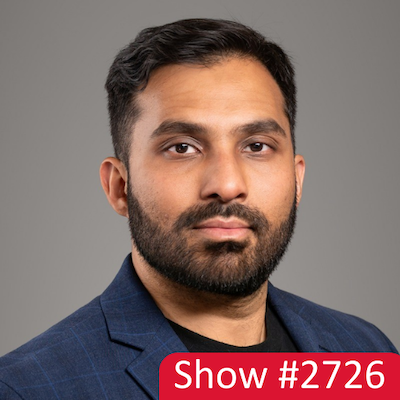
29 Jan January 29, 2026 – AI Agent Builder Rafsan Bhuiyan and Entrepreneur Wealth Mgmt David Wilson
Transcript
0:04 Intro 1: Broadcasting from AM and FM stations around the country. Welcome to the Small Business Administration award-winning School for Startups Radio, where we talk all things small business and entrepreneurship. Now, here is your host, the guy that believes anyone can be a successful entrepreneur, because entrepreneurship is not about creativity, risk, or passion: Jim Beach.
0:26 Jim Beach: Hello everyone. Welcome to another exciting edition of School for Startups Radio. I hope you’re doing well out there, making some money, growing a business, and if you’re not in a business now, getting motivated to start one soon. That is our goal. We want to give you the roadmap for a lot of different industries. We have guests from all over so that you can have a high likelihood of finding an interview that’s going to work for you, for your particular situation. Then we try to give you the tips and tricks and techniques to be successful, and go out there and actually succeed.
0:26 Jim Beach: Got a fantastic show for you today, two very exciting guests. First, we have Rafsan Bhuiyan on the show. He is building AI for agents, in other words, to build agents, not airline agents. And so this is a fantastic conversation on agents. If you don’t know what that is, it’s important that you learn. It’s a tiny little computer program that does something specific for your business, your computer at your location, that uses some sort of enhanced AI. And so Rafsan will give us a much better explanation, I promise. But anyway, you need to know what agents are and how that’s going to be part of your business soon.
0:26 Jim Beach: After that, we have David Wilson. We’re going to talk about exit planning and ESOPs, and anything revolving around planning for your wealth. We’re going to talk about the problem that so many business owners are going to have finding someone to take over their business, which is a huge opportunity for all of us who are not retiring soon. And so it’s a great conversation.
0:26 Jim Beach: We all have to think now about how you’re going to exit whatever you’re doing. Maybe that sounds premature or crazy, but you just have to do that. I established and built a business that I essentially could not sell because it was just positioned that no one, it wasn’t in an industry where someone would go, “Oh, that fits with me.” And so it was a problem. We made that mistake from early on. So anyway, plan better at the exit. Got a great show. Ready to get started in just a second.
2:54 Real Environmentalists AD: The Real Environmentalists, the bold new book by Jim Beach. It’s not about activists, politicians, or professors. It’s about the entrepreneurs, real risk takers, building cleaner, smarter solutions, not for applause, but for profit. The entrepreneurs in the book aren’t giving speeches. They’re in labs, factories, and offices, cleaning the past and building clean products for the future. The Real Environmentalists is available now, because the people saving the planet aren’t the ones you think. Go to Amazon and search for Real Environmentalist. Thank you. 3:23 Jim Beach: We are back, and again, thank you so very much for being with us today. I am very excited to introduce my first guest. This looks like it’s going to be a fantastic one. Please welcome Rafsan Bhuiyan to the show. He is the founder and CEO of OrionQ. As far as I understand, they build agents. We’re going to learn that word that will help you find new revenue and grow it. Rafsan is one of the top AI voices out there. He is an AI adoption coach, and we’re excited to welcome you to the show. Rafsan, welcome. How you doing?
Tamara Laine 2:04: doing? Well, doing well.
Jim Beach 2:06: Happy this morning, for some reason. Oh, that
Tamara Laine 2:09: is fine, and you got my name, right. So we’re all good.
4:03 Rafsan Bhuiyan: Hey, good, good. Thank you. Thanks, Jim, for having me on the show. I’m doing great.
4:07 Jim Beach: So let’s start off with agents. An agent is a tiny little program that you write on your computer to do something specific for you and your business.
4:20 Rafsan Bhuiyan: Yeah, it is a computer program. It’s agentic AI that can take actions. We call it LLM actions, like book, schedule meetings, send you a Calendly link, you know, or add you a meeting invite on Google Calendar or Outlook. So agents are LLMs that can take actions. That’s how I define agentic AI, or agents.
4:44 Jim Beach: Agents, LLMs. Can we use AI instead? Can we say AI that take action?
4:51 Rafsan Bhuiyan: Yeah, yeah, absolutely.
4:51 Jim Beach: Okay, so agents are AI that takes actions. They can book calls, meetings, they have voice, and basically an AI that is capable of something very cool, which is very useful for us, and it helps us mitigate repetitive tasks.
5:11 Jim Beach: All right, I am the master of the repetitive task, unfortunately. So let’s move to OrionQ now. That business builds agents.
5:27 Rafsan Bhuiyan: Yes, okay, awesome. We are a unified revenue intelligence platform, and intelligence that drives revenue and streamlines those processes using AI agents.
5:39 Jim Beach: Okay. Can you give us an example for one of your build-outs? Sure. Tell us the name or anything, but tell us a good example of something that worked well for you.
5:49 Rafsan Bhuiyan: Sure. We have telecom service distributors, and they have account executives that are basically salespeople. So they use our platform to send cold outreach, a digital business card, which is a single source of truth for the customer to use. The AI internally, built AI, learns more about the products. It highlights all the products. It has the advertisement section, and it gives you basically all the buttons and information that you need to schedule a call as soon as possible, and it is human in the loop. So the AI always pushes you, or transfers the call to a real salesperson. And the AI’s goal is to just schedule a demo or a call. And of course, the AI is almost like a search engine. When you talk to the AI voice, it’s pretty cool.
6:40 Jim Beach: All right, that does sound pretty cool. And what kind of ROI? What are the metrics that you’re going to measure that with? Is it number of engagements or meetings scheduled?
6:53 Rafsan Bhuiyan: That’s a good question. Now there’s two parts to ROI. ROI, number one, is how the system is getting integrated to a company, which is usually, you know, if you want to build it from the ground up, it takes about 18 months, but we cut it down to under three months. And then once it’s functioning, the ROI is customers actually interacting with the digital business card. We call it Vega, and we can capture what they’re typing in their LLM, what are they looking at, their session time. And especially important, because as they’re using it, the call is being transferred, or a real sales agent is able to jump in, and that’s what truly drives the ROI. So yeah, absolutely: KPIs, the customers that stick, and then they’re using it, and then hyper-personalized experience, which means the products, they change, they rotate based on your preference, kind of like CarMax’s car list. If you choose Toyota, yeah, yeah. CarMax is one of our clients. Yeah. I built a hyper-personalization engine for them two years ago, which made it through that product.
8:00 Jim Beach: So is it customer-based, or for the staff?
8:06 Jim Beach: It’s customer-based. Awesome. It is for the customer who wants a new used Ford Bronco, baby blue color. I’ve seen those around. They look so beautiful. All right, now go. Let’s walk through the agent.
8:21 Rafsan Bhuiyan: Let’s say you search it. Let’s talk about CarMax. You search the Bronco, and you have the favorite year. From then on, you’ll start seeing Broncos on your email, and you’ll see Broncos when you open the application. That is personalization. And you’ll see Broncos getting cheaper. That is the personalization, knowing, oh, if we make it $1,000 cheaper, he will purchase. And that’s how hyper-personalization works. And it works by pulling in the customer data, their interaction, what they’re clicking on, what they’re touching on their phone, what kind of information they like. And now we added another dimension to it, which is AI that you can text, right? AI, almost like ChatGPT, you can chat, and then you can understand.
8:21 Rafsan Bhuiyan: So that’s what’s built in our Vega digital business card. And it does wonderful things, you know: curated email sequence based on what the customer likes to hear. If you’re looking out for cybersecurity products, you probably, if you get cybersecurity product emails, you’d probably love it. You’d be like, “Oh wow. Let me check this out.” So that’s really as next-level intent.
9:31 Jim Beach: That is very cool. Let’s change topic of conversation. Please go back in time and go six months before you started Orion. What were you doing? How did you get the idea for Orion? What did you do first? Walk us through the birthing of this baby, please.
9:50 Rafsan Bhuiyan: Sure. So six months before Orion, I was working for CarMax, and then I was transitioning into T-Mobile to work with OpenAI to do AI adoption. And I was basically working on AI use cases with T-Mobile, figuring out what fits best in the picture for their executives, and also training the executives on how to think of AI and what tools they can learn so they can drive this ship. That means they can understand new tools that are coming out. They understand how AI works, how model context protocol works, and AI in general, so they’re not wasting any money. They know, kind of mentally, a visual on how this is going to go.
9:50 Rafsan Bhuiyan: And as I was doing that, I realized, wow, I have built a lot of this stuff, and I see a huge need for companies to have a system, not an automation, a system that connects all different systems: CRM, phone, SMS, all that in one, and pulls in what I call the revenue context intelligence. And I think there’s a big need for it, because as a salesperson, I should go to the software and type, “Hey, tell me about Rafsan,” and it should tell me everything, even what phone call I had with this person two days ago. And also tell me the next steps, that, “Hey, I’m supposed to send them a pitch deck today at this time.” And what is the next action? And most of the time, we forget what the next action is.
9:50 Rafsan Bhuiyan: And this is exactly what this agent does. It puts you in the right place, at the right time. It doesn’t give you any option. It just helps you to get there. And it’s human in the loop, so you can control what actions are being taken.
11:36 Jim Beach: Okay, keep going with this birthing story.
11:39 Rafsan Bhuiyan: Yeah, yeah. So anyway, I started thinking about it. I was like, okay, let’s program this. So I was like, no, before I program it, I’ll design it. So I started sketching out all types of stuff, and agentic AI.
11:39 Rafsan Bhuiyan: And I met this person, like, “Hey Rafsan, you want to join our podcast?” I was like, sure. So I joined their podcast and started talking about AI agents, revenue, fintech, telecom. And lucky enough, telecom clients saw me, and they’re like, “Rafsan, we would like to invite you to talk to us.” Because we are trying to build a marketing agent for cold outreach with research. And I said, hey, why not?
11:39 Rafsan Bhuiyan: So as I was talking to them, the big problem they were facing is, I had the solution to build it from the ground up. I hadn’t built OrionQ yet, but it’s just the start. So that’s in January. But they had the money, but they didn’t want to invest yet, because they saw how fast agentic AI was moving. So they didn’t want to invest in, what if there was a better solution that comes up? If they build it from the ground up, they’re going to lose a whole bunch of money.
11:39 Rafsan Bhuiyan: So I said, you know what, I will give you free consultation until we can figure this out. So here you go. I’m problem-solving, designing. And finally, I said, you know what, I will invest my own money, blood, sweat, and tears, and build this company. And that’s exactly what I did. And then the first invoice to the telco customer was $100,000 to build this automation. It was an automation.
11:39 Rafsan Bhuiyan: And then five, eight months later, we basically told them, “Hey, I built it. Here you go. Can you run a pilot? And then once it’s good, your feedback, we’re going to run it.” So they invited me to Arizona, Phoenix. I was in the CVX Expo doing a presentation on go-to-market engineering, on how fast we can deploy this technology. I went to a holiday event where I met a VP of Zoom, Sandler’s partners. It was amazing. And so many people, so many companies that are interested.
11:39 Rafsan Bhuiyan: Now it’s really step by step. I was problem-solving, failing at times. March came, investing. There were teams that came in and they’re like, “No, we don’t know this product. We don’t understand it,” because this product is so new. And that’s why this is a unified revenue intelligence platform, because we really, we don’t want automation, we want intelligence. And that’s really what we’re going after: intelligence.
11:39 Rafsan Bhuiyan: And you don’t want to do 20 different logins. You want to log in once and get all the context out: Otter, tl;dv, phone call, SMS, text, CRM, all that system connected in one platform that speaks to you and your customer and takes care of them, and also pays them the attention they need, the research that the account executive needs for agentic AI to make the next move.
14:41 Jim Beach: So they became your first client, paying client, then as well.
14:48 Rafsan Bhuiyan: Yes, they became the first paying client.
14:50 Jim Beach: Bootstrapped the company entirely, Rafsan.
14:53 Rafsan Bhuiyan: Yes, I bootstrapped it entirely.
14:53 Jim Beach: Wow, you’re going to be a billionaire.
14:59 Rafsan Bhuiyan: Appreciate that. Hopefully.
15:02 Jim Beach: Minus the 10% that you give me for the show, you’re going to be a billionaire. You’re already making money, right? You’re already profitable.
15:14 Rafsan Bhuiyan: Yeah, already profitable. Making money. So right now we have six AI engineers offshore from India, and then I am a software engineer myself. I’m navigating the ship. I have two co-founders. My co-founder is actually my neighbor. We talk all the time. His name is Tim, and I used to walk the dogs and talk about, “Hey, you know what? This is what I’m designing. This is what I’m building.” And we started talking about common problems that we see in the company. And then he started joining our stand-up, and now he’s our co-founder.
15:14 Rafsan Bhuiyan: And then we have a second co-founder as well. They’re both enterprise sales executives, so that’s our team. So we have a VP of IT, six developers, two engineers, one assistant, one lead software engineer, and me, and our two co-founders. That’s it. It’s us. We want to keep it small and simple.
16:13 Jim Beach: And what is the average ticket, or the average engagement, average project size? Is it $10,000, $100,000, a million?
16:24 Rafsan Bhuiyan: It really depends. We have four or five different tiers, because this AI is able to adapt to different company sizes. And so when you’re talking about large enterprises, yeah, that’s definitely hundreds and thousands of dollars. You know, we want to integrate this thing. We want to pull in all the technologies that they have, connect the APIs, make sure our agentic system runs, testing, testing, testing, and then production, and boom, you see the magic happen right there.
16:24 Rafsan Bhuiyan: So yeah, when it’s a large company, it can go anywhere from 15, 20, to $100,000 and beyond, depending on what their needs are. And also, of course, there’s a monthly subscription, because all these tokens that the AI uses, and we actually are, we have more than token.
17:22 Jim Beach: Yeah, token is something that is at the arcade.
17:28 Rafsan Bhuiyan: Yeah, yeah. So it works similarly. So if you have an AI and you’re typing, the AI is using up tokens. So if you’re paying $20 a month subscription, you have X amount of tokens. And after that, your AI slows down.
17:28 Rafsan Bhuiyan: So AI is the money for tokens, but on our platform, we call it Q tokens, because our platform is built out of so many systems. It’s more than 19 systems, different AI. And also the AI is the company-owned AI, so it’s a privately air-gapped, contained AI that only the company is talking to. Nobody else can enter, for data security. It’s very secure.
17:28 Rafsan Bhuiyan: We’re also partnered with Zadara, and Zadara is a cloud service provider, if you didn’t know, and they are awesome because they’re very secure. Their goal, entirely, for being here and existing is data security for AI, and it’s pretty awesome. They can also encrypt whatever you type to the AI to get rid of PII and all that stuff, neat little stuff.
18:36 Jim Beach: All right. Well, congratulations. Sounds like you’ve done it really well, and that I should get a dog and start talking to my neighbors more so that I can find a co-founder. That’s a weird story, but it works. Well, yeah, I guess you just got to live in the right neighborhood, right?
18:36 Rafsan Bhuiyan: Yes.
18:36 Jim Beach: So I want to build an agent. Can I go on to GPT and say, “Build an agent that captures the email I have on the screen and send that email,” or “the three things that we capture into the Excel spreadsheet,” Rafsan, one dot XLC, or whatever it is.
19:22 Rafsan Bhuiyan: Well, it depends. It depends because you have agents in ChatGPT. If you go up in subscription, which is like a $200 a month plan, it’s super expensive for ChatGPT, you can have agents like scrape the internet and all that stuff. But to have an agent work on your local machine, you’ll probably need a different software, or you have to custom code it, because I don’t think, you know, local machine, it really depends.
19:22 Rafsan Bhuiyan: And I also have an agent, which is like GenSpark AI. If you’ve heard of GenSpark AI, they’re basically the AI platform that also shows advertisements below news and stuff. So that’s what they’re trying to be. They have agents, super agents that work, and it’s like $20 a month. So it goes out, captures the data you want.
19:22 Rafsan Bhuiyan: But for internal computer automation, you’ll have to build an agent on your local system. That’s hard. That is, it could be. But the thing is, there’s so many YouTube videos you can look up, and I’m sure there’s a platform that’s solving this problem right now, as we speak.
20:33 Jim Beach: Again, very good. Cool, well-executed story. What are some of the lessons you would like to pass on? What have you learned that people need to emulate?
20:44 Rafsan Bhuiyan: Sure. What I’ve learned is that when you have an idea, it’s so unique, and you know it’s unique, maybe that idea generated years and years of failed startups, and all those lessons that you’ve learned from the failures, you’ll be surprised. If you keep going, they end up making you very, very successful.
20:44 Rafsan Bhuiyan: Because you look back and you’re like, wow, all this knowledge, and how I built the systems, that actually a lot of them came up with all the struggles I had. And then when you do start working on a startup, don’t get scared. Just know that you have to keep moving, especially when you see traction. And what you really believe in will come to reality if you do the right amount of work and know the purpose, why you’re building this. That’s it, to make it, to manifest your startup, or whatever you want to do in life.
21:44 Jim Beach: Oh, you made it sound so easy.
21:48 Rafsan Bhuiyan: It’s very hard, actually. It’s kicking my butt as we speak. Me and the co-founders are dying: meetings, calls, strategy, fixing, debugging.
22:03 Jim Beach: Are things not going right? What’s the insight about, or just the problems? What are they pointing to?
22:17 Rafsan Bhuiyan: Yeah, so the problems point to things going right. That means things are moving, and we’re adapting as we go. Customers are using the system constantly. We’re learning how to scale. We’re figuring out, okay, since they did X amount of Q tokens from our platform, I think we need a little bit more horsepower, more compute, to get it to the next level.
22:17 Rafsan Bhuiyan: Then me and my co-founders were figuring out how to get investment, because we really need investment. I’ve bootstrapped it so far, and now my co-founder is pouring his pockets. So if we can focus on just this and have no other jobs, and just focus on OrionQ, it is bound to be a billion-dollar company.
23:01 Jim Beach: Have someone outside in charge of fundraising.
23:05 Rafsan Bhuiyan: Would love that. Actually, we don’t have much knowledge in fundraising, because this is going to be the first time we’re going to be raising for this company, and we’re already in production, and we already have six and more clients that we’re servicing. So it’ll be interesting to see.
23:23 Jim Beach: People line up to do that deal. Rafsan, hello. You know what deal? I’ll raise the money for you.
23:29 Rafsan Bhuiyan: You know what? I would love that. I would absolutely love you for that.
23:33 Jim Beach: I’m serious, because you have, you know, you’re at the sweet spot: AI, you’re enterprise. Double sweet spot. You already have income. You have a founder who bootstrapped. I don’t think this would be hard to raise money for. Are you having trouble raising money?
23:53 Rafsan Bhuiyan: I mean, we’re just getting started. We haven’t asked. We were so busy improving the product and talking to our current customers, and taking feedback and improving it, that we just haven’t had the time to ask. But yeah, if you can help us raise, I mean, that would be wonderful.
24:29 Jim Beach: What are your goals for five years? Is it to run this forever, or is your goal to go public? What would you like to have happen in five years?
24:41 Rafsan Bhuiyan: So my goal in five years, well, of course, when I get investment, we want to go through the series experience, right? Series A, B, C, all the letters.
24:53 Jim Beach: Probably. Yeah, we have customers already. Some of the letters.
24:58 Rafsan Bhuiyan: Yeah, yeah. Did we skip the pre-seed, seed, A, and now B, all that stuff? Yeah, yeah, absolutely. I mean, I’m ready for a lot.
24:58 Rafsan Bhuiyan: I have a lot of theories. I’m educating myself every day to answer hard questions because I have a lot of responsibility to make sure the companies are getting what I promised, the revenue. What we promise is revenue and ease of operation.
24:58 Rafsan Bhuiyan: So in five years, I would love to work on vision. I would love to work on quantum fiber optic cables and quantum computing, quantum encryption to secure AI and data and PII, and so that we can become one of those platforms that has the resources a company needs to scale, not only scale, but scale securely, and the customers are also taken care of.
24:58 Rafsan Bhuiyan: So that is really the vision in the next five years. And also there is a sub-platform, I call it Finneblocks, which is for fintech, streamline underwriting, and I definitely see it coming out next year.
26:12 Jim Beach: Investors also like to hear words like, “I’m super committed to this company with my entire life. This is all I care about.” 26:19 Rafsan Bhuiyan: Oh yeah, no, I totally, totally care about this. I need to get myself and people paid. And of course, our customers, they’re enjoying this so far, going on this journey with us. And you know, I want to make businesses rich. That’s what I want to do for a living.
26:37 Jim Beach: How are you marketing? What are your marketing plans?
26:43 Rafsan Bhuiyan: Marketing plans: well, I write stories on LinkedIn, I go to podcasts, I go to radio, like today, hopefully. And those are really the marketing right now. We don’t have any funds for additional marketing, but mostly referrals. Our customers are telco.
26:43 Rafsan Bhuiyan: The first customer referred us. I went to CVX Expo, where I did a speech on agentic AI and go-to-market engineering. So really, coming from referrals, 100% of them.
27:16 Jim Beach: That’s the best answer there is. That, and bootstrapping, keeping your costs down.
27:25 Jim Beach: Very well done. A-plus is all around, I must say. How do we find out more? Follow you online, get in touch, get OrionQ set up.
27:34 Rafsan Bhuiyan: Yeah, so you can follow me on LinkedIn. It’s Rafsan Bhuiyan, R-A-F-S-A-N. My last name is B-H-U-I-Y-A-N. My company is OrionQ. So if you go to the search bar and you type OrionQ.ai, you’ll see our website.
27:34 Rafsan Bhuiyan: And also just type Rafsan Bhuiyan. I mean, I know it’s a hard spelling, but if you type OrionQ, agentic AI, anywhere in that realm, you’ll be able to find us and discover us. Also on YouTube, I was actually in a podcast with The One Entrepreneur to Entrepreneur. So a few podcasts. Just enjoy. I hope you enjoy those podcasts. There’s some funny moments too. I like to joke sometimes. But yeah, just search, and would love for the audience to leave their feedback, write a comment, reach out. I love talking to people.
28:32 Jim Beach: You should have a company podcast as well.
28:37 Rafsan Bhuiyan: I would love to. If I had a team, if I had the right funding, you put me on a chair, I’ll talk all day. I was taking drama class in high school. So I can definitely add to a podcast. Because right now, I have a few jobs, and it’s hard to fight. I want to focus just on OrionQ.
28:37 Rafsan Bhuiyan: I just need a little bit less busy, and I would love to just start a podcast for OrionQ. That would be awesome.
29:12 Jim Beach: Thank you so much for being with us. We’d love to have you back in a year and get an update on the story. It’s absolutely fantastic. Congratulations. Thanks a lot for being with us.
29:20 Rafsan Bhuiyan: Thanks, Jim. Thanks for having me.
29:23 Jim Beach: And we will be right back.
29:40 Intro 2: You. Well, that’s a wonderful question, actually. Oh my gosh. I love the opportunity to do this. Thank you, Jim. Wow. That’s a great one. You know, that is a phenomenal question. That’s a great question. And I don’t have a great answer. That’s a great question. Oh, that is such a love. Started class, and that’s actually a really good question.
30:02 Jim Beach: School for Startups Radio, we are back, and again, thank you so very much for being with us. Very excited to introduce another great guest. Please welcome David Flores Wilson to the show. He is a New York City wealth management planner who specializes in helping small businesses grow. He has multiple times been in the Investopedia Top 100 Advisor list. He has appeared on all of the big shows: CNBC, Yahoo Finance, New York Times, Wall Street, all of them.
30:02 Jim Beach: And this is the cool thing, or one of the cool things: he participated in the Olympics in 1996 in Atlanta, my hometown, and represented Guam. And I don’t know what sport. What sport, David, did you play?
Jim Beach 25:53: you so very much for being with us. I have an incredible guest to welcome to the show. Very excited for you. This is going to be really fun. Please welcome Frank Vincent Olis to the show. He is my virtual assistant, and we are also starting a virtual assistant business together called Max VA, or the idea that we’re going to maximize your virtual experience, or your virtual or your Vincent experience, I’m going to have to practice that Frank, welcome to the show. Finally, glad to have you on.
Frank Olis 26:28: Hi Jim. So glad to be here. And this is exciting for me, because this will be my first time to be on your show, and, of course, in a podcast. Thank you, Jim.
Jim Beach 26:39: How long have we been working together now?
Frank Olis 26:43: Oh, actually, Jim, for almost three years. Actually started working for you. That was March 2023, and now we’re ready in 2026 so it will be my third year in coming March, and it is a great journey for for me,
Jim Beach 27:01: Jim, your life, I’ve heard,
Frank Olis 27:04: no, it’s opposite. Actually, it’s opposite. Actually, you’re, you’re the first US client that I work with. And I would say this is the best experience that I have so far when it comes to my VA journey.
Jim Beach 27:21: So I want to hear about your VA journey. But before that, why has this been a good experience for you? On your side? What about this experience has been good for you. It’s good for you.
Frank Olis 27:33: I’m sorry, Jim, the line gets cut off. Always that again.
Jim Beach 27:35: Why has this been a good experience for you? What about our working together for the last three years been good for you, as opposed to other situations, other situations, yes.
Frank Olis 27:45: So as you know, I started working for you, let’s just say for the first two years as a part time. So meaning to say I’m also working for a full time as a VA as well. So of course, working with a full time client as well, was also fulfilling. But working with you is I was able to say I was able to grow more exponentially when it comes to my career, my skills, you give me a lot of what I call this a trust when it comes to doing tasks, you give me a lot of confidence of, you know, delegating a lot of important tasks, or critical tasks. And if we’re going to do some important projects, you’re you’re giving me the freedom to solve it, to what I call this, to bring solution to it. And that way it was able to give me more fulfillment working. Working for you. That’s the reason, Jim, I know you already know this. That’s the reason. Six months ago, I think, yes, six months ago, I’ve talked to you that they wanted to work full time with you because I enjoyed working with you. I am growing more working with you. So, yes, that would, that’s the thing,
30:52 David Flores Wilson: I ran the 200 meters for Guam in track and field.
30:56 Jim Beach: Fantastic. And how’d you do?
30:59 David Flores Wilson: Not particularly well, but I was 18 years old. I was a very solid runner. Got the great chance to represent my island, but I wasn’t a professional athlete. I was the best runner that the island had. And so, yeah, I beat a few people. But I ran track a couple years in college, but it wasn’t my career after college, for sure.
31:25 Jim Beach: How was the experience of being an Olympian?
31:28 David Flores Wilson: It was fascinating, right? Because you’re walking in that Olympic Village, and you’re surrounded by greatness. And I think what’s sort of interesting is that you have the most competitive people in the world, and to be interacting with them on a daily basis, going to the cafeteria and hanging out in the game room and things like that.
31:28 David Flores Wilson: I would spend some time playing video games, because all the training is done, and people from all over the world, we just get very, very competitive about just a meaningless video game, right? Between some runner from Guam and a volleyball player from Brazil or something like that. So it was a lot of fun.
32:14 Jim Beach: How cool. Just amazing. I think that’s an amazing accomplishment, even if you didn’t get a medal. Just being there and being part of that, I think, is a great thing. Tell us about PlanningToWealth.com and what you were doing, your business, the managing partner of, is it Sincerus?
32:45 David Flores Wilson: It was Sincerus Advisory. It’s a wealth management firm that focuses on financial planning for business owners and entrepreneurs. And so we’re really just trying to make an impact on people’s lives through financial planning.
32:45 David Flores Wilson: And for business owners, financial planning is just so different, right? It’s not like regular financial planning. Business owners, you aren’t exchanging time for money. You really take agency over your lives, and you have the ability and potential to use leverage, right? Whether that’s through technology or raising capital or building a team to really raise something of value.
32:45 David Flores Wilson: And so I think a lot of the financial advisory industry really pushes this concept of retirements and, “Oh, you got to invest in 401(k)s.” But it’s really different, right? Because the vast majority of wealth for most business owners is in their business, and business owners are comfortable taking that risk.
32:45 David Flores Wilson: And so we spend a lot of time helping business owner clients navigate what are the best, optimal decisions that they can make, outside and in their business, that are good for them and their families long term.
33:56 Jim Beach: Okay, very, very needed service. So I love that. We’ll come back to that in just a second. But why did you decide to do that? Why small business wealth management? David, what drew you to that field?
34:17 David Flores Wilson: Yeah, sure. I got very lucky growing up. My dad was a CPA, so he had a lot of business owner clients, and I saw the impact that he made in terms of the advice he was giving on the tax side and business consulting. And as well, I would spend a lot of my weekends and summers working in my grandparents’ businesses.
34:17 David Flores Wilson: They had a series of businesses. They had a farm, they had a retail store, and I saw the real ups and downs of that. And for me, what I saw from my grandparents is the most hardworking people, so kind, but frankly, they made a series of bad decisions in their businesses.
34:17 David Flores Wilson: For example, they lost one of their businesses because they didn’t have the right liability coverage, and they made some very terrible real estate decisions. And so that really inspired me to make sure that, okay, when I work with people, I work with business owners, that they’re checking up, looking at all the opportunities, and as well avoiding all those pitfalls that can happen when you’re really focused on your business and maybe not as focused on your personal financial planning.
35:30 Jim Beach: All right, great background. I love that, and I love farms and backgrounds. We have a farm in our family background, our family history as well. And I don’t know, I think growing stuff and kids picking up rocks is a good way to learn the other professions of the world. I spent four years picking up rocks all summer long on the farm, painting and just all sorts of stuff, you know, just to keep it up, what you have to do.
36:06 Jim Beach: All right, as you said, most of our wealth is tied up in our businesses, and that’s really hard. A lot of us are trying to retire and sell off these businesses so we can go do something else. Do you see this huge accumulation of wealth with no one to transfer these businesses to as a problem, an opportunity? What are all these business owners going to do when they can’t transfer that wealth to anybody?
36:31 David Flores Wilson: Yeah, it’s a daunting issue, for sure. And more and more older business owners are turning 65. They’re looking to the next generation, and potentially that next generation isn’t either ready, or maybe has their own thing going on and doesn’t want to go into the family business.
36:31 David Flores Wilson: And I think what really brings to the forefront is how important exit planning is. And I think that exit planning is a little misunderstood, right? Because I think that most people think that, okay, well, I’m going to build this business, I’m going to work in it, whether it’s five years or decades, and then I’m going to get ready and do some exit planning, and I’m kind of off I go.
36:31 David Flores Wilson: We really take the approach that exit planning should be done and is effective throughout the life cycle of a business owner, from formation to growth until the actual transaction or transition toward the end of the business. Because exit planning, it really creates just a more valuable business when it’s done right.
36:31 David Flores Wilson: And so we spend a lot of time working with our business owner clients and say, are you, firstly, ready? Are you financially ready? And is the business itself ready? And usually the answer is no on all three accounts. And so we’ll go in systematically years ahead of any sort of potential exit and talk through a process and a framework which we can chip at little by little, so it’s not so daunting.
36:31 David Flores Wilson: And as a result, there’s better outcomes for business owners and their families and the businesses themselves, right? And all the other stakeholders, employees and suppliers and management and so on.
38:21 Jim Beach: So what is the solution, though, for a 65-year-old couple, they have a business that’s throwing off a million dollars a year, 21 employees, no obvious buyer. What do you tell them? What should they do? What’s their best option? Set up an employee plan and hope the business could run under them? What are your thoughts?
38:44 David Flores Wilson: What really has to do with what are their goals, right? And I think that the pathway that’s optimal for a business owner is dependent on what is most important to them.
38:44 David Flores Wilson: So, as you alluded to, for some business owners, legacy is so important, right? That their name is on the door, the impact on their communities from that business, that continues after they’re gone, that’s super important. And so, depending on the structure and the size of the business, an ESOP, employee stock ownership plan, or a management buyout might be appropriate there.
38:44 David Flores Wilson: If keeping it in the family is important, then we have to explore all sorts of estate planning techniques, whether that’s gifting, that’s a sale to the next generation at a discount. But it’s more than that, right? If family is involved in this succession, we should have a plan to really get that next generation ready and willing to take over that business.
38:44 David Flores Wilson: But as well, if the goal is just the highest possible price, well then optimally, usually we go into the strategic buyer route. You want to find someone who’s maybe a supplier, or one of your largest customers, that may actually buy the company, or a competitor. And so all those different pathways, it really just depends on the owner.
38:44 David Flores Wilson: But some of the general themes to kind of get the best price possible: build a business that is not so owner-centric, that isn’t relying on the owner as chief marketing officer and head of sales and strategy officer and running the IT department and managing all those customer relationships. That owner-centricity is a big issue that will put off a lot of potential buyers.
38:44 David Flores Wilson: And another aspect that that owner should be thinking about is, how can they create repeatable systems and processes, so that when someone does buy a business, well then, yeah, okay, there’s a process for this, and there’s a process for that, and it’s just an easier sell to someone coming in to take over that business.
38:44 David Flores Wilson: And so there’s an endless number of things. But other things that come up a lot in the exit planning process: buyers want a business that has recurring revenue that’s not so concentrated among a small amount of customers. So I think those several issues are something that buyers can focus on to make their business more attractive, increase the universe of buyers, and then get better outcomes from that.
41:57 Jim Beach: Aren’t a lot of owners today going to have to accept some sort of owner financing, where they get paid out over seven years, as opposed to a big check when they sell? Isn’t owner financing going to finance a ton of these deals? What are your thoughts on owner financing?
42:16 David Flores Wilson: I mean, it definitely depends on the industry and the competitive dynamics. I think what’s always happening is that buyers are looking to offload their risk. And so if they can pay over time, if they can keep the owner involved in that transition process, if they can somehow guarantee that the revenue that is stated today will be there in one or two years, it’s just, I think a lot of buyers, I mean, sorry, owners, when they’re looking to sell their business, it’s not ideal. Many of them want to walk away, here’s the keys, and off we go.
42:16 David Flores Wilson: But there’s a market for that. You’re going to get a much more attractive price if you stick around and you reduce the buyer’s risk. And that’s all in the negotiation, in the terms. And that’s why it’s so important to get good advisors, whether that’s business brokers, investment bankers, CPAs, attorneys, and so on.
42:16 David Flores Wilson: But it’s not all gloom and doom as well, right? Because when you do take that seller’s note, some of the proceeds and the taxable event can be spread out over time. And that might be attractive, depending on someone’s tax situation. So I think whenever you’re looking at terms and structures, you need to look at it from a couple of different perspectives.
42:16 David Flores Wilson: One perspective is, what’s the actual after-tax amount of money that you’re going to get? And so that needs to be modeled out with your financial advisor and your CPA, so you can really know what these offers look like on an apples-to-apples basis, for sure.
44:15 Jim Beach: So, David, I went to school with some very, very wealthy people. I had a Rockefeller in my graduating class, and they still had a tremendous amount of wealth. And that Rockefeller guy I knew seemed motivated and like a normal person.
44:15 Jim Beach: I also went to a 25th birthday party of someone who owns one of the largest retail chains in the United States, and his grandfather started that business, and they have towns. A whole city is named after this family. And he got $25 million on his 25th birthday.
44:15 Jim Beach: And since then, he has been a Pilates instructor, ski lift operator, ski instructor, real estate agent, and fireman. What’s up with good family planning, and how do you pass that fire on multiple generations without getting lazy, third generations who end up being firemen? Nothing wrong with firemen. This guy had no clue, though.
45:32 David Flores Wilson: How much time do you have? Right? I think you’re getting to kind of the crux of multi-generational wealth and how difficult it is. And I think that there’s, you know, this is a phenomenon that’s pervasive throughout different cultures. It’s kind of interesting that there are different sort of phrases that describe this in different cultures.
45:32 David Flores Wilson: You know, there’s “shirt sleeves to shirt sleeves in three generations,” “clogs to clogs in three generations.” There’s a different phrase for this, depending on the country and the culture.
46:12 Jim Beach: Yeah, dancing with those thick shoes.
46:16 David Flores Wilson: Exactly. In terms of the point being that the first generation tends to make the money. The second generation, potentially, okay, well, they’re not maybe entrepreneurial. They become potentially professionals, whether it’s doctors or engineers or whatever it is. And that third generation is the one that’s really at risk, because they’re far removed from the values and the hard work and the situation, frankly, as well, that created that wealth in the first place.
46:16 David Flores Wilson: And so I think the whole planning industry, and as well as the family business world, there’s more academic research around this. There’s more best practices that are being put in place.
46:16 David Flores Wilson: And I think a lot of it has to do with, okay, what is important in the family? And for some families, it’s passing on those values, those values of hard work and entrepreneurship, and really educating that next generation and setting them up for success.
46:16 David Flores Wilson: There is this concept of people who are natives to wealth, and then there’s people who are immigrants to wealth. So if families didn’t have wealth and then they built it over time, it was new to them. But then when they have children, all they’ve known is that wealth, and they never knew how to create it.
46:16 David Flores Wilson: And so I think oftentimes what we’ll see is families where the first generation is entrepreneurial and the second generation is not so entrepreneurial. But they want to instill those values, and they might just send them into the wild, say, “Hey, you know what? We’re not going to support you. We’re not going to give you this money. You got to go do it.” But the issue is that they didn’t grow up with those skills. And so just kind of send them into the world and say, “Hey, go and make it on your own,” it’s super challenging.
46:16 David Flores Wilson: And as you alluded to, if someone didn’t have any wealth and all of a sudden was handed tens of millions of dollars in their 20s or 30s, that’s also very challenging. So I think knowing what kind of family you are, what you want to accomplish, exposing the next generation to these concepts of hard work, ambition, compound interest, financial management, and then setting guardrails, all sorts of different things you can have.
46:16 David Flores Wilson: Because I think the skills that the first generation has, they’re realistically not going to be there from the third generation, for example, of a multi-million-dollar family business. But there are still ways to maximize good outcomes, like creating collaboration, really understanding what’s important in the family, exposing them to business concepts and ideas, whether that’s working together, or how to invest.
46:16 David Flores Wilson: So I think there’s all sorts of different things that can be done, but at the same time, sometimes what happens is kind of out of your control. You can try to optimize outcomes and still not get something favorable, anyway.
49:47 Jim Beach: So, David, how did you get your first customer? Let’s switch topics a little bit and talk about your firm from the entrepreneurial angle. How’d you get your first customer, your second customer? How do you market and continue to grow your business?
50:02 David Flores Wilson: Yeah, so I did a career pivot, sort of in my late 20s. I had an investment banking career out of college. And what I was doing was I was keeping in touch with people, creating community here in New York City, as well as when I would travel back to California and Guam. I kept letting people know what I was doing.
50:02 David Flores Wilson: And so when I transitioned to financial planning and wealth management, it really is just a question of like, hey, you know what I’m going to do. This is what I’m focused on. I would ask questions about their situation, and then I’d circle back and say, “Hey, is this something you’re interested in?”
50:02 David Flores Wilson: I think what I always focus on is, in any business, you have the product development, and then you have distribution. And so for me, the product development is financial planning, and just kind of continue to get better every month. If I get one or two percent better in a month, every month, over time, I’m just going to have a bigger impact.
50:02 David Flores Wilson: And so always keep your eye on the two different balls, in terms of how do you improve the product, and then also, how do you let people know about it, in terms of distribution.
51:18 Jim Beach: Do you have a marketing budget? Do you do ads or some stuff like that? What’s your marketing thoughts?
51:25 David Flores Wilson: Yeah, so for us, it’s really about, in terms of the KPIs of the business, what we found moves the needle the most is just how many times we’re actually going to speak with the clients in a given year. And so when we speak to them more, we’re going to solve more problems, and then they’re just going to refer us more.
51:25 David Flores Wilson: That being said, facilitating those referrals down the marketing funnel, that’s where the marketing budget comes from. And so we do spend some time: okay, well, let’s produce content on different topics related to financial planning for business owners. And so we target maybe a four to five percent of revenues on events, producing content, as well as other things related to that.
51:25 David Flores Wilson: But marketing is kind of an endless rabbit hole. And so I think that the key is always to evaluate effectiveness, which sometimes just isn’t possible, right? In terms of, if you’re spending your marketing dollars in different places, and you don’t always know where you’re getting the best ROI.
52:43 Jim Beach: That’s true, but you did say one of my favorite buzzwords. You pointed out that you were doing a bunch of podcasts and radio shows so that you can build links and get backlinks, which I think is one of the secret sauces of all of this, that SEO is determined by how many backlinks you get. Each show you go on should give you a good, solid backlink.
52:43 Jim Beach: And you know, five backlinks can make the difference between first page and second page. So I love that, and that you do that and pointed that out. So I want to make sure the listeners know that as well. David, great stuff. Congratulations on your success.
52:43 Jim Beach: How do we find out more? Follow online, get in touch, all that stuff, please.
53:26 David Flores Wilson: Sure. I produce a financial planning blog for business owners and entrepreneurs. It’s called PlanningToWealth.com. On that blog, people can book a free consultation, and we can chat about your personal situation.
53:42 Jim Beach: David, thank you so much for being with us, and we’d love to have you back. Sounds great. We’re out of time today, but you know what we do? That’s why we come back tomorrow. Be safe, take care, and go make a million dollars. Bye. Now you.
Rafsan Bhuisan – Founder & CEO of OrionQ
When you have an idea, it’s so unique, and you know it’s unique, maybe
that idea generated years and years of failed startups and those, all those
lessons that you’ve learned from the failures. You’ll be surprised. If you
keep going, they end up making you very, very successful.

Rafsan Bhuiyan
Rafsan Bhuiyan is an American entrepreneur, decorated U.S. Army veteran, and the founder and chief executive officer of OrionQ, a unified AI revenue operations platform built to help enterprises and growth teams unlock previously missed revenue at scale. Based in Erie, Colorado, he combines deep technical expertise with leadership experience gained from both military service and high-impact roles in the private sector. Before founding OrionQ, he played a key role in architecting CarMax’s personalization engine that supported nearly 800,000 vehicle sales annually and led large-scale AI adoption initiatives at T-Mobile, where he helped expand GPT usage across thousands of executives. At OrionQ he focuses on creating practical, human-centric AI agents that automate repetitive tasks such as lead qualification, follow-up, and scheduling while ensuring seamless handoffs to human teams to preserve trust and drive results. An advocate for ethical AI and broader access to advanced tools, Rafsan also shares insights on AI adoption and growth strategy with business leaders and coaches teams on leveraging AI to augment rather than replace human skills. He holds a background in computer science from Colorado Technical University and leverages his varied experiences to shape how organizations apply AI to real business challenges.
David Flores Wilson – Managing Partner of Sincerus Advisory & Editor of Planning to Wealth
Exit planning should be done and is effective throughout the life cycle
of a business owner, from formation to growth until the actual
transaction or transition towards the end of the business.

David Wilson
David Flores Wilson, CFP®, CFA, editor of Planning to Wealth, has a passion for being a helpful resource to friends, colleagues, and clients. In an effort to find new ways to better serve his clients and provide the best, easily-accessible information, Planning to Wealth was born. From financial planning tips to wealth management guidance, Planning to Wealth aims to be a valuable resource for top financial planning considerations. Named to the Investopedia Top 100 Financial Advisors in 2019 and 2020, and WealthManagement.com 2019 Thrive list of fastest-growing advisors, David is a Managing Partner and Financial Planner at Sincerus Advisory in New York City. He advises business owners and entrepreneurs as they make financial progress towards their goals and dreams. He has specialized expertise in qualified small business stock (QSBS) planning, business exit planning, strategic philanthropy planning, and equity compensation planning (ISOs, NSOs, and RSUs). Prior to joining Sincerus Advisory, David was a Vice President in the Fixed Income Division at Barclays Capital. He received a BS from the University of California, Berkeley and holds the Certified Exit Planning Advisor (CEPA®), Certified Merger & Acquisition Advisor (CM&AA), Chartered Financial Analyst (CFA), Certified Financial Planner (CFP®), Certified College Financial Consultant (CCFC), Enrolled Agent (EA), and Accredited Estate Planner (AEP®) designations. David enjoys traveling, reading, Brazilian Jiu-jitsu, yoga, and snowboarding and is on the board of the Lower East Side Girls Club.