
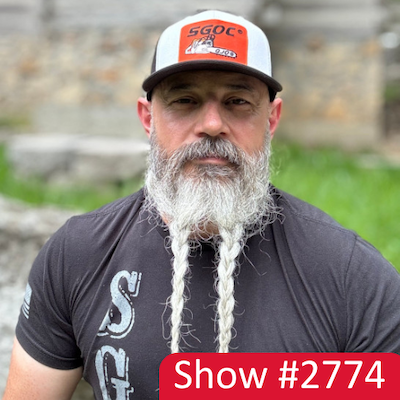
21 Apr April 20, 2026 – Redneckonomics Aaron Chapman and Jim on a Rant
:04 Intro 1 : Broadcasting from am and FM stations around the country. Welcome to the Small Business Administration award winning school for startups radio where we talk all things small business and entrepreneurship. Now here is your host, the guy that believes anyone can be a successful entrepreneur, because entrepreneurship is not about creativity, risk or passion. Jim Beach,
0:26 Jim Beach : Hello, everyone. Welcome to another exciting edition of School for startups. Radio, that’s right. We don’t believe in creativity, risk or passion. We think that it’s just as good to go copy an idea as it is to come up with a fresh idea. 93% of the businesses are exist are copies of existing businesses. So why do you need to be the one that’s out there being creative? Just innovate and do it legally. Of course, we don’t believe in risk. We think you should test your idea for 5000 or less, and if it tests well, then we’ll talk again about the money, but we don’t want you risking more than $5,000 to know if the product is going to work or not. And then passion. Passion is awesome at the church, the synagogue, the mosque and, you know, the bedroom and stuff. But we don’t think that it needs to be part of entrepreneurship. All you need to do is like owning a business more than working for the man. So if you give the working for the man a 60, and you give entrepreneurship a 70, it’s still a lot better. It’s not a 90 or 100 yet, but we can get it there, perhaps with better systems that allow you to work better and wiser. That’s ever more true in this AI world, got a great show for you today. Well, interesting show today. Maybe it’s half great we will see. First up, we have Aaron Chapman. This is the great part. He is author of a new book called redneck anomics, which is a very interesting title. He has been with us before, and we had a great conversation. Enjoyed him very much, so we’re excited to welcome him back with his new book. And then after that, I am going to go on an educational diatribe. I don’t know it’s not a diatribe. I just want to get some ideas in, in out there on the table, so that you know what I’m thinking about awards and best selling authors and so many of the other things that we read off about the guests on the show. I’m giving you my honest thoughts in the second half of the show. You will maybe enjoy that we will be right back to get started with Aaron, which you will enjoy
2:39 The Real Environmentalists AD : Introducing the real environmentalists, the bold new book by Jim beach, it’s not about activists, politicians or professors. It’s about the entrepreneurs, real risk takers, building cleaner, smarter solutions, not for applause, but for profit. The entrepreneurs in the book aren’t giving speeches. They’re in labs, factories and offices, cleaning the past and building clean products for the future. The real environmentalists is available now because the people saving the planet aren’t the ones you think. Go to Amazon and search for real environmentalist. Thank you. We are back and again.
3:09 Jim Beach : Thank you so very much for being with us. I’m very excited to welcome back to the show. Aaron Chapman. He was with us four or five years ago with a book that had a very provocative title. I’m sure it will come up today, but he has got a new book out called redneck anomics, unconventional success by taking the beaten path, as in getting a beating. I think it is five star rated on that Amazon place. Aaron has had a very successful career. He has helped 1000s of people, investors, transform their financial trajectory by understanding one very simple truth, that wealth is a skill, not a stroke of luck. We love that philosophy here, Aaron, welcome back to the show. How you doing?
3:55 Aaron Chapman : Well? It’s good to be back, man. Thank you for bringing it back around.
3:58 Jim Beach : I’m doing pretty well. You know, I never forget your interview and your book that you had before, maybe the most provocative title of all time.
4:09 Aaron Chapman : Well, you got to try and get people to pay to raise an eyebrow somehow, right?
4:13 Jim Beach : That’s right, how much pushback did you get on it?
4:17 Aaron Chapman : You know, there’s, it depends upon who you’re talking to, and what I have found is I just really don’t care if there’s pushback or in embracing it. This is something that I needed just as much as anybody else, and a person wants to embrace it, go for it. You don’t. That’s cool, too.
4:33 Jim Beach : All right, for the people who don’t know what we’re talking about, the title of the book was, stop self pleasuring yourself. But it was a little more I direct than that. So Aaron,
4:47 Aaron Chapman : We actually redneck economics has a chapter that exactly that uses that exact same title of quit jerking off.
4:56 Jim Beach : I actually saw that. Oh, you just said it. So there we go. Slipped it right into the cup. There we go. That’s how we do it. Tell us about your career and your vision of wealth creation.
5:10 Aaron Chapman : So it’s in reality, every single bit of it has been a matter of taking an ass beat and getting back up and keep moving forward and being very persistent in what you’re seeking as an outcome. I have this vision of a, of a an outcome for the future. Now I don’t know if I’m ever going to get inside the walls of that vision, but I might die outside the gates, but I’ll never stop moving towards it, because I have that and I try and convey that to my clients as well, that belief that every step is definitely better than where you were before depends, regardless of whether you’re stepping on rocky ground, a place that’s very steep with poisonous serpents or whatnot. Every business is going to be like that. Every life is going to be like that. You might want to just at least point yourself in a direction that you’re hoping to go to, rather than sitting still or falling backwards. All right, so
5:58 Jim Beach : What are good old southern beatens that you’re referring to.
6:04 Aaron Chapman : Well, some of the beatens really for most people, just getting out of bed every day. You know, when you look at what what life is like, for a lot of folks, it’s easier to sit still, and some may want to just sleep through it and just ignore that it’s happening. For me, the beaten is, is the way the markets like to do the way your competition likes to do, and sometimes your internal business and partnerships. I’ve had partnerships fall apart more than once. I have endured significant financial hardship due to market crashes and then an actual motorcycle crash at 80 plus miles an hour in 2008 that put me in a wheelchair, took my memory from me and put me from a financial position of over $4 million to a negative net worth of 1.5 that was a significant beating that actually taught me so many things that it gives me the strength to go into a lot of potential beatings and not really worry about how it feel,
6:57 Jim Beach : My goodness. I I just, I just so torn by motorcycles, you want to hear a horrible story. Aaron sure, when I was probably eight or nine years old, my father took me to Warm Springs Georgia, which is where FDR President Roosevelt died, and he was there for the hot springs that would help people and with paralysis issues. And so my grandmother was there. She had MS, and they also had a ward for motorcycle victims, and my father made me walk up and down the aisle. Imagine two basketball courts next to each other, totally open space, maybe 218 year old boys in there. How’d you get here? A motorcycle accident. Go up to the next kid. How’d you get here? Motorcycle Accident? Every one of them are quadriplegic, and it’s just hard to get excited about them after that. And then hearing your story, I just, I just cringe every time. I’m sorry.
8:02 Aaron Chapman : I’m just I agree. I mean, I’ve only jumped on one one time since then. That was just to prove to myself I can still do it. But you know, when I look back on that experience, let’s think about this, right? It’s 1224, in the afternoon, August 8 of 2008 in the state of Arizona. That’s not the most convenient time of the year to lay down on the pavement, but I had to lay there because I had no choice for 20 plus minutes while emergency services got there. Because of the where it was on the freeway, it wasn’t easily accessible, and because of that, shattered legs, other broken bones, probably 17 broken bones in total, if I remember correctly, one lung that had collapsed, and then, of course, the memory loss and all the burns and the road rash and all those things. It was some great lessons taught in life. You know, I went into that accident at 190 pounds, at a net worth approaching 4 million, credit score in the high seven hundreds and operating business. I left the hospital weeks later, confined to a wheelchair, 156 pounds, with a negative net worth of 1.5 million, the credit score in the four hundreds. So that was that was a lot to crawl back from right. And sometimes a person has to find where is that bottom in life to start moving up even further, because you knew how to get to the place where you’re at. Now, how do I get past it? Well, you strip away a lot of things that you don’t need, that are in the way many times and start moving towards that next goal. And I achieved a lot of great goals as a result of being able to shed some of that extra weight that I had in life to move to those goals.
9:31 Jim Beach : And what is your financial model? Aaron, talk to me about how you make wealth. How do you build wealth,
9:39 Aaron Chapman : Helping others to achieve what they intend to achieve, but then also giving them things to think about and what their and what that potential achievement might be. Because right now, a lot of people their goals are a little bit of a mess. Some people don’t really even know what they are, because there’s so much information being given to us that they’re looking at all the lives of everyone around them. And because of that, they’re they’re missing their own objectives. So my personal goals, I convey a lot to folks, especially the investors that I’m working with, and the what I have now is as I’m looking to try and change the generational direction of my family as a whole. When they look back as a kid, we go to family reunions back in New Mexico, my grandmother and her brothers and sisters were kind of the elders of the family. No matter what happened, what they said would go right. They had the respect of everybody there. And there could be a couple 100 people at these family reunions. And then, as they started to die off, nobody took that that place over. Nobody took that role. Those stories were gone, those that that that hierarchy, if you will, had dissipated, and all the cousins had had, had kind of dispersed. And I watched all that happen over the generations. And so my generation now, Generation X, is kind of carrying two different loads, other than our own load, and then the load of many of them helping their parents, and then many of them helping their children. And I’m looking to try and change all that with the correct trust structures and holding companies and LLC structures, with the acquisition of our real estate and other things. And we now have, for me, wealth is experience and in connections and relationships, and then also be able to direct the next generation on the capability to perpetuate it. So with that, we have the trust, and each member of our family have adult children now and have grandchildren. They live in homes owned by the family trust, including myself. We all pay rent to it. We all pay on top of the rent to a central account, which would be like a home warranty. So when my daughter calls me up say, hey, the AC is broken, she doesn’t have to try and figure out where she’s going to what she’s going to do, or give up on to try and pay for that that coming months. Or call me and say, Hey, Dad, we need some extra money. If you can help us out, it’s already there. So we have intentionally built a system to protect ourselves, protect our family, and always have that as some place for all of us to be. And now I’m working with all of them, to bring us all together into one place, to have more of a united enterprise other than us kind of scattered around a little bit, trying to cobble it together,
12:09 Jim Beach : All right, and tell us about your firm, the services you offer there.
12:14 Aaron Chapman : So I am the Executive Vice President of North American Financial. One of the things that we focus heavily on is financing real estate investors acquisitions and then also giving them connections with the right people to help them set up their entity structure properly. The main thing I’ve noticed within my business, I’m working with real estate investors, they spend a lot of time on YouTube, a lot of time on podcasts, hearing about the different things that are out there. There’s a lot of great big law firms out there with a lot of great information, but what they’re what they’re offering, and what they give them, puts them in a position where they can’t quite take advantage of those things that they that they provide them at great expense. And so what we do is we we reintroduce them to folks. They’ll help them to set those entity structures up properly. Up front, get your infinite banking in place, if that’s something you want to use as your foundation and make yourself very bankable and also very protected, before you step into the real estate investing purchasing world. And then we start that, that acquisition process utilizing the right kind of financing, and financing you with, with an entity buying investment properties, usually single family to four unit. And we’ve been very, very successful helping people scale and scale correctly in the sense of being able to have that asset protection, that anonymity that they’re seeking by utilization of entity structuring, and then, of course, being bankable to get that good 30 year fixed financing. Because there is a lot of people out there look at different types of things, like your arms and your other type of short term deals. They don’t perform like a good old fashioned 30 year fixed when you look at what inflation does for you, and being able to get somebody else to pay back the bank, and bank is paying majority for the acquisition of the asset, you get to keep the asset, with the tax benefits, with the appreciation, with the cash flow, it’s a no lose deal, but you still have to look at the deals properly and understand what a deal is. That’s another thing. We spend a lot of time educating those investors and those future entrepreneurs on what a deal is. It’s not always cash flow. There’s a lot more things you got to look at,
14:12 Jim Beach : All right. Boy, you came out with a lot of stuff there to ask about. So you said that you help finance real estate deals. I The beauty of having a radio show is I get to ask the questions I want. So help me with this situation. Aaron, I have a three bedroom, one bath that’s collecting a very low rent because it’s a family situation. It’s worth according to homes.com 377 and I own it 100% outright. I don’t really like the property. And on the street that it’s on, all of the other houses are going McMansion, and, you know, $2 million homes just down the street. What would you do in that situation?
14:58 Unknown Speaker : I. Personally, I’m actually in a situation like that.
15:02 Jim Beach : I wish, because it sounds
15:06 Aaron Chapman : Like you got a heck of a deal on your hands. I do have a house. I have a situation very similar, where I have a family member in it, that the the rent that they pay is very, very commensurate with what department be, not what that house is. And the House has gone up significantly in value. I bought it for just over a quarter million, or actually just under a quarter million in 2002 it’s worth 1.2 right now, I’m looking to just, we’re going to sell that property, take the capital from that property, because it’s part of the trust, and then reinvest it into another home at a percentage down, not the full amount, a percentage down. So that way that particular family member can move into a different home at a payment that’s still that they can still manage, and then that other capital that’s going to come from that, I’m going to redeploy into other assets. So rather than leaving that, that property you’re talking about locked up, and paying that having that meager income on it, I would, if it was me, I’d be divesting of that and taking the capital, redeploying it to get them something else to live in that’s something they can manage, and you still have that other capital to redeploying two or three other places that would give you a lot more of a return on investment. The biggest return on investment is financing, getting as much financing as possible for a third party payoff, because the amortization is going to kick in on an 80% loan to value deal somewhere in the range of 11 to 13% annual return.
16:31 Jim Beach : All right, very interesting answer. I’m almost afraid to ask this question, because I have asked it before. What is infinite banking? Aaron, and do you understand why people are hesitant about this? Oh, yes,
16:47 Aaron Chapman : I was hesitant about it when I heard about it first, please. So when I heard about it first, it was 2016 and I was actually called out my my life insurance agent for leaving a very, very, good career to go into selling life insurance. I thought he was freaking stupid, and I asked him. I asked him that, and he said, I want to ask that question. Can you get on a video conference call with me and your wife, which we did my birthday weekend of 2016 and he explained the process of utilization, of taking your your your liquid assets, and purchasing a life insurance policy. And now let’s just say my particular scenario at $90,000 I was looking to invest in real estate at the time, it was after that crash. We talked about my crash. Took my income from me, took my assets from me, took my my my ability to walk, my ability to think, and my credit score, right? Well, it had crawled back from 2009 to 2016 to a 750 plus credit score. I had $90,000 set aside to invest in real estate, and I had gotten myself back into a good, solid business. So I rebuilt everything before investing into those properties, I purchased a life insurance policy on me with a death benefit about $2.7 million I was immediately, within 30 days, able to access about 83,000 of that 90,000 to invest in those properties. I planned on. Then I bought those properties, took the cash flow, plus 10% of my income, started paying back the loan against the policy, which is the $80,000 and knocking it down. And then once I knocked it down enough to purchase another property, I did that again. So what it did became a compounding machine, more property, more cash flow, more pay down, more usage, and I use it like a line of credit. Now some people say I could do the same thing with my bank account. I can put 90 grand in there, buy investment real estate, put the money back in there and build that account back up again and buy it again. Yes, you can. The difference is, and I went through this with that motorcycle accident. If I didn’t make it out of that motorcycle accident, my and I had done that whole process with a regular bank account, my family would have an empty bank account, three three investment properties they didn’t know what to do with. But if we did the Infinite Banking strategy with the 2.7 million, put that money to work that was able to borrow against the cash value the policy had the three houses got in an accident, didn’t make it through it, my family would have the three houses, plus the 2.7 million, minus the 83 $83,000 I borrowed from the line to buy those houses. I always ask everybody, which is better? It’s, it’s, they’re a similar system, right? Your bank account or your life insurance policy, but one has a death benefit to protect your family.
19:21 Jim Beach : All right, so Aaron, I agree with everything you said. That all makes sense. You tell the story a little bit differently. Most of the people who do this don’t talk about that $90,000 at the beginning. They just sort of assume that money is there in purchasing and that’s one of the reasons I’ve had pushback with it. But yes, you’re the way you’re describing, getting long term, term insurance, not term whole life, whole life paid Life policies, right, correct.
19:51 Aaron Chapman : Whole Life paid up policies. And I have seven of them. Every single member of my family has. I have one on each member of my family. I have two on me, one on my spouse and. And for my children to maintain their position as a voting member of the trust, the board of trustees or the board in our trust, they have to have those policies on them, on their and their spouse, because I want my my my children and grandchildren protective something that happened with their spouse. So this is some perpetuates, and we get into deep detail and conversation and practical application of this with our clients, because you’ve got 1000 different ways to apply it. And you can read books upon books upon books, with respect to infinite banking, how this person says you can use it to to pay for your cars and things like that. I don’t subscribe to those. This is there’s a whole different thought process that I tend to use, and it’s strictly for the growing of real estate investment assets and other businesses. We put into other businesses as well, just to make sure that as we’re building these businesses up, it’s possible to lose all your capital there. You could invest all that money into it, and it all be lost. It’s we know how the market swings, but I want my family protected if something happens to me, because I’ll take the burden of crawling out of the hole, I’ve done it more than many, more than once, but to go into the hole and then something happened, and leave that burden on your family. That, to me, is irresponsible.
21:11 Jim Beach : Very, very well. Said, Tell us some of the fun of your stories from the book. I’m here looking at some of these chapter titles, and they are really great. Shall I throw out a title or a chapter title, or you just
21:24 Aaron Chapman : Got some story? Sure? Throwing out, throwing out. Let me see if I can dig something out for you.
21:29 Jim Beach : Ah, no one gives a damn about you.
21:32 Aaron Chapman : You are correct, and they don’t. I don’t know if that’s a funny story or not a funny story when you think about that, because what I explained to folks, you look around, everybody cares about themselves, period. Go on social for three and a half minutes, you will figure that out. There’s not a single person out there that doesn’t care more about themselves than they do about you. So for a person to go about life, trying doing everything it can get the rest of the world to care about them, it’s not going to happen. And for me, the main reason I point that that thing out is because you cannot get anybody to do the work that you need to do to achieve what you need to achieve. Nobody’s going to kick you out of bed and get and work out for you. Nobody’s going to going to make a perfect meal for you. Nobody’s going to get you cleaned up and ready to go, and nobody’s going to sit you at your desk and do your work and make and help you get paid. You’ve got to do all that. You’ve got to care enough about you and where you’re heading, to be motivated to do all those things, even when you’re not motivated to do it. And I don’t care how many people you have in your life that love you. You have a mother that loves you, a father that loves you, children and a spouse that love you, that you’re alone in everything that you do, you have to be the one that does it, and that’s why I state that nobody gives a damn about you, because they don’t. You got to give a damn about you. You got to make sure that you walk those steps, regardless of who it affects. You’ve got to do it for yourself.
22:53 Jim Beach : Ass beaten number five, put your ass on the line.
22:58 Aaron Chapman : So that particular one, if I remember correctly, leaves a lot to the the concept of the word meek or meekness. When I ask you, what is it? What do you see in your mind when you reference a meek person,
23:17 Jim Beach : They’re hunched over and come up to you and bother you and are so wimpy that they won’t stand up for themselves at all.
23:29 Aaron Chapman : Exactly the wimpiness is what people people tend to send to think from the actual in actuality, meekness is definitely not weakness. That’s a person that has the power to react and justified to react when they stay their hand. So if Jordan Peterson says that it’s a, it’s a it’s a monster, it’s basically a monster has it under voluntary control, you know, or Joe Rogan to say it’s a warrior in a garden, not a gardener in a war type thing. And I just realized that that’s actually not what that chapter about. Is about that chapter is about reliability. So the that I was referencing a different chapter, which was, I can’t remember which chapter that one was, but with the meekness thing, but still a good thing to talk about, but with the put your ass on the line. That has more to do with reliability. That is a thing that I learned back as a kid. If you ever see me, you’ll see me wearing a trucker hat that has a chainsaw on a patch. Usually it’s a steel depiction of the steel saw. And the reason that he
24:23 Jim Beach : Long beard in a braid,
24:25 Aaron Chapman : Exactly the braided beard, and the reason I wear that hats, because I always believed as a kid, because we used to cut wood to put to warm our home, I was always out in the hills with my dad and my grandpa running saws they were under then. The other was my grandfather would have to have problems. He had picture and throw them, whichever. And for me, the chainsaw was the most powerful, most useful, the most unique and the coolest tool ever made. It’s also the most dangerous. If you operate that or misuse it for a split second, it’ll kill you. It does not discern between people whatsoever. It depends upon how you’re paying attention to it or. You’re maintaining it, you have to maintain them properly. And the reason the hat goes on my head every day to remind me that the actual most powerful, most useful, the most elegant tool there is, is the human mind. If you misuse it for a split second, it can not only hurt you, but can hurt everybody around you. It can destroy every thing you have from misusing it and not maintaining it. So that’s why I believe that that is a very, very important thing when you’re putting your ass on the line, to be very, very reliable and know exactly what you’re thinking all the time, and check your thoughts, think about the thoughts you’re thinking, and keep focused on what you’re what you’re doing with that, because that’s going to direct everything else in your in your life.
25:38 Jim Beach : Final one, when I go to the grave. I’m coming in hot.
25:43 Aaron Chapman : I don’t believe in retirement. I’ve watched too many people go to that point in life work themselves just senseless to go to a point of retirement just for their life to fade out shortly after that. My intentions are, I will always be building. I’ll always be working. I’ll always be developing. I’ll be do we always be productive in some form, until such time that I’m just done. So when I go out, I’m hoping it’s a blaze of glory of some sort. I don’t want to wither up and die. I spent those, those that time in a wheelchair. I spent that time where I was I was incapacitated, unable to do anything. I never want to see those days again. I want to be able to go right up until the very last second drop.
26:27 Jim Beach : I love that answer. Love it. Aaron, how do we find out more? Follow along. Get a copy of Red Knot. Red economics.
26:36 Aaron Chapman : If you don’t like going to Amazon, which you go right to Amazon, get economics. Sometimes people have a hard time typing that in, because it’s not an easy word, and go to quit jerking off.com that’s the easiest way to find it, and that way you can order from me. You can go to my website, Aaron chapman.com, find whatever you want about me there. You can also follow me on Instagram, which is S, G, O, C, underscore.
26:58 Jim Beach : Aaron, fantastic. Thank you so much for being with us, and we’d love to have you back in three or four more years when the next book
27:04 Aaron Chapman : Comes out, and there’s one in the works right now. So I’m looking forward to it fantastic.
27:09 Jim Beach : What is that? What is it about
27:10 Aaron Chapman : That’s going to be basically about what I talked about with the family, being able to actually detail out how to do everything that I propose, and so I’m going to be writing it
27:18 Jim Beach : As I do it. Okay? Fantastic. Karen, thank you so much. Thank you, brother, and we will be right back. You.
27:40 Intro 2 : You. Well, that’s a, that’s a, that’s a wonderful question. Actually give, oh my gosh, I love the opportunity to do this. Thank you, Jim, wow, that’s, that’s, that’s a great one. You know, that is a phenomenal question. That’s a great question. And, and I don’t have a great answer, that’s a great question. Oh, that is such a loaded class, and that’s actually a really good question.
28:02 Jim Beach : School for startups radio, we are back. I am back. I don’t have a guest right now, so I can’t say we that is the habit. I just have to break it for this segment. I’m going to do something a little bit unusual. I’ve only done it three or four times. I’ll maybe do it more. Now is talk about something that’s going on in or something that you need to know as an entrepreneur. And I don’t know how many people know this, and I think that I want to talk about it and spend a few minutes addressing the whole issue of self promotion, resume building, resume puffing, doing anything to make yourself look more accomplished than you are. Do you, of course, have heard the old expression, make it or fake it until you make it? I think entrepreneurs have to do that. We have to sometimes blow our own horn, because no one else is going to blow our own horn. I didn’t want to say exaggerate, and I almost did, but I didn’t, because that’s wrong, that’s illegal, immoral and bad karma and Bad Juju. And so the last thing you want to do is lie and people get caught and then go to jail. We have Elizabeth Holmes in jail for 11 years for her Theranos lies I haven’t checked or heard recently about the guy who built the electric truck company, and they showed it rolling downhill, as opposed to actually moving under its own volition. He was charged. A lot of people get busted for this. Of course, there’s the 30 or the Forbes 30 under 30 list. And how many of them have gotten in trouble over the years, has made an article in Forbes, has written about that. But we do need to talk about how we get these awards and the best selling status, how we get the accomplishments that so many of us, or so many of you achieve. And I want to talk about this from two angles. Today I want to talk about it in terms of best selling books, and then also in terms of awards, right? So two categories that I want to address this idea of make it before you fake it. So let’s talk about best selling books. Almost everyone who comes on my show is a best selling author. It used to mean something because there was an adjectival, adjectival phrase that went with it. What kind of best selling author? Now we don’t say now, we just say best selling author, which always, in my opinion, means Amazon, but we don’t say USA Today, Best Selling Author. We don’t say New York Times best selling author, because most people are not New York Times or USA Today best selling authors. And if you do have someone, a guest, or meet someone, or read someone’s bio, and it says that they are a New York Times bestselling author, that is substantially more impressive than saying that they are a best selling author, because almost anyone can get best selling author on Amazon. It takes so few books to make that happen. I remember, before my last book came out, the real environmentalist, which I hope you all purchase, a great book on the idea that capitalists are already saving the world the environmental issues. The book made number one in three categories before it came out. And I know that I was buying copies so that I would have copies to give to friends and things like that. And I don’t know who else was buying copies, but it was, you know, I was certainly trying. I was certainly promoting. I was already doing shows about it. I was certainly making the efforts. I was going on other people’s show as a podcast guest. But I was certainly not doing, you know, I wasn’t buying anything. Wasn’t running ads or anything. And I’ll come back to that very soon here, in a second, I was just doing what anyone would call normal promotion, and the book went to number one in three categories before it debuted. The day that it debuted, it was on the three categories again, and was ranking very, very high in the low 1000s. And again, this is like golf. You want it to be a low a number as possible.
32:22 Jim Beach : 100,000 is you know, your book is selling two or three copies a day. A rank of a million means you’re selling one copy, two copies a week, or something like that. And so you need to know what all of those mean. In the first couple of days, you by yourself and with two or three friends, can orchestrate yourself best selling status on Amazon. That’s all it takes. And I think that total the purchases are probably around 20 or something like that. If you buy 20 of your book on the day that it drops, it will probably get close to number one status, if it not number one. And lots of people have figured this out, and lots of people are gaming this, which again, decreases the value of the term best selling book. The fact that there are companies out there that will for two or $3,000 guarantee you Amazon Best Selling status shows how much it’s worth two or 3000 there are also companies out there now that will pay that you have to pay that charge $60,000 for best selling New York Times, or USA Today status. And then I should probably say New York Times is probably a little more expensive, $100,000 for someone to guarantee that to you, because those are very hard. And then you have to look at the methodology. How do those best selling lists get accounted for? I honestly don’t have any idea about the new or, I mean, the USA Today. I don’t know what it counts, though, New York Times, I think counts mostly bookshops in New York City, from what I have heard. And I don’t know how antiquated that is, where they include the other sources, but certainly to get New York Times is as prestigious as you can get in the publishing world. And very, very, very hard. And I just don’t know that that many people achieve it, that that I know exactly how many people achieve it, 40 a month or 40 a week, right? Because there’s the list, and it’s, of course, in different categories. So maybe 240 a weekend get included on it, which is quite a lot of books, but it’s minuscule in the number of books that get published overall, when we’re getting millions of books published a month now. And I don’t quote me on that. I don’t know what the exact number is. You can look it up, but we certainly know that books are getting published at an extraordinary rate now, and most of them sell under 100 copies. And I think people need to know that even books that rank well at the beginning eventually fall to that 2 million rank and are not selling books on a daily basis or even a weekly basis, not a single. Look. And so people need to understand that the fact though that I can go and buy my rankings shows us you know how important they are and how valid they are, but it also shows that it is really just a bunch of BS, and those are pretty good accurate prices, 60,000 for USA Today, and probably 100,000 for New York Times to become not number one, but just to get ranked on there at all. But after that, you can your books will sell instantly better. You can put that on the cover of every book you publish from then on, and you can get publishing deals much better once you become a New York Times bestseller. So in a lot of ways, it’s a great payoff. It’s a good bet, or a good gamble, to buy your way on to the list and then make it up later. For other things, speaking deals and things like that, your speaking gig rate would go up dramatically if you were a New York Times best selling author. There are a lot of speakers out there who base their entire pedigree, their entire resume is based on that one line, and that’s what they claim. And you know, it’s totally valid, a great way to do it. I wish that I could get there. I’m not there yet myself, and so we are all trying to build a better resume and get more prestige so that we can get on better shows, get more
36:30 Jim Beach : Media attention, get more PR and get on better lists, so that our shows do better, our videos get more views. All of that, right? It’s so competitive in anything that you can do to increase one part of your career will help drive the other parts. If you become a best selling author, that’s going to help in your consulting business, for example. And again, I think that probably every single guest that I have come on that is an author is a best selling author. And I always, I promise you, I always look at their rank to see how they are doing. And many times, these guys who came or come on in their their PR media sheets and things like that, have such incredible accolades. And you look at their book, and it’s ranked 2.5 million, and you know that it hasn’t sold a copy in probably a month to rank that, and yet, you see these incredible accolades that the publicist put out. This brings up another point. We need to realize this and be honest. When we are putting out publicist PR media sheets, we need to be honest and say, Let’s not exaggerate and not make up stuff. And if we are a best selling author, put it on there Amazon Best Selling Author, just go ahead and own up to it, right? Because that’s what it is. You are an Amazon Best Selling Author, and as I hopefully pointed out to you, that don’t mean very much. We can do that and get it number one in your category. And there’s always that caveat sentence in your category that they add because there’s 1000s of categories, there’s gardening and French upholstery and science and 1000s of other categories, and so just to be number one in your category, is how they get away with it, and how they make so many people best selling authors. So anyway, enough said about that. I’m now going to move on to awards. So I want to start off with this little story. In decades ago, in the mid 90s, I was starting to raise money, I was building my children’s education business. And we had, we were on the way to growing to 89 locations, and so we needed to start raising money from we would outgrown friends and family and done an a round, and it was time to, you know, get national attention and things like that. And so we also had board members who were very actively telling us to increase our visibility, that that was one of the things we needed to do. So I looked around in Atlanta and found a publicist. To this day, I can’t remember who it was, and they asked, you know what? What was my goal? What did I want to achieve? And I said, Well, maybe if we could appear in some of the things my mother reads that would be cool. And she asked what my mother read, and I said, you know, the my mother read the Wall Street Journal and the Atlanta Journal, constitution and Georgia business, which was a business magazine, a monthly business magazine that I don’t think exists anymore, and some other things. You know, Southern Living, you know, magazines like that, and so a very well informed lady. This was a very, my mother was incredibly well read very, very street wise, and was actually famous that. She was one of the nurses selected to to do the first open heart surgeries in the United States with Dr Debakey in Houston in the late 50s, and was very successful nurse, and then became a mama and so anyway, oh yeah. So the publicist said, Well, we can get you in some of that stuff, and we can get you in other things. And, you know, here’s the rate. And I said, Great. And so we did business, and she put together a press media kit, and a month or so later, called and said, there is a 40. Under 40, would you like to try to be in that? And I was like, Yeah, that would be awesome. It was actually at Georgia business monthly, that magazine I mentioned earlier, and she said, I’ll try to get it. And then a week or two later, she said, Well, would you want to be number one? And I was like, Sure. And I she said, Well, would you be willing to pay for that? And I was like, well, what’s the rate? And she told me, I think it was $500 I said, Sure. And so magazine came out in a month or two later, my mother saw it, and was absolutely ecstatic. There was a big ceremony, and I was the number 140 under 40 that year in Georgia business magazine. And so my mother was all impressed. She, of course, thought it happened organically. And, you know, I told her.
41:23 Jim Beach : I didn’t tell her flat out. I had a publicist put me there, and it cost me $5,000 but, you know, that was the truth. I didn’t let her think that. I let her think that it was just normal. You know, they the the reporters went out and found these people, and they’re here. They are. And of course, that’s never what happens, you need to know that from the very beginning that that never happens. The news never gets done. That way you can assume that every article that’s in a newspaper, paper was put there by somebody for a reason. And I think you just need to come to terms with that. And so anyway, the award ceremony was really cool. The some of the other winners that year were rooms to go. The guy who started that and his daughter was on my show about a month ago, and I put two and two together and realized, Oh, I know your dad. He did rooms to go and won the 40 under 4030, years ago, just like I did, and one of the Atlanta’s major TV celebrities was number two that year and died of a heart attack a couple of years after that. And so anyway, it was a good group of people, and I got a bunch of other media as well, and all of that was paid for. Then we started learning how to get free media, which was even better. And for example, this children’s education business that I was telling you about, I could put out a press report that said two guys in their 20s establish children’s education company at Stanford and MIT. What is more likely to get picked up is this 13 year old girls studying robotics at Stanford and MIT over the summer, or something like that, that gets picked up a lot more. And I know because we had that article print hundreds of times during the summer. And each summer, we would change the message that we were trying to send about our group of smart kids. And it would be, you know, students getting ready for DNC National Committee Republican or Democratic Convention. And that would be our kids going to the conventions to report from there as part of their learning experience. And so that, of course, would get in the media. Everyone wanted to report that. And so that’s called free media versus earned media. And everyone realized that this is a great way to get publicity. And so I then started experimenting and finding out with other awards and other well before that, let me tell you this other story. So I was invited to be a judge at Georgia University of Georgia UGA, number one in football, also number one in business plan competitions. That same year, though, it didn’t get as much reported. It is a true thing. My friend Chris Hanks was the coach. They organized a big event, and I was one of the judges there. And during that event, CNN showed up to report about it. That’s how big an event it was. And I was going to be on screen saying something about a fish company that I thought was a great idea, but I didn’t like their strategy or something. And they asked me, and this is the. Point, they asked me, What did I want to appear underneath my name? So it could be Jim Beach, author, Jim beach radio show host, whatever I wanted. And I said, Why don’t you put Simon Cowell of venture capital? And the woman the public or the producer said, Okay, that sounds great. She loved it, and it happened. And so now forever, I can say that CNN called me the Simon Cowell of venture capital. It’s hokey, it’s crazy, but it’s true, and therefore I can say it the rest of the story is, is that I made it up. I suggested it. I put it in there. Of course, we don’t have to tell that part of the story. So anyway, awards, let me keep saying getting all my preambles done.
45:52 Jim Beach : You need to take control of your own award destiny and not manufacture your awards, but go after your awards, make them happen. So I wanted to get some publicity for my podcast before it was a radio show, you know, we’re now a podcast and a radio show, and when it was just a podcast, I was trying to get some PR for it, and at the same time, I was doing a lot of work for the SBA, the Small Business Administration, and doing some speaking for them there and getting them some notoriety. I’d helped one of their people, one of the companies that they were working on, get on a podcast, a whole bunch of podcasts, so they really appreciated me doing that. And so I was working pretty hard for the SBA at that point in my career, and they appreciated it, and I appreciated the fun that I was having there. But eventually I was awarded. And eventually, is only six or nine months later, I was awarded the what is it media? I’ll turn around and look at the award right there, the Small Business Media advocate Award, which they call the Media Award for the nation. And so I won a national my podcast won a national award from the SBA for the work that we were doing, which is the exact same thing that we’re doing now. And so I could always say that the show is an SBA award winning radio show, because that’s true, and there’s no exaggeration there at all. And so did I make that happen?
47:32 Jim Beach : A little bit? I certainly had something to do with that happening. You know, I know exactly who nominated me things like that for. Here’s another example I won. This is a silly example. When I was teaching at Georgia State, I won the teacher of the Study Abroad Teacher of the Year, something like that. I think that was it. Study Abroad Teacher of the Year. I had nothing to do with it happening, but I know who nominated me. I know who turned in the application that I won because of and I didn’t ask them to do that, but I would have, if I had known that he was willing to do it, and if I had known that the award was out there, which I didn’t, I would have asked that person to say, Hey, do you mind going nominating me? I’ll, you know, I’d really appreciate it, and to see if he was willing to do it. He did it without me asking, which was even cooler, and I won without knowing about it. And then I got notified and got to meet the president of the school and the governor and bunch of other people for this silly award. But I can now say that I am a teacher of the year type thing winner, or whatever, the whatever Study Abroad Teacher of the Year. And which may sound really silly, but when you add it up, with some of my other silly awards, start to look like a real career of substance. Let’s say, you know, and I don’t want to say that I manufactured every single award. I did a lot of work for the Thai organization, the Indian entrepreneur organization, which is a global group of Indian business people organized by city. And each city has a strong membership of 5000 or whatever, Indian entrepreneurs in that city, and they get together and have global competitions. And I won a whole bunch of awards from Thai for my work there, and was nominated as, like, the Thai member of the year, or, you know, and stuff like that. And then eventually won global Educator of the Year from Thai, which was really cool, that didn’t come because I asked about it, that came from hard work that I went out and actually did, and because I actually cared about the organization and wanted to help those kids that I was helping, and through the process of helping those kids, I won some awards, which in the, you know, in one or two don’t mean much, but when you. Add up a bunch of them together look like a career of substance. There are awards that I went out and are trying to manufacture. So I just wrote this new book, The Real environmentalist. You should go check it out. It argues that the environment is already being saved by great environmental capitalists, entrepreneurs that are making money and saving the environment at the same time. It’s a great book and five star rated on that Amazon place, that book has recently been nominated for a whole bunch of Book Awards, mostly independent publishing book awards. There’s an award called the ippi, i, p, p, y, which is for independently published books. That book was one of those. We decided to get it out quickly, as opposed to going through the two year problems a year process of getting a book published normally through one of the big publishers. You know, my first book was with McGraw Hill, and it took over two years to get that book out and to the public, and that was always a bummer. And so anyway, this book has been nominated for the ippi Awards. It’s also the cover of the book has been nominated for the ippi Awards, and it’s also been nominated for another award. I don’t remember what that is right now, so I won’t say what what it is, because I don’t remember, guess who nominated me.
51:37 Jim Beach : My VA and I nominated me, and I want to thank Frank for helping me get through that process. And now I always could say I was nominated for the IP award, and if I win, I can say I was a winner of the IP award, but it will be because of my effort. You know, I some awards. You can’t self nominate yourself for. You have to go out and find someone who will nominate you on your behalf. And that doesn’t take very long. I’ve done that before. You should be able to, you know, find someone who will nominate you for your school alumni significance award, whatever they call that, for the alumni who are significant. Usually, you don’t nominate yourself for those though you can. I’ve seen somewhere you can, but you have to have a friend nominate you. And so find someone that you were friends with freshman senior year and get them to nominate you, if you went to the same school as your family, get someone in your family to nominate you. That is not bad, that is not a moral, it is good strategy and 100% moral. And so I think that you should consider that a lot more. All right, I’m going to wrap this up thanks for listening to my banter. I hope you learned something about it. And I want to wrap it up with a kind of what all of this means. You need to pay attention to who these people are in their resumes. You need to read through the Bs in their resumes and see what it really means, because you need to know that a lot of this stuff can be self generated, or it might just be flat out AI lies, but pay more attention to the resumes that you’re hearing, seeing the guests that you’re seeing on podcasts, a lot of this stuff is just Bs, and they they’re guesting on each other’s show and trying to build credibility that way, and there’s a lot of BS behind it. So have a more jaundiced approach. When you look and evaluate people, there are a lot of guests that are on my show that I’m not very impressed with, and you can pay attention to that, and you’ll hear me subtly saying that, if you know the buzzwords, I introduced some of them today. Thanks for being with us. We are going to wrap it up. I will be with you again later. Bye. Now
Aaron Chapman – Author of
Nobody gives a damn about you, because they don’t.
You got to give a damn about you.

Aaron Chapman
Aaron Chapman is a nationally recognized mortgage finance expert, entrepreneur, and speaker who has spent more than 27 years helping real estate investors build lasting wealth through strategic lending and financial discipline. Rising from humble beginnings working in the oil fields and as a long haul truck driver, Aaron carved his path into becoming one of the most influential figures in U.S. investment property lending, with his team underwriting a significant share of investor real estate mortgages nationwide. Known for his practical, no nonsense approach, he teaches that wealth is a skill developed through experience, not luck. Aaron has shared stages with leading voices in business and real estate, challenging audiences to rethink success through grit, accountability, and consistent action. He is the author of Redneckonomics: Unconventional Success by Takin’ the Beatin’ Path, where he distills decades of real world lessons on leverage, asset protection, and long term financial growth, offering a clear and proven framework for investors at any stage to create sustainable financial freedom.