
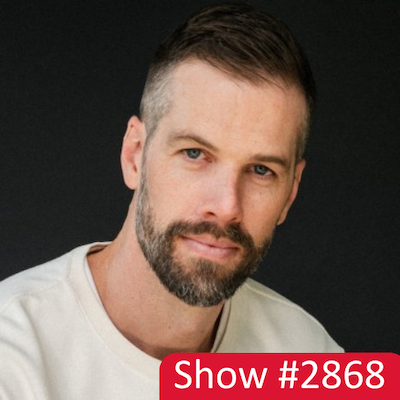
01 Oct October 2, 2026 – Magnus Financial Group Ron Deutsch and Tough Enough Matt Hunter
00:04 Intro 1: In the AM, radio network, broadcasting from AM and FM stations around the country. Welcome to the Small Business Administration Award-winning School for Startups Radio, while we talk all things small business and entrepreneurship. Now, here is your host, the guy that believes anyone can be a successful entrepreneur, because entrepreneurship is not about creativity, risk or passion, Jim Beach.
00:20 Jim Beach: Hello, everyone, welcome to another exciting edition of School for Startups Radio. Thank you so much for being with us today. Really appreciate you, loyal listeners. Tell your friends. Let them know that we’re paying everyone $20 a day to listen. First up today, Ron Deutsch, an amazing story. We’re talking about buying and selling, and then Matt Hunter on tough leadership. Let’s go ahead and get started right now. Here we go. Very excited to introduce you to another great leader. Please welcome Ron Deutsch to the show. He is the managing director of Magnus Financial Group. He has been at all of the big companies. He worked at Prudential Securities, Kidder, Peabody, Sage Financial Group, a lot of different firms on his career. He is a chartered financial analyst and has an MBA from Northwestern Kellogg. I’ve actually lectured there myself. He’s an avid tennis player sports enthusiast and gives back actively to his universities and serves on investment committees. There. Ron, welcome to the show. How are you doing today?
01:21 Ron Deutsch: I’m doing well. It’s, uh… We’re getting over the summer blues at this point, so we’re moving into the fall and I’m actually all re-energized moving forward here, but nice to be on the show. Thank you.
01:34 Jim Beach: Is it a boost in New York energy when everyone gets back from the Hamptons and everyone?
01:39 Ron Deutsch: I think that’s a fair statement. I wasn’t a Hamptons guy, but I did a lot of, a lot of fooling around and lying around the pool and whatnot over the summer and it kind of got a little bit lazy, but now I’m re-energized, and I’m ready to go. The weather was a very hot summer too here. So it was, it was actually a long, hot summer, but now I’m, uh, weather’s turning and uh, and uh, I’m ready to give it a strong, strong uh, push going here, going to your end with uh, with, with my business.
02:14 Jim Beach: And how does that affect? How does that affect the market, Ron? September bump.
02:19 Ron Deutsch: Well, no, usually actually September, October, 10th is not great periods in the market because they tend to be, it’s just seasonally and it just, you pick up a lot of the major events and they’ve all, all the, all the negative events over the past 20, 25 years in the market, they’ve all happened, many of them happened in September, October, uh, going way back to the market, the stock market crash of 1987 in October. It’s a great financial crisis when that really hits striving. Lehman Brothers went on business in September of 08. And I mean, I could probably go through the list, but it tends to be a weak seasonal period. And obviously we’re now at a point geopolitically here in this world where, you know, we got between interest rates moving higher, currently, uh, oil price, obviously, have been high and moving higher again because without getting into politics, you know, the war is getting worse, it seems like day by day, not better.
03:17 Ron Deutsch: And on top of that also is you got a lot of other geopolitical problems, which are further aggravating things. And inflation is becoming more of a sticky problem too. So there’s a lot of headwinds here against the market, despite the fact the market has actually held up fairly well this year and it continues to, but I’m just telling you that being an NX fixed income guy, um, keep your own interest rates because interest rates have moved up markedly higher here in the last month or 2 and they could go higher again, depending what the Fed decides to do next week or 2 as well.
03:54 Jim Beach: Okay, so if the interest rates go up, the economy slows down, right?
03:59 Ron Deutsch: That’s the intention, the intention also is to slow, is to really try to stamp that inflation over the long term as well, which is the big, the biggest, the biggest concern right now. I mean, the economy seems to be doing well, but, you know, I don’t want to get into a whole, uh, economic impact, but, you know, AI is offsetting a lot of that to date, but now there’s all sorts of stuff going on today with AI in regard to people worrying about it wanting regulation on it. So there’s just a lot of headwinds and tailwinds going back and forth with a lot of these things and I don’t think people will know what the result is to wait down the road as far as whether AI helped inflation, rated her inflation, as well as what’s good, what role AI is going to play.
04:50 Ron Deutsch: It’s going to be a large role, but there seems to be a lot of, a lot of concern here in the, the papers in the media the last couple, couple of days actually regarding that. Has been.
05:04 Jim Beach: So many negative articles. Sam Altman said that they’re slowing down their IPO because of security threats. I heard Anthropic was trying to get money from NVIDIA to help prop up their IPO. I’ve also heard that there’s only room in the market for one of them to get public and that they’re both overpriced at this point already. How do we resolve all of that, Ron?
05:27 Ron Deutsch: Don’t know. I’m not going to play. I an advisor. I’m not a prognosticator. So I can tell you, you know, I don’t know. I mean, the markets will determine the long run, but, but right now there’s just so much, um, there’s a lot of stuff going on that we just don’t know about and understand, and a lot of people, you know, I, you know, I mean, AI has become AI and the data center is just all this is now becoming a political football as much as an economic football. So, it’s not, it’s kind of out of my field and I don’t want to get into it, but, but it’s, um, You know, you know, it’s something which, uh, you know, we’ll have to see where the winds blow at this point. I can’t I can’t prognosticate in that regard.
06:16 Jim Beach: Are you overall net positive AI or net negative? Meaning from the statepoint of using it or what I think it could do for the world? The happiness of your 3 sons. Overall.
06:28 Ron Deutsch: No, well, luckily my sons are old enough that, you know, if I had kids come out of college, I would not be happy. I’d be worried. I would be. My kids are old enough now. They’re all will be in their 2nd, you know, by now beyond 3 or 4 years of working, so they’ve already established themselves. And once I think once you get to middle levels of business, of management or working as opposed to the entry level positions, which I think are the most threaded, obviously, at this point, it’s not as big a deal.
07:02 Ron Deutsch: But if I had kids coming, go in a, by juniors in college right now, I’d be very, I’d be concerned because I wouldn’t know, you know, it’s like when the, you know, it’s kind of like when the internet broke 20 years ago and, you know, a lot of, a lot of businesses, which were vibrant, were vibrating, more, and they were replaced, but, you know, people got retrained, you know, there’s all sorts of jobs within the, within the digital media and digital, everything in the media and the, you know, by virtual and viral space that didn’t exist in too. AI, I don’t know. Again, I don’t know. It’s, I know, I really, really don’t know what what it, you know, what people should go. I know that the plumbers in the electrician schools are very popular right now because people know, well, that they’re not going to be replaced, but, you know, I’m not sure many people want to go into that also.
07:59 Ron Deutsch: It’s a limited, you know, it’s a, you have to be a 75 person. So again, we’re kind of straying away from my expertise, so I don’t want to, I don’t want to get too far into it.
08:12 Jim Beach: Let’s talk about… Tell me about the group, what you specialize in, how you measure yourself in terms of assets or accounts. Tell us about the firm.
08:22 Ron Deutsch: So, Magnus Financial Group, we’re a registered investment adviser. We started 2017. I joined it for a year later. The firm started out with a group of there was one advisor, Michael Schwartz, who found the firm and he had about 6 support people, and that was the firm to start. I joined a year later, and I brought on a couple of other people afterwards that I recruited to bring on as well. The firm basically started out with about $3000000 back way back in 2017. And as of today, we’ve grown up to $25000000 under management, which is a growth rate of, I don’t know what it is, 20%, 25% a year, something like that. Um, We are an independent advisor. So basically, um, you know, we managed people’s money in a totally objective way. We use everything from ETFs, individual securities. Um, you know, we don’t make any money from anyone other than the client. We charge the client management fee and that’s it. There are no underlying fees, no commissions, nothing.
09:22 Ron Deutsch: So we are not uh, motivated to use investments for clients that either A aren’t appropriate or B already cost effective because we don’t, we, our, our interests are completely aligned with our clients, you know, as opposed to a lot of broker dealers where they are not, uh, have, they don’t use the same model. We was in our open architecture. So we can use any, any, any, any, any, any security, et cetera, that they want. You know, a lot of bigger firms have their own internal models and investments they use and to, you know, a lot of their platforms that the big guys, you know, big brokers, firms or banks like Morgan Stanley’s and Goldman Sachs, they use a lot of their own products or you have to pay a fee to get on their platform. We have none of that. So as a result, we’re totally objective in choosing what we choose for clients.
10:17 Ron Deutsch: And if the client does Well, we do well if client doesn’t just do well, we don’t do as well. So where our interests are totally aligned with them. Um, you know, me personally, you know, before I joined the firm, I was with a couple other similar firms before that. As I say, we’re an independent RIA. Um, so we are, uh, monitor regulated by, uh, by the SEC, um, and basically, you know, um, I worked for brokerage firms prior to entering this business, uh, before I became an advisor with Magnus and became, came into the business, which I’ve been doing this now for about 17 years.
10:55 Ron Deutsch: I had a career on Wall Street, uh, for almost 25 years, which was to predominantly, um, an investment banking, and then I became a fixed income institutional salesman, which meant that I was dealing mostly in fixed income, which are bonds basically, but as opposed to individual investors like we deal with now, all my clients were institutions, the JP Morgan asset management, the PIMCO’s, uh, mass financial, you know, life insurance, you know, life. I mean, all the big institutions for my clients. So I learned my, I cut my teeth in the bond business for my whole career, um, and by dealing with all these institutions. I was dealing with a lot of burgers, smart decision makers, which made me think and learn a lot more about how the markets work, how things income works, and I became kind of a specialist at fixed income because of that career.
11:47 Ron Deutsch: Uh, toward, in my career, I decided I was finally going to, by the time I turned 40, 45, I was not going to stick around. It was more of a young man’s business. The hours weren’t long. Um, the stress is great. You know, you do your kind of training floor most of the day. Um, and as a result, I took my CFA exam toward the end of my career, I passed that. 3 year exam. So that would enable me to have a pretty good basis for being able to basically manage both stocks and bonds and private investments and everything. So I did that. And then I needed my career, I, I flipped over from basically being a fixed income institutional guide to become a registered investment adviser.
12:32 Ron Deutsch: I went to work for a small friend in New York with no clients and nothing and or the next 5 years, I got to tell lawyers and accountants and built up my business and then after that I made a couple of moves until I ended up with Magnus, which is where I am today.
12:52 Ron Deutsch: So, my, um, my fixed income background is a, is a big, it’s made my whole business that much stronger because, you know, a lot of bigger clients that I have, um, in addition to putting together a diversified portfolio, putting together a financial plan for them, you know, with doing a whole budget, doing retirement planning, I’m also able to build out individual bond, bond portfolios, meaning they’re individual securities I’m building out for them myself, rather than either farming it out to another firm and paying an extra fee to them. Or using just neutral funds and the like, which are very high expense, and not only as effective as owning an individual bond portfolio of specific securities, that can be structured to meet the goals of the client and match what I view is an interesting environment that’s appropriate. So that’s that’s briefly what we do, what the firm does, what I do.
13:45 Ron Deutsch: We’ve, the firm itself, we offer financial planning, obviously, as I mentioned, investment management, and we also have an insurance group as well that will review people’s insurance policies, determine what they may, they have, whether it’s appropriate, what they may need, and what they should be thinking about. And indeed, if people want, you know, want to purchase insurance policies, I will very often price R for now versus other firms to make sure that they’re getting the, you know, the lowest cost and the best policy they can. I, I, um, I don’t deal insurance directly. So, that’s kind of a brief overview of how we work, what I do. As a firm and basically, you know, we have, I, I run my practice with basically 4 meetings a year at a minimum with every client. Um, the practice itself I have. I try to, you know, I try to run a medium-sized practice in regard to number of clients.
14:41 Ron Deutsch: I try to maintain a one on one with all my clients and try to customize everybody’s portfolios to a reasonable extent too, running doing the typical just straight model portfolio that most of the bigger firms do because it’s quicker, easier. And it’s, it’s, it’s less, uh, just less work. But in my case, I’m trying to keep my business to a natural number of clients. I can’t.
15:05 Jim Beach: What is that number, Ron? Sorry to interrupt. What is that?
15:09 Ron Deutsch: That’s all right. That’s got about 40. It’s not. I managed money for about 40, 40 to 45.
15:15 Jim Beach: Okay. 40, 45 families.
15:16 Ron Deutsch: Individuals. It’s more than that. It’s probably about 70 individuals, but many of them are family members like. So that’s what I’m trying to keep trying. I mean, I’ve been growing and slowing you cheer, but, you know, as I’m with people longer, longer. I know them like the back of my hand. They know me. So I don’t have to, you know, I know, I know what I’m supposed to be doing for them and whatnot, but when I’m starting it. I try to maintain it. Um, much more communication contact with them up front at the beginning, we’re just getting things going. So that’s kind of, that’s kind of about, about what the, the, my practice looks like. The firm, as I said, has, I don’t know how many accounts we have, 900, 800 accounts with the firm. So even though my assets are a reasonable percentage of the firms, my number of my clients, a much smaller number because I just found a different business.
16:14 Ron Deutsch: I try to have bigger, bigger clients and just try to um, try to uh, maintain that customization. I can do. And like I said, I do build out individual portfolios with individual bonds and then away from the stocks and as a result of, I can only do that if I’ve got a manageable number of clients as well. So that’s that’s in a nutshell kind of how we work as a firm and how I work kind of as well. Um, so.
16:44 Jim Beach: So you grew the firm sixfold over 7 years. How do you grow a firm like that, Ron? Do you run it?
16:50 Ron Deutsch: It’s a team effort. Not just me. Team effort. Most of it’s organically. We haven’t hired like 20 advisors within the firm either. I would say a lot of it, you know, some of it. You know, I can talk to the very large fur accounts, the firm is, is, we do team up, we do teamwork. So I, I, myself and the CEO Michael and I work together in a couple of big account, very big accounts with the firm. And it’s a, it’s a team approach. There’s another gentleman at the firm that I work with on a few large accounts also. So by, you know, what is it?
17:28 Ron Deutsch: You know, knowledge is in, uh, 2 heads are great or better than one, and very often we found it, you know, when you approach, when you approach uh, new clients or otherwise, you know, if you’ve got depth in a couple of smart people, rather than just one person, it carries a lot more weight and it enables you to just show your, your metal and your, your knowledge base. I mean, I can speak for myself. I know what my strengths are. Everyone’s got their strength and their weaknesses. So, you know, if I’m going to see a particular client or Michael or someone else is, you know, you try to bring someone else who can compliment what your skills are, and then you can, you can be fairly proficient in all the skills that they’re needed to, to convince people why you’re firm and your, your, your group make the most medicines for them to consider using basically. Um, and, and, and that’s been really it.
18:26 Ron Deutsch: I mean, you know, referrals for another reason. Obviously, if you do well, your clients like you. They’re going to refer people to you as well. You know, um, and in general, I think that’s been probably 2 biggest reasons why I’ve been able to do it. I mean, I will say that, that I’m kind of shocked. I didn’t think I didn’t think I’ve never been with a firm that’s grown as quickly. So this had been, you know, but it’s been a very pleasant surprise and, and, um, you know, people could do good for people, things just follow after that. So it’s been, um, It’s been a good. It’s been a good, good adventure so far, I guess, is what I would say. And, um, you know, and I would tell you too that, uh, We’ve also expanded bit as well into alternative investments and private investments. So we, you know, we’re dealing with some things a lot of the smaller, but the smaller advisor for us won’t do.
19:25 Ron Deutsch: And, um, you know, we built our own platform of, of, of, whether it be real estate or whether it be, venture capital, whether it be private equity, whether it be oil and gas. I mean, we we kind of find some of the, some of the kind of mid-size off the, off the, um, the grid, um, private managers to use as well and and, and they tend to be, um, a lot, find a lot more inefficient ways to invest money, make money, and then think a lot of the, the big guys do too. So, that’s kind of just an additional point to bring out.
20:02 Jim Beach: If I come in as a client with $1000000, am I going to invest in different things than someone with 10 or a $100000000?
20:11 Ron Deutsch: A 1000000 yeah. Yeah, maybe hard, what I would say is someone with, you know, usually if you hit 3 to 5000000, It’s not the portfolio, the ideas and stuff aren’t getting markedly different necessarily than if someone with 50 or $100 million. The only difference might be, depending on look on what your personal situation is how we allocate the money amongst all the different investments as opposed to changing them up markedly. You know, if we have a, if, if, if we have a, a view on, on the market or viewing sectors, we’re going to have everybody, you know, pretty much invested the same way across sectors. But as far as across asset classes, that’s a function of your living situation and your personal situation, regard to what percent in private investments you might want to be versus fixed income versus equities, and then even with inequities, you know, how much between growth and growth and income based.
21:07 Ron Deutsch: So that’s the growth and income or the 2 kind of linchpins in the sense of a seesaw that you make money on. I mean, you can make money through growing or investments, you can make money by collecting cash every quarter every day by being investing in dividends or interest paying or other distribution oriented private investments too. Those are the main ways we can differentiate people. And those are determined by people’s demographics, so they were tired. Are they no longer bringing a salary, so they need their salary replaced.
21:39 Ron Deutsch: If that’s the case, you know, I’ll reverse engineer and figure out, well, how much, what do we need to produce and wave cash goes to cover your, your, your, your budget or your shortfall, and then the balance, we can then have different risk buckets, what we can, what we can take as far as high, lower medium risk, you know, in regard to what, what we, we can afford to do without blowing up your, your need for cash to pay your bills and whatnot if you, for instance, in retirement or whatnot. On the flip side, if you’re a younger person, we’ll go the other way, and it’ll be more growth oriented as well, as opposed to value your dividends as well. So it’s, it’s, you know, it, it’s really a function of each person’s, um, uh, their, their, their needs are and what their, what their, how their, their profile needs in regards to their, their life and lifestyle and what, what stage of life they’re at.
22:39 Jim Beach: You mentioned replacing income. Are annuities a good idea? I’ve heard every idea about annuities, every take. What’s your thought on it, Ron?
22:46 Ron Deutsch: Well, like I said at the beginning, I don’t, uh, insurance and annuities are not something that I’m, I’ve got specialists who will deal with that stuff in general. You know, I’ve found that I’ve tend to steer people away from me. They’re very high cost in general. And a lot of them also, um, You know, depending who you’re dealing with, you know, a lot of are being sold rather than bought, I guess, I would say, in that regard. A lot of insurances take a lot of money on those things. And a lot of them are sold rather than bought. So a lot of times I’ll, I’ll, you know, I guess the question will be, okay, why do we want to use the annuity as opposed to, what can, what can we not do in the public markets that they knew will do for us?
23:37 Ron Deutsch: And if there are reasons for that, then I’m willing to listen, at which point I’ll steer you to one of my specialists and have them walk you through it, but I want to understand 1st what I would get out of the annuity that I can’t get by keeping liquidity and keeping people in more liquid public things. And that would be the questions I would ask. In that regard. But yeah, I know what he said had a lot of hair on them over the year and over the years and, you know, a lot of people don’t understand them. I mean, it’s hard to get it by stuff that you don’t understand. And, you know, I know what I’m good at. I know what I know well, and I know what I’m less good at and what I can’t focus on. That’s what we have. Like I said, we, we use people at the firm to complement each other.
24:32 Ron Deutsch: You know, if someone wants to, someone’s advisor, they can talk to me, if someone wants someone who also just bonds it as a specialty, they can talk to me because I know bonds better than most people, you’re going to be in business as well, for sure. And that’s that’s a misunderstood uh, medicine class as well.
24:52 Jim Beach: How so? What’s misunderstood about bonds?
24:55 Ron Deutsch: Well, it’s just a misunderstood. Bonds are are are the hard. I mean. Bonds there tend to be a hard concept for people to understand how they work and and what they should be doing and basically, you know, you throw out the concepts of pre-payments and duration and credit quality and how you combine all of them to pick the right and put together the right portfolio to meet your needs is not something most people can do on the side. A lot of people, on the equity side, you know, can do it yourself because they all think that everyone thinks they know equities, which we all know if we don’t, but everyone thinks they do, or a lot of people think they do and like picking stocks, but picking bonds, not many people are going to find, are going to just be able to pick a bond that makes sense because most people just don’t understand it incorrectly if I’m wrong, but I think that’s fairly accurate statement.
25:54 Jim Beach: Oh no, I would agree. You’re certainly the expert on this is too. What about the rare metals? Gold, silver, the light.
26:02 Ron Deutsch: Oh, yeah, we, yeah, within within what I, I, I, when I, when I, when I build out portfolios within my alternative section, I use, you know, I, I, I use, you know, actually, the gold, gold miners. I been using enough for the last year and a half within all my portfolios and in my gold, they’ve done even better because they’re tend to be more of a leverage bed. But yeah, gold, silver. Um, I use an ETF that kind of combines palladium and platinum and gold and silver all in one. So you kind of get exposure to a bunch of medals in one in one shot. Um, you know, a lot of what I use are sectary TFs because, you know, much of the returns when people have equity returns are, it’s as much a function of what sector of the market you’re in as opposed to necessarily the one, the one uh, particular stock that you picked.
26:58 Ron Deutsch: I mean, the sectors are about 80% of the return on equity portfolios, visa V, just picking individual stocks. I mean, if you tell me I want to own oil and gas, I mean, you know, I’ve owned individual stocks and energy and this and that, but, you know, if you buy the oil and gas, ETF, that has ExxonMobil and Chevron is almost half of the constituent right there. So if you buy Exeter mobile, you buy the ETF, it kind of isn’t that much different between the three. So just not diverting from what you ask, but metals are something that we use. Um, you know, I tend to, to use medals. I tend to use oil, yes, I tend to use some hedged equity products, which use options overlays and whatnot. I can both protect you from a down, you know, protect you from a down market as well as creating a level of income too. So I’m pretty, very open in the different things I use.
27:57 Ron Deutsch: I use closed in funds in some cases. Which are leverage leverage funds that basically can create a better level of income, especially if it’s a fund that you would be particularly like that you’re confident in as well. So closed influence train a whole nother world themselves. They treated discount in that acid belly or premium. It’s a whole nother science, so to speak, but, but I use, I use a bunch of different kinds of, um, off the run things in that regard to, um, and then on the bond side, I’ll even use all these floating rate prefers. Uh, reset bonds. I’ll use, you know, munis on occasion where they haven’t been very cheap. Um, you know, collateralized loan obligations. I mean, it’s, it’s, uh, we, we kind of use a pretty mixed bag of stuff and it’s not your, a lot of visit, your plane with stuff that you, uh, you see a lot of other people either.
28:53 Jim Beach: How do we get into the industry? How do I become you? What should I do?
28:58 Ron Deutsch: Oh, God forbid. My wife would kill you if you became with me. Tell me right now. One of me’s better. My wife couldn’t believe there were 2 of us, God forbid. So you don’t want to become like me, but as far as learning the things I do or whatnot. Um, I guess to get into the industry, look, I did a switch from the institutional side to decide. It wasn’t easy. Um, I basically took a shot. I had no business, no clientele. When I joined a firm. I worked with a guy. I helped him out on his clients and they made very little money, but I want to learn the business and, you know, after a while because of my, My background, my financial skills and everything else. Um, I picked it up and then you just got to network at that point with, with kind of, uh, I guess, fears of influence, so they’d be accountants, so they’d be lawyers. Uh, honestly, podcasters too.
29:55 Ron Deutsch: You know, if I’ve made a, I’ve had a relationship with one podcaster right now, we’re, we’re working together to, with some of his network to see what, what I can drum up there as well as far as meeting people. So it requires a lot of, A lot of dedication, a lot of uh, taking, look, it’s a lot of risk taking any time you make a change like that. Um, and but there’s no one exam, you can just take and become it. Um, But, you know, if you join insurance, you can go to, you know, insurance companies have, have programs where they, they teach people to be same, they, you can join them, become a financial planner and work with their clients to start and see where it goes in there.
30:41 Ron Deutsch: But the guy who runs my firm, Michael, um, came out of Northwestern Mutual, and he was a, I’m sorry as a planner, and they became kind of planner in a, in an advisor of sorts, and now he, and he started the firm himself, and uh, and it’s grown from there. So there are ways to do it. It’s not easy, but, but, you know, if you’ve got the, the, the drive and you’re willing to take some risk, it’s doable. And confidence in yourself, I guess, and the other thing. You know, that’s number one. So that would be one.
31:16 Jim Beach: More follow online, get in touch.
31:21 Ron Deutsch: So with me. So there’s a few ways, um, Our website is, it’s magnusfinancial.com, com that’s M-A-G-N-US financial.com. We’re in we’re at 90 Park Avenue in Manhattan, New York City. Um, You can also uh, go to our LinkedIn page. I’m on LinkedIn as well. It’s it’s Ron Deutsch. My email address is Ron. Deutsch, D-E-U-T-S-C-H, at magnusfinancial.com. LinkedIn, like I said. Um, and then also, uh, you know, My, uh, I mean, my phone number is pretty much available to all my clients all the time. So if you’re really interested and want to set up a, you know, I won’t say we give, we give free meetings like uh, introductory meetings where we’ll, we’ll happily review your, your current situation and come back with the recommendations, tell you what we think, and after that, if you decide to go with this, great, if you know it, that’s okay also. But they’re basically free of charge. So we’ll give you a couple one hour meetings with us.
32:19 Ron Deutsch: We’ll do a good work for you too. Um, My phone number is 914-384-4802. And the rest of my information is on my profile, which is all on our website, as I said before. So that’s probably your best bet, and um, Hope to hear from somebody if you guys are all interested.
32:37 Jim Beach: Ron, thank you so much for being with us. Great information and we’d love to have you back. Thanks a lot.
32:44 Ron Deutsch: Thank you. Appreciate it.
32:45 Jim Beach: And we will be right back to talk about tough leadership. We’ll be right back. He is an executive leadership coach, an entrepreneur, and an author. He started a company called Turnstile, which used Wi-Fi Data to help Businesses Understand their customers better. It was acquired by Yelp in 2017 for $9 billion. That might not be right. I don’t know how much he got for it. But anyway, it was a bunch of money. He is also a very active member in the Founders Pledge, which is helping entrepreneurs give back and create opportunities for charitable causes. The organization has already given out $17000000000 very impressive. He is also author of a new book called Tough Enough, How to Lead a Team to Greatness Without Being the Jerk. Matt Hunter, welcome to the show. How you doing today?
INTERVIEW 2: MATT HUNTER
33:36 Matt Hunter: I’m doing great. Thank you so much for having me here.
33:36 Jim Beach: It is our pleasure. One. 7 billion. Is very impressive. I have not heard of the Founders Pledge. I’ve heard of the billionaire’s pledge or the thing that Bill Gates is doing with Warren Buffett. What’s the Founders Pledge?
33:51 Matt Hunter: The Founders Pledge is an organization, a nonprofit organization that gathers a community of startup founders. So if you think of the Warren Buffett one, they’re doing the wealthiest people in the world, right? They’re focusing on the maybe top 3 to 500 wealthiest folks in the world. Uh, whereas for Founders Pledge, uh, which by the way, I don’t work there anymore. I’m not a part of that, um, organization, but they they do that with startup founders, uh, and they get them to make commitments on paper as their startup is growing to give to charity if they sell their company. And then when they do, they go ahead and donate that money into the charitable sector. So it’s an amazing organization. If you’re a startup founder, I would highly recommend you look into it.
34:37 Jim Beach: That is a great idea. I love that. And I didn’t know that you weren’t part of that anymore, but, uh, nevertheless, it’s good to learn about the organization. Very cool.
34:48 Matt Hunter: Yeah.
34:49 Jim Beach: Tell us a little bit of your history. Tell us about turnstile and what got you to your point here today.
34:56 Matt Hunter: Yeah, so I I’m originally from Canada, and I was a big athlete as a kid. I mean, still am today. Uh, but that was a huge part of my family was athletics and sports and uh, uh, just having a, having a passion for that and understanding what it takes to work hard and uh, build a winning culture on a team. So I was always really passionate about leadership, uh, as a kid. Uh, and then growing up going to uh, business school and then eventually starting a band with one of my best friends, we were making music and wanted to… It was, uh, it was like indie electronic pop music. So, yeah, the band was yeah, the band is called Natural Animals, so people want to look it up. They can, there’s some music. We’ve been out of practice for probably 10 years. We haven’t made any music, but, um, but yeah, in the kind of 2010s, we were doing our thing.
35:54 Matt Hunter: And we wanted to understand who was coming to our show so we could start to recognize them, reward those people, take care of them. And we built the technology to do that. And that technology ended up being really useful for cafes and restaurants and coffee shops. So we turned that into a startup and scaled it up and it was acquired by Yelp in 2017. Uh, and then I wanted to go ahead and have uh, you know, an impact. I wanted to really focus on impacting the world and that’s when I teamed up with Founders Pledge and helped run that organization for a handful years. Uh, and then I actually was being coached by one of the top Silicon Valley executive coaches, he’s coached, uh, a bunch of amazing entrepreneurs.
36:40 Matt Hunter: He’s coached the CEO of Apple, of Nike, DoorDash, Masterclass, a bunch of awesome companies, and when I left that role, he encouraged me to become an executive coach with him, something that would marry my passions for business as well as leadership. And I’ve been doing that for 5 years. And him and I, a few years ago, uh, him being, you know, he’s one of my mentors, he, he started to, uh, share that he was obsessed with this same kind of question that I was obsessed with, which is, what is it about these really successful founders and leaders that we’re coaching? Um, why is it that so many of them are souls or jerks? What’s the deal there? Is it is being a hole? Does that really move the needle as a leader? And he happened to coach many of the C. Just hands, uh, how intense and aggressive and sometimes uh, poorly behaved. Steve Jobs was, but also how it led to these incredible results.
37:39 Matt Hunter: And so him and I, we were obsessed with this question. We did a bunch of research and we actually discovered that, no, it’s not being an asshole that moves a needle. It’s actually being tough and it’s being tough in these 7 specific ways. And if you can do that, you can get these incredible results. And by the way, you can decouple the toughness from behaving like a jerk from being disrespectful to your people. And so once we discover that, we put that into a book, which is called Tough Enough, how to lead a team to greatness without being a jerk. And yeah, excited to kind of share more about that today.
38:19 Jim Beach: Well, that is a great story. Thank you for sharing that with us. And it is amazing. The value that a great coach can bring to a person that is so well documented. What is your niche at what type of coaching issues are you dealing with?
38:33 Matt Hunter: Yeah, so I’d coach mainly growth and later stage founders and CEOs of startups. So these are venture-backed startups going from, you know, uh, let’s say, uh, uh, $50000000 valuation all the way up to 10s of 1000000000s valuation. Uh, and then I also work with executives at Fortune 50 companies, executives and leadership teams of Fortune 50 companies. So I’m dealing with most of the problems are, you know, most of them are kind of people problems when you really get down to the bottom of it. We’re coordinating humans to make something awesome happen. And the problems seem, although these are different businesses, a big public company from a gross stage startup, you do see a lot of the same challenges, how to manage well, how to hold people accountable, how to set an inspiring vision, how to fiercely pursue the truth, how to build an amazing team. Uh, it’s, it’s to me, it seems like a lot of the same problems.
39:30 Jim Beach: How do you get clients like that? Such an amazing list of clients? How do you acquire a client from a fortune 50 company?
39:40 Matt Hunter: Uh, well. Some of it is word of mouth, some of it is a lot of the great work I do with John. Uh, he’s he’s been a coach for over 3 decades and has a bunch of amazing relationships. Uh, so yeah.
39:55 Jim Beach: Okay. Well, tell us about the book. Let’s go through some of these 7 ways to get tougher.
39:58 Matt Hunter: Sure. Yeah, happy to.
40:02 Jim Beach: All right.
40:02 Matt Hunter: So, so essentially, what we’re, what we’re saying, the thesis of the book is that all great companies and all great teams are built by tough leaders. So if you want to have good results, you need to have high levels of toughness. That’s that’s the thesis of our book. And it’s a specific kind of toughness, there’s these 7 areas where we think it matters the most. And Jim, if you’d like, I can kind of walk people through just a very high level of those sevens. Yes, yes. Great. Great. So, uh, so the 1st one is to live your manifesto. We call them 7 habits. The 1st habit is live your manifesto. Define an inspiring vision, mission, values, and enforceable standards, and live them with visible, unshakable conviction. So you want to be clear on what your mission vision, values, and standards are. And then you want to have very high levels of conviction. So that’s the 1st habit. The 2nd habit is called manifesto.
41:02 Jim Beach: Isn’t that like one step away from a life sentence? Wait, say more about that. Well, all these guys that end up, you know, killing a bunch of, like Kaczinski has a manifesto, you know?
41:12 Matt Hunter: Sure, yeah.
41:15 Jim Beach: I don’t have a manifesto. Matt, I don’t even know where to start with a manifesto. How do I write my own manifesto that doesn’t get me in jail for, you know, all the deep, dark thoughts that I have.
41:25 Matt Hunter: Yeah, for sure. Well, a manifesto, as you’ve rightly pointed out, can be many different things. A manifesto can be a dark negative thing, right? It can have some kind of dark commentary on humanity and inspire people to, you know, see the world that way or to take some kind of action. Uh, in that way. But similarly, it can be a positive thing. It can be a way to inspire your group of people to do something amazing. And so it’s, it’s, uh, when I say manifesto, it’s essentially a story that you tell, that inspires uh, employees, potential employees, investors, potential customers, it’s a tool, right? It’s a tool and a story that you use to tell those things. Now, we break it down into 4 specific components. So you’ve, you know, if you’re a business leader, you’ve probably heard a lot about, Well, you want to have your vision and your mission and your values. And most companies already have that.
42:23 Matt Hunter: Uh, they are word salads at best, many of those companies. Uh, they don’t mean anything clearly. And so what we want to encourage people to do is to for for a vision, you want to state some kind of future state in the world that your company is working towards.
42:41 Jim Beach: Well, you don’t have so you don’t have to be, right?
42:44 Matt Hunter: So here’s the, so you’re talking about kind of, at least what I call.
42:51 Jim Beach: I’d make them better, you said, you know, uh, I got to, I said, I actually said… I can’t make the world better. My little company, the 5 of us, you know, we’re just trying to get the lights on, you know? The idea that we make the world a better place is ridiculous.
43:08 Matt Hunter: Yeah, so, so, so, Jim, you’ll notice that I actually said oral, right? So the 2 main stories you’re going to see in business that motivate people at scale are, sure, what Simon Sinek espouses, which is to change the world. But for many companies, that’s not realistic. So then you want to use this other story, which is we’re going to be the best at something. Whether that is, we’re going to serve the best coffee in this neighborhood, whether that is, we are going to be like yeti, we’re going to make the best outdoor products for your food and beverage consumption. So you need something aspirational that your small group is going to go after. Okay? And you can niche it down. You can chunk it down into something that is realistic. But if you if, but if you’re not, and rightfully so, if you are not changing the world, don’t say that you are. And that’s a big problem that a lot of large companies get into, right?
44:07 Matt Hunter: They’re Coca-Cola or Pepsi and they’re talking about and how they’re changing the world. And it’s disingenuous and I really don’t think it works. I think it backfires.
44:17 Jim Beach: Well, it’s true for Coca-Cola, just not for Pepsi. Coca-Cola is true. Pepsi’s the lying company, so.
44:22 Matt Hunter: Wait, say more about that.
44:25 Jim Beach: I used to work at Coke. So, you know, I’m an attic guy, so I bleed Coca-Cola. I bleed Coca-Cola.
44:31 Matt Hunter: Okay. And we back up see the opportunity. Okay, got it. Got it. Okay, fair enough. Fair enough. Um, so anyways, that shall I move on to another next topic?
44:44 Jim Beach: Yes, go to number two.
44:45 Matt Hunter: Okay, great. So habit number 2 is called Make Your Pursuit Relentless. You want to sustain high intensity effort and hunger towards your mission without burning out by managing your energy well. So the idea here is that, um, you know, our book is all about pursuing greatness, which is a very intense playbook, right? This is not for everyone. So I want you to take what resonates and leave behind what doesn’t. But at the highest levels of business, uh, work-life balance does not apply anymore. It’s now actually much more about an endurance event and being smart about how hard you can push without burning yourself out, without losing your mind, without really hurting yourself from a health standpoint. Uh, so that at a high level, that’s habit number two.
45:31 Jim Beach: All right, I like it. Number three.
45:32 Matt Hunter: Cool.
45:33 Jim Beach: All right.
45:33 Matt Hunter: I have it number 3 is to assemble a cult of incredibles. So you want to build and continually upgrade. Excuse me, a high caliber team of mission converts who share your standards and complement your strengths. So this this habit is all about assembling what we call a healthy business cult. So once again, Jim, I imagine the word called. If the word manifesto sets you off, I think the word cult also will set you off. But a cult is a, once again, it’s a tool. It’s a way to powerfully motivate a group of people to do something positive or negative. And ideally, it’s positive in what in a vehicle that we call a healthy business cult. Uh, so, so, if you do that, you’re deliberately indoctrinating people into your manifesto, into the way you see the world, into your mission, right? You’re getting these people to believe and be excited about what you’re up to. Uh, and so that they will ultimately uh, work hard towards your goals.
46:31 Matt Hunter: So that’s happened, number three.
46:33 Jim Beach: Okay. I have a great idea. The bad ideas jumping into my mind. I immediately thought of the Elizabeth Holmes movie where she’s just been destroyed by the Wall Street Journal, but yet she goes out and has a team meeting and riles everyone up based on a bunch of lies as the movie shows us, but, um, she was very good at keeping her team very enthusiastic. So.
46:58 Matt Hunter: She was, she was, yeah, she was actually one of the best in the world at habit number one, living your manifesto, right? She was so fired up about her mission and got all of these people, all of these prominent successful leaders in the world to believe that she and her team were the people that would pull it off. But part of her challenge, and we talk about this in the book, if she went so tough on that particular habit, that, and as well as some of these other habits, that she got into what we call the danger zone, which is where you’re all of your empathy falls away, even your commitment to your mission is so strong that you lose even a basic fundamental commitment to ethics. Right? So she doesn’t ethics be damned. This mission is more important. She’s going to do the ends justify the means. She’s going to do whatever it takes to make it happen, right?
47:53 Matt Hunter: So she’s in what we call the danger zone, which few people get to, but there are some other modern examples. Jeffrey Skilling and Enron, Sam Bankman-Fried at FTX, uh, and it’s a, it’s a horrible place to lead from.
48:06 Jim Beach: Yes, quite a, uh, group of people you just listed there. Have you seen the new documentary or heard about the new documentary about Elizabeth Holmes that was at the…
48:20 Matt Hunter: With yeah, with Nathan Fielder.
48:21 Jim Beach: Yeah, I just I read this story on that. I’m excited to watch it. You’ve seen the preview. It’s just scary is get out. I mean, she looks so psychotic. I mean, they have a, for 45 seconds that she doesn’t blink once and her eyes are open, you know, about 12 feet wide. Oh boy, it’s scary. Okay. Nutcase.
48:42 Matt Hunter: I will check that out. Yeah, I’m excited to watch that.
48:47 Jim Beach: All right, number four.
48:48 Matt Hunter: Nice. Number 4 is harness emotional thunder. So how can you channel authentic emotion and productive tension to drive urgency and clarity without crossing into abuse? So this is where we see a lot of, let’s say, sports coaches. We see a lot of sports coaches. Delivering negative emotion to their team or we see a lot of powerful business leaders doing the same thing. Well, why are they doing that? They’re not just doing that to be an abusive jerk. They’re actually doing that to make their points land and to motivate people to change course. And so we teach you with this habit how to do that, but do it in a way that’s respectful.
49:27 Jim Beach: Like Bobby Knight throwing the chair is that in the personal…
49:32 Matt Hunter: So, so, Bobby Knight? Yeah, so Bobby Knight throwing the chair would be doing that in a way that is disrespectful.
49:37 Jim Beach: Yes.
49:40 Matt Hunter: Right? And and there’s, so they’ve actually studied, so Berkeley studied, uh, uh, through over 300 uh, basketball teams, college and high school basketball teams. And they had some incredible findings, which is that if a coach delivered a halftime speech that included what they called negative emotion. So this is going to be some kind of anger, disappointment, concern. If they had any kind of negative emotion in there, uh, they uh, increased the team’s chances of winning. By going out. So the team actually would play better in the 2nd half. Now they also discovered that if the coach went way too hard, like if they tipped into kind of hostile abuse, this would actually not increase performance. Uh, they discovered the same thing in the NBA. If a coach was being hostile. To a player, they were much more likely to get technical fouls. Their player efficiency rating would go down. So it’s really about finding that sweet spot of sharing negative emotion.
50:35 Matt Hunter: Uh, but not doing it in a way uh, that is abusive or kind of too much to their people.
50:42 Jim Beach: Yeah, I think we’ve seen some examples of the too much.
50:47 Matt Hunter: Absolutely. Absolutely. Well, let’s not, let’s not, let that cloud the facts. That actually sharing negative emotions really does improve performance. They’ve studied this with technological teams, with startup teams as well. Uh, and if a team is comfortable sharing their negative emotions, budget adherence goes up, uh, uh, they deliver faster. There’s all kinds of amazing findings, studying to use that share negative emotions. So anyways, that’s that’s habit number four.
51:11 Jim Beach: All right, number five.
51:12 Matt Hunter: Number 5 is to fiercely pursue the truth. So you want to prioritize the unvarnished reality over the polite comfort of what’s happening. Okay, through passionate debate, through truth telling, through giving and receiving feedback, through ensuring that bad news travels fast. So if you can, so for example, this is where you mentioned Elizabeth Holmes. This is where Theranos really fell down. There were people on her team that were constantly questioning the viability of the products. Those people were silenced, they were fired. They were pressured. Uh, you want the opposite of that. You want your people to, uh, continually debate things, scrutinize ideas such that you land on an accurate picture of reality and you make good decisions. So that’s habit number five.
51:57 Jim Beach: All right. We only have time for one more. So give us number 6 or seven. Which one’s better?
52:03 Matt Hunter: Great. Number 6 is to build your accountability stack. This is, so in any company that delivers great work, they all have what we call an accountability stack. This is a system that helps you hold your team accountable. And do it in a way that drives performance. And one of the most surprising things about this area is how many leaders will shy away from not intervening when the work isn’t going well. And how many leaders will not enforce negative consequences when things are going well. And if you can lean into those 2 things, if you can courageously intervene and have the awkward conversation, as well as introduce some negative consequences that are clear, fair, and consistent, uh, then you can really hold your team accountable well, uh, and deliver great results.
52:47 Jim Beach: The book is tough enough how to lead a team to greatness without being a jerk. Matt, Hunter, and John Baird, or the authors. How do you want us to get in touch with you, Matt? Find no more about you. Get some coaching, buy a book, all that, please.
53:05 Matt Hunter: Yeah, you can head to toughenoughleaders.com. Toughenoughleaders.com. You’re there, you can read about the book. You can also check out my coaching work. So that’s where you can also get in touch with me. You can buy a copy of the book. There’s all kinds of extra resources. So there’s a couple of assessments where you can see how tough you are and how tough you stack up on each of the 7 habits. There’s also a workbook that you can download to use as your kind of companion guide as you work through the book. So that would be the best place.
53:42 Jim Beach: Fantastic. Matt, great stuff. Congratulations on a really interesting, great career, and congratulations on the book. I see that it is 5 star rated on that Amazon thing. Great stuff. Thanks for being with us and we’d love to have you back.
53:58 Matt Hunter: Thank you so much Jim. Really appreciate it.
Ron Deutsch – Managing Director of Magnus Financial Group
I know what my strengths are. Everyone’s got
their strength and their weaknesses

Ron Deutsch
Ron Deutsch is the Managing Director of Magnus Financial Group and a wealth management professional with more than 30 years of experience in portfolio management, financial advisory services, and the fixed income markets. He works with entrepreneurs, business owners, high net worth individuals, retirees, pre-retirees, and institutional clients to develop diversified investment strategies designed to support long-term financial goals. His areas of expertise include strategic asset allocation, portfolio diversification, income-focused investing, risk management, and taxable fixed income, with particular experience in investment grade and high yield corporate bonds, mortgages, and sovereign debt. Before his work in private wealth management, Ron built an extensive career on Wall Street. He held senior positions in the fixed income departments at Bear Stearns, BNP Paribas, Prudential Securities, and Kidder Peabody, and began his career in investment banking at Drexel Burnham Lambert. His wealth management experience has also included roles with Dynasty Private Wealth, Sage Capital, and Lebenthal Asset Management. This combination of institutional market experience and personal financial advisory work gives Ron a broad perspective on how investment decisions, market conditions, business growth, and risk can affect long-term wealth. Ron focuses on helping clients make informed financial decisions while building portfolios and financial plans that can remain resilient through changing economic and market environments. For entrepreneurs and business owners, his work extends beyond simply growing business revenue to understanding how to diversify wealth, manage financial risk, generate income, and protect the assets they have worked to build. He holds the Chartered Financial Analyst designation and earned an MBA from Northwestern University’s Kellogg School of Management. Outside of his professional work, Ron is an avid tennis player and sports enthusiast and serves on the Investment Committee for the Binghamton University Foundation.
Matt Hunter – Executive Leadership Coach & Author of Tough Enough: How to Lead a Team to Greatness Without Being a Jerk
And by the way, you can decouple the toughness from behaving
like a jerk from being disrespectful to your people.

Matt Hunter
Matt Hunter is an executive leadership coach, entrepreneur, and author who works with founders and CEOs to grow their businesses, build winning cultures, and become more effective leaders. He brings two decades of experience founding, leading, and coaching companies and now advises leaders of fast growing and later stage businesses, including companies backed by venture firms such as Andreessen Horowitz, Accel, and NEA. His clients represent companies with a combined market value in the tens of billions of dollars, and his work is expanding to include public companies and elite sports teams. Before becoming an executive coach, Matt was an entrepreneur and company builder himself. He co-founded Turnstyle, a technology company that used WiFi data to help businesses better understand and engage customers. Turnstyle was acquired by Yelp in 2017. Matt later joined Founders Pledge, eventually serving as President and U.S. CEO. Founders Pledge is a global community of entrepreneurs who commit a portion of their personal proceeds from successful companies to charitable causes. The organization has now recorded more than $12.9 billion in charitable commitments, with more than $1.7 billion already deployed. Matt’s experience as both a founder and organizational leader gives his coaching a practical foundation rooted in the challenges executives encounter while building and scaling companies. Matt’s leadership approach draws from a wide range of disciplines, including negotiation, organizational behavior, communication, psychology, executive coaching, athletic performance, and personal development. He has studied approaches associated with the Harvard Negotiation Project, Stanford Graduate School of Business, Nonviolent Communication, the Conscious Leadership Group, the Co-Active Training Institute, and other leadership and coaching traditions. He also brings lessons from his own athletic background in college basketball, competitive golf, and endurance sports. Across these influences, his focus remains highly practical: helping leaders set clearer standards, handle difficult conversations, make better decisions, and create cultures capable of sustained high performance. Matt is the co-author, with executive coach John Baird, of the forthcoming Tough Enough: How to Lead a Team to Greatness Without Being a Jerk. The book challenges the idea that leaders must choose between demanding exceptional performance and treating people with humanity. Matt and John argue for a form of leadership that is firm, fair, respectful, and appropriately demanding. Drawing on decades of coaching founders, CEOs, and senior executives, they introduce seven leadership habits and a Toughness Spectrum designed to help leaders recognize when they need to push harder, when they need greater compassion, and how to maintain high standards without creating a destructive culture. Tough Enough is scheduled for publication by Basic Venture on September 29, 2026.