
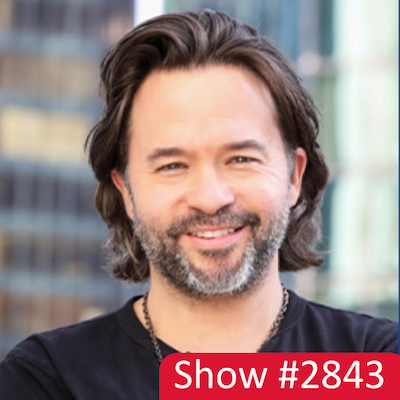
09 Aug August 10, 2026 – Acely Ron Schneidermann and Nushama Jay Godfrey
OPEN – INTRO 1
00:00 In the AM, broadcasting from AM and FM stations around the country. Welcome to the Small Business Administration Award-winning School for Startups Radio, while we talk all things small business and entrepreneurship. Now, here is your host, the guy that believes anyone can be a successful entrepreneur, because entrepreneurship is not about creativity, risk or passion, Jim Beach.
OPEN – JIM BEACH
00:20 Hello, everyone, welcome to another exciting edition of School for Startups Radio. Thank you so much for being with us here today. I greatly, greatly appreciate it. We work really hard to do this. We do it for free, and just throw it out there and hope that you learn from it and enjoy it, enjoy it enough to learn from it. You can’t learn if you’re not interested and just turned it off, right? So we work really hard to keep the energy high, the questions fresh, and the guests great.
01:01 We have a fantastic show for you today. First up, Ron Schneidermann is with us very, very successful entrepreneur. He’s built a couple of websites that you may have used. Actually, three. He built the largest ski site or website for ski tickets, built AllTrails, which is the number one outdoor community in the world. And recently he has just taken over Acely, which is an SAT preparation company. Very, very impressive career. And I can’t wait to meet Ron and introduce him to you. After that, Jay Godfrey is with us, equally amazing career.
01:44 Jay had an incredibly successful career in fashion, was selling at Neiman Marcus and gave it all up. To sell psychedelics. I know how that sounds. Anyway, I believe here that I will talk about anything that’s legal. And you may not agree in selling psychedelics. I don’t have a problem with it. And if it’s legal, I will talk about it and try to show you how to use that business model to your advantage to learn from it. And so even if it’s not legal in your state, that you may learn and maybe it’ll be legal there soon.
02:29 Anyway, great show, thanks for being with us, we’ll get started in just a second. Really need you to go buy the real environmentalist. It was a finalist for indie book of the year in its category. It’s a great book talking about how us environmental. I sorry, us entrepreneurs are saving the world. We’ll be right back.
THE REAL ENVIRONMENTALISTS AD
02:55 Introducing the real environmentalists. The bold new book by Jim Beach. It’s not about activists, politicians, or professors. It’s about the entrepreneurs, real risk takers, building cleaner, smarter solutions, not for applause, but for profit. The entrepreneurs in the book aren’t giving speeches. They’re in labs, factories, and offices, cleaning the past, and building clean products for the future. The real environmentalists is available now, because the people saving the planet aren’t the ones you think. Go to Amazon and search for real environmentalist. Thank you.
INTERVIEW 1 – RON SCHNEIDERMANN
03:22 We are back and again. Thank you so very much for being with us. Very excited to introduce another amazing entrepreneur. I love some of his sites. I actually know them. Please welcome Ron Schneidermann to the show. He is the CEO of a new company called Acely, which is an AI powered education technology platform helping with the SAT and the ACT that our, let’s see, sophomores, juniors and seniors have to deal with, I guess. Is it is earlier sophomores now, Ron? It is. Yeah, they’re starting to get fresh from here now.
03:59 Oh wow. My kid’s a software. Trying to calculate if he’s going to do it. Prior to Acely, he was the CEO of AllTrails, which is the platform that I mentioned that I had been, I had used. It’s an incredible walking trail platform, just like you would expect. He grew that to $600 million company. Very impressive. Ron, welcome to the show. How you doing? I’m doing well. Thanks for having me. It’s our pleasure. Tell us the AllTrails story real quick. Sure. Yeah, so AllTrails is a platform for helping you find trails all over the world, weathers for hiking, mountain biking, backpacking.
04:35 And I took over the company. I didn’t start it from scratch. I took over for the founder back in 2015 when it was a 6 person company doing about half a million in annual recurring revenue. And over the course of about 10 years, grew it and scaled it. The world’s largest community of outdoor enthusiasts, over 100 million members of the community, millions of subscribers, over $100 million in ARR, and Apple’s 2023 App of the Year. So impressive. We used the app. I remember exactly what we were doing now.
05:11 We were in Cashiers, North Carolina, which is way up in the mountains and sort of the Appalachian Mountains, and we wanted to see how many great hikes were within there for a promotional piece that we were doing. And so we use AllTrails to calculate that and then quoted you. Oh, that’s great. Bet you hadn’t thought of that used. I have not. It’s part of the Cashiers County, or no, what’s it, uh, Franklin County, Chamber of Commerce. They quote you. I think that’s who it was. That’s fantastic.
05:46 I’ll look that up Yeah. I was also able to find all of the hikes that involved waterfalls, which was, uh, you know, you’ve got to go see the waterfalls. What they’re there for. All right, so why’d you leave there? You know, alien company is funny, right? Um, the things that you’re good at or that give you passion, you ultimately have to let go of. And so a big part of the AllTrails growth story was growing and scaling the team and I’m a big believer in bar raisers.
06:19 Um, I think one of the biggest growth unlocks we did was it sounds unsexy, but um, process optimization. And really, you know, this is all through the lens of how do we do more faster? And so over the years, you know, you hire Chief product officer, chief marketing officer, chief technology officer, and if you’re hiring bar raisers, if you’re hiring really A-level talent, you have to give them autonomy and agency and, you know, you work with them, but you kind of have to get out of the way a little bit because ultimately the CEOs, we don’t scale.
06:58 And so, Over the course of the almost 10 years there, I found that where I spent my time, the energy, uh, day to day, which is it’s just different, you know, and and, It was a really strange thing. If I’m being honest, um, it was a really strange process to kind of accept and understand this where, you know, on the one hand, I can love, deeply love the product and the team and the mission and the space and using it myself on the weekends all the time.
07:32 All those things can be true and then at the same time, acknowledge that, you know, I don’t really love my day to day anymore. Um, I was just spending all my time with legal and HR and the investor community, things like that, and I wasn’t really in the trenches building anymore, which is where my passion is. And so, It took a while.
07:56 It took about a year to kind of realize, you know, maybe maybe it’s okay that, uh, my my time here is coming to a close and I’ll land the plane and hand the keys over to someone else and then go figure out what’s next for me. And how long did it take you to find something new? I did a sabbatical. I took a 7 month sabbatical, which was glorious, and I cannot recommend if any of your listeners are able to do. I really cannot recommend strongly enough how, how, uh, meaningful and powerful that experience was to just take the setback.
08:38 Really rethink, all right, you know. Now that I’ve shared this ultra identity, who am I? What kind of, you know, what what brings me joy, what part of the company’s life cycle and stage of growth give me the most joy and energy and where do I want to spend my time? And I realized with, um, I kicked the tires on being a VC or maybe some private equity stuff and, you know, maybe it’s like a one to 9 thing rather than going back in the arena, I’ll help the next crop of up and comers.
09:14 But with all this AI stuff going on. It’s just such an incredible time to be building right now. It really is unlike anything I’ve ever seen. And so I said, you know what? I got to do at least one more, one more time in the arena, going as a builder, but I, and my, my whole background is consumer technology. So it was like, all right, consumer tech, AI native, but it had to be mission driven. And that’s really, I think that’s a missing piece in a lot of what’s going on with AI.
09:50 And as a, I have a 3 kids, my oldest is a, 17, she’s a rising senior, and I have a 14 year old and a 10 year old, and I see a lot of what is being unleashed in the world. You know, there’s there’s apps out there where they can take a snapshot of their homework and it just spits out an answer. Right? It’s like, the world’s not better with that. We don’t need that. And so I spent a lot of time thinking through. What does AI for good look like?
10:27 And, um, You know, I’m a big believer in the world, uh, the universe presenting opportunities and it’s just kind of up to us to to be open to seeing them and. Ultimately, that’s what happened and I landed at Acely. Landed? So I’m not a zero to one guy. I don’t like doing it. This is my fourth startup now, and my first startup was from scratch, and after 9 years there, again, looking back, what brought me joy? It’s like, you know, I really hate that zero to one phase because it’s just busy work.
11:02 You’re just trying to like get, you know, how do I take a payment online or how do I set up this bank account, whatever? I like scaling things. I really like, um… I really specialize here, not from zero to one, but I don’t like going from 10 to 20. I just want to go from one. 5 to 9.67. I like one to 100. I like one to 100. So, you know, I hear you, though. But I think, you know, you got to play your strengths.
11:36 Good, you know what you’re doing? Exactly. I mean, I have I have a strong sense of self and what I’m good at, what I’m not good at. So after AllTrails, same thing is like, all right. I don’t want to start something from scratch because, yeah, it’s not fun for me. I like scaling, so they want something with like, again, it’s a product market fit. It’s got, you know, to be clear, when I took over AllTrails, it had about half a million in sales a year, right?
12:09 Like it wasn’t big by any stretch, but it wasn’t nothing either. And so, um, It was one of those things where I was reaching out to a lot of VCs and private equity firms that do consumer tech. And one of them, it was just like this perfect, like, confluence of things where the founder had just transitioned out. It was an education technology, consumer facing, and as soon as she said, you know, then it’s called Acely, I stopped in my tracks, it was like, hey, you’re not going to believe this.
12:45 My daughter, the right after mentioned rising senior. I’d been using it for a year before I even got there, before I even got to the company, she had been using it. And it raised her SAT score 150 points from a 1390 to a 1550, which like dramatically changes, which colleges are in play for her, right? And so this product is already in our home. My wife and I knew it. We loved it. You know, it was like part of our vocabulary every night. I can’t, have you done your Acely yet?
13:22 And so, When the opportunity presented itself to take it over, I just leapt at it. Who was the founder there? Was it a young college kid that got $$6 million for his, uh, school, uh, not loans, but college tuition. She she was she went to Stanford. I was thinking about. Okay. No, but she did not drop out. She actually did graduate, so it’s not the totally cliched Stanford dropout story, but, um, no, and, you know, she had she had done some amazing work, but startups are hard, started so hard.
13:57 Okay. It’s not the kid that was on Shark Tank. Okay. So it was, uh, I found Vivian Shen. Vivian. Exactly. Okay. It’s a, I was thinking that it was also something else helping get scholarships, but it’s not that. Not yet So it helps with SAT training and ACT. How does it make money? It’s a subscription business. So we have a monthly, quarterly, and annual plan. And your daughter found it without you and came to you and said, hey, give me a credit card. No, this one actually I did find it.
14:31 I was advising an an edtech company in the UK, and I was just complaining one day that my daughter’s so smart. She’s so smart. She’s so good, but like a lot of teenagers, she just, you know, was, was. Not finding the time to do SAT studying. And we tried the, we tried tutors. We tried, you know, the Kaplan books and Princeton Review books that you and I use, you know, coming up, like they haven’t changed much. Hated them, hated them. And so finally I was just like, I don’t know what else to do.
15:09 Um, and this, uh, the company I was advising though, like, you know, there’s this startup. It’s kind of taken an AI approach. It seems pretty like adaptive personalized 20 minutes a day is what they say. And so I was like, hey, kiddo, we got nothing to lose here. Let’s try this out. And um, she loved it. I was totally convinced. I knew. You also did Liftopia. I forgot about that. [unclear phrase] Liftopia. Nice, yeah. You know what? The hell with snow skiing. They’ve made it so expensive.
15:43 You know, they can’t go to $$250 a day is pretty much average now, isn’t it? It is. It’s awful. It’s just pricing families out. So rough. So I went to Middlebury. In 1986, 85 to 89. So the 86 winter. Ron, we got for $50 access to all the ski slopes in Vermont for the year for $50. And then in the summer, the golf courses, $50. I’m sorry, I talked over you. I didn’t hear what you said. What’d you say? Oh, just saying those days are long gone.
16:17 That’s what I’m saying. At Middlebury, you could buy a season for the state for $50. And so when you come to me and say $250 for seven hours, you know, assuming your kid doesn’t, you know, send a ski down the hill without him, you know? Just the hell with it. And then I also took kids skiing. There is nothing worse than taking kids skiing. Um, you end up with one kid who’s got one ski under the lift and one ski at the top of the mountain and one kid with one ski at the bottom of the mountain.
16:56 I just, I remember when my parents took me to learn to ski here in Atlanta, there was an outdoor place with the grass in the pebbles and they would, you know, shoot the water on it every 30 minutes. And my mom crashed into one of the instructors and then broke her arm, and then Dad sued, and then they went out of business. And so they sent us to Vermont to learn to ski, you know, with all the ice and everything. Um, I can’t pay $250 a day.
17:29 Can you? What are your thoughts? Well, the first time I took my now 14 year old skiing when he was about three and a half. Um, I paid like $150 for one of those beginner packages lift ticket, lesson rental. And he didn’t even last 90 seconds. It wasn’t even 90 seconds before he’s like, I’m done. I’m not doing it. And we just sat in the lodge the rest of the day. So I love winter sports. I love winter sports. The, uh, the ski industry though. Um, You know, it’s got its challenges.
18:06 And, you know, so it’s been almost a decade of my life trying to make it more affordable, more accessible, trying to bring more entrance into the sport. And it was, it was a worthy cause, but, um, Man, those headwinds are on consolidation, things like that are very real and very strong. And I don’t think consolidation has been good for the industry. I agree. Is it isn’t the lack of competition, why the prices are so high or does it really cost 250 days to operate a hill?
18:40 That’s got grass. Yeah, they’ve got their challenges, insurance costs, and snowmaking, stuff like that, and consistency of weather, but the other reality too is they make 50% of their revenue from on-mountain spend, right? All those overpriced hamburgers and beers and the rent, the lessons and rentals too. So, you know, there is something to be said about treating it more like the cruise industry where sometimes, you know, You lower the barrier to entry because then you know you’ll make it back once they’re there. And that was really the concept we were trying to bring.
19:16 But again, consolidation happened and now everything’s all about the, uh, these season passes, uh, so they can lock in their revenue during the summer. But again, I don’t think it’s necessarily been that good for the industry on the whole. Well, Middlebury College operates the Snow Bowl, which is, I think, 27 runs and 5 lifts, and they operate that out of the college revenue as part of the Phys Ed department, you know? And if a college can throw off enough money to operate a medium-sized ski hill.
19:51 Then my God, these companies in Aspen to be able to do it. I mean, that’s, you know, I know what the budget for the snowball is. They show it to us every year and good grief. So anyway, back to Acely. Uh, when did you come in? What revenue point were they at when you entered? I came in almost a year to the day, actually, last August, and Acely was doing $7 million in revenue at the time. Quite a bit. Yeah, not nothing.
20:23 Like I said, I don’t like the zero to one part. Like give me something and then I’ll come in and try and scale it. So how have you added AI to a simple SAT test? This is what I think is really cool. Right? So, The, the, Objectively speaking, the best. Guidance you can get today or historically is then from a tutor, right? Because a tutor, they see you as a holistic person and student, what your strengths are, what your weaknesses are, what kind of energy you’re carrying in for the day.
20:59 Are you, you know, activated and into it or not. And they’ll adapt and personalize your study plan and really be with you on the journey. And I’ve been sitting in, These tutoring sessions with my daughter and like really watching this and, you know, sometimes they’re great. Sometimes they’re, they’re not, but my, my overarching uh, responses and you know what? Like this is actually a great use case for AI. And so we use, what we do at Acely is, we have expert-curated content. So our content is being produced by educators and we’re actually announcing next week.
21:37 So I’ll tip my hat on this one. Um, a formal partnership with the ACT. We are a preferred test prep provider. We have their content, the official test content now in our system. Why, thank you. Thank you. Um, and then we use AI to underpin the technology. That can provide that same level of personalization and adaptation and really make it this fluid dynamic approach to studying instead of those rigid, you know, books and some of the traditional, you know, more traditional online programs, things like that.
22:12 So we’re trying to do the best of tutoring, but at a fraction of the cost to make it more accessible for everyone all over the country. What is the price point? It’s as low as 50 bucks a month. Okay. And so the AI tracks you as an individual. Yep. And it adapts your study plan based off of your strengths and weaknesses. And the whole goal is to focus on those specific areas that are weighing you down, that are weighing your score down. You don’t have to spend time on stuff you already know or, you know, that’s just not as impactful.
22:49 And so that’s where the 20 minutes a day efficiency piece comes from because we can just 0 in specifically on those score anchors that are holding you back. The SAT has come back in style, hasn’t it? Wasn’t a lot of schools were getting rid of it, but aren’t schools finding out that they actually needed it? Yeah, the pendulum, it’s wild to me. Academia is not exactly known for moving quickly, but how, you know, 5 years ago, the narrative was that.
23:21 Tests were inequitable, and by removing them, we would be, uh, you know, making it more fair and accessible for everyone, but instead what happened is that they’re getting these students in there that just objectively aren’t ready. And so it started with Dartmouth and a bunch of Ivies and now it’s happening all across the country where, They’re recognizing that, um, you know, there has to be some objective universal measure because, because grade inflation is real, GPAs are inflated and, you know, your personal statement’s great, but it’s not a predictor.
23:56 So stupid. I won’t go that in our college field these days. I won’t go that far myself, but I will. I taught at Georgia State for 10 years. And that was 15 years ago. And during those 10 years, the students went from capable to having questions and trouble with, How many minutes in a quarter of an hour? They couldn’t answer that. You know, I think there’s there’s some fair objections out there. Like, are we… Are we readying our kids for college? Right? Are they coming in equipped and ready for the rigors of college?
24:33 And I think it’s even worse without a, again, like an objective baseline score from that can only come from a standardized test, like the SAT or the ACT. Are you allowed to use a calculator during the SAT? You are. They have this online tool called Desmos that you’re allowed to that you’re allowed to use. Good grief. All right. So what are your goals now with the business? Starting at 7 million. You’ve got a lot of the growth already kicked out. I like that zero to one because you get that early, easy growth.
25:09 Now you got the hard growth. How are you gonna get it? Yeah, I think, you know, continue to improve the core product. Um, A lot of it is just really marketing, you know, and I’d say for startups today. That’s kind of the hardest piece right now. There’s the product market fit. Are you building something that people want to pay for? And then there’s the product channel fit question is, uh, can you bring this out to the masses in a way that’s, you know, more affordable than, uh, what you’re getting per transaction, right?
25:46 And so I think that’s that’s the area we’re focusing a lot on right now is how do we bring this to the masses in a way that’s efficient and affordable. And then from there, there’s just so much opportunity to expand it. I mean, You know, this, this, um, transition from high school to college is, it’s, it’s something a family goes through. You know, and there’s a lot more to it than just the SAT or ACT score. That’s just one.
26:17 It’s like the entry ticket, you know, it might be what like opens the door, but there’s so much else involved in financial aid and scholarships and the essays and tracking the colleges and what are your. Target schools versus your reach schools, versus your your stretch schools, and so I think there’s a real opportunity for us to build out. Um, in in that environment and really focus on, um, you know, becoming a household name for for families that are going through this transition from high school to college.
26:51 Well, you expand into other products, ninth grade algebra. I don’t know about general education per se. I feel like the big AI companies are all. In a bit of an arm face to do that, like open AI, anthropic, Gemini. They’re all going to be going to general education. I do like this specialization on test prep. But I think there’s a question in front of us around, you know, after we, you know, get a little more traction, um, on the high school front is, do we go after, you know, then you have the grad school ones, right?
27:29 The GRE, the GMAT, LSAT, the MCAT, there’s professional certifications. Uh, there’s so many different areas we can take it, but, you know, as every entrepreneur, entrepreneur knows, um, You know, the single biggest trap in front of all of us is lack of focus. And so for right now, just saying laser focused on this high school to college use case. But the GMat is so shiny. It is. It’s tempting, but, you know, you think about the number of years between when someone takes the SAT versus the GMAT.
28:03 Um, it’s not exactly like we can keep fishing in that same pond. You know, it’s a totally different customer acquisition motion that we’d have to figure out. And again, it’s there. It’s tempting, but got to stay focused. I remember perhaps I don’t really drink. I, you know, even when during college and stuff, but the probably the drunkest I ever got. I woke up the next morning. I don’t remember. I guess I was just too drunk to sleep and my roommate said, Jim, don’t you have the MCAT this morning?
28:38 That’s when I took the MCAT, [unclear phrase about being extremely hungover]. I didn’t do. Got a perfect score. No way. Yeah. But I was not that strong with the SAT. I… Went to college when I was 17 and a young 17. And so I did it too early. I really should have been a year back or maybe even 2 years back. I had friends that were driving and I still didn’t have puberty yet, you know? Well, I’ve known you for all the 20 minutes out. I feel like you’re doing pretty damn well for yourself.
29:15 So, you know, wouldn’t be too hard on yourself. Well, I caught up eventually, you know? I’m reading at a 27-year-old grade level now. Good job. At least you’re reading books. That’s great. That’s right. Well, we gotta read books, people. Got to read books. Got to read books. Ron, fantastic job. Love you. How do we find out more? Get a lot, find out, you know, get in touch, get some Ace Lee, all that. Yeah, I mean, so any anyone who’s got a high schooler that’s seen about college in the admissions process, go to acelee.com.
29:53 Um, I am not on social media, so I can’t give you any handles or anything like that, but I am on LinkedIn and I’m fairly certain I’m the only Ron Schneider and on LinkedIn, so you can find me there. Fantastic. Ron, thank you so much for being with us. Great stuff, and we’d love to have you back and watch the company grow. Thank you so much for having me. This is fun. And we will be right back.
INTRO !
30:23 Well, that’s a wonderful question, actually. Oh, my gosh, I love the opportunity to do this. Thank you, Jim. Wow, that’s a great one. You know, that is a phenomenal question. That’s a great question, and I don’t have a great answer. That’s a great question. Oh, that is such a loaded collapse. And that’s actually a really good question. School for Startups Radio. 30:45 Wow, you sound like a well.. An emotionally well-adjusted guy. Sounds good. I won’t cry. I’m so much stress. You have no idea. I’m dying of stress. If there were only a solution to help me not be so stressed. Well, if I can think of one by the end of the interview, I’ll make some suggestions.
INTERVIEW 2 – JAY GODFREY
31:01 We are back. Again, thank you so much for being with us. Please welcome Jay Godfrey to the show. He is co-founder of Nushama. I think I said that, right? It’s a wellness company, which is advancing physician-guided psychedelic therapy. Yeah, you heard that right. It is designed to help with stress, trauma, anxiety and create personal growth through innovation. It is something that he has been studying, obviously, for quite a long time. He had an experience that led him to this. We will get him to tell that story.
31:36 He’s been doing this after an amazing career in fashion. He was the founder and CEO of a brand called Jay Godfrey, obviously named after him, but it was sold in Saks Fifth Avenue, Nieman, Marcus, Nordstrom’s Bloomingdale’s. You don’t get any more prestigious than that. It was worn by celebrities like Jennifer Lopez and Viola Davis and Laverne Cox, just some of the biggest stars out there. Pretty impressive. And before that he worked at Citigroup. Wow, what a diverse career. Jay welcome to the show. Thanks for having me.
32:11 Looking forward to sharing what I’ve learned over the last couple years in this wild and emerging industry. Why’d you quit your own fashion brand that would seem like the pinnacle. You know, everything in my dreams in the fashion world came true, except when it came true, it felt kind of empty. You know, I always dreamed of being these big retailers like being Marcus and Nordstrom and dressing those celebrities. That was seemingly the pinnacle, as you say.
32:40 But what I quickly realized was that, you know, underneath it all that was just a foreboding, a fear and this general sense that, you know, I wasn’t good enough. I had what I would call mild anxiety, wasn’t excruciating, but it certainly wasn’t the life I wanted to live. And so I knew, um, after going to therapy for a couple of years, if the, The joy that I was after the freedom that I was after wasn’t something that I could get from the outside through a celebrity wearing one of my dresses or a retailer buying my collection.
33:19 Maybe you needed to hit on more models. No, that apparently didn’t work so well either. You’ve got great hair, Jay. Well, thanks, thanks, but you know, I’m 5 foot 7 and even with a ladder, that wouldn’t have worked well with models. But, uh, you know, in all seriousness, um, I’ve actually been, I’m, I’m 46 years old, but I’ve been married for 20 plus years. So my entire fashion career, I was married and as, as on paper, as, as exciting as that model world looks, and they certainly are beautiful, it wasn’t, uh, that wasn’t for me.
33:57 I hear they’re not as smart as some girls might be. You’d be surprised. Some are. Some are, but I always say don’t judge a book by a cover, although that’s not my saying. What, tell us about the transition period and what was going on then that was kind of leading you toward this. So leaving the fashion industry was actually a long time coming for me. A lot of people look at it as this glamorous existence, but behind, you know, the beautiful dresses and the celebrities and the glamorous parties.
34:32 There’s an underbelly and the underbelly is a brutal work schedule. You know, you’ve got to be on your game 12 months a year because you have to create 12 seasons a year. That’s a lot of creative pressure. Um, then you’ve got this kind of whole manufacturing side of the business. We made our products in China and, you know, having to fly out there every couple months and deal, deal with uh, societal and cultural norms that were completely foreign to me. And so it was, it was very challenging and it was very stressful for me.
35:09 And I ended up going to therapy, talk therapy. Uh, for about 3 years, starting in about 2015. And my therapist was great. She really gave me a forum to talk about, um, my anxiety to talk about my stress, but my ego was so intact. And what I mean by that is I was telling my therapist things about me that made me look good, but they weren’t necessarily the truth. And so I kept on doing this every single week for 3 years, 52 weeks a year, you know, for 3 years, I think. You knew that?
35:47 Uh, I don’t know. I don’t know. You know, I, I, I recognize that a lot of therapists enjoy having a constant, steady stream of the same patience, but, um, I was paying $300 a week or whatever it was. And I recognized that for 3 years. Wow. Spent a lot of money and I wasn’t materially better. I mean, I had some coping mechanisms. Uh, you know, some strategies you could call them, but it wasn’t better. I wasn’t, the parts below weren’t fixed.
36:19 The, and I didn’t know anything at the time of a childhood trauma and I didn’t know anything about the, you know, kind of how the ego develops in a Freudian way. And, uh, I was in this professional organization, and this guy who was 20, 30 years older than me was telling me about a book that I read called How to Change Your Mind, by Michael Pollan. And Pollan is a botanist or a writer on botany, but he’s also a nutrition writer.
36:51 And um, but he wrote his latest book on psychedelics and how psychedelics are the future of mental health, for treating depression, anxiety, and PTSD, and even addiction. And I read it and I was so fascinated by it, but I never really thought much about it being a logical fit for me because I’d never really done any. Substances of any sort. And I was pretty goody goody 2 shoes, even though I was in the fashion industry. Maybe that’s why I didn’t fit in. But, uh, I was introduced after, you know, through this professional organization to, uh, shamanic plant medicine.
37:32 What all that is, is to say, you know, you experience these plant medicines in a ceremonial group. Ayahuasca? Ayahuasca is one form of plant medicine, but I didn’t start there, nor do I recommend anybody does. And you should know, at least in the United States. Most in most jurisdictions, these are illegal. I do want to, I do want to mention that. But where I did it, it was, it was a legal jurisdiction. Uh, and and I experimented with plant medicine and what I found was I saw All of my garbage.
38:07 And maybe not all, but a lot of my garbage. And I saw a lot of the stuff that had happened to me. Not from a victim mindset, but in a way that really gave a lot of clarity to me as to my belief systems, the things that trigger me. And there was a point just about June 2020. It was kind of right in the middle of COVID, um, the whole world was shut down. People will wash in their groceries and triple masking and locking themselves down and, you know, the whole the whole COVID stuff.
38:44 And somehow in June 2020, despite the fact that nobody was wearing dresses at that time, The fact that my number one customer, Neiman Marcus, had declared bankruptcy. And the problem that my business was at the time going down the tubes, somehow I was completely okay. And not only was I okay, but I was better than ever. And it was at that point in June 2020 that I said, there’s got to be a way to bring the best of these kind of plant medicine ceremonies. Into a legal medically supervised framework.
39:19 And that’s what I did. I fundamentally, you know, made it my mission to go partner with a doctor, um, look at which psychedelic medicines are legal. Currently the only ones are ketamine or ketamine related. And uh, yeah, and so here we are. [unclear phrase] Sure, absolutely. And it’s it’s, uh, it’s great for mental health. It’s great for, um, you know, understanding the underpinnings of your depression or anxiety. So it’s incredibly therapeutic, and the results are outstanding. Didn’t find that at all. Oh, you tried it? Yes.
39:54 Did you do integration? Well, I was on it, but afterwards, I didn’t… My life still sucked at that. Well, what was the context? Did you do it in a medical setting or did you recreationally? With a doctor, it was prescribed and everything. Insurance paid for it. Interesting. Okay. You know, look, I will say, and this is just like any drug, not every drug or medicine is for every person. So if… I enjoyed it. You know, it was a fun little ride, but afterwards, I didn’t, You know, I was still crying afterwards.
40:31 Did you do integration? Integration is a process where you work with a therapist both before and after each treatment kind of makes sense of, in our opinion, that’s the most important part of any psychedelic therapy is the integration component. No, I didn’t even hear about that. That wasn’t even offered. Got it. Got it. Yeah, so you’ll, the studies have, without diving too deep into the data, but studies have shown that if you administer psychedelic medicine on its own, you’ll have an experience like you had, which is it could be euphoric, it could be fun.
41:08 It could be, um, Emotional. Uh, but without a trained therapist or integrator or facilitator, they’re called different things at different places. Um, To help you make meaning of it. It’s very, very difficult to have a successful outcome. Well, let me tell you the rest of the story, Jay. I was sitting here thinking about it. The physician’s wife wandered in. And I was like, you having a fun time? I love it. She obviously had had [unclear ketamine reference]. The receptionist had done it. The. I have a feeling that the office kind of just had a fun Friday.
41:46 You see what I’m saying? Yeah, look, I think it sounds to me, I’m not sure. Uh, I can’t, this is not a, this doesn’t resonate with our practice at all, but there are, let’s move on. So anyway, how did this lead to Nushama? We still haven’t gotten to Nushama yet. Yes. You’re telling us the story. In June 2020, I was resolved to start Nushama because I wanted an opportunity to offer what I had experienced with plant medicine to people with depression, anxiety and PTSD.
42:20 And so a very, very good friend of mine from Canada, Richard Meloff, as well as a doctor that I knew who was very, very passionate about this work, Dr. Steven Radowitz. The 3 of us joined together and founded Nushama. And we went out and raised a bunch of capital, uh, through family offices and and friends and family, and we really got our start. I got to interrupt. The family offices had no problem investing in psychedelics. We had probably 95 nos. And 4 or 5 yeses. Okay, all right.
42:55 [unclear sentence mentioning Eli Lilly]. I wish I wish we would have known each other 5 years ago. I would have made my life a little easier. But look, there’s like, like anything else, something that starts out as being, uh, on the fringe becomes mainstream. It’s like the Rolling Stones. At one point they were considered rebellious. Now they’re getting uh, they’re having tea with the Queen or King. So, psychedelics in the right context, medically supervised. Uh, when there’s an FDA approval associated with it, an insurance can cover, it can be very, very safe.
43:31 And it can help a lot of people. But when we started Nushama, the desire was we wanted to be a mental health or behavioral health clinic that specialized in using these molecules, we started with ketamine, as well as Spravato, which is the insurance-covered nasal spray. Um, and as more molecules, like psilocybin and 5-MeO-DMT and LSD and others become legal and approved for certain psychiatric indications. We will absolutely administer them in our clinics. Okay, I have to tell another story. When I was 18, 19, dating my very first girlfriend and she was very wealthy.
44:07 We went to her house. Her grandmother owned the top of one of the hotels, I won’t say which one. Um, 2 story penthouse at the top of a skyscraper hotel in Chicago. And the girl that I was dating was going to spend some time in Nepal and do a semester in Nepal. So we were talking about Nepal and the grandmother wanted us to see her slides from Nepal. So she set up her slide projector, and the screen was the white area in a $15 million Mondrian painting.
44:44 You know, one of those cubist paintings. Yes, of course. And she used the white clean area as her screen, and the first 10 or 15 pictures were nudes that she had done on her trip to Nepal in the 50s with some guy named Timothy Leary. I’ve heard of him. Can you imagine going to Nepal with Timothy Leary in the 50s what that trip was like? [unclear brief response] No. Look, I, you know, it’s funny, psychedelics. In today’s context, in yesterday’s context, almost are like 2 different.
45:18 Scenarios, 2 different 2 different ways of life. I mean, yeah, Timothy Leary in the 60s, uh, believes that LSD should, and until aside, and for that matter, everybody should have access to it. This is, of course, will before. Um, research and an FDA trial started nowadays, um, I am actually a big proponent against uh, the use of these molecules recreationally. I don’t believe people should, you know, if they do do them recreational, should be going to jail. But I really strongly believe that when used appropriately the medical supervision.
45:52 These molecules, uh, I can be very, very safe and very, very therapeutic, uh, and, you know, we’ve treated about 22,000 individual treatments in the last 5 years, and the results have been pretty astounding, very fulfilling to do this type of work when you see the results that we’ve had. So where is this legal? Where where do you operate? Yeah, so we’re right now and we have clinics in Florida and in New York. I’m 2 very, really? They were super strict there with that kind of thing.
46:27 Well, they’re definitely more of a conservative state, but ketamine, without giving you the whole life story, and ketamine has been legal since 1970. So ketamine is an anesthetic that they use on children, actually. Um, because of its safety profile, they use it as a pain reliever or as analgesic, um, in emergency rooms all the time. And so because of its incredibly high safety, uh, record. It’s approved everywhere in the United States.
46:55 When used in a nasal spray format, it is FDA-approved for depression under the brand name Spravato, and when used as an IV or as an intramuscular injection for all of these other psychiatric indications, like anxiety or OCD or PTSD, that is considered an off-label treatment, which means the FDA has approved the drug, but not for that particular indication. And typically those are not covered by insurance because they’re not on-label. Okay, so I interrupted you in the middle of flora. And then I, uh, Florida. So you said Florida and where else?
47:30 In New York State. Okay. With our flagship being in Manhattan. And how many locations are there and such? Right now we have 3 locations. Our flagship in New York is 18 treatment rooms and I believe it’s the largest psychedelic clinic in the world. Um, and we’re in expansion, though. We’re looking at other areas in New York and Florida and as well as expansion into other states because there’s virtually unlimited today. Oh gosh, yes. So, Did they come in and get a prescription? Can anyone just walk off the street and get a K?
48:09 No, no, no, no, no. So first and foremost, I’m not going to… I was about to say something stupid. I’ve edited myself for once. All right. Okay. So first and foremost, everybody who comes to Nushama requires a diagnosis of some type of mood disorder, anxiety, depression, PTSD, alcohol use disorder, uh, uh, OCD, stuff like that. Every single person requires a medical intake with one of our physicians and they have to be cleared for treatment. So there’s certain types of people who cannot. Physician, one of your physicians or any physician?
48:44 No, our physician has to approve, has to approve you based on a very, very strict set of clinical criteria. Well, it, you know, the truth is every doctor’s license is is at risk. Okay, good point, no, so… Right. You know, especially ours. It will not risk it just to give somebody, uh, who might it might not be clinically appropriate. It’s, it’s, we look at this strictly through the lens of is ketamine therapy, for depression, anxiety, or PTSD, clinically appropriate for this particular patient.
49:17 Typically, they’ll come to us because they’ve been referred by a psychiatrist or other type of mental health, um, provider, and we will go through each and every patient or prospect of patient’s medical history, family history, medication history, um, everything. And I’d say about 10% of the people do not get cleared for treatment for one reason or another, and then once people are cleared for treatment. IV ketamine, which is the off label treatment, gets 6 treatments over the course of 3 weeks.
49:49 And it is a full-blown psychedelic experience, but we pair these kind of very transcendent experiences with therapy immediately before and immediately after each in every treatment. And so it’s very, very safe. Um, You know, again, we’ve administered tens of 1000s of these and, you know, we’ve got a great safety track record and patients have done really, really well with it. Wow, I’m going to have to. Learn more about this. Absolutely fascinating. And so your normal LLC business is, you have to get any special licenses or as long as they have a prescription, what’s the legal world look, right?
50:29 So the medical practice itself is owned by a doctor. That’s the rules. That’s the, you know, so entrepreneurs like myself or like Rich Meloff cannot, we cannot actually operate or direct the medical practice. That has to solely be by the licensed doctor. Um, We have, from a structural perspective. Um, we’ll call the management services organization. So Nushama provides branding in space and finance and accounting and all the marketing to make to bring patients in so that they can be treated.
51:01 So from a corporate practice of medicine perspective, There are very, very strict rules, and we have to follow them in that structure. And so anytime you’ll see a branded medical practice, such as CityMD or Schweiger Dermatology or One Medical, for instance, any one of those would be in a similar structure where the brand does all the non-medical work and the medical practice, which is owned by a doctor, does all the clinical work. Fascinating. Unbelievable. I love this show because I get to meet people like you, Jay, doing things that I had no idea about and just absolutely fascinating.
51:39 So is this satisfying you in the way that dresses didn’t? Yeah, it’s interesting. I get that question in different forms quite a bit. And they say, what do you like better? Do you like being a fashion designer or do you like, you know, working in the mental health space? When I was in the fashion industry, so much of it was about image was about validation and and outwardly, uh, finding, You know, success. This is a whole different calculus. This is real, the treatment is really, really about finding safety and calm and stillness and joy from within.
52:18 And so inherently with me as I watch, you know, the 1000s of people who come through our doors, most of whom have been very, very successful in their treatment outcomes. It gives me an immense sense of fulfillment and purpose. And, you know, that that, Fulfillment and purpose was not there in the same way when I was in the fashion industry. Absolutely fascinating. How do we find out who or follow you online, get in touch, have our doctor send you our way, your way, I’ll love it.
52:52 Check out Nushama Wellness on Instagram. Um, Nushama.com, on uh, on the, on the worldwide web, as they call it. And, um, you know, you can, those are the best places to reach us. Tons of content. We have an amazing blog, um, that is very, very informative about the risks, the benefits, the pros, the cons, what to look out for. So that’s those are the best 2 places to find us. Fantastic. Jay, thank you so much for being with us and educating us on all this.
53:26 We’d love to have you back and watch the business grow. Thank you so much, sir. I appreciate the time. And you didn’t cry. I didn’t cry. I didn’t cry. You didn’t let me get into the emotional stuff, so I didn’t cry. I held you back, Jay. Yeah, you want one arm behind my back. We are out of time, but you know what we do. Right. We come back tomorrow. Be safe. Take care, and go make a million dollars. Bye now. Thank you. [unclear final word]
Ron Schneidermann – CEO of Acely
You know, the single biggest trap in front of all of us is lack of focus.
Ron Schneidermann
Ron Schneidermann is the CEO of Acely, an AI powered education technology company transforming SAT and ACT preparation through personalized learning. A seasoned entrepreneur, startup executive, and advisor, he has built a career scaling venture backed and private equity backed technology companies into market leaders by combining product innovation, data driven growth, and operational excellence. Before joining Acely, Ron served as CEO of AllTrails, where he led the company from a small startup into the world’s leading outdoor exploration platform. Under his leadership, AllTrails achieved rapid global growth, reached profitability, secured major growth investments, and earned Apple’s 2023 App of the Year recognition. Earlier in his career, he co founded Liftopia, the first digital marketplace and software platform for ski lift ticket bookings, growing the business from a startup concept into a $60 million company. He also led growth initiatives at Yelp Reservations, further expanding his expertise in digital marketplaces and consumer technology. Ron is recognized for his leadership in go to market strategy, product led growth, brand development, international expansion, and building high performing teams. A strong advocate for sustainable leadership, he encourages workplace cultures that balance innovation, creativity, and employee well being. At Acely, he is leading the company’s mission to help students unlock their academic potential through AI driven learning while preparing the next generation for success.
Jay Godfrey – Co-Founder of Nushama
The joy that I was after, the freedom that I was after wasn’t something
that I could get from the outside through a celebrity wearing one of
my dresses or a retailer buying my collection.
Jay Godfrey
Jay Godfrey is the co founder of Nushama, a wellness company advancing physician guided psychedelic therapy to help individuals address stress, trauma, anxiety, and personal growth through innovative mental health treatments. Inspired by his own journey after discovering that traditional talk therapy did not fully address the root causes of his stress, Jay immersed himself in the study of psychedelic medicine, working with physicians, researchers, and thought leaders to better understand its potential. That experience led him to help build Nushama with the goal of expanding safe, evidence informed treatment options while supporting the future of psychedelic care. Before entering the wellness industry, Jay spent 15 years as founder and CEO of the internationally recognized Jay Godfrey fashion brand. His designs were sold through leading retailers including Saks Fifth Avenue, Neiman Marcus, Nordstrom, and Bloomingdale’s, and were worn by celebrities such as Jennifer Lopez, Viola Davis, Ashley Graham, and Laverne Cox. Earlier in his career, he worked in investment banking at Citigroup. Jay is a graduate of McGill University and Parsons School of Design and brings together experience in entrepreneurship, fashion, finance, and wellness to help shape the future of mental health innovation.