
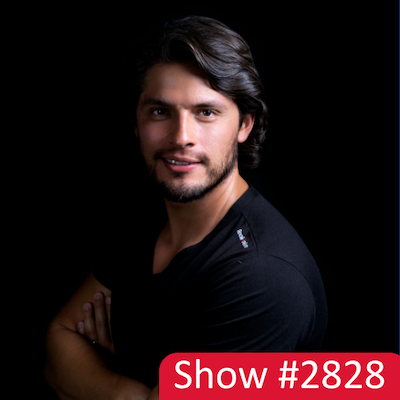
15 Jul July 15, 2026 – Wearable Integration Marco Benitez and Little Bit A-hole Danny M Goldberg
Intro 1 0:00
The AMS and Radio Network, broadcasting from AM and FM stations around the country. Welcome to the Small Business Administration award-winning school for startups radio, where we talk all things small business and entrepreneurship. Now, here is your host, the guy that believes anyone can be a successful entrepreneur, because entrepreneurship is not about creativity, risk, or passion. Jim Beach.
Jim Beach 0:26
Hello, everyone. Welcome to another exciting edition of School for Startups Radio. Two amazing guests. First up, we have Marco Benitez. He is in the wearable data business. He takes the data from all of our wearables combines it in a B 2b business. It is unbelievable what he is doing and how cool this is. It’s an amazing entrepreneurial story for you. And then after that, we have Danny Goldberg. Amazing story as well. Six get that six streams of income and a book out now with a provocative title, a little bit a hole. And so, how can we get a better show for you than those two characters? Right, it is a great show. I appreciate you being here. Tell your friends about it. Make sure you pay your monthly bill and your subscription fee for the show. Let’s get started right now, boy. I have a really cool story to share with you now. Please welcome Marco Benitez to the show. He is the CEO and co-founder of a company called Rook R O O K. It is a digital health company that takes all of that data that you have from your wearable devices and actually turns it into something useful that you can use. He used this information to help become a national Taekwondo champion, but more importantly, he used this data to find out that his father was having some health issues, and it detected a serious heart condition and helped him get back to health. Marco, welcome to the show. How are you doing today?
Marco Benitez 2:06
Doing great, James. Thank you so much for having me here. It’s it’s a pleasure, and thank you for the introduction too. It
Jim Beach 2:12
is our honor. My favorite card game as a child was Rook. Do you know the card game Rook?
Marco Benitez 2:20
No. What’s the what’s the answer in game?
Jim Beach 2:23
It’s sort of like Bridge, but it’s for stupider people. It’s a Southern card game that has its own deck of cards. You can’t use a normal traditional deck, but it’s a great, fun family card game. I’d say similar to Bridge.
Marco Benitez 2:41
I I’m gonna try it. I’m gonna try it. Definitely, have to
Jim Beach 2:45
play one. It’s a it’s a fun game. I’ll see if I can find a deck for you. It’s a you know very small Southern game. I don’t know if it’ll still be around. All right, tell us about the wearables and the problem that you saw with the data.
Marco Benitez 3:01
Yeah. it’s it’s very simple. What we learn in the industry is that basically a lot of wellness companies, also remote patient monitoring platforms, they were trying to integrate different devices. At the very beginning, they started with their wearable devices because some of them were approved to use as medical devices, were approved with by the FDA, so that was a big ramp up. So a lot of them were trying to integrate, but take a lot of time to make those integrations. What we realized is that they were not just looking for wearable devices; they were looking for medical devices, laboratory information, e-charts, medical charts. So for them, take a lot of time, like 20-four months, just to have the full integrations. You know, between the cleaning of all the data, and what we solve is exactly that. We solve those problems. So basically, we create an API. On our API, we have over 400 data sources between wearable devices, medical devices, laboratory information, e-charts. So instead of making all these those integrations in 24 months, just in three hours or right now with one prompt, you can integrate our API, which is just a code, in their own platform, and then it’s off. So 20-four months, and now three hours, or just one prompt, which is like a couple of minutes, and you can have access to all these devices. And now you can pull data, and we clean everything for them. So it’s very straightforward what we sold.
Jim Beach 4:37
That’s amazing, fascinating. Congratulations! I want to make sure I understand it. The API creates data that a developer would use in a new app. It doesn’t sound like I, as an individual, could use the data right off of the bat. Is that correct?
Marco Benitez 4:56
Right. What we do is we are B 2b So basically. If you have an app and you want you have interactions with your end users, right? Because you have let’s say like a wellness platform, and you want to engage with them, you want to learn more things, right? So you have to build a connectivity between your platform and your end user via any device, any e-chart, any depending on type of things that you were looking for, so I’m that connection. I am in the backend. I am like a pipe. I connect you with your end user, and then I deliver to you all the data. Of course, the end user has to approve everything, and then you will show him exactly what you need to show. Like, hey, you have really bad habits, and you need to sleep more. You are really stressed. You have a blood, very bad blood pressure. You have a glucose levels, like I don’t know, or you are doing really well. Let’s improve what you have already. So that allows you to have more tools to to engage with the end user.
Jim Beach 6:01
All right, fascinating. And then, who are the companies that are actually buying this and using the integration? Are you allowed to say who’s your customers?
Marco Benitez 6:09
Yeah, yes, of course. We are again. We are B 2b Our sweet spot it’s on the digital health space. Everything around with chronic disease management. Everything around with I don’t know medications or remote patient monitoring. That’s our sweet spot. Of course, we work a lot with longevity platforms that are doing with peptides or GLP ones and want to improve people’s lives. That’s our sweet spot.
Jim Beach 6:41
Okay, so I don’t know this space very well, but there’s got to be a limited number of companies-200 300 companies-that are doing this, right? So your target audience is very, very defined, right? You have a list of every single one of them already, right?
Marco Benitez 6:57
Yeah, well, it’s really big. It’s it’s it’s really, really big because also we work with hospital systems. We work with a lot of platforms that want to engage with the end user. A lot of wellness platforms. You can you can look in the app store and you will see 1000s and 1000s of companies that are doing and trying to solve a specific thing. So also big pharma is doing a lot of things with the with that information. So they have platforms to engage with the the patients. So they they have patient engagement. That’s the whole name of one like yeah exactly, and they are trying to engage with the end user or the patient with any specific drug, so there’s like a lot of use cases that you can use it. So there’s 1000s outside.
Jim Beach 7:51
Okay, absolutely fascinating. All right, so I could. All right, well, it’s just a great idea. How did you discover that this problem existed, that all of these independent companies were creating all of this data without actually providing the the integration. How did you discover that problem?
Marco Benitez 8:10
Yeah, we love to talk with clients. So at the very beginning, we we have our own we have a previous company. We create our own algorithm, our own wearable device, and we were working with the with the fitness clubs, and they were trying to engage with the end user, and they told us like, “Hey, I want to connect with them via their own wearable. So on our platform, we started to integrate different wearable devices, and we saw the huge mess of the data and trying to integrate all these devices, and then we integrate with the with the popular ones, with Apple watches, with Kolar, with Garmin on those days, and then one day, one big insurance company knocked the door and told me like, “Hey, that’s exactly what we are trying to do. We are trying to integrate different devices so we can engage and make different like under underwriting processes and trying to make premiums on our own life insurance policies. Is there any way I can use your platform, my own my own platform? And we said yes, there is one way. We have to create an API, which is again a code, and that’s how everything started. That was for me like, okay, this is an aha moment, and then I started to ask to other, you know, insurance and other hospitals if they were willing to pay for this specific thing, and they told us yes, we are trying to do so, and that’s how everything started, and then we, yeah, everything after that was a story. But yes, that’s how we we came
Jim Beach 9:49
to. Okay, and then how did you? Let’s go back in time and tell us the the story of of how you built it. It seems like this would be a really expensive thing to do because otherwise. Everyone would have already done it.
Marco Benitez 10:02
Yeah,
Jim Beach 10:02
tell us the build story. How you know? Once you had the idea, what’d you do next?
Marco Benitez 10:08
Oh my goodness! Was really complicated because at the very beginning we were like, okay, this is the future. We can see where everyone can use our API, and then we can clean all these data. So our backgrounds, we are biomedical engineers. So we have been building companies together from the last 20 years. So the first company that we built was an algorithm company for hospitals. That was in 2003 So we were always in the data space, always, always. So we were building algorithms. We were building, so we know how to start. But it was like it was more or less in a different industry because before we were more in the health, but you know, trying to engage also with the data with the patient. But it was a different data. But even though was now making trying or trying to do the same thing with the wearable devices, so when we took the opportunity, was like okay, let’s learn a little bit more about the wearable devices. Let’s try to identify what type of APIs they have, the SDKs and everything. So we built everything from the scratch. We started only the four of us, and then yeah, it was again trying, and then going with the client, trying to identify that’s exactly how they want to use the data, in which you know all the formats that they want to use it, what type of SDKs they were using. So it’s like a lot of back and forth with the with a couple of clients that we have on those days, and build the the whole product because everything starts with the communication with the patient or the one who has the problem, because that’s important thing. Approach have this big approach with those that are struggling with the problem, and now trying to fit what you have to build. And of course, if you have a vision, then you can start doing the next steps in your roadmap. But everything at the very beginning is just making the correct questions to them, so you can start building what you are trying to build. All
Jim Beach 12:18
right, how did you raise the money to do all of this. Did you have to hire programmers? Talk to me about the money in the execution.
Marco Benitez 12:28
Yeah, money is always. It’s not. It’s important. I mean, it’s really important at the end of the day. But I move. I’m from Mexico. I’m born and raised in Mexico. Now living in the U.S. But just to give you like an idea, I move, I sold everything in Mexico to move to the U.S. to raise the money. Basically, what happened? One of my first, in fact, was my first investor. He told me like, if you want to build something really big here in the U.S. and you want to raise the money, you have to move to the U.S. And I was like, okay. I talked with my wife that night, and with my kids, I have two kids, and I told her like, hey, we have to move to the U.S. if we want to build this big thing, and she told me let’s do it. So we start with the visas and everything was really fun, and then we into the US just to start talking with investors so they can see that we are building something here. We were in all these events and everything, so we raised the money with basically some letter of intentions, a lot of the first MVP of our product, and then the money was because we were trying to build something even bigger. Because the API alone is really difficult to build. You are using, you are making something that it’s going to be embedded in your in the platform of our clients, so it’s really important. The security is really important. How we are treating the data, we have to be HIPAA compliant, GDPR compliant, and so two different type of things certifications, which are really important. So, so that’s why we were looking for the money because we have to create. On those days, we had to create this strong, strong infrastructure, so now our clients can trust on what we have. So, so yeah, that’s how we built everything.
Jim Beach 14:32
Did you raise outside money?
Marco Benitez 14:36
When you say outside, what do you mean?
Jim Beach 14:38
From investors.
Marco Benitez 14:40
Yes.
Jim Beach 14:41
Okay.
Marco Benitez 14:41
Yes, we. Yeah, yeah. At the very beginning, we raised our pre-seed round was to milling.
Jim Beach 14:47
Okay. And are you still going on that round, or have you raised a subsequent round as well?
Marco Benitez 14:52
Yeah, subsequent round we raised then the seed round. But yeah, the pre-seed round was in 2020 Three, if I recall well, and then I see around two years, no, one year later or two years later.
Jim Beach 15:08
Okay, very impressive, very impressive. I’m confused a little bit though. You were the director of medicine for Roche, right?
Marco Benitez 15:19
Yeah, right.
Jim Beach 15:20
Roche is one of the largest, most successful pharmaceutical companies out there. Were you was that job in Mexico or was that in the United States?
Marco Benitez 15:29
No, that was in Mexico. Yes, exactly. We were building. It’s it’s a long story, but we were doing two things at the same time. We were building companies, and I was in in the big pharma industry, working for the big for clinical trials between you know phase one, phase four, and collage and respiratory, and I was the head of medical affairs. Yes,
Jim Beach 15:51
all right, absolutely fascinating. I I just love it. So you were very successful before you started the business. I mean, to be head of medicine for Roche is an incredibly impressive position. So, how much did your background and the connections you have contribute to your ability to get this far?
Marco Benitez 16:14
I don’t know. I mean, I mean, no idea. Honestly, we were building something from the scratch, and every single time it’s a different thing. And you have to open new new network with investors. For me, was the first time raising money in the U.S. Never raised money before, so it’s it’s create the network. Be good people. I think it’s be a nice guy trying to build something really cool, but was difficult at the end of the day. From other country, my background probably helped me. I don’t know, honestly. Maybe for if if the investor believe in me because of my background. Because I don’t know. I don’t know. It’s a really tough question to answer, but I think in some way it helps. I guess.
Jim Beach 17:08
Well, I think it would have to. I mean, it’s an impressive title, and it would make me want to do business with you. I mean, it just builds a lot of trust. So, so exactly how? Where are you now? How many employees do you have? How many customers? How do you measure your your KPI, and what are you allowed to tell us about where you are in terms of growth?
Marco Benitez 17:32
Yeah, in terms of growth, we are in early growth. We have over 100 customers. We have over every single month. We are receiving over 160 millions of data sets. So it’s a lot of data that we are passing through our API. Our biggest KPIs: How can we help those companies to receive all these data, clean data, so they can improve people’s lives because we are one part of the full chain of those companies, right? So yeah, that’s where we are. We are in this early growth. We are growing a lot every single month. We have new clients, and it’s beautiful. How many we are? We are over 40 people, mainly 70% of my team are data scientists and developers because our main goal is to build this big data health data infrastructure. So my again clients can do something credible with that information.
Jim Beach 18:42
Give us a story. Tell us the story of your father and how good data was able to help him.
Marco Benitez 18:49
Yeah, that was really interesting. My father, he he he was. I told him something about the wearable devices on those days. He was. I was using WeThings. We thinks is really impressive. I love all the wearables. I’m a geek. I love loops and the Auras and the Polars. I remember I was the first one to use Polar in early 2000s. I was using this Loop. They were using something in loop. It was impressive using only heartbeat and different type of things. But basically, I was using it, and and then these we things came. They were, I think, was the first one to start using ECGs. So my father, he was like, “Hey, this is really cool, and I was like, “Why don’t you try to use these with things? And he was, “I don’t know. Probably I’m gonna use it. Probably not. And I wasn’t, please, that try to use it. And he started to use that wearable, and then he tried the ECG and was something weird about the the. The the the the you know
Jim Beach 20:04
results
Marco Benitez 20:05
the results and was like okay let’s wait another week so we can review if that’s something that because the the the the watch is not working one week after same results and that’s when. Oh, hey, this is really weird. Maybe we need to go with the doctor. Well, two days later, he went to the doctor, and doctor said something like, “Hey, you have something in your heart, and that’s something that we have to take care. Was something really interesting because again, I think that basically when you have a lot of information, you can do something really. You can see patterns, even though that it’s not really accurate, or sometimes they are really accurate. You can really identify this type of issues, but you have to see the results. You have to. It’s not something that will take from one day to another. It’s something that will happen when you have a lot of information. So really help my dad. Now he’s he alive and he’s taking all the medications and he’s doing a lot of exercise, and and of course he’s using a wearable device so he can track himself basically in the heart and the heart rate beat.
Jim Beach 21:23
That is so cool.
Marco Benitez 21:24
Yeah, yeah, it was.
Jim Beach 21:28
Are we going to live to be 150 years old, 200 years old?
Marco Benitez 21:34
I think so, and I think we are not so far. A lot of small things are changing. You can see a lot of peptides in the in the market. You can see a lot of more people doing really exercising himself. A lot of people really trying to improve things with healthy things. Less people. people taking alcohol, which is it’s impressive. New generations doesn’t want only to take you know alcohol. Now new generations want they they they are more in the fitness space. So I think eventually we are going to be over there. My grandpa he has 90-seven years old, so my my family has a story of longevity. My my his mother lived 102 years. So again, I think this is something that is going to happen eventually, and yeah, maybe we will have also a Elon Musk over there trying to help us with that part.
Jim Beach 22:45
Should humans live to be 200 years old? You know, there is a system where we have old people, middle people, and young people. And how do we handle it if we have teenagers, their parents, the grandparents, the great grandparents, and the great great grandparents-is that right? Should we look at 200 years old?
Marco Benitez 23:13
I don’t know. Maybe yes. Maybe just. You never know. Technology will push more and more and more, AI will help us. Robots will help us. I think it’s it’s a matter of time. We can see over the time the how the evolution is. It’s becoming more interesting because I, if you go 100 years ago, people were dying less older, right? Yeah, 30-five, younger,
Jim Beach 23:45
old,
Marco Benitez 23:46
30-five, exactly. And now the average is in 80-570-five, more or less in men, 80-five in women. I mean, it’s the double. It’s the progression. It’s really interesting. I think yes. Eventually, we will achieve that. Probably, cancer is always something that we are trying to to you know to avoid and trying to identify the the result why we have cancer. There are so many things over there. I mean, I love that part, but we can go into the weeds, but it’s I’m going to become more technical. But that’s a lot of things that we still need to figure out. But now with these AI models, then you can do so many cool things, and to predict, eventually we are going to prevent everything. There’s a lot of institutions that are recollecting all this data, so they can eventually do a drug that can help you to identify those problems. Epigenetics-it’s really important, so you can try to identify those patterns. So again, the the future is going to be amazing, I believe. Well, that’s a night-a place in my mind is going to be. Amazing.
Jim Beach 25:01
Well, that’s a great line, and we will tweet that out, Marco. It’s amazing what you’re doing, and congratulations on the incredible success. We’d love to have you back to hear the story further in a year or so. How do we get in touch? Follow you online and continue to watch your cool story.
Marco Benitez 25:19
Yeah, you can find me all the platforms: LinkedIn, TikTok, Instagram as Marco Benitez, and my company is Rook. As you can see, my web page is tryrook.io, and please we would love to to engage.
Jim Beach 25:40
Fantastic, Marco! Thank you so much for being with us. I looked it up, and Rook is a card game that is out there and available, but it’s not very prevalent. There’s not much on there, so it looks like it’s a southern thing that’s dying. But I remember as a child having a ton of fun with it. I’d rather live with you though, and live to be 150. So amazing stuff! And congratulations! Thank you so much.
Marco Benitez 26:04
Thank you so much for your time.
Jim Beach 26:05
And we will be right back.
Intro 2 26:23
Well, that’s a that’s a that’s a wonderful question, actually, Gilly. Oh my gosh, I love the opportunity to do this. Thank you, Jim. Wow, that’s that’s a that’s a great one. You know, that is a phenomenal question. That’s a great question, and and I don’t have a great answer. That’s a great question. Oh, that is such a loaded question, and that’s actually a really good question. School for Startups Radio.
Jim Beach 26:45
We are back, and again, thank you so very much for being with us. I’m very excited to introduce another great entrepreneur. This one’s very impressive. Please welcome Danny Goldberg to the show. He is a very successful entrepreneur. Listen to this. He is the founder of Gold SDR. It’s a staffing and executive recruiting business. Crown Cloth, a luxury lifestyle brand. DLC Cards. It’s a sports collectibles business. Like Me app. It’s a dating app. Gold TM. It’s an ATM vending machine service. And author of a new book that I will talk about in just a second. Wow, how many streams of income do you have? And so impressive to be such a serial entrepreneur. The book we’re going to have a problem with this throughout the entire episode. The book is called a little bit of an a hole, and you see what I mean? It’s a very provocative title. I can’t wait to talk about it. Danny Goldberg, welcome to the show. How are you doing today?
Danny M Goldberg 27:49
Fantastic, man. Thanks for having me.
Jim Beach 27:52
Cool career, and love the title of the book. You obviously like to poke people in the eye. At what point did you realize you were just different from everyone else, just maybe it was 25 when you started your last first business or something, or when it was 12. What’s
Danny M Goldberg 28:08
it’s funny because you know you’re you’re right because my dad was an immigrant. My parents were both immigrants. He worked at Raytheon for 43 years, and we were told you know go to college, work for the man. That’s the way it is. And about when I turned about 30, I started to really lose my passion for for my job. And I remember walking into like a Chick Fil A after a doctor’s appointment. You know, on Thursday at 11, and I see all these people just sitting there, hanging out, working. And I’m like, I need that. I want that in my life. I want to be able to control my schedule much more, and so it kind of shifted into this now, which is-it’s not that my life isn’t busy; it’s just I’m able to control my time, which I think is just such a blessing.
Jim Beach 28:54
All right. So, what was your first entrepreneurial venture? What was the first thing you did outside of the corporate world?
Danny M Goldberg 29:00
So, in corporate, I was a chief auditor slash director of internal audit in a couple companies. And when you do that, you have to do training to keep up your certifications. Well, I’d go to training, and the training was just quite frankly awful, monotone, reading from the slides, not really learning or paying attention to anything. And I kept on thinking to myself, I can do this a lot better than these people. So I wrote some articles, built some credibility, and once I left my director of auto role in 2009, I wasn’t sure if I wanted to start up a business, but I knew I didn’t want to go back into corporate America. So I started calling some friends, calling some long-term colleagues, and lo and behold, they wanted some training, so got a couple of contracts. Was able to shift that into after a year and a half selling my company to another consulting firm and then buying it back in 2014. So that’s been kind of the main staple business is Gold SRD, which is staffing, recruiting, and development. But we really focus on training. We have 310 full day courses on a wide. Array of topics. I’ve got five other presenters, and that that business has that business feeds the kids, to say the least.
Jim Beach 30:06
I love it. I love it. Feeds the kids. You know that’s not required in every state. You can shop around for a better state. Just to say
Danny M Goldberg 30:16
it. I know, man. Teenagers, man. I’ll just leave it at that. Teenagers are. It doesn’t get easier. It doesn’t get easier.
Jim Beach 30:22
No, it only gets worse. They, they’re their most difficult. I think 20 620-728-2930, Round in then.
Danny M Goldberg 30:31
I’m not there yet, so I’ve got something to look forward to. I
Jim Beach 30:35
have kids. Listen to this, Danny. Born in four different decades. Is that or is it three different? I have kids born in. I’ll stick with three kids born in three different decades.
Danny M Goldberg 30:48
That’s impressive. Yes. Wow. I’m running the numbers in my head right now. Go ahead and say it.
Jim Beach 30:57
You can say it. I’m an idiot. You know, I have so many stories. I’ll be sitting there, Bill. You know, Christmas night, helping Santa, and I’ll look at it and go, “I feel this is. I feel so deja vu. And my wife would go, “You bought that exact toy 20 years ago for another kid, idiot. You know, that’s crazy. 20-715, and seven.
Danny M Goldberg 31:30
God bless you, man. God bless. I got divorced five years ago, and I’ve been dating a woman, and right away she’s like, “I’m done with kids. And I told her, “I said, you know what? That’s a good idea. I do not want to be 70 years old when my kids going into high school. I’ve decided that, so I love kids. I love I love what you’re doing. I don’t. That’s that’s a lot for me.
Jim Beach 31:50
I anyway. Let’s move on. I’m going to start crying. All right. So, what made you decide to write a book? And part two, why did you decide to give it such a provocative title?
Danny M Goldberg 32:06
So I’ve actually written. This is the fourth book I’ve written.
Jim Beach 32:09
Those others. No, no, no.
Danny M Goldberg 32:11
You’re fine, man. No worries at all. I wrote a book on accounting, internal audit best practices, where I was professional commentator about 15 years ago. Then I wrote two books on communication skills for auditors and finance professionals through Wiley, and I also wrote a kids book with my kids many years ago. But this one kind of took me out of my normal genre, to say the least, because it’s something that that I kind of struggle with on a daily basis, and I know a lot of people struggle with being too nice, being a people pleaser and focusing on other people’s needs versus your own needs, and you lose sight of your own identity. And so that’s why I really wanted to focus a book on this. We’ve gotten great reviews. Everybody loves just the general concept because it’s good to be respected. It’s good to be kind. I’m not worried about being nice, if that makes sense.
Jim Beach 33:00
What do you worried about? I want to be nice. I want people to think that I’m nice, but I also want to be respected and obeyed in you know the business world, the in my offices that I’m paying the rent for. What do you think, Jenny? Where do you draw the line? I mean, where what do you want to be on the spectrum, and where do you think you are?
Danny M Goldberg 33:20
So I want to be, and again, I want to reiterate. I want to be kind. I’m not worried about people thinking I’m nice. Said
Jim Beach 33:25
too, isn’t it?
Danny M Goldberg 33:27
Yes, yes, yes, and it’s it’s. I think kindness drives respect. Niceness drives taking and being taken advantage of. Because when you’re nice, you tend to acquiesce to everything people want, and you don’t you don’t have you don’t conflict with people because you just you give in most of the time. And again, I want to be kind. I’m a good person. I want to get along with people, but I want people to know that I’ve got an edge to me. That here’s my boundaries. Don’t cross these boundaries, or we’re going to have problems. And and I think that’s healthy for any business leader. I think that’s healthy for any personal relationship as well.
Jim Beach 34:02
How do you let that known in a business world? I mean, if you were to come up to me and say, “Here are my, you know, seven rules of doing business with Danny Goldberg, I’d be kind of like, “My number one rules: get the hell out of away from somebody crazy like Danny Goldberg.
Danny M Goldberg 34:18
You know, I I think you set the boundaries as necessary. Like I’m not setting them at when I meet somebody, but when I when I sense someone might be taking advantage or doing too much or asking for too much, it’s time to push back. And I think those boundaries naturally get set. But a lot of times, you know, I maybe have a client. I’ll talk to my girlfriend real quick. She asks for stuff all the time, and I when I push back on her, she’s learned that hey, there’s certain things I’m willing to do, and there’s certain things I’m not willing to do, and we’ve kind of gotten into a pretty decent groove in that regard. And so I think you can apply that to the business world. If you if you have a boss that always you’re you’re good at your job, he or she will put a lot of work on you when. Are you going to get to a point where you say, “Hey, that’s too much, or “That’s not realistic, or “Hey, I can do that, but I can’t get to this and this. What are my priorities? Instead, a lot of people will just say, “Sure, I’d be happy to, because they are a natural people pleaser, and so that’s why I want to make sure that people feel comfortable having boundaries and and having difficult conversations, because again, I think that’s healthy for any leader.
Jim Beach 35:23
All right, you announce this in front of the entire group. Stand up and say, “Here are my rules. Like, don’t look me in the eye. If we pass through the hallway, put your head down at a 60-two degree angle.
Danny M Goldberg 35:36
No, again, I think it’s more of a natural progression. You know, I’m a I’m a very amicable person. I want to make my clients happy, but when they ask me for too much, I’ll give you an example. I’ve got a group in Florida that wants me to come out, but they’re only willing to offer me half my rate. I told them no. I said, “Here’s some of my other speakers. They said, “You know what? We want you. I said, “Fine. If you want me, then you need to book me three other gigs at my full rate around Florida at that time, and we can talk about it. And that’s what we’re working on right now. But they knew that was kind of my boundary. I’m not willing to just cut my rate because they can’t pay it. I’d rather not take the work. So that’s kind of just one example where I’m not necessarily saying it right away. I’m just waiting till the opportunity to say, you know what, that’s too much. Because a lot of times, when you’re a people pleaser, you’re willing to say yes to everything. And to me, it’s more of a gut feel. It’s hey, I can’t do this anymore. I feel guilty giving into you. Like if I did this work for half my rate, I I probably I’m going to say it. I probably wouldn’t put in the effort necessary to get do great. I mean, I always do great, but again, I just wouldn’t feel good about the work I’m doing. I wouldn’t put in that extra effort if that makes sense.
Jim Beach 36:46
Totally, absolutely. So I gotta respect that. That makes a lot of sense. So how do you politely say that without offending somebody? You know, because immediately the second I understand that you’re firing me, I’m mad at you, right? No matter how polite you’re going to say you’re firing me, I’m still going to be at 100, you know, upset. I’m actually going to turn it up to 11, you know.
Danny M Goldberg 37:11
Yeah, and so I think in general conflict management, I think people will respect somebody that is tactfully direct. I’m not going to offend you with what I’m saying, but I was just having a conversation with my son. He’s helping me on these new businesses, and I said, “Buddy, we’ve got to treat this like a real employer-employer relationship. Meaning, if I tell you to do something and you don’t get it done by that date, we have a problem, and you need to tell me why it’s not getting done. And and that that seems to work. That kind of I think a lot of people don’t aren’t comfortable with honesty, and they don’t want to hear you know the truth. But in all reality, you need people in your life that are willing to tell you, “Hey, you’re stupid. Don’t do this. This is a bad idea. Instead of you know walking around the issue and saying, “Hey, I don’t know if that’s a great idea, no, no, it’s a dumb idea. Don’t do it. You need people like that in your life, and you know. Again, you don’t want to. The goal here isn’t to offend people, but the goal is to make sure people know, hey, these are these are my boundaries. This is what you need to do. Set up appropriate expectations. I think that’s what’s critical in any personal or professional relationship. Set up appropriate expectations, and most people are willing to meet them.
Jim Beach 38:20
Sure, I would love that. I’d love to know each person’s rules and what they expect. You know, you mentioned dating. You know, today I understand this ghosting thing, right? And how you can date somebody for a month and then ghost them, and it’s okay, and then come back a week later and expect them not to be upset, you know.
Danny M Goldberg 38:44
I’ve learned a lot from my my. We’ve been dating off and on for two years. We’ve had a trial three three years two months. I’m three years older than her. Yes, it’s not much, and you know I try to date someone much younger than me, and there was just too many too many gaps, honestly, and too
Jim Beach 39:02
much to them.
Danny M Goldberg 39:03
Pretty much, yeah. I mean, it’s like we’re just at two different points in life. Her and I are at similar points, and man, where was I going with this? What did you just say? I just lost my thought completely. This is what happens when we get old. I completely lost my train of thought.
Jim Beach 39:22
Breather, Danny. Yeah.
Danny M Goldberg 39:23
Well, okay. You were talking about ghosting. That’s right. Yeah. And and you know, her and I have had our trials and tribulations. Where I mean, honestly, I’ll admit it. I’ve never done this before. I ghosted her for a few months because I just she overwhelmed me. I couldn’t handle her anymore. And I told her that. And I said, I’ve got to be more transparent with you when I have a problem, and that’s why, really, kind of the impetus of this book. Now that I think about it, is you know situations like that where it’s not that I wanted to avoid the conflict. It was like I can’t do this anymore. I should have sat down with her and had a conversation, and that’s what I’ve started doing a lot more. Is hey, here’s where I’m at. Here’s where you’re at. Do you want to do this? And so we’ve had a lot. More tactfully direct, candid conversations that I think have been healthy. She hates them. I will be the first one I met at. She’s always dreading these conversations. But if you don’t have the conversation, you’ll never resolve the issue in the first place.
Jim Beach 40:15
I love the business idea, and I can’t wait to hear your thoughts on this. Since you have a dating app of a Olis Sheldon Cooper from Big Bang Theory, a friendship relationship agreement creation website. So you sit down together and say, “Here are the rules of our relationship slash marriage slash friendship, whatever. You know, I acknowledge I’m going to rub your feet three times a week, you know, and write down the rules and have it all in print, and then you can’t get mad at me for not giving you a present. I’m not supposed to give you a present this quarter, you know. You know what? What are your thoughts?
Danny M Goldberg 40:57
No, I look. I think I talk about this in my classes all the time. It’s set appropriate expectations. Like if I have a new staff person, I’m going to say, “Here’s your pathway to success. If you do all these things, I’m going to make sure that that I’ll do everything in your in your in my power to make you move up in the world. And you know, and I’ve told I’ve told my girlfriend this on multiple occasions. I said, if you stop thinking about you and start thinking about us, then you’re going to get everything you want in life. And again, she hasn’t gotten to that point, but that’s kind of you know. I think it’s healthy to set those expectations.
Jim Beach 41:31
It’s so hard to be an entrepreneur. I can’t come up with any ideas, and you have like seven of them. It’s not fair. Why do you have so many ideas and I don’t? It’s not fair, Danny. Where do you get your ideas from?
Danny M Goldberg 41:45
Say that one more time. I’m sorry, I lost you for a second.
Jim Beach 41:48
Where do you get your new business ideas from? You’re running so many different interesting ideas. Where do the ideas come from?
Danny M Goldberg 41:54
They come from the just the air in general. Because I’ll give you the crown cloth idea. I’m I’m folically challenged. I’m bald. I’ve always been bald for many many years, and it’s hot in Texas. So I’m always carrying around a washcloth with me to wipe my forehead wherever we’re at. And last summer I was with my girlfriend in a nice restaurant, and she pulls. I pull out the washcloth. She’s like, “Don’t pull that crap out. That’s you look nasty. I’m like, “You know what? That’s valid, and so I started using a pocket square, but the pocket square doesn’t absorb anything. So we came up with the idea, and we’ve got a patent on this where it’s a half silk pocket square, a half microfiber towel. So it’s a functional pocket square, and there’s nothing like this on the market. But this was-I mean-it just popped into my head one day at a hotel. I’m like, man, why doesn’t anybody do anything like this? And so it’s you know it was more necessity, and it’s it’s simple in in in in theory, but I think it works. And we’re just about to kick off. We’ve got our first shipment from our manufacturer coming through this week, so I’m excited about that. the The dating app. If anybody’s ever been on a dating app, they’re they’re awful. I mean, I really don’t enjoy them. It’s all all about looks. There’s nothing about connection compatibility. Our app, there are pictures on there. Don’t get me wrong, but you’re the one that controls people seeing your pictures. Period. So if you want to show them, you can, but you don’t have to. It’s all about instead of swiping right and left on people, you’re swiping left on things you want to do. Like so, for example, restaurants, types of food, activities, politics. Do I want kids or not? Religion, and so after you do a certain amount, it’s going to come up with a compatibility percentage, and then you can kind of start sharing more with that person, so it’s you’re in control, but it focuses on everything else but looks. And you know, my girlfriend, who’s very beautiful, she right away said, “This is for ugly people. I said, “No, it’s not. It’s for beautiful people that have have been overexposed or or feel like they’ve been exposed because they’re only looked at from their look standpoint versus their personality versus their intelligence. So I think it’s for everybody that is so sick of that kind of you know just just focusing on physicality relationship.
Jim Beach 44:13
Once you have one business idea, do you just find them dripping everywhere, or if you pay attention?
Danny M Goldberg 44:21
You know, really, those both of those have come up, and I’ve also got an idea, and we haven’t kicked this off yet, for something that will compete, I think, well with Uber as well and Lyft, but we haven’t gone to that point. It’s more I see holes in the market, and I think this has a lot to do with my internal audit background. We do operational auditing, which is focusing on efficiency and effectiveness of business, so I’m always asking questions about business on how to make them better, and I think some of these ideas just kind of pop up from from that train of thought all the time.
Jim Beach 44:51
I totally agree. That’s a good way of putting it. So, how long do you run? The business before you decide it’s not working.
Danny M Goldberg 45:03
That’s a great question. So we had an ATM machine out at a site for a year and a half, and all of our expectations were never met. Period. Not even close. And so about three months ago, I finally got to a point where it’s like okay, the the money is gone. We lost a little bit of money. This is the only venture that I’d say that has not been ultimately successful. We got to a point where it’s like it’s costing us more from a time and energy standpoint than we’re getting back. So there is no upside potential. So let’s wrap it up at this point. So to me, I’ve I’ve never really had that happen, so that was an interesting experience. But I think to me, it’s just a feeling, man. Because I think a lot of entrepreneurs tend to just sink more and more money into things when you really need to take a step back and ask yourself, is this a good idea anymore?
Jim Beach 45:56
How do you manage your time?
Danny M Goldberg 45:59
That’s a tough one, man. Because every entrepreneur struggles with delegation. I know that. I’ve gotten much better at it. I am anally retentive about project management. That’s a subject I love talking about. I love teaching, but I also love applying. So I have my task list on a daily basis. I allocate time to each, and and I mean I run my life based on my task list, so I’m very efficient with my time. But I’ve also learned to delegate. I’ve got other people help me out now because I keep on reiterating to my girlfriend, my friends, etc. Things are about to get really, really busy because one of these, if not both ideas, is going to take off and do really well.
Jim Beach 46:40
That’s an interesting idea. Putting multiple fish, multiple fishing lines in the water, then wait to see which one is the most sexy to the market, and then pull the rest back.
Danny M Goldberg 46:50
You know that that’s the way I’ve always been. Is I kind of put my toe in the water on a lot of things and see and see where where it goes from there. I don’t invest too much in any business to a point where it’s going to bankrupt me. You know, these are businesses with low capital initial you know needs, and once we figure out hey this is going to work, then we’re going to sink a lot more into it. But I think that’s that’s the danger of some entrepreneurs too is they’ll sink every dollar they have into one venture, and if it fails, like with restaurants, for example, you’re gone. You’re bankrupt at that point, and I don’t ever want to get to a point where that would ever happen.
Jim Beach 47:27
Tell me about your trading card business. How are how is that your version different from everyone else’s? Yours is called DCL Cards.
Danny M Goldberg 47:36
Yeah, it’s it’s that’s me and my kids’ names. That’s all it is. And you know, it’s funny because I used to be into cards when I was a kid, and my son, my son’s 19 now. When he was about seven, six or six or seven, we got into cards again, and I started opening packs, and I started realizing, oh my God, this is so much fun! I love it. But then, with anything, I kept on sinking money into something, and I kept thinking to myself, how do I turn this into a business so I can actually start making money long term, but I can also do you know some expenses and write offs. And so we went the route of building a very strong eBay store, investing in a lot of high end basketball cards, and they have slowly appreciated. Where we started turning a profit two years ago, and this year this year is going to be extremely profitable because the market for some of these cars has just just skyrocketed. So it’s been it’s been a fun little venture to turn a hobby into into a successful business.
Jim Beach 48:32
How involved have the kids been along the way?
Danny M Goldberg 48:35
They have been involved, but not as involved as I would have liked. I’ve told my son on numerous occasions, he’s a sophomore in college now. I said, “You can take over this business, you know, and you know, I’ll give you 30, 40% of the profit on everything because the I mean, we have a large inventory. We have about 1500 auctions, but I still have another 5000 to 10,000 cards that are not listed that are very high end. So I told him, I said, you can eventually take this over. So we’ll see if he does or not. If not, it’s kind of a passion business for me. I love it. It’s making some money, but it’s fun. You know, it’s it’s something I’ve always enjoyed. And you know, people always say do something you enjoy and you’ll make money. I don’t agree with that. You know, people enjoy a lot of things and don’t make money. You’re going to find something that is unique and you enjoy, and you can make money.
Jim Beach 49:22
Yes, it’s very true. I hate the idea, this silliness that the passion alone is sufficient.
Danny M Goldberg 49:29
You know, I love public speaking. I really do. I mean, I have a passion for it. Would I do it for free? Hell no, I wouldn’t do that for free. I mean, that’s. I mean, I want to get paid for it. So it’s something I enjoy, but it’s not like something I need to do at all. But again, I’m good at it. I know I can make good money doing it, so I love it. You know, and I think that has to do with it as well. Is you fall in love with something that is yours that you can make profitable?
Jim Beach 49:55
I had a very successful speaker friend, and his. Line was I’ll speak anywhere for free. I don’t care. I’ll speak anywhere, but to get on an airplane, I charge $10,000 an hour.
Danny M Goldberg 50:07
I love it, man. Yeah, my rates for virtual training and and live training are very different. And he and he or she is 100% correct. Is if I get on a plane, it changes things a lot.
Jim Beach 50:21
Planes have just gotten so much worse. It’s just one of the problems that’s just gone to they just just
Danny M Goldberg 50:28
travel. Air travel is just awful. It’s not comfortable, even when you’re in first class. Even though even though you’re traveling on great airlines, it’s not comfortable. I don’t. Even my son went down for the World Cup game in Houston on Saturday, and we were going to go down and stay in a hotel. And just the thought of staying in a hotel-it’s like I don’t want to do that. So I’m 100 with it,
Jim Beach 50:48
Danny. What did we not talk about that we need
Danny M Goldberg 50:51
to
Jim Beach 50:52
billion things we could talk about? We could deep dive into each of the businesses and such, but we’re out of time. We only have time for about another minute or so.
Danny M Goldberg 51:01
Well, let me let me just say you know leave leave everyone with just what some words of advice that I got when I was starting up is don’t try to be everything to everyone and don’t be the low cost provider. Find something you’re you’re good at, charge a premium, and if you’re good at it, people are going to pay it. But if you’re the low cost provider, you’ll always be the low cost provider and fight people on nickels and dimes when you don’t want to mess with that. So, to me, that’s the best advice I got when I was starting up.
Jim Beach 51:29
I absolutely love it. I I actually prefer to be the most expensive in the market. 100% the happiest. So
Danny M Goldberg 51:37
agree, agree,
Jim Beach 51:38
Danny. How do we find out more? Follow you online, get a little bit of a hole book.
Danny M Goldberg 51:43
So you can find me. You can find the book on Amazon. It’s a little bit of a hole.com Well, I’m sorry, little bit ahole.com with no dollar signs for the s’s. That is the website. You can buy a author’s copy from me. You can also get the book on Amazon. You can find me under Danny M is in Michael Goldberg on LinkedIn or Twitter, and we don’t have a site for like me yet, but we do have a website for Crown Cloth. That’s C R O W N E C L O T h.com If you’re interested in that product, we should be up and running here in the next month. But the site is working, and you can you can get on our mailing list.
Jim Beach 52:21
I’m going to throw a product idea at you. If you like it, we’ll go havesies. Okay, sweat. I I also have a large forehead. I haven’t been brave enough to shave the back yet, like you have. But I also sweat a lot. Sweat wipes. Basically, here a baby wipe with ammonia and or some other product like that in it that has a cooling refreshness to it that actually cools your forehead 15 degrees after you swipe with it. In Japan, they give them out at stadiums as you walk into the stadium, and every guy gets a pack of like five or six of them, just like a baby wipe travel pack, but they’re designed. The chemicals in them offer a cool refresh.
Danny M Goldberg 53:08
I’m in. That would go perfect with crown cloth too, man. That’s that’s good stuff. I like it a lot.
Jim Beach 53:12
Your brand would be a great extension.
Danny M Goldberg 53:14
100% man. If you want to, when when we get the first order, you want me to send you a couple samples so you can try out.
Jim Beach 53:21
With a little something as well, and I, you know, I I never leave a restaurant without a packet full of paper napkins before going outdoors. So if I have to plan ahead for it, there’s a product there.
Danny M Goldberg 53:36
You’re you’re gonna love this product. I can promise you that.
Jim Beach 53:40
All right, Danny. Thank you so much for being with us. Great stuff, and we’d love to have you back.
Danny M Goldberg 53:44
Thanks, man. It was great, great to talk to you.
Jim Beach 53:46
Likewise, we are out of time for today, but you know what we do. That’s right. We come back tomorrow. Be safe. Take care, and go make a million dollars by now.
Marco Benitez – CEO & Founder of Rook
When you have a lot of information, you can see patterns.

Marco Benitez
Marco Benitez is the CEO and co founder of ROOK, a digital health company that transforms wearable and health data into standardized, actionable insights for healthcare, wellness, and insurance organizations. A biomedical engineer, former pharmaceutical executive, and national Tae Kwon Do champion, Marco combines expertise in health technology with a lifelong passion for human performance. His mission is to bridge the gap between fitness, healthcare, and preventive medicine by making health data accurate, accessible, and meaningful. Before founding ROOK, Marco built his career in clinical research and the pharmaceutical industry with companies including Roche and Novartis, where he saw firsthand the potential of data to improve patient outcomes. He was Head of Medical Affairs at Roche. Recognizing the challenges organizations faced in integrating information from hundreds of wearable devices, he co founded ROOK to simplify access through a single, standardized platform that enables personalized health insights and better decision making. Marco’s passion for wearable technology is deeply personal. As an athlete, he used recovery and sleep data to become a national Tae Kwon Do champion, proving that performance depends on more than just training. Later, a wearable device he gave to his father detected a serious heart condition, reinforcing his belief that better health data can save lives. Today, Marco leads ROOK with the vision of creating a future where technology empowers healthier lives through trusted, high quality data that supports prevention, wellness, and better healthcare for everyone.
Danny M Goldberg – President at GoldSRD and Author of A Little Bit A$$hole
Don’t try to be everything to everyone, and don’t be the low
cost provider. Find something you’re good at, charge a
premium, and if you’re good at it, people are going to pay it.

Danny M Goldberg
Danny M. Goldberg is the founder and president of GoldSRD, a professional services firm specializing in staff augmentation, executive recruiting, and leadership development. With more than 25 years of experience in internal audit, risk management, executive coaching, and talent development, Danny has built a reputation for helping organizations strengthen both technical excellence and the people skills that drive long term success. Through GoldSRD, he works with Fortune 1000 companies, government agencies, and professional associations to develop stronger leaders, build high performing teams, and recruit exceptional talent. An internationally recognized speaker, Danny has delivered more than 350 presentations around the world on leadership, communication, internal audit, and professional development. He is the co author of several books on leadership and people centric skills, including the pioneering People Centric Skills, and the author of A Little Bit A$$hole, which explores the balance between kindness, accountability, and assertiveness in leadership and life. His articles have appeared in leading industry publications, and he has consistently been recognized as one of the highest rated speakers at major professional conferences. Danny holds eight professional certifications, including Certified Public Accountant, Certified Internal Auditor, and Certified Information Systems Auditor. He has served in numerous leadership roles with the Institute of Internal Auditors and other professional organizations, and remains committed to advancing leadership, communication, and professional excellence across industries.