
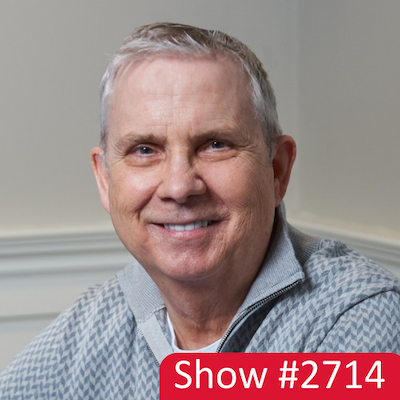
05 Jan January 6, 2026 – Never Sit in the Lobby Glenn Poulos and Better Messaging Ash Seddeek
Transcript
0:04 Intro 1: Broadcasting from AM and FM stations around the country. Welcome to the Small Business Administration award-winning School for Startups Radio, where we talk all things small business and entrepreneurship. Now, here is your host: the guy that believes anyone can be a successful entrepreneur, because entrepreneurship is not about creativity, risk, or passion. Jim Beach.
0:26 Jim Beach: Hello, everyone. Welcome to another exciting edition of School for Startups Radio. I hope you’re having a great day out there trying to make a million dollars, fighting the fight, and just riding the roller coaster of roller coasters. Got a great show for you today. First up, we have Glenn Paulos with us. He has just released a new book called Never Sit in the Lobby. It is a sales volume, and really, I have a great conversation with him. He has some really fantastic points. And importantly, he bought a business. And if you are out there trying to figure out how to become an entrepreneur, and you don’t have any clue, you’ve got to listen to the second half of the Glenn interview as well, because we’ve got some really good information there about buying a business instead of starting. And right now, that’s perhaps even a better opportunity than being a startup, startup entrepreneur. There are so many thousands of businesses that the owners have no idea how to get out of, and they are incredible opportunities. As the greatest generation passes on, the baby boomers, they have all these businesses that their kids don’t want. You should want one of them. And so anyway, Glenn is with us. It’s a great conversation. After that, we have Ash Sadiq. We’re going to talk about communications. He is the chief excitement officer at his company, and that’s a great conversation as well. So I’m excited to have Ash on the show too. We’re at the very, very beginning of the year now, and that means not resolutions, but have you set goals for the entire year? Are you going to double sales? Go to church once a month more? Run once a month more? Have one less cigarette a day? Whatever it is, we’re going to hold you accountable for the year: not the month, not the week, but for the year, and divide that up 12 times. So anyway, just to let you know our system, we’re going to get started with another great pre-show right after this.
2:36 Jim Beach: We are back, and again, thank you so very much for being with us in this Happy New Year. Very excited to introduce a great guest from Canada. Please welcome Glenn Olis to the show. He has built two successful distribution companies out of Canada, and now he is doing a new business here in Orlando, in the power utility sector. He has had some successful exits as well. He sold one of his businesses to NWS for $18 trillion. I think that’s probably a typo. Let’s assume that’s not true. And he is also the author of a book, Never Sit in the Lobby: A Practical Guide to Winning and Sales. Welcome to the show. Glenn, how are you doing?
3:25 Glenn Poulos: I’m doing great. Thank you so much for having me and having that wonderful introduction.
3:29 Jim Beach: What’s wrong with sitting in the lobby?
3:33 Glenn Poulos: Well, when you sit in the lobby, as I came to learn, oftentimes you get distracted, and customers show up, present themselves, and you’re on the phone arguing with the wife about who’s picking up the bread and the milk at the grocery store on the way home, or who forgot to get the kids. And that, I just found that, you know, standing up, waiting for your client to show up, it’s, it’s just a better look. And most of my tips and tricks that I go over in the book especially are about, you know, how to maintain a good look, how to get act and stay in front of your customers, and to be a pleasure to do business with Olis. And so I’m always looking for tips and tricks on how to do that.
4:12 Jim Beach: All right. I like that one. Give us some other ones, well.
4:16 Glenn Poulos: So, I mean, when you’re standing in the lobby, customer walks in. The next little rule that runs right into it is: always have something in your hand and something in your mind. And so the customer walks in, you have something to hand to them. It’s usually the reason you showed up. Maybe they asked for a quote. Maybe they asked for literature. Maybe you’re giving away mouse pads or water bottles, you know. But always show up sort of with something to hand them, and something to tell them or ask them, and so that sort of leads the conversation. There’s no sort of jilted or stilted conversation. You know exactly what you’re doing, and you can, you can gage with the customer and have a little brief conversation. Then I hit them up with my third rule in that series, which is: always ask for a mini tour. And people are like, “What’s a mini tour?” And I’m like, “Well, that’s a tour that doesn’t take all day,” because we’ve all been on those tours, and they can, they can drag on. You just want to get behind the veil of the lobby, behind that curtain at the Wizard of Olis, where the magic happens. So you can see where your products or services or software, whatever you sell, wherever, whatever you know you’re there to talk to them about, where it’s going to be used. Because oftentimes, when you get behind the lobby, that’s where you start to see what’s really going on at the customer, and that maybe, you know, they’re using your competitor. Maybe it’s a brand new space and it’s an even playing field. But oftentimes, you know, you can learn a lot. You can also learn about all sorts of other products you might be able to sell them that you didn’t realize in first responding to the customer request. So that’s sort of like a little three-pack of rules that go together when you’re, when you’re not sitting in the lobby, as I like to say.
5:58 Jim Beach: Is it okay to sit in a meeting room?
6:03 Glenn Poulos: For sure, but don’t be boring, right? And so, so I have a, I have a little giveaway on my website called the punch perfect pitch and close and that. So when you’re in a meeting room, I have a little, little worksheet that I use to help people to design presentations that, you know, get to the point, and that really, you know, engage the customer and move them towards where you want them to be in terms of buying your product. And I call it the punch perfect pitch and close, and, and so, but definitely you’re going to be sitting down there. You just want it to be an engaging and enlightening conversation.
6:43 Jim Beach: So can you give me an example of that?
6:47 Glenn Poulos: Yeah. So typically, you know, the customers invited you in because you sell a product or a service or a system of some sort, and I typically, the punch is basically where you change their state, right? Most people, they start the presentation by saying, “Oh, you know, we have a, our head office is in New York, and we’ve got a factory in Europe with 1,700 people.” And by then, customers already asleep, already disengaged, wanting to pull out his phone and, you know, start chatting with the wife, right? And, and so the punch is where you change the state. And typically, you, you know, you’re playing a video, I find, is one of the best things. And in that video, you’re showing them another customer, or an example, or a situation where they’re getting that, where the, where the people on the video are getting the results you hope they’re going to get by using your product. So if they’re looking for faster throughput, you’re going to show them, you know, a video where that’s being occurred. If you’re looking for cost reductions, you’re going to show them something that shows how the benefits and that are. And you want to grab their state, and that’s, you know, and so that they’re, you know, they sort of lock in on your presentation, on what you’re saying, and they kind of wake up and all start paying attention, right? Then they go into the perfect pitch. And the perfect pitch for me, that’s the uses the Goldilocks principle. So the Goldilocks principle is the power of three, which I call it, and that’s where, you know, sort of small, medium, large, good, better, best. But you break everything down into, into three packs. And it’s just like any good presentation, you know, you tell them what you’re going to tell them, you tell them, and then you tell them what you told them, right? And you, you, when you’re breaking down the product ideas, the demo, you know, the demonstration, or the, the items that you’re covering, you always want to do it in three. Two is sort of not enough. Four is too many. And, you know, and that’s how I make my presentations: in little sections of three, right? And then the third and final part is sort of the close. And if I’ve done everything right, I sort of punch them, grab their state, demonstrate the product and service in the way they want. At the end, if I’ve done it right, they should say to me, “Well, how much is it?” or “How long does it take to get it?” or “When can I have it delivered?” or “Can I try it out?” or something like that. And that’s sort of the close. And if they haven’t sort of semi-closed themselves, asked a closing question, or something like that, you probably haven’t done it right. And you have to look back on the, and maybe take a step back and, and bring them more towards, you know, a closing signal. So that’s, that’s how that little presentation thing works. So I love it.
9:32 Jim Beach: That’s great advice. How do you make your hello memorable without being cheesy?
9:41 Glenn Poulos: Well, everything I do is gaged around trying to build genuine rapport. And so, one thing I’m not doing is I’m not, I’m not acting overly familiar. I’m not taking, you know, assumptions with a customer. For instance, you know, when I walk into a customer’s office or something like that, and I notice pictures on the wall, I don’t automatically assume things. And if I see him golfing or something like that, I don’t say, “Hey, we should, you know, we should go hit 19, you know, 18 holes,” or something like that. Because, for all I know, the guy doesn’t like golfing, and he just, he only has the picture on the wall because it’s with his boss, right? And his boss made him go. And so I’m always starting by using my, you know, the, what I like to say is, you know, God gave me two ears and one mouth, so you do the math, right? So I’m always trying to be listening more than I’m talking, and I always want to ask them questions, right? I’m engaging and enlightening questions about, you know, the situation at hand, and, you know, practicing things like, you know, active listening, you know, sympathy, empathy, and compassion, things like that, and always towards an eye towards one: not being a pain in the butt; and two: you know, trying to be a pleasure to be around. And it’s not easy at times, you know. And oftentimes it just requires you to say less than say more, right? And yeah, so those are just a few things right off the top of my head, but it’s an important point too, I will say. So I…
11:21 Jim Beach: I think it’s a great point. Tell me the story behind Eric Vockers rock. Yeah, that…
11:30 Glenn Poulos: That was a crazy little funny story, or what have you. And I’ll try and tell it quickly for the audience, because it can drag on. But I hired this guy, and, you know, I sent him down to a, and he was a junior sales guy, you know, brand new, you know, fresh out of school, and I sent him to one of my big suppliers in the US. And, you know, I got, I ended, there’s two parts to the story, right? And I ended up getting a call from the president of the company, and the guy’s like, “Well, who’s this bozo that you hired and sent down here, and this Eric guy?” And I’m like, “Why? What’s the problem?” And he says, “Well, the guy started drilling me about, you know, wanting to know what our gross margins are, what our turnover is, and terms and conditions of the contract.” And I, I mean, in all my time, I’d never had, like, a junior sales guy ask these kinds of questions. I mean, these are things, as me, as the owner and contract negotiator, I need to know. But I was, I was perplexed and flabbergasted at the same time that he was asking all these private business, you know, questions that had no relevance to him being there for product training, right? And so I was quite upset. I can’t remember if I scolded him there or when he got back, but you know, when, when he got back, he had this picture of him holding a rock up on a mountain in Colorado, and the rock he was holding sort of looked the same as the rock behind him. And I have to admit, it was kind of an interesting photo, you know, that, that, that he had taken. But, you know, the conversation didn’t go well, and I ultimately let the guy go, right? And it turned out, so he, you know, I walked him out. What have you, let him go. And a few days later, I get this package from FedEx, you know, on my account, right? FedEx Express, right? Attention: Eric Volker, right? And I crack it open, and you’re going to guess what’s in the box, right? It’s the rock from Colorado. So, in addition to, you know, butting in where he didn’t belong, you know, things like that, and he also took it upon himself to FedEx himself a rock from Colorado. And, you know, and it was just, it was just a lesson around hiring people. And, you know: hire slowly, fire quickly, and, you know, the importance of making good hires. And it was just, it was just a comedy of errors in many respects.
13:56 Jim Beach: So, oh, that, for some reason this story jumped into mind. I was, I was the boss, and I hired a salesperson at an investor’s insistence. And this salesperson, we were on the phone with maybe the most important call of the year. He called in from his convertible with the top down on speaker. You know, no thought came to me during your story. Glendy, in the book, you talk about your harshest lesson from voicemails and having voicemails that actually have value, as opposed, as opposed to, I just call it a check-in on you, make sure you’re still thinking about buying from me, and you have even a script. Give us some help with leaving a good voicemail, please. Yeah.
14:49 Glenn Poulos: So the good things about, so the thing about voicemails for me is, one of the rules is: if you’re going to phone the person, you should leave a voicemail, and if you’re going to leave a voicemail, I always target 20 to 30 seconds. No, no less than 20, no more than 30, because they’re not going to listen to it above 30, and below 20 they’ll often think it was just spam, and they’ll just delete it without even listening to it because it’s too short, right? And so, and in that, so that’s point number one. Point number two, I try to sort of hit them very quickly. I don’t, you know, I don’t go on a litany of discussion about who I am and who I’m calling from, you know. It’s just sort of, “Glenn from Prague, USA,” and I was trying to get 15 minutes on your calendar, because I know you’re putting in a new, you know, production line. I know you’re buying a new, you know, quantum exasperator, something like that. And then I’ll try to hit them with a compelling piece of information that would make them want to talk to me. And then I’ll say I’m going to follow up with an email, and, and that’s sort of it, right? And I’m trying to get it all out in one sort of little breath, keep it short and sweet. And then I always follow up my voicemails with emails, and the, you know, and then you end up creating multiple points of contact with the customer. So eventually, hopefully, if you’re new to them, they will pick up and they will either respond back or, or answer your next call. If you’ve intrigued them, you know, there comes a time where that particular customer may not be an appropriate contact, and maybe you need to call one of their coworkers and see if they’re, you know, if you can engage by a different coworker or something along those lines, right? But just to back up a little bit, the harshest lesson that I had learned was when, you know, I had realized that someone had said to me, “Oh, you know, I need to talk to you about something.” And I ended up saying to them something along the lines of, “Oh, well, you know, if you miss me, you know, just, just, you know, just give me a call and leave me a voice now.” And they kind of laughed at me, right? And, and this was at a specific time in my life, and I was going through a divorce, and, you know, there were a lot of extenuating circumstances, and building my excuses in early here. And, and so he kind of laughed at me. I’m like, “Why are you laughing,” right? And they’re like, “Well, what do you mean, leave your voicemail?” And eventually, I had to pull it out of him, or like, “What are you talking about?” He goes, “Well, you know, the standing joke around here is, you know, give him a call and leave a voicemail,” hahaha, “because, you know, you never call back, you never answer the phone, and you never call back. If we don’t, if we don’t bump into you in the hallway, we can’t get a hold of you.” And I mean, to me, it was like, you know, it hit me like a freight train, right? And, and I couldn’t believe it. And, you know, it took me some time to, you know, to digest it all, but I made a commitment to myself that I was going to always make my best effort to: one, pick up the phone; or two, phone back, right? And, you know, I will admit that not every cold call or whatever gets a call back from me, but I mean, it’s customers, vendors, salespeople, employees, whatever. If they call me, I always call them back. And I do my best to grab the phone and take the calls in real time, and, and I realized, like, it was a really bad look. And you know, to this day, I’ve striven to avoid that, you know, coming across that way and being that, you know, unattainable or unreachable, I guess, you know.
18:18 Jim Beach: Yes, very, very true, Nick. I mean, Glenn, let’s change conversations now and tell us a little bit about your career. So I introduced you. Tell us about the project you’re working on in Orlando. That sounds really cool. When you say you had distribution companies, is that power distribution or cement distribution? Walk us through your career, please.
18:44 Glenn Poulos:: Okay, so, yeah. So I started out as what I call a failed civil servant, the Canadian government, and my boss, my boss told me…
18:54 Glenn Poulosr: In Canada, I was working, I was working too hard, and everyone was complaining that…
19:01 Jim Beach: I would believe that is seriously the only answer I would believe. Oh, my God. My first day at Coke, the guy came over lunch and said, “Jim, you’re moving too fast, slow down.” Already, exactly, already.
19:15 Glenn Poulos: Yeah, exactly, yeah, right. That’s exactly what happened. And so, you know, the guy said, “Hey, I see something in you.” And, you know, he suggested, and I took him at his word, and I got a job in sales, and we were selling high-tech electronic test equipment. And so anyone with an electronic lab, any, any kind of electronic company, you know, building computers, building any kind of, you know, we would sell them instruments to measure electronic signals. And for five years, I worked for them. And this was starting in 85, and, you know, as the 80s wore on, mobile, mobile wireless started coming into, into prominence. And I pro. Some about starting a company, the owners, because I realized, you know, every time I made a sale, I made a commission, but every time I made a sale, the owners made a commission on myself and everything they sold as well. And I realized the leveraging, owning the business versus working at a business. And, and so I said, “Hey, why don’t we spin off a little division, you know, and I’m going to focus on this new area of technology, and you can own some, I’ll own some.” And they flat out refused me and said I would be better off sticking to my knitting. And I was doing well working for them, and I should just, you know, leave well enough alone. And I promptly, the next day, quit, and, and, you know…
20:38 Jim Beach: …gain my resignation. Glenn, were they shocked?
20:41 Glenn Poulos: Piss, what was, they were shocked. And they were shocked, and they, although they didn’t, were really interested in hearing about my business model they were doing. They wanted to do anything they could do to retain me as a salesperson. And I refused. And I’d already, I’d already found a vendor that I could partner up with to sell in my territory. And I’d already, you know, started approaching customers about who I could sell to. And so, and those are, you know, those are two of the main things that are needed when you want to start a business. You need a minimum viable product, and you need a customer that you haven’t really earned yet in order to get started, right? I mean, what you know does your first piece of business, you know, you never really, you never really deserve it, right? Someone takes a chance on you. You have to earn all the rest of them, right? Someone takes a chance, gives you an order, you got to work like heck to keep them. And then, you know, you work like heck to get every other customer that comes beyond, right? But nonetheless, I said no, and I focused on this newfangled technology that I thought I was wasting my time on, called the cell phone. Of course, that never went anywhere, right? Who needs a cell phone, right? And, and so started selling, you know, electronic equipment into the cell phone industry. And when I mean distribution, I mean buying products from companies around the world, storing them in my warehouse, and selling them to customers in my, in my territory. And that territory has been parts of Canada or the US over the years, and, you know, typically selling high-tech electronic equipment and systems, and, but not a distribution of power or something along those lines. And so my first two companies were in Canada. They were distribution companies into the mobile wireless space. And when I sold my second company, I sold the first company in the early 2000s, I got a chance to start another business, and I sold it in 2022. And I went to work for private equity there for a couple years. And then, in order to maintain my no-compete with the new owners, with the private equity, I had to sort of switch industries, right? And so I didn’t only switch industries, I switched customers, products, and also countries as well. And I moved from Toronto to Florida, mainly because of the weather and the size of the market. And, and again, I’m doing my third business. This time, though, I didn’t start from scratch. I bought a 20-year-old company. The owner was retiring, and I was able, I came across it in my search for companies in Florida, and it had the same business model: buying equipment from suppliers in Europe and Asia and other points, and importing those products into the American market and providing sales, service, support, etc., to the US market. And that’s what I’m doing now. And so, and the customers, instead of being telecom, they’re power utilities and people working in the substations, power generation, and distribution of electricity in the US market.
23:52 Jim Beach: Glen, great job, and thank you for that recount. Fascinating career, and you did well, my friend, recognizing that cell phones were going to be there. Man, that was smart of you. I’m fascinated by the buying of a company. Tell us about that. How’d you find it? How’d you target it? Talk to us about the vast size of businesses that are going to go no one knows where, because the kids don’t want to run the business and dad can’t sell it. I’m fascinated by that subplot. Dig in, yeah. And so…
24:30 Glenn Poulos: The, I started by looking on. I first started with my geography. I knew I wanted to, if I was going to do it again, I wanted to do it somewhere in a bigger market, in a colder, in a warmer climate than Toronto, Canada. And so I’ve always had an affinity for Florida and what have you. So I started looking on biz, buy, sell, calm, and a couple of the other websites that, that target these kinds of businesses. And, and through that and inquiries about certain companies, in certain wholesale distribution companies there, I ended up coming across and becoming, you know, sort of notable to brokers and things that were selling businesses in the Florida area. And it wasn’t on the website, but one of them had pointed me at this business that was potentially for sale, and it hadn’t been listed yet, and I could approach the owner. And I looked on, I looked at them online, and, and I approached the owner kind of off market, let’s say, you know, on the whole sort of at a wholesale level, before they had gone out to the general public. And it turned out that, you know, he’d been at it for 20 years. He didn’t really have any family to pass it on to, or any legacy of that. There was no employees that sort of wanted to take it over and, and buy him out. And so had, you know, had a good look at it, and I was able to come up with, you know, a standard sort of model where you take the EBITDA, the profits for the year kind of thing, you, you multiply by a multiple depending upon the size, right? Sometimes it’s three times profits, sometimes it’s five, sometimes 10, depending if it’s a lot, if it’s, the bigger the size, the bigger the multiple, right? And, and then, through a series of down payment and a loan that I took out and vendor, vendor financing, I was able to come up with a payment plan and acquire the business, and also an earn out with the owner, such that he would hang around to show me the ropes for a couple years, that, which is a little bit longer than usual. Most times it’s only six months or so, but I was able to come up, because it was a new industry for me, I felt I needed it in such a high-tech space. And so that’s kind of the, you know, the parameters of the envelope around how I found the business and bought the business.
26:55 Jim Beach: Excellent, Glenn, that is a great way of doing it. Listeners, I mean, there’s so many opportunities, so many opportunities for owner financing. My good friend Chris Hanks does a lecture. He’s the founder of the UGA Entrepreneurship Center here at the Georgia Bulldogs land, and he goes through that most businesses you can buy for almost nothing, and with all of his little tricks and stuff. Of course, one of the tricks is owner finance, and it’s just a great opportunity for all of us who still want to do one or two more plays before we retire. And so, a lot of businesses coming around. Gwen, well done, and congratulations on all of it, and thanks for being with us to share. I love all your sales stuff. Want to give us one more sales tip, and then how to get in touch with you.
27:52 Glenn Poulos: Well, my, my biggest tip is always, especially with the younger listeners, is called, you’ll need forever to make another impression. And despite what your mom said about making a good first impression, I always counsel the young fellows and gals, of course, to try to make a good first impression on every impression, especially with people that have power over your career, because it’s the smallest things that you do every day that you’re the, your bosses and your bosses’ bosses notice. And if you ever wonder how people go from being, you know, driving a forklift in the warehouse to being the CEO of a giant, you know, Fortune 500 company, which happens all the time, it’s because they made sure that every impression they made on the people that had the power of their career in their hands was a good first impression. And so, yeah, so that’s just one of my, one of the chapters in the book, and one that I would, that I always like to share with people. So I’ll end with that.
28:50 Jim Beach: And it’s Glen Poulos com, G, l, e, n, n, 2, n’s, and Glenn A O, U, L, O, s.com, yeah.
29:02 Unknown Speaker: And I’m also on LinkedIn as well. They want to get older.
29:05 Jim Beach: Me, fantastic. Thank you so much for being with us. Great stuff, and happy new year to you.
29:11 Glenn Poulos: Thank you. Same to you.
29:13 Jim Beach: And we will be right back you.
29:20 Intro 2: Oh, well, that’s a, that’s a, that’s a wonderful question. Oh, my gosh, I’d love the opportunity to do this. Thank you, Jim. Wow, that’s, that’s, that’s a great one. You know, that is a phenomenal question. That’s a great question. And, and I don’t have a great answer, that’s a great question. Oh, that is such a loaded question, and that’s actually a really good.question. School for Startups Radio.
29:48 Jim Beach: We are back, and again, thank you so very much for being with us. Very excited to introduce another great guest. Please welcome Ash Sadiq to the show. He is a communication and, and strategic influence specialist. He helps you get your message across, and his website, communicate with clarity.co, has just tons of great resources and data on how much better you are to, if you have good communication skills, how much better you are to close with your investors, and how much better you are more likely to, you know, close the deal. Some great statistics showing how important this skill is. He is an Amazon best-selling author and has created leadership frameworks that help leaders learn and maintain the ability to communicate better. He is a two-time Fulbright Scholar. I didn’t know you could do that twice. Welcome to the show, Ash, how you doing? Thank you so much. Thank you for having me, Jim. What did you say there about doing it twice? Oh, doing…
30:51 Ash Seddeek: …it twice was just, you know, accidental. It happened, and it was interesting and amazing.
30:58 Jim Beach: So tell us about your business and the communication skills that you are teaching.
28:47 Joe Massa: You know, really, it started with a love of radio, as we’re on the radio right now. That’s where I cut my teeth. It was in the radio world, and it was always something I knew I wanted to do. Didn’t know why. My wife would tell you it’s because I talked too much. So radio was a natural evolution for a career path. And I spent many, many years in the industry. I still work there off and on. I never really fully left. But as technology sort of changed and adapted and grew, the next evolution, clearly, was podcasting. And I had a lot of my clients that I would work with that were building podcasts and sort of expanding into that space. So it was something that naturally I just kind of followed their suit. And really, once I got into it, there was no going back. It’s so powerful for a medium. It’s one of the last truly free mediums. Obviously, you know, radio, TV is very censored. Podcasts, you can be a little more free to speak your mind. Obviously, you have to keep that within the grams of what’s important on what platform you’re sharing that, but I feel like you can really have your powerful message shared in podcasting, and it’s really something that your audience and your listeners are very hyper engaged. So it’s a really powerful tool for your marketing toolkit, your branding, anything where you’re trying to sell a product, of course, spread your thought awareness and be a thought leader. Podcasting is this space. So the more and more I spend time in it, the more and more I love it.
30:12 Jim Beach: Is it different from radio? How is it different? What makes it special or different from any other medium, audio or video? For God’s sakes, you know, we call Joe’s thing a podcast. It’s a video. I don’t know if the words mean anything anymore.
30:30 Joe Massa: Yeah, there’s a lot of overlap. So, you know, what I find is a lot of radio show hosts also repurpose their radio show for podcasting. A lot of podcasters try to get their podcast on radio, so they’re very much related to one another. I think the difference is, with the podcasting space is you really get to control more of what you want to talk about. Radio, you kind of have your hands tied sometimes, depending on what format you’re on, but you’re really more in the driver’s seat with the podcasting, and you can control your own advertisers, sponsorships, where you don’t always get that opportunity in radio. A lot of times, the station will fill in the gaps of what you’re going to advertise or what sponsors are going to be, you know, released within your show. So it gives you a little bit more granularity control. And I find that the listeners tend to be slightly more engaged because they had to find your show, they had to download it, they had to consume the content, so they really want to hear what you’re talking about, whereas radio, it’s sort of hit or miss that way. And don’t get me wrong, this is not a bash on radio. Radio is extremely powerful, a great forum, and it’s really the first love of my media life. So I just think the difference is you are more in control, as opposed to being dictated what you’re allowed to or not to do.
31:46 Jim Beach: Tell us about Podtopia Network. Podtopia Network.
31:04 Ash Seddeek: Absolutely. So I’ve been working a lot over the last 10 years with leaders at companies like Cisco, Uber, and Google, where the most amazing skill that we activate among them is the ability to connect, number one, with what their own conviction is when it comes to what exactly they want the organization to achieve, and then taking that conviction and converting it into inspiring, compelling stories that connect with the audiences and help them take the next step action that they want to see happen in these organizations.
31:40 Jim Beach: What are people’s problems now with communication? What are they doing wrong?
31:46 Ash Seddeek: I think a lot of the time, they actually miss out on thinking enough about the audience or what the, what the audience is looking for, and they get so wrapped up either in, “I just want to send this message and get done with it,” or they get wrapped up in their own challenges with the message that they are writing. Sometimes they feel that they don’t have enough confidence, or that they don’t have all the information that they need. So we actually get them to think more about the recipient and what the recipient needs to do, and how the recipient’s life may actually be transformed by the message that they receive. So once they literally get themselves out of the equation, life will get a whole lot easier, because it will get a whole lot more focused on: this is what this other person is waiting for me to send them so they can take action. And I think that’s what we get them focused on, is understanding the audience a whole lot more, and paying attention to how the message needs to speak to their needs a lot more than the sender spending so much time budgeting and thinking about, “Should I say this, or should I say that?” We, we want them to think more about making, making it audience-centered and also expediency as well.
33:06 Jim Beach: All right, so audience-centered, but the stories are about me, and the message is from me. How do I make it audience-centered when all of my stories involve me?
33:17 Ash Seddeek: Absolutely, that’s the magic in the story. Because as soon as you tell the story about how it was just incredibly amazing, on one Christmas morning, you wake up and you find this big, huge box standing by the tree, and you open it up, and you find that amazing bite that you were looking for, and that’s when you pivot. You basically say, “And that’s exactly the moment that I want us to create for our customers.” So that’s really how we use stories to create the foundation and the example that we want to pivot into today’s main point that we want to make, just like I did now with how we want our customers to be completely delighted by how they receive amazing packages from us, and when they open them, it’s just amazing experience. And I think a lot of people would see the value of your personal story, because you’ve been able to take it and make it so relevant for them as well.
34:13 Jim Beach: What if I don’t have stories to tell?
34:19 Ash Seddeek: I think that may happen. And I would very much encourage our listeners to mine for stories and look for stories: movies that they have, they may have watched; of somebody that they met and they told them a story. So feel that stories are not that difficult. What I think we want our listeners to really believe is that stories are available everywhere, and it’s okay for you to say, “I was talking with Jim, and here’s what he told me.” And you know what this story made me think about? It made me think about the amazing work that we have ahead of us.
34:53 Ash Seddeek:See. So we can definitely encourage listeners to embrace the idea, you know what? It’s not really that hard.
35:02 Jim Beach: Why are people so nervous when they have to speak in front of others? And how do we overcome that nervousness?
35:10 Ash Seddeek: I think again, it really comes to because we feel that we’re being, you know, maybe we’re being judged. And so there’s a lot of that being wrapped up in our own, our own mind, and that’s really where I love for our listeners to really see that their main goal in communication is unlocking someone else’s transformation, unlocking someone else’s feeling of satisfaction and delight. So when we embrace that concept, then we’re not going to care about the fact that, oh my goodness, I didn’t use the right word, or I didn’t use the right sentence, because it’s all about getting the message across. And if I can get it across, and the understanding, that’s amazing. And that’s really where, when you look here in the US especially, we have people from all walks of life, all different culture backgrounds and language skills, but still, they wake up every day, they earn a living. Even though they may not have the best accent, they may not know all the words that we want them to have, but they have been able to really create a transformation for the families. Because I think in those moments, they basically say, “It’s not about me. I gotta get up. I gotta go. Yes, I don’t speak as good of an English language as Oprah Winfrey might speak, but I will go out there and make it happen.”
36:32 Jimbeach: I love that attitude and I wonder, are people who are nervous, are they receptive to that? It seems like nervousness is the number one fear to overcome, even more than being naked in public, I bet.
36:49 Ash Seddeek: Yeah, I think definitely, definitely, nervousness is a key factor that I do when I’m working with, with leaders. A lot of them are already established and very successful, but it’s fascinating how we all, at the very end of the day, we are still human beings. We want to feel that we are adding value, that we have something incredible to contribute and I do believe that we need to embrace the fact that the piece of the puzzle that we have is definitely going to interlock with another piece that someone else has, but it’s only when we share that piece that the other person is hopefully able to make something with it. So we want people to believe that it’s in the sharing of the love and getting the word out and communicating, and that’s when the magic starts to happen. So definitely don’t let it stop with you. Share it and be willing to say, “You know what? I may not be saying this in the best words of vocabulary that I might have, but here’s what I want to tell you. Can you help me make it even better?” If that’s the case.
37:57 Jim Beach: If I open a presentation by acknowledging that I’m nervous, is that a good or a bad strategy?
38:04 Ash Seddeek: I would actually encourage not to do that, because the audience would only see this as noise, because the audience is there to learn from you something you want to tell them, and it’s a whole lot better for them not to deal with noise that’s not so focused on what they are there to do. So what you want to do instead is, is to basically say something, hopefully softer than this. You might say, “Bear with me as I go through this, because it will take me a few times, a few minutes to get that across. But I do have the information that you need, and I’ll make sure that you walk…” .away with what you need.
38:46 Jim Beach: And what about giving out presentations in advance? I’ve, you know, given everyone wants a copy of your presentation, but when you give it in advance, they don’t pay attention to you in advance, so they can take notes on it and stuff. What are your thoughts on that?
39:02 Ash Seddeek: I think that’s a great question. And I do believe that whenever you can send it in advance, go ahead and send it in advance. I think it’s okay, because the magic that we want people to believe is the fact that they have, they still have the ability to intrigue and wow their audience when they step into that meeting, even though they did have the deck. You can basically say, “As I was coming to you, a number of questions came up for me.” And people who have the deck already, they have the presentation already, you’re coming in and saying, “These questions came up for me,” and all of a sudden, there’s something intriguing in the room. What questions came up for Jim? And they want to understand, you know, what are those questions? And then all of a sudden, now you have their attention, and you can say, “As I looked at the presentation that I prepared for you, and I’m sure a lot of you have looked, looked through it, which I’m grateful for you, the insight that I thought about is…” And that’s when they lean in and listen to the insight that you have gathered, because they are all more interested in what, what you’ve been able to synthesize out of all this.
40:15 Jim Beach: And there’s a trend now to use slides. Well, let me ask you this: there’s two different strategies, I think, with slides. One is a lot of information, and one is, the other is just one picture. Which one do you think works better?
40:35 Ash Seddeek: I would very much encourage people to lean on the side of less is more, for sure. So I do believe that if you can put it in front of people, the picture of a dog, and make, make that the center focus, and then use the story to get into the fact that we’re going to have this amazing dog park in our town, and here’s what it’s going to do for us as a community, I think this would be a much better situation than putting in front of them a big, huge proposal with a lot of text, because there’s a lot of cognitive burden that happens when there’s so much noise in front of people, whether it is you on camera messing with your hair, or if there’s something interesting right behind you with a bunch of books and titles on them. All of this is distracting the audience’s attention from the message, not you, because you, to be honest, you’re not as much as important as the message that you are delivering, because we want the message to get across. So as much as possible, let’s get rid of as much of that noise as possible and single out the main point we want to get across, and then come back today.
41:54 Jim Beach: So many of our communication skills are used over Zoom. How do we present better over Zoom? And what are your thoughts on backdrops and where you broadcast from? It’s obvious that a lot of people are broadcasting from the desk in their bedroom, and I don’t like seeing people’s bedrooms. I think, what are your thoughts, Ash, on little simple things like that: the backdrop that you use, where, yeah, from all of those basics. Give me some advice on that.
42:27 Ash Seddeek: Please, absolutely agree with you. People should not see your bedroom or, you know, any of that noise that we were talking about. So I totally agree with you. Definitely make sure you select a background image that, again, does not have as much noise as you might have with a bookcase, for example, and then focus on making sure that when you come into that meeting, it’s almost like you are in the building and you’ve been walking the halls and you just found the conference room, and you pause right, right outside that door, and you basically say to yourself, “I need to check in with myself first. I need to think about my own energy, and what energy am I going to bring into that room?” And my whole coaching practice is centered on the idea of chief excitement officers, and the main nugget there is people definitely sense your energy. And even if it’s a virtual meeting over Zoom, WebEx, or any of the other tools, we want you to come into that meeting having already, already activated this interesting, engaging, exciting energy that you need. And even if you have to talk about some risk management topic, you can come in with the right energy and still say, “I just have a very risky situation that we need to deal with, and I would love to unpack that for you.” But still, people feel like you’ve got the energy that they need that’s going to help them see that they can trust you and count on you as we work through this risky situation.
44:07 Jim Beach: I like that. One piece of advice maybe throw out. I bought a eight foot by eight foot vinyl roll-up step and repeat. They’re called step and repeats. It’s where you have your logo every foot. The celebrities use them at the movie premieres and things like that. And they stand in front of these vinyl roll-up things that have the logo or whatever on it. I got one of those with my logos on it for about 100 bucks, and I use that behind my screen, and people can’t tell where I am, and it has all of my logos behind me. So I think that looks cool. I love it, yeah. So it’s only $100, you know, and you can put whatever you want, whatever graphics, whatever art you want on it, and then you can move it around and put it in different places. And, throw it up and nail it to a wall in your bedroom, and then it doesn’t look like you’re in your bedroom, for God’s sakes. Exactly.
45:07 Ash Seddeek: Exactly. I think, with the pandemic, a lot of people allowed to give themselves the permission. But to your point, Jim, I think it’s time to stop.
45:17 Jim Beach: My wife works from home, and we made a, you know, like that fake paneling, like it’s like a sheet of panel or, you know, piece of, piece of plywood, but it looks like…
45:27 Ash Seddeek: …it’s, yeah, on it. It gives you a partition, yeah. So we put…
45:31 Jim Beach: …that right behind her chair. And I love that she has a very classy background. It looks very professional.
45:38 Ash Seddeek: I love it. So that it’s show time, you know. I love it. Exactly, exactly.
45:42 Jim Beach: So, and little things like that make you more confident, I believe. Don’t you think?
45:48 Ash Seddeek: Absolutely. And it’s, and it shows that you’re coming to provide a service. You know, I talk about the idea of speaking to serve. You’re really there to help this other person on the other side understand a topic that can help them move forward. So definitely, I think this is very professional and goes in the direction of: I am here to serve a purpose, and I’m here to help my audience understand clearly, without any of that noise that might happen because of the background or what I’m wearing and all of that stuff. Like people wearing T-shirts with a lot of writing on them, I would also tell them, you know what? Come in with a professional dress. Make sure that you’re coming in almost as a McKinsey consultant. You’re looking the role and you’re playing the part.
46:36 Jim Beach: I think so. That’s great advice. How do I do better on Zoom? Let’s talk specifically about Zoom, not the backdrop. Now, just the eye skills and things. I also noticed that people don’t know where to look when they’re talking on Zoom. You need to look exactly into the center of the camera. What else do you think are some Zoom skills we need to talk about, Ash? I very much…
47:00 Ash Seddeek: …I started my, my work as an English language teacher back in Egypt, where I come from, and you learn when you are standing in front of people that you need to engage everybody in the room and make them feel that they are part of the conversation. So I would very much encourage our listeners to do a little bit of prep, who learn who’s going to be in the meeting, and think about what their desires and their needs are, and what are the impacts of what you’re seeing and going to be for them and their teams. And as you are presenting, talk to Jim, mention Sandy, talk about Michael, and bring all of those people into the conversation, so it feels that this is really us in one physical room and we’re having a back and forth. I talk to people about how you need to design, not to present, but to come in and have a conversation. And that’s why, when you mentioned people are asking for the presentation, give it to them, because we want you to come in with the intention of creating intrigue, creating a lot of participation and interaction. And when you are in that kind of mode, it doesn’t feel like you’re on in Zoom anymore. It feels like you’re right there with them. You’re talking to them, you’re asking them to comment and give input, and you’re going around the room as if we are there together.
48:27 Jim Beach: Give us some advice on disagreeing with people. How do I publicly disagree with you?
48:34 Ash Seddeek: I bring some of my management consulting experience into that, and I, I very much encourage people that, again, whenever we are in a very large forum, the best thing is to very elegantly and diplomatically handle the disagreement and be open to the fact that in that meeting, we don’t have to accomplish 10 things. We could accomplish one or two things really well, and then maybe a couple of things that we could come together again, maybe in a one-on-one conversation, and get a bit more understanding of how this issue is causing a problem and how there might be a disagreement. And then in that moment, rather than in the very large public forum, we could go back and forth on the issue and discuss it. So my, my recommendation, if it’s a, if it’s an open forum, make sure that you don’t publicly have a very big public conflict on the call, but rather be very elegant and diplomatic and say, “That’s a great point. Let me pencil that down, because I’d love to get together with you and see how we can work through this together.”
49:45 Jim Beach: Let’s change the topic 100%, and when you are a communications expert, you need to be able to talk about anything. So let’s test that. Ash, what do you think about the recent revelations that there might be huge areas underneath, the pyramids.
50:00 Ash Seddeek: That is just incredible.I did hear about that, I did. It’s absolutely fascinating to envision that there are layers and layers of existence beneath the pyramids. And I can’t wait to go see some of that, because I’ve been, I’ve been into, into the pyramids, and it’s just a fascinating world to see. And I think Egypt continues to unveil more and more goodness that the history has given us. And I think we just need to be good custodians of all of that, and, and invite people over and make sure when they come into our country that they enjoyed and learn a lot about that history.
50:44 Jim Beach: Have you heard the idea that the pyramids are actually not tombs, but are some sort of energy device?
50:53 Ash Seddeek: I, it is just so much about the different possibilities. And we did talk about energy. So yes, let’s take that and, and use it. Make sure that we do see ourselves as energy beings, and that when we are communicating, we’re bringing energy. And the question would be: is that a negative energy? Is that a neutral energy? Or is this an energy that tells us that there is hope in the world? So I love what you said, and I would love for people to really embrace it, because that is at the essence of effective communicators, or people who understand that their energy has an impact. And especially if you have a director title, a VP title, or a manager title, you walk in the room, other people are watching what you do, and they’re watching your energy, and they are translating that into: is there a layoff that’s coming? Is there something wrong going on, or what’s happening? And I think it’s much better for you to step into that noise with your energy and your words and help them understand that you’re just dealing with a difficult piece of work and everything is fine, and the project we’re working on is incredible, and here’s what’s going to do for our customers.
52:05 Jim Beach: So what about instead of opening my presentation with a joke or a story about me, I start off by talking about the pyramids and then transitioning into energy the way you just did that. Absolutely. What are your thoughts, Ash, about using something that’s in the popular media, something going on in the world, as your introduction, as opposed to a joke or a story?
52:32 Ash Seddeek: I think it’s absolutely valid, because it all depends how you pivot from there. And also, we encourage people to manage, it’s very much like a movie director: don’t spend too much time on one scene, because the audience is already jumping ahead. And what you want to do is you want to stay ahead of that and let them know what’s coming next. Are we going to go to the restaurant next, or are we going to go up the mountain next? So this idea of sharing with the audience what the roadmap is is going to be important. And as much as you are able to, to pivot from the story into what you’re talking to them about will make a big difference. Fantastic.
53:16 Jim Beach: Ash, great information. And thank you, B, for being with us and sharing. How do we find out more, engage you, learn from you, all that, please?
53:24 Ash Seddeek: Absolutely. The best is to email me at ash, at connect with ash.com, or visit, communicate with clarity.co, or definitely reach out on LinkedIn. We’d be more than happy to have a conversation.
53:37 Jim Beach: Fantastic, Ash. Thank you so much for being with us, and Happy New Year to you and yours, and we’d love to have you back. That was great information. Thank you so much. Thanks. Thank you.
53:47 Ash Seddeek: Thanks. Thank you for having me. Thank you so much. You too.
53:51 Jim Beach: We’re out of time, but back tomorrow. Be safe, take care, and go make a million dollars. You.
Glenn Poules – President of ProgUSA and Author of Never Sit in the Lobby: 57 Winning Sales Factors to Grow a Business and Build a Career Selling
You need a minimum viable product, and you need a customer you
haven’t really earned yet in order to get started. Someone takes a
chance on you and gives you an order, and you have to work like
heck to keep them, and then you work like heck to get every other
customer that comes beyond.

Glenn Poulos
Glenn Poulos is a veteran sales leader, entrepreneur, and author with over 40 years of experience building and scaling businesses. He recently retired as EVP and GM of NWS and co-founder of Gap Wireless Inc., where he drove growth at the intersection of sales, marketing, and leadership in the telecom and technology distribution industries. Glenn is the author of the award-winning book Never Sit in the Lobby: 57 Winning Sales Factors to Grow a Company and Build a Career Selling and a recognized LinkedIn Top Voice. A sought-after speaker, he shares actionable insights on sales mastery, negotiation, leadership, and entrepreneurship that inspire audiences to achieve real results. Now based in Florida, Glenn is reintroducing himself as a new kind of entrepreneur—launching an AI venture that helps organizations embed AI into their operations and see measurable efficiency gains in as little as five weeks. He is also exploring opportunities in the electric power generation sector and continues to invest in real estate. When he’s not shaping the future of business, Glenn is a dynamic DJ under the alias Phossl and a proud dog dad to his two French bulldogs, Pierre and Jean-Jacques.
Ash Seddeek – CEO of Intelligent Context AI & Leadership Development and Executive Coaching at The Executive Greatness Institute
Their main goal in communication is unlocking someone else’s transformation, unlocking someone else’s feeling of satisfaction and delight. So when we embrace that concept, then we’re not going to care about the fact that, oh my goodness, I didn’t use the right word, or I didn’t use the right sentence, because it’s all about getting the message across.

Ash Seddeek
Ash Seddeek is a globally recognized executive coach and change leadership advisor with over 15 years of experience helping leaders drive transformation through compelling communication and strategic influence. He has coached senior teams at Cisco, Uber, Google, Boston Scientific, San Francisco International Airport, the State of Washington, and Doosan Bobcat. A former leader at Deloitte, Oracle, and Cisco, Ash blends deep expertise in executive presence, strategic facilitation, and change sponsorship. An Amazon bestselling author and creator of leadership frameworks like Chief Excitement Officers (CExOs) and Exponential Value Moments (EVMs), he equips leaders to lead with clarity, align stakeholders, and inspire action across the enterprise. Ash is a two-time Fulbright Scholar, linguist, AI fintech inventor, and entrepreneur. He holds an MBA from Santa Clara University’s Leavey School of Business and an M.A. from San Francisco State University.