
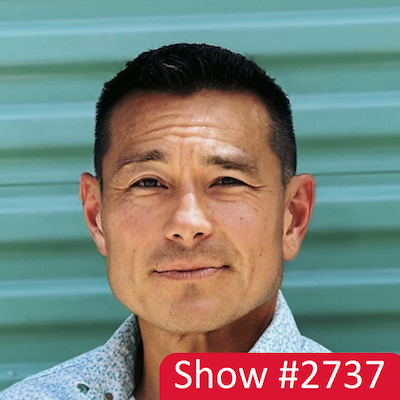
16 Feb February 17, 2026 – Rocket Dollar Henry Yoshida and Grace under Pressure John Baldoni
Transcript
0:04 Intro 1 : Broadcasting from am and FM stations around the country. Welcome to the Small Business Administration award winning school for startups radio where we talk all things small business and entrepreneurship. Now here is your host, the guy that believes anyone can be a successful entrepreneur, because entrepreneurship is not about creativity, risk or passion.
0:24 Jim Beach : Jim Beach, hello everyone. Welcome to another exciting edition of School for startups radio. I hope you’re having a great day out there, riding the roller coaster, getting on bumps, twists, turns. You never know what’s going to happen as an entrepreneur, that is why it is so fun. We have a fantastic show for you today. First up, we have Henry Yoshida. He is the CEO behind rocket dollar, an incredible idea that allows you to put crypto, real estate, other businesses, inside of your IRA savings account, your IRA savings account. Amazing idea. This is something that a lot of us entrepreneurs should be doing, want to be doing. There’s the great story that, who is it? Mitt Romney, who started Bain Capital, capital, and, of course, ran for president, put all of his ownership of Bain Capital. Bain, I don’t know if it’s capital or research, what it is, but all of that ownership inside of his IRA, so it grew tax free. Great idea, just absolutely brilliant. We will talk to Henry about that. This is one of the things that I just insist that you get involved with. It will save you so much money in taxes. Henry has created an amazing platform. After that, we’re going to have one of the top speakers, one of the top influencers in the country, John Baldoni, is going to be with us to talk about grace under pressure. This is actually one of our repeats Greatest Hits. We lost a server three or four years ago. Company went out of business. We had about 10 years of shows posted there, and so we had to slowly transfer them to a new server, and that’s what we’re doing today with the John Baldoni interview. It is one of the greatest hits. He is one of the top guys out there, and I have to get that file back up for you, because that’s what we do. We get the good stuff back up. So that is the second interview. Also, I wanted to point it out that Henry did a great interview, and right afterwards, I was praising him and saying how great he was. And he said, Well, it was because of your score sheet. And I was so he made me feel good because I created this score sheet. We put it up at school for startups, radio.com, if you are ever doing any interviews, this score sheet will help you get better. It shows you what you need to do, what you can’t do, what points are delegated for what part of the whole package? Is your face expressive? Are you using your hands correctly? Do you have a clear outline all of these things are in this score sheet. I know a lot of you are doing other podcast interviews in other places. Please go use that free resource to help you. Just like Henry did, get a lot better at your interviews, I promise you it will make a difference. And it’s totally free. It’s in the others on the far right, where we have the bonus stuff and all the other things in the menu there anyway, great show. We’re gonna go ahead and get started right now. Thank you so much for being with us.
The Real Environmentalists AD 3:42 You change, introducing the real environmentalists, the bold new book by Jim beach. It’s not about activists, politicians or professors. It’s about the entrepreneurs, real risk takers, building cleaner, smarter solutions, not for applause, but for profit. The entrepreneurs in the book aren’t giving speeches. They’re in labs, factories and offices, cleaning the past and building clean products for the future. The real environmentalists is available now because the people saving the planet aren’t the ones you think go to Amazon and search for real environmentalists. Thank you.
4:14 Jim Beach : We are back and again. Thank you so very much for being with us. Very excited to introduce another great guest. Please welcome Henry Yoshida to the show. He is the CFO, I’m sorry, CEO and co founder of rocket dollar. It is a incredible new FinTech product that we will learn all about. He has been a serial FinTech founder and is a certified financial planner. His previous company was acquired by Goldman Sachs. You don’t get any more impressive than that. For $9 trillion that might be a typo that might not be right, Henry, welcome to the show. How you doing?
4:54 Henry Yoshida : Hi. Thank you very much. Thanks. Thanks for having me.
4:57 Jim Beach : It is our pleasure. All right. So tell us. About rocket dollar, why it’s so cool.
5:02 Henry Yoshida : So rocket dollar actually plays into sort of how people invest today and where, where the returns are. We are a Ira platform, but instead of stocks, bonds and mutual funds, our customers can keep all the tax treatment of IRAs and defer those taxes. But they could buy, they could buy private and alternative investments. So everything from real estate to private equity. Invest in private companies, private businesses, private lending to even crypto. And we have about $12 billion of customer money doing that right now.
5:33 Jim Beach : The rocket dollar, 12 billion, you said, yes, very impressive. So you can put, instead of normal assets like stocks and bonds, you can put real estate equities, cryptos in your 401, K
5:51 Henry Yoshida : in your IRA. So 401, K, little different, yeah, but IRAs, yes. And the crazy thing is that it’s actually always been allowed. It’s just none of the providers in the IRA space have made it easy to own anything other than stocks, bonds and mutual funds and Jim, you know the secret there is because most of the companies who offer IRAs are also in the business of selling mutual funds and brokering stocks.
6:14 Jim Beach : Okay, you don’t do that. That allows you to do these other things. Or is there a conflict? Could I do normal stocks, bonds and your mix,
6:23 Henry Yoshida : you can you just have a separate IRA at one of the traditional providers that probably everyone knows about already, but if you use a rocket dollar IRA, then you’re able to buy, let’s say, a rental property or a Bitcoin, or maybe even make an investment into a private company, small private company,
6:42 Jim Beach : using our account, and that you said that’s allowed by current law, just not done yet, not executed, was the problem that hard.
6:51 Henry Yoshida : It’s not that it’s hard. It’s just not that well known. So the law that created IRAs and 401 K originated in 1974 so little over 50 years old, 52 year old person now today, but the providers who grew up and started becoming and providing services in the IRA and brokerage space, they are also on the other side of their house. They’re in the business of creating mutual funds and brokering stocks. So they really don’t want to publicize or allow their accounts, their IRAs to purchase anything other than stocks, funds or mutual funds, because it benefits them. But since we don’t do that, we’ve enabled our customers, using the same Ira structures that have existed for these 52 years, to hold paper to private assets inside of their IRA account with the same tax treatment.
7:39 Jim Beach : Absolutely fascinating, great idea. So I go to a new job and set up a new IRA, and they might match, or something like that, if they’re, you know, a good company. Can I put my house in there, or only secondary properties? Talk to me about the real estate piece.8:01 Henry Yoshida : Yeah, so specific to real estate. You can only do things that are not personal to you, so you can’t personally benefit. It has to be a true investment property. So it can be the house that you live in. Can be a house, let’s say that’s owned by a direct relative of yours. Let’s say your kid and so forth. You can’t buy them a condo using money from your IRA. It just has to be an arm’s length investment, but you can own it. And then, to your point, a second ago, if you start with a new company, what you would do is you would actually open an IRA at a place like rocket dollar, and you would roll over the old retirement account from your past employer, not the new one. So that’s what you would do. Yeah, you would have eligible access to the old 401 K to move into an IRA and have little more freedom. If you move to us at rocketdeller, you have a lot more freedom to do private investments. If you move it to a regular IRA, you have the freedom to go from their 20 mutual fund menu in the old 401 K to maybe now buying whatever stocks you want to buy.
8:56 Jim Beach : All right, very cool. So I have rental properties that are just owned by me. Now, think they’re in a LLC. What should I do with those? And what would be the tax advantage of putting it inside of my new rocket dollar IRA?
9:14 Henry Yoshida : Well, so you have to use money that’s in the IRA to purchase it, so if it’s already owned, you know, with money that you’ve paid with taxable money, you can’t move that into an IRA, and you wouldn’t want to, anyway, because you already basically paid a big chunk of the house already. But if you, let’s say, roll over an old employer for 1k and it has $200,000 in it to a new Rockefeller IRA, and then you can buy $150,000
9:40 Jim Beach : rental property using the cash
9:43 Henry Yoshida : and the IRA so existing investments can just be moved in only cash and other investments that currently sit inside of 401, K or IRAs can move into IRAs.
9:55 Jim Beach : Why can’t I put my is that a rule or a technical limitation? Question, why can’t
10:01 Henry Yoshida : It’s a rule. It’s a rule, yeah, because you’ve already, you’ve already used taxable money to pay for that. So now you can’t just move that into a different type of account where there’d be no taxes going forward. So you’ve already made that purchase. If you instead, you had cash in your IRA and you want to buy a new rental property, then that property is in the IRA by virtue of you purchasing it with cash that within the IRA. But you can’t move an existing rental property that you already own into that type of account.
10:32 Jim Beach : Okay, I accept that, but I still, to be honest, don’t understand why. I guess it’s just the rules and, you know, rules and taxes. I don’t understand the tax situation there. Yeah, you
10:46 Henry Yoshida : already own it as an investment. So you just can’t move things that aren’t already treated the same way for a tax purpose. It’s just different types of accounts or different types of money. So you can’t just move that investment because you already own it. You can’t move the investment itself. You can only purchase new investments using money that’s already in an IRA, the cash that’s there and so forth. So that’s just why. And you know, without getting into the weeds of it, you just wouldn’t want to do it anyway, because you, by owning that property the way you do right now, in your LLC, you’ve already, like, established the cost basis of it that you wouldn’t want to move it to another type of account anyway.
11:21 Jim Beach : Okay, and then how would a piece of real estate work inside of the rocket dollar? Ira, so I have that 200,000 I go and buy $150,000 rental. You said I couldn’t buy a 200,000 I could only, is there a limit, up to 75% of what you have, or something. Why? Why’d you pick 150 instead of 200
11:42 Henry Yoshida : just in case you wanted to have some cash available to do something else. So there’s no limitation for that. But to answer your question, the reason why you how it’s different than when you own it there is as your tenant pays you rent, that rental income is very similar to if you owned a stock in an IRA and you got a dividend payment that it’s just inside the account, so you don’t have to pay ordinary income tax on it, because it’s inside of an IRA. So as the tenant pays rent, let’s say 1500 a month. Now that’s not taxable. It’s just cash that accumulates inside of the account. Whereas it’s in your current rental property, they own your LLC, when your tenant pays you rent, you’re gonna have to tell your tax advisor at the end of the year that you received rental income
12:24 Jim Beach : throughout the year. Yes, and I have to pay tax on that
12:28 Henry Yoshida : exactly, and just get that into I think it’s like when you told me you make $8 million a year doing what you do your
12:34 Jim Beach : day job. That was 18. Henry, oh, sorry,
12:37 Henry Yoshida : I was mixing you up with another professional athlete.
12:41 Jim Beach : Well, you sold your business for 9 trillion. So we’re even could I? I’m just the type guy who likes to push the rules. Could I sell my house to myself in my IRA?
12:57 Henry Yoshida : You cannot, because that’s under arm’s length transaction that happened? So yeah, I guess the thing is, over 50 years the IRA thought of all the government and the IRS had thought of all these ways that someone might try to back door, put assets, investments in cash and no longer pay taxes on it, inside of an IRA. So I think most of like these general things are items that they’ve already thought about and have prevented, right? So, so, yeah, most of the ones that you’d think of, unless you’re super, super creative. I mean, you know, neither one of us are in Congress. We’re not that creative when it comes to money, but, but most of the ones that regular people would think about, the IRS is already put the kibosh on.
13:39 Jim Beach : All right? Damn them, they seem to think of everything.
13:43 Unknown Speaker : Yeah, they’ve had 52 years. So, yeah,
13:47 Jim Beach : all right, we get it. Now, do we understand rocket dollar pretty well. Now, are there other features or benefits that we need to cover?
13:55 Henry Yoshida : You know, I think the thing is just to understand that, you know, the way we’re talking about it. It’s as if it’s a new concept that owning private investments inside of an IRA is unusual, but it has existed in a small way, when I say small, to the tune of hundreds of billions of dollars for several decades, and I think it’s just going to continue to grow, and it’s just something that’s not well aware by the general public. But as the general public is looking to invest in more and more private types of investments, real estate, crypto private companies and so forth, they’re going to look for ways to match capital that they may already have to those investments. So, you know, I think when you look back and listen to this episode down the road, you’re going to realize that this was like thinking that rideshare was an unusual concept of getting into a stranger’s car, and you’re listening to this show in 2010 and you’re literally thinking about that while you’re in in someone else’s car on the way to the airport.
14:53 Jim Beach : Yeah, alright, let’s change the topic a little bit. Henry, go back in time and. Tell us about the first business, and just give a little bit of your personal bio. Work your way up to the rocket dollar, and then start telling us little rocket dollar history. How’d you get the idea? How’d you get started that kind of stuff?
15:12 Henry Yoshida : Sure, you know, I ended up I started, like a lot of folks who are entrepreneurs, I started in the corporate world, and that first job that I had in I was starting it when the internet bubble was bursting. So I was working in Merrill Lynch, and it was really hard when everyone’s individual stock investment accounts were going down 20 30% in one year. So it was hard for a 21 year old kid to get clients in that space. So I was that narrow. I didn’t want to get fired, quite frankly. So I ended up discovering that I could sell small companies, very small companies, 10 people and under their first 401 k plan. And then that kind of turned into the space that I’ve been in in my career now for almost 26 years, just tax advantage retirement accounts I became an expert in. But started by getting into the niche, almost by virtue of necessity, of not wanting to get fired and have to go to my parents and have to go live back in their house again after college. So that’s how it came about.
16:08 Jim Beach : All right, so your niche that you figured out was small businesses creating their first 401 k, that sounds like a brilliant idea to go after small businesses who haven’t done it yet. It’s a defined group. You can get them a list. You could buy that list. It just seems like a very good strategy. Did it work?
16:29 Henry Yoshida : Well, if I didn’t even have to buy the list. So other guys getting recruited for their first company jobs or corporate jobs out of college were actually in my class graduating from the University of Texas, where I did an undergrad go Longhorns, but they were hired by payroll providers. And those payroll providers, the new kids, were the ones who had to knock on the doors of 10 persons and other businesses. And if they got payroll through that provider, they had the option to check a box, to add a 401, k as an add on. But since I was an investment product. You could be assigned to a financial advisor at Merrill Lynch, UBS, Morgan Stanley and Smith Barney at that time. And when I figured that out, I basically just found all those sales reps and offered them 100 bucks if they just put my rep ID for Merrill Lynch. So I didn’t actually have to sell the 120 some odd 401 K funds that got in the year, 2000 year, 2000 I just ended up getting assigned them because my rep ID was on there, and then I had the contact information, so I had to call and introduce myself as their 401, K advisor.
17:32 Jim Beach : Sounds really smart. And had the bosses like that was, were you praised? Did you do well? Did you get fired? Are you still in your parents basement?
17:41 Henry Yoshida : No, I didn’t have to go back, and I was living in Texas, so we don’t have basements, so it’s good. So at least it would have been a spare bedroom, not a basement or my old childhood bedroom. But no, I was actually crazy. So what’s funny is, over the 10 years I spent at Merrill Lynch, I actually got into a position where they had carved out a role for me to teach other financial advisors how to acquire a 401 K business from their business owner or their business executive clients that they had individual stock accounts for. So they actually liked it quite a bit.
18:14 Jim Beach : All right, tell us about retired.com
18:17 Henry Yoshida : so retired.com came about. It’s the parent company of rocket dollar. We were when you do IRAs, you have to have a trust company, so you have to have a place to hold the paper to all the assets, the property, the the crypto, the LP investments in the private funds and so forth. So we were partnered up with a organization called Digital trust. It was a custody company based in Nevada, and they basically, we made a transaction. There was a parent company created so we could all be together as same ownership. So that’s essentially what happened. So there’s two consumer facing sides of the retired.com family, which is rockin dollar, my division. There’s another one called Bitcoin IRA. And then behind the scenes, it holds the $12 billion in digital trust. And inside we hold it all onto under an umbrella and do business as retired.com which is a domain name that, you know, we were able to acquire in 2024
19:16 Jim Beach : great name. May I ask? How much I pay for it?
19:21 Henry Yoshida : It was a lot. It was, it was in the mid six figure range, but that was actually lower than what it was. But sometimes you kind of do those things to acquire it. And the funniest story Jim, you know, for us, it’s that this conversation set up for us to be just doing general banter, as if we ran into each other on the street. But when you, when you go around like me, and your actual work email address is henry@retired.com it’s actually one of the most depressing conversations you can have, because they just assume I’m a very well off person who decided to create a personal email address as a retired person and just uses the email henry@retired.com and then I have to sadly tell them that it’s my work email address.
19:58 Jim Beach : Oh, that’s a great idea. Maybe I could get, like, super sexy.com and I could be Jim at Super sexy.com you could try, yeah, that’ll help my dating life.
20:10 Unknown Speaker : All right. Well, you got one day
20:14 Jim Beach : years ago. How’d you have the idea and tell us the birthing story?
20:20 Henry Yoshida : Sure, the I distinctly remember this one, I was actually just kind of going down a wormhole one day, and this was two years after my last company, which all my businesses have been in the retirement and tax advantaged account space that I’ve ever done since then, falling into the niche almost accidentally, 25 years ago at Merrill Lynch. But the idea for me was I was going down a wormhole, and I started, I came across an old article. It was a news article from around the 2010 1112, timeframe, and it was written by an investigative journalist at the Wall Street Journal talking about this $5 billion Roth IRA. And it was describing the story of Peter Thiel, one of the most famous startup entrepreneur folks history. For people who don’t know, he known for two things. He was the founder, co founder, CEO of PayPal, which sold to eBay, made for $1.65 billion he was also the first investor in Facebook, but the article actually had nothing to do with his entrepreneurial exploits. It actually just indicated that he had done a transaction or created a trust to make an IRA eligible investment into his own PayPal shares as a founder, and as that company grew, and as he made investments like Facebook, he ended up accumulating a $5 billion dollar Roth IRA. And I thought, okay, that’s just a tech guy thing in Silicon Valley. No big deal. But the second half of the article was actually articling al MIT Romney, who had recently run for president that time in the early 2010 time frame, also had a several 100 million dollar Roth IRA as the co founder of Bain Capital. So it just kind of got me going down this wormhole that, wow, it must be really difficult to set up one of these special IRAs for private investments. Man, if someone could make that easier than regular people, maybe different people could just purchase private investments and own them inside and have them as a Roth with no taxes down the road, or a traditional IRA, and kick the tax man down the road for several decades. So that kind of became the genesis for the idea, like making this, like, sort of pet project of billionaires available to, to be fair, maybe, maybe upper middle class or, like mass affluent folks, was kind of the genesis of the idea for Rockefeller.
22:37 Jim Beach : Okay, and then what did you do first?
22:41 Henry Yoshida : Well, like I did with my last company, the first thing was, you know, really thinking about how to set up the infrastructure and also how to get recognized online. So I had a panoply of the domain names that had something dollar in it. And, you know, like I normally do starting a business, I run an analysis just to see at the time, like, what comes up when you run like certain keywords. So when I ran rocket dollar at the time in 2018 and I own the domain already, the only thing that came up on Google first were the campus money that you could use and load onto your card at the University of Toledo. So their mascot are the rockets, and they’re on campus. Money they you could use at the cafeterias on campus or inside the dorms or in the vending machines, was called Rocket dollars, and that was the only thing that came up. So they then, I kind of cross referenced that against the idea that, well, I want to create a company that allows people to do bigger and better things with their money than they can otherwise do, and the idea of thinking that rockets will take you further than planes, planes will take you further than cars, cars will take you further than you walking or jogging around and so forth. So I kind of mirrored the two, and came up with the name thinking that the first thing you got to do is obviously create the ability for someone to find you online
23:59 Jim Beach : for your product or service. All right, I just looked at you on LinkedIn. We’ve been LinkedIn first level since 1019 How do we know? Years already? Seven years already,
24:17 Henry Yoshida : I’ve listened to the show before. So I know I’ve had Yeah, so I knew it immediately when I when my people had told me that they had contacted you.
24:26 Jim Beach : Okay, well, we were introduced through Joe masa, I think, yeah,
24:33 Unknown Speaker : okay, it was a contact of mine.
24:35 Jim Beach : Yeah, I’m surprised that that we’re connected first level. I just didn’t remember you. I don’t recognize you now that I see your your very handsome face, so I’m just in your sheet is a Japanese name. So I would immediately think of that, because I used to live in Japan. So anything Japanese sticks out to me. Just curious why we’re already connected. Any. Way, that’s it aside. So when you started rocket dollar, how’d you get your very first person that you didn’t know to sign up?
25:10 Henry Yoshida : So the first person that we didn’t know to sign up was actually it was a referral of maybe some of those initial friends and family folks. So when we put up the site, we actually publicly told people that it was available and people could open up accounts, but it was really just an online intake on the back end. But we entered a startup pitch competition at a big FinTech conference in Las Vegas, and I was able to make my way through the rounds because our pitch was less about talking this technology, that technology and so forth, and more about, you know, what we started the interview with, which was, you know, our company really just does help people unlock money that they already have to go to go do the types of investments they didn’t think they can do with these types of accounts. And my keying on that, I think it really resonated with the general people in the audience, and not just like the tech savvy potential venture type investors in the audience, which, you know, there are a lot of medicine tech conference but at the end of the day, it may at most be two 3% of the people there. So we came up with this very scripted three minutes, because out of the length of the presentation, while you’re on stage, that spoke to the account, and it drove people to sign up, just out of curiosity, more than anything else. And I think a lot of people knew that they wanted to invest in private deals or real estate or even crypto at that time, but they didn’t know that they could use these old 401, k slash IRA money to do so, and
26:37 Jim Beach : that’s what helped us out. And how do you measure success, number of signups, money moved. How do you measure
26:48 Henry Yoshida : so what you just named are probably the typical business KPIs, but in my mind, ever since starting the company, we have set up this little notification that comes to my phone via slack so JP or zap that came to my phone every time a new customer. So we had this like little moniker would say, you know, new account just opened. And it kind of did, like the celebratory emoji, like sentence and so forth. And I always measured success at the point where I would get so tired of those notifications that I would be asking people to turn it off. And I thought that would happen, because I get, I get quite a few of them, but I still haven’t turned it off. So maybe we haven’t fully succeeded to the level I want to yet.
27:29 Jim Beach : That’s a cool idea, though. Every time a new customer, you personally get the ding.
27:33 Henry Yoshida : Yeah, I personally get the ding. So go off, you know? And it started slow, and yeah, for people listening, if you’re building a consumer product, or even not a consumer product, I mean, it’s little things. I mean, the road to building that business is hard, and we’re talking about kind of the high points those people only read about those. But there’s many, many more low points. So this little one is like a mini dopamine hit that just kind of reassured that, Hey, someone took a chance, someone Someone bought your product, someone paid you money.
28:06 Jim Beach : I love it. I love it. Amazon should set that up for their authors and stuff, so that whenever your book sells, you get a ding. So now, hundreds of customers, 1000s of customers, hundreds of 1000s of customers. I don’t want to ask anything private, but
28:23 Henry Yoshida : how big is it? Yeah. So we’re, we’re in the, we’re in the 10s of 1000s,
28:28 Jim Beach : so like, 14, 1516, somewhere, like in the 10s Yeah, in that range, yeah. Or 10s of 1000s, yeah.
28:37 Henry Yoshida : Well, yeah, we’re sorry. We’re in like, the Yeah. We’re in like, yeah, the 10s of 1000s, yeah, okay.
28:44 Jim Beach : I was teasing there again, yeah. Well, that’s damn impressive. I am really impressed with the story. And you know why you did so well at the conference is because you appeal, you solve a problem that every entrepreneur has. You’re not just entrepreneurs, but other people too. But this is something that, you know, I think entrepreneurs are going to find sexy, because it just is. What about the equity piece? Can I start a company and put my equity that I own in that company, in the IRA,
29:22 Henry Yoshida : if you’re if you’re in control of that company, you can’t anymore. So ironically, what got me started in this space that Peter Thiel investigative journalist story, and, by the way, the story also talked about a guy named Max legend who was also the CTO of faith bound a pretty famous entrepreneur himself. He’s the founder of a company called affirm, which is the big Buy now pay later company today, but he made an angel investment using his Roth IRA into the two people who co founded Yelp, who were also employees of early employees of PayPal, and when he became the Board of Directors, the reason why the story came about in the first place was at that point. This industry had grown somewhat, and the dollar amount got to a point where the SEC and the IRS cared and they realized that he was the chairman of Yelp at that period, while owning shares in an IRA, which is technically disallowed, but he did it before he became the chairman. So there’s a control issue to where if you have too much control, you can’t invest in your own company, but you can invest in your friend’s company, someone who’s not related to you. Okay, for example, you can be the board of directors and buy shares in that company.
30:31 Jim Beach : And of course, you can put crypto in you said, Does anyone own crypto anymore? Or are we down to zero yet? Henry, what do you think is going on with the huge crypto drop?
30:43 Henry Yoshida : Well, I guess I keep seeing stories, and I’m not the biggest crypto person out there that Michael Saylor from MicroStrategy is still controlling his 5% of all the Bitcoin out there, and that he pledges to never sell any of it. He’ll only keep buying but you know, we’ll see. But you know, I think for the most part the activity we see across our platform at Rockefeller, some people do crypto primarily. It’s done on the other side of our business activity. Still, people have taken advantage. People are actually moving money in and taking advantage of these lows right now. I mean, when we look at, let’s say, a 60, 70,000 level for the flagship coin, Bitcoin, I mean, it’s 40% off, but from the all time highs just a few months ago. But that actually happened in the s, p5, 100, quite a bit, to the tune of like, you know, highs, and then drop a 20% or 30% level as well. And and what you’ll what you usually see behind the scenes, if you really dig into it, or if you have access to the information, are that the people that are long term holders, smarter buyers, quote, unquote, institutional smart, smart money, they’re actually buying at times when, when they’re gifts like this, not
31:48 Jim Beach : selling, this is the best time to buy. Yeah? Thinking of getting some more myself, because it’s gotten so low. Sure.
31:56 Henry Yoshida : Yeah, exactly. And you know what you’d be doing is you’d be following in the footsteps of the largest players in that space.
32:02 Jim Beach : Yeah, very impressive, Henry. We are out of time, I’m afraid. Boy, that went quickly. Very impressed with what you’re doing. Thank you so much for sharing it. Rocket dollar is just a brilliant idea that all of us should be involved in. If you’re not in it, I can’t imagine what the hell you’re thinking. So great, great job and great execution. Thanks for being with us. How do we find out more? Get in touch. Send you some of our money.
32:25 Unknown Speaker : Yeah, so we are
32:27 Henry Yoshida : very easy to find@rocketdollar.com so R, O, C, K, e, t, dollar, D, o, l, l, a, r.com and even if you’re not going there just to look at buying an account right away, go there to learn something. We have a very robust knowledge base, and that’s one of the other things we started in 2018 was that we pledged myself and my co founder, we wrote one article a week for years to kind of add to that database. And it’s related to private investments, how these accounts work, the history of them and so forth. So it’s kind of become more of a repository for folks to learn about how these accounts work if they’re right for you. You know, how did I not know about this before? And you know, of course, there’s a section where you could sign up and open an account as well, but if you’re just coming to learn information, I would go to rocketdoor.com
33:12 Jim Beach : and find it there. Henry, thank you so very much for being with us. Great story, great accomplishment, and we’d love to have you back another time. Thanks a lot. Thank you very much. Thanks, Jim, and we will be right back.
33:39 Jim Beach : Well, that’s a wonderful question, actually,
33:42 Intro 2 : oh my gosh, I love the opportunity to do this. Thank you, Jim, wow, that’s, that’s, that’s a great one. You know, that is a phenomenal question. That’s a great question. And, and I don’t have a great answer, that’s33:53 Intro 2 : a great question. Oh, that is such a loaded question. And that’s actually a really good question.
33:59 Jim Beach : School for startups radio, we are back and again. Thank you so much for being with us. Very excited and honored to welcome my first guest today. His name is John Baldoni. He was on the show goodness four or so years ago to talk about his book on Grace. Today, though, we’re going to talk about grace under pressure, leading through change in crisis. His new book, it is just out in a day or so. John has an amazing career, one of those careers that any mom would be proud of, 16 different books, all sorts of awards, like top management guru, top global leader, all of those sort of things, Hall of Fame, on and on and on, just an incredible Lifetime Achievement Award, and literally, the list goes on and on. If I read all of them, we wouldn’t have any time. John, welcome. How are you doing?
34:58 John Baldoni : Well? Thank you very much. I appreciate that very warm welcome. And as we say, as my mother, because you alluded to her, don’t believe everything you read. You’re very kind.
35:12 Jim Beach : Thank you. All right, what is the difference between just normal grace and grace under pressure? Is there a distinction that we need to know about. When you add pressure, does it turn into gasoline?
35:26 John Baldoni : Good question. I like that. Yes. Well, grace is grace. I define grace. And thank you for reminding me that I was on your show four years ago with my book grace, a leader’s guide to a better us. What I just what in this one is grace is the catalyst for the greater good. That was what I articulated in the first book. And I talked about grace being generosity, respect and compassion, as well as acting for the benefit of others and energizing the organization. All of this applies when grace under pressure, but the heat’s on, and you know, right now, we’ve been through some very contentious times, certainly with the pandemic, and my this is an attempt to give a little bit of muscle to grace. So what do I mean? So when times have changed or crisis strikes, what do we do? What do leaders do? One, they take care of their people. Two, they take care of themselves. Three, they prepare for the future, I argue that they have to do one thing more, and that’s create a sense of community. And how do you do that? Well, you do it by the principles of grace, but you act with kindness, generosity, Respect for others, but also compassion and also a sense of courage. You know, Grace sometimes is viewed as an ephemeral kind of nice thing, and it is. But also, people with Grace have courage. They stand up for themselves, their ideas and their teams.
36:56 Jim Beach : Well, adding the new piece is a definite twist, isn’t it?
37:00 John Baldoni : Well, it is, but I think it’s right. Well, I think, yes, it is harder, but we see it every day when people, you know, we live in a gotcha culture, and you can kind of get away with being nasty, but what? How much? But people remember those who are wronged, but yet they have the dignity about them. They have the sense of self and the grace about them to not let it get to them. And when you’re in a leadership position, as you know, especially in times of crisis, the heat’s up. And when, if you’re in an organization and things are falling apart, if your person at the top, if he or she is kind of losing his or her cool all the time, that makes the whole organization kind of feel very uncertain, very uneasy. And so when you have a leader who takes things in stride, puts takes it all one step at a time and at the same time can bring people together. That’s what people rally to. That’s what people are looking for.
38:09 Jim Beach : Right when we talk about change and crisis and these things that lead to pressure, isn’t the outcome, almost largely or almost entirely determined by who has the most emotional intelligence. And in this case, couldn’t we just say the emotional intelligence equals grace?
38:36 John Baldoni : It’s a very interesting thought, and hadn’t made that equation, but I’m not going to push down hard on that. I want to say grace is a little bit more than emotional intelligence, in the sense that what grace does is foster the ability to connect with others, and that’s what we look for when we create community. As you know, the great Harvard scholar Amy Edmondson, talks a lot about, or has pioneered the concept of psychological safety, where people feel that they can, they belong, they voice their ideas. That’s what community is, and grace facilitates that kind of thinking. So yes, it’s an emotional you know, your emotional quotient, emotional intelligence, if you will, but it’s, I think it’s a little bit deeper than that. It’s when you get into the sense of compassion. It’s which, which it’s outward, it’s empathy, which is outward, directed. I don’t know that emotional intelligence fosters that, but I’m not a therapist, so I can’t totally argue.
39:45 Jim Beach : All right, so the added piece of compassion I’m trying to think of, where that comes from, is that inherent in the person. Is that a learned trait? Is that a trait that I can stop myself and say, oh, I need to be compassionate right now?
40:08 John Baldoni : Yeah, I think you can, because it’s taught, and that’s why I wrote this book. I think, I think people are born with different levels of empathy, yes, but when we grow up in an organizational when we go through school, we go all of our education, from our parents and our friends, and we see compassion. We are often the beneficiaries of compassion, so we kind of internalize it. And then when our opportunity comes to be compassionate, which is basically every day, it’s a means of showing kindness for others, we manifest it. So, yes, we have examples of it, and it is a learned behavior. And I know people when they come up that, you know, I’m an executive coach, and every, virtually every senior leader with whom I’ve ever worked has had this they’ve been successful, but at some point in their career, usually early in it, their boss or their mentor pulls them aside and they say, you know, Jim, you’re doing a great job, but if you keep on doing what you’re doing now, you’re not going to make it any farther, which means they’re alienating people in some way. Well, compassion is that what the mentor is showing you, Jim, but it’s also open in the eyes of the other person that your interpersonal your the way you connect with other people, can be improved, and so compassion is one element where you feel for others and want to act on their behalf. Now compassionate leaders also are disciplined leaders. There’s there. They exert courage. They stand up for their people. They also exert discipline, management, discipline, but also holding people and themselves accountable for results and if things fall short, if and if there are behavioral issues with people, they have to be dealt with. So compassion doesn’t mean giving everyone a free pass and acting kind. It also means being responsible for the entire team, the inspired group, and you do that by by creating conditions where people feel they belong and they want to be there.
42:17 Jim Beach : All right, John, I’m sitting here trying to think about particular instances of corporate or business or entrepreneurial pressure, or maybe even some government. I’m thinking about the following things. And let me ramble here for a second, and then you pull it together for me. I’m thinking of Giuliani on 911 but not after 911 that on 911 he had a lot of grace. But afterwards, you know, during the Trump years, with the makeup running down his face, that he did not look graceful. I’m thinking of Steve Jobs, who, I would say, led under tremendous pressure. But I don’t think that we can give Steve Jobs any points for being graceful. I wouldn’t. I would argue that I’m thinking about Bob Iger at Disney, who is as slick as an individual. And I mean slick in the good way. I mean he is polished, polite. Every single hair is in the right place. And you certainly think that he has more grace than the Chapin or chapping or whatever that guy, the bald guy that he replaced, who I can’t think of grace at all. He looks to me like a wrestler in a China shop. So John, what are all my ramblings there? What did you take from all of that? Would you agree with those assessments, and does it lead us to anything?
43:48 John Baldoni : Well, I’m glad you toss in those disparate characters out there. Yes, picking up on Iger the last one. What he has is a sense of love, which is a form of grace. He strides into a room and people take notice. There’s a charismatic feature of him. I think he’s been an effective leader, certainly over the decades he’s been there. And you know, we’ll see how much grace He shows when they you know, they’re in downsizing now, small amount for Disney, they have something like 300,000 employees worldwide. They’re letting go seven, 7000 but if you’re one of those 7000 it’s the you know, it’s a pretty crushing blow. So how he handles that is important. Giuliani, well, many have argued that what he did on 911 and I’m a great I wrote about his example on 911 that was the exception of his life. So but there were some other good elements. There was something about him too, that as noted, and it kind of gets lost that when he was mayor, he always went to all the funerals of police and firemen, and you have to give him some credit for that. Now, what has he done since then? Well, you know. Rather experts argue that he’s, you know, chased the money and maybe gotten himself upside down and made compromises, I don’t know. So he’s not shown grace.
45:12 Jim Beach : But on that one day, he did, didn’t, can we agree on? Well, I
45:16 John Baldoni : think it was more than yes, and on more than one day, because he was the cheerleader of the city, the cheerleader for America. He was America’s mayor, and he did good things, and he deserves to be remembered favorably for that. But, you know, but I think his legacy will be tarnished by much of his bad behavior, which was being overly greedy and leading to behaviors
45:40 Jim Beach : that hurt others so and Steve Jobs.
45:44 John Baldoni : Jobs, curiously enough, I actually met Steve Jobs 40 years ago. I worked on a marketing communications project for the computer called Lisa, which is the predecessor to the Mac. Steve was very kind and gracious to me, and we had a good dialog. Yeah, I think he was a tough boss. He was also extremely young, but, you know, he was successful. What he Steve’s gift was he energized people. He was a visionary. Knew how to pull it off, and he hired great people. That’s another thing about that. So I don’t know, perhaps I don’t know him personally, whatever, but I think he had his moments of grace. Let’s put it that way.
46:27 Jim Beach : So speaking of moments of grace, John, I was thinking about this when I was getting ready for the interview, and one instance in my mind jumped in to or one instance from my past jumped into my mind, and I wanted to share it with you. And have you have you sort of assess it and then figure out, how can we take that and learn more as entrepreneurs and get ready for the next disaster stress moment. John, I used to my very first business back in the 20s. I ran summer camps. We were at Stanford, MIT, Georgetown, UCLA, SMU, teaching computer skills, HTML, movie making, that kind of thing. And one day, I was giving the award ceremony, and a woman walked in the door behind me and shouted, you’ve lost my I’m not going to say the child’s name. You lost my John. Johnny is missing. You have lost my Johnny. And I knew where Johnny was. I had sent him to the bathroom, and he was a good kid, and I knew that he was in the bathroom. And I said, Ma’am, I’m sorry that you’ve lost your child. But you know, there were 300 people staring at me because I was giving a an award ceremony for the end of the week. And I said, staff immediately leave all I want every staff to stand up right now and go find Johnny, and the rest of you, we’re going to finish this. And obviously we’re all worried about Johnny, but we’re going to finish this and get you out of here so we can find Johnny. And I continued on the staff left, and by the end of the ceremony, we had found Johnny, and coincidentally, he was exactly where he I said he was. Didn’t make it to the toilet. He had an accident, and because he was so embarrassed, he was hiding in one of the bathroom stalls with his feet pulled up, and it took us kicking in the door to a locked room to discover that. But all the parents stuck around, you know, wanted to see if Johnny was alive or not, and everyone seemed to be satisfied that their child was at a place that was safe. They saw how we reacted during moments of stress. What are your thoughts on? Thoughts on all of that? Now, how do I I thought that I handled that fairly well. How do I use it next time? Also there are, yeah, I thought you did. I mean all your thoughts.
48:54 John Baldoni : No, I mean I thought what you did was, first of all, you acted for the good of the organization. You mobilized your staff, but you kept the students right there, and you gave them their moment of recognition, along with their parents. So that was important. What you did was you acted, you kept your cool. You were collected your I’m assuming your demeanor was steady, and by doing that, you gave reassurance to the children, but also to the parents, that, hey, this guy has it together. That’s what we look for. You know, there’s a saying in the military that when the heat is on, the commander’s voice gets lower and slower, and that means he’s speaking more deliberately, or she is speaking more deliberately and more precisely, and maintaining this sense of calm so doing what you’re doing in that moment of high stress that you told me about, apply it to everyday life, and whatever you know I mean from little things when you get annoying or irritated by customer service, which is my Bane, but I always try to. Be Like to the folks, yes, to customers who might annoy us at times, or employees. You know, we always this just gets in the sense of respect view people with an open heart, give them the benefit of the doubt. And sometimes you know that that’s going to be tested, but if you do that, I want to say that better things will happen. Some people will disappoint you, of course, but when you act that way, people will remember you as you know Jim. He acted with an open heart. He viewed people he treated people with dignity. He gave them the respect they deserve. Maybe they didn’t, maybe they didn’t deserve it, but he gave them the benefit of the doubt. Well, that’s not a bad way to be remembered, is it? So on
50:48 Jim Beach : the other hand, recently, I got mad at my daughter, she’s an adult now, and she made a decision that I disagreed with, and I was not graceful, and I think it was because of the emotion. How do I control my emotion when it’s also part of the pressure?
51:09 John Baldoni : Very good question. And those we are closest to, those we love, the dearest, sometimes we are most ungraceful to them. So when you understand what your triggers are, that if you expect here’s the thing to do in management, or maybe whatever, you know that so and so is going to bother you or whatever. So that know that if he said or she says, X, I’m not going to take the maybe it’s not bait, but I’m not going to react. I’m just going to absorb it. I’m just going to deal with it. I’m going to either shift the topic, or I’m going to say, explain more about it, or, you know, just if it’s not working right now. So, you know, that’s a good stuff, but right now is not the time to talk about and so, you know, that’s it. You know, try to put in perspective, try to get some distance, try to breathe deeply, is one of them, you know, just, just take deep breaths. Speak more calmly, look at it that way, and just learn what you can do, but also plan ahead. As I was saying, learn what the triggers, what’s going to set you off? If my daughter does x, it always gets me. I’m not going to do it. I’m just going to say, Okay, we’ll table this discussion or tell me more. So you kind of diffuse, de escalate the situation.
52:32 Jim Beach : Fantastic advice, John. I know you need to run. How do we find out more? Get a copy of the book. Get some grace under pressure ourselves.
52:41 John Baldoni : Well, great. Thank you. The best place to go is my website. John baldoni.com My books are available on Amazon, of course, as well as Barnes and Noble and other stores like that. You can always order them via these stores and independent bookstores too, but the book will be available in electronic form, both as paperback, electronic form, and soon an audio copy via via audible so that’s where you can find.
53:12 Jim Beach : It. Fantastic. Thank you so much for being with us, and hope you’ll come back again in another three or four years, or sooner
53:21 John Baldoni : than that, sooner than that, Jim, you’re a great interviewer. I appreciate your study. You ask good questions, you challenge me and and you enable us guests to shine a light on our topic. So thank you. Thank you very much.53:37 Jim Beach : We are out of time for today, but back tomorrow. Be safe, take care and go make a million dollars. Bye. Now
Henry Yoshida – CEO & Co-Founder of Rocket Dollar
The road to building that business is hard, and we’re talking about kind
of the high points. People only read about those, but there are many, many
more low points. So this little one is like a mini dopamine hit that just kind of
reassures you that, hey, someone took a chance, someone bought your
product, someone paid you money.

Henry Yoshida
Henry Yoshida is the CEO and Co-Founder of Rocket Dollar, a fintech company based in Austin, Texas that enables individuals to take control of their retirement savings by investing in alternative assets such as real estate, startups, cryptocurrency, and private equity through self-directed retirement accounts. He founded Rocket Dollar in 2018 with the mission of making retirement investing more flexible and accessible, helping investors move beyond traditional stock and bond portfolios and gain broader diversification opportunities. Yoshida is a seasoned entrepreneur and financial expert with more than two decades of experience in wealth management, retirement planning, and fintech innovation. Prior to Rocket Dollar, he co-founded Honest Dollar, a venture-backed robo-advisor retirement platform that was acquired by Goldman Sachs and later integrated into Marcus Invest. He also founded MY Group, an investment advisory firm managing billions in assets that was later acquired by CAPTRUST, and he previously served as a Vice President at Merrill Lynch, where he built extensive expertise in retirement and investment strategies. A Certified Financial Planner and recognized leader in the fintech and retirement industry, Yoshida has helped bring innovative investment products and platforms to market throughout his career. He holds a degree from The University of Texas at Austin and an MBA from Cornell University, and he continues to advocate for empowering individuals to diversify their portfolios and gain greater control over their financial futures through modern retirement investing solutions.
John Baldoni – Top 10 Thought Leader and Author of Grace Under Pressure: Leading Through Change and Crisis
View people with an open heart, give them the benefit of the doubt.
And sometimes, you know that’s going to be tested, but if you do that,
I want to say that better things will happen. Some people will disappoint
you, of course, but when you act that way, people will remember you as,
you know, Jim. He acted with an open heart. He viewed people, he treated
people with dignity. He gave them the respect they deserve.

John Baldoni
John Baldoni is an internationally recognized keynote speaker and author of 16 books that have been translated into ten languages. He is also ranked globally as a top ten leadership coach. John’s thought leadership is reflected in his writing as well as his choice of media: columns, videos and books. John also integrates piano improvisations into his keynotes which he illustrates with his still life photos. John is also the host of LinkedIn Live’s GRACE under pressure interview series, a platform that has enabled him to interview more a hundred global business, academic and thought leaders and doers. John’s books include Grace Under Pressure: Leading Through Change and Crisis; Grace Notes: Leading in an Upside-Down World; GRACE: A Leader’s Guide to a Better Us; MOXIE: The Secret to Bold and Gutsy Leadership; Lead with Purpose; Lead Your Boss and The Leader’s Pocket Guide. In 2022, Thinkers 360 named John a Top 10 Thought Leader for both Leadership and Management. Also in 2022, Global Gurus ranked John a Top 20 global leadership expert, a list he has been on since 2007. In 2021, the International Federation of Learning and Development named John a World-Class Mentor and named him to its Hall of Fame. In 2018 Inc.com named John a Top 100 speaker and Trust Across America honored John with its Lifetime Achievement Award for Trust. In 2014 Inc.com listed John as a Top 50 leadership expert. John is also a member of the renowned 100 Coaches, a group of executive coaches and thought leaders from the worlds of business, academia and social service. 100 Coaches was founded by Marshall Goldsmith. John established a career as a highly sought-after executive coach, where he has had the privilege of working with senior leaders in virtually every industry from pharmaceutical to real estate, packaged goods to automobiles, and finance to health care. John has authored more than 800 leadership columns for a variety of online publications including Forbes, Harvard Business Review and Inc.com. John also produced and appears in a video coaching series for SmartBrief, a news channel with over 4 million readers. John is the author and host of two online leadership courses: “Leading through Change & Crisis” and “Leading with Resilience + Grace” for Methods of Leaders/100 Coaches.