
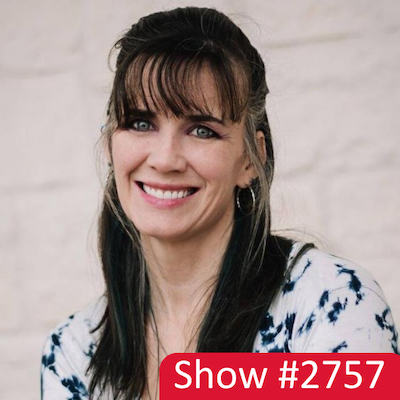
22 Mar March 23, 2026 – Blue Skye Financial Rebecca Irey and Supply Chain Dr. Zal Phiroz
Transcript
0:04 Jim Beach : I have to interrupt the introduction because our show is so good, so cram packed, that I have to go ahead and start right now. Two great guest, Rebecca Irie on financial planning, and then zal for rose on supply chain. Let’s go. I’m very excited to welcome another great guest into our world. Please welcome Rebecca Irie to the show. She is the founder and CEO of Blue Sky financial. It is a national firm designed to help American families change their financial trajectory and have some independence and hopefully a tax free retirement. And she’s trying to help build true legacy wealth and financial independence. She does work more with women, but I think the same financial rules probably apply to us men, so I’m excited to learn from her. Rebecca, welcome to the show. How you doing?
0:57 Rebecca Irey : I’m doing well. Thank you so much for having me. I appreciate
1:00 Jim Beach : That. Mom of seven,
1:03 Rebecca Irey : Yes, sir, seven. Seven children, six grandchildren.
1:07 Jim Beach : Okay, I thought, didn’t I see that you also work with foster families, foster kids? Yes, I
1:15 Rebecca Irey : Had 37 foster children in and out of my home over the span of about 10 years until my husband became disabled, and then we had to that was just, that was too much. But, yeah, 37 foster children.
1:29 Jim Beach : Well, that is amazing, very impressive in God’s work you are doing. So thank you for that. All right, tell us about Blue Sky financial let’s not do the products in your mission or anything yet. Let’s say that for a few minutes. Right now, I want to talk about the entrepreneurship of it. How’d you get started? Why did you start? What’d you do the first day, first customer? Let’s talk to the entrepreneurial history.
1:56 Rebecca Irey : Sure. So I’ve been an entrepreneur since I was a child, actually, my I was raised in South Dakota, not I’m in Texas now, but I was raised in South Dakota. My dad was a rancher, and we, we actually lost the ranch during four generations of my family. We lost the ranch during Farm Aid in the 80s, and that’s the first time I realized at 12 that there were, there were, there must be rules to this game that we all are playing, and I don’t know them. And clearly my family didn’t really know the rules. We knew crops and cattle. We did not know the rules. So I started my little, my little company, when I was 12. First Company, it was called Wolf, Incorporated. That was my maiden name. And so I saw a little ad in the newspaper back in the day, and it said, I’ll teach you how to make, you know, 1000s of dollars every month. And the the idea was, you put an ad in the paper to teach people to make 1000s of dollars every month, and they sent you $1 so my my dad, went to the mailbox and all there’s, you know, 30 envelopes in there with $1 and he’s like, Oh, my Lord, what is Wolf Incorporated? And what have you done? What it because we lived in a very small town, so these were our neighbors. So I’ve been an entrepreneur since I, you know, could basically write in cursive, which was still taught when I was a child. I met my husband in finance right out of college. So it was always kind of a passion for me to know how how the financial game works when you get through college on ramen and ketchup packets. That is, that is how you want to figure it out. So we did that. We had several companies as a couple, and built those, grew those, when my husband became disabled in 2017 I really came back to my first love of finance and and we do serve small businesses. Of course, it is a passion of my heart. Women and Families have a heart for young people, because I have so many of them myself. But I feel like for entrepreneurs, one of the things that I have said is we kind of just fumble our way through right? We’re trying things. We’re trying to figure it out, trying to bring, bring our mission to the world. And sometimes what we want to do at Blue Sky is come around entrepreneurs and families and say, Hey, we can engineer a path forward. Instead of just throwing things to the wall and see what sticks. There are rules to the game, and we can, we can make it work for you and say, Hey, if you did this thing better financially, it will go better for your business next year.
4:27 Jim Beach : Okay, fantastic. And so how’d you get your first customer? Actually, before that, I want to go back to the couple of comments here at Georgia, we just passed a law that school kids are required to learn cursive because we’re realizing that they can’t read, and you need to be able to do cursive, because the rest of the world still does. And I love your dollar thing. As a 12 year old, I wonder, though this is the advice I always give kids, never tell the client how much they owe. Let them choose how much they owe, because you’re a kid and they’re going to feel guilty. I wonder if you had said you’re supposed to send money instead of saying $1 I bet you would have a lot of $5 bills and some $10 bills.
5:13 Rebecca Irey : I think you’re probably right. However, in the little ad that I put in the classified section of our county newspaper, I did not say I am 12. Send me money so I can teach you how to, how to, teach you how to make money. That might have been more effective or maybe not as effective at all. You know, you never know about those things, I suppose. But that’s, that’s true. I’ll always tell people, you’re a child, if you, if you think that card will play, that’s, great advice. I love that.5:41 Jim Beach : Yeah, don’t, don’t. I had a kid who did lawn stuff, and that was his thing. Pay me whatever you want to pay. And he would usually get double, I think, what he was deserving. Okay, so back to blue sky. So you have this mission, what was the first thing that you did? You got your LLC or whatever, and then what? How did you get your first client?
6:05 Rebecca Irey : I have seven children. First client was easy. It was all after. After the first seven clients, that’s what was more difficult. Generational wealth is a big deal for me, and as a serial entrepreneur through my whole life. What I can tell you frankly is that typically, when it comes to planning for the future, entrepreneurs are terrible. We’re terrible when it comes to planning for our own retirement, because we make money. That’s what we do. We build businesses, we we create things, and so we can always sell another house, do another deal, sell another car, we can always put it off, because that’s what we do. So the first thing that I did was set up my children so that I knew I know that I know that, I know they will be financially stable their entire lives. Past that point, it was, you know, there was a lot of trial and error in the financial industry, and while I had a lot of experience, it wasn’t full time experience until my husband became disabled, because we, we had a medical company, and we had a record company, and I was a chef for a while, so a serial entrepreneur, you have, you know, we are, we are the Renaissance people of the modern world. So I’ve tried a lot of things, and I settled into the people that I know best, small business owners and women. And how can we come along those people and say, We can roadmap your wealth generationally, and that’s what we do,
7:35 Jim Beach : All right? And when you say, set up your seven kids, what does that mean? Set them up with an annuity plan for when they’re 65 be more. What does that mean?
7:45 Rebecca Irey : Exactly. So the first thing that I did for them, I feel strongly that people get caught in trial, you, is that financial, wealthy families, leverage their money. They do not spend their money. They leverage it. So the first thing that I did for them is I set them up with not an annuity plan, although that’s a good idea, I set them up with an index, universal life insurance program so they were covered regardless of what happens to their wealth and in the regardless of what happens to their health. In the future, they have coverage. But then I funded that so that I knew that they would have at least $3 million when they they turn 65
8:24 Dr. Zal Phiroz : Now, when my children, that’s a whole life policy, right?
8:29 Rebecca Irey : It’s a type of whole life Indexed Universal Life is not the same as whole life. Whole life is limited on your returns. Indexed Universal Life is is what it sounds like. It’s tied to an index like the s, p or Barclays or futures, so you can increase that rate of return for my children based on their ages. It ranged anywhere from $100 a month to $300 a month for my older children. So not a huge investment, but when I look at the security that they’ll have with that when they turn 65 it was worth it to me.
9:01 Jim Beach : Okay, so how much do you have to put in to get a guaranteed 3 million?
9:07 Rebecca Irey : For my youngest child, it was $115 a month. For my oldest child, it was $320
9:14 Jim Beach : A month, and they have to pay forever every month,
9:18 Rebecca Irey : Yes, every month, forever and when they turn 18, I I tell them about it, and I tell them, and you will take this over, and you will make this payment because you don’t have children, and you don’t have a home, and you don’t have a car payment, and you need to establish the habit of saving for yourself, all right? And I think that matters that that habit is exceptionally powerful.
9:42 Jim Beach : Yeah, they’re nothing like compound interest. So how’d you get client number eight then? So we got the kids all set up. We learned with them. Now you have to have someone else Absolutely. Maybe is it easier to find client number eight or to have a baby?
9:57 Rebecca Irey : Rebecca, OH. Jim. Now that’s a very male question. Come on now, making a human is a hard thing. Number one, it’s not not It’s not scalable. It’s even with foster children, it’s not scalable. So no, I in the financial industry, you can purchase leads, you can establish seminar teaching, which is what I did. I created a scope of classes. Some are on estate planning. Some are on retirement planning. We do tax advisory, we do small business establishment. So what I chose to do was teach. It’s my comfortable space. I homeschooled all of My children, so I developed a series of seminars and classes educationally. And sometimes, sometimes we’ll do a dinner where I can get in front of people and really pass a great deal of knowledge. But it’s never enough. I think once you start on that that knowledge scale, you always want more. So that education path was very important to me. It was important with my children, and it’s important to my clients, financial education in America. And I’m sure you know this, Jim is well, lacking. You know, we talked about cursive in school, and the other thing they don’t teach us is how to how to balance our credit cards or balance our checkbooks. We just tap. It’s done. Okay, that’s not good financial planning to just poop. I spend some money. I don’t know. I guess I’m out of money when the card doesn’t work anymore. Basic financial planning needs to be done, and I think we’re scared of it. I will tell you, Jim, I think of financial planning, especially with women. We take care of our kids, we take care of our parents, we take care of our families. We don’t want to think about it. We don’t want to balance the checkbook. It’s much like a, you know? I will say, as a woman, a fat girl on a scale, right? You have to step I had a doctor tell me one time after my fifth child, the scale is not bad. The number is not good or bad. It just is. It’s where you go from there that is good or bad. And the same is true with finances. Step on the scale. Let’s figure out where you are, and then create a path to where you want to go. You can get wherever you want to go from wherever you are, but you need a map to get there.
12:23 Jim Beach : All right? I like that idea a lot. So you how do you get people to come to your educational event? Like, how do you get the people you sign up, you help?
12:35 Rebecca Irey : I do a lot of I do a lot of podcasts. Education is very important to me. We use social media significantly. Facebook, Instagram, I do not tick tock I, Gen, Gen, Xers, I struggle with the Tick Tock i Someday when we know each other better. Jim, maybe I’ll tell you the story of my first interaction on tick tock. My children made me take it down instantly, because there were just so many things I didn’t know. But we do Facebook that. Rebecca, now,
13:02 Jim Beach : Story ever. I’m not going to tell it to you, but it’s the best story ever. I have a dog phobia. I’m not good with dogs, and I have the worst dog story in the history of pet stories. And I say you don’t want to hear it, then people are going to tell it. You got it, so that’s what you just did to us every time I tell it, people like, why’d you tell me that you begged me to begging? Rebecca, oh,
13:33 Rebecca Irey : Okay, so Tiktok, this is, this is what I know, and I have the most beautiful thing about Tiktok is you can delete your account. I love this so much. I’m grateful for that. So I created a Tiktok account. I figured this was the thing to do. I needed to reach more people, and I picked I’d set up my profile. I’d followed all the steps and chat. GPT helped me, and I picked a profile picture that was me. I’m a brunette, and I was wearing a very pretty red top, and I thought that was very pretty, and so I put the thing together. And what I didn’t realize is that Tiktok, if you don’t choose background music for your profile picture, Tiktok will pick what it thinks is appropriate background music for your picture. So I launched it and I friended all My children, and my son, who is now 23 called me and said, take it down. Take it down. Right now, right instantly, Mother, take it down. And I’m like, oh my goodness, it’s a very pretty picture. What is your issue with me, son, well, it turns out that Tiktok saw that the appropriate song for me in a pretty red top was something by Cardi B that has very strong innuendo that would be inappropriate for any child to hear about their mother and hurricanes and riding things, and I’m not going to go. Any further than that, because I don’t know your audience, but I instantly took it down because it was not, oh my goodness, I I’m a homeschool mother in the South. It was horrifying. So I took it down instantly. I never posted a single thing, actually, and that’s my only interaction with Tiktok. Was it? It picked a very racy, can I say racy? It was racy in the extreme. It was very graphic. It would have had one of those little ease on the on the record label, if we still had records. It was not good. My poor son was, I think he’s still traumatized by the fact that his mother’s picture and that song was in the back. I didn’t know I didn’t know that. So I do not tick tock. I’m a little afraid of it.
15:43 Jim Beach : What are your what is your policy, your belief on spending money on education, right? So you obviously value it. You’ve made that clear with your homeschooling. Now, you got to send the kids off to college. Would you rather go to Harvard and come out with $100,000 in debt, or go to UT Austin on a scholarship and have no debt when you graduate.
16:10 Rebecca Irey : I homeschooled my children through college, through their bachelor’s degree, so you can create a college plan to you know the first two years of college are just repeating your high school career. So you can test out of all those courses, you don’t have to actually go to school at all. So it’s on her books, go take the test. My 15 year old. My youngest is 15. Now she’s already doing that, so she’ll she will hit 18 with her bachelor’s degree. I’m a huge proponent of trying things. And I think when it comes back to our original conversation, Jim about index, universal life insurance programs, not not every tool is right for everything, but that’s a good one for education, because unlike your traditional 529, plan, where you save money and then you spend the money, and then the money’s gone, in that particular program, my children have been able to borrow that money, leverage their their savings, and pay it back to themselves in a way that continues to earn interest in it in direct recognition loan. So they come out of college, they’re 19, they have their bachelor’s degree, they’ve tried a lot of things, and they have no debt, then they can decide, I’ve never heard where they want
17:23 Jim Beach : To go through college. Yeah, what do they put on their resume? Mom’s home, school, college, university?
17:33 Rebecca Irey : No, actually, they don’t they. There are colleges. Many colleges now will accept college placement exams, so CLEP exams, and Dante’s exams, and DSST and Excelsior exam. So all of those are virtual classes that you can take, and then you take a test for the college credit, and then you go to a specific college. Thomas Jefferson is a great example. They’re out of New Jersey, but they work with non traditional students to get you your bachelor’s degree, which is really powerful, actually, for folks who want that bachelor’s degree. Now, I will say, as a homeschool mom, Jim, I don’t necessarily think a college degree is necessary. It wasn’t necessary for me, for any of my businesses, and I’m sure you feel the same. Oh yeah, yeah,
18:22 Jim Beach : Okay, I’m blown away. I never knew that you could do college as a homeschool thing. Let me tell you, you want to see what a horrible person I am, what a horrible son I am. I had AP credits and enough school credits to graduate at the middle of my junior year. So at two and a half years, I could have graduated. I needed one more class to graduate, and I went to one of the most expensive colleges in the United States. I said, in Vermont, that’s just think it’s like $70,000 a year now, plus board and room and stuff, and so I was could have graduated. I took the required class spring of junior year, dropped it after a week, so I had to come back for my senior year. Took the class for a week fall senior year, so that I had to come back in the spring of senior year. So I stuck around for a year and a half extra at, you know, like 70 grand, a quarter or whatever. It is ridiculous there, because I didn’t. I wasn’t ready to graduate college yet. I was having too much fun and stuff. So I had, I didn’t tell my parents any of that till right before they died. As a matter of fact, that might be the reason they died when I told them
19:40 Rebecca Irey : That, well, did you pay for your own college, Jim? Or did your parents pay
19:43 Jim Beach : For you? They paid i i had never, you know that was just not something on the table. They always said that they would pay for wherever I wanted to go. I’m sorry. They would pay for my college as long as I went to Wake Forest, and I had no interest in Wake Forest. But they, they were, you know, very, very supportive and paid for all of my crazy ideas. You know, by after my freshman year of college, I sailed across the Atlantic. And, you know, they were supportive of that, you know, so no matter how stupid my idea was, they were there for it. I love that.
20:18 Rebecca Irey : I think that that’s a very powerful family. Support is really powerful. And I would say my dad was an entrepreneur, but because we didn’t, we were farmers, we were we’re a farm family. We didn’t, I didn’t have a college fund. I didn’t have he didn’t have the capacity to pay for me. So using non using traditional tools in non traditional ways is kind of been the theme of my life, if I’m going to be honest, when it comes to homeschooling, getting my kids through college with no debt, using financial tools that can be utilized, but not in the way Wall Street will tell you, and we need to remake The financial system, because it doesn’t work for it doesn’t work for the average family anymore. Honestly, when you look at the fact that over the last 25 years, salaries, and I know we’re entrepreneurs, so that that’s different for us, but salaries have grown by about 30% and housing has gone grown by 350% the cost of housing, the financial system is broken. So as entrepreneurs, we have the ability to move the world the way we want it to, to break a system and remake it better. That is our superpower, and we need to
21:33 Jim Beach : Do that. What do you think about inheriting significant wealth? Would you do that? Give your kids my children,
21:43 Rebecca Irey : Sure, but you need to they will play by my roles for the next 10 generations. So what we do inside my own family and at Blue Sky is we’re big believers in the Rockefeller waterfall wealth method, which utilizes both irrevocable and revocable trust to structure what wealth looks like for the future generations of my family. Will I leave them wealth? Yes, I will. Will I write the rules of how they access that wealth, what they get to use it for, and how it is distributed? Yes, I will also do you will play by Mama’s rules to my great, great grandchildren, which makes me very happy as a woman, because I’m German and I’m a Texan and I’m female. I like control, and I like to write the rules. So that is just, that’s just me. There you go.
22:33 Jim Beach : I had a very close friend who, when he turned 25 got like, $50 million a check for $50 million and they assumed that by 25 you would be old and mature enough. And since then, he has been a fireman, a ski lift operator, a ski instructor, a Pilates instructor, a real estate agent, and he bought a bookstore, and I have no idea how much money is left. All I know is that he’s been lost since the day he got the money. No clue his life is just adrift. You know, we can’t figure out what he is. And so I think that a lot of families really screw it up badly with giving kids money that they don’t need or don’t hadn’t worked for so I know one of your big talking points is small business owners pay more in taxes than they should. How do we how do we solve that problem?
23:33 Rebecca Irey : I think small business owners do pay more taxes than they should. Well, I am not a fan of taxes. Jim, I don’t look good in orange, so I’m going to tell everyone, please pay your taxes. You don’t have to leave a tip. It ain’t worth it. It is our duty as citizens to, in my perspective, pay as little in taxes as possible, because it forces, hopefully, our government to be more responsible with the money that they do get. And government responsibility is not something that I have a huge hope in but whatever I can do to make that happen, I’m going to do and for me that means pay as little as possible. A lot of times. What I find with small business owners, and maybe you have found this too, is that we have an accountant, and the accountant set or a bookkeeper, and the accountant, the bookkeeper enters all our transactions, the accountant says, Here’s your bill. And many times in my entrepreneurial journey, I looked at my account, and when you have got to be kidding me, I didn’t make that much money, that’s not possible, that I would owe that much. No, no. And my accountant, because this is accountants are, are backwards looking, right? They look at what you’ve already done, just said, Well, yes, absolutely. So said, Well, this is what you made, and this is your expenses, and this is what you owe, so figure out how to pay it. At Blue Sky, we believe in tax advisory, which means, not only will we help you file your taxes, of course, we’ll do that, but we’re going to put our arm around you and say, hey, here are some strategic. Strategic ways that we can do things better next year, so that you don’t have that tax liability at the end of the next year. So a couple of things that you’re there’s my my accountant, and is actually on my other line, our chief tax strategy just was just trying to peep in on me. So one of the things that we believe in is there are certain strategies that anyone can use. So as an example, here’s a very specific one, if you or your listeners don’t know about the Augusta rules. So the Augusta rule allows you to rent your own home to your business 13 times a year. Now you can rent it to yourself. You can buy the food for your event. You do have to actually have an event, so let’s just be clear, you have to have people come over, you have to give a presentation. But think about what you would have to pay to rent a facility. You can pay that to yourself tax free 13 times a year. It shows up as an expense for your business, it shows up as tax free income for you, all of those things can be done, and depending on the area that you live in, that’s a significant tax deduction doing that 13 times a year, but it takes tax advisory, not just a CPA, right? So looking at tools like that that are they’re not super commonly known to every entrepreneur, but having a team of people around you to say, if we do this a little differently next year, it will go better.
26:31 Jim Beach : That helps. We have already blown through our allotted time. Unbelievably. Rebecca, I have 74 more questions. We’re going to have to have you back a another day, another time. How do we get in touch? Follow you online. Continue to learn from you, please, absolutely.
26:46 Rebecca Irey : Website is blue sky. Financial com, blue like the color s, k, y, E, financial.com all of our services that are there, you’ll find a lot of videos, all of the content that we put out. Is there lots of information. You can also follow us on Facebook and Instagram. Y’all already know I do not tick tock, but LinkedIn, I’m there as well. Fantastic team of people. So if you have a need and it has anything to do with money, we can probably help where we’re not the biggest company in the world. We’re big enough to handle all your needs, but we’re small enough to know your name, and we’re very proud of that.
27:22 Jim Beach : Thanks. Rebecca, thank you so much for being with us, and we hope you can come back soon. And happy tax season.
27:29 Rebecca Irey : Jim, it has been my pleasure. Thank you so much, and we will be right back.
27:39 Jim Beach : We are back and again. Thank you so very much for being with us. Very excited to welcome back to the show. Dr zarose With all of the things going on in the world, I thought he would be a great person to talk to. He is a global supply chain expert and business leader who has worked at the highest levels of industry and academia. He spent years at Procter and Gamble managing their some of their international projects, and has worked in partnerships with Walmart, Tesco and Walgreens. He is the co founder and president of peer Consulting Group, and He currently teaches graduate level Supply Chain Management at some place called Harvard. I’ve never heard of it, but I’m sure it’s prestigious. He is a frequent speaker at forums around the world, has been a TEDx speaker and spoke at the United Nations in Canada. Dr ferroze, welcome back to the show. How are you doing?
28:35 Dr. Zal Phiroz : It’s a pleasure to be here, Jim. Thank you so much for having me. I’m doing great. How are
28:39 Jim Beach : You I am great. So he had almost recovered from the pandemic and the supply chain issues that we encountered then and now we have this war going on. What’s going to happen with the Strait of Hormuz, and how much is it affecting the supply chains around the world?
28:58 Dr. Zal Phiroz : It’s really interesting, because if you look at geographically, the Strait of Hormuz, it’s basically a dead end, and then a strait that leads out of it, which means that all the Middle Eastern countries like Saudi Arabia, Kuwait, et cetera, cannot transport their oil out of their geographic hot spots. And what that basically means is that there needs to be a necessarily a reliance, but an alternative measure put into place that would alleviate some of the pressure on the price of oil. Now what that means for our purposes is relatively straightforward in a supply chain sense. That essentially means that if oil goes up and the price of gas grows up, that might mean that the costs of a product go up all of a sudden. Transport costs to get a product from point A to point B, and then points B to point C and D and E, until it’s finally in the hands of the consumer, have gone up dramatically. And. Some cases, by way of the mode of transport, assuming it’s truck, assuming it’s air freight, assuming it’s, you know, ship freight. And as a result, that end cost is either going to eat out from the profits of an organization who’s building a product and selling a product, or a retailer or distributor or manufacturer who’s making, distributing and selling the product, or it’s going to be increased, the price is going to be increased on the side of the actual buyer. So one way or another, there is going to be a cost that’s associated with increases in prices for really anything. But specifically with oil prices going up, and that gas price is inevitably going to mean that there are going to be reverberations and a ripple effect that consumers are going to see, in one way or the other,
30:43 Jim Beach : How much of inflation is caused by increases in supply chain.
30:49 Dr. Zal Phiroz : Well, inflation is an interesting marker. What we can basically see in terms of inflation is if a price goes up from the perspective of how a product is made and where it’s made and how it’s made, then inevitably, that price is going to be distributed down to the consumer. Now we can look at it in a number of different ways. If the price of borrowing money goes up, if the price of transporting the product goes up, if the price of making that product goes up, if the price of storing that product goes up, all of these markers would inevitably result in a price going up. Now, there’s, you know, zillion other factors, currency fluctuation, et cetera, et cetera, et cetera, but in general, if we have a situation in which the price of a product is going up for whatever reason, that essentially means that the cost of purchasing that product and the cost of living will inevitably fall all
31:42 Jim Beach : Right, what do you think is going to happen here in the next month with gas prices? What’s your best guess on, I guess, how the war plays out and how the supply chains respond?31:52 Dr. Zal Phiroz : Well, that’s an interesting question. From my understanding, you know that there’s, there’s quite a few oil reserves that the United States has, and there’s quite a few resources that they can pull oil from. However, it’s my understanding that the apprehension in the market, and even if they were to pull various reserves, the price impact that it would have on the price of oil would not be alleviated drastically. I think there’s, you know, certain percentage that it would go down if they used all the reserves. So basically what this means is, in my estimation, it is an extraordinarily volatile situation. Now this is moving a little bit away from, you know, direct supply chain impacts, but certainly indirect impacts on supply chain. But it’s just from observation, I can see that the volatility in terms of oil futures and oil prices based on, you know, statements that are made in terms of how soon the war will end, that variability and that fluctuation seems to be relatively high, which essentially means that there is the possibility of nodes within the supply chain hesitating and not necessarily knowing whether or not they are going to have consistency or confidence in terms of dictating a price, simply because there might be hidden costs that arise from an increase in the price of transporting a material or making plastic, or, You know, a zillion reasons that that oil and gas are actually used for so with that being said, Whenever you introduce uncertainty into the market, what inevitably happens is, there is, you know, understandably, a lacking of confidence and a somewhat of A withdrawal in terms of production, in terms of speculation of growth, what that could potentially mean is that we enter a stage in which manufacturing and production are somewhat more reactive than they could have been previously.
34:00 Jim Beach : All right, what’s more important, supply chain resilience or efficiency. What is going to drive the economy and, you know, increase our GDP in the world if we become more efficient, or if we handle our supply chain better,
34:17 Dr. Zal Phiroz : Well, supply chain resiliency and supply chain efficiency oftentimes overlap in a number of different ways. If you look at, you know, supply chain resiliency, we’re essentially looking at the ability of a supply chain to adapt and withstand and anticipate somewhat of a disruption or or something that was unforeseen, and, you know, continue to maintain a certain performance level. If we look at supply chain efficiency, what we’re essentially looking at is how efficient and how ironclad we can make the supply chain to optimize it. To be able to operate at its, you know, peak level, right? So essentially, we’re looking at kind of both. There’s a little bit of an overlap, in general, when we have situations in which there’s uncertainty and there’s an upheaval of a system that was accepted, situations like, you know, covid and, you know, what have you, what we usually move towards is, I would suggest that we would move towards more of a resiliency stage as opposed to an efficiency stage. However, the need for efficiency would still be there. It would just be more of a focus on trying to make sure that a supply chain is adapting and withstanding the variety of changes that are now flowing into the flow into the mix.
35:44 Jim Beach : I guess this should have been my first question. Let’s go backwards a little bit. What when we talk about the supply chain today, we think of ships, trains, trucks, warehouses. Is there anything more that the modern supply chain includes, other than the old timey physical, you know, assets, trains and trucks and boats, indeed.
36:08 Dr. Zal Phiroz : So it’s interesting, because a supply chain is is unique in its in its application, and what I mean by that is every supply chain is different. Each supply chain, each product, has a different supply chain. Each industry has different supply chain, with supply chain. Within those product lines, each product will have a difference. And you can even go down to the skew, and each skew could have a different supply chain, which inevitably, you know, changes and adapts as as time progresses. So the the nodes that you were speaking about, you know, there’s a there’s a zillion more that we could talk about in a traditional supply chain, suppliers, manufacturers, distributors, warehouses, retailers, etc. But that’s a traditional supply chain. If you think about how things have changed, you know, now we have last mile delivery. Now we have online purchases, which might be able to bypass a retailer, or, you know, in essence, the online provider might be considered a retailer. So there’s a number of different ways that each supply chain might adapt and adjust. And when you introduce the idea of outsourcing and offshoring, and you look at production facilities, mixing centers, various methods in terms of bringing product in raw material versus finished goods, based on a number of different considerations, like taxes and tariffs, etc, the entire process becomes extraordinarily complex and convoluted. In essence, we shouldn’t be calling it a supply chain. We should be calling it a supply web, in many cases. So to answer your question, a supply chain in its purest form is an interconnected set of businesses that are inclusive of various nodes, various types of businesses, be it a supplier, manufacturer, retailer, distributor, what have you that are all designed to cohesively work together to ensure that a product moves from its source to its destination in the most efficient way possible. There’s a number of different ways we can define efficiency. There’s a number of different ways we can allocate each of those responsibilities within that supply chain. But as a broad definition, that definition would suffice, when
38:12 Jim Beach : We talk about the last mile, is that eventually going to mean drones?
38:16 Dr. Zal Phiroz : That’s an interesting question. I’ve spent some time looking at how the the last mile has adapted and adjusted. And in certain parts of the world, India, Dubai, it’s fascinating, because they’ve got something called Quick commerce. And, you know, in the in the US, we take for granted amazon prime will deliver something the next day, and we think it’s fantastic. Whereas in India and in Dubai, the various cities in India, obviously, and in Dubai, and I’m not sure about various cities in the UAE, they have something called Quick commerce, in which a product can be delivered in a matter of 10 minutes. And I’m not exaggerating when I say 10 minutes. 10 minutes. I’ve seen this happen in action. And this fascinated me to the point where I would see this happening. I would see, you know, this in place in, you know, countries outside of the United States. And I asked various people in the US, former Intel execs, former Amazon employees, what exactly is happening, and why doesn’t the US have it? Why don’t we have something similar to this? I know in the past there’s been there’s been pilot projects with Amazon and two hour delivery windows for everything you could ask for from in various hot spots in the US or cities that have a lot of density. But why not 10 minutes? And the answer I was given was rather interesting. I was pointed to a couple of videos, and some of the videos spoke about what some American companies, Walmart, Google, Amazon, are actually doing in using drones. And I found it absolutely, you know, fascinating to see how long these pilot projects have been going on. What the obstacles are. Some of the obstacles are getting permission to actually fly a drone based on, you know, air, you know, planes moving through and having you. Not causing a problem. There other obstacles were the sound and the noise that a drone makes. So these are some of the potential next steps that could take place right now with the infrastructure that we have developed. Last Mile often means a company that’s delivering a product right to someone’s door. But that could change, and it effectively has changed in other parts of the world to to an eye opening level.
40:25 Jim Beach : I’ve been to India many times, and when you talk about quick commerce, the first thing that jumps to my mind is that a wife will cook her husband’s lunch and have it delivered to her husband at 1130 every day, and millions of people do that, and there are companies that specialize in picking up the food from the wife and delivering it to the husband within that 10
40:49 Dr. Zal Phiroz : Minutes, you’re absolutely correct. Yeah, that I think
40:56 Dr. Zal Phiroz : That my wife now, I love it, you do? I know
41:04 Dr. Zal Phiroz : Refrain from commenting because I know that this is going to be published. It’s gonna be live soon, and I know I’m gonna have to withstand the backlash. I’m gonna frame refrain from commenting on that. But you know, it’s interesting what you’re mentioning, I had looked into this research way back about 10 years ago when I was at USC as a professor there, and seeing this actually inspired a number of case studies and projects that we had students do, because it was so mind blowing at the time that you know, in a chaotic environment, you can have a hot lunch delivered. And it’s not, you know, one person who takes it from point A to point B. It’s, it’s a whole web of delivery processes that they have, not only to deliver the the, I think it’s called tepin, I can’t remember a top I can’t remember what it’s called. And not only to deliver the actual container that the warm lunch comes in, but also to take back the container, back to, you know, it’s absolutely mind blowing. It’s interesting. You know, when we’re on the topic. Here I was, I was flying to India for some work recently, and I ended up sitting next to someone who’s a chef. And what she was saying was absolutely mind blowing. She was basically saying, with quick commerce, what she does is, when she starts a recipe and starts cooking something, she’ll start with whatever ingredient she has, and then as she’s making whatever you know she’s making, she’ll order the next ingredient, and the next ingredient she doesn’t you have it all. It’s almost like just in time for consumers. Absolutely mind42:32 Jim Beach : Boggling it is. It’s unbelievable how efficient that can be, and indeed, really surprising. What about AI? How is artificial intelligence going to change this?
42:44 Dr. Zal Phiroz : It’s interesting. You should ask about that. I’ve been doing some research with artificial intelligence of late, and in the process of this research, I’ve had to interview quite a few companies to understand how they’re applying AI. Interestingly enough, I’ve so far generated some rather interesting results. It seems like a lot of companies recognize the the usefulness of AI, but have not necessarily embraced it and applied it. And oftentimes, you know, there’s this confidentiality, confidentiality and what have you, which makes it extraordinarily difficult to understand exactly what their thought process is. But in general, I can speak to the potential value of AI, and it is rather astounding. If you look at the general supply chain, or typical supply chain, the role of demand forecasting and projection is extraordinarily important. And what I mean by that is understanding how many consumers will buy a certain product on a certain day leads to a number of decisions behind the scenes in terms of how many need to be stored, how many needs to be made, how many need to be packaged, how many employees need to be hired, how many factories need to be built, how many suppliers need to be sourced from, etc, etc, etc. So understanding that demand forecast is essentially, you know, one of the drivers of a supply chain. And as such, there are a number of different tools that we’ve rely on, relied on over the years, from mathematical formulas to statistical calculations to using various coding platforms to try and get some sort of a sense of, you know, what that forecast looks like. And in, you know, in the past, however many years, there’s inevitably been some level of error, so much so that we typically, in practice, determine a good forecast from a bad forecast by whether or not a forecast meets a certain error margin, which basically means we’re accepting that level of error, as you know, it being good or bad, and if it’s a certain level of error, it’s good. If it’s a certain level of error, it’s bad. But there’s no such thing as a perfect forecast. Now, with the advancement of AI, I would assume and expect from what I’ve seen in people who I’ve spoken to and. You know, the developments that have come through that we are now able to use a number of other markers when we form our, you know, regression markers and and and forecasts and projections, to basically see, you know, a wealth of data and understand exactly how it can be looked at, understand exactly what these patterns are to a much greater level than we are doing now to potentially be able to forecast better. Now remember, forecasting is essential because it, you know, it does what I mentioned, but it’s also extraordinarily important because it results in the potential wastage or potential underage of millions of products, which might translate to hundreds of millions of dollars. So that one area of artificial intelligence, or the application of artificial intelligence, is extraordinarily important. I imagine there’s a number of other areas as well, from tracking transport to understanding consumer behavior, to ensuring that products are made with a clear understanding of buying patterns. So there’s a number of different areas that we could gain a lot more insight if AI is used appropriately.
46:20 Jim Beach : I looked it up. It’s called Tiffin in India,
46:24 Dr. Zal Phiroz : And that’s the word I was looking for.
46:27 Jim Beach : The delivery workers are called Double Olis. I see they do about 200,000 meals a day. Yes, wow. Absolutely fascinating. That is incredible. That is incredible. What what do us entrepreneurs need to be aware of? And what should we think about? You know, I think, as an entrepreneur, we don’t worry about our supply chain or even think about it until it’s broken, and then we think about it, and it’s the disaster of the day. What advice would you give entrepreneurs as we’re building our businesses.
47:02 Dr. Zal Phiroz : Well, it’s interesting because, you know,
47:06 Dr. Zal Phiroz : The the term supply chain has been around for, you know, years. However, it was only, I would argue, really popularized, probably the last decade or so when President Biden came on the news and said, you know, we’ve got a supply chain issue. And all of a sudden, the term supply chain, supply chain became kind of fashionable. And you know, what’s interesting is that we kind of, you know, kept supply chain somewhat in the background, but it was a very, very important concept, and has remained extraordinarily important. One thing that is, I would say, the at a foundational point, one of the critical areas of a supply chain is the acceptance of the fact that it is forever changing. There are always adjustments and changes that need to be made within a supply chain based on so many different factors and variables, from regulations to tariffs to consumer behavioral patterns, to restrictions, the price of oil, to the economy, to what have you. So with that being said, entrepreneurs who are moving into any sort of supply chain area or supply chain related area need to be aware that their insistence on remaining rigid is actually detrimental. They need to be as flexible as can be, and aware of the possibility that there’s inevitably going to be some sort of adjustment and some sort of a change, and that’s not necessarily for any other reason, other than it’s the nature of a supply chain. The nature of a supply chain is to change and to adapt and to be flexible in certain ways so that it can survive the constantly changing environments that it’s put into. So as an entrepreneur, irrespective of which arena and area that the focus becomes, it might be AI, it might be last mile, it might be, you know, a whole slew of things. The understanding of the fact that there are changes that inevitably will take place on an extraordinarily frequent basis is exceptionally important.
49:05 Jim Beach : I think one of the things that’s interesting is, you know, during the pandemic, we all ordered in food, and then a year later, we realized we’re spending a lot of money on ordering, yeah, and then we realize, you know, the food’s the cheapest part. It costs more to have it delivered than the meal sometimes, yeah, I think that we’ve really experienced not only tip inflation, but we’re becoming more aware of the cost of supply. And I think that DoorDash and Uber Eats and Grubhub have all tried to figure out how to solve the problem that delivery can cost more than the meal. Is that problem going to be solved
49:47 Dr. Zal Phiroz : Potentially, potentially in based on a number of different variables, what fuels the delivery? Is it gas? Is it electricity? Are we. The most expensive part depends on the geography, right? If we look at the United States, labor is expensive. If we look at a country like India, Labor’s cheap, right? So it all depends on a number of different factors, and based on that, labor cost is a consumer willing to spend that price? What’s the elasticity? Right? We need to look at a couple of different factors to see how things could change. There’s no clear answer. What we can see, though, is, in a sense, we basically got changing patterns that are taking place, numbers of different segments that are all adapting and as a whole, I mean, you’re talking about covid 19. I remember, you know, situations in which you couldn’t eat at a restaurant, so you have to eat at home, right? To get that food delivered was expensive, but you could go and pick it up if you wanted. But, you know, we there were questions as to what was going to happen with commercial real estate. Were malls gonna, you know, die out, where restaurants gonna go away? I mean, when covid 19 finally finishes, you know what exactly what’s going to happen. And in many cases, many cases, not in all cases, but things have kind of kind of gone back to the way things were. Right? Restaurants are busy again. People are buying in stores again. Work From Home has kind of gone away to an extent, right? So in many cases, the unpredictability of how consumer behavioral patterns will change based on various factors that take place are extraordinarily important, and also areas that we can’t easily predict based on the fact that we’re essentially, you know, living in the changes that are taking place from a day to day basis, both as business people and as
51:37 Jim Beach : Consumers, about a mile from our house, Over on the big road where all the retail stuff is there’s a kitchen and it serves the last I heard, seven different restaurants, and seven restaurants cook there. There’s no tables at all. It’s entirely a delivery launch point from those seven restaurants. So they’re sharing the kitchen space, and it makes it easier for the delivery people, because they can pick up potentially seven different deliveries from one location. Do you think that that will catch on nationwide?
52:12 Dr. Zal Phiroz : Well, you know, it’s interesting. I think to an extent, this exists in another way. It’s called a ghost kitchen, or cloud kitchen, or virtual, right? And basically it’s a it’s a kitchen that operates, and it’s exclusively for delivery orders, right? So they advertise themselves, Uber Eats and and Door Dash and what have you. And there’s no storefront, no dine in options, no walk in customers, right? You basically have a situation in which you get reviews and ratings and you order whatever it is, you order from the menu, and someone makes it in a ghost kitchen, and you get it delivered thinking that you’re ordering it from a restaurant, when, in fact, you’re ordering it from one of the facilities that you you might be, might be describing. So is this possible? Sure. I mean, it grew rapidly over covid 19, since then it’s, you know, perhaps faced a little bit of an adjustment. But is it something that is efficient and effective for people who want to order food for delivery? Yeah, absolutely.
53:10 Jim Beach : We need to wrap it up. Dr zaal Thoreau’s, how do we find out more about you? Follow you online, get in touch.
53:16 Dr. Zal Phiroz : Well, one advantage of being named all for Rose Jim is that there’s only one of me in the world, anybody who’s listening is more than welcome to add me to LinkedIn. I would welcome any conversations that might come as a result of this discussion. And anyone who’s interested in in supply chains or operations or the discussion of various industries and how they’re impacted and affected by way of a supply chain impact or change is more than welcome to contact. Fantastic.
53:44 Jim Beach : Thank you so much for being with us, and we’d love to have you back.
53:46 Dr. Zal Phiroz : Thanks a lot. It’s been an absolute honor. Thank you so much, Jim. I really appreciate it.53:51 Dr. Zal Phiroz : We are out of time for today, but back tomorrow. Be safe. Take care. Go make a million dollars.
Rebecca Irey – Founder and CEO of Blue Skye Financial
As entrepreneurs, we have the ability to move the world the way we
want it to, to break a system and remake it better. That is our superpower.

Rebecca Irey
Rebecca Irey is the founder and CEO of Blue Skye Financial, a national firm on a mission to change the financial trajectory of American families, from dependence on broken systems like debt and Social Security to building true legacy wealth and financial independence. With over 25 years of experience, Rebecca brings a unique mix of straight-talk, heart-centered strategy, and values-based planning that resonates with individuals, families, and business owners alike. She specializes in tax-free retirement, Social Security and Medicare optimization, estate planning, and small business tax strategies, offering practical insight delivered with warmth, humor, and conviction. What sets Rebecca apart is her belief that wealth isn’t just about numbers, it’s about dignity, agency, and living a life you’re proud to pass on. From empowering women in transition to guiding veterans and federal employees through benefit optimization, she’s known for making complex financial decisions simple, meaningful, and actionable. Rebecca also leads one of the most mentorship-driven financial sales teams in the country and has partnered with organizations like Save the Children to align every client win with greater social impact. She’s a passionate educator, an unapologetic truth-teller, and a mom of seven who knows how to lead with both head and heart. Whether she’s talking about how the wealthy play the game differently—or why every family deserves a team of experts—Rebecca will inspire your audience to think bigger, act boldly, and build a financial future they believe in.
Dr. Zal Phiroz – Supply Chain & Data Science Professor and Fortune 500 Consultant
The nature of a supply chain is to change and to adapt and
to be flexible in certain ways so that it can survive the constantly
changing environments that it’s put into.

Dr. Zal Phiroz
Dr. Zal Phiroz, a global supply chain expert and business leader who has worked at the highest levels of industry and academia. He spent years at Procter & Gamble leading major international projects and partnerships with retailers such as Walmart, Tesco, and Walgreens. He is the co-founder and president of Pier Consulting Group and currently teaches graduate-level Supply Chain Management at Harvard University. Dr. Phiroz is also a frequent speaker at international forums including TEDx and the United Nations in Canada, where he shares insights on global logistics, sustainability, and the future of supply chains. Dr. Zal Phiroz is a powerful business leader and established industry specialist in marketing and global supply chain practices, within the fast moving consumer goods and IT industry. Zal has held a number of executives, senior management and senior advisory roles including time spent with Proctor & Gamble and TELUS. He currently teaches Supply Chain Management (Masters Level) at Harvard University. With an established foundation in IT and management, Zal led a number of international special projects at Procter & Gamble, including $100M+ projects on shrink, Wal-Mart capacity optimization, Tide product concentration, IAMS demand projection, and recall. In addition to leading an exploratory team tasked with overseeing global P&G innovation, Zal contributed to the Folgers divestiture, Gillette merger, and managed cross-functional special project partnerships with major retailers including Wal-Mart, Shoppers Drug Mart, Tesco, CVS, and Walgreens. As the co-founder and President of Pier Consulting Group Inc., Zal is responsible for direct collaboration with medium sized corporations, leading academic institutions, and federal charities on sustainability, macro marketing, and management and coordination of all supply-chain and operations projects. Major projects have included management of international consumer marketing research, aggregate data analysis on competitive markets, growth opportunity quantification, and optimization of supply chain coordination. A dynamic public speaker, Mr. Phiroz is a regularly invited to guest lecture at various Universities on topics relating to Supply Chain Management. He has also spoken at TEDx, UN Canada, OPAL (Chicago, Newport, Toronto), and currently instructs graduate-level Supply Chain Management at Harvard University.