

26 Feb February 26, 2026 – Doc Holiday Will Cooper and Dropout Millionaire Brian Will
Transcript
0:08 Intro 2 : From the am FM 24/7 Radio Network broadcasting from am and FM stations around the country. Welcome to the Small Business Administration award winning school for startups radio where we talk all things small business and entrepreneurship now, here is your host, the guy that believes anyone can be a successful entrepreneur, because entrepreneurship is not about creativity, risk or passion. Jim Beach,
0:35 Jim Beach : hello, everyone. Welcome to another exciting edition of School for startups Radio. Thank you so much for being with us today. We always greatly appreciate it. Just make sure you send in your checks for listening. We’ve got a great show for you today. We have a greatest hits with a local Atlanta millionaire named Brian. Will I think he’s going to be on the show again in a month or so. But I wanted to go ahead and get this out on the Greatest Hits, because I thought it was a really good interview. And Brian has done so well with so many different things, a lot of different industries. So he will be with us in the second half. In the first half, we have Doc Holiday. Will Cooper, who has invented, discovered an investment strategy with zero risk. Hard to believe that, isn’t it, but it is true, and I’ll let you know that since I recorded the interview, I discovered that one of my better 10 year long friends is actually using this method, and it’s worked every single day. He’s never had a day where he has gone to bed with a loss. Part of the strategy is you get in and get out of every deal within one day. In the morning you buy, and in the afternoon you sell, or in the morning you sell, and in the afternoon you buy if you’re going to short. So really great information. And I just want to let you know some of the claims are crazy, but one of my best friends has validated it 100% so please welcome. Will Cooper, also known as Doc Holiday. He is a financial expert. Spent a lifetime in the oil and gas sector and covid hit. He had done really well in oil and gas seven different startups grossing right out of half billion dollars, pretty impressive. And then that damn covid thing came and knocked us all out. He sent down, sat down, and started spending seven, eight hours a day playing with trading and has come up with a guaranteed way you can never lose money ever. Of course, that’s teasing. That’s the dumbest thing we could ever say. But he’s come up with something called the stock market ping pong method, and he’s here today to talk about it. Doc Holiday. Welcome to the show. How you doing? Doing?
2:47 Will Cooper : Fantastic. Thanks for having me. And to be honest, that’s not the dumbest thing to say. It’s facts. And you know, it’s hard to say out loud, but
2:55 Jim Beach : you know, the F in the SEC can’t say those sort of things. You know, you can
3:02 Will Cooper : put me in front of Congress. The only way to lose money is to break the rules. I promise you, it’s God. So we’ve done it every day for four plus years without a failed day, and have the stats for it. So it does it’s repeatable. And we’re not looking for miracles. We’re not looking for home runs. We’re looking for safe, simple, repeatable, profitable trades. And that’s what we do. It’s the same thing every day.
3:22 Jim Beach : Tell us about it. Tell us the system. Well, first, first, first. Why do they call you Doc Holiday?
3:28 Will Cooper : Well, it’s it’s kind of just a funny banner between some trading buddies over the years. But essentially, from the volatility that we’ve increased here in the last six to seven years since covid, my ability to hit the highs and lows with with extreme precision, especially during the day, with the volatility we have, is giving the name Doc Holiday I never miss.
3:50 Jim Beach : All right. Doc, Holliday was the law man that got and tombstone. Tombstone, okay, yeah. Who did he catch Billy the Kid?
4:04 Will Cooper : No, no, no. They were getting rid of the cowboys out of Tombstone Arizona. They were just, they were contract Sheriff, basically a group of a group of mercenaries that came in to settle a quiet town and had to clean it up.
4:17 Jim Beach : Who was the actor that played him in the movie that I would remember? Okay, that’s it. That’s right. Oh yeah. I’m so sad that we don’t have Val Kilmer with us anymore. I’m gonna watch that an honor of you will.
4:30 Will Cooper : You need to do it. You need to do it. You’ll enjoy it.
4:33 Jim Beach : All right. Now, talk about the trading. How you doing? What are you trading, oil and gas or just normal stuff.
4:40 Will Cooper : So today, today is nowadays. When I say simple, I mean simple. I trade one thing that I trade options, against the spy, against the s, p5, 100. So my early trading career, I traded all I had scanners. I spent over $50,000 on personal education myself. Went to the seminars, took the classes, did all the. Things and and just never was hitting the marks that I wanted to hit, and eventually stopped. And I just said, Hey, we’re going to do like grandpa said, go where the money is, buy low, sell high. Let’s just, let’s just dial it back. And so the s, p5, 100, the spy ETF moves roughly $40 billion a day in six and a half hours. Well, that’s a lot of opportunity in a short window. And so when you start to really take that into perspective, coming into that learning some basic, repeatable skills, coming in there and making an extra 1000 to $10,000 a day, that’s like, Fine, staying at the beach. It’s expected. Nobody’s in shock. Good job. There’s $40 billion dollars moving. And if you follow the rules, starting with the smallest investment, you can imagine, $100 if you follow the rules, you can grow that into freedom, absolute unbridled freedom, as I call it. And all it takes is to follow simple rules. I’ll tell everybody right now that if you don’t ever come and go learn anything further than just mastering a double bottom. The power of a double bottom will change your life. If you go learn trading from anywhere else, on YouTube and infinite Google searches, you’re going to get overwhelmed with data and SMAs and EMAS and volumes and all kinds of indicators. They’re going to tell you about earnings reports and and cash flow and supply and demand zones and inner circle theory. I mean, the list goes on and on. No different than how to make the perfect brownie, you could spend 10 days researching how to make a perfect bunch of bounties, but all you need is a little sugar, little flour, etc. It’s pretty simple. Well, same thing here. All you need to double bottom, a little patience. It’s pretty simple. So we go with opportunity is we don’t need to fight liquidity, we don’t need to fight the crowds. We don’t need to fight short attacks and things that happen on individual stocks themselves. You’re trading in a massive River. All you gotta do is just come dip your cup in and take a little for yourself.
6:57 Jim Beach : All right, give us some of the rules or some Well, let’s take it to the next level. How does it work?
7:06 Will Cooper : So right now I can tell you,
7:09 Jim Beach : typically, we’re
7:10 Will Cooper : going to have opportunities every hour. So this is designed to truly help any person that’s working right now get away from the J, O, B. How can you start working towards true Retirement, true financial freedom, being home, being where you want to be in life, if you’ve got an hour on your lunch break, you can come pull up and we’ll show you how to find a nice, safe opportunity where you can guarantee yourself a nice 20 to 40% repeatable trade every single day on your lunch break, and oftentimes it exceeds that. But every hour, based on the protocol and procedures we use, you will have at least a 20% safe, known profit trade we’re using. Everybody would tell you, this is a Gambler’s world. Going to the zero day to eat options. And I’m telling you that, because of the metrics and models we use, it’s the safest place you can go to sleep at night. We’re not holding any stock overnight. You come in, take your trade, buy low, sell high. Pay the free money. Say thank you. Go to sleep. Investors right now in today’s market, aren’t sleeping too well. Okay, the volatility is shook. Even the best of investors and consistent day traders right now are able to take this volatility. Wait till it comes back to support. Buy that dip, run it. Sell it. Take the money. Go to sleep. So for someone that’s never traded, you’re going to want to go to our website, go to stock market, Ping pong.com, and it’ll walk you through, start to finish, what to expect, the video series and everything that you would need to say, what is an option to thank you for the free money if you’ve been trading, you’ve already tried to explore this field before. You’ve had your success, your failures. This is going to be something you’re going to come to and you’re going to pick it up, and you’re it up in likely six to eight weeks, if you’ve already done some options trading, if you’ve ever experienced it. Right now, we’ve got comment after comment in the feed. Wow. Been in here three weeks, and I’ve learned more than having five years in other classes and on my own, another trader just this morning. This is my first day in with the feed, and I’m already winning. Thanks, doc. So it’s simple. It’s very simple. And if I was to say too much on the feed, we’d give it all away for free. It’s that simple. I’ll say Forrest Gump, simple. That’s why we call it stock market ping pong, the Forrest Gump, simple way to being a gazillionaire. You go Mug your neighbor’s yard for free, just because you like doing it so much you don’t have to worry about money. No more. It’s there every day. It’s a $40 billion day river well, so if you have an hour a day tribe, then, so right now, we’ve got an entry level option at $100 a month, where you can come in, open the door and see what we’re all about. For those that have never traded before, you like, you know this sounds interesting, but before I just want to jump in, I want to peek under the hood and see what’s really going on. So for $100 a month, you can come in get a feel to see if unbridled freedom and daily money opportunities is something you’re interested in learning. And then after that, the annual membership that unlocks all the modules, all the videos, access to me for questions and live daily interaction with the market is $1,500 a. Year. So for less than a cup of coffee a day, you can absolutely come change your life. The results are guaranteed if you do the work. Okay? It’s no different than anything else in life. The diet you started that you broke on day four, it didn’t work. Okay? The same thing here. If you come in and you show up and you don’t show up past day four, it’s not going to be a get rich overnight deal. But if you show up a couple times a week, come in in the evenings, you get off work, kick back instead of watching Netflix, you come watch a 15 minute video on how to change your life, and you slowly apply that a little bit for a walk run. In six months, you’ll be laughing, sitting at the at the coffee shop, making $1,000 on your lunch break. I’ve got a seven year old man in Nevada right now that’s running around literally laughing, doing it, he was sitting there having to work his second act in 70 years, and still working in the mining industry in Nevada. And Damon started learning this, and now he’s making anywhere between 800 and $1,000 a day on his lunch break from his iPhone. Okay?
10:59 Jim Beach : And is that it’s simple. So for $100 a month, how it works? That’s it.
11:07 Will Cooper : So the method is, is what we’re going to well, all you’re trying to do is buy. Is buy between support and resistance. The market can only move three ways, up, down and to the right. Everybody over complicates a very, very simple machine. And one of them’s given. We know what’s going to the right. All we have to determine is it going up or down. So the simplest way is, have we been here before? The double bottom? We come to a place in the market where we look and we see buys were here previously. Let’s just say, for an example, at 680 on the spine, we come back to 680 we expect buys to be there again as previously. You buy that bounce and you carry it for at least 40% you take your profit over time, you can learn to carry that bounce further and manage it even better, right? Same scenario, we come to a place in the market where it won’t go any higher. We get to 685, and we’re finding resistance, just as we did before. This is a great spot to enter your foot trade. Take the market short and take it back down to resistance. This is, this is where we call what I call is free money, because Support and Resistance rarely breaks. We do not expect to break out in the market. It has its boundaries, just like a river. This is a financial River, $40 billion a day, flowing down it, just like your river has to follow the banks. At home, the market has to follow its river banks. We buy at the edge of the bank. We don’t get in the middle of the river. When it gets the other side, we collect our free money and say, Thank you. And so the very simple metric is waiting for it to come to a place it’s already been before, and it will do that multiple times a day. So if we’re very patient and disciplined, we don’t get trapped in the noise and the Hoopa of a big move or a volatility moment that, oh, I wish I’d have been in that I could have made an extra 800 bucks right there. I knew that trade. No, you didn’t. We wait till it comes to a spot that we do know, and that’s when we execute the trade. So in the in the in the discord, you’re going to receive daily examples from market open to market close of trades that I myself are taking others in the feeder taking you’re gonna have individuals responding with their trades, and you’re gonna see that over time, everybody in the feed is all taking the same trade.
13:13 Jim Beach : It’s regardless. So all I can tell you you have a discord going all day.
13:19 Will Cooper : That’s correct. That’s correct. It’s an online Discord server that’s where you’ll have access to all the training videos, access to the 24 hour community. Like I said, we’re teaching in six countries right now, so there’s people in that feed 24 hours a day. So if you have questions, and you’re you just got off a night shift, and you’re coming in and and eating your breakfast last, getting ready to go to bed, and you want to bed and you want to ask some questions, or somebody there with you. We’ve always got somebody in that feed,
13:47 Jim Beach : all right? Tell people it is a community. It’s a fan though. Talk to us about puts and shorting and doing things long so we understand that at least.
13:58 Will Cooper : Okay, so for those that have zero exposure to the market an option. An option is going to give you the ability to leverage your money and the s, p5, 100, the spy options we’re taking, you’re essentially buying one option contract for 100 shares. So a call option is where the simple Metro I teach my students as we’re calling for the market to go higher if the market increases in price, Your call is going to increase in value. If we come to a resistance spot, this is where we’re going to use our put. And I’d simply tell my students, you’re looking to put it in the trash. You’re looking for the market to go down here. So you’re going to take your put. As the market goes down, your puts going to increase in value. So all the call and put does is give you a nice, easy method to either go long or short in the market. Going long in the market, we’re expecting it to increase in value, and going short, we’re looking for it to decrease in value. And we can elaborate on that, and obviously much greater depth. And when I tell you, I try to teach the market beyond simple at the. End of the day, you do not need to know all the ins and outs of everything you’re trading. You need to learn how to buy support and sell at resistance. And the main thing that most traders struggle with, it’s not buying a support, it’s the selling that resistance. It’s taking that free money put in your pocket and saying thank you and so, so the option world allows you to go both short and long in the market with a leveraged instrument, meaning I can come in and and take a 10 to one or 100 to one position. So I’m coming in with $100 buying a leveraged asset that you otherwise wouldn’t be able to buy. You know, I share on the single spy right now is, is $680
15:41 Jim Beach : all right, what else are you allowed to tell us until we buy in? What else can we ask that you’re not going to make us pay for?
15:49 Will Cooper : Well, ask away anything. Ask any, any questions you’d like. I mean, right now, as far as just trying to shoot from the hip and dive into the to the market questions, that’s what I do all day, and that’s what I’m that’s what I’m teaching. So So for for your audience, per se, all I can tell you right now, regardless of your interest in the markets, you need to be looking at investing. I know many of you have already. You’ve got small businesses, you’ve got side hustles, you’ve got real estate, you’ve got a 401, K you’ve got something that’s you’ve determined to be working towards retirement, and if you’re not keeping up with your retirement plan and making sure that’s growing as steadily as your businesses and your other daily efforts, right now, we are losing to inflation. Okay, that’s just a simple fact of it, the dollar is decreasing. We’re pouring more and more money into the economy as our debt runs through the roof. Eventually, somebody is going to call for the debt you can only rob Peter to pay Paul so long. So those of us that have taken those risks and gone to business, much like myself, that they got ripped in the last little short breeze, that was a four month downfall that started to recover pretty quick, that hit me very hard, just because of where I was when I was positioned when it hit. So now imagine an extended version of that that goes on for 18 months, 36 months. So if your business is you position for that. And what I can tell you with the market is whether the market’s going up or down, the economy is good or bad. We make money every day consistently, and so it’s a skill that I would encourage anybody to come learn so that you can be prepared for a a shift in the economy. Your business is no longer valid. Your job is no longer valid. AI has replaced you. You know what? What comes into the next 10 year economy? This is a skill that so long as money moves, this is how they’ll do it. If the stock market doesn’t exist, then you don’t have to worry about money anymore, folks, it’s over, but as long as there is money, this is how it will move. And so anybody that’s preparing for the next decade and longer, learning this skill now will absolutely make a difference in your family’s long term wealth plan. And we already know that there is something coming in the financial future that’s not going to be pretty the writing is on the wall. So, and if we’re not prepared to navigate that
18:05 Jim Beach : if we buy the $100 package, is there something that we’re not getting if we get the $1,500 package correct?
18:13 Will Cooper : So for $100 you get to come in, you get to see what we’re doing every day. You’re going to see examples of the trades. You’re going to get to engage ask questions, start to learn more about what is option trading, what is day trading, and determine if this is something you’re really committed to. Is this something I want to do? Am I going to go further? And at that point, if you say, Hey, I see this opportunity for what it is. I see that I think I could learn this. I want to I want to get all the training information I’ll have access to you, I want to go further. The $1,500 is going to give you access to all the training videos, the protocol, and essentially, grandma’s recipe on how to make a million dollars and and so that’s, that’s what you get access at that at that level. And then there’s also a $6,000 lifetime membership that comes with two one hour private one on one coaching sessions for individuals that that have already gone this route and say, No, I want to trade, and I want to help, and I want to I want a real mentor. There is a lifetime package, and you do get two private one on one, Zoom type trading sessions. So there’s, there’s, when you get to the website, you’ll find everything you need to decide, am I going to tip toe into this? I’m ready to jump in and change my life now. Am I all in? I see the market. It’s not going anywhere. I saw Warren Buffett do it. If I start with $100 now, in compound, I can do it too. Come on in.
19:37 Jim Beach : We’re not going anywhere. And for the $100 package, can you start making trades?
19:43 Will Cooper : Absolutely, absolutely. You’ll get live call outs. You’ll know exactly what I’m in when I’m exiting. There’s examples on my website, there’s examples on our YouTube, on our Instagram, on our Twitter, everywhere you want to go find stock market, ping pong or doc, holiday in the trading world, you’ll see examples of everything we’re. Doing, essentially, I’m going to come in tell you supports here. I’m taking my call entry now, and I’m looking for it to carry back up to this target, meaning that I’m expecting it to at least go to here. This is my first target, and then when we get to that target, I’ll tell you if I’m going further or if I’m taking my profits. Typically, when I get to first resistance, I’m taking my profit. Why? Because I trade support to resistance. That is the free money. It doesn’t break out of the river banks, folks. If it does, it’s going to slosh right back in. Watch every storm. It’ll run out of the banks and flood right back to the river. We don’t chase out of the banks. And so I simply come in tell you the trades I’m in. We’re taking them all together, and everybody’s having fun. So for $100 you can absolutely start making money today if you need help figuring out how to do it, and you can increase your education. There’s ways to do that.
20:49 Jim Beach : I don’t see the $100 package on there. I only see the 1500
20:53 Will Cooper : Yeah, no, it’s just so basically, we had to, this is being added as we speak. So that’s the way she’d pull that up. So we had to increase that to a whopp module to be able to add the bot service to be able to do the monthly subscription, because I’m not going to jockey 1000 people in and out. That only shot up for 30 days when people are signing up for the full year. The website’s a very standard purchase option. Come in, email back, they come to the discord, but to be able to do monthly what I, what I call tire kicker, entry door level, $100 option, I had to set up a bot service to manage all the in and out folks. So that’s, that’s that by the time your podcast airs, that’ll be there. It’ll be there in 24 hours, okay, but, but that’s so basically, what’s happened here is we’ve had a lot of people we’ve engaged with. And, you know, the state of the economy, I get it, I get a strange disconnect. When you can make a salary in 40 minutes, you know, you understand their struggles out there, but money just doesn’t. It gets a little different. And so you start meeting people, and you realize that not everybody’s just got an extra $1,500 right now, and if they do, it’s sitting there for an emergency. And that the real purpose of this mission is to change lives. And in order to do that, we need to make it accessible to more people, right? And so the whole desire is that we decided to lower the entry level, give people a chance to say, you know, we came here. We saw your website. It looks really good. I know there’s some people winning. We see the testimonials, but I just can’t put $1,500 on a chance right now. I just can’t afford it. But for $100 you can peek under the hood and see and if it’s a sure deal and you’re confident in yourself, you can make that extra investment, if that’s something you want to do, or you can take the $100 monthly deal, keep learning and growing over 90 days, and walk out of it profitable that way as well. You may not need all the videos. You may be able to come in and simply see that, oh, wow. You buy a double bottom right here, and you make money. One of my best traders that ever came to me had $700 to his name, after after training, and he paper traded for six weeks. Everybody that comes in will paper trade. We practice with Monopoly money, practice till proficiency, and then we go the market. So he came in, he paper traded for six weeks, and he sat there, he went live with $700 he bought nothing but double bottoms 30 minutes apart or further in the market. And he turned $700 into 12 grand in two weeks. And I never heard from him again. He was done. He just kept winning every day after that, wow. Turned $700.12 grand in two weeks. But it took him six weeks of practice. He was an Uber driver that had been in a car wreck, and unfortunately, was 26 years old at the time, didn’t have commercial insurance on his private automobile, so they wouldn’t cover it. Uber wouldn’t cover it. So now he’s got no vehicle, no job, and a banged up neck sitting at home, and next thing. So he had the time and literally practiced every day, and in six weeks, he turned his last $700 into financial freedom at 26
23:45 Jim Beach : years old. Wow. Will.com
23:48 Will Cooper : that’s a god’s honor story. Put me in front of the boat.
23:52 Jim Beach : How do we find out more? Get in touch. Will
23:55 Will Cooper : star market, Bing, fong.com, or find us on Instagram, YouTube, reach out, drop us a questionnaire, hit us with a comment, we’re very engaging as a community like I said, it’s a family. These are men and women from around the world trying to change their lives. They’re fighting inflation. They’re fighting the economy, and many of them got, well, we’ve got some large families. We got one member with 11 kiddos. This is a huge tribe, and we’re changing lives together. You’re going to find support. You’re going to find love. So anywhere you see stock market Ping pong.com, or stock market ping pong, that is us. We’re the only ones in the game with that name. Reach out and one of us will help you. Fantastic.
24:31 Jim Beach : Will thank you so much for being with us. This is a great one. I think I’m going to do it myself. Thanks for the time, and we’d love to have you back.
24:37 Will Cooper : Thanks a lot. It’s an absolute pleasure coming. I’d love to change your life, just for sport, let’s
24:41 Jim Beach : do it all right, thanks a lot. Will take care. Don’t hang up and we will be right back. You.
25:00 Intro 2 : Olis, well, that’s a, that’s a, that’s a wonderful question, actually, oh my gosh, I love the opportunity to do this. Thank you, Jim, wow, that’s, that’s, that’s a great one. You know, that is a phenomenal question. That’s a great question. And, and I don’t have a great answer,
25:15 Intro 2 : that’s a great question. Oh, that is such a loaded question. And that’s actually a really good question.
25:21 Intro 2 : School for startups radio,
25:25 Jim Beach : we are back and again. Thank you so much for being with us. Very excited to introduce my next guest. This is a really cool, dynamic story. Please welcome Brian will to the show. He is author of a new book, how called the dropout, multi millionaire, 37 business lessons on how to succeed in business with no money, no education and no clue. Fantastic title. It has almost 250 reviews on Amazon, which is a huge number. It puts it in the top 1% of books out there on Amazon. Very impressive. Brian has been successful in a lot of different businesses, four main industries, I think, he is currently working in the restaurant space, residential development and also a tech company. Brian, welcome to the show. How you doing?26:21 Brian Will : Thanks, Jim. I appreciate you having me on today. I’m excited about being here.
26:24 Jim Beach : So how far did you make it in school? What drop out of? What graduate school you drop out of your PhD program? What? What did
26:31 Brian Will : you do? No, I actually failed out of high school my junior year, primarily
26:35 Jim Beach : because exactly me. I just stopped going okay, and eventually, did they not have anything to say about that?
26:43 Brian Will : Yeah, I have kind of a sordid, rough background, so they weren’t really too involved.
26:48 Jim Beach : Okay, well, I’m sorry to hear that the system let that happen as well.
26:53 Brian Will : No, if you and I’m kind of old now, I’m 57 and we go back to the latch key kid days, you know, where people don’t really know what that means anymore, but I was the kid that got up and your parents were gone and came home from school and your parents were gone, and by the time I hit 16, I just didn’t feel like going anymore, and they weren’t there to make me so I didn’t go.
27:11 Jim Beach : All right, and what happened to what did you end up by 20? What were you doing?
27:16 Brian Will : Well, I got back in I ended up graduating, and I went to the military because I didn’t have any place to go. Spent a year on active duty, then transferred to the National Guard and tried to try to work, tried, couldn’t hold a job, kept getting fired from construction to restaurants to, you know, working as a waiter and a bus boy, and finally decided that I was unemployable, and my only real option was to go into my own business. I started my first landscaping company at 21 that’s how I got started.
27:43 Jim Beach : And why were you unemployable and getting fired by all of these people? Were you a bad employee? Would you fire you?
27:50 Brian Will : Now? I would have fired me. Now, yeah, I grew up in kind of a rough household, so I grew up angry, had a big chip on my shoulder, didn’t like authority, didn’t like to be told what to do, which is kind of a challenge in a working environment. So, you know, first thing you should obviously do when you have all those issues is join the military.
28:10 Jim Beach : Well, I think so I do think it’s some of that out of you, isn’t it, that what happened with you?
28:16 Brian Will : It was it, you know, that I needed it at the time. I didn’t have any other choice, and looking back, it was something I needed to do in my life. So gave me a little bit of discipline, you know, little bit of appreciation of hard work. And so when I got back off active duty, I went, you know, went into my own business, and that’s how we got started.
28:34 Jim Beach : You know, Brian, I believe that there are certain privileges that our country gives us, the privilege of driving on the roads that they built, the privilege of collecting unemployment insurance from them from time to time. I think that for those privileges, we should pay a price. And I think everyone should go into the armed services for two years, at which point they force you to take basic parenting classes, basic check book balancing and turn you into a fighting guy, or maybe send you off to the Peace Corps or something. But I think everyone should do something to give back. What do you think?
29:13 Brian Will : You know, it’s an interesting debate, and while I don’t disagree with you, and I think there are a lot of people that would, would, would agree on that point. You know, I think America, being a free country gives us the opportunity to do it if we want to and not do it if
29:27 Jim Beach : we don’t. So then you don’t get the opportunity to get a driver’s license. You don’t get the opportunity to collect unemployment insurance later. Because that’s very possible to play along.
29:35 Brian Will : Yeah, that’s very possible. My daughter actually went into the into the AmeriCorps, not Peace Corps, but AmeriCorps, after she graduated and spent a year volunteering. So that’s different types of good programs out there.
29:47 Jim Beach : All right, so how’d the landscape business do? It went good until it didn’t right.
29:53 Brian Will : So we built it up, and I made a lot of mistakes and learned a lot of lessons, and then it crashed and burned. Lost every. Thing, and we had to start over again when I was
30:04 Jim Beach : 28 How do you burn a landscape business?
30:08 Brian Will : Well, you, you start a franchise, but you use a business partner that didn’t write your documents correctly. They were called your you fuck documents back then, which allowed your franchisees to essentially stop paying you, and then you on the construction side of the business. You concentrate 90% of your business with one developer, and when you get fired from that developer, your entire company collapses.
30:32 Jim Beach : So two big mistakes, yes,
30:37 Brian Will : okay, so don’t put all your eggs in one basket. Mistake, basically, and don’t get so deep into
30:43 Jim Beach : debt with your trouble because of that,
30:47 Brian Will : two houses, all my cars, all my money, I bounced 130 checks in one month. The bank canceled my deposit accounts. Had a wife and a new baby, and we had to go find a new place to live.
30:59 Jim Beach : It was pretty bad, yes, and what were the lessons learned? What did you take from that other than the fact that you are you still married to that woman?
31:09 Brian Will : No, although we get along great, okay, but we are not married anymore.
31:13 Jim Beach : I also have an entrepreneur divorce, so I can totally understand that those sort of things just are hard to work out.
31:22 Brian Will : Yeah, biggest, biggest lessons learned, of course, is don’t concentrate all your business in one area. Secondarily, however, I was spending every dollar I had. Didn’t have any savings. Got in, you know, we were up to our eyeballs in debt, and when we had a couple of bad months, we got into serious trouble, and that’s when we had to start selling everything. So I’ve never made that mistake again,31:46 Jim Beach : all right, and how did you bounce back? What was the next venture from
31:50 Brian Will : there, I went started selling insurance for an agency. After a couple of months, I decided to start my own. This was back in about 1999 right, as the internet was coming online, and we, we mistakenly, without knowing what we were doing, created the first call center in the health insurance space, which was bought by a venture capital firm, which is how I got back into the venture capital and technology side.
32:13 Jim Beach : So did you trip by mistake, and all of a sudden you had developed a call center? I trip out, damn. I hit my head. Oh, and I built a call center in the same time.
32:23 Brian Will : Jim, this is, let me tell you, this is what I call ambitiously lazy, right? I am ambitious, but I am lazy. So I try to figure out ways to do things that I could do without me having to do them. So instead of me going out and doing all the sales, I hired a guy to to do the sales while I sat at home. And then instead of me taking the calls, I hired a guy to take the calls. And then instead of me doing the paperwork, I hired some do the paperwork. And then we got tired of paying the guy who was running around town, so we called the insurance company and said, Hey, can we do this by fax? And they agreed. And now we have people just sitting in an office, selling over the phone, doing faxes. And then when the internet came along, they were like, Oh my gosh, if you can do it by fax, we can do it online, and you’re the only people doing it. So my company got bought, and it was literally just me being too lazy to go do all the things that there needed to be done to build
33:13 Jim Beach : a company like that. You know, I feel like I should call BS on you. Brian, why? Okay, so then what did you do? So sold
33:31 Brian Will : that company, and then we ended up turning into a company called connection calm, which went public, then started another company, doing insurance. Again, again, this time we did a pure online ended up selling that company to get insured.com which now powers probably seven or eight different state exchanges. We started another online company with another partner, selling online leads in the subprime and insurance market. Sold that company to a private equity firm out of Chicago, and then started doing consulting. It’s amazing when you sell a couple companies, everybody in the world thinks that you’re super smart, and they want you to come in and tell them what they’re doing wrong, talking billion dollar public companies, and I used to laugh at 10 years ago, I was probably mowing the CEO’s grass, and now I’m in his boardroom telling him what he’s doing wrong,
34:17 Jim Beach : and what were they doing wrong? What was that business? Mostly a cash flow business or or what?
34:24 Brian Will : No, it’s direct to consumer sales, right? So if you think of the insurance industry 20 years ago, everybody was doing it face to face, and today you go online and you buy it, or you call a call center. And so my specialty was direct to consumer which is teaching call centers how to sell. And all these insurance companies were trying to do it, but they were trying to do it from a corporate perspective instead of an entrepreneurial perspective, and none of them were making money. So, you know, I’ve gone in and done turnaround work on on four or five different companies teaching their people how to sell and make a profit.
34:56 Jim Beach : And what is the trick there? Uh.
35:00 Brian Will : Not the that’s a long, long answer, but the trick is the correct lead by you have to get correct ROI on your leads, and then you have to teach proper sales techniques to your sales force. This gets into my 7020, 10 rule, where we fire the 10% of the sales force all the time. We replace them, we try to train the balance up. This is called bottom up P and L training, where we we do actual individual P and L’s on every single salesperson organization. This allows you to see who’s profitable and who’s not just not, not just who’s selling and who’s not, because there’s a difference there. And if you can build those P and L from the bottom up instead of the top down, you can make an organization
35:38 Jim Beach : much more profitable. Kind of brutal. It’s brutal, but the world is brutal. Oh, it’s fuzzy and sweet, tastes like smells like daisies.
35:53 Brian Will : But when I roll into a company that’s losing a million dollars a month in their call center in Minneapolis, you know you have to make hard choices, and you have to do things that aren’t
36:02 Jim Beach : comfortable to fix it. Yes, that is very true. All right, let’s talk about the book. What are some of the 37 lessons in the book?
36:14 Brian Will : Oh my gosh, most of these my book is, is less on the technical side or the skill set side of business, and really more on the mindset side. I find that a lot of entrepreneurs, and I would, I would think that from a little bit I’ve read about your organization, probably agrees with me here, that mindset is one of the most important things, and most entrepreneurs launch without really knowing what they’re doing. And the first, the first mistake they make is they don’t bring in a coach or a mentor to help them overcome the easy mistake so that they can get on to the bigger ones. So we talk a lot about a lot about mindset in the book, the way you need to think, what you need to what you need to understand about yourself, and what you need to understand that you’re good at and what you’re not good at. And bringing in, you know, backfilling your organization with people who can, who can are good at where you’re weak. That’s a lot of what the book is about. And it’s a lot of stories where I made mistakes along the way and had to learn those examples. So a lot of soft skills.
37:14 Jim Beach : All right? Is everyone capable of learning those?
37:20 Brian Will : I think so. If you are see I talk about the fact that most people, most businesses, are just successful, have these different personalities. And a lot of people who start businesses think that they’re the entrepreneur, and really they’re the technician or the specialist or the person that does the work, right? I call it the Joe the Plumber syndrome. Joe starts a business and because he used to work for a bigger plumbing company, and now he thinks he’s a business person, and he is, but Joe doesn’t have the back office skills that he needs in order to run a proper company. He’s good at doing the plumbing. He’s the specialist. So if you know you’re the specialist, you need to bring in somebody else to manage the office, and maybe somebody else to do the actual sales. And your ability to recognize who you are within the organization is a lot of times determined on how well your organization is going to go and how big it’s going to get, and how much money you’ll make if you can get your ego out of the way. In that situation, he can be the entrepreneur, but he’s also not the manager, right? So I use the example of myself as I’m terrible at details. I’m a good sales person, but I’m terrible at details, and I think that’s that applies to a lot of sales people. So I have to hire people to manage the back end and manage my schedule. I have to hire people to look after the payroll, and have to hire people to do all the things that I don’t want to do and can’t do, so that I can do what I’m good at. I have a famous saying in my organization that I’m useless, right? Don’t ask me about all the again. Brian, I’m good at sales, that’s what I’m good at. I can start them and I can sell them. I can sell the vision. Okay?
38:49 Jim Beach : And then who’s good? Is there always someone that you bring in that’s good at the operations? Or is that always the same person?
38:55 Brian Will : I’ve had different people over the years. I had one person who stayed with me for about 20 years through three companies that handled operations, but he’s gone on to do his own thing now, so I’ve brought different people in to do it. So it really depends on
39:07 Jim Beach : the business. All right, you have a chapter about That’s called being the CEO. What is that in relation to entrepreneurship?
39:17 Brian Will : So I think if you’re going to be a CEO and and also if you’re going to launch a company, there are certain things that you need. That you need to understand about business, and a lot of them is that the business isn’t always going to be the warm and fuzzy fun. Everything’s working out in your favor. Kind of thing, as a CEO, you’re going to take a lot of hits. You’re going to take hits from your employees, you’re going to take hits from the government. You’re going to take hits from people on social media, you need to understand that being a CEO means that people are going to come after you and try to take you down, or slow your business down, or, you know, hurt you in some way. And you’ve got to be able to stand in the kitchen when it’s on fire and not get excited and keep moving forward. So a lot of that is about mentality of the. CEO and what’s going to come at you and how you need to handle it. And I use an example. When I was young in business, and I was having problems with this company, and this guy pulls me in his office and he said, Brian, this is the business that you signed up for. If you can’t stand the heat, you need to get out of the kitchen and do something else. And that was one of those aha moments in my life where I said, Okay, I can handle it. And so you, you, you take what comes at you, you move on, and you keep going.
40:29 Jim Beach : Very well said, yes, there always has to be someone who does put up with the absolute the hardest part. Not easy. Going through the book here, looking at things I want to point out or kind of address, negotiating. You’ve already pointed out that you’re kind of a jerk like to fire people negotiating. Your title is you need to be relentless.
41:00 Brian Will : Yes, yes. Nego and my next book coming out is actually called No, just No, and it’s the psychology of sales and negotiation, and it is about watching every penny that you spend. It’s about watching every deal that you do, and it’s about making sure that you’re not getting taken advantage of or people aren’t overcharging you, or you’re getting the best deal possible for whatever it is you’re trying to negotiate. And I use this example in my business all the time, when contractors come in and they want to charge me $1,000 to rewire an outlet in a restaurant, and my first response is, I’ll give you 709
41:39 Jim Beach : times out of 10 they take it. If I gave everybody
41:44 Brian Will : that walked in my door everything they think they wanted, I would be out hundreds of 1000s, if not millions of dollars over the years.
41:51 Jim Beach : So you’ll pay $700 to rewire one outlet, believe it or not, that’s what they wanted. You can do that in like eight minutes, right? If you knew how to do it, I don’t. I Doug, call me for God’s sake. That was
42:10 Brian Will : a true story. My manager walked over and said he wants $1,000 and I said, give him 700 he just stood and looked at me. I said, Go offer him 700 he came back. He said, he’ll take it. I said, I told you,
42:22 Jim Beach : what are your restaurants? You have restaurants in the Atlanta area, right?
42:27 Brian Will : We do. Our primary brand is Central City tavern. It’s kind of an upscale
42:30 Jim Beach : sports tavern. Where is that located?
42:34 Brian Will : Alpharetta, Johns Creek, Buford. And we have one coming in Woodstock next year.
42:39 Jim Beach : Okay, so how big a place is it? Is it designed to sort of be a local watering hole?
42:47 Brian Will : It is. It’s we call a central city in the city center. So it’s kind of the cheers bar in each of the towns we put them in.
42:54 Jim Beach : So is it 5000 feet or smaller? Or how
42:58 Brian Will : big four? 4000 square feet is our footprint. We’re, we’re bar centric. So we have a giant bar with indoor, outdoor Windows. You can sit on the patio, sit inside, most of them, look out on a green space, you know, where people can gather outside. So it’s, it’s kind of a hometown bar kind of feel,
43:16 Jim Beach : all right? Was it on one of the TV shows?
43:21 Brian Will : Nope. It’s Nope.
43:23 Jim Beach : Hasn’t been on a TV show. I’m trying to figure out if I’ve eaten there or not. I don’t know. Have you been around the Atlanta area or the Alpharetta area? Yeah, I live in Sandy Springs.
43:37 Brian Will : Oh well gosh, okay, yeah, Alpharetta right downtown, and city center and Sugar Hill city center. I also own the Derby, which is in John’s Creek. And I own cantina loco, that’s our other brands. If you lived here long you’ve probably heard of the derby.
43:50 Jim Beach : Yes, I’ve heard of the derby. Yeah, I’ve owned that one too. I don’t know when I’m trying to remember the last time I went there, though,
44:00 Brian Will : probably a long time ago. We used to have more. We’re down to to, I own one location, and I sold one of them to one of my employees. And that one’s up the one I owns up on Nesbitt ferry in
44:11 Jim Beach : old Alabama. That might be the one that I was at maybe 20 years ago. Were they that old 15?
44:19 Brian Will : Oh, yeah. It’s been there for been there for 40 years. Okay, yeah,
44:25 Jim Beach : I have been there. Okay, it’s an old smoky bar. Yes, exactly. Yep, kind of like manuals, yep, I only I probably haven’t been there once in the last year. I don’t even go in the bar. You mean your own bar?
44:44 Brian Will : Yeah, I don’t. I don’t go to the bars that often. In that one because it’s a smoky bar. I don’t go there that often,
44:51 Jim Beach : okay, but don’t you want to have a bar where everyone knows your name?
44:56 Brian Will : Song like, that’s the central city, yeah, that’s the central city tavern for. Am. Okay, that’s different. All right, all
45:03 Jim Beach : right. And how often do you go there?
45:06 Brian Will : Well, I live about a quarter of a mile from the one here in Alpharetta, so I go there a couple times a week. The other ones, I don’t really go to that much. I have, I have always build businesses that don’t require me to actually be in them and working them. So that’s because I’m ambitiously lazy. That’s exactly right.
45:21 Jim Beach : I’m paying attention. So what do you do all day with yourself then? Well, I
45:27 Brian Will : just got back from Park City for two weeks, and in two more weeks, I’m headed to, well, I’m on city council here in Alpharetta, so we have a retreat, and then I’m headed to Vail for a week, and then I’m headed to Park City for two weeks, and then I’ll be back in Atlanta. Oh, here’s a very fun fact, on Wednesday, I’ll be at SpaceX in California.
45:45 Jim Beach : Oh, wow, that is cool. That’ll be fun at Park City right now. Oh, yeah, yes, skiing there this very second as we speak. Yep, I LOVE Park City. This will air tomorrow, and they’ll be skiing then too. So yeah, Park City is one of my favorite towns. It is a great place, yes, yes. What are your thoughts on the four hour work week
46:15 Brian Will : if you set up your businesses correctly? Very viable, not in the beginning. Of course, everybody in the beginning has got a hustle, but once you get it established and you set your business up, you can set it up to where much like I do, you don’t have to go in and actually do the physical work anymore.
46:34 Jim Beach : And if you’re so strict with your call center workers, how do you judge individual restaurants? Or do you even judge individual managers or individual servers? How does that practice play out in a restaurant world?
46:52 Brian Will : So I’m a big, big, big believer in PNLs, and I believe that your PNL is what you call your your magic crystal ball. You can tell almost everything about a business, if you dissect a PNL and analyze it correctly. So every category within a restaurant is broken down on our PNL. So we know food costs, labor costs, liquor costs versus sales. We know what our comps are, which is what they’re giving away. And by managing those three metrics, I can tell you if food’s being stolen, if it’s being not charged. I can tell you if the bartenders are over pouring. I can tell you if the staff is writing the clock and running over their hours. I can also manage all of them off my phone, because we have an app that tracks everything that goes on in the stores. So I can look at my phone right now and look at every single open, check, closed check, every tip that’s been given. I can look at the cameras and see what’s going on. I can see my food costs. I can see what items are popular. I can literally manage that entire business without ever stepping foot in it, by looking at PNLs. So we’re, we’re deadly serious about the metrics inside of a business,
47:58 Jim Beach : and that’s how we manage them. And does the manager get compensated based on how closely they hit the numbers?
48:08 Brian Will : Yep, so they have their base salary, and then they have the three metrics that they have to manage, which is food, liquor, labor, and they get bonused on whether they hit them as well as the regional manager and the district manager.
48:21 Jim Beach : So how close to projections they are.
48:25 Brian Will : So for instance, your liquor costs in a restaurant need to be at 22% now that’s my restaurant. We pour a little heavier, we make we make what we call badass drinks in our restaurants, where a fancier restaurant might be running 17 or 18% but they know that they have to hit the 22% liquor cost. So when they do their weekly orders, for instance, they can order up to the 22% mark. And if they go over, they have to explain why. And then we get to the end of the month, if their numbers are off, we have to go back, and we have to explain why. Same thing with food costs and the same thing with labor costs. Everything is balanced to that exact percentage.
49:01 Jim Beach : What’s your policy with comps?
49:04 Brian Will : So we know as a restaurant that bartenders are going to give stuff away. We don’t care, as long as it stands within about two and a half percent. So two and a half percent is going to get comped, whether it’s given away, lost whatever, and you’re okay with that,
49:24 Jim Beach : and who’s going to decide what customers get that comp the bartender. Are the bartenders bartenders. But you have
49:33 Brian Will : to understand, if they start doing it too much, and that comp goes too high, then the liquor costs will go off. If the liquor costs become too high, then we go back and we start analyzing why it’s too high when it’s too high, and then we find out who’s doing it. So as a for instance, I had it happened one month and we were missing 400 glasses of beer in one month in a restaurant, and we came back and pulled the cameras, and we saw the bartender was giving away free drinks all the time.
50:01 Jim Beach : So you fired him or killed him. We fired him. Do they get a warning or do they just get fired?
50:10 Brian Will : No, you get fired for that. That’s blatant theft.
50:15 Jim Beach : Yeah, 400 free beers is I would assume his tips skyrocketed, right?
50:21 Brian Will : Well, they’re either giving them away, or they’re they’re what they’ll typically do is they’ll take the cash, the person’s paying cash, and then they’ll, you know, comp it out, and then pop the cash in the pocket, which is what we saw.
50:33 Jim Beach : How long do you keep your camera film?
50:37 Brian Will : I think we’re only on a seven day loop right now
50:45 Jim Beach : I’m the type customer Brian that eats out. Well, it used to be 20 only, 21 meals a week only, but I’ve come back a lot now because I have a chef wife who cooks delicious foods, and they were trying to the kids to learn to eat at home and stuff so but when we eat out, I expect, you know, I expect my appetizers free, you know, I’m, I’m that Customer, wow, because I bring the business, you know, you know, I’m the, I’m the type customer that for nakato Japanese restaurant on Cheshire bridge. Also landed them the Delta dining contract for all air fly all of their planes to Tokyo. Wow. You know, I got them that contract that is a mega influencer contract. Yes, I don’t expect to pay there. Now that’s probably worthwhile, for sure. Change that just closed there at exit five, not the exit eight, but exit five, perimeter mall location I never paid there ever Not a cent. Interesting, but you know, why is I had the CEO, the CEO of PF Chang was in town one day, and I knew about it before they did, and I was able to walk in with him when he went into the restaurant, and they all thought that I had showed up with him. I just timed it right? They all they, I mean, I knew the guy. I mean, I knew he was showing up, you know, right, right. But I was able to leverage that with some artistic planning of my arrival.
52:41 Brian Will : I worked out perfect for you,
52:44 Jim Beach : yes, and I’m going to try it at all of your places. I was on the phone with Brian yesterday,
52:55 Brian Will : just bring the rain and we’ll
52:57 Jim Beach : set you up. He wants me to smile to the video.
53:01 Brian Will : Say, bring the rain, and we’ll set you up.
53:04 Jim Beach : Brian, how do we find out where get a copy of the book? Follow you online. Go have dinner with you, buy some landscaping. Have you designed a technology platform for us, or any of the above? Call Center stuff?
53:16 Brian Will : Www, dot Brian will media.com
53:21 Jim Beach : Brian, everything’s on there. Will media.com
53:25 Brian Will : Yep, all of our podcasts are on there. The books are on there. The site isn’t a redesign, so don’t judge me too harshly on what it looks like now. It’ll be redone a couple of weeks.
53:33 Jim Beach : Ryan, appreciate you being with us. Great stuff, great story. Congratulations on the
53:38 Brian Will : book. It was super fun, man, I appreciate you53:41 Jim Beach : having me. Likewise, we are out of time for today, but back tomorrow. Be safe, take care and go make a million dollars. Bye. Now
Will Cooper – AKA Doc Holliday – Founder of Stock Market Ping Pong
We’re not looking for miracles. We’re not looking for home runs.
We’re looking for safe, simple, repeatable, profitable trades.
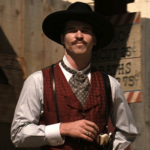
Will Cooper
Will Cooper is a serial entrepreneur turned professional day trader with more than 15 years of experience building companies in the Oil and Gas industry. During that time, he founded and helped develop seven start ups that collectively generated more than $500 million in gross revenue. When the COVID pandemic disrupted the energy sector, Will shifted his focus to the financial markets, transforming a long standing personal interest into a full time profession. Over the next two years, he developed a proprietary trading protocol and algorithm designed to identify repeatable opportunities using a disciplined, rules based approach. Today, nearly six years into his trading career, Will trades independently from his laptop, applying the same structured thinking that guided his success as an entrepreneur. He now shares his experience and methodology with others, helping traders understand the principles of consistency, discipline, and process that drive long term performance in the markets.
Brian Will – Serial Entrepreneur and Wall Street Journal and USA Today Bestselling Author of The Dropout Multi-Millionaire: 37 Business Lessons on How to Succeed in Business With No Money, No Education and No Clue
I had always build businesses that don’t require me to
actually be in them and working them.

Brian Will
Brian Will is a serial entrepreneur who has created or co-created seven very successful companies in four different industries over the last thirty-five years. These companies were worth over a half a billion dollars at their peak. His first business was a 10-year stint in the landscaping industry that he started when he was twenty years old. This was followed by three online internet start-up companies during the dot.com boom of the late nineties and early 2000s. Today, Brian owns a growing chain of restaurants in the Atlanta area as well as an Insurance and Technology company based on Denver and a residential and commercial Real Estate business in Georgia and Florida. He also serves on city council in his hometown of Alpharetta, Georgia. Brian is an industry leading Business and Sales Management Consultant to companies from startups to fortune 500. During the course of this career Brian has done multiple turn around projects and helped those organizations drive billions of dollars in sales. He now owns a growing chain of restaurants in the Atlanta area, an Insurance and Technology company in Denver and a residential and commercial Real Estate business in Georgia and Florida.