
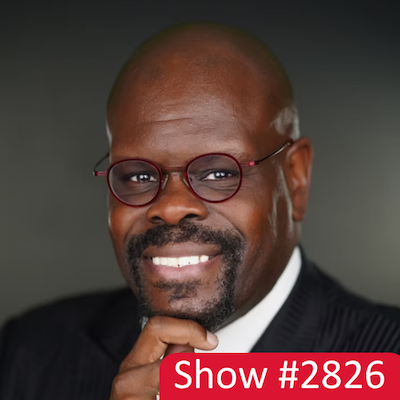
12 Jul July 13, 2026 – On Call COO Melissa Franks and Pro Q Solutions Santarvis Brown
The Intro 1 0:04
Broadcasting from AM and FM stations around the country. Welcome to the Small Business Administration award-winning school for startups radio, where we talk all things small business and entrepreneurship. Now, here is your host, the guy that believes anyone can be a successful entrepreneur, because entrepreneurship is not about creativity, risk, or passion. Jim Beach.
Jim Beach 0:26
Hello, everyone. Welcome to another exciting edition of School for Startups Radio. I have a fantastic show for you today. Two fantastic guests. I don’t know how we continue just to find great entrepreneurs to spotlight, but we do, and we don’t even look. They just come to us. The point is, is that America has so many incredible stories to share that I don’t think I will ever run out of amazing entrepreneurs and their stories to share with you. First up, we have Melissa Franks. She is with COO on Call and has built an amazing reputation, a team of almost 20 people now, 3 million in revenue, all started by herself. It’s just an amazing story, and if it won’t inspire you and get you motivated, I don’t know what will. She is so impressive. After that, equally exciting, we have Santarvis Brown talking about leadership and leadership development. His company ProQ Systems is doing an amazing job of teaching authentic leadership. He has very very impressive background. I’m excited to share with you too, and it’s just a great show. Add up two fantastic guests, and you get it’s worth everything you paid for it. Worth every penny you paid for it. All right, we’re gonna get started in just a second. We’ve got a great show today and great stuff coming up all week. Are we on Billionaire Alert? Yes, we are. We’re on Billionaire Alert. We are back, and again, thank you so very much for being with us today. Very excited to introduce my first guest. Please welcome Melissa Franks. She had a very successful career out there in the big corporate world at Alliance Company. 20 years heading big organizations and managing 100 million dollar portfolios. She managed complex mergers and acquisitions and major technology incidents. She helped reduce bad and harmful effects by 70% Helped improve employee retention. In other words, did a great job. But she left that and went out and started her own company to help others be successful like that. She is the founder of On Call COO and the three-time winner of the OnCon Icon Top 100 COO of the Year honoree. She helps companies now with all of their operational issues. I’ll let her tell us all about it. Melissa, welcome to the show. How are you?
Melissa Franks 2:57
I’m great. Thanks for having me.
Jim Beach 2:58
It is our pleasure. So, why did you decide to leave the corporate world? What was your impetus?
Melissa Franks 3:08
I am a builder of businesses. I love to take things apart, put them back together, grow them, and I had had a great run at the very large multinational corporation I was at, and we got to a place where things were running smoothly, which is what I have learned, is my opportunity to look for the next fun and exciting thing. I had about you know 25 years of working life left, and I couldn’t imagine just kind of doing the same thing every day. And so I exited the corporate world and moved into the startup space for about nine months, just to to do something new and to learn new skills and have new challenges.
Jim Beach 3:46
Okay, what do you mean for nine months?
Melissa Franks 3:49
That’s a great question. So you know, as the startup story goes, I think everybody has one that has worked inside of a startup. Nine months in, we ran out of cash, and the founder at the time was self funding the endeavor, and he wasn’t open to fundraising, and so we went our separate ways in October of 2023. And at that point, I had a decision to make: do I start looking for my next corporate gig and go back to what I know and that is stable, or do I roll the dice and see if I can monetize my expertise as a fractional COO, and I did that. And on-call COO was born in the fall of 2023.
Jim Beach 4:27
Excellent. Yeah, always roll the dice. Always roll the dice. All right.
Melissa Franks 4:32
I mean, what is life without risk, right? You got to have a little fun.
Jim Beach 4:36
Let’s play with this. How much risk did you actually have? Let’s investigate. How hard was it to get your first customer?
Melissa Franks 4:43
So the first customer was easy. The second customer was hard. Luck would have it.
Jim Beach 4:48
Please,
Melissa Franks 4:50
absolutely. So I was I was in a period of my life where my back was against the wall. So while the business had failed and the the large suffering. Package I had so expertly negotiated had disappeared with the failure of the startup. I also was found myself in a family court situation and going through a divorce that I hadn’t planned on having. So, as a single mom, three teenage boys, no income, and a friend had called a week prior to the startup failing and said, “I think I’m in over my head with my new business, I think I might need a little bit of help. So she was my first phone call. I said, “Hey, I might have some free time on my hands. Do you still need some help? And she became my very first client. So that was slam dunk. It was really easy. She’s the one that seeded the idea that maybe I could monetize my ability to be a COO. And then it got really difficult after that. I hit my network really hard. I did all of the things that are recommended, and finding that second client felt near impossible. In fact, we I ended the relationship with my first client because she only needed me for a few months, and it was a few weeks where I had no prospects. I luckily went to an in-person event. I met an entrepreneur that needed some help, and they became client number two. So it was a really tough climb initially, going from is this a good idea to I can make this really fulfill my dreams of having my own business.
Jim Beach 6:17
And has it been sort of successful ever since then?
Melissa Franks 6:21
So it was it was still you know a steady a steady trial and error period. So from the period of about March of 2023 or 2024, excuse me, to September, I tried everything I possibly could. Eventually, I invested in learning how to run paid advertising on Google and in the Meta landscape, and that was the gas on the fire I needed. As soon as I figured out how to run advertising and it really started to work, that’s when the business really started to acquire clients exponentially. And six months after that, I started growing a team. So now here we are in the end of June of 2026. I have a team of 17, and we have a very, very healthy client roster onboarding new clients every month and growing at a pretty rapid clip.
Jim Beach 7:14
Wow, Melissa, I just hate to do this and to disagree with the guests because you’re a guest in my home and on my radio show, and it’s not polite to disagree, but that’s not that your risk. Remember, 240 We decided to start talking about your risk. Yeah, you took very little risk. You already had a customer, customer number two. You got within weeks. That’s not that long to wait. You didn’t double triple mortgage the house. You weren’t living in your car. I understand it was hard at the time, but you did. Let me take say it this way. Our show here, we have certain rules that we like to teach, and you did almost every single one of our rules, which now means you own 100% I would assume of this incredible business, and you’re you’re one of these. There’s a term they made up a special word for it. You know what the special word
Melissa Franks 8:16
is? I don’t millionaire
Jim Beach 8:18
and incredibly, you know, cool and successful and stuff. And so, even though it doesn’t seem to you, you might be insulted by me saying this. It wasn’t that big of a risk. You were able to do it, and you know, you you understand what I’m saying to me.
Melissa Franks 8:36
I I do, but I you know I think I maybe lost the plot a little bit. So what I didn’t tell you is is what my personal life looked like at the time. So while all
Jim Beach 8:47
of that, yes, that’s
Melissa Franks 8:47
yeah, yeah. But while all of that unfolded, I was in pretty protracted litigation. So I had a five figure legal bill a month, and in January of 2024, I went on government assistance, so food assistance, and I had to, you know, do some loan modifications. So I didn’t pay my mortgage for over nine months. So I was really kind of in a, you know, looking at the bank account with about, you know, less than $5,000.03 teenage boys and a mortgage, and you know, there was there was a lot of financial stress.
Jim Beach 9:21
Was that the?
Melissa Franks 9:22
Yeah, it was. It was to ensure we had some violence in the household, and so in order to keep a restraining order in place, thank you.
Jim Beach 9:33
You know the thing that’s so great about divorce is it’s worth every damn penny sometimes, and it
Melissa Franks 9:39
is. And keeping everybody safe was the priority, and so you know as much as the story is elegant, and I can say I went from client one to client two, and then the business has incredibly grown rapidly. So I agree with you that once I got it right, it went fast. There was a lot of you know financial challenges and hard. That I carried with me while trying to grow the business, right? And so I think that my my gift was that I know how to grow a business. So I just had to use the skills that I had spent 25 years in the corporate world owning and building, at the same time, really living a life opposite of what I had imagined having in my mid 40s. Right? Nobody expects to go on government assistance to be really trying to learn the the ways of the road through those through those channels. But luckily, here we are, and we’re on the other side of it.
Jim Beach 10:37
Yes, and congratulations! You deserve all the success and rewards that you have achieved, and I hope your ex is just jealous as hell. So, I
Melissa Franks 10:49
mean, you would have to ask him. I don’t know.
Jim Beach 10:52
Yeah. Anyway, you mentioned that you had the skills to grow a business. Can you articulate some of that? What are some of those skills, and how did you already have them, and how do I learn them?
Melissa Franks 11:06
That’s a great question. So I built my, I will one day as soon as I have a little bit of time. I think I think there’s a book or two in me, but I I would say that the the first thing that I got very clear on was who I was serving and what I was selling. So, who was my client? What services was I was I offering to them? And I verified that. Luckily for me, I had a you know I had somebody come to me with a demand before I had a business, so I was able to verify what those services were and were not. And I learned that by working inside of a very large corporation where we built business divisions. And my M and A experience, where I I absolutely took businesses apart and put them back together and did new instantiations, taught me how to price things correctly, how to verify what the customer wants, and while I didn’t know how to navigate in an online business setting, that was new to me. How do you sell on social media? How do you lean through into a personal brand. I didn’t really know how to do those things because I’d always had a corporate logo behind me. I had spent two decades building businesses for some of the biggest global brands in the world, and so I was able to leverage that experience to say, if I was going to start over in that corporate structure where I had all of the financial backing in the world, what would I do? And then I figured out how to do it on my bootstrapped budget.
Jim Beach 12:25
What were some of your bootstrapping tricks?
Melissa Franks 12:28
The very first bootstrapping trick that I had was to get into as many rooms as possible. When I quickly found that my personal network was not going to create the million-dollar business I thought that it should, I started saying, “Where can I go in my community, in my local environment? You know, do I need to travel and get into conferences? Who can I meet? And it was through those relationships that I found my first few clients. It’s where I got referrals to move forward and skill acquisition. So I met a variety of people that knew how to do things I didn’t, and so we traded skills. I would say, “Hey, I’ll sit down and help you build a business strategy. For one of those friends, I did it on the back of a napkin while we were at a conference together at lunch, and she helped me reframe the entire customer journey because she was really great at it. And so, through building connection and relationships, and then and then having zero ego and saying you’re better at this than me, can we trade skills and services? I was able to get the structure in place to be able to build the building blocks that have led to a successful business.
Jim Beach 13:36
Great example, Melissa. Absolutely fantastic example. So. so we love bootstrapping here. You know, I don’t think there’s any better way. One of our big thesis points is that you should start your business for under $5,000 and almost every business can be started for that amount. And if not, I have a guest who did it that way, and we’ll show you that it can be done that way. Even a restaurant chain, hell, even airlines have been started for under $5,000 And so, I just love any bootstrapping story. That is a great one. You know, we never really cleared this up. I never asked this. Let’s go back to the beginning. What services do you offer and who do you’re selling them to? So obviously,
Melissa Franks 14:24
that’s a great question.
Jim Beach 14:25
Fractional COO, but we never let you define the business. We got too enthralled with the history. So, what does your business do, Melissa?
Melissa Franks 14:33
I mean, the story is much sexier than the services themselves. But we provide part time or fractional chief operating officer services to small businesses, typically 3 million up. We do work with businesses that are smaller than that. We just have to make sure that their business model is really sound and stable, so that we can do our best work. And and what that means, because the even the tide. Of COO is quite vague and open to interpretation. Is that we provide executive leadership and strategy for how a business should operate across a variety of dimensions, and we not only advise, we roll up our sleeves and we do real work. All of us, including myself, come from very large corporate backgrounds where we were chief operating officers, and so we know what it takes to run big corporations. And now we’re able to take all those tactics and tricks and corporate secrets that are not known by small business owners and bring them into small business and help them exploit them for good, and help them grow and scale their businesses.
Jim Beach 15:39
All right, and 17 team members. How do they divide up? How many outsourced people do you have versus how many people do you have actually managing the business and doing invoices and all that junk?
Melissa Franks 15:51
So I have three internal team members, and two out of the three still actively work with clients. They are about a 50-50 split because they need to be close to the client work in order to do their jobs really well, in order to have the operations of the business run. And the rest of the team is out all outsourced consultants. They’re split across two roles. We place fractional COOs, and then often with them we pair what is called an operations manager. I refer to it as the doers or the arms and legs. So with the COO, you get executive strategy and leadership, and with the Ops Manager, you get high velocity execution. They’re the ones that are the best at doing dashboards and KPIs and writing job descriptions and conducting interviews and writing systems and processes and leveraging AI, and so we pair the best of both for our clients. That allows them to get much more bang for their buck and much more delivery in short periods of time because we have the dynamic duo model.
Jim Beach 16:55
I like that. That makes a lot of sense. That’s really smart.
Melissa Franks 16:59
Thank you. It’s working quite well. Our clients have really responded well to it, and we really want to be able to provide value within the first 30 days. And this helps us do that across all of the clients that we work with.
Jim Beach 17:11
And what have you settled on your marketing channels and platforms? What is that working best these days?
Melissa Franks 17:18
So Google still takes the lead. Paid advertising on Google. Those are people with high intent that are looking for our services. So the majority of our leads come through that secondary with with Meta, so Instagram and Facebook ads. We’re starting to tinker around with our LinkedIn environment as well, but we’ve actually been leaning really heavily into training large language models to educate about our services and also start to refer us. So last month we had about 10% of our sales calls come from recommendations from large language models, which I actually think is pretty cool. AI is now starting to recommend people talk to us to solve their business problems.
Jim Beach 17:58
That’s amazing. How did you? You said you proactively did that. How did you do that? That’s very impressive.
Melissa Franks 18:05
Thank you. So LLIs love to consume information that’s out in the public purview, and they like patterns and repetition. So what we are leveraging very very heavily is long form content, Substack blogs on our website, LinkedIn, all across the same themes that we work with our businesses on, and then embedding SEO and GEO rich terms so that the LLIs can kind of mine that information, and then we counterpoint that with actually training the models themselves. We heavily use multiple models to help us create assets and fine-tune coffee, and and do some other internal document processing. And we always ask it to codify what we’re teaching it. So you know, remember this is what we stand for. And
Jim Beach 18:51
what does that codify?
Melissa Franks 18:53
So we we ask or we prompt the models to take everything that we just did, and then not only record it in the memory for the the chat that we’re having, but we also give it permission to record it in its memory to show up in searches for other people.
Jim Beach 19:09
Okay, so we give it never heard of. That’s really important. So how do you I do that? So Chat GPT, how do I go in and say, “Hey, buddy, use me.
Melissa Franks 19:20
So so what we do is we’re careful with it because we don’t want it to use everything that we put in there, right? There’s some information that we don’t. It’s IP. We don’t want the market to have it. We don’t want anybody to be able to get it through the the tool. And so we’ve actually created very specific and bespoke prompts and AI agents to say, now take all of this material that we’ve created and make sure that it’s searchable and indexed in a way that other LLIs can can find it a big enough. Sometimes it recommends that we go, you know, go publish this on Substack or go do this with it. And other times it’s able to record it to memory. But we have some agents running in the background when prompted to use that as a. Source document for information and recommendations.
Jim Beach 20:03
Fascinating. Did you create that agent? And let’s make sure everyone understands what an agent is. An agent is a computer program in the AI world that you can create. You can just type in “create an agent that says hello to me” every morning, right? And you’ve just created an agent. So, did you create or buy or lease or SaaS? Where’d you get this agent?
Melissa Franks 20:26
Yeah, you know we’re doing everything a little bit homegrown right now. So we did. I’m a I’m a technologist at heart. I grew up in the San Francisco Bay Area in the.com boom. It’s when I forgot my first job. So I love a good tech puzzle and challenge, and learning AI and kind of staying on the cutting edge of it has been a lot of fun for us to do inside the business.
Jim Beach 20:50
Right. Well, listeners, please just try it. Say, I’m really proud of this AI. Do you call your AI something? By the way, Melissa, I call my AI friend, and that’s their official name now. Is friend, so I say, hey, friend, I’m really proud of this. Let other LLIs and you please remember this and put this in search engine results. Please do that. You’ve now written an agent, haven’t you?
Melissa Franks 21:18
Yeah, it depends on which model that you’re using, so you know depending on what tools you have, we we internally use Cloud CoWork, so you can build skills and you can build autonomous agents through Cloud Design that can actually run those things on a routine or a schedule. So just depending on what you need it for, but I would I would recommend to everybody that you get out there and you start testing the waters, and there’s a lot of free training. There’s a lot of armchair experts out there that can teach you a few tricks, and just start playing with it. You’ll be surprised at some of the efficiencies you can gain just by knowing a little bit about AI.
Jim Beach 21:59
Yes, that is some great advice. I have not done that yet at my business, and so I will have to implement that. I’m just addicted to the AI in terms of improving the quality of what I do. You know, everything I write, I’m now putting through it, and just enjoying that so much. And it’s you know just like a good friend, it asks great follow-up questions sometimes, and then it will shut up whenever you want it to, just by unplugging it. So I just can’t find or anything bad to say about the AI success I’ve had. So again, sit down and spend two or three hours with it, listeners. So how? how have the boys responded to all of this, Melissa? Your three teens have they been blown away with what mom has been able to accomplish and build? What are do they even are they aware of it? You know how integrated has it been part of their lives?
Melissa Franks 22:59
So for them on the outside, things haven’t really changed. Mom still has a job. Mom still travels a bunch. Mom’s still on the phone all the time. You know that’s that’s pretty normal. I think what has been different for them is that everything that I used to do was behind closed doors, so to speak. You know, kind of inside of the corporate infrastructure, they didn’t see a lot of what happened, and now you know I applied a couple of billboards in Times Square, and I’ve had a good amount of you know media opportunities, and so mom’s been on TV and mom’s on social media, and so their friends are are seeing the success, and so they’re older now and much more bought in, and they’re starting to even think about like you know when I graduate from college, will there be a role for me in the business, or how does this how does this work? You know, as a part of my life, and so it’s been a really fun time to be able to show them a how much hard work it is to build something of your own, but b how rewarding it can be and the opportunities that come from that hard work. And they’re able because they’re old enough now. They’re 1315, and 17. They’re very easy easy for them to say. Mom works this hard, and it translates to this in our life. And so they’re they’re supportive and excited. And I haven’t heard them tell me that I was cringe in a while. So I feel like we’re on the right track.
Jim Beach 24:18
Oh, that’s just the coolest thing ever! You’ve created and altered three sets of DNA. Now you know that might be my favorite part of your story, Melissa.
Melissa Franks 24:30
I so I have said since they were very little that my goal with them, because I have three boys, is that when they get into a working environment in some instantiation or another, that they see the woman in the room and they expect that she’s the leader. And I want them to understand that you know gender has no play, and this is just hard work and expertise and willingness to learn. And I think that they’re getting a front row seat to to that right now. So I’m really excited to see. Their futures take them.
Jim Beach 25:01
Absolutely, absolutely. That’s so cool for them who have grown up this way. So, A pluses, Melissa. I give you A pluses all around.
Melissa Franks 25:11
Thank you.
Jim Beach 25:17
I love my buttons. How do we find out more? Follow you online. Get us some COO help.
Melissa Franks 25:23
So the best way to find us is to go to melissafranks.com. There you have access to book a free consultation if this is something that you think would help you, and you can talk to us for 30 minutes so we can dig into your business and see what’s going on. We are also on LinkedIn, so you can go follow the on-call COO page. We post at least once a day over there. Hot takes, one minute fixes. So there’s a lot of free advice there as well. And we’re also, you know, kind of out there on the internet. You can find us on Instagram and in Substack as well.
Jim Beach 25:57
Fantastic! Congratulations! Thank you so much for being a great guest, and we’d love to have you back.
Melissa Franks 26:02
Thank you,
Jim Beach 26:03
and we will be right back.
Intro 2 26:21
Well, that’s a that’s a that’s a wonderful question, actually, Jim. Oh my gosh, I love the opportunity to do this. Thank you, Jim. Wow, that’s that’s a that’s a great one. You know, that is a phenomenal question. That’s a great question, and and I don’t have a great answer. That’s a great question. Oh, that is such a loaded question, and that’s actually a really good question. School for Startups Radio.
Jim Beach 26:43
We are back, and again, thank you so very much for being with us. Very excited to introduce another great guest. Please welcome Santarvis Brown to the show. He is an equity architect, a leader in the servant industry, and also a executive leadership expert and transformation strategist. He has worked in education from the K through 12 all the way up through the higher levels. Has been a distinguished professor and a several-time author. Right now, he is working with a company called Pro Q Systems. We will learn all about that. Maybe have time to talk about his new books, he has several out. One is called “The Posture of Leadership. He has another one out called “365 Days of Grace and Grit. Welcome to the show. How are you doing, Santarbas?
Santarvis Brown 27:31
I’m doing well. How are you? Thank you for having me today.
Jim Beach 27:34
I am very well, thank you. So it seems like you’re doing a whole lot of different things. Boil it down for us. What are you all about?
Santarvis Brown 27:42
Leadership development, empowering people, and helping people be their best selves.
Jim Beach 27:48
Okay. What are we having problems with now with leadership?
Santarvis Brown 27:52
Authentic leadership. I think we have we have been so driven now by artificial intelligence that we’re using artificial leadership, and I think now more than ever, we’re in a craze where people want authentic leadership.
Jim Beach 28:08
Well, certainly, yeah, we definitely want that. how How do we have inauthentic leadership? Is it just people lying about themselves, or is there an AI component, or are they pretending to be someone they’re not?
Santarvis Brown 28:20
Well, I think it could be actually a mixture. I think what it is is people are putting up this facade of what they think a good leader should be or look like, and you know, leading behind a mask when, in essence, the people who they’re leading are crying out for a vulnerable human leader.
Jim Beach 28:39
Yeah, that is what we we want. How do people get off track? What are they? Are they following a bad system, a bad path?
Santarvis Brown 28:48
Well, sometimes it could be a mixture of both as well. It could be a bad system, a bad path, and just a bad perception of what a good leader looks like. You know, because historically we’ve always had that context that a strong leader is someone who can maybe be a bit aggressive, maybe be, you know, in your face, intense, and may not, you know, talk to the people the best. When, you know, we’ve seen that that’s not always a good look, and sometimes the best leaders are those who are humble, can’t, kind, and caring. You know, the whole servant leadership piece by Robert Greenleaf from about the mid 70s came into being into life, where people understood that you could do leadership while being humble and human.
Jim Beach 29:32
All right, are there certain things we can do to judge whether we’re doing a good job of that or not? Do I go ask, or am I doing a good job of being a servant leader?
Santarvis Brown 29:43
Well, I think you know. My very first book was “Leading While Limping, and it talked about having authenticity tests where you’re checking yourself and and and you know understanding are you leading aligned with your values, your moral. And and your your authentic personality is the real you showing up every day, the real you that the people are getting. And so I discuss that in my very first book, Leading While Limping.
Jim Beach 30:13
I love that title. That makes a lot of sense. Does the limping part help eventually make you a better leader?
Santarvis Brown 30:21
Yes, because the concept in the book is that if you embrace and if you embrace the the the limp or the impediment that you have, and you’re authentic with it and vulnerable with it, then the people that you’re leading will feel empowered to do the same. And together, for for lack of a better term, but but conceptually for sure, broken people can come together to do whole work.
Jim Beach 30:46
Okay, is there a process that they need to go through for that to be achieved?
Santarvis Brown 30:52
Just you know, daily daily check-ins and self-checks to make sure that they’re leading their authentic self.
Jim Beach 31:01
I noticed you have a lot of books and items that deal with a daily fight, a daily effort against this. The 365 days of grace and grit seems to be exactly about helping people on a daily basis.
Santarvis Brown 31:18
Right. It’s a devotional guide that I put together for women. I did one called “Brothers Minutes” for for men also, and it’s just a self check, self help, the leadership development piece that gives you some inspiration for the daily journey.
Jim Beach 31:34
We need that very badly. That’s wonderful. And then the the new book, The Posture of Leadership. Tell us about that. How do we develop that posture? I love that because I hate kids who have bad posture. I just want to go grab them by the shoulders and pull their shoulders back so they stand up better.
Santarvis Brown 31:52
Yeah, and and honestly, that was the motivation for that title and concept because I had a teacher that would always come around the classroom. It’s very cliche in movies, but she would literally do that every morning as we come in and sit down. You know, bring bring us into good posture, and and you know, for me, it was just something to remind me of that. But it also makes makes me remember that every day we have to have that posture of leadership, and ultimately, that posture of leadership it causes leaders to kind of carry the responsibility with humility, courage, service, and equity, but also undergirded by purpose. You know, leadership is not about ego. It’s about impact, and that’s the posture of of leadership in a nutshell. It’s not self promotion, not domination, not control. It’s listening, learning, empowering, and creating pathways for other leaders to rise. Is it
Jim Beach 32:56
possible for a non leader introvert to become a leader?
Santarvis Brown 33:01
Yes, very much so.
Jim Beach 33:02
How
Santarvis Brown 33:03
they realize the leader within them, and they bring it out of them. And if cliche as that sounds, you know, sometimes I think we run from opportunities of leadership because we think we’re not ready, we think we can’t handle it, or we think we can’t do it. When the best leaders historically came on the fly.
Jim Beach 33:23
What do you mean, came on the fly? Just developed out of the blue.
Santarvis Brown 33:27
They they they were put into a situation where they had to develop leadership. They were kind of
Jim Beach 33:34
catalytic.
Santarvis Brown 33:35
Well, I’ll use Doctor. Well, you know what? I’ll use Rosa Parks for example. So Rosa Parks, as most people know who are familiar with that scenario, Rosa Parks was not going to be the original person to be the the marching piece for that boycott. Okay, it was going to be a young woman, but she ended up getting pregnant, and that was not the the image that they wanted to use for the movement. Rosa was just sick and tired. She had a long day, and she just wasn’t going to give up her seat. Her feet were hurting, but a foot ache and a refusal to give up her seat propelled her into a leadership role, into a movement that changed the world. And if you could go back and ask her, she would not. She would tell you she didn’t get up that morning, decided she was going to do that. It happened on the fly, and there are other countless examples of where we’re put into situations where that those things happen, but then they cultivate us and show us the leader that’s within.
Jim Beach 34:32
All right, was she active after that in the the walks and things happening down there in Selma? Yeah, I don’t know what happened to her after she got off the bus.
Santarvis Brown 34:45
Well, after she got off the bus, she was very active in in local movements. I mean, she was up up in age when she did that, obviously, but she was active in local movements and and stayed a civil rights activist and icon until she passed away.
Jim Beach 34:58
How much does race? Play into your work.
Santarvis Brown 35:03
Well, I don’t think it plays. It doesn’t play a lot. I wouldn’t say it plays a lot into my work. I mean, I think I’m I’m more geared toward equity and and inclusion for all. But I I’m unapologetically an African American male, and so I come from that perspective.
Jim Beach 35:20
Okay, but does that give you a negative bias, a positive bias? Does that make you a better leader because you’ve had to go through hard times?
Santarvis Brown 35:31
No, I don’t think it makes me a better leader because I had to go through hard times. I think it just gives me another wealth or another tool, another tool chest of experience to speak from.
Jim Beach 35:46
Okay, have you had, you know, let’s say Rosa Parks was 100 How bad a racism have you faced with your career? Your career is so impressive. It seems like unless the bio was written very carefully, that you’ve skated right past any racism issues.
Santarvis Brown 36:06
No, I’ve had some. You know, I’ve had to deal with some. I mean, it’s it’s been a glaring thing. Sometimes covert, sometimes very overt. But I’ve had to deal with it. But I think that the premise of. Of instruction and teaching from my family growing up, it it I was prepared for it because I knew it existed, and so you know it was that age. Oh, you have to be 10 times better, or two times two to 10 times, depending on who you ask better, because at the end of the day, you’re going to see you’re gonna see. People are gonna see you for who you are, and that’s a person of color. I’ll give you an example. So one day, I was in, I was near campus going to CVS to get something because I wasn’t feeling well. So I developed a head cold, so I was running in between classes to get some cold medicine, you know, some over-the-counter cold tablets or something. And so, I walk by these two ladies. They see that I’m a black man. I have on a. I I wear a suit every day. I just that’s my thing. I wear a suit every day. So I had on a three-piece suit, and I’m running in, going, and they see me, and the lady says to the other lady in Spanish, “El negro, el niño negro, black man. In essence, that’s what she was saying, and motioned for the lady to clutch her purse. And I looked at them and I laughed and I said, “Statistically, you would rob me before I robbed you. So it’s very covert at times, and then other times it’s. I mean, I can I can probably flink back to some positions that I didn’t get because of the color of my skin, and I and I was qualified for in some cases over qualified. But I think that has not made me bitter; it’s made me better. And I say that it’s made me better because it has helped me to realize that I am put in a I’m put in places and spaces where I can open doors and put place settings and seats for people that look like me. That had I not been in those rooms, they may not have gotten down.
Jim Beach 38:17
Tell us your journey. How did tell us your just the entire history. How did you get into school and do so well? How early were you motivated? In what direction? Give us some personal history background.
Santarvis Brown 38:32
Well, you know, I always had drive. I always was committed to knowing you know things that I wanted to do, and so early on, I had a family structure that supported that. I saw the importance of education. My grandmother worked in education. I have several cousins who were in the education field as well. So it was always in the family, you know, if that makes sense. So it wasn’t uncommon that I was going to do that. Always had a call for the ministry on my life early, and so you know went that route and and still serve today as a pastor in a church. So for me, I’ve had ups and downs, but I I’m on a path I think that is not only aligned with some of my goals. I think it’s more aligned with where God would have me to go, and it’s been an amazing journey because I’ve been in some places and spaces that, if it wasn’t divinely ordered, I probably would have never gotten there. Like, for example, I did. I went to the Seminole Tribe of Florida to do some work for them, and ended up being the head of their Department of Education at one time. And I’m a non-tribal member. That
Jim Beach 39:42
is a big story. How’d that come with me? They just trusted me so much.
Santarvis Brown 39:48
Yeah, I mean, my work product, I guess, spoke for myself at the time, and they they they said, you know, and I’ll never forget when they called me to the meeting that day to talk about it. You know. We we are looking for someone to head up our Department of Education, and I said, “Oh, okay. Well, you know, I’m thinking. I hope you find them, and you know, they’re laughing and like, you know, we’re we’re thinking of you, and I’m like, oh, okay, you know, and and the rest is history. So that’s what I mean about things being divinely ordered in spaces and places, and being able to get places and spaces.
Jim Beach 40:26
So let’s just talk theology for just a second. Totally off topic. I’m mad at God right now, and I’m mad at God for the people that He sends to be His representatives. I had the woman who married me-not my wife, but the pastor, a woman, my cousin, I’ve come to the conclusion that she’s one of the least biblical, one of the least trustworthy people that I know in my entire life, and it’s it’s hurt me so much that I have cried about this, and she’s a person of of God, and the worst representative that I can see. How do I deal with this? Boy, am I opening up here! I mean, this is not fair to you, but I’m really just mad at God right now. 100 different ways to Tuesday.
Santarvis Brown 41:13
Well, that happens, or we get we get upset because we’re human. And I will tell you this. Remember, listen to what you just said. That she is a representation of God. She’s not God. So think about every time you have a representation of something, they’re not really the authentic authentic source. They’re a representation. Representations come with flaws, come with defects, come with challenges. Think about when people go and try to reproduce a masterpiece of art. You can reproduce it, but you realize that it’s only a reproduction. It’s not the original, and so it bears some some simulances to it now. But it also bears some flaws, and all people are flawed, and so I think that if you’re angry, it’s okay. He he’s big enough to where he can handle your anger, but allow yourself to process your anger with the representation, because it’s the representation that made you angry, not him.
Jim Beach 42:20
Yes, and that’s an excellent point, and I 100% see where you’re coming from. But it’s just like
Santarvis Brown 42:28
I knew there was going to be a butt. Yeah, you know, just like
Jim Beach 42:30
you know, you’re you’re still the quarterback of the team, buddy, and you threw three interceptions today, and it’s not necessarily your fault, you know, because we missed some field goals and we had horrible reception from our wide receivers today, but still, you’re the quarterback, buddy, and you know I can’t punish you. You see what I’m saying? You know why doesn’t God send some counter response? Or you see what I’m saying? I’m just venting. I’m just mad.
Santarvis Brown 42:58
No problem, and and he and and I would take it the next step further. Who’s to say he didn’t? Because a lot of times we are so jaded in our view of our emotions, we lose sight of stuff that could be in front of us. Can I can can I give you a biblical example?
Jim Beach 43:14
Oh sure, I have a great joke about that. But keep going. Yeah, tell me a biblical example.
Santarvis Brown 43:19
So remember the story of David and Goliath.
Jim Beach 43:22
Yes,
Santarvis Brown 43:23
the people the people were so upset about what was going on, and they were looking and praying and looking for somebody to go out and fight Goliath. So when David came, because they were so caught up in David’s appearance and caught up in in everything that David had going on. Oh, you can’t be the one we’re looking for, you know. Even even even his brothers doubted him. Like, man, go go about your business. You you can’t do nothing. And then even Saul said, “Listen, David, I know you. You know, Saul gave the ultimate rejection letter. It was like, okay, you’ve got good, you’ve got David. We appreciate your interest. We appreciate your passion, but we’ve decided to go for somebody else whose experience lines up with the job. Because in the scripture, it Saul literally tells him, you know, you you you’re a young man, but Goliath’s been a warrior since he was a young man, and David insisted on going, but David said, “Listen, I’m gonna do this thing. And and Saul said, “Well, if you’re gonna do it, you know, here you it’s it’s your funeral now, but at least go wear my armor. And David was strong enough to say, “I can’t wear this because this has not been made for me. Too many times we try to do approach leadership by putting on other people’s stuff, and we we approach life by putting on other people’s stuff. So when David said, “I can’t wear this, and David went with what he knew, he went with his slingshot. He got him some stones by the brook because he had been out there protecting the the sheep from the lions, tigers, and bears. You know, oh my, and he. Built his own resume, and it was that that caused him to be able to throw that one shot to knock Goliath out. And so I will say, don’t be like David’s brother or Saul or the other people who are so caught up in what their perception was that they couldn’t see what was standing right before them?
Jim Beach 45:23
Yes, good example. Do you know the joke that I’m referring to? The hurricane is coming, and a man is getting blown away, and he’s hiding on his roof from the storm. And the Red Cross comes by in a boat, and the Red Cross guy says, “Get in the boat, I’ll save you. And the man goes, “No, no, no! God’s gonna save me I’m I’m good and then the helicopter comes by and the helicopter pilot says get in I’ll save you and the man says
Santarvis Brown 45:47
yeah now remember this joke
Jim Beach 45:49
yeah you know and then the he dies of course and then the punchline is God up in heaven says well I sent you the red cross and then I sent you the helicopter you know and so that’s the joke I’m referring to. You remember that one?
Santarvis Brown 46:02
Yes, I do.
Jim Beach 46:05
I think it’s it’s summarizes my situation right now. Well, I don’t know that someone else has been a signal in the other direction. I don’t know. So maybe I just need to reevaluate the past more precisely, does that sound right?
Santarvis Brown 46:24
Yeah, yeah, and and and and be open. It be open as you do.
Jim Beach 46:31
What do we need to do about race in America? What what are some of your solutions to make the situation a little less contentious, where we all hate each other, we see 10 minutes or two seconds of the news, and we automatically assume the entire outcome based on three or four adjectives that they gave me during the news. How do we get past this?
Santarvis Brown 46:58
By realizing that we all are human, different skin colors, different skin hues, and ethnicities, but we’re all human, and appreciating the fact that we all have to meet our Maker, whatever religious equivalent of that is, together. and the world would be a little better if we found commonality in our similarities instead of harping on our differences. I’ll give you an example. Listen, in my elementary school where my grandmother worked, I worked. I was the first. Well, not first. I was the only black child in that whole school from kindergarten to fourth grade. Looking back on that, I had two instances where well, one one person called me the N word, and you know, another situation was when I when I had a friend that had we had been friends since kindergarten, and when we got in third grade, we could no longer play together because she told me her dad said because I was black we couldn’t play together. But looking back on that, hatred and racism has to be taught because I’ve been I’ve been out of elementary school for a long time and I still keep in contact with many of those friends today. We’ve been to each other’s homes and things of that nature. So I think that it has to be the way it can be learned, it has to be unlearned, and it’s not going to be an easy journey. But as long as both parties are willing, I think it can be done.
Jim Beach 48:51
Well, I certainly hope so. I certainly hope so. You know, I’ve tried to just be a good, normal parent and raise kids that are nice and normal, and never really talked about race so much in the house. You know, we just try to be respectful, and they see that we have multicultural friends who we invite into our house. And my son’s first girlfriend was someone of color, and I was just-I don’t-I don’t know what the word was-surprised, happy, just whatever. That apparently we raised a kid who didn’t think about that, you know, and was so anyway. They’ve been going out for almost a year, and he still hasn’t kissed her. I’m like, dude, kiss the girl. Still hate it. So I remember that first kiss too. How?
Santarvis Brown 49:41
Yeah, yeah. And I was gonna say, I guess in his mind, he’s gotta, he’s gotta get there. He’s gotta get there.
Jim Beach 49:47
Yep. He’s not ready. Where do we hire you these days? Are you working at Pro Q Systems? Where’s the best place to get in touch with you in terms of bringing you in to help our culture and our operations?
Santarvis Brown 50:01
So let me give a plug for ProQ. ProQ Systems, where I am currently, is is helping business owners and leaders move from chaos to clarity. And so Pro Q helps leaders scale intelligently by you know aligning the vision, the operations, the people, and the execution. So I can be reached, you know, at ProQ Systems santarvis@proqsystems.com or if you want to people want to check out my leadership channel on YouTube. I’m the Leadership Doctor SB.
Jim Beach 50:35
All right, fantastic.
Santarvis Brown 50:36
I’d love to engage. So please, please, everyone listening, reach out and and let’s let’s have the conversation. I think, and to your point about racism and hatred, I think a lot of times it’s because we don’t really see value in conversation anymore.
Jim Beach 50:50
Well, getting to know everybody made up their mind, and all they want to do is tell you their position. They don’t want to hear your position and reflect. Like the the arguments going on with Carmelo Anthony right now, people have made up their mind, and they have no interest in hearing what you have to say, unless I’m just going to yell at you and tell you how stupid your position is. You know, so I think it’s horrible about people that we all have just got to get past that. What did I tell you? The very first thing when we started before we were recording, let’s have a conversation like people used to do,
Santarvis Brown 51:23
like people used to, yes, which is
Jim Beach 51:25
respectful and polite and interested. And your position is just as good as mine. Tell me your position because I want to know it. You know, and so I don’t know why it’s so hard these days.
Santarvis Brown 51:39
Well, I think because we we we are approaching it where we don’t want to talk, we don’t want to listen, we just want to go ahead and have a have a position, and not understand that sometimes our position is flawed because we didn’t talk and we didn’t listen.
Jim Beach 51:56
Yep. All right, let’s go somewhere. We only have time for one more question. One of the coolest things I think about entrepreneurship is that it uses the skills that God gave you better than any other occupation, vocation, job, interest, passion, or hobby. That being an entrepreneur forces you to improve your speaking and your selling ability, and your organizational and your operational. That being an entrepreneur is as close to God as we can get in terms of doing work on Earth, maybe not in terms of being a preacher or something like that. But I’m mad at them, so I’m putting entrepreneurs first today. What do you think?
Santarvis Brown 52:31
I would agree. I would agree. We’re living in a society now where people are, you know, this is an entrepreneur’s world right now. I’m so excited about you know the the current flux of of entrepreneurs who are getting into the into the business world and getting into the game because it is it is just amazing of the skills, the products, and things that are coming forth. And so I celebrate it.
Jim Beach 53:00
Well said. How do we get in touch with you? Find you online. Learn more about you.
Santarvis Brown 53:04
LinkedIn. Connect LinkedIn. Santarvis Brown. Connect with me at the leadership doctor sb@gmail.com Or as I said earlier, please feel free to reach out to me by my Pro Q email, santarvis@proqsystems.com That’s S A N T. S-A-N-T-A-R-V-I-S at ProQSystems.com, or the Leadership Dr. SB at Gmail.com. But I would love to to engage and thank you so much for having me today. I really appreciate
Jim Beach 53:34
it. Likewise, I appreciate a great, open, honest conversation, and we’d love to have you back. Thanks a lot, sir.
Melissa Franks – Founder of On Call COO and Three-time OnCon Icon “Top 100 COO” Honoree
My goal with them… is that when they get into a working environment…
they see the woman in the room and they expect that she’s the leader.

Melissa Franks
Melissa Franks is a technology and operations executive, business strategist, and founder of On Call COO, where she helps entrepreneurs and growing companies build the operational systems needed to scale with confidence. With decades of executive leadership experience, Melissa specializes in organizational transformation, operational excellence, mergers and acquisitions, and business process optimization. Her passion is helping founders move out of the day to day operations of their businesses so they can focus on vision, growth, and long term success. Before launching On Call COO, Melissa spent more than 20 years leading large scale operations and technology initiatives for global organizations, including Allianz. She managed portfolios exceeding $100 million, led complex merger integrations, reduced major technology incidents by 70 percent, improved employee engagement and retention, and consistently delivered significant cost savings while building high performing teams. Her work also helped create global business models and operational frameworks adopted across multiple international organizations. Today, Melissa combines Fortune 500 executive experience with practical entrepreneurial insight to help business owners create scalable operations, stronger leadership teams, and sustainable growth. Through consulting, coaching, and strategic advisory services, she equips leaders with the structure, systems, and confidence needed to build businesses that thrive without depending on the founder for every decision.
Santarvis Brown – Founding Director of Partnerships of Pro Q Solutions, Author of 365 Days of Grace and Grit and Host of TheLeadershipDoctorSB
Leadership is not about ego. It’s about impact.
Santarvis Brown
Dr. Santarvis Brown is an educator, leadership strategist, author, and equity centered executive with more than two decades of experience helping institutions strengthen leadership, transform organizational culture, and create lasting impact. As the Founder and Principal Consultant of The Equity & Elevation Collective, he partners with universities, nonprofit organizations, and mission driven institutions to develop inclusive leadership, improve governance, and build sustainable strategies that move organizations from intention to measurable results. Throughout his career, Dr. Brown has served in executive leadership and faculty roles at institutions including Excelsior University, Cornell University, and the University of Virginia. A distinguished professor, keynote speaker, and executive coach, his work focuses on leadership development, institutional transformation, accreditation strategy, curriculum innovation, and community engagement. His leadership and scholarship have earned national recognition, including features on the NASDAQ Tower in Times Square, and appointments as a Distinguished Scholar Practitioner at the European Institute for Higher Education and a Visiting Scholar at Rutgers University’s Samuel DeWitt Proctor Institute. Dr. Brown is the author of several leadership books, including 365 Days of Grace and Grit, Leading While Limping, The Equitable Edge, and Leading in Color. Through his writing, consulting, and speaking, he equips leaders to lead with courage, purpose, integrity, and compassion while building organizations where people and communities can thrive.