
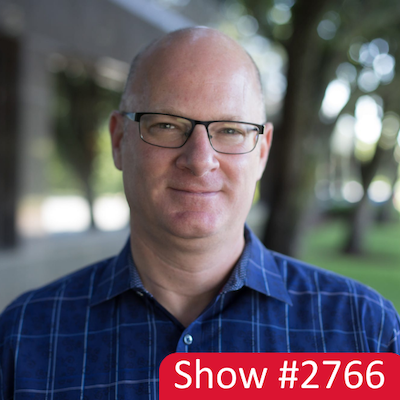
03 Apr April 3, 2026 – Lead Like the Boss Andy Freed and Persuasion Blueprint Danny Bobrow
0:04 Intro 1 : Broadcasting from am and FM stations around the country. Welcome to the Small Business Administration award winning school for startups radio where we talk all things small business and entrepreneurship. Now here is your host, the guy that believes anyone can be a successful entrepreneur, because entrepreneurship is not about creativity, risk or passion. Jim Beach,
0:26 Jim Beach : Hello everyone. Welcome to another exciting edition of School for startups radio, we got a great show for you today, two fantastic entrepreneurs that have had a lot of success. First up, we have Andy free. He helps associations. He has a group of 90 100 associations that he organizes and runs and puts together their events and all of that amazing niche business I had never thought of, never heard of. And then Danny bobro is with us. He is in the dental marketing niche. I always love comparing a niche to the macro anyway, Big Show. We’re going to get started right now. Here we go. Please welcome Andy freed to the show. He is the chairman of virtual ink. It is a strategic consulting, marketing and professional services company. They have small clients like Microsoft, meta and Google, and for more than 30 years, he has been helping organizations like this foster growth and transformation. He has a new book out called Lead like the boss, published by Wiley. You don’t get really more any prestigious than that. It is five star, rated on that Amazon place. Andy, welcome. How are you doing?
1:41 Andy Freed : Great to have me, great to be here and
1:45 Jim Beach : Best place to work for more than a decade. Your business, virtual. Very impressive. Why? What about it is so great? Is it ping pong and Foosball
1:54 Andy Freed : We’ve got now, we don’t have ping pong or Foosball available, but we’ve always just really focused on our culture and really focused on our employees. And, you know, recognize that that’s kind of, you know, the notion of contented cows give better milk. You know, what can we do to make the place special to be and, you know, make the place really a place that everybody loves.
2:15 Jim Beach : So, what are some of those things you’ve done? What are the employees?
2:21 Andy Freed : Well, a few Well, I will say we don’t have foosball. We do have soft ice cream, though, and you know, that’s pretty good. But you know, so much of what employees love, it’s beyond the perks and beyond the trips. It’s that we’ve had a culture of transparency, where we tell people we’re doing well, tell people when we’re and when we’re doing well, we certainly share the wealth. We tell people when we have challenges and let them be part of solving it. But I think a lot of it is the way we treated people beyond the perks of just really enabling to be their best selves, enable them to really be themselves, and enable kind of part of our success, and really enjoy that
3:04 Jim Beach : Excellent and do you ask the employees about culture? Are they involved
3:09 Andy Freed : In constantly scoring the culture? Constantly, we do two we do multiple employee surveys every year, and a lot of things that I do as Sherman that are just kind of informal focus groups. I mean, having lunch every month with employees whose birthday is that month, that gives me a random selection of people to sit down with and find out kind of how they think things are going. But what’s so important in this process, more than anything, is listening and you know, making sure that as you listen, you understand kind of, you know what people are looking for and what resonates and what doesn’t,
3:47 Jim Beach : Tell me more about what the company does tell me about virtual, sure.
3:51 Andy Freed : So virtual is in the business of working with associations, consortia and standards bodies that are forming, growing and changing. So the best example I can give of that is years ago, in 2001 we got hired by MasterCard, where they said we’d like there to be a way to pay for things with your cell phone. You know, if you want to pay for something with your cell phone, if your phone is talking about the first name and the Coke machine that you’re holding it up to is asking for your last name, you’re not going to get a coke. Or if the phone is in 128, bit encryption in the coke machines in 256, you don’t get a coke. So MasterCard might have a solution for that, but they want to work industry wide. So to make it work industry wide, they’ll form a nonprofit. We then run those nonprofits. So we in this case, they form one called the mobile payment forum that MasterCard joined, along with the visa and American Express and all the people that are, you know, accepting card making card acceptance devices, they all have to sit around a room and hammer out those rules. We then kind of provide the infrastructure for that organization. So we do their marketing, we do their finances, build their website, facilitate the meeting, you name it, we do it. We do that for about now, about 90 organizations worldwide.
5:04 Jim Beach : Very cool. And, you know, I just love this show, because I get to meet people in industries that I had never heard of before, doing no question, never heard of. I never knew that there was someone tricking organizations to exist.
5:17 Andy Freed : Yeah, no, it’s certainly, you know, for us, it’s, you know, it’s not what my high school guidance counselor told me to do, and it’s not something that a lot of people are aware of, you know, but it’s a great business and, you know, and that kind of interoperability and kind of making things, you know, work together, you know, that’s what enables a lot of markets. You wouldn’t see the same growth in mobile payment if you need a if your Matt, your phone only worked with MasterCard and Pepsi machines, you know, you see more growth because your phone works anywhere, and that creates, you know, requires an infrastructure to make that happen.
5:57 Jim Beach : Very fascinating. Who else do you work for? Could you tell us some of the associations that you were the behind the house?
6:03 Andy Freed : People, sure. I mean, there’s a few other groups that are doing next generation stuff. So another one, for example, I own the interoperable wireless networking Association. You know, they’re kind of creating the rails, and 6g phones are going to run on in about, probably about six, eight years, you’ll start to see their technology really driving 6g technology and driving the next generation of cell phones. We work with quite a few groups in cyber security. The PCI Security Standards Council is a group that puts out all of the security standards for accepting any payment card card worldwide. So with them, we work with American Express mass card Visa, Discover JCB China union, pay all these groups, make sure the cards are secure anywhere you go in the world. And then we work with some groups that are outside of technology, the Academy for eating disorders, for example, which is scientists that are trying to come up with the right way to stamp out eating disorders worldwide. So quite a quite a different array of groups, and enables us as a company to make our mark on the world.
7:08 Jim Beach : Very cool. How did that get started? How did you fall into this?
7:11 Andy Freed : We fell into this, as many small businesses do, by accident. My business partner, who’s long since, kind of retired from the business, but my business partner, when we were starting things, he had a PR firm, and in his PR firm, one of his clients was involved in a standards organization, and said, you know, we’re involved in this group. It’s not very well run. Any chance you’d like to take a shot at running it and him being a small business entrepreneur? His answer was, absolutely, I’ll give it a shot. And, you know, and then that, you know, with time, that little side business subsumed the PR business, and, you know, became our primary focus. Fascinating.
7:53 Jim Beach : I just never have heard of it. Totally outside of my wheelhouse. So absolutely fascinating. And what kind of issues do the associations have that you have to take care of for them, annual meetings or Yeah, I
8:09 Andy Freed : Mean, I think in terms of tasks, certainly annual meetings and press issues. And, you know, press marketing, you know, all of that are things. Are some of the tasks that we do strategically. The biggest challenge for any one of these organizations is figuring out how to get work done amongst a group of organizations that are competitors. If you think of the work that we do for PCI, where we’re trying, which is the group that is putting out payment card standards, we’re trying to get American Express Visa, MasterCard, discover and JCB to collaborate on creating a technology standard. Those are organizations in the marketplace. We’re all arch competitors. So a lot of the challenges that we have are on getting these groups to function together and getting these groups to see the commonality of what their purpose is.
9:06 Jim Beach : Yes, I can imagine that would be very difficult. I mean, you can’t get Samsung and Apple to work together. They’re fighting, you know, over Yep.
9:15 Andy Freed : And yet, there are several organizations where we have Samsung and Apple sitting at the table together, and recognizing that while on one hand, they’re fighting for market share, on the other hand, they also recognize that there’s certain things they need to do together in order to make in order to make sense of it.
9:32 Jim Beach : Wouldn’t it be better if there were just one system that could accept texts from both worlds easily? I mean, wouldn’t it be to their advantage if it was just
9:43 Andy Freed : Easier for all of us? Yeah, there are certainly things where that’s the case. I mean, that was the case with mobile payment where, you know, the idea of having a certain having one system is what enabled the market to develop, because if there were multiple ones, nobody would have used it. You know, I hear what you’re. Saying, I know no Apple user likes seeing that green sign. You know that kind of green text go through that somebody’s not on an Apple phone, yeah? So it’s Yeah. So it’s always tricky, and the companies pick those moments of where they can work together. And even there, you’ve seen progress on how those texts work and how different parts of that are now more interoperable than needs to be.
10:27 Jim Beach : Yes, very interesting. Do you go out and find the association that needs your help? Do you build the association? Do associations? You would say we’re lost?
10:40 Andy Freed : All of those are true. We usually get we usually get our business one of three ways. Either an organization like a large tech company might come to us saying, there is a business problem that needs solving, and we need to convince you, we need to collaborate across the industry to do it. So then we’re helping form the group and spin it up from the get go. Sometimes a group will have formed, and they’re running it by volunteers, and they turn to us when they say, we’ve realized this is harder than we thought. To do it with volunteers. We’d like to professionalize it and have you guys run it. And the third way is an organization might exist for a number of years, and they’re ready to transform themselves in some way, in which case we step in to help with that transformation.
11:23 Jim Beach : This weird example just jumped into my mind. I used to live across the street from the local amphitheater Park type thing, and every year they had a festival, and I liked the festival because I usually volunteered and I would get a festival shirt. And I always liked my festival t shirt. And then one year, they said, you know, we don’t need any volunteers this year, and we’re not collecting money at the gate this year. And they got rid of 90% of what they did and made more money, you know, by not having all of the Yeah,
11:59 Unknown Speaker : To get a fresh look at things. Certainly, certainly kind of change it change the paradigm. For sure,
12:05 Jim Beach : It was fascinating, better festival with no boundaries. In other words, they used to have a really strict fence, and they kept people monitoring the fence so no one was getting in and saving the $2 you know, yep, it was costing them 1000s of dollars to have their $2 fence. So, yep, boy, I remember college first year, and all I heard was the boss. We lived what was his name. Steve Hopkins played the boss nonstop. Bruce Springsteen, tell me how the boss integrates with your new book. Lead like the boss, sure.
12:42 Andy Freed : Yeah. So when I’m not helping organizations and helping associations, I am one of these folks who is pretty close to selling all of his possessions and just following Bruce Springsteen and the E Street Band all around the world. So I’ve seen Bruce more than 90 times live when a whole bunch of different countries and a whole bunch of different places. But somewhere along the way, I started learning something, and somewhere along the way, I started watching the way that Bruce, as the boss, interacts with his audience and interacts with his band, and recognize that there are some leadership lessons to be taken away from this and a reason why he is doing as well as he’s doing. So started to jot those leadership lessons down, first in a LinkedIn post, and in that LinkedIn post got a great response, and so it grew into a book, and that’s where lead like the boss comes from.
13:34 Jim Beach : All right, give me one example of how he’s doing that
13:37 Andy Freed : Sure my favorite moment of every Bruce show doesn’t happen when he’s got his guitar in his hand or the harmonica in his hand or even the microphone in his hand. My favorite moment of every Bruce show comes at the very end of the show, when he retreats to the back of the stage and he shakes the hand of everybody that was in his band and everyone that was on stage with him that night, and tells them they had a great show. And when you see them do that, it’s a unique reading for each member of the each member of the band, but it’s also something which, when you hear the band members interviewed, you know they’ve said that for 10 seconds every night, Bruce makes me feel like the most important musician on the face of the earth. Now, when you take that as a leader and recognize that 100 years ago, William James wrote that the deepest human need is the need to be appreciated, deeper needs in sex, deeper need than money, deeper needs and power. Deepest human need is the need to be appreciated, you realize how important that is for a leader to share that kind of appreciation. And that’s something which I look at. When I watch Bruce do that, I think of myself as the CEO, and think, How can I be that good? Because what he’s doing in that moment with people that might have played with him for a year, or people that have played with him for 55 years, is, you know, really engendering that feeling of appreciation. And, you know. What more important thing for a leader to you than that?
15:04 Jim Beach : That’s a great example. I have not seen him do that. That is fascinating. That’s a good one. What about the set list?
15:12 Andy Freed : Yeah, so the set list to you, every Bruce show doesn’t start when Bruce takes the stage. You know, Bruce show starts hours before, when he is sitting in his dressing room, and he’s writing out a list of the songs that they’re going to play, and writing out the set list. As he writes out the set list, it’s a very intentional list of songs. It’s not just pulled together randomly, but it’s pulled together for him to tell a story and him to kind of understand everything that he wants the audience to think, feel and do over the course of the next three hours of performance. There might be a quiet moment where he’s, you know, where he wants to tell a story. There might be another moment where he’s looking to get the audience participating, but as he does that, it’s very intentional. Now I compare that to what so many leaders do today, which is, they’re confronted with a communication opportunity, and the first thing they do is they just start cranking out PowerPoint slides, and, you know, changing the PowerPoint deck from last month to this month, and then going on stage and then just presenting it. You know, that’s equivalent to Bruce’s not put on stage and starting to play and hoping for the best. There’s an intentionality about creating the set list that I think leaders need to take away when they’re communicating, of really stepping back and before you start cranking out slides, before you start communicating, stepping back and thinking about, what do you want your audience to think, feel and do, and then making your communication very intentional as a result.
16:43 Jim Beach : Okay, I have a band that’s just as prominent in my life as Bruce is in yours. I’m the same way with the Grateful Dead and I traveled hundreds of their shows. One of the features of their shows Andy is that they don’t have a set list, they walk out on stage with no idea what they’re going to play, and then just start playing. And sometimes you’ll see them arguing. The guitar player will do a riff, and then the bass player will do the other riff, and then you can see they’re arguing over what song to play musically. I just think it’s fascinating to see how one becomes,
17:19 Andy Freed : Yeah, no, they’re they are certainly the exception that proves the rule. They have a very different approach to music than most other bands.
17:29 Jim Beach : For sure, another thing I love about them is that they like to sell their tickets to their hardcore fans, and so they have months in advance prior to normal ticket sales. They have a 800 number where you can call and get 58 different instructions on how to get your tickets in advance. I just think it’s the funniest thing ever. You have all these stoners out there, high as could be, trying to write down 58 instructions from Yeah. I just think it’s so funny. And, you know, I got my tickets that way, and I did it as methodically as I could, and I always got great seats by doing that, because it was printed nicely and stuff, you know, it’s, yeah, fascinating.
18:11 Andy Freed : And they’re, they’re a unique band also, because they’re as much a musical act as they are time travel. You know, when you kind of look at, you know the dead, you know it’s a chance to see music, but it’s almost like, you know, the 60s in a bottle for a day. You know, they’ve created kind of an experience. It’s a little video that’s different and unique in rock and roll.
18:31 Jim Beach : Yes, I was very sad the day Jerry died. I’m sure died for me. Yes. So, introducing new material. You have a chapter on that. How does I do?
18:46 Andy Freed : Yeah, that’s talking about change. You know, new material for Bruce is change, and not everybody likes change, and not every audience is a kid, is a kid in a tune to change. But you know, when Bruce does it, he wraps the new material around some old, familiar material. And you know, he does it in a way that’s very intentional, of how we introduce his new material to the audience. Same thing that leaders need to think about, you know, change, and many times, if an audience is hearing about change, the first thing you need to do as a leader is make them feel safe and make them feel less threatened, whether it’s a proactive change or reactive change, your audiences can feel threatened and concerned about it, you know, so as a leader, your job is to first give them the safety and then be able to start to communicate about the change. And there’s language, and, you know, words that you might want to use and avoid as you’re doing that. But again, it comes from that same intentionality of understanding that change, not from your perspective as a leader, but as you know from the audience, from the where the audience sits,
19:56 Jim Beach : Planning the next tour, keeping up with the times and. After seven, yeah,
20:03 Andy Freed : So on that. What I will say is Bruce has been on Top of the Rock and Roll period pyramid, arguably since 1975 board to run came out then, and you know, was number one. He was on the cover of Time and Newsweek, and you know, since then, he has been one of the biggest names in acts of rock and roll, staying on top for 50 years doesn’t happen by accident. Staying on top for 50 Years happens because of intentionality of how you’re approaching things as a leader. And there’s a lot of things that I think, when you look at what Bruce has done, his musical style is adapted his you know, the nature of what he does and shows and tours is adapted, but you better just stay on top of the pyramid for leaders, I think that’s all about challenging themselves. You know, continue to learn and continue to change with the times and build out there an audience of your peers, and almost like a board for yourself that can help you, help you stay on top of your game, and help you do that with a commitment. And again, I’ll go back to that same word of intentionality. It’s really being intentional with the opportunities to learn and then kind of keep going with the times. I love that word.
21:23 Jim Beach : It’s a good one for planning your life and things like that. So, very good word. Andy, I heard that you were not feeling great recently,
21:37 Andy Freed : Yeah, so, and that’s another kind of leadership lesson. So I was diagnosed with pancreatic cancer back on Halloween, and one of the things I’ve learned from that is really underscored that same idea of preparation and intent being intentional. So for me, for years, my secret sauce was just my energy, and I was somebody who thought nothing of going to a client meeting in Tokyo and flying home and then going to working a full day and then doing something else that was just the way I functioned. Now I’m four months into chemo, and I’ve gone from being a car with a 27 gallon gas tank to being a car with a two gallon gas tank, and if your car only has a two gallon gas tank, you were really thoughtful on where you’re going every day, and you make sure you’re not hunting around for a parking space, and you know where you’re going from place to place. That’s something which I’ve really taken away as a leader of understanding that I really need to be very intentional with my communication, because my energy isn’t what it once was, and I don’t have the time for the extraneous things that you know might not relate to what I’m trying to do, you know. So it’s been a very powerful lesson for me on owning my leadership and honing my communication, as I’ve kind of, you know, found myself with a more limited fuel supply. I’m so
23:05 Jim Beach : Sorry to hear that. That must have been a horrible Halloween shock for you.
23:10 Unknown Speaker : It wasn’t really the trick or treat I was looking for now.
23:13 Jim Beach : Oh, yes, and is the chemo helping? Are you getting some of your strength?
23:18 Andy Freed : Yeah, no. Look, I’m very fortunate to be I live in Boston, around some of the best hospitals in the world, so I’m getting my treatment at Mass General, and they’re very optimistic on what they can do. Excellent.
23:30 Jim Beach : That’s good, yes, and Boston is great for its hospitals and so many other things.
23:37 Andy Freed : Not bad for its hospitals, and we have a couple of good sports teams too.
23:41 Jim Beach : I don’t know about any of that. Yeah, no, no, no, but I can’t think of any good Boston team. So No, no,
23:51 Andy Freed : No, I was happy that our long Super Bowls route ended this year.
23:56 Jim Beach : So remember y’all winning the Super Bowl?
24:00 Unknown Speaker : Yeah. Can been. It might have been.
24:04 Jim Beach : So here’s going to be Vegas.
24:07 Unknown Speaker : Absolutely, Yep, absolutely.
24:09 Jim Beach : What do you think? How you what grade would you give Tom, since he’s retired?
24:15 Andy Freed : You know, he’s an interesting carrier. Walks to watch since he’s retired, on the way he has managed himself. And, you know, he seems to have a kind of a new ubiquitousness, where he keeps popping up in all different places. You know, that said he, you know, I’ve he’s turned into a pretty good analyst for Fox. And, you know, seems like somebody who anything he does, he wants to excel at it. And it seems like, when you watch him as an analyst on Fox guys, doing his homework, learning about the other teams, and, you know, certainly adding some value out there. So I gotta give him a pretty solid grade for that.
24:52 Jim Beach : You know what I’ve heard about him, though, this is just as silly as could be, that he’s got no game with the women that I guess he gets. Women so easily that he doesn’t have any, you know, rapport. Doesn’t have a stick. You know, he’s just not that good with the women.
25:09 Andy Freed : If having no game lands them. Giselle, yeah, then I think that that’s up. Then I think that we’re better off with him having no game, because lord knows what he’d do if
25:21 Jim Beach : He had it, yeah, but she’s just such a asparagus drinking nut, you know, you know I would. I don’t want her life if it involves that much food sacrifice.
25:32 Andy Freed : No, I understand. I’m with you. I’d much rather, you know, have my hot fudge sundae than, you know, than the avocado ice cream.
25:39 Jim Beach : Yeah, I don’t know. Seems like he was better off without that without her. So I agree she’s gorgeous, but she’s too mental for me to put up with. So anyway, Andy, congratulations on the book. It’s five star rated, and we will pray for health and prosperity for you and your chemo doctors. How do we find out more? Get a copy of the book.
26:06 Andy Freed : Well, I’m fortunate that was early to the early to the domain name race. So you can just go to www dot Andy freed.com F, R, E, D. So at Andy freed com, you can find about the book, how to engage our help if you need it as a consultant, or our speaking ops, or whatever it might be, but it’s all at Andy freed.com. Fantastic.
26:27 Jim Beach : Andy, thank you so much for being with us, and we’d love to have you back in a
26:31 Unknown Speaker : Year. So fantastic. Thanks for having
26:33 Jim Beach : Me, and we will be right back. You. Hey,
26:46 Jim Beach : We are back and again. Thank you so very much for being with us. Very excited to introduce my next guest. Please welcome Danny bobro to the show. He is the creator of The Art of the first impression telephone skill mastery curriculum and the persuasion blueprint, communication skill mastery program. He was in the dental marketing space for a long time. Over three decades, he was the executive director, also of the climb for a cause, which is, I think, an outdooring thing. I’ll have to ask about that. He is a very accomplished ski instructor and is still actively, I think, involved in that. Danny, welcome. How you doing today?
27:35 Unknown Speaker : I’m doing great. Jim, how are you?
27:37 Jim Beach : I am very well. Thank you. Thank you. So decline for a cause. Let’s start there. What is that? Sure?
27:47 Daniel “Danny” Bobrow : Yeah, I’m gonna go back, you know, to put that in proper context, you might have I sort of share my journey briefly through digital marketing, through the dental vertical. Thank you. We actually began, as you mentioned, in 1989 at that time, we were glorified list brokers, and when I say we, I mean myself and my brother. My brother was and continues to be a practicing dentist outside Chicago, and he identified the opportunity for us to help dentists to grow in what was then and continues to be a quite competitive space, and at that time, all we knew how to do was to broker labels of new residents and send them on sticky labels to dentists who, owing to their lack of training in business, as is the case with most health care providers, didn’t do a whole lot of good with them, and so we made a lot of money just brokering labels, but I knew that that was not a sustainable model, and so I recognized that even before the client did that they needed more service. It’s sort of like Apple tapped into this demand for customers that didn’t even know that they wanted a phone, and, you know, an iPhone, because they didn’t exist. But we got involved in design, fulfillment, scheduling, and then with the advent of the Internet, commercial for commercial uses at least around 2000 we began to get into the digital marketing space. And very shortly after that, we learned that the next week in the success chain was not getting their phone it was how calls were being handled, or, unfortunately, in the overwhelming majority of cases, how they were being mishandled, which led to me creating the art of first impressions. And that was that was back in 2010 from there, we expanded into all facets of effective communication and in verticals beyond dentistry, which has led to our current offering. You mentioned the persuasion blueprint. Now, as far as climb for a cause is concerned, that helped me to merge my passions of giving back adventure travel, physical challenges, even technical challenges. In the case of mountaineering, i. And to show people how to harness the concept of cause marketing to literally do well by doing good, in other words, by supporting a socially responsible cause and then having a newer to your business as an unavoidable consequence of that commitment to doing the right thing, the growth of your business and the the event is an annual one where we do climb for a cause. They are now more arduous hikes than technical challenges because we found that we were limiting the gene pool, if you will, somewhat by requiring that people have technical mountaineering expertise to participate in the climb for a cause. But they still are a physical challenge, and they’re extremely rewarding for people to choose to participate. Excellent.
30:41 Jim Beach : Quite a fun, dynamic life you’ve had for that in your workspace. Fantastic.
30:48 Daniel “Danny” Bobrow : I could have done worse. Yes, sir, yes.
30:50 Jim Beach : Very, very true. And what is the event? Now, you said it’s not as technical a climb, is it? Is it just a five mile hike in the lower lands.
31:02 Daniel “Danny” Bobrow : Well, it’s more like a 17 mile hike, and we do top out at around 10,000 feet elevation. This year’s we’re returning to the Banff area because we were just so enchanted by it last year that we’re doing the Egypt Lake Trail, which is just north of Banff National Park in Alberta, Canada, and yeah, if you’re if your listeners are interested in learning more, they can go to climb for a cause.org, that’s all spelled out, no no letter, no numbers, and happy to tell them more. Fantastic.
31:34 Jim Beach : I am also very jealous of your work in the ski industry. I went to Middlebury College in Vermont, and was a Georgia boy up there at Middlebury, and so, boy, was it cold for me, but I did get a lot of skiing in, like, over 100 days my first year, and someone took me to the top of FIS. Do you know that that hill? Where is it? It’s on which mountain I don’t remember, but they gave me
32:05 Daniel “Danny” Bobrow : A push. No, I’m not familiar with that acronym for that abbreviation,
32:10 Jim Beach : The hill stands for effing impossible skiing
32:14 Daniel “Danny” Bobrow: Atta boy. Wait a way to start small, Jim. I go, Oh, I’m
32:20 Jim Beach : Still here to tell you about it.
32:23 Daniel “Danny” Bobrow: That’s true, although you may have gotten down with with assistance from my, one of my fellow ski patrollers.
32:30 Jim Beach : So tell us about the persuasion blueprint, absolutely.
32:38 Daniel “Danny” Bobrow: Well, Jim, again, it was, it’s founded on the premise that whether we care to admit it or not, people make decisions based on emotion, and then we justify it with logic, because we all want to feel that we’re in control and that we’re rational human beings. But unfortunately, we are all possessors of the same brain, which has only evolved to a certain extent in terms of its architecture. And so you know, 10,000 years ago, even you know more recently than that, the brain, which responded and was too deliberate in its in its processing, didn’t survive long. And so, you know, the brain is wired in such a way that we need to respond quickly and to threats. And you know, the problem is that, typically, or often, if we get overwhelmed by emotion, our limbic system hijacks our brain. And I wrote a blog not long ago called it said that angry people are stupid, and anger is just another emotion which is really a manifestation of fear, in my opinion. And so the key is to train ourselves to recognize the emotion, name it, label it, so that we can move out of our limbic system back into our prefrontal cortex, which is responsible for rational cognitive function, and that’s largely what the persuasion blueprint coaches people on. We recognize three different components to effective persuasive communication, and those three components are caring, connection and collaboration. And even before I go into that, I like to make sure that I define my terms, because people sometimes hear persuasion just as they hear sales as synonymous with manipulation or coercion. And I believe that nothing could be further from the truth. To me, persuasive communication is a series of skills and mindsets that we use to influence people to take a desirable form of action that is in their own best interest. So in that respect, it’s as honest the communication as possible, and I distinguish it from convincing. In that convincing at most can suggest people change their their beliefs. At best, I can convince you that you need to lose weight or. That you need to get some ski instruction before you try FIS again. But persuasion is actually influencing somebody’s actions, and again, it’s doing it in a non coercive manner. And so we coach people how to master caring, which is about, first and foremost, recognizing that there’s often a care gap. You see, most people with whom I work, since so much of my work has been in the in the health field, they’re caring individuals. The gap exists because there’s a there’s a difference between our intentions and how we’re perceived by people. And so we coach people on how to embrace empathy, convey rapport, exude enthusiasm, ask the right questions in the right way at the right time, and perhaps most importantly, embrace and master effective listening technique through a number of exercises that we offer. And this is somewhat of a sequential process, although not completely, because we’ll often need to recalibrate and return to the caring component. It’s not like, well, all right, we’ve established caring, and now I can move on to connection and not worry about demonstrating caring anymore. It’s an ongoing process. Connection is about establishing credibility and earning trust, and I think one of the areas that people often miss is that they believe that the righteousness of their cause or the legitimacy of their communication of their plan is self evident when study upon study has shown that people are more concerned about and responsive to knowing that you get them and their problem, and perhaps can articulate it even better than they can, more so than they are about you demonstrating your expertise. So once you’ve made the connection, you can then move on to collaboration, which is empowering your counterpart to be a co owner, to have agency in the development of the plan, so that it’s truly customized. They were a part in developing it. And again, studies show that people that feel a sense of ownership in the proposal or in the plan are much more likely to follow through and and and continue to to be a cooperating participant in that process.
37:18 Jim Beach : Very good. I love that is this for any conversation, any sales conversation, what exactly is the best use of this?
37:30 Daniel “Danny” Bobrow : Yeah, no, it’s a great question, Jim and you know, as a marketer, I learned a long time ago that you shouldn’t try to be all things to all people. But having said that, what really drives my passion for this is that it it transcends any vertical, any particular interaction. We’re talking about humans, communicating with humans. And whether you’re working you’re trying to be more effective at communicating with your teenage daughter, with your spouse, with a parent, with a team member, with a customer, patient or client, these skills will help you to do a better job of connecting with your counterpart, whoever that may be.
38:08 Jim Beach : How is the dental business going these days? What do you sell exactly at AIM Dental?
38:14 Daniel “Danny” Bobrow : Well, at AIM Dental, we’re marketing consultants. As I mentioned, we’re a full service dental marketing agency, and that means that we were our marching orders were, if you take them in a rather narrow sense, which we don’t, but it’s to get the phone to ring and get people to the our Health Partners, which is how we refer to our clients, to get it to their get them to their websites. But we’ve learned that there’s, that’s just the first link in the chain, getting the phone to ring or getting somebody to your website. So I actively encourage my health partners to also embrace the art of first impressions and the persuasion blueprint so that you can do the most with the traffic that we or anyone else with whom you work is generating, in other words, converting the lead into a solid and kept appointment. In the case of dentistry, you
39:04 Jim Beach : Know, I’ve never thought about dentistry marketing much. It just, you just go to the dentist, and you always just there, right? And I started going to the dentist, to the place my parents went. And I went there forever. And then I don’t know how I found the next guy, friend of a friend or something,
39:23 Daniel “Danny” Bobrow : Or why do you remember why you
39:25 Jim Beach : Found the next guy? I’ve never asked the dentist a question like, Why you You know, I just go there.
39:32 Daniel “Danny” Bobrow : Well, I would submit to them that that means, well, I would submit that their marketing is working beautifully, if you never thought about switching, that they’re delivering on promises, which is what branding and marketing is all about. I’m sorry, what was your question?
39:47 Jim Beach : Why do people choose the dentist? Do people actually shop or is it just the first number they find?
39:54 Daniel “Danny” Bobrow : Sometimes people move out of an area, sometimes people have a negative experience in. Insurance participation could change. There are a number of motivating factors. There are people get divorced, people get married, people have children. They look for a pediatric or a Kid’s Dentist. You know, people are getting married and they’re looking for somebody that maybe is offering cosmetic services that they are not aware if their current provider isn’t doing an effective job of marketing. May not realize they provide or they may not provide them, you know, the bigger the ticket. Oh, you’re looking for as people are moving the baby boomers are getting older, the need for replacing teeth, for implants, becomes, becomes a big factor. So there are a lot of lifestyle considerations that would cause one to consider switching dentists, but often they’re or your dentist retires, for instance, right?
40:55 Jim Beach : Yeah, I know that Dr Trey, my guy, retired and ran into him at the grocery store a couple months ago, he’s doing well. In case you were wondering,
41:04 Daniel “Danny” Bobrow: I always am, and you know, it’s always a testament. My father died, sadly, way too young, but he had 300 patients show up to his funeral, and that told me that his marketing was good. He died in 1983 and at that time, you know the M word wasn’t one that you used in polite company in dentistry, because, in fact, until the mid 70s, it was illegal for any professional services organization be the attorneys, physicians or dentists to even advertise. That had to be overturned in a landmark case, FTC versus American Medical Association, I think in 1977
41:44 Jim Beach : My father was a pathologist. I think right after that got approved, we went to Hawaii on some paid comp thing for you as a kid, that was the first time we went to Hawaii. I remember that so when people are afraid and worried about elections and wars and stuff, does your job of selling a commodity that we have to have change?
42:15 Daniel “Danny” Bobrow : Are you referring to the persuasion blueprint as a commodity or dentistry? Dentistry?
42:20 Jim Beach : Okay, dentistry, and it’s, you know, Dentist as a dentist,
42:25 Daniel “Danny” Bobrow : As we just established, right? Well, that is why there’s a marketing challenge, because people seem to value, in many cases, or or will purchase without thinking their vacation to Hawaii, then they will to take regular care of their teeth. Or they view somehow that having to spend several $1,000 on improving your smile, the the function, or not just the look, but the function and the well being of the body is somehow it’s not budgeted. It’s not expected, and sometimes, unfortunately, I think we’re raised in a society where we feel that the government or our employee, our employer should, should be the, the arbiter or the responsible party for our for our health and wellness, which is a sad state of affairs, and that’s where marketing comes in, too. And you know, in that vein, if I may just elaborate briefly, I also helped found the American Academy for oral systemic health in 2010 which is really intended to and as I think, succeeded at communicating not only to the lay public, but to health care providers themselves, the increasing body of a lot of knowledge linking the health of the mouth to the health of the body to Whole Person health. So there are there are holistic dentists, and they go by varying names, but that’s something else that I share, have a passion for, and I think helps practices differentiate themselves by legitimately offering a wider array of services. And that also talks about collaboration with healthcare providers. I work with a number of health partners that specialize in Dental Sleep Medicine, for instance, which is an oral appliance that you can offer as an alternative to CPAP, which has notoriously low compliance among patients. And so that’s just one example of an oral systemic link. Because you know, obstructive sleep apnea is not just annoying to your partner if you snore, but it can also kill you prematurely.
44:25 Jim Beach : Yes, very true. And is the marketing for the product different from persuasion, marketing, marketing,
44:38 Daniel “Danny” Bobrow : I think it’s an element. I think it’s part and parcel of that you want to make sure that you understand the key principles of influence and that remember that people don’t care how much you know until they know how much you care, and that’s especially true in health care. So I think it’s just an excellent opportunity to apply the skills that are offered through the persu. Asian blueprint.
45:03 Jim Beach : Good point. So how do you divide your day? How does a busy person get so much done? How do you make 27 hours a day?
45:16 Daniel “Danny” Bobrow : I try to stay fit first of all, because that’s the energy you know as Rodney Dangerfield, often said, You got to have health and so I take that seriously. I am an early riser. I also don’t stay up particularly late. So I’m not, you know, I need a good block of sleep. And then, you know, I do reach out to my health partners, let them know what we’re learning, what’s new. We do regular health partner checkups with our clients. I do regular podcasts, and work with my coaching subjects on how to master the persuasion blueprint. We’re also working hard as the event for climb, for a cause, approaches, so we work on the website, following up on on leads, expressions of interest, and that pretty much keeps me, keeps me busy most of the day. I’m also doing research all the time, because I don’t claim to have all the answers, I block out a significant amount of time each day to learning more about persuasion and effective communication from people that have preceded me and are my contemporaries, and I’m not I’m not ashamed to say that I I don’t have all the answers and that I’m constantly curious and learning, because I hope your audience is as well.
46:38 Jim Beach : How do you market and grow a coaching business.
46:44 Daniel “Danny” Bobrow : Well, one way is to do what we’re doing right now. Jim is to help get the word out, but there’s a lot of referral based on satisfaction, customer satisfaction. Of course, I do seek out case studies, for instance, from people. So I have winning testimonials and I request reviews so that we optimize our website. But I would say the majority of our coaching subjects, our students, are referrals from people that have preceded them through the program. Okay?
47:17 Jim Beach : And how do you encourage that? Is there a way you can make that happen more frequently?
47:25 Daniel “Danny” Bobrow : Good question. I don’t find that I need to offer an incentive or a bribe. I think most people are so excited about it. And you know what’s interesting? I was a health coach, too for many years. I am a personal trainer. And when you would coach somebody to lose weight or to achieve a healthy BMI or to get, you know, more fit. They were my best advertising. They became a walking billboard. And in large measure, you know, it’s like people would say, Well, hey, you look different, or what? How’d you do that? And they’d say, Well, I’m glad you asked, Would you like to speak with Danny? And it’s similar with the persuasion blueprint. You know, people say it’s been a pleasure working with you and or they’ve seen an improvement in the the person, how they present, how they how they show up in a conversation. And that leads to conversations, and then the people are only too happy to refer to me.
48:20 Jim Beach : Very wise advice, Danny, what have we not talked about that we need to oh, we have. We’re gonna play the quick 10.
48:29 Daniel “Danny” Bobrow : That would be great just and I am assuming your your notes. You let people know how they can get a hold of me. It’s just my name. My website is Danny bobro.com, actually, yeah, that’s all I need to say.
48:39 Jim Beach : I’m sorry we do that at the very end. We’re not there yet. We’re gonna play the game. Sorry. First of all, ready, knowledge that you want to play. Do you want to play the game?
48:51 Daniel “Danny” Bobrow: I love the play. You can’t win if you don’t play.
48:53 Jim Beach : All right, what do I win? The standard wager?
48:59 Daniel “Danny” Bobrow : Well, I like to show my courage and say yes, because I trust you and I sure that there’s that this is a no lose situation. So yes, I’ll accept your wager.
49:10 Jim Beach : Whatever it is. Number one, your favorite creativity hack.
49:18 Daniel “Danny” Bobrow : Well, early in the morning, I like to begin my day. I think I might have mentioned this with a hike, a bike, a runner, a gym workout. It really gets my creative juices flowing. And I always have my phone with me, not as a distraction, but as a means to text myself as ideas pop into my head.
49:35 Jim Beach : Number two, your favorite bootstrapping trick.
49:40 Daniel “Danny” Bobrow : Well, again, I like to get agreement from people to create a case study so that I can prepare a winning story that they agree to let me share, and I ask them for Google reviews and testimonials and and I’ll often actually gain agreement with the with the process. Aspect prior, because I think it shows confidence, and it’s also sort of a quid pro quo, which is one of the seven key principles of influence that Robert Sheldon he talks about, namely, reciprocity.
50:15 Jim Beach : Number three, name your top passions.
50:19 Daniel “Danny” Bobrow : Well, as I think people can tell already, it’s persuasion, science in general, number one. My second one would be empowering teams to deliver top tier caring, largely through mastery of that. My third would be adventure related travel, making sure there’s a fitness component, just like climb for a cause offers. Number four would be philanthropy and showing people how to do well by doing good, as I mentioned, through the cause marketing principle. And then fifth, in general, just helping people stretch to grow. I was afraid of heights, so I got involved in mountaineering. I was afraid of public speaking, so I became a public speaker, and I was afraid of water, and I became a triathlete, and so I encourage people to face their fear and to conquer them.
51:09 Jim Beach : Number four, the first three steps in starting a business are,
51:16 Daniel “Danny” Bobrow : First, I would say, be clear as to the problem that you’re solving, and next, be sure that you validate it with real people. And three, I would, I would commit to delivering more than you can immediately monetize. Don’t worry about the money it will follow if you do, if you exceed people’s expectations.
51:37 Jim Beach : Number five, the best way to get your first real customer is you well,
51:44 Daniel “Danny” Bobrow : Just following up, I would go in with the goal of exceeding expectations, doing more than your offering is worth. Don’t worry about the money. It’ll it’ll follow basically under promise and over serve. And that will prime the pump to get more people to seek you out.
52:00 Jim Beach : Number six, your dreamiest Technology is
52:07 Daniel “Danny” Bobrow : Anything that amplifies rather than replaces human connection. For example, you can use AI assisted communications technology training to help with your micro learning, but remember the human element that’s going to be your big differentiator.
52:27 Jim Beach : Number six, your dreamiest technology is, think we just did we just did that. Did we miss? Number five,
52:37 Daniel “Danny” Bobrow : I don’t think so. I think we’ve been I don’t know if I lost count.
52:41 Jim Beach : I lost count. I think number seven best entrepreneurial advice,
52:47 Daniel “Danny” Bobrow : Oh, that’s easy. Lead with empathy. That’s your differentiator, and then execute consistently. In other words, develop ironclad systems and remain relentlessly curious, which is what I do. I mentioned alluded to that earlier
53:04 Jim Beach : Number eight worst entrepreneurial mistake.
53:10 Daniel “Danny” Bobrow : Sort of a theme here. I would say that the worst entrepreneurial mistake is a failure to remain curious and innovative. We must learn and adapt and resist the tendency to bureaucratize our operations.
53:25 Jim Beach : Number nine favorite entrepreneur and why
53:33 Daniel “Danny” Bobrow : I say Richard Branson. I’ve modeled a lot of my behavior off of his ability to combine his bold vision with humanity and adventure.
53:42 Jim Beach : And finally, number 10 favorite superhero,
53:49 Daniel “Danny” Bobrow : Oh, that’s got to be Batman, because he proves that purpose, discipline and grit are superpowers that can be mastered by mere mortals like me. Fantastic.
54:00 Jim Beach : Now we do, how do we get in touch with you? How do you give a URL, social media, handles, all that stuff.
54:06 Daniel “Danny” Bobrow : Danny, sure. Jim, thanks. It’s just Danny. Bob row, calm, D, A, n, n, y, B, O, B, R, O, w.com, and all my contact information is there, and you can learn more about the various ways in which we can deliver the persuasion blueprint to you and your team. Fantastic.
54:25 Jim Beach : Thank you so much. I’m just pausing until, oh, I just got your score. You got a 94 but it’s excellent score. We have to have a 95 to win. So you owe us a Tesla. Dan and we always play for Tesla.
54:38 Daniel “Danny” Bobrow : I’ll be happy to owe you a Tesla. Yes, I
54:40 Jim Beach : Will count the days. I’ll be out on my front porch waiting all right, Jim, thank you so much for being with us, and we’d love to have you back. Danny, great stuff.
54:51 Daniel “Danny” Bobrow : Appreciate it. Thank you, Jim. Have a great
54:52 Jim Beach : Day. We are out of time for today. Be safe. You.
Andy Freed – CEO and CEO of Virtual Inc.
We’ve always just really focused on our culture
and really focused on our employees.

Andy Freed
Andy Freed is a nationally recognized CEO, author, and strategic leadership advisor whose company, Virtual, Inc., has been named a Best Place to Work for more than a decade. Known for his exceptional communication insight, he helps leaders rethink how they show up, connect, and communicate during moments of change, uncertainty, and high stakes decisions. His work has been endorsed by figures including George Stephanopoulos, NFL quarterback Ryan Fitzpatrick, and Senator Angus King, reflecting his impact across business, media, and public leadership. Andy emphasizes that even well intended change can create disruption when it is not communicated effectively, making communication a central driver of leadership success. With more than 30 years of experience, Andy has advised teams at Microsoft, Google, Meta, and other global organizations, helping them craft messages that resonate and drive action. As Chairman of Virtual, Inc., a strategic consulting, marketing, and professional services firm, he supports mission driven organizations across technology, healthcare, financial services, and life sciences, including member groups representing some of the world’s most influential brands. His leadership approach combines vision, analytical rigor, and creativity to align stakeholders and guide organizations through growth and transformation. Andy’s insights are captured in his forthcoming book, Lead Like the Boss, where he translates the structure and energy of a Springsteen concert into a practical framework for leadership communication. He teaches that communication is leadership, and that intentional interactions determine whether strategy succeeds or fails. His work focuses on helping leaders anticipate resistance, address concerns, and create clarity through frameworks such as Think, Feel, Do, ensuring that every message lands with purpose and impact.
Daniel ‘Danny’ Bobrow – Communication Skills Coach at The Persuasion Blueprint
Be clear as to the problem that you’re solving, and next,
be sure that you validate it with real people.

Danny Bobrow
Daniel “Danny” Bobrow is a communication skills coach and the creator of The Persuasion Blueprint, a structured framework designed to help leaders and teams transform everyday conversations into opportunities for trust, connection, and collaboration. Through his coaching, training programs, and workshops, he works with organizations and individuals to improve communication effectiveness, recover lost revenue caused by miscommunication, and build cultures that foster loyalty and referrals. His approach emphasizes that true persuasion is rooted in empathy and understanding, focusing on how people feel rather than simply what is said. Bobrow holds dual MBA degrees from the University of Chicago and KU Leuven in Belgium, combining a strong business foundation with practical communication strategies. In addition to his professional work, he is an ultraendurance athlete and mountaineer, experiences that influence his disciplined and resilient coaching style. Known for delivering clear, actionable insights, Bobrow has helped hundreds of leaders and teams elevate their communication skills, enabling them to create stronger relationships, align teams more effectively, and drive meaningful results across their organizations.