
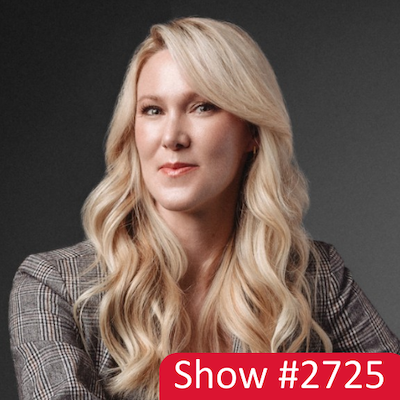
27 Jan January 27, 2026 – Gigster Credit Tamara Laine and VA Guru Frank Olis
Transcript
Intro 1 0:04: Broadcasting from am and FM stations around the country. Welcome to the Small Business Administration award winning school for startups radio where we talk all things small business and entrepreneurship. Now here is your host, the guy that believes anyone can be a successful entrepreneur, because entrepreneurship is not about creativity, risk or passion. Jim Beach,
Jim Beach 0:26: hello everyone. Welcome to another exciting edition of School for startups radio. I hope you’re having a great day out there riding the roller coaster life of an entrepreneur, up and down, up and down, twists and turns. You never know what is going to happen next. I’ve got a fantastic show for you today, two great guests and two great topics. We’re going to start off with Tamara lane. She has a company called empower. It is a gig credit agency for all of you gig workers, it is incredibly important that you listen to this. She’s built a model for you to gain credit and help build your credit score. After that, Frank Olis is going to be with us. He is my virtual assistant, and we’re going to talk about how to have a great virtual assistant, what they should do, how to find them, all of that stuff. So it’s a great show. Appreciate you being with us. We’re going to go ahead and get started right now. Here we go. Very excited to introduce my first guest today, an Emmy award winning journalist turned FinTech founder. She was doing gig work herself, and realized that there needed to be a better FinTech solution for the gig economy, and so she has created M power, and we’re here today to learn about it, Tamara, welcome. Thanks for being with us, of course. Thank you for having me on. Oh, I don’t know if I’ve said your full name, Tamara lane. I’m sorry that’s probably the worst thing you could do is not introduce while you’re introducing Tamara lane, welcome. How you
Tamara Laine 2:04: doing? Well, doing well.
Jim Beach 2:06: Happy this morning, for some reason. Oh, that
Tamara Laine 2:09: is fine, and you got my name, right. So we’re all good.
Jim Beach 2:11: All right. What is wrong with the gig FinTech world? What problems are the gig workers experiencing?
Tamara Laine 2:21: Well, so I mean, let’s, let’s look at it this way. Our financial system was created mainly back in the 50s, when work was a w2 and women didn’t have bank accounts, right? And so we’ve really evolved way past that, but our system for tracking credit worthiness has not today. It’s very normal for someone to have more than one job and have several income streams. It’s normal to have multiple bank accounts. It’s very normal to rent for your entire lifetime and not own a home. And so these are all things that have changed, you know, and and the way that we live has changed, the way that we borrow has changed. And so we need a financial system that has changed with us, and that’s what we’re building, which is empower, which is a way for lenders to create products and to lend to. I call it the new economy now, right? Because it’s not just gig workers, it’s creators, as caregivers. It’s a majority of the the workforce, and we should be building things so that they can thrive.
Jim Beach 3:30: I love it. That makes so much sense. You know what? I’m one of those people. I’ve methodically been proud not to have a credit score. You know, I have to have made enough money that I didn’t have to buy a house on credit. I paid my house, I paid for my cars, and, you know, I had a debit card, and recently I rented an apartment. And boy, was that an experience for me. Yeah. And, I mean, I’m impressed.
Tamara Laine 4:00: Are you? Are you Gen Z? Because that is how Gen Z thinks right now. What the trends that we’re seeing is that Gen Z doesn’t have credit cards. They do instead of loans. They do buy now, pay later. They pay off, you know, they’re off of their debit card. And that is great, because you think, Wow, that’s so financially responsible, but it does not build credit, right?
Jim Beach 4:25: That is something I discovered, yes, when you don’t borrow money, you don’t get credit, yeah, and it’s so counterintuitive, right? Yeah, it is. I it’s just part of the system I opted out of. Again, I was really happy not to have and everyone told me I was stupid. You have to have a mortgage payment, but why? They’re like for the tax deductions, but you still lose money, you know? And so my house has been paid for for a while. You. How’d you do? Okay, so this is how you discovered it. What did you do when you discovered this problem for solving it? I mean, this is a big one to solve. It deals with financial regulators and stuff, right? Yeah, well,
Tamara Laine 5:14: I mean, it’s not a small problem to step into. That’s why it’s something that, for a long time was kind of punted, right? You know, it’s not that we haven’t noticed this problem for a while. We just have gone, how do we solve it? And I think we’re in a really great time with AI to be able to really reimagine how banking is done. So instead of creating kind of patchwork solutions, we’re able to just reinvent how it’s done, and that’s where Empower comes in. And I’m excited about I saw the opportunity when I’m sort of dabbling in AI and said this really has just exponential power to look at the whole person and create a new way of viewing credit worthiness. And so that’s what we’ve been building out. It’s it’s exciting, because we’re using agents, and so we’re seeing the potential to be able to help, help the borrower in ways that we hadn’t imagined before. So for a long time, we’ve talked about financial fluency, right? Like, how do we get people educated on financial fluency, so that they make the best decisions with their finances. And that is great. And we’ve, you know, put a pen and paper down in front of people and said, Here’s the Excel sheets that you should be doing and working within and and here’s how you track things. And it moves the needle a little bit, but it doesn’t do it to the amount and extent that we like it, AI and the power of agents Now does that in a way that can reach everyone. So you can have a financial coach on your phone that helps you make these decisions and automate them, right? So that good behavior, good habits happens for everyone, not just people who are really savvy with money or, you know, extensively gone into financial literacy.
Jim Beach 7:07: When you’re saying agents, you’re meaning an AI person that can reprimand me.
Tamara Laine 7:15: No, AI is is so kind and nice, right? Like, I think that’s the joke of ai, ai, yes, too complimentary. All. You always have a brilliant idea. You know what I mean is, if you think of the way I imagine it is, if you think of how your I watch, or, you know, your Fitbits help you make good decisions and good habits, just by being kind of gentle nudges, you should be able to have financial coaches the same way with your your behavior and your actions, with money that is there in the background, helping you, giving you gentle nudges to make the best decisions, to enhance your savings, your portfolio, Your habits, everything that help you become, you know, financially stable and thrive.
Jim Beach 8:05: Okay, is my component mostly with the customer interaction, or is there another AI thing that’s going on there as well, well? So our platform
Tamara Laine 8:19: has is starting with six AI agents that some are customer facing and some are lender facing, to really help through the whole process. And it’s a like I said, it’s a modern way of doing financial services.
Jim Beach 8:35: Yes, all right, so how long ago did you decide to do this?
Tamara Laine 8:39: Well, I had been working in financial fluency for a while and and I had been talking to banks. Oh, well, journalism I’d worked in for a long time.
Jim Beach 8:52: Fluency was that part of your journalism or part of something else?
Tamara Laine 8:56: That was part of something else in boards that I advise and in programs that I support. And so, you know, I’ve been I’ve been on the edge of listening to it all the programs that we’re helping people, how we’re going about it. And so something I’ve always been interested in, and I’ve spent a lot of time talking with banks and talking with borrowers, mainly small business owners, female small business owners who had such a hard time getting loans and listening to the pain points, a lot of it came down to the information and the understanding of the business and the person and and that was always the big disconnect. And so I put my journalist hat on, and I said, How can we fix this? And that’s when I started digging in and came up with the solution of Empower.
Jim Beach 9:43: Okay, and what did you do first? Then, I mean, it seems like this would take some money to get started. Did you bootstrap? Did you go get money? And what was the very first action you took? The very first action
Tamara Laine 9:56: was just like extreme research and cus. Customer interviews, right? I spoke with banks, with lenders, to find out what their pain points were, to make sure that I was starting off on the right path. Then I made the intentional decision to bootstrap, which I think is the most important for me. It was the best advice I was given. It was Bootstrap, your company, hold on to as much as possible for the longest time possible. So we are bootstrapped, and we’re about to have customers on. And I couldn’t be more proud of that.
Jim Beach 10:31: That is amazing. Yes, yes, very, very proud of that. But you had to build the technology, right? Yep.
Tamara Laine 10:38: So I have a co founder who’s building the technology, and now we’ve just brought a
Jim Beach 10:42: smart thing. You found a co founder who, yeah, the tech for you have to pay for it, right? Yep.
Tamara Laine 10:48: So we met on the Y Combinator matchmaking site. Oh, like, like, dating for co founders. And it was, it was great. So I had talked to a whole bunch of potential CTO co founders, and a lot of them said, well, let’s just build something in three weeks and get customers on. And you know, we could start testing. And I knew what I was thinking was more comfortable than that, right? You couldn’t just vibe, code it in three weeks and and have customers on in a regulated space. So when I met my co founder, Melanie, and I explained it. She said, this is a very complicated, highly regulated, you know, industry. And she she basically said, no the first time. And I said, this is going to be my co founder.
Jim Beach 11:38: She’s the most honest one you met, yeah.
Tamara Laine 11:41: And so I then I kept engaging and saying, you know, well, here’s what I’m thinking and here’s the thought process, and here’s, you know, the way I want to look at the solution. And after three conversations, she was like, Okay, I’m in like, she she had always wanted to tackle this problem and the way that I was thinking about it, she was like, Nope, this is it. Let’s do it
Jim Beach 12:03: all right. So very cool. You didn’t have to sell any of your Emmy Awards. I didn’t have to sell any
Tamara Laine 12:09: of them. No, no. In fact, one is right here on my desk with me to remind me that hard work pays off.
Jim Beach 12:14: Excellent, excellent. I love it. Okay, so you have been programming, and you just said you’re just about to let customers on. Did I hear that correctly?
Tamara Laine 12:24: You are correct. And we couldn’t be more excited. We have other good news. We were just accepted into the FinTech sandbox data residency program. It’s a global program, but it’s here in Boston, so we’ve been very excited about that.
Jim Beach 12:39: Well, congratulations. Okay, so what does that get you? Is that a incubator with money? Or what is that?
Tamara Laine 12:46: So what they help with, which is exciting for us, is access to a lot of data. So obviously, our system runs on a lot of data, and so what we’ll be able to do through the residency is not only get more mentors and more support, but access to all the data platforms that we’re interested in. So that helps with our predictive analytics and systems and running our running our models on a high amount of data. So we’re, you know, we know that’s going to put us way ahead of time Our time schedule.
Jim Beach 13:24: So I actually had this conversation yesterday with a CTO. What percent of a startup do you give a CTO who’s responsible for doing all the coding? What percent? Oh, so what was the deal you made with Melissa?
Tamara Laine 13:40: Oh with, with Melanie. Gosh, I, you know, I feel like that’s, I would have to ask her if she’s okay with me disclosing you
Jim Beach 13:51: don’t have to give, you know, precise stuff. I, you know, we don’t want to, you know, violate your confidentiality and privacy. But do you, did you think that it’s a 20% thing or a 50% thing, or what are your just general thoughts on what you should give a CTO who’s going to bring to you, in essence, everything?
Tamara Laine 14:10: Yeah, well, so I’ll speak in generality, so as I don’t violate her confidence. But when you do kind of the mathematics of co founder relationship, it usually works on if someone like sweat equity versus if money is being put in. So you, you know, you kind of take those percentages. If someone is putting money in, then their equity goes up. If someone is just putting time in, then the equity is less than putting money in, right? And so you have to it. It’s math, it’s not emotions. If that’s my, my recommendation to other founders who are going through that process, it shouldn’t. It should never just be like a coming together and saying, Let’s split it three ways, right? At least in my opinion. It really is a mathematical equation
Jim Beach 15:02: that’s even easier to share with us then. So what are the mathematical equations that look like? So yeah, what does a founder get? Or what does a tech person get for doing just the coding? 1020, 3040, 50, which one? A, B, C, D, E, just the coding. Yeah. Zero to alive until that coding is done, you don’t really exist. You’re just an idea on paper in the ether. But now you actually have a website that works. So you’ve gone from zero to 100 what is that person worth?
Tamara Laine 15:40: Yeah. I mean you’re okay. So this is why your question is complicated. And I know, I know you think I’m dodging this, but this is why your question is complicated. What is the product? Is this six months sweat equity, or is this three weeks sweat equity?
Jim Beach 15:54: It’s a complicated thing, just like RC said.
Tamara Laine 16:00: So if it’s, if it’s six months, no no money put in, no proprietary data behind, I don’t know my my knee jerk reaction would be, you start somewhere between 10 and 30%
Jim Beach 16:15: okay, thank you. Yeah,
Tamara Laine 16:19: because I feel like, again, you’re, you’re talking about, you know, some people are bringing proprietary data and proprietary technology already to the table, right that they tested. So, like, it’s not, it’s not an easy, clear, cut decision of what someone should get over someone else. You have to take into account all the different things. And like, you know, some there’s, there’s the other part of expertise. Can you do it without that
Jim Beach 16:49: person? Right? Like,
Tamara Laine 16:53: did you find someone in biotech, for example, who has such an expertise in this one area that you can’t do it without them. You may be offering them more than 50% as a co founder. It really depends on multiple factors. That’s why I say it’s
Jim Beach 17:13: kind of math, yep. All right, I’ll tell you my situation, and you tell me what I should have done. Okay, okay, all right, so I have an incredible URL, a once in a lifetime URL in that industry. Okay, everyone who’s heard the URL is blown away that I got it. But it’s like, you know, having wine in the wine industry, okay, okay, I have an idea that no one else has had that is one of the easiest ideas. Once you’ve heard the idea, you’re like, oh my god, that’s so stupid. How did that not done 20 years ago? And the programming will probably take a long weekend to get it up and running. Okay? He’s gonna do all of the programming a long weekend. He has 600 customers already in that space who could potentially be customers for this new idea. And he already has someone who he thinks will put in a million dollars day one. Okay, what equity do we bring? What? What’s the solution there. And you think this is a weekend development, it’s almost already done.
Tamara Laine 18:26: So I would make so if it were me, and it sounds like there’s a very valuable co founder that could bring you a lot of customers
Jim Beach 18:34: and customers and a million dollars day one,
Tamara Laine 18:37: then I would make the equity based on KPI milestones,
Jim Beach 18:42: who has to perform to actually get it. It has to perform
Tamara Laine 18:45: to actually get it. Because up
Jim Beach 18:47: with what? Okay, if you do every milestone and kick them all, what percent does that person get? If it’s
Tamara Laine 18:53: just you and that and your CTO, who’s also bringing customers, then I would start with a 5050, split, based on his milestones, right? Because it’s only over the weekend. So I would say, for a certain percentage of customers, you get to 5% for you know, certain and then the next percentage of customers, you get to 10% and then the next percentage of customers you get and so I would build in 5% increments. And then, you know the again, another 5% increment for the or you’d have to think about the million dollar investment, right? Because if someone comes with a million dollars, they’re also, at your stage, going to want 10% of the company, so, our
Jim Beach 19:41: 40 so you the company knows what they’re going to want, right? Yeah, yeah,
Tamara Laine 19:45: you don’t know. So then you would have to factor that in, that you’re that if this co founder brings in a million dollars, you’d be giving equity to the co founder and to the investor. So I. Would make it all milestone based, all
Jim Beach 20:03: right, so the we did that, and we ended up exactly what you said, 5050, with four milestones that were in there. And you know, one thing I didn’t say, but I guess I should have, is that his enthusiasm matched mine, just like Melissa did with you. And that’s what really kicked it, and I wanted to give him more equity to make him more excited. Yeah?
Tamara Laine 20:33: I mean, that’s, that’s the thing. Co founders are relationships. It’s like a marriage, yeah? So, and and there’s nothing cut, clear, cut and cut dry, yeah, with co founders, right? And so I think, I think you’re, I mean, I’m glad to hear that you did it on milestones, because that sort of arrangement really does seem like it’s just prime for milestone based agreements.
Jim Beach 20:59: How do you win an Emmy Award. Oh, what is
Tamara Laine 21:04: it practice? No, I the Emmy came after many years of hard work as an investigative journalist and digging into really hard stories. Was really proud of the story that won this Emmy, which is on a group of shareholders, activist investors, who were fighting to have Northrop Grumman and Amazon put a code of ethics into their AI engineering. And the group of activist investors were the nuns, and it was really fun to follow and to learn more and to dig into the work that they were doing, and then really, I mean, that’s where I started getting deeply interested in AI. And also gave me a foundation for ethical AI, and why that’s so important and so important in engineering. And as you look at developing AI, how your values and codes of exit ethics and diversity of your team all play into really great AI products, and how valuable and important that
Jim Beach 22:12: is very interesting. The nuns were behind it, huh? Was that like the big reveal at the end of the story? Hey, guess who it was mob Frank Leone, no, even worse, it was the nun.
Tamara Laine 22:27: Oh no. It wasn’t a reveal. It started with them, because they were the champions of this. And it was really, I mean, it was really fun to watch these in, you know, nuns who had been fighting for so many great things, human rights interests over their their lifespan, and then still, the two nuns that I was following and profiling were both over 80 and still fighting for people’s rights. And it was just,
Jim Beach 22:52: it was incredible. Very cool. Tell us about your podcast. What the frack?
Tamara Laine 22:59: Yeah, what the frack So myself and my co host, Nicole, we talk about business growth and scaling. We started we talked about it from our two perspectives, which mine is zero to one, and Nicole is scaling. She’s also had two companies and exits of her own, and so we have a great time. We not only do case studies and troubleshooting, but we bring on experts from the fractional CXO world. That’s why it’s called what the FRAC to talk about how to grow and scale your business. You know, with everything that’s happening right now, we talk a lot about AI, because everyone’s trying to figure out how to integrate it, but it’s a really great conversation and great insight on how to troubleshoot problems in your business and insight into scaling. Excellent.
Jim Beach 23:43: You should have me on. I grew my first business to 89 locations, 600 Yeah.
Tamara Laine 23:49: Please come on. I’ll send you the link to sign up. Yes.
Jim Beach 23:53: So what are you? Is this the FinTech now empower your full time gig is that what you’re 100% devoted to now?
Tamara Laine 24:03: Yes, I also do some consulting and advising, but my time, I mean, as a startup founder, you feel like, if you have 80 to 90 hours in a week that you’re working, and you devote a little bit of time to other people, you’re still doing over full time.
Jim Beach 24:19: Yes, very true, very true. And a year from now, when you come back on the show, what were your accountable goal be that we will judge you on a year from now, oh,
Tamara Laine 24:32: well, we will have finished our three pilot programs, and scaling to the goal will be 10 to 20 customers.
Jim Beach 24:41: 10 to 20 customers in a year? Awesome, yeah, but the customers that would be banks or gig workers.
Tamara Laine 24:50: Banks, if it was 10 to 20 gig workers, he would be working,
Jim Beach 24:54: yeah, you should have 1000 gig workers on each bank, right? Yeah, exactly, exactly. Exactly yes. Well, I love this, and I think that this is a great idea, and I hope it works out. How do we get in touch? Find out more. Follow you online.
Tamara Laine 25:10: So follow me on LinkedIn. That’s where I’m the most active. Just Tamerlane on LinkedIn. I’m the first one that pops up. And then if you’re a partner and you want to chat with me more, you can either find me on LinkedIn, or you can go to our website, empower a i.com that’s NP, WR, ai.com if you’re gig worker and you want to sign up for we’re gonna have a great app for cash flow analysis that’s at Empower dot money and PWR, dot money, fantastic.
Jim Beach 25:36: Thank you so much, and we’d love to have you back in the year to get caught up. Thanks a lot.
Tamara Laine 25:40: Awesome. Thanks. Bye. We are. Thank
Jim Beach 25:53: you so very much for being with us. I have an incredible guest to welcome to the show. Very excited for you. This is going to be really fun. Please welcome Frank Vincent Olis to the show. He is my virtual assistant, and we are also starting a virtual assistant business together called Max VA, or the idea that we’re going to maximize your virtual experience, or your virtual or your Vincent experience, I’m going to have to practice that Frank, welcome to the show. Finally, glad to have you on.
Frank Olis 26:28: Hi Jim. So glad to be here. And this is exciting for me, because this will be my first time to be on your show, and, of course, in a podcast. Thank you, Jim.
Jim Beach 26:39: How long have we been working together now?
Frank Olis 26:43: Oh, actually, Jim, for almost three years. Actually started working for you. That was March 2023, and now we’re ready in 2026 so it will be my third year in coming March, and it is a great journey for for me,
Jim Beach 27:01: Jim, your life, I’ve heard,
Frank Olis 27:04: no, it’s opposite. Actually, it’s opposite. Actually, you’re, you’re the first US client that I work with. And I would say this is the best experience that I have so far when it comes to my VA journey.
Jim Beach 27:21: So I want to hear about your VA journey. But before that, why has this been a good experience for you? On your side? What about this experience has been good for you. It’s good for you.
Frank Olis 27:33: I’m sorry, Jim, the line gets cut off. Always that again.
Jim Beach 27:35: Why has this been a good experience for you? What about our working together for the last three years been good for you, as opposed to other situations, other situations, yes.
Frank Olis 27:45: So as you know, I started working for you, let’s just say for the first two years as a part time. So meaning to say I’m also working for a full time as a VA as well. So of course, working with a full time client as well, was also fulfilling. But working with you is I was able to say I was able to grow more exponentially when it comes to my career, my skills, you give me a lot of what I call this a trust when it comes to doing tasks, you give me a lot of confidence of, you know, delegating a lot of important tasks, or critical tasks. And if we’re going to do some important projects, you’re you’re giving me the freedom to solve it, to what I call this, to bring solution to it. And that way it was able to give me more fulfillment working. Working for you. That’s the reason, Jim, I know you already know this. That’s the reason. Six months ago, I think, yes, six months ago, I’ve talked to you that they wanted to work full time with you because I enjoyed working with you. I am growing more working with you. So, yes, that would, that’s the thing,
Jim Beach 29:03: all right. Well, thank you. For the last three years, they’ve been great for my side as well. I just want to let people know what people know, what Frank’s skills are that you need to replicate, right? So if you hire your VA, please do the following. Frank is always, always gets what he needs to get done on timely fashion, and has always got his work done when he says he’s going to it’s 99% right? It’s very rare that I catch him on an error. Number three, very honest, and says, I don’t understand this, or I don’t understand where we’re going with this, or what’s going on with this. So help me explain. He’s very honest. And so we’ve had problems about me explaining something to him and him not understanding it, pretending like he did, which has happened me with Indian within. Am workers in time 1000 me, that’s just the web, and he’s always been super polite and put up with my steaming temper. So how do you put up temper
Frank Olis 30:17: for me? Jim is with my almost a decade of corporate experience, of course, I do a lot of you know here in the Philippines, I’ve worked on, I work with Filipino clients, Philippine companies, so I always encounter what I call this feedback that most of the people would interpret as an attack. But working in a corporate world, I have understand that, you know, feedback. When a client burst his anger toward an employee, it’s not it’s nothing personal. It’s all about work. By the end of the day, this is a business, and it’s all about, you know, running the business and, of course, bringing value to the client, customers. Yeah, client and customers, something like that. So every time that, you know, just in case that you will burst out to me, I would just, I’m always thinking, it’s all about work. It’s nothing personal. It’s all about business.
Jim Beach 31:20: Out at you, you’re making it sound like it happens every day.
Frank Olis 31:24: That’s the thing, Jim, the way you asked me, it seems like you’re always doing that, but actually, I think you only did that once or twice. I haven’t remember. So that’s the thing. You’ve been a good boss, understanding there’s only for me to you know, hardly remember that you’ve, you know you You’re scolding me or giving a feedback, something like that in a angrily fashion.
Jim Beach 31:51: How often I’ve been angry at you. Just mean, I think there’s only,
Frank Olis 32:01: I think this once Jim and I
Jim Beach 32:03: hardly remember, like I’m very sorry on how
Frank Olis 32:07: No, no, no, no, it’s okay. You’ve been great to meet him as a, what I call as a client, as a boss.
Jim Beach 32:17: How did we meet each other in the first place? How did we introduce Frank Olis 32:22: I actually, that was through a a online job platform. Jim, it’s famous here in the Philippines. We call that online jobs that. Th, so you just post there. It’s very short message. And then I try to, you know, message you through the platform. Sometimes the platform is when it comes to the messaging feature, is not great, so I try to message you through email. I found, I found your emails, and I messaged you on LinkedIn as well. So on the other hand, I think that’s the feature that we’re going to improve in, maximize VA as well when it comes to messaging feature, because the online platform that we have used way before, it’s not friendly when it comes to the messaging platform, yeah. So answering your question, it was, you know, through through that platform, and I try to, you know, connect with you through email and LinkedIn in which you responded, and that’s how our relationship started.
Jim Beach 33:27: That is a great platform, one of the ugliest platforms, but it did get us introduced. I would have to check I think I probably got the applicants off of that one post. Well, maybe more than that, I quit looking. I think I turned it off. I don’t know what I did, but it certainly took a lot to stand out in that group. So if you’re trying to find a VA, we need to introduce each member. The guest was a haseem Hassan, who introduced the idea his book is called Higher I think, I think, and I think he gives it away for free on his website, if you find it on the monolog or the show notes here, we will post that as well. But that book describes a process whereby you post on a website like this and make it very easy for people to apply. Then, once they have applied, you make it very difficult for them to go through all of the steps, and those steps prove that they’re worthy to get a detail oriented job like a VA. Did you listen to that episode, Frank? I think I pointed it out to you.
Frank Olis 34:50: I think that was just last week. Jim and I was not able to listen listen to it yet
Jim Beach 34:56: ago, a couple months ago.
Frank Olis 34:59: I hope. Okay, I will try to check this out. Since we do have index in our podcast, we could easily track it down. Yes, the point
Jim Beach 35:07: is, is that there’s some things you can do while hiring to make sure you get a great person. And what he recommended was you set up a couple of hurdles, and maybe one of the hurdles the last line of your post is make your subject line New England Patriots in the Super Bowl, you know? Yeah, that way you read the entire email or the entire posting, and then you’re actually going to follow crazy little details like that. Good. Va, be a good.
Frank Olis 35:41: Va, yes, that falls to the qualification gym of a VA of being, you know, attentive to details. And way before, when I was applying, before I was working for you, I tend to encounter that kind of, you know, hurdle and online job application platforms like on the message, they would say, please put this code on your cover letter to see if you really read the job description, something like that. So yeah, that’s, I would say, not common, but there’s a lot of you know, clients doing that?
Jim Beach 36:24: Yes, I think we need to pay attention, and we’re certainly going as we grow our business, because I think that will give our clients so frank, yes, go ahead, you obviously you want to say something. The answer will say what you want to say, and then and then blend that into what do you think your job as a VA is, what is technically supposed to do?
Frank Olis 36:51: I would say, in a general term, Jim is making the client’s life easier when it comes to the business. What I call this, any task, important task that the client can delegate. He could give that to the VAs like, you know, calendar management, email management, customer service, email correspondence on my case, on working for you Jim is I’m managing most of your podcast, any related podcasts, updating your website, podcast, website, posting the podcast for today, social media marketing, I’m doing that, of course, transcription, a lot of things. I even build websites for you, even though that way before, I don’t have any experience in coding, so, yeah, I build websites for you. I was able to learn that even though with zero experience and so basically, any any problems that the clients are having, you can delegate that to the VA. I think that falls to the role of general virtual assistants. But for clients out there, they could also outsource a specific, what I call this niche or specific task that is related to their department, like for marketing, for sales, for for operations, specifically,
Jim Beach 38:27: in our relationship. Have you had to do things that you thought were beyond what a normal VA should do? And obviously you’re not the same city, so you can’t go get my dry cleaning. But have has, I would say that our VA client relationship has left that and is going to the next level. Don’t you think, yes,
Frank Olis 38:52: yes, Jim, I would say I’m doing a lot of what I call this task, that I would say basically beyond my niche. But again, Jim, as I have said earlier, doing tasks that is beyond my expertise. Doing tasks for you beyond my expertise is help me to grow exponentially when it comes to my skill set and career. So for that point, I’m really enjoying that.
Jim Beach 39:17: Have I left you to the wolves for a project like that, without any help, without any help.
Frank Olis 39:23: No actually, Jim Justin, if there is any clarification, that’s what I like about you, Jim. You’re very direct and also supportive. So this is you always tell me, this is I wanted to get and and on my part, I’m doing, I’m doing my best to deliver the exact output that you wanted.
Jim Beach 39:44: What are the rules that you and I nurtured over time
Frank Olis 39:50: for zoom is, of course, we have different time zone. It might be silly for others, every time that we have meeting or through emails, we always greet each other good morning. Evening, even though it’s evening on my end, it’s already night on your end. And the most important thing next rule is asking question, if it’s not clear, that’s what I like about you, Jim, on the other hand, let’s just talk about the culture, the culture, cultural differences between us, citizen and the Filipino US citizen like you or us clients are very direct. Sometimes Jim those directness will lead to ambiguity. And us Filipinos tend to receive that ambiguity through, you know, second guessing, always analyzing stuff and what you meant, something like that. Of course, it is. It should be an open communication, and I will before I’m going to ask clarification to you, Jim, I will do my best to you know, to analyze on what you meant, what does I mean? What it what it is that you wanted me to do, but just in case, if I won’t get it, that’s the time that I would ask you if, what do you mean by this? Or I will try to give you some solutions overhand. If this is what you wanted, something like that.
Jim Beach 41:15: Alright, what about feedback? I would have to imagine that you guess that you don’t get enough feedback from me. What are your thoughts on? What a good relationship in terms of feedback should look like? Know, when you can’t see my face or tone, or you don’t know about smiling when I admire you, like that, like that. So, so tell me about dream feedback situation, situation. So, first of all,
Frank Olis 41:50: Jim, if I know you, so don’t give me feedback. But if there was an incense, incense that you give me one, first and foremost, the feedback that you’re giving me, Jim, is mostly we do our communication through email or through through WhatsApp. So with text communication, it is or email communication, the message has no emotion. So if you’re going to give me a feedback. I would not overreact. Something like that. I will never overreact, because, then again, the the email has no emotion, unless, if you’re going to talk to me over the phone, so I will, I will really handle that professionally. Again, Jim, the feedback is not an attack, but a support to me, for me to be better, for me to do the projects correctly.
Jim Beach 42:46: I do send you five or six emails almost every day. You send me a daily report, and I almost always respond to it, don’t I? Yeah, yes, even if it’s just one word, just one word, yes, yeah. How does that make you feel just one word is that, are you when you see that? Or you do realize that every once in a while, catch an error to prove that I am actually looking at it, and every once in a while, I make the recommendation to make things better. I thought, What are your responses before I fire?
Frank Olis 43:19: For me, those emails, I really appreciate, like, just two words. Like, great job. Thank you so much. I’m really happy with it. Like, let’s just say, if I’m I finished my work in the afternoon, and I would receive your replies in the evening before I go to sleep. I would, you know, I would read those, it really make me happy, like I was able, I would be able to say to myself, I did a great job today. And if there’s a, you know, a correction, they may like do this. Can you please change it? Change this. I would write that down on my notebook, something like that for me to be prepared for the next day. So with a combination of, you know, always complimenting me and giving me a feedback by the end of the day, I really appreciate it, Jim, because it, it make it is making me prepared for the next day.
Jim Beach 44:16: I hope so. I don’t want you to know that. No, appreciate I also am not going to write a paragraph when I could. I saw this.
Frank Olis 44:29: Yeah, it’s okay, Jim, because, of course, I know that you’re dealing a lot of emails every day, so as much as possible. On my end, I would love to send my emails and direct, simple and intenuative manner. So it is already enough for me. Jim, if you’re going to, you know, send me an update with this short message only. It’s, it’s, I mean, it’s okay again. By the end of the day, our job as a VA is to make your life. Player. So it is our job as well to, you know, to understand you and appreciate you, even though that you’re just going to you’re just sending us short responses.
Jim Beach 45:13: What about the variety of projects I’ve thrown your way? Is that a plus or a negative? Would you send a variety of things your way? Frank Olis 45:23: No, no. With that, Jim, it is really important in the first glance. Other people may think that it is messy, but no, since we’re using a project management tool, so it is easy for me to, you know, do some I mean, label the task in a I mean to prioritize the task, if it’s high, medium or low priority. So and of course, it is my job as well to ask you for the timeline, when do you want to get this to be to be released, for example, for the books, when they want it to be published? So with the open communication, and of course, with planning, it is easy for, I mean, for me, to do those projects, of course, with the time management and doing the high, the most important tasks or projects on the day. So it’s a it’s just a matter of time management. Jim and and the the project management tool really helped.
Jim Beach 46:26: I want to talk about the first time that you asked me for extra money outside of your normal pay. Yes, yes. What are your thoughts about that you remember? It sounds like you remember that moment vividly. Wasn’t it?
Frank Olis 46:44: Yes, actually, I would start them way back 2023 when I started working for you, I was using my sister’s laptop, which is an outdated one, Windows 10. Windows 10 laptop by the time that she needs to get it to use it, I don’t have any laptop anymore, so I requested to, I know, on that part, I was shy to ask, but I think that’s the only way for me to, you know, to get help and to get a laptop of my own, because I was really struggling back then, and I tried to message you and asked nicely if you could support me with, you know, sponsoring me for a Windows laptop so that I would be able to continually working for you. And I proposed, initially, Jim for a salary deduction, so you agreed to it, and by the time that I get the laptop and with my next pay, I was really surprised that there was no salary deduction, and when I asked you for it, you don’t want to talk about it like I initially thought, that it will be awkward for you to talk about it. So why I understood on that time is I’ll be giving it for you. I will be giving to you the laptop for free, no dramas, something like that. So I really appreciate you on that one last year, Jim. I think that was on June. So it is really important for me. When I started working for you, there’s a lot of additional workloads that requires me to use Apple laptop. I mean, MacBook, and when I said that I don’t have any funds to get one, you supported me again. When I propose for a salary deduction. Again, you decline. So that’s what I’m using right now. The latest one, the MacBook M for chip. So it’s the MacBook is really a productivity power tool. So it was able to help me to be efficient with my with my workload in a daily basis, and they really support to you. I’m really thankful to you about this one, Jim, do you want me to share the last thing that you did for me? Jim, I’m
Jim Beach 49:13: not sure what you were referring to last December.
Jim Beach 49:22: I don’t think it’s also not understandable. Just an economic standpoint, it doesn’t the numbers don’t properly. So anyway, anyway.
Frank Olis 49:42: So basically, sorry, Jim, go ahead. Yeah, so I will not be sharing the last one, but I would say, generally, Jim has been generous to me in a way that he really trusted me, that you know, by supporting me. Me by supporting you providing these tools, I’ll be able to do my job efficiently. And so basically, I would really appreciate Jim the support that you have given to me. Just ready, trust that you know I would do it. I will do the task for you. I will do the work for you. So I really appreciate Jim the I think for the VA gym, the important thing is the fulfilling, the fulfillment that the VA needed working for a client is not just about pay, but for the trust that you are giving to the VA. So, yeah, I think that’s one of the most important thing well. So thank you so much.
Jim Beach 50:45: You have my credit cards, for example, you know, and the Philippines and I have given I have money over the time, because, number one, you develop trust, you know, and we’ve had a thought and honest relationship with we’ve told each other, and you’ve been very supportive. But you’ve also done extra work, I would say, right. I would say, right. So I always if you do extra work, you deserve some extra loving.
Frank Olis 51:24: Thank you, Jim, of course, US Filipinos, Jim, or we’re very hard working in a sense that we would love to go on beyond, above and beyond, when it when, when it comes to our work, especially if the project is really important or the deadline is already there and go back to the trust gym. Yes, I have your credit card information because there’s a task that I need to do that requires purchase. Yeah, purchase, like, for example, if we need to purchase this domain and a website, as we start building the website, the time when we made the backdrop for your office, and there’s a need for me to, you know, pay the company that is doing for your backdrop,
Jim Beach 52:15: the whole variety, yeah, I just want You to do that. I don’t given you, because the time is upon us find our own VA, cool relationship to help us not have to work so hard. Where do we go? Where do we go?
Frank Olis 52:34: So for clients to ease, for the clients to easily find VAs like me, or basically great Filipinos VA, try to explore maximize VA. So you could find us in four major social media platforms. So that is through Facebook, Instagram, LinkedIn, and also in x or formerly Twitter. And you could also check our website, maximize va.com so yeah, please check the website, and hopefully you could set up a discovery call with us. It will be either through me or through Jim. So we’re going to provide you some talented, talented vas. We’re going to match you with top notch VAs in the Philippines, and hopefully in the next year, we’ll be able to expand it, maybe offer VAs outside the Philippines. Fantastic, Frank, thanks
Jim Beach 53:32: for being with us. It was fun to talk a little bit, and I’ll talk to you soon,
Frank Olis 53:41: looking forward to it. Thank you so much. Thank you so much.
Jim Beach 53:44: We are out of time for war today, but you know what we do? That’s right? We come back tomorrow, be safe, take care and go make a million dollars. Bye. Now you.
Tamara Laine – Founder of MPWR & MPWR Money
Our financial system was created mainly back in the 50s, when work was
a W-2 and women didn’t have bank accounts, and we’ve really evolved
way past that, but our system for tracking credit worthiness has not.

Tamara Laine
Tamara Laine is an Emmy Award winning journalist, fintech founder, and business growth strategist focused on expanding access to credit and capital. She is the founder and CEO of MPWR and MPWR Money, where she leads the development of AI driven financial tools that use alternative data to serve gig workers, women, and historically underserved communities. Drawing on her own experience as a former gig worker, Tamara built MPWR to address the real world gaps she saw in traditional financial systems and to create more inclusive pathways to financial stability and growth. Before launching MPWR, Tamara built a successful career in media and technology, combining storytelling, data, and strategy to drive impact. She has helped launch and scale multiple technology ventures and is widely recognized for her work at the intersection of financial inclusion, ethical AI, and economic innovation. In addition to her work as a founder, Tamara co hosts the podcast What the Frac?, where she explores startup growth, innovation, and the realities of building modern businesses.
Frank Olis – Executive Producer of School for Start-ups Radio & Operations Manager of Maximize VA
For the VA, the important thing is the fulfillment that the VA needed
working for a client is not just about pay, but for the trust that you
are giving to the VA.

Frank Olis
Frank Olis is an experienced media and operations professional with a strong background in radio production, business systems, and virtual support management. He serves as Executive Producer of School for Start-ups Radio, where he oversees the development and execution of show content, production workflows, guest coordination, and the overall listener experience from planning through broadcast. In addition to his work in radio, Frank is the Operations Manager of Maximize VA, where he leads operational strategy and supports the delivery of virtual assistant services and business support solutions. His work at Maximize VA includes optimizing internal processes, managing client engagements, and ensuring high standards of execution for teams supporting growing businesses. Frank combines his skills in production, strategy, and operations to help organizations run efficiently and create high-quality content that serves their audiences.