
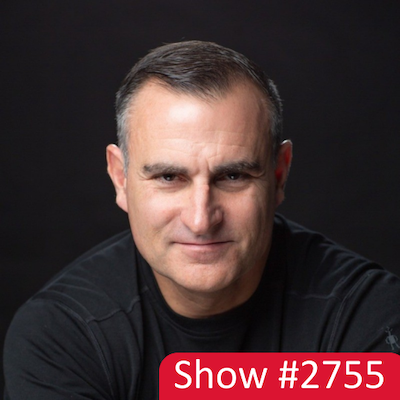
18 Mar March 19, 2026 – E&Y Entrepreneur of the Year Sam Goodner and Financial Product Sales Trainer Jim Effner
Transcript
0:04 Intro 1 : Broadcasting from AM and FM stations around the country. Welcome to the Small Business Administration award winning School for Startups Radio where we talk all things small business and entrepreneurship. Now here is your host, the guy that believes anyone can be a successful entrepreneur, because entrepreneurship is not about creativity, risk or passion. Jim Beach,
0:26 Jim Beach : Hello everyone. Welcome to another exciting edition of School for Startups Radio. Two fantastic guests today. First up, we have Sam Goodner. He was an entrepreneur, I’m sorry, Ernst and Young Entrepreneur of the Year winner. You do not get more prestigious than that. He started off with a Microsoft integration business, and then took over the parking industry. If you’ve ever parked your car, it was because Sam put the spot there for you. And then Jim effner is going to teach us about sales, getting referrals, all of that. So it’s a cram pack show. It’s a great one. Thanks for being with us. Let’s go. Boy am I excited to introduce our first guest today. This is an amazing story. Please welcome Sam Goodner to the show. For the first 20 years or so, he lived in Switzerland and was actually part of the elite Swiss mountain grenadiers. After that, he, I think, came to the United States and settled in Austin, is where he lives now. But along the way, he founded two amazing businesses. First he built catapult systems, which was the large world’s largest Microsoft System Integrator. And then he started flash parking, which became the largest parking technology company on the planet, currently valued at a billion dollars. Very impressive. He released last year a new book talking about this and giving some advice for us, called like clockwork. Run your business with Swiss Army precision. Sam, welcome to the show. How you doing?
1:57 Sam Goodner : Jim, it’s a pleasure. I’m doing great. How are you doing?
1:59 Jim Beach : I am well, thank you. What an amazing story. Oh, I just saw this. You also won the Ernst and Young Entrepreneur of the Year Award, which to me, is like winning three Academy Awards in one year. The ultimate sign of success. Ernst and Young Award is by far the best run. It actually has previous winners who are the judges and all of that. So it’s a great, great honor, and that’s the one thing I have never done, and I so jealous. Bam, very impressive.
2:30 Sam Goodner : Yeah, Princeton young really puts on a good, a good award program with that entrepreneur of the year. It’s really, you’re like you said, it’s the Oscars for for entrepreneurs.
2:39 Jim Beach : It is, it is, there is no more prestigious award, other than having a billion dollar company. If you had to choose, what would you choose, the E and y of the year or the billion dollars?
2:51 Sam Goodner : That’s a hard one. I’ll probably go for the money.
2:54 Jim Beach : I would hope so. If not, I think our conversation was over, because that’s all right, take us through the Swiss Army grenadiers portion of your life. What was that like, right?
3:09 Sam Goodner : So, as you mentioned, I grew up in Switzerland, where we have compulsory military service, so all men after high school get to serve in the Swiss Army. I decided to go ahead and volunteer for our version of the Special Forces are, you know, what we call our Swiss mountain grenadiers. It was a two year program, and you know, I’ll tell you no regrets. It was certainly one of the most transformative times in my life. I realized only later how many valuable lessons, you know, I took with me into the various businesses that I founded over the following 30 years that I didn’t even realize that, you know, I had learned while serving again as an officer in the Swiss Army. But I really, I really enjoyed, actually, my time during the you know, back then,
3:57 Jim Beach : What did you learn? Then? Was it precision? What was the some of your key takeaways from that experience?
4:04 Sam Goodner : Yeah, there’s so many valuable principles, I think, that entrepreneurs and organizational leaders can learn from the military anything from leadership principles, the value of preparation and training, decision making, you know, gathering intelligence. But if I had to boil it down to just one, like the most important principle that business leaders can learn from the military, any military, by the way, Swiss Army, US military or others, it would be clarity, like in the military. What I mean by clarity, right in the military, is obvious. It’s absolutely clear who’s in command. It’s clear who the enemy is. It’s clear who we’re fighting. It’s clear what the mission is, what my role in that mission is, how we measure success. Every communication has to be precise and clear. In the military, or people die, bad things happen. And in business, when everyone knows where we’re going, how we’re going to get there. What our top priorities are, what everybody’s role and responsibilities are, and what’s expected of me and how we’re going to measure success, man, you can accomplish great things. So again, clarity. If business leaders could just focus on having more clarity in every part of their organization, companies would be better run
5:21 Jim Beach : In the book, you talk about the first day there is that a brutal experience like it is at West Point, or it
5:31 Sam Goodner : Was a memorable experience, for sure, and brutal, to say the least. It was, no there was not a second of downtime. We were running around like chickens with our head cuts off, cut off, you know, going from one assignment to the other, still in our civilian clothes. We had, you know, we had traveled to the base in, I mean, just non stop, and then, and not a second to spare, physical activities, gathering our equipment, and then suddenly, suddenly, magically and ever, never forget this, right before the sunset, we’ve been running around all day in multiple groups, all over base and magically, right before sunset, all of the groups suddenly, you know, arrived simultaneously on this huge parking lot, you know, With the hill overlooking it. And then the base commandant, Colonel Hess, walks up on top of the hill. We’re in a Green Beret and mirrored sunglasses and a cigar in his mouth, right out of central casting, and proceeds to greet us and welcome us to Special Forces basic boot camp in three languages, in Swiss, German and French and Italian, and he finishes with and I hope that the next five months of the most difficult five months of your life, and in the process, you learn something about yourself, I will never forget that day.
6:53 Jim Beach : Well, I love that idea that it’s the most difficult time of your life, because from then on, it’s all downhill and easy.
7:00 Sam Goodner : You know, anytime I get to sleep with a roof over my head, it’s a good day.
7:06 Jim Beach : All right, after you left that tell us about what transitioned into catapult systems, Microsoft, largest integrator,
7:16 Sam Goodner : Yeah, so I had the opportunity to come study computer science in the States after my time in the Swiss military. So I came to Texas. I went to Texas A and M University, and after working a few places for just a couple of years, I worked in Kansas City, worked in London. I’d always known that I wanted to start a company. I’ve known this since probably I was a teenager, and then in college, I met my best friend David, and we had always talked about starting this, our first company together. And he was living in Austin, I was living in London, so I decided I need to move to Austin so we can finally start that business together. I wouldn’t got a job that needed to make money at a little hardware company called Dell Computer Corporation. And then we founded our first company in in September 1993 I know I’m dating myself, and it was called catapult systems. Now we we didn’t initially want to create an IT services firm. That’s what we ended up building. But initially our thought was, well, we want to build a bunch of these software we had all these ideas for software products, so we didn’t have any capital. And so we thought to ourselves, Well, I bet people would pay us to help them figure out how to build some of these enterprise applications that we know how to build. We were at the beginning of this technology inflection point from mainframe computing to client server computing. And then, of course, we caught a gear with the internet that just happened despite us. And then suddenly every company wanted to build systems, you know, on top of this new this new platform. And so we sort of lucked into being an IT services company at the right time. And then along the way, we did, we did, of course, funnel all of our products into all of our profits, into different product ideas, which became a few companies along the way that we sold, but the main company, catapult systems, had an exit 20 years later I sold to a public company in 2013
9:13 Jim Beach : Why does the marketplace allow companies like Microsoft and Salesforce to deliver A product that you then have to go hire another company to figure out how to use. You know, Salesforce is huge about that now, and some of the fastest growing companies here in Atlanta are Salesforce integrators. I would not buy. I still get it, buying a product that you’re not capable of using until you spend another million dollars to fix it? What the hell? Yeah.
9:45 Sam Goodner : So it depends on, you know, how differentiated you want to be compared to everyone else. Because, yes, ideal, in an ideal world, you can buy a package and implement it, you know, when it runs right off the shelf. And I’ve seen. For your accounting system. That’s it. That’s the way it should be. There’s no reason to run your accounting it’s not a differentiated solution you’re offering to your customers. But if you want to be different than everybody else in your space, and you want to leverage technology to provide something differentiated to your own customers, then you may have to build it. Then if you don’t want to have a team of internal, you know, IT folks to build it, then you might need to hire, you know, a firm like catapult systems. Of course, in, you know, in these days, you need less, you need fewer and fewer programmers, and you know, only a few that really know how to use artificial intelligence. So that whole world is being transformed yet again. I would love to be starting an IT services firm focused on AI right now. What an amazing opportunity.
10:52 Jim Beach : Why don’t you do it?
10:54 Sam Goodner : Yeah, so I promise myself and my family at this point, I’ve climbed all the mountains that I wanted to climb, and I’m now focused on coaching other entrepreneurs to climb their mountains. It was really fun. Don’t get me wrong, I love climbing mountains, but I think I’m at the phase in my life where it’s more fun to give back, more fun to sort of be behind the scenes and coach others on climbing their mountains. I get so much, so much enjoyment and satisfaction out of that.
11:20 Jim Beach : All right, before we talk about that more in depth, tell me about flash parking. How did that parking industry become your next business? Why parking?
11:30 Sam Goodner : Yeah, so I should say I did not found flash parking. I was looking for a company to buy or invest in after I had my other big exit. And then I, of course, I took the family around the world for a year, we traveled, took the kids out of school, visited 34 countries. When I was done with that, I was looking for a company to buy or invest in. I became an angel investor. I looked at over 100 companies over the course of a year because I wanted to start went from scratch. I had a set of criteria. I was looking for technology based, recurring revenue model, high gross margin, except, you know, a team that I would love working with. Then I met the young founder of this company, Flash parking. His name is Juan Rodriguez, and our 30 minute coffee meeting turned into three hours. And I remember leaving that meeting thinking to myself, Man, if half of the thing, the things this young entrepreneur is telling me are true, we have an amazing opportunity. And what it was, is it just it just so happened that back in 2016 when I met him, the parking industry was stuck 20 years in the past. They and he had built, either by brilliant design or by accident, the first entirely cloud native platform in the space, and you were stuck at 3 million in revenue for, you know, for the previous three years, they had 12 employees, and what they needed was, you know, a fresh round of capital, some growth capital, and maybe somebody to help them that had a few gray hairs, and I could provide both. So I, you know, a friend of mine, Dan sharplin, and I took down the whole investment round. I put myself on the team as President, I put him on our board as chairman, and then we proceeded, over the next six years, to turn flash parking into the largest parking technology company in the world. And as you mentioned in our last round of funding, a $1 billion valuation. So it was an amazing ride, and we just again, once again, happened to be at the right place at the right time, bringing this transformative type of technology to an industry that was simply stuck in the past.
13:32 Jim Beach : So describe exactly how your parking method works. Is it got a kiosk that I get a little ticket at and then put that on my dashboard.
13:43 Sam Goodner : So it’s all of the above. So when you go and want to disrupt an industry like parking, you have to be able to accommodate what the way that they do business today, and then the way that we think they’re going to do business in the future. So if you’ve ever entered a garage with a QR code, chances are that’s our technology. If you prepaid for parking with a mobile app that’s running on our rails. If you pull the ticket at a modern looking kiosk with a full, you know, touchscreen on it. That’s probably one of our pieces of hardware. If you’ve ever prepaid for parking on Ticketmaster, or if you’ve ever found parking on Google Maps and bought parking that’s using our our technology. So it’s everything from garage parking, surface lot parking, valet parking and event parking
14:28 Jim Beach : And lot owners come to you and hire you to outsource their lot operations. Is that true? You don’t own the parking lot?
14:38 Sam Goodner : No, no, no, so Well, we do neither. Actually. We don’t own the parking facilities, and we actually do not operate them. We’re the we sell the technology, so we sell to two constituents. It’s the asset owners, the parking lot and garage owners. That’s one of our constituents that the buys from us, or the parking operators, those are the companies that, like you said, run those Park. Facilities. Both of these types of customers are customers of ours, okay?
15:06 Jim Beach : And is what’s sort of the bread and butter of the industry or your business? What do you make most of your money from one particular niche? Or I don’t know what’s the key driver?
15:20 Sam Goodner : Obviously, the key driver for us, it has to be paid parking, right? We don’t make any money on free parking, and it’s, you know, and obviously, we’re looking for customers who want to optimize, you know, their parking revenue. So before we came to the market, for example, there was no such thing as surfacing, the availability of parking in your parking facility. There was no way to know, is this parking facility? 80% booked, 20% booked? Is it completely full? I mean, you have to wait for somebody to walk out with a panel and said, parking full. There was no dynamic pricing. We’ve been doing that. We’ve been working with dynamic pricing, whether you buy an airline ticket or a hotel room, for decades, and yet, pricing for parking was completely fixed until we came to the market and started doing dynamic pricing based on a whole number of conditions. So our customers are those companies, those organizations, who want to maximize revenue for their parking assets.
16:23 Jim Beach : All right? How do you know how many cars are in the lot and what spaces are available? Obviously, there’s just a little sensor for each space. Is that a technology that you do as well?
16:35 Sam Goodner : We don’t actually make those sensors. We integrate with them. So there’s a number of companies that make the sensors, like at the airport, you’re very familiar with that. You see the little green or red dot above space you can drive to it. Those are very precise ways of counting. You know the how many cars are in a facility, the way we do it, those are very expensive, by the way. The way we do it for regular surface lots or garages that don’t have that technology, we simply count all the cars coming in, coming out. So know exactly down to the vehicle, down to the space. You know which you know how much, how much inventory is left, how much is fee sold in advance using a mobile app, for example. So maybe you have 10 spaces available, but you’ve already sold nine of those, so really you only have one space available. So these are the ways that we that we were always managing in real time parking inventory.
17:24 Jim Beach : Do parking lots make a lot of money in excess of just appreciation and growth? You know, thinking of the large parking lot companies here in Atlanta, and I think most of them are just holding on to that piece of property until they can sell it for a skyscraper or something like that. And they don’t really care about the parking. They’re actually marketing the space or the entire lot trying to sell it. Is that a misperception of mine?
18:00 Sam Goodner : I think it is. I think it is. I think obviously it’s location dependent, right? If you’re downtown New York versus, you know, out in the suburbs, you know, in Milwaukee, these are two very different kinds of properties. But if you’re in an urban dense environment, even with the advent of ride sharing, like Uber and Lyft, where, obviously more people are taking those than than driving. There’s still an enormous amount of money to be made with the parking asset itself, not to mention the fact that, as you said, a lot of these assets do eventually get sold to turn them into something else. But no, they’re, they’re Cash Machines, if you, if you run them,
18:42 Jim Beach : Well, what kind
18:46 Sam Goodner : Of ROI? Again, it really is facility dependent. So it’s hard for me to give you, you know, a specific, generic, generic answer on that, because it’s so dependent. Right? A surface lot in the suburbs, you know, nearest trips a strip mall versus, you know, in an urban core like Atlanta, very, very different ROI.
19:08 Jim Beach : But the ROI should, you know, it’s out in the end, because of the cost of the lot. So if I buy something in New York, you know, I should charge New York prices and get an ROI. I think that that ROI should be a little bit similar to the Milwaukee parking lot because you paid so much less for the Milwaukee land.
19:27 Sam Goodner : So again, I think, in theory, I think you’re, you’re right to some extent, and yet we see vastly different, you know, types of, you know, return on investments I get, like airport parking lots are some of the highest performing parking lots in the country, just because of volume and because of the flow that they have. And, you know, they almost have this, you know, such a captured audience. They have some of the, some of the best ROIs. I couldn’t give you a number. And again, if you go just build a surface lot, it. You know, out somewhere, you know, near Midtown, you’re making a lot less money, even if it’s even if a lot is cheaper, sure, yes, yeah.
20:09 Jim Beach : I used to live down the street from a guy who started park and fly, or fly and park, or one of those things.
20:15 Sam Goodner : Yeah, park and fly, yeah, they make, they make good money. They added a
20:18 Jim Beach : New wing to their house every year.
20:23 Unknown Speaker : Yes, yes, yes. I’m sure he did20:26 Jim Beach : All right, back to the book, like clockwork, run your business with Swiss Army precision. Give us three or four of the lessons that you talk about in the book. Share with us one of the things that you think is central to being an entrepreneur. Yeah.
20:41 Sam Goodner : So in the book, I focus on execution, and most specifically, I focus on operational scalability. And what I’ve noticed is as especially startups, a lot of Starbucks, a lot of startups, will stall at a certain size, and that size is somewhere between two and 3 million revenue, or, you know, 15 to 20 employees, oftentimes, and the reason for that is oftentimes the founder and and CEO is still in the middle of every decision. He or she has not figured out how to truly decentralize decision making in their in the in in his or her organization. And they’re they’ve become the bottleneck. They also love this because they feel indispensable, but it’s limiting on growth. And so what I focus on in the book is, how do you get out of that trap? How do you start building systems? How do you start, you know, building processes, systems. How do you start to, you know, codify your best practices so that you can scale right. The formula for operational scalability is clarity plus repeatability plus time. And as I mentioned, clarity earlier, one of my earlier answers, you want to be clear on every part of your business. You want to be clear on what you believe in. It’s what Jim Collins calls your core values why you exist. That’s your core purpose, where you’re going as an organization, or your big, very audacious goal. You want to be absolutely clear who your customers are. Who is your core customer? Who are you targeting your solutions to? You know, what can your customers expect from you? Be absolutely clear on what your brand promises. You want to be clear on what are you best at in the world and in the world. I mean in your market, what are you best at, and how are you different than everyone else in your industry, what Jim Collins calls your hedgehog concept. You want to be clear on your org structures. You want to have absolutely clear swim lanes, clear roles and accountabilities, absolutely well defined. If you want to be able to delegate decision making. And then the last thing is, you have to be absolutely clear in what your critical numbers are, right? What are the KPIs that run, that you have to measure to run your business successfully, and each business unit within your business. Once you have clarity on that, then you’re ready to operationalize every part of your business to achieve repeatability and scale, and this is what I call codifying your best practices. And if you had to pick an order in which to codify your best practices, in fact, I was meeting I was mentoring a young entrepreneur just this morning over coffee, we were talking about how to scale his $3 million business. Like, listen, the first thing you need to codify is your sales process. It’s you have to build a sales playbook. It’s not just a training manual. It’s a consistent approach for engaging prospects, handling objections, closing deals before you go hire your next salesperson, or, God forbid, a whole sales team. You need to make sure that you have completely codify, codified who you’re going after, how are you going to close deals, what objections you’re going to encounter, how are you going to overcome them? And then, and only then are you ready to start growing your sales organization. And then you move on to every other part of your business, and you and you codify your best practices. You need to know what good looks like in every department in your business so that you can train and onboard and train new employees when you hire them and improve the skills of your existing employees.
24:10 Jim Beach : In the book, you talk about your unfair advantage. What is that? Why is it unfair?
24:16 Sam Goodner : So it’s one of the first questions I asked every entrepreneur that I mentor and coach. My question is, tell me what your unfair advantage is. And I’m like, What do you mean by that? I’m like, I want to know how you’re different than everyone else in your industry. What are you best in the world at? I know. I want to know how you’re different than everybody else. Now, not everybody has a true unfair advantage, but I still want to know how you’re different than everybody else. And if you can’t answer that question, that’s going to be a real problem to scale your business, right? What are you best in the world at? And by the way, best in the world like there’s a little bakery in a little neighborhood in Austin called Clarksville. The bakery is Swedish, Hill bakery. And I will continue. 10 that they are best in the world at being a bakery in Clarksville, Texas, and that probably their unfair advantage is a combination of their oven and their recipes and their location. And that’s it. Their world is that neighborhood. But there, there’s no one else displacing that bakery in Clarksville, they’re simply the best good luck building, you know, coming in with a new bakery in their market. And I asked that same question, regardless of what industry or business you’re in, I want to know how you’re different than everybody else.
25:34 Jim Beach : Okay, is it fair to limit the size of the playing field by saying just in this one little town? I mean,
25:41 Sam Goodner : If that’s your business, there’s nothing wrong with having a local business, really, right? If you’re, if you’re, you know, an HVAC repair company, and your market is Round Rock Texas, then I want to know why you’re the best HVAC, you know, company in Round Rock Texas, and how you can defend that market. I have no problem with a, you know, lifestyle family run business. Not every business should be, you know, has to scale to be successful. There’s nothing wrong with doing a lifestyle business, in my opinion.
26:10 Jim Beach : I think sometimes it’s a much better idea. I had a lifestyle business, and I tried to push it and make it, you know, much more than that. And that was a huge mistake. We should have kept it at about half of what it turned out to be, and just milked it forever. And instead, we tried to turn it into a billion dollar enterprise, and it wasn’t designed to do that. The industry just wasn’t there for that.
26:35 Sam Goodner : So, yeah, yeah, I agree. I agree. By the way, sometimes as entrepreneurs, especially tech entrepreneurs, we fall into this myth that unless you have this, you know, unless you go raise money and have this big successful exit, you haven’t really been successful as a tech entrepreneur. And I just disagree. I think some companies are, you know, are great companies to go raise money and go and go for the big gold ring and grow. You know, well beyond your local market, other companies, if you run a six, if you have built a successful lifestyle business, and you’re you’re nicely profitable, and your customers love the product or service you offer them. You love working with your employees. There’s nothing wrong with was nothing wrong with during that business, 1020, 3040, years. Why not
27:20 Jim Beach : The richest man that I know made all of his money in paving, you know, paving roads and stuff, the less the least sexy business on Earth. And there’s never been an article written about him. No one knows that he’s a billionaire. You know, he’s just made a bunch of money putting concrete and asphalt down on the ground. Nothing sexy about that, except that he’s worth probably $5 billion
27:46 Sam Goodner : Yep, I love it. Everybody needs roads.
27:49 Jim Beach : That’s right. All right. We’re out of time, actually. But I want to ask one final question. Tell me about your gut instinct and how you know. How do you trust your gut versus data?
28:00 Sam Goodner : So there are some situations that are so fluid, so real time, so dynamic, that there’s no way you could possibly ever have enough data to fully justify an analytical decision. Now this is not every decision, but for very complex situations, your brain is a pattern matching machine. Now, what I really talk about here in the book is you have to make sure that your brain is trained on a specific area of expertise before you’re willing, before you before you can trust your gut, right? So I have good pattern matching, you know, skills in certain parts of business, but definitely not others and so. And by the way, you hone this pattern matching skills over decades in that field, right? So, for example, I had a former, my former Chief People Officer, Sue. She could interview a candidate for five minutes, and the rest of us maybe eight other interviews. We all were like, man, we love that candidate. We should have hired them immediately. And if she came and said, you know, there’s something about this candidate, I just can’t put my finger on it, as soon as she said that we knew, Oh my goodness, we better dig in deeper. And anytime I overruled her, 100% of the time, we ended up regretting that hiring decision, and probably had to part ways with that candidate three months later, because she had developed this after interviewing 10,000 candidates over 20 years. So you want to trust your gut instinct, but only in areas where you’ve developed good pattern and good pattern matching skills.
29:33 Jim Beach : All right, very well said, Sam, how do we find out more? Follow you online and, most importantly, get a copy of the book.
29:38 Sam Goodner : Yeah, you can find out more simply at Sam goodner.com,
29:43 Jim Beach : Fantastic, easy to spell. Thank you so much, and we’d love to have you back. Sam. Great story.
29:49 Sam Goodner : Good moves. A pleasure. Have a great day. You too, and we will be right back. You.
30:00 Jim Beach : You. We are back, and it’s still so very appreciative that you are with us. You know we need to sell more, and my weakness is selling. A lot of you are the same, and I hope we can help with that. With our next guest, please welcome Jim effner to the show. He is a sales trainer and specializes in helping financial professionals with his sales training. You know the people, all of the certified financial planners and those sort of people. He is the president and CEO of P to P group, author of a book called bridge your gap. Jim, welcome to the show. How you doing? I’m doing fantastic. Thanks for having me. So am I correct? You specialize in helping financial planners right the people who sell me insurance and you got equities and all that stuff. You said that exactly correct. Okay. Why are they different from other sales professionals. Are they?
31:04 Jim Effner : Well, you mean, after they meet me and go through all my workshops and all that kind of stuff, or do you mean? Or do you mean, why is a financial professional different than, like, a pharmaceutical salesperson? I didn’t understand your question.
31:16 Jim Beach : Both of those I’m happy with. Do the pharmaceutical sales one? Do different first?
31:21 Jim Effner : Yeah, well, the difference in financial services is intangible product, and it’s also, especially when you’re talking about life insurance, it’s never bought, it’s only sold. People don’t think they need it. People don’t think they’re going to die, at least healthy people don’t think they are. And so when somebody is doing pharmaceutical sales or selling steel or selling, you know, almost anything else, it’s typically a tangible product and there’s a perceived need. And so when you’re selling an intangible product, that there’s not a perceived need for people don’t wake up and say, you know, I think I need to go get that. It’s an extremely difficult sale. I would make the argument that selling life insurance the right way, the fundamental way, the foundational way, and in a true client counselor type relationship, is the most difficult thing to sell out there.
32:08 Jim Beach : So Jim, when you’re talking about a financial product like that, life insurance, and someone says, I can wait five years, right? You have a whole bucket of objections that you will hear over your career, are there like 20 objections that you could boil all of them down to so that you could plan an answer to each one of the objections?
32:29 Jim Effner : I would say that you could probably do that with 10 objections. But what I would also tell you is, at the end of the day, even though that I call what I do professional sales training, because it resonates with people, and they understand it, and they get it. One of the very first things I teach in all my workshops and financial services, you never want to be selling. You always want to be selling product. I mean solving problem. I can’t believe I just made that Freudian slip. I’ve never done that. So you never want to be selling you always want to be solving problems. And the way that you do that is not necessarily taking a battle for battle line an answer or way to, you know, take an objection. It is seeking to understand. It’s taken Stephen Covey’s concept and seeking to understand. And the way you do that is you ask a ton of questions and you build a lot of strong relationship factors and benefits, and you seek to understand as to what’s important to people, what it is that they want to accomplish. And at the end of the day, you help them solve their problems, as opposed to you selling your product. And that’s a very different process. All right,
33:39 Jim Beach : What is my problem when you’re trying to sell me insurance, life insurance.
33:44 Jim Effner : Well, so for example, I would say, Jim, you know, if you’re married, you got young children, let’s just say that make up that hypothetical situation. I would say, you know, it’s an important question. It’s not a fun question, but it’s an important question for those that have strong family values and care a lot about their family. Is if, God forbid, you get hit by a bus to you tonight and you don’t make it home, let’s walk through what are the things that would be financially important to you, you know. Would it be important that you paid off your debt? Would it be important that you put a side fund away for kids? Education? Would it be important in place, replace income stream to your spouse? You know? And I’m not making suggestions. I’m not judging, I’m not telling them what’s right or what’s wrong, I’m just asking them what’s important to them. And then you basically hold up a mirror and you say, well, if what you told me is true, then this is where your shortage is. That’s that would be a potential problem.
34:37 Jim Beach : You said one phrase that really stood out to me. If you have strong family values. One there’s that’s really an interesting phrase. Are you saying that I don’t have good family values if I don’t buy your product?
34:55 Jim Effner : No, what I’m saying is nobody buys life insurance without a lot of love because it’s a. Selfless product. I mean, if you don’t have somebody or someone or multiple people that you really love, that you really care about, why would you buy life insurance? You’re gone, you’re dead. You know, so life insurance is sold to people who have a lot of love. It’s a very selfless product. If somebody doesn’t have a lot of love, if somebody doesn’t care about what happens to others they leave behind when they pass away prematurely, then they’re not a candidate for life insurance. I’m not saying they’re bad people like I said. I’m not judging. I would just have a next mentality that’s not the pond that I’m going to fish in if I’m selling life insurance.
35:35 Jim Beach : All right, let’s go through the process a little bit. How do you find customers in the first place. So these are people who did not call you and say, Hey, I need life insurance. How do you find them?
35:48 Jim Effner : How you find them is through favorable referrals that come strongly nominated. And there’s an art to being able to get referred to people. And so when you, first and foremost, do a great job for a particular client to the point that they’re thankful that you are in their life, and they feel grateful for that, then you’re able to do some research on the networks that they’re in, whether the hospital that they serve as a surgeon in with other surgeons in their practice, or family members or friends or associates, or whatever it may be, trying to get referred from your clients to their best friends with a favorable nomination is the best way, and the only way I train to do this business. Okay? And sometimes, when you do a really good job, those referrals come unsolicited. That’s not really common, but that also happens occasionally, throughout a year, will somebody say, Hey, will you do me a favor and talk to my brother? Will you do me a favor and talk to my best friend? You know, stuff like that. All right?
36:48 Jim Beach : And from the referral, do you ask someone when you’ve sold, can you refer me to somebody?
37:00 Jim Effner : Well, when I’m talking to an individual client and I’d like to ask them for a referral to two or three people that I could be introduced to. First and foremost, I’m waiting to ask that person until I have a relationship with them. I have built an established implicit trust. They genuinely know that I care about them because I’ve taken time to understand them, and then I would say I’ve earned the right to ask. Now, not everybody’s going to cooperate, not everybody’s going to feel comfortable with that, and I also want to respect that when I hear that. But if they do and they’re willing to introduce me to two or three people, it’s because it’s been built upon a foundation of a relationship which has trust and understanding and care and knowledge all wrapped inside of it. All right, I have, and I’ll say, I’ll say, a big, big, big mistake, which is why the work that I do is so necessary in this industry, is too many people in this industry are just wrapped up in a transaction business, and their whole goal is to sell something, and then their whole goal is not to build a strong relationship that’s foundationally built around trust and care and getting to know them. And they talk too much and they sell too much, and they’re all about transactions. And that’s not what I’m about at all, and that’s what PDP is. One of the many things that it’s different in this space is teaching people how to really build in depth relationships inside of their practice.
38:29 Jim Beach : All right, so once you have the referral, what do you do? What’s the next step?
38:34 Jim Effner : Well, first of all, I would ask the person who’s referring me, I will call that the nominator, to reach out to them ahead of time and let them know that I’m going to be calling and let them know why they introduced me. So I would ask them to speak from their heart. You know, a lot of times that might sound like, let’s say the person I’m working with. His name is Bob, and he’s going to call his sister Mary. He’s going to call Mary and say, Hey, Mary, I don’t know anything about your personal finances. It’s none of my business. I don’t want to know, but I know you really well. You’re my sister, and I know my financial guy really well. His name is Jim effner, and I really think that a meeting between the two of you would serve to your mutual benefit. No idea what you do, no interest in finding out what you do, but I think you’d be missing the boat if you just didn’t take the time to meet him. I told him to call you her best friend. Works with me and is really appreciative and values the work they do with me, and so they trust their best friend. So you have borrowed trust before you even meet them. So I don’t want to call them and catch them off guard, and then I’m going to ask them to set up a meeting. And you know that first meeting, I’m not bringing anything, I’m not selling anything. All I’m doing is asking a ton of questions. We call that a Fact Finder really getting to know them
39:43 Jim Beach : All right. And what kind of questions would you ask? Do you love your wife?
39:49 Jim Effner : No, the answers you get from the questions you ask, it becomes obvious. And so you know, so I understand you’re married. Tell me about your wife. Where’d you guys meet? How long you been married? I understand from your brother that you know you’re a pharmacist. How long have you been a pharmacist? Where do you work? How did that come about? Tell me about that. What made you want to become a pharmacist, if you had to do it all over again? I mean, I could go on and on and on and on. I want to ask questions to really get to know them personally and then financially, I’d probably start out with a question that said, hey, because I’m a financial planning planner, it’s imperative that I understand what money means to you. So one of the things I would like you to do is I’d like you to go back to your earliest childhood memory and tell me, what is it that you learned about money from observing your mom and dad. People learn a lot about money at a very, very, very, very young age, and people’s behavior in money is more much more emotionally than it is logically. Every financial planner, well, anybody that’s half good financial planner can handle all the logical facts. You know, asset allocation, tax harvesting, automatic rebalancing, you know, you name it, you know all that kind of understanding, risk profile, understanding returns. The market is the market. It’s not rocket science. The financial planners that are masters at their trade have unbelievable skills in people and relationship building and understanding and caring and those questions when you ask them in a Fact Finder, you know, one of many things I teach my people that go through my workshop, as I said, a goal you have in a Fact Finder is find out stuff about them that you cannot find out on the internet. And nowadays, as you know, you can find out a lot about people on the internet. You found my house is worth you find out if I had a mortgage. If I didn’t have a mortgage, you could find out almost you know where I went to school my family stayed you find out a lot, but you can’t find out what they learned about mom and money from observing mom and dad. You can’t find that out. And there’s other things that you can’t find out, and the goal is to understand them at a deep level.
42:01 Jim Beach : Would you tell them, Hey, I’ve done some research on you, and I know that you have a big mortgage.
42:07 Jim Effner : No, because I wouldn’t do that research. I want to know it from them through their story. I mean, I would do enough research to know Are they married? But when you say research, I wouldn’t do any research. I would ask the person that’s referring me to them. I would ask them, tell me a little bit about them. Why do you think that it would be a good fit? You know, are they married? What do they do for a living? How old are they they have children? How many they have? How old are the children? Where do they live? You know, stuff like that, basic things I would do. But other than that, everything I want to know about them. I want to hear from them, not from doing research on a computer,
42:42 Jim Beach : All right, good. I like that a lot. So we have our meeting, and you find out about me, and you worked with Northwest mutual I know because I did some research, and you were one of the very, very, very top successful agents there but the value of sold about $27 billion of policies, and you are a lifetime member of the Round Table round a million dollar round table club. So you’re going to sell me a Northwestern Mutual product right
43:17 Jim Effner : Back in when I was at Northwestern? Yeah. Well, first of all, if you’re a good candidate for it, I don’t know you. So, you know, it’s like when I first meet somebody, and somebody that has, you know, a little bit of an edge or an attitude or maybe has a preconceived notion that people in our industry are, you know, just out to sell stuff and make money and don’t really care, which is quite a few people. It wouldn’t be unusual to be in a meeting and somebody say, Well, what do you got for me? I would look at them legitimately and say, I don’t know what I have for you. I might not have anything. I don’t even know, you know. So it would just start by having a conversation. So would I sell you a Northwestern Mutual product if there was a need for it, and if you were a good fit for it, and if we clicked? But you know, when you are a financial planner and you’re taking on a client, you’re taking on a relationship, and you’re taking on a lot of responsibility, and that would be critically important to me, and I wouldn’t take anybody on that I didn’t feel I enjoyed being around. So you know, there are people I would walk away from and say, Thanks for your time. It was good to know you, but I don’t think that we would be a good fit
44:23 Jim Beach : And move on. What if a guardian life insurance policy is better for them? Or would you you’re not allowed to sell a guardian policy?
44:34 Jim Effner : No, I could sell anything I want. I’m an independent contractor, statutory employee. If a guardian had a better policy for you than I would sell you the Guardian policy, I’m not married to Northwestern Mutual. I’m an independent contractor affiliated with Northwestern Mutual, but I could sell anything out there.
44:50 Jim Beach : Okay, all right, how do you know whether you should sell me an annuity or whole life or full term? Policy? See, how do you know which policy or what type of policy is best? Like, what, who would you sell an equity to? For example?
45:08 Jim Effner : Yeah, well, first of all, let me just say this. That’s like asking a surgeon, you’re not a doctor, and asking a surgeon, how do you know when you go in and cut somebody open that you’re supposed to do the right valve of their heart versus, I mean it, that’s a that’s a lot of study, that’s a lot of research, that’s a lot of time, and it’s a lot of experience. So if I’m working with you, and you know, I’m 510, 20 years in the business, and I’ve got 1000 clients, you know, I know what I’m doing. I’m a professional. I’m an expert, so I’m able to assess the situation, and within a fairly short period of time have a pretty good idea of what it is that you should be doing and why, and be able to explain it to you. But you know, in a short interview here with you, I can’t just rattle how I have all that knowledge over all those years. That’s a lot of study, a lot of research. I’m not saying it’s a secret. It just it’s impossible for me to express that it’s more intuitive of knowledge and having all kinds of clients and experience, but an annuity would be something that somebody really had a void of any kind of qualified pension plan or anything like that, where they needed a distribution stream for a long period of time and they were Super, super concerned, scared, afraid, fearful, worried about running out of money, because annuity is not the best thing for everybody by all means. No, no one product is the best thing for everybody. They’re not just sold off the shelf. You have to customize it to the client’s needs. But one of the benefits of an annuity is it gives you the reassurance that you’ll have an income stream until the day you die, and that’s important to some people.
46:45 Jim Beach : All right, so let’s change the topic just a little bit. You are, in essence, an entrepreneur, a solopreneur. You’re out there running your own business within a umbrella framework. Why did you decide to leave and become a sales educator. Instead of continuing selling, why leave that part and switch over? Well?
47:10 Jim Effner : So just to be real clear, the first 12 years of my career, I was selling as a agent for Northwestern Mutual. The next 15 years, I was a CEO and Managing Partner, and I owned my own firm at Northwestern Mutual with 130 financial advisors working in the firm and an additional 400 people supporting those so when I sold my business in June of 15 I was 47 years old, and I had a lot of Passion, a lot of energy, and I can only play so much golf, and so I wasn’t ready to retire. And so I had a thought in my head that I felt I was uniquely gifted at teaching professional financial people how to maximize their productivity and how to really grow their business the right way. And I felt the industry had a void of trainers, consultants and teachers and coaches that had walked the talk, that were credible, that know how to perform at a very high level, but also our conscious competence, and know how to teach others how to do it and care enough to want to. And so it was a combination of me getting back to the industry, and also me having a lot of fun. So I started P to P I have four people now, you know, when I owned my firm, I had 400 and so, you know, back in those days, I went to work every day, going with, you know, how many fires do I got to put out today? How many problems do I have to solve? It’s a big job, you know. And now I only work with people I want to work with. I only do what exactly I want to do. I only do what I’m really good at. And I wouldn’t even call it work. I would call it passion. I would call it fun, you know. And so I wanted to start this because I’m competitive. I have a sense of achievement drive, and I wanted to prove it that I could do it. And even though I had a very autonomous world with Northwestern Mutual. At the end of the day, I still reported to Mother mutual, especially as a CEO and a managing partner. And this is true entrepreneurial. I mean, this PDP company I own, it was started by an idea in my head, and that was a thrill to me, that was a challenge to me, and it was something I could run after. And I’m so glad I did it. It’s been 10 years, and it seems like it’s been 10 been 10 weeks.
49:24 Jim Beach : And how do you know who’s a good candidate? And this applies to what you’re doing now at p to p but also when you were managing 150 How do you know who’s going to progress and get better and who’s just there until daddy dies and they inherit their money?
49:40 Jim Effner : Yeah, well, first of all, it’s a great question, because there’s a lot of people that are the latter. And you know, the one thing you got to understand when you do what I do is, I can’t want somebody’s success more than they want their own success. And as soon as you figure out that you’re you’re dead, you walk away. And so, you know, when people are a common question. I get, because I run a lot of workshops, is who’s the ideal candidate profile for your workshops? It’s got to be somebody who’s professionally perturbed because they’re nowhere near where they want to be, and they want to be where their potential could take them so bad. They’re willing to get comfortable with the uncomfortable. They’re willing to roll up their sleeves. They’re willing to go to work. They’re willing to practice. They’re willing to, you know, try new things. They’re so they got to be hungry. Let’s just say that. I probably could have just said that. And they also have to have a certain amount of, I don’t really like the term, but I would say a Moxie factor. They gotta, they got, they can’t have no personality. They have to have, you know, they have to have some attraction power. They have to people got to want to be around them. So, you know, they have to have the right makeup for a professional who’s in a relationship people business. They got to have a big amount of goals and achievement, and they got to be disturbed, pissed off that they’re not there, and they got to be willing to go to work for it. That’s a really good candidate for me.
51:00 Jim Beach : All right, we only have about a minute or two left. What if someone came and said, I love everything you’ve said, but I don’t sell financial products. I sell architecture to corporate fortune five hundreds. Will you train me?
51:16 Jim Effner : You know what? It’s one of the most common challenges I get from my close, personal friends, they’re like, Jimmy, sales is sales. You’re so good at it, you’re so passionate about it. Why limit yourself to financial services? There’s so many things that are applicable to every aspect of sales. Open it up, widen it up. You should teach it. You know, I get that feedback, Jim all the time. And the reality of it is, I think the one thing that is really important. I shouldn’t say think I know. The one thing that’s really important to me is I not only want to know the business, be credible and have walked in it at a very high level, but I also want to be really, really passionate about it. And there’s no other industry that I’m passionate about, like the financial services industry, so I want to stay in that space. If you called me as a good friend, if you called me as a son or a daughter of a good friend, I’d spend an hour or two with you. Because there’s some things I could really give you that would really, really, really help you, selling, architecture, whatever the heck you said you sell, but I wouldn’t have a workshop for you. I wouldn’t have a program. I wouldn’t charge you any money, but I could share some basic fundamental principles of sales that I think would be applicable universally across any industry that would be helpful. So it’d be based on the strength of the relationship or who you were, whether or not I wanted to give you the time of day to help.
52:36 Jim Beach : All right, Jim, great stuff, and I love what you’re doing. I’m reflecting on my own purchases in this space and my father’s purchases. I went and met my agent through my dad. Of course, I think a lot of that happens. So you’re making me think about the past with my dad quite a bit. How do we find out more about you? Follow you online and get an appointment.
53:01 Jim Effner : Well, you can just go to gym after.com that’s our free website for marketing and informational purposes. And if people are in the financial services world and they don’t want to spend or invest the money to have me personally, P to P hyphen academy.com, is our subscription website and for 50 bucks a month. There’s over 350 videos in there that I have filmed over the last 10 years, pretty much everything I’ve ever known in this business, that they could go in and learn from me and that website as well, or they could grab my book on Amazon, which is called bridge your gap.
53:37 Jim Beach : All right, Jim, thank you so much for being with us. We’d love to have you back, and I hope I never need call on your services. I hope I never have to die.
53:48 Jim Effner : There’s a pleasure meeting you.53:50 Jim Beach : We are out of time for today, but back tomorrow. Be safe, take care and go make a million dollars. Bye. Now
Sam Goodner – Entrepreneur, Angel Investor, Keynote Speaker and Author of Like Clockwork: Run Your Business with Swiss Army Precision
The formula for operational scalability is clarity plus repeatability plus time.

Sam Goodner
Sam Goodner is a serial entrepreneur, angel investor, and mentor with a passion for solving business problems through the innovative use of technology. A dual citizen of Switzerland and the United States, Sam has experienced a diverse journey from serving as a mountain infantry officer in the Swiss Army to being recognized as an Inc. 500 CEO and Ernst & Young Entrepreneur of the Year. In 1993, Sam founded Catapult Systems, which grew into the world’s leading Microsoft Systems Integrator before being acquired in 2013. During this same period, he also founded and sold two software product companies (PowerDOC and Inquisite), started a mobile application development firm (Mobile Alchemy), and launched a digital agency (Slingrock). A global traveler and lifelong learner, Sam took his family on a year-long journey around the world in 2014, homeschooling his two children while embracing education and exploration. In 2016, Sam invested in FlashParking, a small technology startup. As president and later chief strategy officer, he helped guide the company to becoming the largest parking technology company in the world with over $100 million in revenue and a valuation of $1 billion. Now retired from running companies, Sam focuses on sharing his insights with entrepreneurs and business leaders.
Jim Effner – President & CEO of P2P Group
You never want to be selling you always want to be solving problems.

Jim Effner
Jim Effner is founder and President of P2P Group, a company specializing in sales training for financial services professionals. His mission is to help bridge the gap between financial advisors’ potential and their performance. Prior to forming the P2P Group, Jim was Managing Partner of one of the largest Northwestern Mutual offices in the country. He built the Effner Financial Group to nearly 150 full-time and college advisors, insuring over 65,000 policyholders with a face amount of nearly $27 billion. A Million Dollar Round Table qualifier every year he worked in the business, Jim is now a lifetime member of MDRT. He was a three-time Recognition Dinner/Forum qualifier, which represents the top 5% of all Northwestern Mutual advisors. In fact, he was the youngest person to make Forum the first two times he qualified. As a new advisor, he led his region in 1990, 1991 and 1992, placing runner-up in the Bronze and Silver awards, and 3rd in the Gold. Jim has overcome numerous life challenges, including losing his hearing just 30 days after taking his Managing Partner contract. He brings his commitment to excellence, his passion, energy and conviction – along with his perspective of 30+ years in the industry – to every aspect of his business. A graduate of Valparaiso University with a degree in finance and economics, Jim has exemplary credentials in all facets of the industry – including sales, management and training. Jim and his wife, Lynn, live in Henderson, Nevada. They have three children: Brittney, Brianna, and Bryce.