
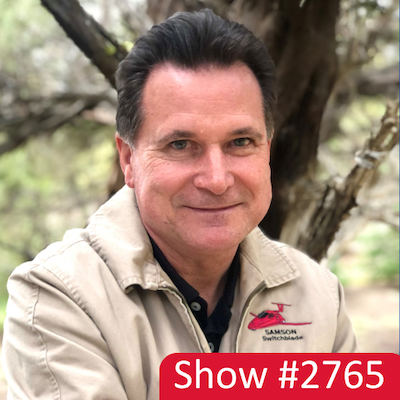
01 Apr April 2, 2026 – Flying Cars Sam Bousfield and Business Law Matthew Fornaro
0:04 Intro 1 : Broadcasting from am and FM stations around the country. Welcome to the Small Business Administration award winning school for startups radio where we talk all things small business and entrepreneurship. Now here is your host, the guy that believes anyone can be a successful entrepreneur, because entrepreneurship is not about creativity, risk or passion.
0:24 Jim Beach : Jim Beach, hello everyone. Welcome to another exciting edition of School for startups. Radio, as always, we sure do appreciate you being with us. Just keep sending those checks, and we will keep throwing free entertainment and education atcha, we got a lot of the both. Today, we’re going to start off with Sam bows field. And he started off as an architect, and now he is making flying cars. You heard it right? Flying cars, cars that fly. An amazing story. I wish I was him. I am so jealous. You all know that I’m a George Stein Seinfeld, what’s no George Costanza architect, you know, a failed wannabe architect. If I could be anything, I would be an architect, but they won’t let me. And so Sam, incredible architecture career, and then now he’s doing flying cars, which is, I think the coolest thing on Earth. Even makes Elon look not as exciting. And then after that, Matthew fornaro. Fornaro is going to be with us. He is a small business expert, like the LLC creation, all of the basics. We haven’t done this in a while, so I thought it would be useful. So I’m excited to have Matthew on the show. We’re going to go through all of the small business things, the articles, the resolutions and all that kind of stuff. Haven’t done that in a while. We are going to and someone else pointed out to me, something else that we haven’t done in a while is defend the thesis we are always growing. And some, some of you haven’t heard the thesis and heard the defense of it. It’s in the introduction with the British woman who says, guy who doesn’t believe in creativity, risk or passion. I don’t know you’ve actually internalized that, but that is what the thesis of the show is. And not every guest defends that, not every conversation is about that. We are trying to create an overall mosaic showing this is what we believe, and it’s a great path to become an entrepreneur using these three principles. And if you use these three principles, your chance of failure plummets, and your chance of success just goes through the roof, because you’re eliminating so much risk and so much of the outside stuff. So let’s defend the thesis very well. Just first, anyone can be an entrepreneur, because we are going to re examine creativity. Everyone says you have to be creative to be an entrepreneur, and I will simply disagree with that. What you need to do is become very good at adapting someone else’s idea, looking at it and saying, I could do that better. How can I adapt, overcome, innovate, that that model is better, you know, or my model is better. And if you can do that, you can have an incredible advantage, because you saw how it was done in Denver. Now you take it back to El Paso and do it better there than better than anyone’s ever done there, no matter what it is. You know, if it’s a book shop, how can you make it better than all of the ones that are competing with you? And so the comp, the creativity, is not that important. 93 of all, 93% of all businesses are copies of existing businesses. So all you need to do is copy, borrow steel, and there’s nothing immoral or wrong about that. That’s what 93% of entrepreneurs did. Right? If you go create a hotel now and become a successful hotelier, you are still an entrepreneur, because there’s been hotels for 1000s of years, right? So people lose that, they think, Oh, I have to go create the new Facebook. Well, remember, Facebook was a copy risk. Let’s look at risk. Risk is awesome if you want to be a bungee jumper. Risk is great if you want to marry four women at the same time. I’m not a big fan of any of that, I like to sleep well with no sleeping problems, and to just sleep through the night like a little baby. And you can’t do that if you’re shouldering 20 different types of risk, or perhaps any risk at all. And so I will do anything to eliminate risk with my startup. I will use your money. Thank you. I’m looking forward to your checks. I will reduce the startup cost by bootstrapping and using any method I can to put cost into the future. I only pay bills that are necessary now, and I’ll create as much as possible. I don’t have bills by using partnerships and things like that. I’ll do anything. I think we put together a list of 42 ways to bootstrap your business, and you need to just start thinking that way that you can bootstrap almost any business model. I say, or used to say that I’ll show you a friend who created a restaurant with $5,000 well, that part’s there. And then I used to say, and then I, you know, the only thing we can’t figure out how to Bootstrap is an airline, right? You need to have a bunch of airplanes and people and stuff. Well, Branson, Richard Branson, went off and bootstrapped an airline. If you’ve never heard that story, it’s a great one. Anyway, we’re going to do anything we can to reduce risk and passion. Passion is awesome for the church, of synagogue, the mosque. I am all in there and in the, you know, bedroom, and every once in a while, the back porch and anywhere else, you know, it’s just the idea, though, that you should be passionate for the important stuff, your God, your family, and that’s it. Passion for an object is called materialism. And if you’re obsessively obsessed with selling these purses, you know, I’m just not sure about that mentality of mass consumerism and so anyway. But more than that, passion doesn’t matter. It doesn’t matter if you have passion for your business, as long as it’s better than working for the man or working at a job that you can’t stand, or living a life that you can’t stand. If you can’t stand the life, then you can do better as an entrepreneur, even if you don’t love the product or the service. And so you have to think of that. You don’t have to have a product that you love to death. You just have to have a product that’s cooler than working for that shirt. All right, that’s enough. We don’t have time, though. My views have started. We’ll be back in a minute to learn how to fly an automobile, I mean, how to drive a plane. On
6:59 Intro 1 : Climate change, introducing the real environmentalists, the bold new book by Jim beach, it’s not about activists, politicians or professors. It’s about the entrepreneurs, real risk takers, building cleaner, smarter solutions, not for applause, but for profit. The entrepreneurs in the book aren’t giving speeches. They’re in labs, factories and offices, cleaning the past and building clean products for the future. The real environmentalists is available now because the people saving the planet aren’t the ones you think. Go to Amazon and search for real environmentalists. Thank you.
7:29 Jim Beach : We are back in a very excited to introduce our first guest. Please welcome Sam bosfield to the show. He is the CEO of Samson Sky, which makes switch blade flying cars. It kind of looks like a thin Tesla, but then the wings pop out of the trunk, and then boom, it lifts off and takes off into the air. Tim has a whole bunch of patents and has been very well received professionally in the science community by people like the American Institute of Aeronautics and astronaut astronautics, and also by the popular science community as well. Welcome to the show. How are you doing? Fine.
8:13 Sam Bousfield : And thanks James for having me on. Appreciate it.
8:16 Jim Beach : It is an honor. I love the product. We’ve all thought about the flying car. Everyone wants the flying car. The Jetsons promised me that. Why did you actually go and try to do it?
8:28 Sam Bousfield : I guess it’s been a kind of a long term goal of mine. I have friends in that have been with me since kindergarten, and they remember me drawing pictures of flying cars in kindergarten, saying, One day we’ll have these.
8:42 Jim Beach : Wow. That’s amazing that you that they remembered all that was put together. So you went to architecture school and started on, if you devoted your entire life to this, it looks like from your LinkedIn profile, started doing this in 93 or so.
9:04 Sam Bousfield : Yes, it’s about right when I let’s see, I was an architect for 26 years, and I really enjoyed it. I loved creating co creating, really with your clients. You co create a new building or set up, or a home, or whatever it is that they that they need done. And it was very exciting. I love, I love that part and working with people and helping their dreams come true. And towards the end of that, I started doing some inventions, because, you know, you do something for a while, you you get to where you can see how they can be done better. And so I started doing some inventions, and some had to do with construction, you know, what I was trained in, and other things had to do with aviation, which is my my love. I didn’t really know whether or not my aviation ideas had any creep. Students, because I didn’t have formal training in it. But I ran it past some aero engineers, one particular aero engineer who is specializing in what I had in mind there, he got really excited. Talked to his buddies. They worked at Boeing, and then they got excited. Next thing I know, I’m I’m working with Boeing engineers in their off hours, and we worked for three years to develop a certain technology, which ended up, you know, they published four scientific papers, and that you mentioned the AIA, and it became a pretty big deal, but the switchblade came right after that. That was when I said, Okay, now that I know that I can really do something, what is, what is this country, what is the world? Really need? That’s when I went flying cars. You know, obviously, because the futures transportation is up in the air,
10:56 Jim Beach : I get that. So do we need a flying car? You know, yours still has a runway, from what I see, and we don’t have room to add runways every you know, block. So what’s the target market in use for this? Along, are you, Sam, do you have one that flies right now that we could go out in and
11:20 Sam Bousfield : Well, yeah, we flew two and a half years ago, and that was with the flight test team up in central Washington state, and that was a really great day for us. We’d been flying off and on the summer, and then in November, we did our published first flight and announced it, but we are now in the business of putting together the production vehicles and getting production going. So it’s a bit different deal. We did hit a roadblock there because everything worked with the vehicle, flew, well, drove well. We we beat everything in our in our wheelbase, distance between front and rear wheels, everything in our wheelbase in Road and Track, standard slalom course on the ground. So other people had four wheels, we had three. They had pro drivers. I drove ours, and they tested it near empty weight. We tested at full Max gross weight, and we still beat everything in their history books. So we feel really good about everything except for top speed in the air. We didn’t hit top speed in the air, so kind of looked at it and went, man. I mean, people are expecting this to go, you know, fast. It’s supposed to be high performance in both modes. So we had to kind of go back to the drawing board just a little bit and bite it. As a business, you had to just go, okay. That means we’re not going in production this year. But that swivel allowed us to do a couple of things, one of which was fully hide and protect all the wings and tail and the props and motors and everything inside the vehicle when it’s on the ground, which is super important for insurance. And then also it allowed us to make our speed target validated in the wind tunnel in Washington State University of Washington, Seattle, and so that way we can go in production on we’re going to give people what they what were they were expecting, what we told them. We give them
13:30 Jim Beach : So cool. I love it. I can’t wait to see this. And just to make sure, I guess we should have done this early on in the interview. You know how, when an author comes on a show, he sends a book in advance, right? So that could read it. My understanding from your publicist was that you were going to send me one of the first cars. That’s really I just want to validate that with you now, before we get too far into this sideways or something.
14:00 Sam Bousfield : Okay, really good. Well, we have a little 3d printed model that we have ready to ship.
14:05 Jim Beach : You mess with the SAM. This is real radio here. You know, yeah, you know, I get one of the top five at cost, is what I was told.
14:16 Sam Bousfield : Oh, absolutely, absolutely, we can do that. What is the
14:20 Jim Beach : Cost on this? And you can give you the retail or the commercial or the wholesale, whatever you would look at it. And guess you know $250,000 to produce one right now.
14:35 Sam Bousfield : Yeah, our sales price is right around 200,000 for the base model, and about 230 for the what’s called instrument flight rules, which is one that’s has extra instruments that you can fly through poor weather, so you’re in the ballpark, didn’t have, yeah, you know, it’s a lot of guys that fly poorly themselves as pilots. And. End up paying the price. That’s what we train people not to do. We’ll actually be training people how to fly as well. So we have our own flight training program that’s being developed with it’s kind of a cool thing. It’s a VR goggles set up so that it’s very real. I mean, it’s it’s as real as you can get, and you’re sitting in the cockpit of a real switchblade with all the regular instruments that you’d be operating. So it’s a very realistic approach to things, and allows people to practice and practice on the ground, where it’s cheap, before they get up in the air, where it’s expensive to do flight flight training with a flight instructor in an actual plane. You know, mostly about 13,000 feet is where the upper limit of where you’d want to fly, because past that, you have to have what’s called supplemental oxygen, right? It’s like, you know, the air bottle with a little cannula under the nose to 100
15:58 Jim Beach : Feet, or 150 you know, I was thinking you’d want to be closer to the ground.
16:03 Sam Bousfield : Ah, not really. When you’re flying, the ground is your enemy. You want to you want to be up above it, as far above it as you can get. That gives you a greater glide distance if your engine quits, or you have that gas or something. So you do have a parachute. I mean, it’s an optional parachute for a whole vehicle, but most pilots would rather glide to a landing.
16:22 Jim Beach : Yes, kind of like the Cirrus has a parachute, doesn’t it?
16:26 Sam Bousfield : It is, yeah, serious has a
16:28 Jim Beach : Parachute. Do that? Sam,
16:29 Sam Bousfield : Completely, I am. Actually, that’s a good one.
16:33 Jim Beach : Let me tell you my one aviation story. You know, doctors love to fly, and my father, when he started getting a little bit of money ahead on an airplane and another doctor, and they were taking flying lessons together, and the friend called said, Hey, I’m gonna take the plane and my family up, and we’ll see you. Monday, he killed himself and his entire family, Florida. He flew into the one mountain in Florida, I think it’s 75 feet or something, and his entire family. And so my father got the insurance check and was walking around the airfield kicking wings or tires or whatever you kick on an airplane. And the instructor came up to him and said, between you and your friend, your friend was the good pilot. In other words, the dead guy is the good one. You’re even worse than the guy who killed his family and so, oh no, they bought a beach house in Daytona Beach instead.
17:38 Sam Bousfield : Okay, well, I guess that’s a good thing. You’ll probably live longer. Yes, all right, all right. It takes a little bit to be a pilot, so you have to pay attention. Portland or No, no, we’ll do um, we’re setting up looks like in Utah near Ogden. Oh, that’s awesome place. Yeah, it’s pretty good infrastructure there for what we’re doing, a lot of aviation oriented businesses, and the state’s pretty acceptable. Weather is decent, and they have ground west of Ogden that’s ready to be developed. So I think that’s a good
18:17 Jim Beach : Place. Okay? And how long a runway does it need?
18:21 Sam Bousfield : Well, you can take off in less than 1800 feet. So maybe a 2000 to 2500 foot airport is should be good enough for most times. So depends on the altitude you need. Longer when you go
18:33 Jim Beach : Higher, two seater or one seater,
18:35 Sam Bousfield : It’s two seaters side by side. Just be like a sports car that flies.
18:40 Jim Beach : You know, it’s very similar to the one in the James Bond movie, Man with the Golden Gun. I mean, it looks, yeah, that the shape is just very similar. You know,
18:53 Sam Bousfield : Ours is bigger, yeah, right, yeah. We, ours is, I don’t know it’s, yeah, it’s, it’s more like, at least, built for what it is. It’s built for both ground and air use.
19:10 Jim Beach : This looks real expensive as an entrepreneur, to get this kind of business started and to build these. How does the money play into this?
19:19 Sam Bousfield : It was a, it was an interesting stretch. Took 15 years to develop. It isn’t a slow thing, or see isn’t a fast thing, and there were a few hurdles to get through, including a couple of economy crashes along the way, starting in 2008 and then again, later yet, we had to kind of pivot each time and try and figure out how, how do we go forward? You know, how do we make this thing go? And I think it took about 14 million to get it to the point where we flew, which is not bad, considering what you’re developing flying cars got actually two. Five in fly but it did take some time to work things out. If we had more money, we would have gone faster. Of course, we’d have burned through and and use that capital in a poor way, but the way we did it was actually pretty economical. That does include the sweat equity that my wife and I put in along the way, but that is how much we burned up.
20:24 Jim Beach : And the was that for salaries, or how many other people are working on you with this? What are they? Mostly engineers,
20:34 Sam Bousfield : Mostly engineers, and we’ve had different phases over the years. To start with. It was just myself and a couple other people, and it was just all wages, and mostly it was the hardware engineering and hardware to develop the base model on the ground, and we got into flying stuff, we had to go into wind tunnel. So there’s extra costs that’s, like, insanely, hideously expensive to go on wind tunnels, but it sure saves in the end. It’s really worthwhile, but it did take quite a bit of time and energy called working hours of engineers to get it up to the point where we can fly and you know now we’ve got a staff about 1112, people as we get going on the first bit of the assembly of the Flying production models, and we’ll probably triple that in the next two months, because we have a major deal coming for full funding in the first facility, about 100 million And that that will raise the bar for us, to enable us to move faster. Now that we have all the roadblocks out of the way, we can just start running.
21:49 Jim Beach : Who’s your aviator icon? I just love Howard Hughes and his career, and absolutely fascinated by him. Of course, he had some really bad mental health problems at the end, and he’s one of the people that would have been fascinating to see what they could have done if their mental issues were more in check. For those of you who don’t know, he ended up buying entire hotel. Oh, bought the hotel so that he could stay on the top floor and never go out of the room and never get his hair cut and never get his nails cut. But He also invented and flew some of the most important airplanes, and famous for the flush rivets. That was a big deal to him, who’s an icon, Sam, I think
22:35 Sam Bousfield : Bill Lear, probably I spoke with Moya Lear, his his wife, he had passed away before I started doing my my things, but Bill did the Lear fan, the Learjet, and, of course, a lot of other things earlier, very big entrepreneur. But I loved his Lear fan. I just love that design of that vehicle. I just it’s hanging up in the the Boeing Museum of Flight in Seattle, and just the prettiest dog on airplane. But he had some really amazing stories his wife told in a book, and then I talked to her afterwards. Is quite, quite fun. You have time for a two
23:16 Jim Beach : Minute story or no? Oh yes, sir. Stories are our blood life.
23:20 Sam Bousfield : Okay, so he’s so he’s flying his family from somewhere Midwest, back to Nevada, where his aircraft, or actually it was a bus facility, was at that point, he was doing busses, and he he had not been paying attention to where he was flying, and he flew right over a military area that’s restricted, and so he heard on the radio that he was his plane was being intercepted. You know, they were sending up jets to escort him off, and they didn’t know who he was. He just knew that there was a plane and it was flying where it shouldn’t. So he says, okay, okay, everybody get down on the floor, and he put his little baby girl in his in the seat where the pilot would be, and kind of boosted her up so she could see out, and she was grabbing the plane. Was an autopilot, you know, so it’s flying itself. So she sat in a seat, and when the Jets came up alongside, they saw his tail number and saw who it was. So I instantly knew him, because he’s kind of famous guy, and the lead pilot of the two jets kind of looked over, saw the little baby girl, and there’s, oh, come on, Bill, what are you doing? That’s hysterical, man. That would
24:36 Jim Beach : Have been a great picture. I hope they got a picture of that.
24:38 Sam Bousfield : Yeah, imagine that guy burned in his his retina forever.
24:44 Jim Beach : Yes, so what’s the hardest part of your project Is it money or technology?
24:52 Sam Bousfield : It’s been both, but money has probably been the hardest. Money doesn’t solve your technology, but it. At least buys you the time to get that done, and if you’re smart about it, you you’ll overcome your technical hurdles along the way. But, you know, flying cars have been a dream for everybody for since almost the day the car was born, or not earlier, and so it’s a little bit like you’re giving people their dream. What you’d think would be easy sell, but I didn’t find it to be an easy sell. We had to go to different ways to fund it. We couldn’t get equity, right at first, my wife and I put in the first three quarters of a million, probably added at least that much since that time, but it took 15, 14 million, so the other came. A lot of it was kind of a quasi debt thing. We had to figure out that there were a lot of people who wanted it. A lot of people wanted the switchblade really badly. They didn’t have they didn’t want to have equity in the company, but they would pay hard money down for the earliest version, you know, give me an early one, and at a discount. So we did that for quite a bit of time, and did it as notes, so that it’s, you know, kind of hard to say you’re going to pay me hard money down. You’ve never test driven or flown this thing. You don’t even know exactly what you’re buying. That was a hard thing for us to stomach, and so we had to do it as a convertible note, either cash plus principal or principal plus interest, or the switchblade as a payback of the note. That way, if the guy did test fly and he didn’t like it, or he changed his mind over the years, or whatever, he had a different way to go, and that made it okay with me, because I I was feel like you got to be okay with both sides of a deal, and that made it okay with me to be both sides of that deal. But that got us through quite a bit. And then when we started working with flight testing and actually going in the wind tunnels. Prior to that, we knew we’re going into bigger money, and we had to get equity, and so we we pushed hard for that, and did start a breakthrough and and find enough as time went on to keep the project going. And worked out a lot of things time worked in our favor, things that we wanted to do but couldn’t do earlier now became available, and so we ended up with a much better product in the end, and now we’re going in production with that
27:36 Jim Beach : Very, very cool, very impressive. So how does it fly? Sam, how does it feel up there? Is it race car or sled on a fast Hill? What’s it feel like?
27:51 Sam Bousfield : I couldn’t tell you, because a test flying for us is a profession, and we use professional test pilots for a reason. They know how to do this safely, and so they’re the ones that flew. And they said that it flew. Well, they liked it. Actually, he wanted to go back up more. But the one that flew the last and so right at the moment, everything seems good. On the flying part, I can tell you, on the ground, it drives like a banshee. Oh my gosh, you step on that gas. You better be holding on, because it takes off.
28:29 Jim Beach : What’s the weight on it?
28:31 Sam Bousfield : About 2000 pounds empty. It’ll be 2600 pounds with everybody in fuel.
28:42 Jim Beach : And how long now is your best guess until one of these will be that we could see at a airplane show, you know, perform, and then, you know, three, four years after that, actually buy one. How close do you think you are to that?
28:58 Sam Bousfield : Yeah, well, we had a little bit of a pause over December and January. I was traveling a lot in the fall, over to Dubai and other countries in that region, and so we had a little bit of a lull. I was off and gone. But the at this point, I think we’re about six months out from having the first one of the production models capable of being test flown and test driven, and then we’ll build two more right after that, and then all three will go out on what was we call a 50 city tour, driving and flying to different places around the US on a schedule to get mine. Well, you could definitely get a ride, for sure at that point.
29:43 Jim Beach : Okay, I definitely want to do that. Yeah, what are your thoughts on architecture? Where are we right now? I, let me tell you my architecture story. I wanted to be an architect since I was a kid like you with flying cars and I. To build cities and designed houses and everything. And so I went to graduate school in Japanese and stuff, because that’s what I was, a path that I was on. And I thought I was going to be the CEO of coke. And then I worked at Coke, and they said, You’re not going to be the CEO of anything. As a matter of fact, we’d like you to leave. Oh no, I got escorted out of coke, and my life was over at 23 or something like that. And the guy who lived behind me, he said, Well, I thought you wanted to be an architect. Whatever happened to that? And I was like, you know, I should go off and become an architect. So I applied to the Georgia Tech graduate program and got rejected. And so I moved into the hallway where Dean Galloway was and drew the other side of the hall basically until he said I could get in. And the reason I wanted to go to the architecture school also was because I was starting my first business that same year. I needed the winter off, and the business grew so quickly in the next four years that the next summer, we were using the architecture building, is our building, and we were taking the architect faculty out of their building for the summer so that I could use their building for my program. And they really didn’t like me. About a month short of graduating, we all got together, and also I didn’t do any hours, you know, to my licensing hours, I had zero. And because I was running a business, you know, at that point, 500 employees or something. And so we all decided it would be in my best interest not to finish architecture school and to leave quickly. A lot of people that Sam to leave quickly.
31:44 Sam Bousfield : No kidding, get out of dodge Exactly.
31:47 Jim Beach : Oh gosh, very, very, very frustrated architect, okay,
31:53 Sam Bousfield : Well, you, you probably can design your own home sometime, if you would like to. That’s, that’s a fun deal. And I worked with a lot of people on their their homes, their dream homes. Many people don’t have an idea of architecture like you do. And you know, you kind of feed them magazines and pictures and things so they can get look at enough things to figure out what they would like to do. Yes, I like this. I don’t like that. And then then you can roll with it, but you you could probably just take it and go and work with the draftsman for the details, and I bet you’d come up with a really nice place
32:29 Jim Beach : I am. My favorite architect is Hugh Newell Jacobson. Do you know him? Or of him?
32:35 Sam Bousfield : No, not that one’s not familiar to me.
32:37 Jim Beach : He builds pavilion houses, maybe its own structure. Got it, and he’s done some really, really great stuff. And so he’s probably dead now. But anyway,
32:53 Sam Bousfield : Yeah, well, there’s some Go ahead. There’s some neat things in, I guess, Saudi on the on the west coast of Saudi Arabia over there, they’ve got what you’re talking about, pavilion homes, or pavilion flats or pavilion bungalows. I don’t know what you call it, but they’re more resort ish, and they’re built out on the reefs off the off that coast. They’re just gorgeous looking from the outside and the inside. And I really love the way that they took kind of the their their approach was, we want to make the place wherever we’re going to we’re going to make it better in better condition than when we found it. And so they approached it from that point of view on the building of these and designing of these, and really cleaned up their areas of coastline, made it very gorgeous and very pretty, with the buildings now in place. And so not only is it the bungalow style you’re talking about, which is kind of cool, but it is the idea that you can, you can improve things with building if you take care to do that,
34:03 Jim Beach : Architecture is, I think the most important art is, it affects us the most.
34:10 Sam Bousfield : Well, great. I can almost agree. It’s where most people will interface with their environment. Is in a building somewhere, some cell, somehow, at some time.
34:21 Jim Beach : So that’s great, Sam how do we get on the list to get one of these delivered as soon as possible? How do we find out more? How do we keep watching and keep up to date with what you’re doing?
34:33 Sam Bousfield : Oh sure. The website is Samson sky.com S, A, M, S o, n, s, k, y.com, we have at the bottom of each page, and the website’s got links to LinkedIn, Facebook. We got lots of followers on Facebook, lot of YouTube videos and whatnot, also linked at the bottom there. That’s the easiest way to kind of check things out. And if you want to, there’s a web page section for signing up for the switch blade, which you can. Get your name on the list for them when they are ready to come. Fantastic.
35:05 Jim Beach : Thanks a lot, Sam, and we’d love to have you back and get updates as you fly along. Thanks a lot,
35:09 Sam Bousfield : Sir. All right, James, bye
35:10 Jim Beach : Now, and we will be right back. You.
35:27 Intro 2 : It wonderful question. Oh, my gosh. I love the opportunity to do this. Thank you, Jim, wow, that’s, that’s, that’s a great one. You know, that is a phenomenal question. That’s a great question, and, and I don’t have a great answer, great question. Oh, that is such a loaded question, and that’s actually a really good question. School for startups radio, we are back
35:48 Jim Beach : And again. Thank you so very much for being with us. Very excited to introduce another great guest to the show, this time an attorney. Please welcome Matthew fornaro to the show he has been in the south Florida market for almost two and a half decades. He worked at Big 300 plus attorney firms, and got the, you know, the mentoring and all that stuff there, and then went out on his own, which is what we like to see. He is given back by teaching at the Kauffman Foundation’s Fast Track New Venture Program, and he also has worked at other programs in the area, and particularly the Jim Moran program. We don’t really get more that’s the Jim Moran Institute. You’ll get any more prestigious than that. So pretty cool, Matthew. Welcome to the show. How you doing?
36:38 Daniel ‘Danny’ Bobrow : I’m good. Thank you for having me. Glad to be here.
36:41 Jim Beach : All right, so what are the biggest issues with starting a company? Can we do it by ourselves? Why wouldn’t we? Why? What are the pros and cons?
36:52 Matthew Fornaro: Sure, so you can do it by yourself, but it’s not going to be easy, and you’re probably not going to do it correctly. So one of the biggest issues I see with entrepreneurs, founders and startups, is that they jump right into business too quickly before they do their necessary due diligence. And what I mean by that is they just go online to their Secretary of State website, register a business and get going, and they don’t really put a lot of thought or preparation into what they do. And that’s something that I see over and over again, and it creates a lot of problems down the line, whether your business is unsuccessful, even if your business is successful. So what I like to see, and what I encourage businesses to do is, obviously the first step is they need to have a written business plan in place before they do anything. Which the written business plan tells the who, what, when, where, why and how of the business before you even start it, and kind of puts pen to paper and makes you think about it. Then the next thing I always say is you need to consult with professionals in order to figure out, you know, what kind of business you want, from a legal standpoint, what issues there’s going to be and things like that. So you reach out to a business law attorney like me, you reach out to an accountant, you reach out to a commercial banker, and go from there. And then, once you have those people in place, you discuss your business, you go over your written business plan, you come up with what kind of business you’re going to have, whether it’s a corporation, an LLC, a partnership, a sole proprietorship, whatever. Then you go and then you can register your business online, but at the same time, you need to have your necessary governing documents, which are your articles of incorporation, your operating agreement, your partnership agreement, whatever it is that you need. Then you know you
38:56 Jim Beach : Let me interrupt Matthew for a second. Let’s get some of questions through all of that, you talked at the very beginning about having paperwork and a business plan, and then at the end, you mentioned having articles of incorporation, which is in the paperwork category. So I want to make sure we all understand exactly what you need. You need a business plan that’s at least 510, pages, and then the articles of incorporation or partnership agreements, or all of those legal things that you have to do to get your license right. So when we have paperwork, we have two piles. Is that correct?
39:31 Matthew Fornaro : Well, you have multiple piles, and they’re ongoing piles that go on during time. So the first pile you have is your written business plan, then you go consult with all of your professional and
39:44 Jim Beach : Everything before I get in trouble. Is it a half page? Are they going to look at it funny?
39:51 Matthew Fornaro : You know, it needs to have all the information that needs to happen it. So I’ve seen great short business plans, and I’ve seen terrible long business plans. So as long. It answers all the questions about your business and lays out a roadmap. It’s substantive. It can be any length, as long as it has the information that’s required in it.
40:08 Jim Beach : Okay, all right, then the partnership agreements and all of that,
40:16 Matthew Fornaro : Yes, after you meet relation, yes.
40:20 Jim Beach : So tell us some. What are we doing there? What is? What is an article? Sure.
40:25 Matthew Fornaro : So, so after you figure out what kind of business organization you’re going to have, you then pick the business organization and you have in you draft the documents that go with that business organization. So if you have an LLC, you’re gonna have an operating agreement. If you have a partnership, you’re gonna have a partnership agreement. If you have a corporation, you’re gonna have articles of incorporation and bylaws, and each one of those documents specifically is a more refined version of your written business plan, and says what your business is, who’s in your business, what your business does, how your business operates, how it gets money, how it spends money, how it resolves disputes, how you add people, how you subtract people, how you buy things, and how you sell things, and all related things like that are in your governing documents, regardless of what kind of business organization you have.
41:28 Jim Beach : Okay, what are the advantages or disadvantages of the LLC? It seems to me that most of our listeners, you know, pure startups, are going to be LLCs, and they can change later if they need to. I thought, isn’t the LLC going to be good for most small business
41:49 Matthew Fornaro : Well, it depends on what your specific business is, and it also depends on what your economic circumstances are. That’s why, when I work with businesses at the startup stage, I always like to get the opinion of their accountant, or bring in an accountant to figure out, from not just a legal standpoint, but from a money standpoint and a tax standpoint, what is the best business organization for what this person or people want to do? So there’s not necessarily a one size fits all. Some LLCs are great. Some corporations are great. Some S corporations are great. It depends on what you want to do. From a legal standpoint, it depends on what your economic background is, what your assets are, and what other businesses or their interests you have as far as which one is the right one to go forward with,
42:41 Jim Beach : Okay, can you give us some advantages and disadvantages of the LLC, as far as tax pass through and litigation and stuff like that? Sure.
42:50 Daniel ‘Danny’ Bobrow : So an LLC, like a corporation, is a legal, fictitious entity or person that provides you advantages or a shelter if you want from individual liability, they both pretty much function the same regarding that, unless you do some really dumb things or cross the line between your personal life and Your business life, you’ll have, you know, the protection of the business organization. You know, for different purposes, you can have pass through taxation on both. You can elect S corp status on both. The primary advantage is, you know, some people like the LLC, because it’s a little less formal, little less rigid. Some people like the corporation more because it’s more formal and more rigid and more easily scalable, versus the LLC, which is a little less formal and less moving parts. So they’re not extraordinarily different. They’re somewhat different, and it just depends on what it is you’re looking forward to do and how you want to how you want to do it. Okay,
44:08 Jim Beach : How much money have we just spent
44:11 Matthew Fornaro : For setting up a company?
44:13 Jim Beach : Yeah, the things you just talked about getting the LLC, if that’s it, written up, and writing up the articles of incorporation and the agreements and all of that, sure.
44:23 Matthew Fornaro : So from a cost standpoint of actually dealing with your Secretary of State and filing things, you can spend a few $100 to register and do everything to have an attorney help you. It’s generally done for Docu for drafting purposes and things like that, on a flat fee basis. Of you know, depending on what the attorney charges, some charge in the hundreds, some charge in the 1000s. I’m not going to say which one is right or which one is wrong, but that’s generally the ballpark of what you’re talking about, depending on where you are geographically and what the different legal. Mark, it’ll bear
45:02 Jim Beach : All right. And we never got back to resolving disputes. So what you mean by that is, if you have two founders and they disagree, how do you handle it?
45:14 Matthew Fornaro : Yeah, yes, if you have a dispute between two members of an LLC, shareholders, whatever your governing documents will say how you resolve the dispute. And if you don’t have governed documents, then it’s your state laws will say how you dissolve resolve the dispute.
45:32 Jim Beach : Okay, just like having a will or not? Yes, I remember my granddaddy, we asked him, we didn’t my mother asked him, Do you have a will and everything? And he said, You won’t like this answer. Now that I think of it, Matthew, He said, I looked it up and or found out that if you don’t have a will, the state law is what supersedes, or, you know, has the answer. And he said, I looked at the state law, and the state law gives everything to the wife. And he said, I’m fine with that, so I’m just not going
46:10 Matthew Fornaro: To have a will. Same thing with the that’s the same thing with the business. If you don’t have it, it’s what the law says.
46:17 Jim Beach : All right, so what are the biggest problems you see walking your door. Business owners come to you dealing with what, what they do to themselves,
46:29 Matthew Fornaro : The the they don’t, they don’t prepare or do some of the steps that we just talked about, and they just kind of jump right into business, which is not great, because the due diligence part means that you’re going to pick the right entity that fits you. It’s going to pick the right circumstances that go with you. Your documents are going to say how you’re going to run your business, how you’re going to expand, how you’re going to add things, how you’re going to deal with circumstances and situations and things like that. So a lot of problems that I see that walk through the door are people who didn’t do the due diligence, who don’t have the written business plan, who don’t have the governing documents, and then they run into issues, whether it’s with their people, who they’re in business with other members of an LLC, or other shareholders or former employees, or they want to sell their business, but they don’t have the necessary pieces in place to do it, or they want to buy a business, or they want to add to their business, and they don’t have the necessary pieces in place to do it. So it’s generally the same theme is that it goes back to not having the stuff in place to begin with, and then dealing with those issues later on, versus proactively doing it at the beginning.
47:47 Matthew Fornaro : What are some of the things I need to think about in advance for purchases or sales? Say I want to sell my company in five years. What do I need to do now?
47:56 Daniel ‘Danny’ Bobrow : You got to think about how you’re going to sell it. So it needs to be baked into your documents. If you’re the sole shareholder or the sole member of the LLC, or if you have members, or whatever, it’s going to say, What process do you go through to actually sell it? Is it going to be, you know, 100% vote? Is it going to be a majority vote? Are you going to have to go get a business evaluation done to say what the business value is before you sell it, or can you just list it and say what it is? So it’s all the data and all the information that needs to go into the eventual sale needs to be contemplated from the beginning, so that, that way you can have a smooth process later on.
48:39 Matthew Fornaro : You’re a business owner, Matthew, how do you start a new law practice in the state of Florida?
48:47 Matthew Fornaro : Well, it’s a lot easier now than it was 10 years ago, based on the proliferation of technology and things like that. So I mean, just like any business, you want to plan ahead, make sure you have all the tools in place before you execute and go forward. So make sure. As a attorney, you got to make sure you have, you know your written business plan, your business organization, picked out all your governing documents, all things like that. Special considerations for an attorney, you got to make sure that you comply with Florida Bar rules. Make sure you have, like an inventory attorney, if you die or something happens to you, you got to make sure you have malpractice insurance. You have to make sure that you pay all your licenses and dues, and make sure all your information is updated with every regulatory entity in the world, to make sure that it comes to you. And then you got to go out and either bring clients with you or get clients, depending on what your practice area is, and that involves SEO, advertising, networking, all the things that go with that, all the things that go with any business.
49:50 Matthew Fornaro : How much money should a young lawyer in their new practice spend on marketing? What percent of their budget or just they don’t
49:58 Matthew Fornaro: Have? You know, it depends.
50:00 Jim Beach : You know, just first year, what? How much? 1020, 30,000
50:04 Matthew Fornaro : It depends, because it used to be a lot more money, and now technology has made it a lot less money, because the promulgation of technology and AI makes it a hell of a lot easier now to do advertising, to do SEO, to do Google Business Profile optimization, to do social media outreach than it used to be in the past. So I would say, look at what it is your goals are, your practice area, is your geographic area, and then figure out what it is that you want to do, and look at alternatives to what you used to have to pay people to do, to do for you, such as AI based SEO, AI based social media, AI based Google Business Profile optimization, which are all a fraction of what they used to call so now your budget actually goes down. Your percentage goes down, and your quality and your output actually goes up based on the technology.
51:08 Jim Beach : All right, I like that point. How do you do SEO using AI? I have not figured that out yet. How do you do that?
51:16 Matthew Fornaro : Sure. So there is, you know, it’s interesting. I can tell you my experience and what I’ve seen. So I am a LinkedIn troll. I love LinkedIn. I’m on Facebook. I’m on all social media, and my feed constantly gets hit with stuff for attorneys and law firms, because that’s what my algorithm says. So there are just like, there’s been for years. There’s companies out there that focus on, you know, SEO optimization or whatever. And so these companies, you know, you can speak with them, or they’ll tell you what it is they do and how they do it. And essentially, there’s AI sites, AI apps or whatever, that essentially do what the company does, except it costs a 10th the cost. So you can go online and look for again, look for the best rated ones. You don’t have to buy some crazy thing that’s, you know, very sketchy or whatever. These are all reputable things with real Google reviews or whatever. And there’s specific AI that does your social media posting. There’s specific AI that does your Google business profile optimization, local SEO and things like that. There’s specific AI that does regular SEO optimization, website design, website optimization and things like that. And like I said, it’s probably a 10th the cost of what you would had to pay a person a decade ago to do.
52:44 Jim Beach : All right, great advice, Matthew. We need to wrap it up. How do we find out more? Follow you online, get in touch. Hire you all that. Where else can you are licensed in addition to Florida? Sure.
52:56 Matthew Fornaro : So I’m licensed to practice in DC and in New York. So anyone in the Empire State or the nation’s capital can reach me too, find me on funeral legal, which is my website, F O, R, N, A, R, O, L, E, G, A l.com, it’s got all my social media, all my contacts, all my blogs, my videos, everything you can imagine is on there. It answers a lot of your questions. If you need to get a hold of me my phone. Hold of me, my phone number, my email address is on there, and I’m all over social media. I’m all over the internet. I’m easy to find. Thank you so much.
53:31 Jim Beach : We have done it. We have done run out of time. Thank you so much for being with us today, and we are back next week. Have a good one. Take care. Bye. Now you you.
Sam Bousfield – CEO Samson Sky – Switchblade Flying Car
Money doesn’t solve your technology, but it at least
buys you the time to get that done.

Sam Bousfield
Sam Bousfield is the CEO and founder of Samson Sky and the visionary designer behind the Switchblade Flying Sports Car, a hybrid vehicle that can be driven on roads and flown as an aircraft. With a professional background spanning more than 25 years as an architect, Bousfield later transitioned into advanced vehicle design and aeronautical innovation, combining engineering, business, and creative disciplines to pioneer next generation transportation solutions. He holds a degree in architecture with additional studies in business management, marketing, and sales, and is the author of multiple patents, with work that has been published in both popular and professional scientific communities. Bousfield began developing breakthrough aircraft concepts in the early 2000s, collaborating with former Boeing engineers and producing designs that were recognized by leading aerospace organizations and even used by the Swedish government for wind tunnel calibration. After shifting his focus to practical transportation challenges, he founded Samson Sky and created the Switchblade to merge air and ground travel into a single, efficient vehicle. Today, he leads the company’s efforts to bring the Switchblade to market, positioning it as a transformative solution for regional travel and a major step toward the future of personal mobility.
Matthew Fornaro – Attorney at Matthew Fornaro, P.A.
It goes back to not having the stuff in place to begin with, and then dealing
with those issues later on, versus proactively doing it at the beginning.

Matthew Fornaro
Matthew Fornaro have mentored emerging entrepreneurs as an instructor for both the Kaufman Foundation’s FastTrac New Venture Program and the Jim Moran Institute. Every day in my practice, I see how smart legal planning can help business owners avoid pitfalls and seize opportunities as they grow. I am happy to share clear, action-oriented advice so your listeners walk away smarter, safer, and more confident about building their businesses. Matthew Fornaro has been a business law attorney serving South Florida, since 2003. Prior to starting his own law firm, he was an attorney at a 300+ attorney civil practice law firm that served local, national, and international clients, and was also an attorney at a prestigious national law firm. Matthew practices complex commercial litigation, including contract disputes. Matthew, a member of the Florida Bar and District of Columbia Bar, also practices construction law, intellectual property law, homeowner and condominium association representation, and drafts and revises of business documents, including the formation of business organizations. Matthew assists new business owners in choosing and drafting all legally required documents. Matthew is involved in mentoring new attorneys, as both a graduate and instructor of the Kaufman Foundation’s FastTrac NewVenture Program, presented by the Broward County Office of Economic and Small Business Development and the City of Hollywood, as well as a graduate and instructor for the Florida State University College of Business Jim Moran Institute for Global Entrepreneurship Small Business Executive Program.