
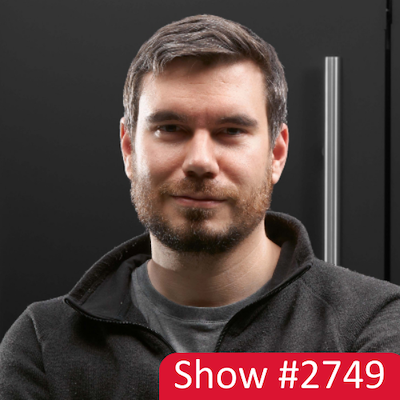
10 Mar March 9, 2026 – Near Shoring Brian Samson and Lumafield Eduardo Torrealba
Transcript
[00:00:00] Intro 1: The AM seven Radio Network broadcasting from AM and FM stations around the country. Welcome to the Small Business Administration Award-Winning School for Startups Radio, where we talk all things small business and entrepreneurship. Now, here is your hub. The guide that believes anyone can be a successful entrepreneur because entrepreneurship is not about creativity, risk, or passion.
[00:00:24] Intro 1: Jim Beach.
[00:00:25] Jim Beach: Hello everyone. Welcome to another exciting edition of School for Startups Radio. Wow. We have two fantastic stories for you today, two amazing entrepreneurs. First up, Brian Sampson is with us. He has built a Latin American talent agency called Plug Tech, E-L-U-G-G Tech. This is such a great idea.
[00:00:47] Jim Beach: I love this. I am such a fan of. Offshoring, nearshoring, any of them that can help you become more effective as an entrepreneur. You must have someone who is helping [00:01:00] you and taking care of the little things so that you can do the big things as an entrepreneur. And Brian is directly talking about that.
[00:01:09] Jim Beach: The idea that bring in talent from Latin America. I have personally decided on the Philippines that have an amazing guy named Frank and love it. He makes my life a billion times easier. You need someone like that, so please listen to Brian and learn from him after that. Eduardo Alba is with us. He has got an amazing company, 150 employees, 10 plus million in Rev.
[00:01:34] Jim Beach: That does. X-rays, CAT scans of things like shoes and iPhones and things like that. It can tell you from that. If the glue is working well enough or whatever, the glue that holds the shoe together can look at the inside of an iPhone and see if the components are right and measure the, the variances and all that.
[00:01:55] Jim Beach: I don’t understand the technical stuff, but it’s an amazing company and [00:02:00] Eduardo has done such a great job of building the business. Again, 150 employees. It’s just really, really impressive and it’s a great example of entrepreneurship. There are so many things, so many ways you can be an entrepreneur. I love it when I meet people like both guests today, who are doing something I had never thought of.
[00:02:19] Jim Beach: It just proves how vast the opportunity is to be an entrepreneur and how there are just so many great ways to solve the puzzle. So we’ve got a great show for you today and appreciate you being with us. We’ll get started in just a second.
[00:02:46] Jim Beach: We are back and again, thank you so very much for being with us today. Very excited to welcome to the show, Brian Sampson. He has, for the last 10 years or so, been helping bring Latin American talent to the United [00:03:00] States. He’s had three exits, very impressive, and is a really great family man. They’re adopting foster kids actively.
[00:03:08] Jim Beach: You gotta appreciate someone taking care of our extra kids. He is host of a. Podcast called the Near Shore Cafe Podcast, and it goes along with his business where he is, the CEO, it’s called Plug Technologies. With two GS P-L-U-G-G Technologies, they have helped placed over a hundred Latin American engineers and talented, uh, people in United States companies.
[00:03:34] Jim Beach: Very cool. Welcome to the show. How you doing, Brian?
[00:03:37] Brian Samson: I am so honored to be here. Thanks for the opportunity.
[00:03:40] Jim Beach: We were just talking that you’re lucky enough to live in Hawaii. How did that happen?
[00:03:45] Brian Samson: Oh, uh, you know, um, we spent, my wife and I spent a full year living out of a suitcase traveling the world. Um, so effectively homeless by choice and, uh, moving around [00:04:00] Asia, Latin America.
[00:04:01] Brian Samson: And, uh, so we had this incredible optionality of, well, where do we wanna set up? Um, and, uh, Hawaii is about as good of a place, you know, you’ve, you’ve lived here about as good of a place as possible to, uh, call home. And we’ve since, you know, been raising our family and it is a, uh, great place to live. What about the
[00:04:23] Jim Beach: cost of living there?
[00:04:24] Jim Beach: Uh, it is damn
[00:04:26] Brian Samson: expensive. Uh, you, you said it. Um, everything, you know, uh, groceries, uh, going out to eat, uh, taxes. Hawaii is a very high tax state as well, real estate, but, uh, if you can make it work, uh, it is about the best place possible to be.
[00:04:49] Jim Beach: Very true. I, this is so weird. I had another guest from Hawaii about two or three days ago, and he was wearing a Rinn Spooner shirt during the interview.
[00:04:59] Jim Beach: I, I [00:05:00] had to bring that up. Are you a Rinn Spooner fan there? The Hawaiian shirt, the original Hawaiian shirt. I guess.
[00:05:06] Brian Samson: I do have a couple of ’em. Yeah, absolutely. This is for those that don’t know, we don’t really see a lot of, uh, full suits and ties here in Hawaii. You know, we, we have, uh, aloha wear. So, uh, if you’re dressing up, I mean, even for like a funeral, uh, I wore, uh, black pants and, and Aloha shirt and, uh, that, that goes as formal here.
[00:05:32] Jim Beach: Yes. Do you know how RINs, uh, that company started? Have you ever heard this story that they probably, they came out with the line and it didn’t sell very well, and then they realized that if they turned it inside out, that the fabric looked like an aged old, cool Hawaiian shirt, and that’s how they started everything.
[00:05:52] Jim Beach: All of their fabrics are turned inside out.
[00:05:55] Brian Samson: I don’t think I knew that. That’s, that’s a fun fact. I didn’t expect to hear today. That’s cool. [00:06:00]
[00:06:00] Jim Beach: You didn’t call in for Hawaiian trivia.
[00:06:04] Brian Samson: You know, it’s, it’s, I mean, I should be the ones, uh, sharing Hawaiian trivia, but, uh, this is great. I can’t wait to tell all my friends of the next party.
[00:06:12] Jim Beach: Well, let’s talk about Argentinian trivia for a while. My favorite bar in Buenos Aires was Los. Do you know that bar?
[00:06:20] Brian Samson: Oh gosh. Uh, I’m sure I’ve been there, but it’s right off
[00:06:25] Jim Beach: Main Street where the, the big monument, the big, uh, code.
[00:06:28] Brian Samson: Oh, yeah, yeah, yeah. Noue de Julio, which is one of the, it’s one, either one of, or the, uh, widest streets in the whole world, uh, to give context to people.
[00:06:40] Brian Samson: If you try to cross it on foot, uh, it might take you three stoplights to make it through. Wow. Alright, you just kind of go section by section to cross that thing. Let’s talk about Nearshoring. Tell us what it is. Yeah. Um, [00:07:00] a lot of your audience has probably heard of offshoring, uh, which, uh, for the United States, we tend to think of, uh, three major countries.
[00:07:10] Brian Samson: China for manufacturing. Uh, we tend to think of India for software and IT workers, and then we look at the Philippines for call center, you know, back office, virtual assistants. And, um, the, the pro of Asia is, it’s, uh, very attractive from a cost standpoint, but there’s a big con. And that it is on essentially the exact opposite time zone, uh, that we’re on.
[00:07:41] Brian Samson: So, um, you’re either, uh, not on the same page, you know, with, uh, your team out there, or somebody’s making a huge sacrifice. You know, somebody’s up at three in the morning to accommodate and if it happens to be the talent, they’re probably gonna burn out. And if it happens to be you, [00:08:00] you’re probably gonna burn out.
[00:08:01] Brian Samson: So it’s, it’s not super sustainable. Um, and then, you know, if you are working opposite times and you pass the baton and your message isn’t crystal clear, you might waste a day or a couple days of, you know, having that workout output, um, meet the deliverables that you were initially hoping for, when, if you were on the same time zone, you know, maybe that that gets figured out in a matter of minutes instead of days.
[00:08:28] Brian Samson: So that’s what Nearshore is really meant to solve. Um, and for the US it’s really Latin America is what we mean by nearshoring. You’re not hopping over an ocean. You’ve got all the talent on the same time zone. And even if you look at the map a little bit, countries like Brazil and Argentina kind of jet out, you know, to the right, to the east.
[00:08:48] Brian Samson: But if you don’t know, um, people in Argentina are eating dinner at nine 10 o’clock at night. So that means even that, you know, couple hour [00:09:00] mismatch in terms of time zone gets fully right sized, um, because of the time they’re having dinner, you know, those late night heavy steaks and wine. Uh, and um, that means you’ve got eight hours every day.
[00:09:16] Brian Samson: So if you wanna hop on a Zoom or a WhatsApp or a Slack or however you get work done, quick emails, that person is working while the sun’s up, just like you’re working while the sun’s up and they’ve got all the talent you could possibly need. You know it. Software engineers, marketing back office call center.
[00:09:39] Brian Samson: Latin America has become a really exciting treasure strove of talent, and it’s also, um, at a really affordable price.
[00:09:48] Jim Beach: Alright. What kind of placements are you doing the most?
[00:09:52] Brian Samson: Yeah. Um, our company plug, uh, generally it tends to be the most mature [00:10:00] in any market. You know, it was what was offshore first. Um, so it was what was Nearshore first, but, um, we’re also doing, um, uh, in addition to it, and when I say that, I mean everything from what you might call a front end developer, a backend developer.
[00:10:20] Brian Samson: Full stack AI is the new hot thing. So AI and data engineers, qa, Salesforce, um, and then we’re also doing some call center, some virtual assistants, some back office marketing. Um, and Latin America also has a lot of managers and leaders, so you can build whole teams, whole departments out there. Excellent.
[00:10:47] Brian Samson: What about the language problem? Any issue? You know what’s uh, so interesting is. I own a nearshore company, and I’ve been in Nearshoring Latin America for over a [00:11:00] decade. My Spanish has gotten worse since I’ve been in this business because everybody I work with, everybody I talk to is so advanced, fluent English, and it’s not just being fluent in English, it’s being fluent in US style English.
[00:11:18] Brian Samson: So just little colloquialisms. Like if I were to say, Hey, you know, take a hike. They’re not grabbing their backpack and their, their, their hiking shoes. You know, they understand what that means. Um, you know, they understand the slang. They love us culture. They’re watching Netflix movies in English, so they understand, um, all the little nuances of the way we speak in the States.
[00:11:42] Brian Samson: And, um, as a result, everybody’s speaking English all the time. And it’s, it’s our type of English. It’s not this kind of scripted. English that feels a little bit different from how we might speak it.
[00:11:56] Jim Beach: So by definition you have the Visa problem. [00:12:00] You know, visa has to get a lot of restaurants to take the card and then has to have a lot of consumers who will use the card.
[00:12:05] Jim Beach: At those restaurants, you have the same issue. You have to find a lot of people down there who want to come here, and then a lot of businesses to provide the jobs. Which one of those is harder?
[00:12:17] Brian Samson: So what’s interesting is. We’re a remote business, so we’re not, we’re not doing immigration here. Um, the, were set up where, um, our hundreds of people that we have out on projects.
[00:12:33] Brian Samson: They’re all working remote and companies have set up for this. You know, in a post COVID world, uh, people work from home or they work from distant offices, and it’s really not that big of a deal. Um, and we’re not worried about things like, you know, if it’s over the border, is there IP protection issues or like, we’re always worried about China stealing our, our, uh, designs and information and proprietary [00:13:00] stuff.
[00:13:00] Brian Samson: Latin America is really set up to, um, for protection. Their legal system is very similar to the states, so no one’s really worried about that. And then all the, to the, the typical IT stuff, you know, um, uh, you know, being able to access devices, you know, turn stuff off, you know, have security, um, that that’s all normal, just like we’d have in the States, but there’s no immigration.
[00:13:24] Brian Samson: You know, everybody’s working remotely and that allows companies to access, uh, a giant labor pool that they wouldn’t have access to otherwise.
[00:13:34] Jim Beach: I didn’t know that everyone was remote. I thought they actually moved. Uh, that makes a big difference. How do you market in America to find the businesses that need people?
[00:13:44] Jim Beach: Where, how does that
[00:13:45] Brian Samson: make happen? Yeah, there’s really two types of customers that we’ll work with. Uh, we’ll work with, uh, small business, early stage companies that, you know, uh, as a founder and I can relate ’cause I’ve been a small business owner for, for over a [00:14:00] decade. And, uh, you end up doing the work until you find some leverage and you find some labor arbitrage.
[00:14:09] Brian Samson: And, um, and that’s the case with, um, uh, these types of companies, you know, they’re looking for, um, they want to be judicious, they wanna be protective of their capital. Uh, they can’t just blow it. So, uh, we try to, um, augment that and, um, we have a lot of flexibility in our contracts and, you know, you’re really looking for.
[00:14:36] Brian Samson: High quality people and flexibility. And then our second group of customers is what I call, you know, medium to large size companies. In those cases, they’re really looking for scale, but then again, optionality and some cost efficiencies. So, uh, they’re looking for the ability to hire [00:15:00] 5, 10, 15, 20, maybe more, you know, um, at a pop and, uh, get the, um, the labor arbitrage, get all the cost efficiencies that you, you’d wanna hope for.
[00:15:12] Brian Samson: Um, and they also want the optionality because. If there’s been any truth to the last five, six years, it is, volatility is here. Uh, you know, we’ve had everything shut down for COVID. We had the huge economic boom of 21, 22, where cash was, was all over the place. Uh, everything skyrocketed, quiet, quitting. You couldn’t find anybody.
[00:15:39] Brian Samson: Then the crash, and then we’ve got ai, then we’ve got, um, high interest rates. And it’s just really hard for companies to plan and predict. So they need, um, flexibility in their contracts, flexibility and um, and optionality. And we offer that too. So, um, uh, medium sized companies, large [00:16:00] sized companies can build a whole team.
[00:16:03] Brian Samson: And then if something unexpected happens, um, they’re not stuck in that forever. There’s easy way outs.
[00:16:11] Jim Beach: Excellent. What kind of wages, so let’s try to make apples to apples. Uh, what would it cost to hire full-time? A great va virtual assistant mm-hmm. In your system? Uh, what would that
[00:16:27] Brian Samson: Yeah, sure.
[00:16:27] Jim Beach: What are the rough costs on that?
[00:16:29] Brian Samson: Yeah, sure. So. I don’t think, um, Latin America is gonna beat Asia on price. Um, so typically if you are looking for a VA in Asia, and you know, usually the Philippines is, is where you’ve got, uh, labor abundance, you’re probably gonna be right around $10 an hour or less. Um, in Latin America, not every country’s set up for, for being a va.
[00:16:57] Brian Samson: Um, like I wouldn’t look at say, Brazil [00:17:00] or even Argentina for VAs, but Central America is a fantastic spot. You’ve got, uh, high abundance of English, of, of the English that we just talked about. Um, you know, it’s very easy to get hardware in and out. They’re on your time zone and it’s gonna be probably 20.
[00:17:20] Brian Samson: To 25% more than Asia. So then it’s just a matter of, you know, what kind of trade are you looking to make? You know, are you okay paying for 25% more than you would Asia? Um, but you get all the other benefits and that’s where, you know, value for your money comes into play.
[00:17:39] Jim Beach: Alright, good point. How’d you get the business started?
[00:17:43] Jim Beach: Go back in time, 10 years and tell us, you know, where’d you get the idea? What’d you do first? I know you were vagabonding living around the world, outta your suitcase then. Um,
[00:17:53] Brian Samson: yeah. Yeah. So that you started
[00:17:54] Jim Beach: business as a vagabond.
[00:17:56] Brian Samson: Yeah, that was, uh, that was one of the, the catalysts for being a, a [00:18:00] vagabond.
[00:18:00] Brian Samson: So, uh, ended up having a thesis when I was in San Francisco, uh, about the FinTech world. Uh, your audience isn’t familiar. That’s like the new up and coming financial tech companies that are trying to disrupt banks. Where banks tend to do a lot of things mediocre. Uh, a FinTech will do one thing and one thing will only really, really great.
[00:18:22] Brian Samson: Either it’s lending or investments or, uh, something like that. And, um, uh, my thesis was, uh, that fintechs needed. A time zone aligned team, um, that could build the, uh, tech stack for, um, these brand new fintechs that had capital and a product vision, but didn’t really have the, uh, the technical team ready. So we decided to do that in Argentina.
[00:18:51] Brian Samson: And uh, I moved there. I moved to Buenos Aires, uh, with my wife before we had kids. Uh, experienced all [00:19:00] the highs and the lows, you know, of a high inflationary country where restaurant prices are written in chalk, um, but also you’ve got this beautiful quality of life. Explain that
[00:19:13] Jim Beach: people might not understand why it’s written in chalk.
[00:19:15] Jim Beach: Explain that.
[00:19:16] Brian Samson: Written in shock because the prices are changing frequently. Um, and, uh, well, if you’re sitting there, the prices can change. There is a story of a friend of mine who went to the hardware store and from the time he picked a drill. Out of the, from the back of the store and saw the price there, and then he walked up to the front of the store to the checkout, the price had changed.
[00:19:42] Brian Samson: So that is, uh, what I might call doing entrepreneurship on hard mode, um, because you’re, you know, worried about, uh, cost control for our customers. This is a non-issue actually, because we’re, um, we’re. Doing everything in US dollars. They’re working [00:20:00] with Plug, which is a US entity, US contracts, US payments, straightforward pricing.
[00:20:07] Brian Samson: That doesn’t change. Uh, we. Plug deals with everything south of the border. If there’s any, you know, currency fluctuations, you know, we, we figure that out. Um, but Argentina was, you know, where I really got the world travel started and, uh, did everything from located in an office hiring the initial team. Uh, figuring out payroll, uh, currency, uh, taxes, legal, all that stuff.
[00:20:36] Brian Samson: Um, but gosh, I had a world of fun and, uh, the quality of life is unbeatable, you know, um, low cost. Um. And extremely high quality meals, uh, treeline streets, beautiful cafes, and, uh, some of the best wine in the world. If you like Malbec, the Undisputably best [00:21:00] steak I’ve ever had over and over and over, I, I really overdid it on the red meat.
[00:21:05] Brian Samson: Um, but it is a fantastic place to live. I might call it the most third world of the first world. You’ve got these beautiful Parisian style, uh, buildings and architecture. A lot of Italian influence, German influence, Spanish influence. It’s extremely European. You know, when we think of Latin America, we tend to think of it like how we see in Mexico.
[00:21:29] Brian Samson: Um, but Argentina is extremely, uh, European and it makes it a very special place.
[00:21:36] Jim Beach: It is, it’s very similar to Paris, almost, uh, some of the architecture is the same six or seven story buildings. I went to Brazil and Argentina on the same trip, Brian, and I was so excited for Brazil. I just joined Argentina ’cause that’s where everyone else I was.
[00:21:53] Jim Beach: I didn’t really care. Loved Argentina, Brazilian K, but Argentina was so [00:22:00] much nicer and I could definitely see living there. And you’re right, the stake there is by far the best in the world by think incredible, just absolutely. Uh, an amazing, um. Then we took the hovercraft over to Uruguay to Oh yeah. Monte Gro.
[00:22:17] Jim Beach: Is that the name of the Monte?
[00:22:19] Brian Samson: Uh, yeah. The, the biggest city there is, uh, very, very close. It’s uh, uh, Monte eo Monte vid. You probably took the, uh, BKI Boost Ferry, uh, which is about, uh, three hours.
[00:22:30] Jim Beach: Yes. I had, listen to this story, Brian. This is hysterical. I was traveling in Argentina, Brazil, Uruguay, and I.
[00:22:41] Jim Beach: Came home in one of my credit cards, I had an alert on my Visa card and so I called the, the company and you know, like, you know why, what set off the alert And the woman was like, well you’ve been to Uruguay and, and Brazil and Argentina and you know, that didn’t set it off. Oh, here, here it is, you [00:23:00] bought clothes.
[00:23:00] Jim Beach: I was like, yeah. She’s like, you haven’t bought clothes in 12 years. That said it all, not the fact that I was in Uruguay.
[00:23:08] Brian Samson: Oh, man, that’s, that’s hilarious. I love
[00:23:10] Jim Beach: it. And you know what that means? New girlfriend buying me a new wardrobe.
[00:23:14] Brian Samson: There you go. That’s, that’s what happens.
[00:23:17] Jim Beach: It is. So what happens? What’s
the
[00:23:20] Brian Samson: hardest part of your
[00:23:21] Jim Beach: business?
[00:23:23] Brian Samson: Um, you know, we’ve, we’ve really worked out a lot of the kinks. Um, in 10 years. Uh, we figured out a lot of things, but, um, something not everybody thinks about because it’s easy in the US to get hardware and equipment. Um, you know, you just walk up at the store and, uh, uh, I mean, not that Best Buys are everywhere anymore, but you know, best Buys or Apple Stores or Amazon.
[00:23:48] Brian Samson: In Latin America, especially places like Argentina, where um, it’s a very, uh, protected, uh, domestic environment, which means high tariffs. They, and they really wanna [00:24:00] stimulate, uh, the domestic companies. So there’s a lot of protectionism. So that means if you wanted to say, um, get a MacBook that you might be able to get for a thousand dollars in the states.
[00:24:13] Brian Samson: It could cost $3,000 in Argentina. And, um, they don’t do a lot of business on credit. So I remember, um, you know, we wanted to get new hardware for about 20 people. And, um. Uh, no one would, uh, do it on credit, you know, like, get it now, pay later. Like, it’s very common for business to business transactions in the States.
[00:24:38] Brian Samson: So I had to have all the cash, you know, ready and, and in this case it was real cash, you know, real bills, uh, paying for, you know, 20 computers, which were also hard to get, you know, hard to find. So there are some things we, we take for granted. Um. That other places in the world. Um, and again, it’s not the population’s [00:25:00] fault, you know, it’s the leaders that are creating policy that can either make it harder or easier to do business.
[00:25:06] Jim Beach: What about the political instability In Argentina, they’ve had, uh, presidents getting not only arrested a La Trump had actually convicted and sentenced to life in prison and stuff like that. Uh, Lula and all of his. Craziness. Yeah. Is that, does it affect your business at all? The political instability and I, and I think the inflation is kind of under control now, isn’t it?
[00:25:30] Brian Samson: Yeah. Uh, you know, speaking about Argentina specifically, um, it’s taken about two years, you know, with Malay, but Wow. Um, they. They recognized that they couldn’t keep kicking the can and making false promises. Somebody had to come in with a chainsaw and just rip it apart. And, uh, they had austerity, you know, which meant that, um, it was really rough for a little while.
[00:25:57] Brian Samson: They ripped the bandaid off. Um, and [00:26:00] it’s improving rapidly. Uh, the market is really good. It’s a lot better for businesses. There’s a lot more clarity, a lot more black and white and, you know, for a long time, not just Argentina, but Latin America, it’s kind of operated in a, in a gray area where contrast to a place like Singapore, which is one of the easiest places and best places in the world to do business.
[00:26:26] Brian Samson: It’s black and white. You know exactly where you stand. It’s four hours to set up an enemy. It’s super clean and clear. In Latin America, there’s a lot of gray area. You know, you’re kind of crossing your fingers. You don’t know when stuff is gonna get approved. How long that takes is the government gonna have a new policy?
[00:26:44] Brian Samson: It’s very pro employee versus pro employer. So there’s a lot of trade-offs, but, uh, countries like Argentina are recognizing that to generate, um, more global investment, they need to be an attractive place to do business. So a lot of their [00:27:00] policies have changed. Um, you also look at a place like Venezuela, which had decades and decades of, um, just, uh, it was just so sad to see what happened to the population and they didn’t choose it.
[00:27:11] Brian Samson: You know, they didn’t choose the, um, the dictatorship that they were under. Uh, you know, unfair elections and they didn’t see a dime, you know, it’s just the top 1% was, was benefiting. But now that Madero has been captured, there’s a lot of optimism and, um, a lot of the US oil companies, you know, like ex Exxon and Chevron, are hopefully gonna be back.
[00:27:36] Brian Samson: To recoup some of their investment. Uh, the population is gonna benefit, there’s more opportunity. So, um, the, uh, the politics certainly matter, just like the matter in the States. Um, but, uh, we’ve seen a lot more optimism of, um, kind of pro business, pro investment and, uh, [00:28:00] creating more jobs, more companies, more opportunities.
[00:28:04] Jim Beach: Fantastic. Brian. Sounds like you’ve created an ideal lifestyle and congratulations on the success of that and your business. Um, great stuff. Congratulations. Well done.
[00:28:16] Brian Samson: Oh, thank you. Appreciate that.
[00:28:18] Jim Beach: How do we find out more, get in touch, follow you online, all that?
[00:28:21] Brian Samson: Appreciate that. Um, we talk to people all the time that are what I call nearshore Curious.
[00:28:28] Brian Samson: Uh, this might be the first time you’ve heard of the word nearshore, maybe you’ve heard about a few times you take pills. Is that right? Exactly. Yeah. Uh, you know, it’s, it’s another vaccine, the Nearshore vaccine. Um, but we, we are happy to, um, uh, give advice. No strings attached. Either, um, you know, you’ve got a certain budget, certain hardware, certain time zones, certain uh, potential scale.
[00:28:56] Brian Samson: We’ll give you some direction and advice and you can go to our website [00:29:00] anytime. That’s plug, PLUG g.tech, TECH. And uh, feel free to fill out the contact us form, we’ll get a call scheduled and point you in the right direction.
[00:29:11] Jim Beach: Fantastic. Brian, thank you so much for being with us. Great story.
[00:29:14] Jim Beach: Congratulations and we’d love to have you back.
[00:29:16] Brian Samson: Oh my pleasure. Really appreciate it.
[00:29:18] Jim Beach: Now, your publicist said that they were going to send me to do a quality control tour. When is that happening?
[00:29:25] Brian Samson: Uh, let’s, let’s get you out to Hawaii. We’ll, we’ll hike cocoa head and get some spam. Musubi.
[00:29:30] Jim Beach: Oh, spam. Oh my God.
[00:29:33] Jim Beach: That is So, one of the weirdest things about Hawaii is that they love spam there. I don’t get it.
[00:29:39] Brian Samson: Yeah.
[00:29:39] Jim Beach: My kids
[00:29:40] Brian Samson: are all about it. Yeah.
[00:29:41] Jim Beach: Thanks a lot for being with us and we will be. Thank you. Right back.
[00:29:56] Jim Beach: We are back and again, thank you so very much for being with us today. Very [00:30:00] excited to introduce another great guest. Please welcome Eduardo Toba to the show. He is a mechanical engineer. Got his undergrad at Baylor, the hottest place on earth. I spent a summer at Baylor and I’m still hot from it. He has created an amazing company called Luma Field.
[00:30:17] Jim Beach: It’s sort of like an x-ray. Well, one of their products is like an x-ray of your hardware. They can see inside it, engineers can see it much better than they’ve ever been able to before. He had an entrepreneur beginning. His father was an entrepreneur and his mom wanted him to go into a stable business, but he just had to become an entrepreneur During school, he created some really cool products to help, uh, farmers figure out how well their fields are, uh, getting.
[00:30:47] Jim Beach: Fertilized and water. And he actually sold that product to Scott’s Miracle, grow pretty damn impressive. He has now raised over $140 billion. I bet that’s supposed to be a million. I’m gonna say that’s a million. A [00:31:00] hundred Forty’s a million, yeah. Billion dollars for Luma Field to help grow the business.
[00:31:05] Jim Beach: And they do all sorts of, uh, design for hardware, and then they have that incredible x-ray product. Eduardo, welcome to the show. How are you doing?
[00:31:14] Eduardo Torrealba: I’m doing well. Thanks for having me, Jim.
[00:31:16] Jim Beach: Did I get everything right there? Do, did I have anything incorrect that we need to clean up?
[00:31:20] Eduardo Torrealba: No, you got it. It’s pretty hot in Waco in the summer.
[00:31:22] Jim Beach: Oh my God, you’re,
[00:31:23] Eduardo Torrealba: you’re right there.
[00:31:24] Jim Beach: It is so hot there. Alright, the x-ray for the CAT scan, for the hardware that I explained correctly, was that your first sort of product, the bread and butter?
[00:31:39] Eduardo Torrealba: You know, the, the concept behind Luma Field is, is really about, uh, introducing a new level of intelligence into factories.
[00:31:48] Eduardo Torrealba: If you think about the way that semiconductors, uh, you know, silicon processors, chips, all that stuff is manufactured, there’s a huge amount of information that the engineers have throughout the entire process of [00:32:00] making those devices. That just doesn’t exist in traditional manufacturing. Um, and, you know, we can’t build semiconductors without that information.
[00:32:08] Eduardo Torrealba: We can get by with less information in traditional manufacturing, but we’re not at the cutting edge of what will be possible. So we wanted to bring the same kind of mindset of, uh, you know, that that cutting edge information from semiconductor manufacturing into traditional manufacturing. And it turns out that, you know, 3D x-rays, CT scans is one of the best ways to get data for that decision making.
[00:32:29] Eduardo Torrealba: But ultimately, data is just one part of the puzzle. And, uh, the rest of the decision making is, is a huge part of what we’re building as well.
[00:32:36] Jim Beach: And so, uh, you have an incredible screenshot on the homepage of luma field.com with an iPhone from two different angles. But you’ve also worked with non-tech companies, I think, you know, like shoe companies and things like that too, right?
[00:32:53] Eduardo Torrealba: Yeah, that’s right. Yeah. I think, uh, you know, the world is a Museum of Passion projects is, is, you know, the quote. And, uh, [00:33:00] you’ve got a lot of incredible things that are out there that are being manufactured not just by tech companies, but apparel companies, medical device companies, uh, companies working on energy.
[00:33:09] Eduardo Torrealba: There’s a lot of stuff out there in the world of manufacturing the physical economy that, uh, you know, they need the technology that we’re building.
[00:33:15] Jim Beach: So what would you do for a company like New Balance?
[00:33:20] Eduardo Torrealba: Yeah, so, you know, when we work with one of our, our footwear companies, I won’t, I won’t talk about new, what we’re doing in New Balance specifically, just to make sure that we’re confidential with them.
[00:33:27] Eduardo Torrealba: But just broadly speaking, you know, there’s a lot of really cool things you can do with footwear. One of the, one of my favorites is that. Um, you know, traditional footwear development involves a lot of wear testing. So people are wearing these shoes, you know, they’ll go and they’ll run 50 miles in the shoe, and then traditionally what they do is they cut the shoe in half and they look at the way that the foam is being compressed.
[00:33:48] Eduardo Torrealba: Um, but then since they cut it in half, you can’t run at it anymore. Oh, really? So we have a lot of shoe companies who are having people run 50 miles. They CT scan the shield, they run another 50 miles, they CT, scan it again, they can [00:34:00] actually get like a progressive wear test information, um, over time with the shoe.
[00:34:05] Eduardo Torrealba: So you get this like really interesting kind of, you know, fourth dimension in there. Of being able to look at the same thing over and over again in the development process of a shoe. And that’s a totally new concept that didn’t exist before. L the field, you know, brought our technology to these companies.
[00:34:19] Eduardo Torrealba: And then there’s always other things like, you know how if I’ve got a shoe that fails and was returned, how did it fail? What’s the failure analysis there? I’m bringing a new shoe to market. Is the glue that I’m putting in between these different layers, is it bonding correctly? You know, there’s so many different applications in shoe development, um, that it’s, it’s just exciting to see people who are doing something that’s, you know, probably been around for about as long as humanities existed, making shoes, uh, you know, embrace this like, cutting edge technology to revolutionize their, their craft once again.
[00:34:49] Jim Beach: Alright, so the CT scanner that you, uh, use, it looks sort of like the size of a refrigerator put on its side. Is that about right?
[00:34:58] Eduardo Torrealba: Yeah. Yeah, that’s about right. [00:35:00] Yeah.
[00:35:00] Jim Beach: Okay. And it has a door and you put the shoes in it and then it pops over onto your screen just like that on Voyager?
[00:35:07] Eduardo Torrealba: Yeah. You just stick the shoe in.
[00:35:08] Eduardo Torrealba: Press start. If you can use a microwave, you can use one of our scanners. It’s, it’s pretty straightforward.
[00:35:13] Jim Beach: That is so cool. And then what is the Triton for?
[00:35:18] Eduardo Torrealba: Yeah, so Triton is like a automated version of Neptune. You know, it’s designed to, to solve that problem around, um, wanting to scan 50 or a hundred or a thousand of something and not have to have an operator there opening and closing the door manually.
[00:35:32] Eduardo Torrealba: Um, Neptune is really designed as like a lab solution, and Triton is designed as kind of the, the inline factory floor solution.
[00:35:39] Jim Beach: Okay. And so they would put this on the floor to measure tolerances, things like that.
[00:35:46] Eduardo Torrealba: Yeah, tolerances, you know, they’d be able to look at assembly validation. Um, you could look for voids in a casting or injection molded part.
[00:35:53] Eduardo Torrealba: There’s a lot of things you, you might wanna be able to look at on the inside of, um, you know, an individual part or an assembly of several parts together. [00:36:00]
[00:36:00] Jim Beach: Alright, very, very cool listeners. You have to go to the website and check out the pictures and things that they’re doing. It is just absolutely fascinating and it.
[00:36:11] Jim Beach: Looks like an x-ray of your cool tech stuff. So, um, really, really impressive. Kind of go back in time and tell us how the company came about. So you and a group of people just tell us the whole birthing story, please.
[00:36:26] Eduardo Torrealba: Yeah, sure. So, um, you know, my background’s in mechanical engineering. I worked on a consumer technology device, uh, in graduate school at the same time as, uh, studying semiconductor manufacturing.
[00:36:39] Eduardo Torrealba: And as I said before, I was just kind of struck by the gap between, uh, kind of how advanced the world of, uh, semiconductor manufacturing was and how basic the world of traditional manufacturing was still in the. You know, this is probably the, the late 2010s. Um, you know, I was getting into to doing this sort of thing and I think if you wanted to like work on digitizing manufacturing at that time [00:37:00] period, you almost always ended up in 3D printing, uh, which is what, you know, led me here to Boston to join Form Labs.
[00:37:06] Eduardo Torrealba: I worked there for a while, you know, wanted to work on digitizing manufacturing. It became pretty clear that, you know, 3D printing was probably not gonna be the manufacturing technology that I wanted it to be. And so I took a step back from Form Labs and took a year to kind of explore different concepts and ideas of, you know, what does the future of manufacturing look like, the manufacturing intelligence that’s there, how do we get to that cutting edge of what we’re designing and what we’re building?
[00:37:29] Eduardo Torrealba: Um, and it just felt like, you know, there was a really big opportunity to really increase the quality and the quantity of data, uh, that companies could use to make these decisions. Um, I think if we were starting a company today, we’d talk a lot more about AI for manufacturing. Uh, we want to power those, you know, automated decision systems.
[00:37:48] Eduardo Torrealba: Uh, and I think having really good data to power those decision systems is, is kind of a fundamental piece of it. Um, yeah, so found, found some folks that shared my vision for the future of what manufacturing could look like, and [00:38:00] we’ve been, you know, off and running for the last six years now.
[00:38:03] Jim Beach: Okay. You went too fast there.
[00:38:04] Jim Beach: So you found some people. What did you do first? Did you raise money first? Did you build a prototype first? Go back to, I don’t know, March, 2019, maybe a couple months before the business actually started.
[00:38:17] Eduardo Torrealba: Yeah, so I was, uh, in, in the spring and the summer of 2019, I was doing a lot of, uh, you know, consulting work for a few different companies.
[00:38:27] Eduardo Torrealba: Um, these were just startups that I had known, gotten to know over the years working in startups. And I was, um, kind of a visiting. Friend of the center for Bits and atoms at MIT, which basically just meant that I had a desk there and would hang out and use the library and use the machine shop and talk to the, the grad students and the, the professor.
[00:38:45] Eduardo Torrealba: Um, so there was a, it was just a really great environment. I was very fortunate to have it to kind of, um, you know, have a primordial stew of ideas and opportunities and conversations. And so I was able to kind of, you know, my, my mindset there was like, I [00:39:00] tried to talk myself outta doing things as fast as possible at that point.
[00:39:03] Eduardo Torrealba: Um, so, you know, I’d say the, like finding the people raising the money, building the prototype, that all happened within like three or four months. Once it was starting, it all happened kind of at the same time, once we were ready to go. How much did you
[00:39:16] Jim Beach: raise in the first round?
[00:39:19] Eduardo Torrealba: The first round was $10 million.
[00:39:21] Jim Beach: Okay. That was to, to develop the prototype.
[00:39:25] Eduardo Torrealba: That was, uh, build, uh, you know, it wasn’t really tied to a specific milestone like that. It was just the first funding tranche for the company. And we were gonna try to not just build a prototype, but, you know, see how far we could get with that money. So by the time we raised our series A just a year later, we already had paying customers for our hardware.
[00:39:42] Eduardo Torrealba: So we got pretty far in a short amount of time.
[00:39:45] Jim Beach: Very impressive. How big a company in terms of people or money or whatever you’re, uh, feel free to share, um, how many people y’all got now.
[00:39:54] Eduardo Torrealba: Yeah, we’ve got about 150 employees. We don’t talk about our revenue, you know, public other to say that it’s, um, you [00:40:00] know, it’s, it’s, it’s more than $10 million in, in annual revenue at this point.
[00:40:04] Jim Beach: Yeah. And then what is the rest of all that money for then? Marketing growth. Bringing in more people.
[00:40:13] Eduardo Torrealba: Oh, the money. Yeah. You, you know, you, uh, you gotta spend it. I think, uh, you know, we have, you know, most of our, our expenses are in people. Um, so, you know, we’re paying salaries, uh, for, for folks here in the Boston area and for Silicon Valley.
[00:40:26] Eduardo Torrealba: You know, we’re, we’re working on an incredibly hard technology problem. And so this is the, these are the markets where the, the really top notch talent is. And so we wanna pull those people into Luma Field. Um, and then, you know, we run our own factory. We manufacture all of our own machines. We have a extensive research and development team that’s constantly building new products.
[00:40:43] Eduardo Torrealba: Um, so yeah, we’re definitely, we’re definitely spending money, uh, as an organization, but we try to do that responsibly and make sure that we’re growing the business, you know, faster than we’re growing the expenses.
[00:40:52] Jim Beach: Yes, that’s a good idea. So your factory, and how big is a facility? Is that 10, 20, 30,000 feet?
[00:40:59] Eduardo Torrealba: [00:41:00] Yeah, our factories here in the greater Boston Metro area, and it’s about 20,000 square feet. Um, you know, we’re able to build all of our hardware there ourselves. I think that level of, uh, you know, vertical integration is very powerful. We don’t have to like machine our parts or build our p CDAs from scratch.
[00:41:15] Eduardo Torrealba: There’s a great supply chain across the United States for things like that. Uh, but we are able to have those, you know, great relationships to vendors. They ship all the parts to our factory. We can do all the assembly, the final validation, the calibration, the crad. The delivery and then the installation ourselves.
[00:41:30] Eduardo Torrealba: So we’re very, very hands-on with our hardware products across the board,
[00:41:34] Jim Beach: which is harder. Where do you spend more time on hardware or the software to run it?
[00:41:40] Eduardo Torrealba: We have a equally split engineering team, so we spend about as much time on hardware and software as one or the other.
[00:41:46] Jim Beach: Okay. And once
[00:41:47] Eduardo Torrealba: I’ve
[00:41:47] Jim Beach: installed, can it get software upgrades to make it better five years from now?
[00:41:52] Eduardo Torrealba: Yeah. That’s one of the key things about our, our business model and our technology is that, uh, you know, we’re the only company in this industry that has a, a [00:42:00] cloud native platform. So you can actually access a lot of success for companies like this is, is focus, which I will confess, we don’t always have as much focus as I would like us to.
[00:42:09] Eduardo Torrealba: Uh, or I don’t have as much focus as I would like to have, but I think, you know, we’ve seen some really clear signal that medical devices is an area where we’re getting a lot of traction. Um. Which makes a lot of sense. You know, these are, these are critical components that can’t fail. Not all incredibly expensive, you know, bone implants, some things are continuous glucose monitors or drug delivery systems.
[00:42:30] Eduardo Torrealba: Um, you know, catheters, there’s a lot of stuff where it’s not gonna kill somebody if it fails, but it’s gonna be really inconvenient and degrade their quality of care significantly. And so, you know, those companies, they want that, that product to work. And, uh, you know, they’re, they’re really adopting our technology very quickly.
[00:42:45] Eduardo Torrealba: So I’m always thrilled to, you know, see the use cases that companies who are developing lifesaving drugs, you know, the devices that they need to use to deliver those drugs, they’re, they’re partnering Lewisville to improve that entire process and make them more efficient. Make them faster, you know, if you can get [00:43:00] a drug to market and get.
[00:43:01] Eduardo Torrealba: Approved, you know, 30, 90 days sooner. That could be the difference between, you know, uh, life and death for some patients or for, you know, massive improvement in quality of life three months sooner. Um, you know, we wanna be a part of something like that here. It’s, it’s easy to get outta morning and they go to bed every morning and, and work on these problems when you know that your customers are gonna have like a direct impact on people’s lives.
[00:43:21] Jim Beach: Yes, definitely. And what could you design individualized parts better this way too? Customized things.
[00:43:30] Eduardo Torrealba: Yeah, totally. I think, you know, the, the kind of, at least in my mind, you know, one of the, the key things that differentiates an experienced engineer from an unexperienced engineer is just the amount of, you know, stuff that they’ve seen, the amount of products that they’ve designed and the amount of things that they’ve torn down and have looked inside of.
[00:43:47] Eduardo Torrealba: And I think that this is a tool that really supercharges that it makes it possible for people throughout an organization to look at the inside of every part they’ve ever manufactured. That’s just incredibly valuable information. It makes. The entire engineering organization better [00:44:00] to have this kind of data, this kind of, uh, experience that scales with your, with your company and the stuff that you’re scanning.
[00:44:07] Jim Beach: Right. You know, I feel like in my second to last question, I forced you to answer medical, and the alternative was this would be applicable for every single thing made. I mean, I,
[00:44:18] Eduardo Torrealba: oh yeah, totally. Yeah.
[00:44:19] Jim Beach: Your ultimate goal is to have one of these in every factory of the world, no matter what the hell they’re making.
[00:44:25] Eduardo Torrealba: Yeah, I think that would be an amazing outcome. Um, you know, I think that’s what, that’s how you really know. You’ve got a revolutionary technology and we’re, you know, we’re on our way. I think we’ve gotten adoption. We have great adoption in, you know, medical devices as I said, but automotive, aerospace and defense, consumer electronics, batteries, athletic equipment, um, you know, you name a vertical.
[00:44:43] Eduardo Torrealba: We probably have at least a couple of Fortune 500 companies in that area using our technology today.
[00:44:49] Jim Beach: Yes, I saw the list of people you’re working with. Toyota New Balance. Thermo Fisher logo’s too small, p and g, Walmart, Unilever. Very impressive. [00:45:00] Wow. So is there more commercial, uh, tech uses for this or more Walmart uses, do you think?
[00:45:11] Jim Beach: I’m thinking the Walmart market is bigger than the tech market because that includes shoes, clothes, you know, a thousand different SKUs, a million different SKUs.
[00:45:23] Eduardo Torrealba: Yeah. You know, I think everything in a Walmart is manufactured by somebody. And, uh, you know, those, those, uh, those items, you know, whether they’re coming out of, uh, you know, a traditional tech company or a more, more, um, you know, old school manufacturing company, they can all benefit from, uh, from the technology that we’re making.
[00:45:42] Eduardo Torrealba: I think. So what’s the hardest part of this business now? Oh, I, it’s certainly the, the focus piece that I talked about before. There’s so many things that we could be doing, whether that’s product engineering, you know, our customer success team has a lot of customers to work [00:46:00] with. Where do we focus, where do we spend our time?
[00:46:02] Eduardo Torrealba: What’s the best way to, you know, advance and grow the business? It’s a hard call to make, and you know, it’s one that we work on every single day at Luma Field. So, yeah, I, I would definitely say focus is the hardest part of running a business like this. Do you have competitors at all? Oh yeah, absolutely. We did an invent industrial CT scanning.
[00:46:19] Eduardo Torrealba: There’s, there’s companies in the US and Europe and Asia that make systems like this. Ours are, you know, they are, they’re faster, uh, to learn and to use. They’re easier to use. Um, they tend to have, you know, better. Um, economics we’re, we’re much less expensive due to the fact that we’ve, you know, done a lot of innovation around the hardware itself.
[00:46:38] Eduardo Torrealba: Um, and then, you know, certainly the data quality is very high. We have an incredible engineering team that’s built the entire, you know, kinda system from the hardware, you know, from the bits to the atoms. Um, and, and that gives us a lot of leverage. But ultimately, you know, most of our customers have never used industrial CT scanning before.
[00:46:56] Eduardo Torrealba: Uh, they’re adopting this technology for the first time, and so I think there’s plenty of room for [00:47:00] everybody. I’m not too worried about competition. I think. You know, the main, the main way that we will win or fail as a company is, is how well we execute. Um, and I think competition just validates that there’s, you know, there’s a good enough idea for more than one person to approach.
[00:47:15] Jim Beach: Yeah. Competition’s always a good thing for you. The interface, the Voyager interface looks very similar to iMovie or iPhoto. It looks like it would be very easy to learn simply because I recognize that format, you know what I mean?
[00:47:32] Eduardo Torrealba: Yeah, I think a lot of professional, kind of creative tools, you know, have that we, we certainly think a lot more about like computer rated design tools.
[00:47:39] Eduardo Torrealba: Um, but now that you mention it, yeah, for sure. I think, you know, whether it’s Photoshop or Illustrator or iMovie or SolidWorks or Siemens nx, you know, there’s, there’s kind of some fundamental paradigms of like interacting with and creating, uh, you know, data and data views and interactions that are like definitely universal across all those things.
[00:47:58] Jim Beach: So what data would you get [00:48:00] from scanning an iPhone? I understood the glue in the shoe. That was clear to me. That would make total sense. What would you learn from scanning an iPhone?
[00:48:11] Eduardo Torrealba: Yeah, with an iPhone, you know, there’s, there’s all these components. There’s the, there’s the materials, and then there’s kind of the, the geometry.
[00:48:16] Eduardo Torrealba: And certainly we’re, we’re more of the geometry company and the materials company, so we wouldn’t be able to tell you what glue is in the shoe without the idea of, you know, what we’re looking at. But. If you’re making the shoe, you already know the glue you’ve gotten there, right. You probably wanna know more about.
[00:48:30] Eduardo Torrealba: Yeah. So from the iPhone perspective, it would be, you know, something like, uh, presence, absence detection, or all the screws in these phones. Um, you know, if we’ve got, uh, an issue with a tolerance stack up, is everything aligned properly? Um, yeah, there’s, there’s, you know, is there water ingress? Is there any kind of corrosion?
[00:48:51] Eduardo Torrealba: There’s a huge amount of information that you can get from scanning a smartphone.
[00:48:54] Jim Beach: Okay. Those all made sense. Yeah. Alright. What does [00:49:00] an engineer, I’m thinking now about my 15-year-old son who’s talking about going to aeronautical engineering. Uh, what does the different engineering fields earn? Where should we point an 18-year-old?
[00:49:14] Eduardo Torrealba: Oh man. Um.
[00:49:18] Jim Beach: Because, you know, I don’t know, you know, a civil engineer, they might be lucky to make 70 or $80,000 sometimes, you know? Sure. Then you gotta think an aeronautical engineer or a chip engineer is gonna make half million a year.
[00:49:33] Eduardo Torrealba: Yeah. You know, I, I have to confess, I don’t really know that much about what engineers are paid outside of, uh, you know, the, the kind of Silicon Valley tech startup space.
[00:49:41] Eduardo Torrealba: I think if you’re, what’s that? If you’re good paid. Oh, you know, the, the high end of somebody, it’s gonna be the people working at the AI labs, right? Like there are people that are getting paid a hundred million dollars to work on ai. That’s, so there’s the ceiling is the last. Yeah, well, but the ceiling is sort of [00:50:00] unlimited.
[00:50:00] Eduardo Torrealba: I think, you know, you could be making, certainly there are people in, in engineering director jobs that, you know, companies like Apple that make a million dollars or more a year. Sure. Um, so yeah, there’s, there’s a lot of money to be made out there. I, I think ultimately, I would not encourage anybody to make a decision about what field of engineering they’re going into based on the average salary.
[00:50:19] Eduardo Torrealba: You know, you wanna know that you’re going to something where you’re gonna be above average. And I think it’s important to think about, you know, where’s the place I can put myself, where I can be great at what I do and not where can I be the average inside of a career. Um, and I think if you focus on being great, you’ll be a lot more successful than, you know, you can, you can make a lot more than the average in your career if you’re in the top 10% in your career, in your field.
[00:50:40] Eduardo Torrealba: Um, those people are always gonna get paid well in any kind of technical discipline. So I would focus more on what’s the thing I’m really excellent at than on? What’s the average payment in a, in a given industry?
[00:50:52] Jim Beach: You still want to know what’s sort of gonna happen. You want to know, so you went, you were in material engineering, [00:51:00] mechanical engineering.
[00:51:01] Eduardo Torrealba: I studied mechanical engineering, but I think, you know, I would say I’ve been pretty multidisciplinary. Um, you know, I didn’t go back and get 15 degrees, but I can, I can do all of the following badly, but good enough, right? Like optics, uh, software, material science, electronics, like, you know, you gotta have to be dangerous in multiple different disciplines to build the kind of products that I’ve worked on in my career.
[00:51:25] Eduardo Torrealba: And I think that’s another piece. You know, the, the individual thing that you major in, um, is less important than your ability to kind of solve, you know, complicated systems problems, whether that’s through an electronics perspective or a software perspective, or a mechanics perspective. Um, these things all get very fuzzy very fast when you’re building complicated products.
[00:51:44] Eduardo Torrealba: Yes,
[00:51:45] Jim Beach: very. So, so my very first business back in, before you were born. Was run out of the MIT student center, you know that big ugly concrete cement square building with the cafeteria downstairs? [00:52:00] Sure. Yeah.
[00:52:00] Eduardo Torrealba: Yeah.
[00:52:01] Jim Beach: That was our building every summer for 10 years. The only thing that Oh, nice. Didn’t give us was the, uh, the store down in the basement on the far left, I guess.
[00:52:13] Eduardo Torrealba: Okay.
[00:52:14] Jim Beach: But that, that was our building for years and we What was the business? Excuse me.
[00:52:21] Eduardo Torrealba: What was the business, what they do?
[00:52:22] Jim Beach: It was a summer camp. A technology summer camp for kids. We were the world’s largest summer camp company. Our first two locations were Stanford and MIT back in 1994. Cool. And we grew, you know, we had a hundred kids the first year, and in the year four we had 2000 kids a week just at MIT.
[00:52:42] Eduardo Torrealba: Wow. That’s awesome.
[00:52:43] Jim Beach: So they had to give us that building.
[00:52:46] Eduardo Torrealba: That’s great. Yes. Yeah, I didn’t, uh, I didn’t attend MIT, but I spent a bunch of time at the institute. It’s a great place. It’s a fun place to be for sure.
[00:52:53] Jim Beach: Yes. I, I, it’s just, you feel smart just being there
[00:52:59] Eduardo Torrealba: for sure. [00:53:00]
[00:53:00] Jim Beach: How do we find out more, follow you online, get a touch, and maybe buy some, a technology.
[00:53:06] Eduardo Torrealba: Yeah, we’re easy to find Luma Fields. You know, if you just search Luma Field on Google, you’ll find our website. You can find us on X and on LinkedIn and, um, on Instagram. I think we got a TikTok. We got all kinds of stuff out there, depending on your, your flavor of social media. Um, and then I am just Eduardo Tore Elbow, Luma Field.
[00:53:24] Eduardo Torrealba: If you search that, you’ll find my LinkedIn and my, my X profile, my personal website. And I’m not a hard guy to find. Nope.
[00:53:31] Jim Beach: Very, very impressive. Eduardo, thank you so much for sharing your story. We would love to have you back in, uh, a year or two and get an update as you continue to grow and take over the world.
[00:53:41] Eduardo Torrealba: Yeah, for sure. Thanks for having me. It’s always a pleasure to get to talk about, uh, what we’re building here at Luma Shield.
[00:53:46] Jim Beach: It’s a great story. Thank you so much.
[00:53:49] Eduardo Torrealba: Thank you.
[00:53:50] Jim Beach: We are out of time for today, but back tomorrow. Be safe. Take care. Go make a million dollars.
Brian Samson – Founder & Chairman of Plugg Technologies
If you pass the baton and your message isn’t crystal clear, you might
waste a day or a couple days of having that work output meet the
deliverables that you were initially hoping for.

Brian Samson
Brian Samson is the Founder and Chairman of Plugg Technologies, a technology staffing and nearshoring firm that connects U.S. companies with highly skilled professionals across Latin America. With more than a decade of experience building global teams, Samson has become a recognized voice in the nearshore talent movement and the future of distributed technology workforces. Samson began his international entrepreneurial journey after relocating from San Francisco to Buenos Aires in 2015, where he helped scale a FinTech startup and built a team of dozens of professionals in Argentina. That experience revealed the depth of technical talent available in Latin America and inspired him to launch Plugg Technologies to help U.S. companies access this talent efficiently and responsibly. Under his leadership, Plugg Technologies has grown into a trusted partner for startups and technology companies seeking nearshore engineering and digital operations talent from countries such as Argentina, Mexico, Brazil, and Colombia. The company focuses on helping organizations build high performing remote teams while maintaining strong collaboration through shared time zones and cultural alignment. In addition to his work at Plugg, Samson is an entrepreneur and investor who has helped build multiple nearshoring businesses and has held leadership roles in venture backed technology startups. He is also the host of The Nearshore Cafe Podcast, where he interviews founders, engineers, and executives about global hiring, innovation, and the evolving technology ecosystem across the Americas. Samson holds an MBA from the UCLA Anderson School of Management and has spent years living and working throughout Latin America. His career has focused on helping companies scale globally while building strong, collaborative teams across borders.
Eduardo Torrealba – Co-Founder and CEO of Lumafield
The main way that we will win or fail as a company is how well we execute.

Eduardo Torrealba
Eduardo Torrealba is the Co Founder and Chief Executive Officer of Lumafield, a technology company that is transforming how manufacturers inspect and understand the products they build. Lumafield develops industrial X ray CT scanning systems and cloud based analysis software that allow engineers to see inside physical parts without cutting them open, helping companies identify defects, improve quality, and accelerate product development. Eduardo is an engineer, product creator, and entrepreneur with a track record of turning complex hardware technologies into accessible and affordable tools for engineers. At Lumafield, he leads the company’s strategy, product vision, and growth as it works to modernize manufacturing diagnostics for companies around the world. Lumafield serves customers ranging from startups to major global manufacturers, including companies such as Milwaukee, SharkNinja, Unilever, Henkel, and New Balance. Before founding Lumafield, Eduardo led engineering and product development for the Fuse 1 selective laser sintering 3D printer at Formlabs, where he helped bring advanced industrial manufacturing technology to a broader market. Earlier in his career, Eduardo co founded Oso Technologies while in graduate school and created PlantLink, an internet connected soil moisture monitoring platform designed to help gardeners care for their plants. The company was later acquired by Scotts Miracle Gro, providing him early experience in building a company and bringing a connected hardware product to market. Eduardo holds a Bachelor of Science in Mechanical Engineering from Baylor University and a Master of Science in Mechanical Engineering from the University of Illinois at Urbana Champaign. He splits his time between Lumafield’s headquarters in Cambridge, Massachusetts and the company’s office in San Francisco, California.