
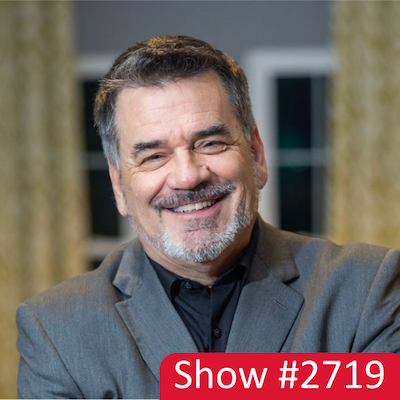
15 Jan January 16, 2026 – Siri Creator Lon Safko and Author Your Brand Doug Crowe
Transcript
0:04 Intro 1: Broadcasting from AM and FM stations around the country. Welcome to the Small Business Administration award-winning School for Startups Radio, where we talk all things small business and entrepreneurship. Now here is your host, the guy that believes anyone can be a successful entrepreneur, because entrepreneurship is not about creativity, risk, or passion. Jim Beach.
0:26 Jim Beach: Hello everyone. Welcome to another exciting edition of School for Startups Radio. I hope you’re having a great day out there riding the roller coaster life of being an entrepreneur, ups and downs and all of that. We are here to give you two things. I’m trying to get you motivated to get off the sofa. And if you don’t have a business to go to, start one now. Grow one. Do something to take control of your own destiny and the future lives of your kids. And that means you must create long-term businesses, some kind of business that produces a passive income for you in your later years, and hopefully for your kids as well.
That’s number one: motivation. Go do something. And then number two, we’re trying to give you solutions and tips, tricks, and techniques to be successful, so that when you do go out there and tackle a problem with marketing or whatever, that you’ve already heard a solution from someone who did it in your space, in your industry. We have interviewed so many people. Now we have a great index and a great search where you could go and find people in your industry who have done things similar to what you hope to do. So please use the resources. We spend a lot of money keeping the index up to date and stuff like that, and having a wide variety of guests, and so use the resource, please. That is what it is there for.
Have an amazing show for you today. One of my favorite guests is back. Lon Safko is with us. He invented Siri, or Siri, Siri, I guess, and a whole bunch of other stuff. He’s got a ton of patents. He’s in the Smithsonian. He’s in the Smithsonian. How many entrepreneurs do you know in the Smithsonian? Lon is one of them. Then after that, we’re going to talk about building your brand with Doug Crowe. He has the best way of getting sponsors and partners for your book that I have ever heard. Did you understand that I have ever heard? He is one of the best that I’ve ever heard on how to get deals for your book before you even write the book. It’s great. And so I’m blown away by Doug’s technique, and was really impressed. And so this is one of the best hits, like from the first time. We’ll get right back. Time.
2:56 The Real Environmentalists Ad: Tired of talk and no action on climate change? Introducing The Real Environmentalists, the bold new book by Jim Beach. It’s not about activists, politicians, or professors. It’s about the entrepreneurs, real risk takers, building cleaner, smarter solutions, not for applause, but for profit. The entrepreneurs in the book aren’t giving speeches. They’re in labs, factories, and offices, cleaning the past and building clean products for the future. The Real Environmentalists is available now because the people saving the planet aren’t the ones you think. Go to Amazon and search for Real Environmentalist. Thank you.
3:27 Jim Beach: We are back, and again, thank you so very much for being with us. I’m very excited to welcome back one of my favorite guests. I think he’s been on this show four or five times now. Anyway, he’s getting very close to that green jacket that we give all of our five-time guests. Anyway, welcome, please, Lon Safko to the show. He is the creator of everything. He created, literally, the first computer to save a human life. That computer, along with 18 of his other inventions, are in the Smithsonian Museum in Washington. Maybe you have heard of it. He designed numerous hardware and software things, developed the first CAD software, built the archetype for the Apple Newton, little things like that. It’s just been an amazing career. He is the founder of 11 successful companies, including his newest, which is Paper Models, which we talked about the last time he was on the show. He’s won the coolest list of awards you can imagine, the Westinghouse Award, the Entrepreneur of the Year. I mean, the list of awards is an entire paragraph, you know, 20 lines long. Also very successful author of six books, including the Bible, the actual Social Media Bible. And he is an author of a series of Western books as well. Very, very successful speaker, and has a great career there. Lon, welcome back. How you doing?
4:50 Lon Safko: Wow, oh my gosh. I don’t even know what to say after that. And most of it’s true, renowned lover, at least that’s what my wife says. That’s—
5:01 Jim Beach: What she wrote. Remember the last time you were accusing me of going behind your back and talking to your mother?
5:09 Unknown Speaker: Well, somebody’s been talking to her.
5:11 Jim Beach: We have one staff that’s actually living down the hall from her right now. So, yeah.
5:18 Unknown Speaker: Yeah, they get that on work release each week.
5:23 Jim Beach: That’s not nice to say about your mom.
5:25 Lon Safko: Well, you know, sometimes the worst thing is saying the truth. But all kidding aside, sir, that’s an impressive list. I actually just finished my 24th book, and by the end of this week, I’ll finish my 25th. I had six bestsellers out of those 25.
5:42 Jim Beach: You’re writing the 25th. Is it AI, AR, VR, and IoT? Did I get it right?
5:49 Intro 2: Pretty close. AI, AR, VR, and IoT. AI, artificial intelligence.
6:02 Unknown Speaker: I got it now. Okay, AR. Want to try it?
6:07 Jim Beach: Oh, AI, AR, VR, IoT.
6:12 Unknown Speaker: VR, IoT. Oh.
6:15 Lon Safko: I know it’s crazy letters. First one is AI, artificial intelligence. The second one is AR, which is augmented reality. Yeah, that’s where you actually use the camera. Pictures. Yep, yep. And the third one is VR, virtual reality. Yeah. And then the third one is Internet of—
6:32 Unknown Speaker: Things. VR—
6:33 Jim Beach: Just hasn’t caught on. Zuckerberg tried so hard, spent billions of dollars, and we still just don’t care, I guess. Why do we need a 3D virtual world when I have a 3D real world?
6:46 Lon Safko: Because sometimes the 3D real world gets to be a little bit too much, and it’s a heck of a lot of fun. I’ve been in Second Life, which is the biggest virtual world. They hit probably 18 and a half million subscribers at any given point, and I’ve been in there since, I think, 2004. Meta sucks. Excuse me, Meta is less than optimal. There’s some reasons why they’ve changed the name and they try to compete with Second Life. There’s a lot of platforms out there right now. The thing is, is that when you get—
7:21 Jim Beach: In there, I remember, please, the State University got in trouble because they spent like $6 million buying turf in Second Life. What did I go there and do?
7:32 Lon Safko: Well, what I did almost immediately, I just published The Social Media Bible and had an entire chapter on virtual reality, because virtual reality, even today, is still a really good place where people congregate and they’re going to buy things. So you could market inside Second Life. So I bought some turf or some artificial land, and I built a two-story granite mansion. It was just absolutely spectacular. It was on the ocean. There were seagulls flying around. You can hear them. The whole, it really is amazing. And then in the courtyard outside of this mansion, I had a 10-foot wide flat screen where I would teach classes to the University of Michigan. I would do PowerPoint presentations. And all these people would sign up, become cartoon figures, avatars, and they would come at a given certain time, and I would put on a full PowerPoint presentation and teach classes. I did executive interviews. Matter of fact, I was even on CNN one time for giving the world’s first CEO interview in a virtual world. I was on CNN for that.
8:39 Jim Beach: Interesting. I was on CNN, and they called me the Simon Cowell of something like that.
8:49 Lon Safko: We probably need to unpack that offline. Yeah, yeah. Well, you’d never insult a host.
9:04 Jim Beach: Well, you already did. You talked about my face for radio.
9:09 Lon Safko: You said you had a perfect face for radio. I’ve never verified that. Mock-up. I don’t want to see full Monty. Did you say Monty or mock-up?
9:21 Jim Beach: Mock-up, like a six-foot-three cardboard statue for you to put in your living room.
9:27 Lon Safko: Okay, yeah, we’ll talk about that. So I also sold. The first floor was actually an e-commerce presence at a time when e-commerce was just starting to catch on. It was way before Shopify or Etsy or any of those. And so that you could walk around, your cartoon could walk around and look at virtual downloadable products in a virtual world and pay for it with virtual money, and it would download to your virtual email account. The only thing that was real is when the money went into my actual bank account. That is cool traction.
10:03 Jim Beach: I mean, did you ever make $1,000 off of it? Or, you know, that’s—
10:09 Lon Safko: There were times. There were times, usually. I mean, it was only $23 a month to keep it, so it wasn’t cost prohibitive. But to be able to get on CNN for free, to actually practice what I preached. You know, digital marketing. That was a form of digital marketing. I needed to be there. And Mars Candy, their home offices in Germany, I interviewed the CEO of Mars Candy in their national cash register. It really was. It was quite an amazing—
10:42 Unknown Speaker: It was a lot of fun.
10:45 Jim Beach: All right, let’s move on. What are we going to call the process by which we make sure that the AI engines talk about us? It’s not SEO, is it? What is that? You know what I’m referring to, getting, yeah, ChatGPT to talk about me. What’s that process called?
11:08 Lon Safko: Well, there’s a major change that’s happening that most people don’t even realize is happening. And if I was Google, I would seriously, seriously try to understand this major change. All the search engines. The search engines always relied, first of all, on organic listing. That means that you make your website really good. Not to heck with the customers, they’re not important. But if you made it good for the search engine spiders, the robots to look at it, you would show up in a Google search engine. Well, eventually, around 2015, 2016, that came to a screeching halt because Google realized, why should I put your website at the top of the page when you didn’t pay me anything? And last year, Google made $273 billion in sponsored ads, pay per click. So 2015, 2016, that started to shift. And now even if you pay for the sponsored ads, you’re still not going to get any click. You’re going to get a lot of clicks, but you’re not going to get any conversion, no sales. So they kind of kill the internet. You can’t do it organically, and paying for it is cost prohibitive, and it doesn’t work anyway.
Well, as soon as Chat and Claude and all of the other Notebook and all the other AI started to come out that was completely independent, that was based on just everything on the internet. So there’s this underground shift that’s happening right now where people are turning their back angrily on Bing and Google and other search engines because we’ve been taken advantage of for nearly a decade, and they’re all moving to AI now. One of the things that I found interesting is this morning, Shopify, which is one of the biggest e-commerce platforms in the world, with about 3.2 million merchants in Shopify, they announced today that they cut a deal with Google for the Google AI to now officially list all of their merchant stores. And that’s the trend, okay?
13:00 Jim Beach: So we’re going to have, how does that end up getting me Nike sneakers, though? I mean, how does that integrate in?
13:09 Lon Safko: Well, the cool thing is, is now that Google is looking at merchants, because all their AI, let’s just use Chat. I use Chat. I use pretty much all of them, but I kind of favor Chat first, the one I started working with. Okay, so Chat would just look on the entire internet and bring you back an unbiased answer. And that’s why, subconsciously, we’re all trusting AI over Google. So if you need a pair of Nike sneakers in the past, it would just talk about Nike sneakers. It would look at the majority of information that was on the internet about Nike. It would not prioritize sales. It would prioritize history, background, blogs, and things that are written about it.
But now Google is catching on, I think, and they’re partnering with the major online merchant companies such as Shopify, and you’re going to see this happening with eBay next and then Etsy after that. What they’re doing is, is now they’re feeding the shops. Shopify is feeding these 3.2 million shops into the AI, and AI is going to prioritize it and make it part of the conversation that you’re having with your AI.
14:18 Unknown Speaker: All right. Well, and teach us some of the cool—
14:22 Jim Beach: Things that we can do with AI. I’ll throw out two and let you think about it, and I would love to get your thoughts on my two. First, I have been talking about that I’m using it for my English teacher in 12th grade. I submit a paragraph. They tell me what’s good and bad about it. I fix the paragraph. I’m putting all of my books through ChatGPT, just to say, are there, you know, continuity lapses here, or, you know, just beyond, way beyond proofreading, way beyond what Grammarly will do. I’m also writing a series right now, and I know that you have your Western series. I’m doing an entrepreneurial thriller in three volumes of 100 pages each, because one of the data points that I see again and again is that people don’t read past 100 pages. And yes, so I’m going to have three volumes, and I want, you know, a continuity check between volume one and volume three and stuff like that. And so I’m using it for that, which I think is way beyond just write the essay for me. I’m saying, here’s my essay. Help me make it better. And so I’m loving that. It’s almost, I’ve almost gotten addicted to it, because it’s a fun little game. You know, you write. I also feel like I’m writing better.
The second thing I’ve done that I was really excited about is I just published this book on The Real Environmentalists. Lon, the people who are really making a difference, they’re called, I don’t know if you’ve heard of these people, they’re called entrepreneurs. And they don’t go out and get government grants. They go out and do stupid stuff, like getting customers who will actually pay for their environmental products, and they’re actually solving global warming without having to get the government involved. There’s the real, real environmentalists. And what I did to find the jerks at the other end was I took ChatGPT and I said, tell me about celebrities. And I defined celebrities, you know, sports stars, people, magazine, movies, TV stars, singers, who are actually doing something for the environment. And by doing, I defined getting hands dirty, touching dirty birds, picking up trash, planting trees, hands dirty.
And then I took a different list that ChatGPT generated and said, who’s talking about what they’re doing on the environment the most? And there goes Leonardo DiCaprio and Al Gore and all those people. And then I said, now, ChatGPT inverse the two lists and give us who’s talking the most and doing the least. And we call that a hypocrite. And so we produced the 10 biggest environmental hypocrites by flipping the list on ChatGPT. So you’re the expert. Give me a grade on particularly my environmental little thing there. What are your thoughts on this?
17:24 Lon Safko: I think it’s amazing, and I love it, and I wish more people would do stuff like that. Let’s start with Congress, and I’ll support that project as well. I think that’s beautiful, because you’re exposing all of the hypocrites by definition. Now I’d be a little bit careful how you publish that and make that public, because a lot of these people have attorneys on staff.
17:45 Jim Beach: ChatGPT, we put the data up online, you know, here’s our methodologies, pure Chat.
17:53 Lon Safko: ChatGPT, yeah, yeah, hallucinations. I don’t know. They’re still having hallucinations in the data. We didn’t verify it. We thought that it was accurate.
18:02 Jim Beach: Hey, it’s not my fault. There you go. There you go.
18:07 Unknown Speaker: I don’t know if that stands up in court, but yeah, okay.
18:11 Unknown Speaker: I like it.
18:13 Jim Beach: All right. Give me some of the things you’re doing with it. In particular, I haven’t figured out how to program with it. And by that, I don’t mean HTML. I mean, I want to hit F1 on my computer and have it do something different from what an F1 traditionally does. You know what I mean?
18:30 Lon Safko: Yeah, that’s a good question. That’s something I haven’t explored, and I think that’d be something that I’m probably going to explore soon as we hang up. I’ve been trying to, I always push to the limits of technology. I mean, you and I have talked about the first computer to save a human life, and I was the first to do voice recognition, voice synthesizing, environmental control, virtual reality. And it was all just constantly pushing the technology. And I’m trying to do the same thing. It’s like being in a dark room and running your hands along the baseboard to try to find if there’s a door. So, yeah, I’ve been doing that.
One of the things that you had mentioned about your books, that’s absolutely correct. I tried. Okay, I wrote this book, Alien Time, and I want to write a sequel. And I’m going to feed you the entire book, and I want you to tell me all of the chapters in the second edition, and then write every one of the chapters. And boy, I spent two days. I was copy and paste, and copy and pasting until I read it. It was the worst garbage that I’ve ever seen in my life. AI can’t do that. AI can do little individual tasks. Don’t overestimate its capabilities. So what I did—
19:38 Jim Beach: Is, paragraph, right? Did you like that? Yeah, okay, yeah.
19:42 Lon Safko: Or even it will fix an entire chapter if I say, take this chapter of 800 words and expand it to 1200 words and make it exciting. And here’s the way I—there’s two things I want to tell you that most people aren’t aware of.
One is that when I write my prompt—prompt—and I’m going to put a little asterisk next to it. It’s not really a prompt, but it’s going to be a prompt. Just bear with me. So I write the prompt, and I say I’d like you to, whatever, expand the following chapter to 1200 words, and I want you to do it in a New York Times best-selling style, award-winning Pulitzer Prize-winning style. But here it comes: in the style of Lon Safko. And I fed it all of my 25 books. So my Chat has got literally thousands of pages of my writing. And what’s amazing is, is that if it expands it or it has to create some text, it really does do it in my style. I can’t tell the difference.
So you can program the persona of Chat. You can say, from now on, I’m going to say arrogant mode. And when I type in arrogant mode, I want you to come back with snarky, straight up, no sugarcoat, give me the data and cut the crap style. And then when you say, turn that mode off, it goes back to the nice Lon Safko, and it will. So you can program—
21:13 Jim Beach: Ability here, Lon. Yeah, hit a button and make it different. Yeah, the other Lon—
21:19 Lon Safko: You can. I’m not kidding. You take something that you have written, put it in the Chat and say, please rewrite this in the style of Lon Safko. I promise it’ll sound, it’ll be my voice.
Now, when I said earlier about putting an asterisk next to the prompt, I don’t want you to write prompts anymore. Here’s what I want you to do, and nobody’s that I’m aware of has figured this out. What you’re going to do is you’re going to write the best prompt you can. You’re going to give it a personality. I want you to be a Madison Avenue top executive, public relations firm, marketing. And I want you to look at it from legal as if you were a $450 attorney. I mean, you just go all out and give it the personalities of the people that you would want to have contributed to the answer. And then you ask it for the answer. And you tell it the format.
But here comes: you say, take all of this next text and turn it into an absolutely killer, award-winning, oh my God, I can’t believe it prompt. And then it takes your information, which is maybe two paragraphs, and it will come back with a two- or three-page prompt that will knock your socks off.
22:32 Jim Beach: Now that’s a great idea.
22:35 Lon Safko: Now ask it the question. If it’s an important prompt and you really want good content, create your prompts, but tell Chat to turn it into an award-winning prompt, and it’ll be like three pages, and you will not believe the type of results that come out.
22:52 Jim Beach: Yes. Another thing I’ve loved doing is saying, I want to start a business in blank, and here’s the one-page business plan that I’ve done. And it will analyze that, and then it will come back and say, do you want to talk about a marketing plan now? Then it’ll come back and say, do you want to talk about finance? It has great prompts, yes, to bring you to your next thought.
23:19 Lon Safko: It’s really good. You want a PowerPoint pitch deck? Do you want me to create the pitch deck for you? Do you want the comp? Yeah, it really is good. Always look at the bottom of your prompt and see what it’s suggesting next. And that’s how I go down the rabbit hole. Because when I’m working on a project, and this is, oh yeah, yeah, let me see what you’re going to do with that. Oh, that’s great. Oh, you’re going to do this too. Let’s do that next.
23:43 Unknown Speaker: It is good. I know about rabbit holes.
23:48 Lon Safko: Yeah, and let me tell you this, Chat, this AI stuff has got me down rabbit holes all the time, because I’m always—I asked it to write front page of a newspaper for 25 years into the future, just kind of checking to see—
24:05 Jim Beach: Did I tell you my War 19 story? Bond? No, no, no, no, what’s that? Oh, this. You got to go online and look at the Amazon listings. So during COVID, I decided that I wanted to write a political thriller, but I also—my wife was saying, you can’t be too biased, and you know, weren’t willing to go down one path, yes. And so I decided to write two political thrillers. Both ended up with war with China, and both ended up with America winning. One was Trump and one was Biden, and they were pure porn. So in the Trump one, Biden got arrested, Hillary got arrested, sentenced 29 years in prison, and blah blah. In the Biden one, all the Trump kids get arrested, go to prison, pure porn. Porn.
What I did was I hired people from, what’s it, Fiverr, to write 500-word articles, assuming that Hillary just got arrested. Write that article, that newspaper article. And I set the whole thing 25 years in the future, so it was like a retrospective. Oh, that’s cool. Articles on that time. I love it. War 19. I got that great URL. I had to write the book around the URL, war19, yeah, right. Now I have to figure out something new to do with that URL, you know. So, yeah, if you got that first scenario, second version, let me know.
25:43 Lon Safko: A lot of people think that first scenario is going to play out this summer.
25:48 Jim Beach: It’s scary, yeah. Well, what are your thoughts on, you’re a smart guy, what are your thoughts on AI, ATLAS, and aliens and all that stuff?
26:03 Unknown Speaker: For me, it is—
26:05 Jim Beach: The most ATLAS. Were you following the comet? That’s not a comet. Yes. Okay. Are you an alien? Is that how you have so many patents?
26:17 Lon Safko: If I am, nobody’s told me, but I certainly don’t fit into the normal human populace, that’s for sure. Never did. But I don’t have antennas or anything, or ESP, so not even ESPN, no. You know, the closest star is 4.3, Alpha Centauri, 4.3 light-years away. That in miles is 186,000 miles every second for four years. So yeah, there’s nobody’s going that distance, and that’s at the speed of light. So even though—
26:54 Jim Beach: There’s like a subway system, yeah, wormholes, and yeah, there is—
26:59 Lon Safko: Well, yeah, I don’t have an annual pass to that, so I’ve never, never checked it out. You would have to have something like that. That’s the unfortunate. You should read my—you know what? I’m going to also send Alien Time. You’d get a kick out of it. Yeah, yeah. I’ll just send it over.
And you’re absolutely right. Keep the books under 100 pages. Most of mine now are running around 75.
27:23 Unknown Speaker: Yes, who’s the guy?
27:26 Jim Beach: One of the big gurus out there, who’s basically taken the philosophy of a chapter. What we used to call a chapter is now what they call a book. Who is the guy?
27:37 Unknown Speaker: Oh, really? I’m not familiar with that.
27:41 Jim Beach: He’s pumped out 68 books. And of course, you know, they’re beyond repetitive. You know, once you’ve read two of them, you’ve read all 68.
27:53 Lon Safko: Yeah, of course. Not a bad idea. I could take one book that has 25 chapters and turn it into 25 books.
27:59 Jim Beach: Exactly, exactly. Exactly, yeah. Well, then you do The Social Media Bible for Dentists, The Social Media Bible for Pediatricians, The Social Media Bible for Back Crackers. What are those people called? Chiropractors.
28:15 Unknown Speaker: Back crackers, that’s close enough, yeah, you know what I meant.
28:18 Intro 2: Yeah, yeah. You could for every individual industry, every niche.
28:26 Jim Beach: So final question, how do you become so creative? How do you let your mind go toward patents and stuff? And did I tell you that I got a patent? Did we talk—
28:38 Lon Safko: About—no. Tell me again. Your audience probably not aware. Wi-Fi blocking paint.
28:57 Jim Beach: Oh, that’s crazy. Yeah, in France, you are not allowed to have Wi-Fi—about France. Oh, okay, then we must have talked about, how did you do, like aluminum filings or something?
29:01 Lon Safko: Geez, you just blew me away with that. So my brain is like running down the street. I’m like a toddler in pull-ups. My brain, okay, I don’t, I don’t—I’m just constantly—if you remember Johnny Five from that movie about that robot with Steve Guttenberg.
You know where he’s flipping through the book and he’s just consuming as much data. I’m kind of like that. I mean, of course, not like that. But I mean, I have so many different interests, and I look at so many shorts on YouTube, and I read so many blogs and book magazines, just like you, and I start to put stuff together.
I mean, for example, you know, we talked about a couple of things, that there’s going to be a transformation of people moving away from Google. Nobody’s going to Google it anymore. They’re going to AI it, right? So I just see the trends because I’m in there, I’m in the weeds, I’m using it every day. So that’s one trend.
And to create a prompt, how did I get creative and come up with that idea? I thought, well, hell, if Chat can write an amazing response to my prompt, I’m wondering what it can do with writing its own prompt. And then when I saw the results, I freaked out.
So it’s kind of just getting all this information, and it’s like a kid with Legos. You know, what Lego do you pick up first? And I just kind of pick them up and put them together. And sometimes they work, sometimes they don’t, but I’m always testing it.
30:27 Jim Beach: Lon, how do we find out more? Follow you online, get in touch.
30:31 Lon Safko: LonSafko.com, or just Safko.com if you’re feeling lazy. Wow.
30:38 Jim Beach: Five-letter dot com for your last name. It’s like Madonna, but even better.
30:44 Unknown Speaker: Yeah, because it’s mine. I own it. Madonna wouldn’t do me any good.
30:51 Jim Beach: Burst my bubble. Lon, thanks for being with us. Tell your mom hi, and we love having you back again.
30:57 Lon Safko: You are totally awesome. It’s such an honor to be on your show, truly. You do such a great job.
31:02 Jim Beach: I’m honored that you would be on it anytime at all, sir, please. You know who I had the other day? James Webb.
31:10 Unknown Speaker: Oh, really? James Webb, seriously?
31:13 Jim Beach: Seriously, yeah.
31:14 Lon Safko: You, you roll with the big dogs, man.
31:18 Jim Beach: You have a good day, Lon. Thanks for being on.
31:39 Intro 2: Well, that’s a, that’s a, that’s a wonderful question. Oh my gosh, I love the opportunity to do this. Thank you, Jim. Wow, that’s, that’s, that’s a great one. You know, that is a phenomenal question. That’s a great question. And, and I don’t have a great answer, that’s—
31:53 Speaker 5: A great question. Oh, that is such a loaded question. And that’s actually a really good question.
31:59 Jim Beach: School for Startups Radio, we are back, and again, thank you so very much for being with us. Very excited to introduce my guest today. His name is Doug Crowe. He is an exceptionally good source for money if you’re writing a book. So many of you out there, I keep telling you, you’ve got to write a book. He is the consultant that will help you get enterprise clients before you write a book, or enterprise clients to help grow your partnerships. Damn impressive. Doug, welcome to the show. How are you doing?
32:42 Doug Crowe: Well, it’s funny. I’ve been in the publishing and ghostwriting business for about 15 years, and I’ve seen this huge trend of personal branding and getting out there and getting your name known. And the challenge with it is everyone’s doing it, therefore everyone kind of sounds the same. Here’s my value proposition, here’s my leadership skills training, blah, blah, blah, blah.
What we do is we kind of reverse. So we have a thing actually called the Reverse Spotlight Method, where we really focus on your ICP, your ideal customer profile, or, quite frankly, your ideal large entity or large association, Fortune 1000 company, big nonprofit. And we focus on them for your book. We’ll actually talk about their trends in their industry, things that they would really find valuable, but most importantly, put the spotlight on them a little bit. And when we do that strategically, as we’re interviewing you as well, we sprinkle in some stories from your ideal readers as well as your journey. And when we package it up and position it properly, they become basically launch partners and collaborators and bulk book buyers, because it’s not just about you, it’s about you and them.
33:50 Jim Beach: All right, so let me make sure I got this. You sprinkle in things about your sponsor company, yes.
34:00 Doug Crowe: They help. We do that giving, giving in advance. We don’t ask for any money. We don’t, you know, we don’t do a lot. We just say, listen, I’m working this book about X topic. You guys have got, you know, 10,000 members in your organization. I’d love to talk to you, the CEO, maybe some of your people about this, and get little snippets and stories about that. So when the book comes out, we tab those pages where they’re mentioned, send it to them, and they go, holy smokes. This is, this is great. This is about me. Yeah, that’s right. Well, can I get a couple thousand copies? Like, yeah, you sure can. So now it’s a collaborative discussion, not a sales discussion.
34:33 Intro 2: All right, so does our thesis need to change then to make this work?
34:40 Doug Crowe: Not really. What we do is we spend a couple of weeks, sometimes up to a month, on research, and we research the trends in the industry. And then we tie threads between what’s happening, what’s going to happen, because people want to know about the future, and what your value proposition is. And we stitch those together pretty well. It’s very rare that we can’t find a connection between those two areas, but when we do craft the book—for example, one of my clients is a national Vistage chair. He’s got serious, serious health issues, cancer issues, quite frankly. And when we’re ghostwriting and talking about him crafting his book, he drops the name Vistage, American Cancer Society during an interview. So we left that in there. And when a book was completed, we tab those sections, send it to those two entities, and lo and behold, he’s a keynote speaker for American Cancer Society, and Vistage named a national award after him at the national convention. So it’s done strategically and with, you know, connection, obviously.
35:42 Jim Beach: I mean, does this work for any topics? And I want to write another leadership book. We don’t need another. Just not needed in the world.
35:53 Doug Crowe: Well, I can help you with that, yes, as long as you don’t say it’s a leadership book. If you say, hey, I’m going to help manufacturers source locally for X and make them leaders in their industry—when you narrow it down into a specific demographic, psychographic, geographic, whatever you want to do, when it’s narrow focus, it’s much easier to do, and it works for any nonfiction topic. There’s not a single one I couldn’t pull leadership and the current trends in a specific industry and pull it together.
36:24 Jim Beach: Okay, how do you get in touch with the right person at these Fortune 500 companies?
36:29 Doug Crowe: Oh, this is the fun part. Yeah, it’s way easier than people think. They think, oh, gatekeepers and administrative executives gatekeeping their phone. We get around that. We have 100% open rate on what we do to get in touch with them. I’ve talked to people that are extremely high up. I mean, I did a project for a guy, you know, in the family offices. And because of what I did, I ended up talking to Bloomberg office and about a dozen other ones that were representing billions of dollars of value. And it was a great conversation, because it wasn’t a sales conversation. It was a journalistic conversation about a book. So people are much more likely to pick up and talk. 100%.
37:09 Jim Beach: Open rate on an email?
37:11 Unknown Speaker: Not on an email. I have a secret weapon.
37:17 Doug Crowe: FedEx envelope. No one’s ever discarded one of those in the garbage without opening it first. So we—and what we put in there is kind of cool. It’s not proprietary, but it’s not your typical, hey, I want to interview you for a book, which may or may not get response. I put something in there that they—90% chance—they are going to call you back within 24 hours. Or if you ping them two days later, they’re going to take up the phone.
37:40 Unknown Speaker: Naked pictures.
37:43 Doug Crowe: I wish it was that easy, but I wouldn’t know who I’m talking to. But no, it’s a very well-researched white paper.
37:53 Intro 2: About them. Okay, yeah, so it’s not about your book being in the book?
37:58 Doug Crowe: No, we don’t even—see, that will be a pitch, right? We just say, hey, listen, we’ve just been studying your industry for a while. Here, I was so impressed. Here’s a white paper on an upcoming trend that you are a leader in. Thank you very much. And by the way, I also wrote a short Amazon short read, an Audible book. Here’s a couple of gift cards. Go there and listen to the book that I wrote about you.
38:22 Unknown Speaker: It’s like super fan stuff.
38:24 Jim Beach: Okay, wrote a book about me and then put it up on Amazon. Well, me—
38:34 Intro 2: It’s happened for centuries. Yeah, I don’t know if I like that, though.
38:42 Jim Beach: Some people are going to push back on just that, aren’t they?
38:45 Doug Crowe: Well, we screen pretty heavily before we send that out. We’re going to target people who are already public entities. I’m not going to pick, like—who’s that one guy that invented the duty-free shops? He was anonymous for like 30 years, and then finally he surfaced. We don’t pick on somebody who wouldn’t like it. We focus on entities that are already out there. They’re visible. And this is just an additional very powerful piece about them. It’s designed to get a conversation with a high-profile person.
39:14 Jim Beach: And you send it directly to them, not to their secretary.
39:18 Doug Crowe: No, we send it directly to them. And, you know, obviously the admin sometimes opens it up. And then the way we frame it up there and we put there, she always puts it on his desk. Here’s a piece of special order about you. And there’s no pitch in there. There’s a little cover letter that says, you know, hey, I was following you guys, wrote this article. Tell me what you think. It’s really short, two sentences, handwritten, stuck on there. It gets really high connection rate.
39:46 Doug Crowe: Okay, we go one step further. The white paper that we produce is not just sent to the CEO of the large organization or association. It is published and we send that out to upward of about 100 different entities, like industry journalists, competitors, suppliers, board members, other people that will be interested in that same topic. We get a lot of traction on the article that goes out there. And because of that, even if the CEO doesn’t want to engage with you, you’ve got dozens of other people that were impressed with what we created and published on behalf of the industry.
40:24 Jim Beach: Doug, so I just wrote a book on the environment, and a fairly controversial book. The thesis was that all of the people who talk about the environment are the problem. Leonardo DiCaprio is the problem. The guy—read that line—the problem, yeah, you know. And then in the book, I highlighted five entrepreneurs that are building businesses quietly, that are saving the world, right? One company is cleaning the air, one’s cleaning the water. I don’t worry about global warming at all anymore, because I have met the people who are solving the problem right now. It’s entrepreneurs. So how do you handle a very controversial book like that, that’s poking the eye of the existing industry and saying, you suck, you’re the problem?
41:14 Doug Crowe: You know, I wrote a short article about this. You actually do want to piss off some people. It gets a lot more traction that way. I was good friends with the producer of the Rush Limbaugh show years ago. He told me—no, not Rush, the actual producer, the guy who produced the show, I forget his name, sorry, it’s been a while—but he said 40% of the audience hated him. 40%. Now, who cared about that? And certainly advertisers, because they were agnostic, right? So when it comes to publishing a controversial book, I would lean into it, because you’re going to have plenty of fans, but the haters.
I mean, I don’t mean to be political, but CNN was the one responsible for Trump’s presidency, quite frankly, because they talked about him so much. So it’s okay to get controversy. Actually, it really helps in the PR and media world. There’s no damage there unless it’s super negative, you know, as long as it doesn’t hurt anybody. But a couple like this, number one, you—yeah, I love it, because I was at the very first Earth Day in 1970. That’s how old I am. So I’m very familiar with global warming, global cooling, floods, typhoons, locusts, the whole problem.
42:23 Jim Beach: So do you still go after corporate sponsors in a situation like that?
42:27 Doug Crowe: Absolutely. Yeah, you can. You can look up and we do some research and find out. We go pretty deep on intent signals and who we go after, but we will definitely target the people that are in line with your values and beliefs, and we might actually target a few that are not, just to get them in the fray and blow it up a little bit when it comes out.
But to build your book, I would definitely focus on the, you know—and I’ll just be my opinion here—the rational thinkers, the people that understand the wobble of the earth and the—you know. Look, I look at the global environment in a way that most people don’t understand. But we understand that the earth is, you know, 4 billion years old. And people measure weather. They don’t really measure climate. Climate changes every couple hundred thousand years, but we measure it in our brains, like a zit on a gnat. Oh gosh, it’s got warmer the past 30 years. So what? Tell me what happened, you know, 1,000 years ago. And that might be a millimeter on a ruler. But measure things. People are just—they don’t have a sense of scale when they talk about this. But I don’t want to get off on that topic.
43:39 Jim Beach: Unless you want to. Well, I wholeheartedly agree. So, you know, that’s—my book was about these entrepreneurs are saving the world right now, and they’re making cool progress. One of the guys in the book, Doug, grows coral, you know, like sea coral, 50 times faster than God does.
44:01 Unknown Speaker: Super coral. I love it.
44:02 Jim Beach: Yeah, so you can go in and plant a coral reef overnight.
44:07 Doug Crowe: Well, he needs to do that because I’m a scuba diver, and I went to the Great Barrier Reef years ago, and we lost a lot of that reef. So yeah, get him over there. Would be good.
44:15 Jim Beach: I’m a diver too. And yeah, I’ve also dived the Great Barrier Reef. It was beautiful.
44:25 Unknown Speaker: What’s your best dive ever?
44:27 Doug Crowe: Cozumel, man. I did a drift dive there at about, I don’t know, 60 feet or so, and the visibility was 200 feet against the continental shelf. So I’m just cruising like I’m flying around this canyon. It was gorgeous. Of course, it was a drift dive. It was like two-knot currents, so I didn’t even kick. I was just—
44:47 Unknown Speaker: Just coasting.
44:50 Jim Beach: It was great. Wow. I did a dive once in Honolulu where we saw 30 airplanes. Oh my. And that was amazing. So I always like it when there’s a man-made thing that sunk, that’s always—
45:05 Doug Crowe: Fun to dive on. Yeah. The only other memorable one I have was, I was in the Caymans on New Year’s Eve, and a buddy and I went and did a night dive at like 11 o’clock. And around 11:55 we popped our BCs, went to the surface, we both brought a can of beer with us, and floated out in the ocean, watched the fireworks on Grand Cayman.
45:23 Unknown Speaker: Having a beer was kind of fun.
45:24 Jim Beach: That is a nice one. My wife has a place in the Grand Caymans. That is a dive, the Roan—is it the Rhone—the ship out there, like it’s the—
45:35 Unknown Speaker: Kittywake.
45:36 Jim Beach: Yeah, right off the beach there. Amazing dive as well. So you never asked for money from the partners. You said that earlier. I thought—
45:49 Doug Crowe: No, no, no. It’s about giving and serving. And if they want to do a full-size book with me, because I do this myself, I do probably a white paper and a piece on an association once a month or so. And, you know, about half the time they’re interested in doing a book with me. So I might talk about doing an engagement, but I never pitch it. They just, they ask me, you know, so it’s a much different dynamic.
46:11 Intro 2: How long are these white papers? They’re about 20 pages.
46:15 Doug Crowe: 15 to 20 pages long. Takes us, you know, we do a little bit of AI, a little bit of manual research and things. So it takes us a good week to craft a good one with rubber graphics and infographics and citations, whatnot. But it’s—
46:27 Intro 2: It’s a solid piece, all about one person—no, all about one—
46:32 Doug Crowe: Topic, and we sprinkle in the person that we’re targeting, or the entity we’re targeting. So if it’s for, like, I have one client who’s got a whole protocol for decision making in corporations. So I said, well, we could target an industry. I can’t say how to make better decisions, but we could target a specific industry with that about the decision-making processes they use, what’s worked, what’s failed, and then we highlight a particular entity in there. And usually the entity is a large organization that represents thousands of his ICP.
47:06 Unknown Speaker: How much does all this cost, Doug?
47:10 Doug Crowe: Well, it depends if you want just a white paper. And all the ranges of our services go from about 7,500 to 75,000. It really depends on how much somebody needs. If they just want to get some leads, some clients in, it’s a much lighter thing. If they want to build a personal brand or be a TEDx talk or a book tour, the investment goes up from there.
47:32 Jim Beach: Okay, you do other marketing tools as well, help with podcast interviews or anything like that?
47:39 Doug Crowe: You know, I do, but I do it for free. I don’t really charge for it. I have spent four years in radio in Chicago, and I love podcasting and helping people get what I call slightly famous. So we build a lot of our assets into our school community. Or, I do an event once a week, starting next month actually, called the Visionaries Exchange, where I invite operators and investors. Operators got to be doing over a million to get in the room. But when you’re there, you’re networking with other successful people and capital partners, and it’s a curated discussion for a solid hour once a month. It’s a lot of fun.
48:13 Jim Beach: So do you believe that there are huge tunnels and chambers beneath the pyramids that they are just discovering, parameters deep?
48:25 Doug Crowe: The problem with everything nowadays, quite frankly, is I was watching a video the other day, oh my God. I was about to comment on it, like, wait a minute, let me read the comments. It was fake. And a year ago, we couldn’t tell what was real. We couldn’t tell what was real and fake online. Almost anybody could. Nowadays, I don’t know. I think I got to go back to the pyramids and get a shovel. I would be surprised if there’s not a big foundation there. But I don’t know. I don’t have an opinion. I’m curious.
48:54 Jim Beach: Interesting people who are doing this are real academics. I mean, this is not an AI, book-bait generation, yeah. This is real scientific. Do you talk to them? Have I personally talked to them? No, I’ve seen them interviewed, though, many times.
49:07 Unknown Speaker: Are you sure?
49:09 Jim Beach: Well, I mean, yes, these people really do exist. It was in all of the newspapers. So, okay, yeah, there’s no doubt that this really happened.
49:19 Doug Crowe: It makes sense that there’d be some underneath that, because it’d be hard to have all that stone sitting on sand and still stay level. So yeah, I’m sure there’s something.
49:26 Jim Beach: Well, I think that in the last year or so, we have pretty much proven that the pyramids are fertilizer-making machines. They’re designed to make fertilizer. Yeah, I do hear that. That’s cool. Have absolutely nothing to do with burial. They are machines designed to make fertilizer, and whoa. There are a lot of people talking about it now. You know, Joe Rogan, of course, is talking about it. Yeah, if you start getting into it, and there are people now who have actually figured out how it works, you know. And Tuttle is the relief basin, and you know. And they’ve done chemical analysis of the walls and the chemicals that should be there if they’re making ammonia nitrate are there, you know. So, wow, you’re really skeptical though, Doug. Are you sure you’re talking to me now?
50:21 Doug Crowe: No, I said I’m curious. I’m going to look it up. I want to know. I just said I trust but verify things. I’m curious. I’m open minded to anything. I’m not open minded to the flat earth. Everything else, I’m pretty open minded about.
50:37 Jim Beach: Yeah, I’ve been to the pyramids as well, and I’m fascinated by the topic. And I do think that all of these new revelations are true. It makes sense.
50:47 Doug Crowe: Yeah, it does. You know, I asked my guy when my son and I were there, I think he said—and we asked him, saying, so what’s the story in this? And of course, he’s Egyptian, like, we built them. Like, okay, okay. But yeah, I’m fascinated by that stuff. It’s interesting.
51:06 Jim Beach: Yeah, Doug, how do we get in touch with you? Find out, hire you, all that stuff.
51:08 Doug Crowe: Get a hold of me. I’m pretty, pretty accessible. You can go to DougCrowe.com and there’s a contact form at DougCrowe.com. If you’re interested in the book thing, I’ve got a free gift for your listeners. They can go to AuthorYourBrand.com/go, and we could do an assessment. We can actually dive in personally and take a look at what they’re thinking about and give them a really clear assessment on a go-to-market process of actually getting your book done, whether it’s a small, you know, short read, or something more expansive.
51:42 Jim Beach: How long should a book be these days?
51:45 Doug Crowe: It should be something that should be consumed on a flight from New York. That way, about a four-hour read is ideal, because people finish those more than the big ones. So I would say 150, 160 pages, about right.
51:56 Jim Beach: When I heard that no one reads past page 99, that statistically Amazon has pretty much proven that 99 pages, you stop reading. That’s because most books are crap. That is true. Would you pay any attention to that data, or do you just ignore the data and say—
52:15 Doug Crowe: I don’t ignore data. I don’t ignore data, but I look at what they’re referencing. And because self-publishing is so easy to do nowadays, there is a lot of garbage out there. We are professional storytellers. We put in story arcs, hooks, plot lines, character development. Even in a nonfiction book, we’re making sure that it’s creative nonfiction, that the through-put story on, for example, leadership has some narrative elements in there that make people want to turn that page. So it’s a pretty polished system that most of our books do get finished because they’re fun to read.
52:48 Jim Beach: Doug, thank you so very much for being with us. Great information. And I think I would hire you. You—my environmental book came out.
52:58 Doug Crowe: Well, we can talk about that. I got some connections in industry and media stuff. I’d love to talk more about that, because I’m pretty passionate about it myself. I get really frustrated real quickly. My kids came home from school once in June in elementary school talking about, you know, global warming. And I said, be quiet a second. I said, put this glass of water, put an ice cube in it. What happens? Oh, it’s going to, it’s going to overflow. Come back in the morning, and it didn’t overflow. I said, your teacher didn’t talk to you about displacement. Okay? Ice is already there, not going to flood. Stop it.
53:32 Jim Beach: Doug, let’s not get off topic. We’ll both get canceled. Thanks for being with us. We are out of time, but be safe, take care, go make a million dollars. Bye.
Lon Safko – Best Selling Author & CEO at Innovative Thinking and Author of The Social Media Bible: Tactics, Tools, and Strategies for Business Success

If chat can write an amazing response to my prompt, I started wondering
what it could do if it wrote its own prompt. When I saw the results, I freaked
out. That’s when it really changed everything for me.

Lon Safko
Lon Safko is the bestselling author of “The Social Media Bible” which hit #1 on Amazon, and “The Fusion Marketing Bible” which hit #3 on Amazon. He is an acclaimed international keynote speaker and the host of the PBS Television Special “Social Media & You… Communicating In A Digital World.” According to Steve Jobs, Lon created the “First Computer To Save A Human Life!” Lon has 3 patents and has 18 inventions. More than 30,000 of his personal records are part of the permanent collection of the Smithsonian Institution! Lon was the recipient of the Westinghouse Entrepreneur of the Year Award, and was twice nominated for the Inc. Magazine and Ernst & Young Entrepreneur of the Year Award.
Dough Crowe – Founder of Author Your Brand
We are professional storytellers. Even in a non-fiction book, we build
story arcs, hooks, and narrative elements that make people want to
turn the page, because most books don’t get finished simply because
most books are boring.

Doug Crowe
Doug Crowe is a business growth strategist, personal brand specialist, media insider and the founder of Author Your Brand, a ghostwriting and publishing company that has helped business owners and entrepreneurs launch hundreds of Amazon #1 bestselling books by turning their expertise into influential thought-leadership platforms. He leverages decades of experience in media, marketing, sales psychology and storytelling, drawing on a background that includes a degree in speech from Northwestern University, early success as a Dale Carnegie award-winning trainer and contributions to major outlets like Entrepreneur Magazine and the Chicago Tribune. Doug’s work helps CEOs, founders and professionals amplify their influence, build strategic alliances and expand their reach through published authorship and personal brand development.