

13 Oct October 14, 2026 – Sabai Thai Spa Franchise Nuttha Goutier and Matter of Hope Jim Bildner
00:02 Intro 1: From the AM FM 247 radio network, broadcasting from AM and FM stations around the country. Welcome to the Small Business Administration Award-winning School for Startups Radio, where we talk all things small business and entrepreneurship. Now, here is your host, the guy that believes anyone can be a successful entrepreneur, because entrepreneurship is not about creativity, risk or passion, Jim Beach.
00:27 Jim Beach: Hello, everyone, welcome to another exciting edition of School for Startups Radio. I hope you’re having a great day out there, being an entrepreneur, trying to be an entrepreneur, just riding the roller coaster at any stage. If you haven’t got a business yet, I hope that this show will inspire you to get off the sofa and go get started, the hardest part is you getting raising your hand and saying, me, I’m going to go and do something. I’m going to be special, different, unique. I am going to go start a business. It’s the hardest part right there. And then every day you have to do something to validate that and make it real.
01:13 Jim Beach: And I hope that the show here can motivate you and then also give you some of the tip skills techniques and tricks to be successful so that you can listen to our great role model examples here on the show and go and replicate them. To that end. We are incredibly proud of the huge index. Thank you, Frank, that we produce and keep very up to date so that you can go and find other interviews that are relevant to you and your business. We understand that not all of the 6000 interviews that we’ve done are going to be relevant to you, but about 20 of them are going to blow your socks off and help you grow. We got 2 amazing interviews today with 2 just amazing people. First up, we have Nuttha Goutier.
02:07 Jim Beach: She grew up in Thai, Thailand, and then moved to Canada and has started a company there that has a series of locations in the Thai spa business. It is an unbelievable story. She’s really going to motivate you, I hope. And then Jim Bildner will be with us. He has a social entrepreneur, has an amazing lifelong story to share with us. We talk about hope being a verb, which is something I love and talk about uncertainty and dealing with comfort. Just a great, great interview, and we talk about my book, The Real Environmentalists, but if you haven’t read, you have to go read now, so you’ll understand the interview. Thanks for being with us. We are going to get started in just a second.
02:58 Station Jingle: Bye, bye, bye.
02:59 Station Announcer: School for Startups Radio hopes you will reach out to us if you have any questions or comments, or if you need help with your business at any stage, from concepts to exit. Jim accepts all connections on LinkedIn. He tweets from at entrepreneur gym and he responds to emails at james.beach at att.net. Thanks for listening, and we hope you enjoy the show.
03:26 Jim Beach: Okay, sounds good. We are back and again, thank you so very much for being with us. I am very excited to introduce an amazing story. One of those stories that gives you hope for the capitalist system and for people who just work hard and get things done. Please welcome Nuttha Goutier to the show. She is the founder and CEO of Sabai Thai Spa. She migrated, well, grew up in a farm in northern Thailand with no running water or electricity. And she learned then that wellness was part of everyday life, not part of something special. She moved to Canada in 2001 and opened her first spa in 2005 and now they are franchising all across Canada. They have 7 locations in greater Vancouver. Nuttha, welcome to the show. How are you doing?
04:20 Nuttha Goutier: Thank you for having me. I’m so excited to be on the show and I’m so honored to be here today.
04:26 Jim Beach: Well, it is our honor. Tell us about the village where you grew up.
04:32 Nuttha Goutier: Yes, let me bring you back. The village that I grew up, it is, is in middle of nowhere, no running water, no power, no. Shoo, not even have a toothbrush, and we’re using clay pot, and pan for cooking, has a lot of clay, pottery stuff. And The way of living, if we have no hospital nearby, and the way of living every day is self care is part of life, is nobody actually make a big deal. You. Get up, you know, you’re always thinking about how can we have the journey of life, that joyful, More presentable, more, you know, more engaging with the community and care for yourself is great number one. You have to care for yourself from inside out from your mind.
05:24 Nuttha Goutier: It’s including what is your thought that coming in your head, what you speech, only selecting a good speech, and action, only selecting, only good action, you know, helping your neighbor, helping people in the village, and everybody just be there for each other without asking. Is someone going to build a house? People just show up and help you. If someone going to harvest you. Coffee, right, your farm. Your tuppy yoga or your corn or garlic, everything. People just show up. Like 20 uh 30 people will show up and they finish in one or 2 days. And that is, is stay with me today, is amazing how we can live life so simple. People don’t have money. We’re so poor, like poor with money, but we feel so rich of support and rich to have each other to be in a way.
06:21 Nuttha Goutier: And We are feel so joyful to work in a hard work farm, people singing, people laughing. They throw the mud on each other. And throughout the day, throughout the season of hard work. It doesn’t feel hard work. And then my dad, you know, always said. You know, hard work doesn’t feel heavy when you carry with your heart. And that word was not saying in when I was a little kid, listen. And he repeat quite often. And now look back and go too many things. It totally makes sense. And when he moved to Canada, Different culture, different country. And I always try.
07:03 Jim Beach: Yes. How did you get to Canada? How did you get the money to get out of the village and get to Canada? How did you even get the money to get to Bangkok?
07:15 Nuttha Goutier: Oh, I did not have money to go to Bangkok. I just work and said, very small amount just to have enough money to get on the cheapest bus to Bangkok, that way, hot and bumpy, and when arriving back home, uh, looking for the job, and then I get, different job, different job until I get the job to spa and hotel. After that, I have met so many people from all over the world that I have no idea that people are actually seeing it. I did not know, right? From the village. It’s like, oh. You from America, you from Europe, you from Africa. Wow. The war is very interesting, and that made me thinking, I want to see the war, and I saw on TV, that long time ago is TV that the North America is very futuristic. You got build rocket ship and fancy machine.
08:15 Nuttha Goutier: And that where I said, wow, I want to live somewhere, the futuristic. I’m done with the farming and, you know, with nothing and that’s why I coming to Canada. I get a job to work in Canada. And they come here. Not exactly what I, uh, imagine before I come, where I did not see fine car and, you know, rocket ship shooting up the air, anything like that at all, what I imagine it, but I said it out here, uh, people is amazing. And the village is everywhere when you open your heart into it. When I open in my first location, I have a 1000 bucks, and I just have the vision and the dream that I would like to bring a Thai.
09:06 Nuttha Goutier: Changely that people can feel transport to Thailand without getting on airplane, or the 5 senses, feel taken care of, the side, the south. The smell, the taste, and the touch is just that. And that just, I just have vision and then I want to share the self care to the. Local people that where I live in Northland crew and that time because people here are very different. They’re just very ambition. They have to, oh, I have to do this. Many things to try to achieve something and then I would be happy if I achieve this, I would have to get this to be happy. But actually, where I coming from, you just be happy.
09:53 Nuttha Goutier: Without anything, anyway, you just be grateful and gratitude to even you have nothing, and then every day, we always feel every day is a new day, and every day is a gift when you still wake up to see the sun and able to go to work in a farm, see the neighbor, and that is a joy and a great food that we have. And then people here, not many. That go to get massage legally. I make a lot of people like, oh, I only go once a year. Or twice a year on my anniversary or birthday. I said, that’s not quite right. If people need to learn the way of living, they need to bring the massage, our self-care, mind and the body, to be passive their routine, to be passive life. And It’s massage, it should be weekly, minimum once a month.
10:53 Nuttha Goutier: And when I open it, that means we bring you back to open with a little money, And that when the village is showing up for me. In the North America, in North Vancouver, I just have a dream and a vision and I go to talk to the landlord. I don’t have money, but I have the vision and a dream. I’m young and full energy. I believe this is what people need here. And him hand me over the key and I have no idea how to start up the business. And uh, people show up, the lawyer come in. Oh, I can cooperate your company for you. Just give me 2 massage and then have. I said, I have a vision.
11:42 Nuttha Goutier: I want them to look like a Thai house, old Thai Thai house, like a tea wood feeling, and we met with a film set guide who work in the film industry. And he said, oh, I can do that. Just give me 10 massage. But I don’t know how to make the color to make it like tick, but I know someone could make the color like tick, and then, of course, they come in. I can help with that. Oh, just give me another 10 massage and then have people on the website, give me one massage and the bookkeeping, the cleaning, the construction, and… The will is showing up. Here for me. And that, that is amazing. I, I, it’s, it’s, it’s hard to believe it’s true, but that what happened with Sabai Thai Spa on the first location. And as soon I start up.
12:41 Jim Beach: How did you pay the rent? You said you had very little money and he gave you the key. Oh, you didn’t get the rent for massages.
12:51 Nuttha Goutier: Oh, the landlord gave me 3 months, 3 rent. I said, here we go. I’ll give you 3 months, free rent. You don’t have to pay me for 3 months. Can I have no money, right? I said, I want to do it. Give me a key. Okay, figure out. And yeah, I know he gave me his uh, He definitely is someone that’s very special that is make big difference changing in a community and myself. Yeah, I’m very thankful for that. And not just only him, when the door, as soon the spy is open, people stop by and people ask what I’m doing. I said, I want you offering, you know, the time side, I want to implementing to lifestyle, to people here to share, that’s why COK is so important. And the word of mouth just go around and around people.
13:48 Nuttha Goutier: I would tell everyone I know, give me 10 gift certificate. I will give to all my friends, to family, and so, oh, give me 20 gift certificate, and we saw so many gift certificate. I think in a a few months. I think we over that time, October, by the time December, we saw at least about $65,000 worth of gift certificate.
14:13 Jim Beach: Wow. By hand, calculated by hand.
14:15 Nuttha Goutier: And people would upload, just go around and around, and I would walk every shop, every street, every house, that neighborhood. Okay, I have no money on. Marketing. The only way that I can do to get people to know about my brand, to walk around and introduce myself, what I offering is a grassroots marketing. And purely, no pay-per-click dotting at all. Is uh, yeah, and people appreciate it. I still believe even now we have very amazing digital. Marketing, right? You can check it, different group people. I still believe the grassroots marketing are still the best way. If anyone starting in a business, Go around, knock on the people though, introduce yourself, not just only you get the business. You get to make friends as well, right?
15:07 Nuttha Goutier: You’d be friend with people, you know all the local people, local school, local business, and then and make it. It make your life become more joyful and make a visit more meaningful and just. And, um, I believe it’s everything will work. It doesn’t matter what business you set up with. I think if you do this way, it will work, it’s sweat equity and it’s very enjoyed doing it. Yeah don’t be shy.
15:37 Jim Beach: Now, how many locations do you have now?
15:41 Nuttha Goutier: We have 9 location opening in went to a lower mainland, and 2 will be under, 2 under construction. One is under developing, here is 3 and then we have 3 in Calgary, that, We’ll be opening one is under construction, well, fall in Toronto is to be under construction. Yeah, it’s coming up.
16:03 Jim Beach: So how many does that add up to?
16:04 Nuttha Goutier: 21 in total?
16:06 Jim Beach: Okay.
16:07 Nuttha Goutier: Yeah.
16:08 Jim Beach: Wow.
16:09 Nuttha Goutier: Yeah.
16:10 Jim Beach: That’s amazing. And when you open a new location in Calgary, are you still doing the same grassroots marketing of knocking on the doors? And that is a fenchai. Right? It’s not my corporate anymore. Right.
16:23 Nuttha Goutier: And in a corporate location will help with the pay-per-click because we can manage anywhere. And the grassroots marketing is that when we ask the franchisee, that the responsibility to do, just go around, get to know your neighbor, making friends, and that is still happening and they’re happy to do that. And then we can we?
16:45 Jim Beach: Go ahead, go ahead.
16:46 Nuttha Goutier: Yeah, because we take care of the paperwork, not pay-per-click admin work stuff, and they don’t have to focus on that. The only thing you need to focus is just go ahead root marketing.
17:01 Jim Beach: All right, what a great system. How many of the 21 are corporate owned and how many are franchises?
17:07 Nuttha Goutier: We are a corporate, and then the less franchising.
17:12 Jim Beach: Okay. Many of them are still not open yet, right?
17:16 Nuttha Goutier: They still, the tourists, so the list being final, right? Some construction begins, some already almost done and some is just have it done. Just in each one in different stage, but we hopefully in next 2 to 3 years, all of them will be all open.
17:34 Jim Beach: All right. Do you have much competition? Because, you know, here in Atlanta, for example, there’s a whole part of town for Thai and Thai businesses, and there’s probably, I don’t know, 50 massage and spas. I have no idea, but it seems to me there’s a lot of competition here in Atlanta. What is it like in Canada, Vancouver, your cities?
17:58 Nuttha Goutier: I still a lot, but it’s not quite a lot, and like Thailand yet in Thailand, in one street, you might get one block, you might get 67 spa or massage places in here, it’s one neighborhood. It may be a, yeah, 3 or 4 press it. But I never feel Their competition. I always think, Everyone need to get a massage. It doesn’t matter how old are you? What is? It’s the benefit for all of us, and then many of them have not know yet that how important for the self care is. I think it’s more massage place, more spa coming up is more information that will give out to people and people will learn more and that means we will have more people. Convert. To learn and become self-care aware and bring it to the path of the lifestyle. That’s my goal is.
18:56 Jim Beach: Is a Thai massage different from, say, massage envy. Do you know that brand in America?
19:03 Nuttha Goutier: Yes, yeah, very different. And Thai massage is more like a pressure point, technique, combination of stretching, like, like someone doing yoga. I like a lot of people know that way. Like someone doing yoga for you and massage at the same time. It’s very different than the Western Swedish day, right? Aroma, right? Is very different.
19:25 Jim Beach: Right, okay, yes. Yeah. Okay. And what is your biggest problem now, Nuttha, what are the things you’re worrying about? Are you focusing almost entirely on franchising and growth?
19:35 Nuttha Goutier: Yes, I last 2 years, we focus on franchising and growth. That’s why we have a lot more people on boarding, and probably will be more upcoming as well, and more. Challenging for me is to secure the site, to have the site, to open the site, Sanctuary for people. It takes so long to find the space. It take a long time to negotiate with landlord. It take a long time to get a building permit. It take at 9 months to a year to open one location. It’s just a process of the of the whole thing here. I think it’s a permit is too long.
20:21 Jim Beach: Right, yes.
20:22 Nuttha Goutier: Yeah, the yeah, the permit could go up to 3 to 5 months, right? A lot of time up to 4 to 5 months.
20:30 Jim Beach: Uh-huh.
20:31 Nuttha Goutier: Wait, yeah, to waiting and then you take 3 to 4 months to 5 the site that already add up. Uh, in, in a time and then construction, take another treatment.
20:41 Jim Beach: I guess that’s about the United States time. It’d be a little faster in the United States, depending on the state that you come to also, it’d be faster than that. Do you plan on coming to the United States?
20:58 Nuttha Goutier: Yes, we are. Channing. We already done. We have the team in US there. We have the, you know, construction team, the, All the, our full team in there that we ready to move to United States when we are. When we are. Get, when you call again, and until we be happy with where we are, want to be in Canada first, we want to be at least 25 locations, open before we going in to US, that means we learn about franchising well, and we support, you know, get super strong, and we know everything inside out, like, you know, like for me as well, that I, You know, I would be, I learn a lot in class a few years, and I can imagine what I would learn in the next couple years ahead of me. And it’s just so many things to learn.
21:56 Nuttha Goutier: It’s, uh, I want to be ready when I come in to US because I know the speed over there is faster than here, uh, the permit can go for 2 weeks to 4 weeks, or some, it could go up to 2 months, and and everything else, it just speed a lot faster in Canada.
22:19 Jim Beach: Yeah. Do you find, I know you live in Canada, which is different, but do you find us Westerners lazy?
22:27 Nuttha Goutier: Not at all. I think it’s a Western. People were very strong ambition. When the strong ambition is, you were facing many challenges and then you have very, uh, Go get there, like expectation and go get there and quite strong. A lot of people have, you know, to, I have to achieve achievement is very, very oriented target in the North America here is slightly different than where I’m coming from, and then people looking to the future quite a lot. And that is. Make it. Make it. You forgot the moment you forgot about your present that where you are at right now, right? You forgot the moment of joy. That’s the only thing I just noticed here, like, people are amazing. How about we? Bring something best of both work, right? You have ambition, you have, you know, go get her, you want to go renting stuff.
23:26 Nuttha Goutier: That’s good, that’s amazing. But how? Can you bring in to learn, to release that tension, stress, to bring your joy into that? That’s very easy, you know, go get massage weekly, right? Take care of yourself. And then that is will help you to take a moment to notice, you know, who you are, what you actually are, and how you feel, and then just be at the moment and be gratitude and just be joy, and you feel better. You’ll become a better version of himself, right? You just elevate yourself out to the next level. Yeah, you think more clearly, you’ll be calmer, you will speak, you know, a good speech, right, you’ll be nicer, where that coming out, right, you will not snap at someone that next closest to you. It’s just small even just that.
24:21 Nuttha Goutier: It’s very valuable already, not just the other benefit that you will get with your body, that, you know, the tension lilies, you know, relaxing the situation, the joy mobility. That’s another benefit as well for get into self-care routine.
24:37 Jim Beach: Should you get a massage before or after a workout?
24:40 Nuttha Goutier: After workout. So it doesn’t matter. Actually, you can go, what it will is work with your schedule, because we all busy this day, you can go before work, uh, during the work, take a break during the day or the evening, some people come to our spa, they will book every Monday, the less of the year, that I’ll, it get me to the week of work that I, I’ll be a couple more clear. Yeah, and some people I like to come every Friday because after my full work of week. I just want to, you know, bring my myself down, yeah.
25:22 Jim Beach: Oh, relaxation in, yes. Yes. Yeah. Yeah.
25:25 Nuttha Goutier: And it’s just differently, but we have a lot of customer here that we can’t be in convert. Many, many people hear that some people, oh, before they only go once a year, some people never, and then now they become legal or routine, they come every 2 weeks, some people come once a week, some people come once a month. It’s amazing how we can see the chain, they, they appreciate it, and then they channel lifestyle. Sometimes they, oh, I need to save the money to come to spa and then I would, you know, pack my lunch to lunch and you know, you know, I’m not going to take, you know, a fancy drink, a coffee, 5 or 6 of them in a day. Maybe I’ll take one a day and then they can add up easily.
26:19 Nuttha Goutier: Even nowadays stay away and have young generation, that is amazing me because I did not expect that. We do, we have a lot of data. And then we say, okay, from, Now, 15 to 25. You know, how big a piece of pie, how many percent it from 25 to 35 and then from 35 to 45 to 50, right? We just see how much, you know, percent of it, increasingly, uh, before, we have a lot of Chang with, you know, 45 to 65 range, 35 to 45, and now it’s amazing me, just so many Chang, the people from 25, 35, the big piece of pie, a percentage, is getting bigger, and now from 15 to 25, even coming up, and then, When I saw them in the store, I asking, like, wow, how did you To this car, what made you come in here?
27:19 Nuttha Goutier: And they said, yeah, want to get healthy and the care, the silk, uh, the self-care, the value of that. And they said, oh, how can you afford it? Like you’re a student. I said, oh, I just sapped some money from the, you know, not too much fancy drink. I’m not going out at, you know, for the pub or drinking. I’m not drinking. I go to the gym. I, you know, pack my lunch for the school and things like that. I save money to come to us to the studio spa once a month. That’s amazing. And yeah, I did some. Yeah, I did some, I always like to ask a customer, right? Because like, oh, how can you get here? How can you afford it? Because we, always concerned, like, how people can afford that stuff. Yeah, some people just said, yeah.
28:16 Nuttha Goutier: I just, you know, stop grabbing extra stuff from grocery and I just put that money toward a side for me, for my self care jar. And and actually, everyone can afford it. That’s the thing about here because so many times when I talk to local people, oh, it’s so expensive, I can’t afford it. That’s the first thing of the mindset in here. And then, that is not true because it’s, is if you’re really thinking about it. Actually, you can, you know, set money from something that you waste it anyway, can go toward your health care if you see the value of it. Okay, I found the country that we, you know, more than we’re so poor, right? We don’t have money. Our earning is very low, but we go and get massage very often. How can we afford it? But we value that.
29:16 Nuttha Goutier: It’s okay, and then we, Set that money to go toward the massage. Yes, they’re cheaper over there, but also we earn. Almost nothing too. We earn very little as well, right, in here, people earned a lot more than people over there. It’s mean we can afford to take care ourselves.
29:37 Jim Beach: What an amazing story. I am so impressed with you and I can’t wait for you to expand here to Atlanta so I can go and get the massages that I need. My body hurts so bad. And so I would love a good place. How do we find out more, fill out the form, become a franchisee, all of that stuff, please?
30:02 Nuttha Goutier: Yeah, sabaifranchise.com, S-A-B-A-I, Fenchai.com. sabaithai.com and uh, our website, or you can reach out to me on Linkin. N-U-T-T-H-A. My last name is G-O-U-T-I-E-R. It’s Nuttha Goutier. And you can connect me anytime. I’m always happy to get to know more people. Any question? Yeah, I would happy to share.
30:24 Jim Beach: Thank you so much for being with us and sharing your story. It’s so impressive and congratulations. Just a great story.
30:32 Nuttha Goutier: Thank you so much. Thank you for having me, Jim. Bye for now.
30:37 Jim Beach: And we will be right back.
30:39 Intro 2: Well, that’s, that’s a wonderful question. Oh, my gosh, I love the opportunity to do this. Thank you, Jim. Wow, that’s a great one. You know, that is a phenomenal question. That’s a great question, and I don’t have a great answer. That’s a great question. Oh, that is such a loaded question. That’s actually a really good question. School for Startups Radio.
31:06 Jim Beach: We are backing again. Thank you so very much for being with us. Very excited to introduce an amazing entrepreneur. Listen to this resume. Please welcome Jim Bildner to the show. He is the CEO of Draper Richards Kaplan Foundation, and he has a new book out called A Matter of Hope, lessons learned from leaders, change makers, and visionaries on making the world making a difference in the world. He is focused on social entrepreneurship, spent 22 years in the private sector, running a company, 2 publicly traded companies. He also was a consultant for Deloitte. He has been a speech writer for a U.S. Senator, and he had 2 terms as a selectman for Manchester by the Sea, which is one of the most beautiful places in the world. He’s an adjunct lecturer at the Harvard Kennedy school.
32:00 Jim Beach: He also was with the Kresge Foundation, which is an incredibly important foundation giving out money. He’s now also doing the same thing with the organization that I mentioned before. Draper Richards Kaplan. They have given out, um, saw it. I don’t see it here now. How much?
32:20 Jim Bildner: Uh, 200 we made 280, only 300 investments over our 22 years.
32:25 Jim Beach: Okay, I’m Somehow I’m missing that. Oh, that’s at the top of the bio here. Jim, welcome to the show. How you doing?
32:33 Jim Bildner: Thanks so much. I’m glad to be with you and anxious to have a conversation.
32:39 Jim Beach: Yeah, so 280 investments in healthcare education, poverty, economic development, criminal justice, climate, and community development. An amazing life, Jim. What are you sort of the most proud of? What of your business endeavors is what you want to be remembered by.
32:55 Jim Bildner: Yeah, so it’s a great question and it’s an easy one for me to answer. Um, so, uh, I’m 72. And when I think about my life and the legacy that I hopefully will leave behind. It’s the fact that I’ve literally, over the course of those years, had the opportunity to work closely with 1000s of entrepreneurs and then more recently at Draper Richards Kaplan, to, you know, work intensely with 100s of entrepreneurs. And these are not your average entrepreneurs. These are folks who are working on the front lines of change. Uh, half of our uh, portfolios in North America, the other half is in Europe and Africa. And they are literally changing the course of lives of millions of people.
33:45 Jim Bildner: And when you see that, You know, there’s just nothing better to, and, you know, in the book that I’ve just read in A Matter of Hope, uh, not only do I profile those entrepreneurs, but I talk about my own life. And, you know, I’ve had my share of challenges. My son died of a drug overdose when he was 21 and my wife has stage 4 metastatic colorectal cancer and she’s had it for 5 years and feels like we’re getting to the end of that. And yet, having a life full of purpose, and having the opportunity to work so closely with these amazing people is for sure what I’m the most proud of.
34:30 Jim Beach: Excellent answer. I love it. Sorry to hear about your personal struggles. Not fair, what God sends us sometime, isn’t it?
34:38 Jim Bildner: Well, you know, uh, so I, I, again, in connection with the book and my job, I talk to literally 1000s of people every year. And I’m certain that, you know, when I’m talking to a 100 people in a room or a 1000 people in the room, if I put them all under sodium pentothal and uh, wanted to know what they were really worried about, every single one of them and every single one of us, you know, has challenges, life does not give you a free pass. And what really matters is how you deal with that. And, you know, again, I know from my own experience. It’s just how strong The gravitational pull can be to pull you down a rabbit hole when you’re confronting a really hard thing.
35:33 Jim Bildner: But I know as well that there’s an equal force. That can propel you out of that rabbit hole, uh, when you realize like we only get one shot at this. And so every minute spent, you know, in despair is a minute that you can’t spend helping somebody else and the joy from that.
35:52 Jim Beach: Nana intervenes.
35:56 Jim Bildner: Yes.
35:57 Jim Beach: Sounds like an interesting story. Tell me about Nana.
35:58 Jim Bildner: Yeah, so that’s the story of Muso.
36:01 Jim Beach: I’m sorry, what?
36:02 Jim Bildner: That, uh, the company is Muso. M-U-S Okay. And, um, it was started by Ari Johnson. It was a Harvard Medical School fellow at the time and was sent to Mali to look at a specific disease that was creating, you know, increased infant mortality. And when he landed there, They quickly found this woman, Nana, who sort of was the community matriarch. And a caregiver among a whole host of things for her community. And when Ari got there, he was like the last in a long line of people coming from various parts of the world to tell the community, what they needed. And she very quickly pulled Ari aside and said, hey, if you’re coming here to tell me what we need to do, please go away. But if you want to learn what the problems are in our community, come live with me.
37:01 Jim Bildner: And she did. And he did. And that’s the story of her, what Ari learned from her. And today they’ve been successful in taking Mali’s infant mortality rate from one of the highest in the world, one of the lowest because they finally realized what was causing it. And like most problems in the world, they’re always complicated. And so conventional wisdom was that drug prices were too high, but when people funded the drugs, it didn’t actually make a difference. And it turned out there were 5 problems. And the book helps people unpack kind of these big problems into component pieces. And in this case, cost was a factor.
37:44 Jim Bildner: Um, but transportation to the facility was an even greater factor, the condition of the facility was still another factor, and then the providers themselves were a problem, and it all contributed to something so simple, the lay of care. And so when he was able to solve for all those component pieces, that’s when he saw the results.
38:08 Jim Beach: Wow, great story. I love that. Very. Very impactful. You know, the thing that I don’t like, Jim, is that my destiny is 100% out of my hands, and I, it’s my destiny. I can’t control it at all. It’s, you know, destiny. I can’t control it at all. Don’t you agree with me?
38:30 Jim Bildner: Oh, you know, that’s, I’m so glad you went there. So, Um, When I, you know, I was, you know, at law school and, you know, uh, At at Harvard myself. Conventional wisdom on leadership. And this is now 40 years ago, uh, was around this idea that leaders needed to be all knowing, um, transactional, focused in on the bottom line, and in today’s world, actually the number one attribute that I see in the best leaders is comfort with uncertainty. And so you’re right. Uh, there’s no way to truly know what your destiny is, but you don’t need to know it. What you need to know is the things that are right in front of you. And the things that you don’t know and you can’t know.
39:20 Jim Bildner: And so spending time and trying to create narratives around certitude, which doesn’t exist, is a really, in my view, dysfunctional, uh, waste of time. And if you’re leading an organization and you just make stuff up because you’re uncomfortable with the things you don’t know. Number one, you’re mostly going to be wrong, and then people won’t believe you anyhow. So in my organization, And the organizations that we support, we encourage our leaders to tell people what they know and what they don’t know, and what’s really important is authenticity. So if somebody asks you something like, what’s going to happen here and you don’t know, it’s okay to say, you know, I don’t know, but I got your back and we’re going to solve this together. And for me, that is the number one defining characteristic that can help people.
40:17 Jim Bildner: Uh, work around the general despair that they may often feel because this world is super challenging and they might wish. They could control their own destiny, but there’s so many component pieces that enter our life, you know, every 2nd and every minute and every decision you make. If you think about it, opens up an exponential set of consequences that wouldn’t have been there if you didn’t make that decision. So, yeah, I just find you can get really comfortable not knowing everything, uh, and that is a ticket to being able to really lead in in very challenging moments.
40:57 Jim Beach: Excellent. Give us another story from the book. Where else do you want to go in the book? You want to talk about TV?
41:07 Jim Bildner: No, what I want to talk about? Um, so there’s another entrepreneur profile in our book called Jared, uh, who started Dollar For. And what I want listeners to understand is you don’t have to be super resourced or super networked or have superpowers to change the things that are around you. Jared’s a fantastic case. And so he was a bartender and he and his wife got home one night and they got 2 calls from each side of their family and each call. There was a significant health issue that some family member was going through. And the interesting part. Was it wasn’t the health issue per se, that was really worrying these family members. It was the cost of the medical bills they were going to incur. And that really angered him.
42:01 Jim Bildner: Again, he was a bartender at the time and decided he just was so pissed off about it that he was going to do something. And so this, he was in Portland, Oregon, and he literally went around to various coffee bars and others and basically said, hey, will you give away a coffee to everybody who gives a dollar for, hence the name of the company for somebody else’s medical bills. And he did that for about 5 years and was able to raise about $150,000 towards various folks in the community’s medical bill, which was great. But was just enabling the problem. And what he found out later, and what he then put in place, is actually the bill should never have been issued at all, because there’s regulation, charity care for most nonprofit hospitals.
42:54 Jim Bildner: And if you fall below certain income level, the hospital isn’t allowed to bill you. And today, with that, he’s created one of the largest platforms for people to be able to find and extinguish their medical debt in the 100s of 1000s of dollars. And my point is that you just, the only barrier to constraint, the only constraint, to making a difference is the decision to act or not to act. And that’s one of my favorite stories. And he’s like that. Because, you know, he remembers his own mother. When they were going from one place to another, she’d always stop at a corner of the street where there was a homeless person and she would stop and talk to this person and recognize them. And, you know, if we think about our whole experience in life, just the very act of recognizing every human being, you know, really contributes and builds that sort of resilience and ability to act.
43:59 Jim Beach: Tell us about Draper Richards Kaplan, of course, from named after Bill Draper, who was his own force, and then Kaplan was with, uh…
44:07 Jim Bildner: Yeah, let me let me… Yeah, well, so basically, Bill Draper, who just died last week in 98.
44:16 Jim Beach: Oh, I’m sorry, I didn’t know that.
44:19 Jim Bildner: Yeah, he he was. He was an amazing human being in every respect, life of service, one of the most successful venture capitalists in the country. Um, committed to making a difference in the lives of others and more importantly, or at least equally importantly, really believe fully in the power of each human being, to make a difference and in entrepreneurial behavior. And so he started with Robin Richards. Now Robert Richards Donahoe is an investment partner in 2002, Draper Richards, and then when Rob Kaplan joined in 2010. It became Draper Richards Kaplan. So Bill is an amazing person. Robin is an incredible investor herself. Rob Kaplan was the vice chairman of Goldman Sachs, then the president of the Dallas Federal Reserve, and now the vice chairman of Goldman Sachs. So you couldn’t ask for better senior partner.
45:14 Jim Bildner: Um, and our model has basically been the same since uh, 2002, which is uh, again, we’ve funded 100s of organizations. We fund them all the same, whether they’re nonprofits or for-profits, generally 300,000. We take a board seat on every organization that we make an investment in. We only serve on that board for about 3.5 years. We never reinvest. And the board service that we’re providing is detailed operating support. So it’s not just calling things in or appearing 4 times a year. As a result, our portfolio is now has now served over 7,000,000 people. And, you know, these organizations have solved the connection of nearly 49,000,000 students, the broadband, feeding 100, uh, 600,000 kids in Kenya, lunch when they’re at school so they can learn and the list goes on and on.
46:08 Jim Bildner: And more importantly, Those portfolios have had follow on funding in excess of 2,500,000,000 dollars. So, you know, it’s just extraordinary. The success of the portfolio and it’s all because that business model, like, it really turns out when you are an operating partner with a relatively early stage organization, it makes all the difference in the course of their own trajectory. Yes.
46:34 Jim Beach: I’m on your website. What are, is the website or the, the foundation 80% women?
46:40 Jim Bildner: Uh That’s interesting. You know, honestly, I haven’t I haven’t counted it, but um, the number’s almost right, though, isn’t it?
46:47 Jim Beach: Aren’t I guessing accurate?
46:50 Jim Bildner: I bet that’s I bet that’s that’s right. It could be 70%, but it’s a, the vast majority are, in fact, women.
46:57 Jim Beach: I just noticed that. May I tell you very briefly about a book that I just published? It’s interesting to you.
47:06 Jim Bildner: I saw it in your LinkedIn, but I’d love to learn more.
47:11 Jim Beach: It’s called The Real Environmentalists. The thesis is that there are 216 American companies, 4 profit American companies that are already solving the climate crisis. You tell me what you’re worried about the whales, the plastic, the coral, the air. And I’ll tell you the company that’s already making money, solving that problem right now. And in the book, I introduce 5 entrepreneurs that are examples of this. It’s just an incredibly encouraging story to me, and it also has a sub thesis that the government and academics need to just get out of the way that they are the problem. What are your thoughts on the book? On my Tsis.
47:55 Jim Bildner: Well, I haven’t read it, so I’m definitely going to read it. And, you know, my view of government per se, so number one, in all of those, the vast majority of our investments in organizations, very little money, if any, comes from, um, federal government in the United States. And the vast majority of the funding for those organizations is twofold. It’s, uh, essentially fee for service for things they’re delivering or uh, payments for products they’re, they’re providing uh, and or philanthropy if they’re nonprofits, um, because they’re really delivering great output or if they’re for profits, then over time, uh, conventional investors. But in the beginning, because their primary motivation, His social impact, there’s very little market capital for them. But the fact that government isn’t the answer all the time is absolutely true.
48:48 Jim Bildner: And if you look at the world today, if you were relying on sovereign funding for, you know, health and other issues, you’re in trouble because every government has actually pulled back, except for a rare few. And so, The idea that you have independent funding sources and that over time, and I think this might be your premise as well. It’s just incredibly important to be sustainable and independently sustainable. And so, you know, I believe strongly in the need for our organizations because change takes time to have sustainability.
49:25 Jim Beach: How do we take hope and turn that into action?
49:28 Jim Bildner: How do we take what?
49:31 Jim Beach: Hope. Oh, the hope for her book, A Matter of Hope and turn that into action.
49:38 Jim Bildner: Yeah, so hope is a verb. That’s how we think about it. So, you know, conventionally, people think hope is some kind of aspirational ethereal concept, but we know for sure that hope is a tool. And so, you know, if you unpack what hope means, number one, it means that you can imagine a better future. And then make it happen. And so that ability to see something that exists today and imagine how it might be different and then begin to act on it is the essence of turning hope into action. And that’s, again, everyone can do that. And it’s, uh, the message of my book is to just, you know, again, you have one life to live. Make it count. And in the book is my favorite story. So Roger Federer in 2024 gave the commencement speech at Dartmouth.
50:34 Jim Bildner: And, uh, he stunned the audience, and this thing has had millions of views, so I encourage listeners to go Google it and get it. And so he said to, you know, the 1000s that were, what’s he name to him, you know, most of you know that I won 80% Of all my matches. Now I want you to think about how many points did you think I won? And then he said, I won 54% of every point. And my, yeah, I mean, it was a shocker. And his message was super clear. Like, the last point you played is interesting, but irrelevant. What really matters is the next point. And that is something that has just stuck with me.
51:24 Jim Bildner: And if you think about competitive professional sports, how many players get all hung up about the mistake they made and that screws them up for the next points that they have and Federer were super clear, like, forget about it. The last point is just the last point. The most important thing, head view is the next point. And that’s really, that’s my strong advice for everybody.
51:49 Jim Beach: That is a great story. I have a tennis obsessed 15 year old that I will share that data with. Great one. Who did you write for on Capitol Hill? Was you Kennedy Massachusetts guy?
52:05 Jim Bildner: No, no, I was at law school at case Western Law School. Um, and uh, Howard Metzenbaum.
52:09 Jim Beach: Oh, great guy from Ohio.
52:12 Jim Bildner: Yes, was running for Senate. Uh, against Taft. And so in July, I became his issues director on the campaign and then when he won. I went to Washington with him and became a speech writer and 0 my god, that man was amazing. Uh, you know, a businessman. Um, who really focused on helping his constituents. I acknowledge him in the book is so instrumental to everything I am and who I became.
52:43 Jim Beach: Wow, what luck. He was, even I remember him, you know, so the fact that even I remember him, a non-political person. Um, he was quite a character. Very, very interesting.
52:53 Jim Bildner: Totally. He was he was an every man, even though he was a millionaire. He was he was every man.
53:01 Jim Beach: Well, as I said, Jim, you’ve had an amazing career. Congratulations. How do you want us to reach out and get in touch with you? Find out more. Get a copy of the book.
53:15 Jim Bildner: Yeah, suggest anybody who wants to get in touch with me? Just go to amatterofhope.com, and then you can get A Matter of Hope through any source you want on Amazon, you name it, and be in touch. I’d love to talk to anybody who I can help.
53:35 Jim Beach: Fantastic. Jim, from a Middlebury graduate to you, a Dartmouth graduate. I wish you well, and thanks for being on the show.
53:44 Jim Bildner: Okay, I can’t wait to get your book too. Thanks for having me.
53:49 Jim Beach: Thank you.
53:50 Jim Bildner: Thank you.
53:51 Jim Beach: Well, we are out of time. I am afraid. Thank you so much for being with us today and we’ll be back tomorrow.
Nuttha Goutier — Founder and CEO of Sabai Thai Spa
I don’t have money, but I have the vision and a dream. I’m young
and full energy. I believe this is what people need here.

Nuttha Goutier
Nuttha Goutier is the Founder and CEO of Sabai Thai Spa, a Canadian wellness company built around the traditions of Thai healing, hospitality, and community. She grew up in a small farming village in Chiang Rai, northern Thailand, without running water or electricity. Wellness was part of everyday life rather than something reserved for special occasions. She learned about massage and traditional healing from her grandmother and grew up in a community where neighbors routinely helped one another with farming, building homes, and caring for families. Those early experiences shaped her belief that wellness should be rooted in connection, presence, and care for others. Nuttha moved to Canada in 2001 and opened the first Sabai Thai Spa in 2005. She wanted to create something different from the rushed and transactional spa experiences she encountered in North America. Her vision was to recreate the warmth of Thai hospitality in an environment where guests could slow down, reconnect with themselves, and feel cared for as people rather than simply customers. Sabai Thai Spa combines traditional Thai inspired treatments with modern spa services and has grown to seven locations across Greater Vancouver. As the company grew, Nuttha focused on turning that original feeling of hospitality into a culture that could be consistently delivered across multiple locations. Sabai Thai Spa emphasizes care, simplicity, consistency, and community involvement, and Nuttha has worked to make self care feel like a regular part of life rather than an occasional luxury. The brand is now expanding through franchising, giving entrepreneurs the opportunity to bring its Thai inspired wellness model into additional communities across Canada. For Nuttha, scaling the company is not simply about adding locations. It is about preserving the cultural authenticity and sense of belonging that inspired the business in the first place. Nearly two decades after opening her first spa, Nuttha continues to lead Sabai Thai Spa with a philosophy shaped by her childhood in Thailand and her entrepreneurial journey in Canada. She believes successful businesses can create value for customers, employees, franchise owners, and the communities around them at the same time. Her broader mission is to make wellness more accessible and meaningful while proving that growth does not have to come at the expense of culture or human connection. Through Sabai Thai Spa, she is working to build a national brand that combines business opportunity with a simple idea she learned early in life: taking care of people should be part of everyday living.
Jim Bildner – CEO of the Draper Richards Kaplan Foundation and Author of A Matter of Hope: Lessons Learned from Leaders, Changemakers, and Visionaries on Making a Difference in the World
Yeah, so hope is a verb. That’s how we think about it. So, you know,
conventionally, people think hope is some kind of aspirational ethereal
concept, but we know for sure that hope is a tool.
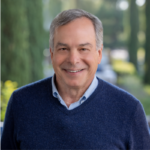
Jim Bildner
Jim Bildner is the CEO of the Draper Richards Kaplan Foundation, a global venture philanthropy organization that identifies, funds, and supports early stage social entrepreneurs working to solve difficult social and environmental problems. DRK provides entrepreneurs with unrestricted capital along with hands on operational support designed to help promising organizations build the capacity to scale their impact. Over more than two decades, the foundation has made nearly 280 investments in organizations addressing issues including healthcare, education, poverty, economic opportunity, criminal justice, climate, and community development. As CEO, Jim works across DRK’s portfolio, investment pipeline, donor community, talent network, and thought leadership efforts. Jim brings experience from the private, public, academic, and philanthropic sectors to his work. Before focusing much of his career on social impact, he spent 22 years in the private sector, including serving as CEO of two public companies and working as a consultant at Deloitte. His public service has included work as a legislative aide and speechwriter in the United States Senate, two elected terms as a Selectman in Manchester by the Sea, Massachusetts, and an appointment to a federal advisory panel for the Centers for Medicare and Medicaid Services. He is also an Adjunct Lecturer in Public Policy at Harvard Kennedy School, where his teaching and research examine social entrepreneurship, philanthropy, private capital, and how organizations can scale solutions to complex public problems. Jim also spent nearly two decades as a trustee of The Kresge Foundation, serving from 2005 until 2024. He played an important role in the development of Kresge’s social investment strategy, became the inaugural chair of its Social Investments Committee, and later chaired its Investment Committee. Kresge credits him with helping shape the foundation’s use of investment capital alongside traditional grantmaking to advance its mission. Jim has also served on the boards of numerous nonprofit and social enterprise organizations associated with DRK’s portfolio. He earned his undergraduate degree from Dartmouth College, a Master in Public Administration from Harvard, a law degree from Case Western Reserve University School of Law, and a Master of Fine Arts from Lesley University. Jim is the author of A Matter of Hope: Lessons Learned from Leaders, Changemakers, and Visionaries on Making a Difference in the World, published by Matt Holt Books in September 2026. Drawing on decades of investing in and working alongside social entrepreneurs, as well as experiences of success, adversity, and personal loss from his own life, Jim examines how hope can become a catalyst for action rather than simply an optimistic feeling. The book shares lessons from entrepreneurs who have built organizations addressing some of society’s most persistent problems and presents a practical path for moving from recognizing a problem to taking meaningful action. At the center of Jim’s philosophy is the belief that people do not need enormous resources, prestigious credentials, or formal authority to begin creating change. They need the willingness to see possibility, take a first step, learn from others, and turn hope into sustained action.