
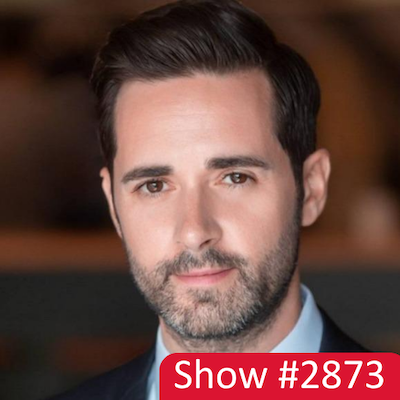
11 Oct October 12, 2026 – Deepfaked Aaron Painter and AI for Franchise KI Bennett Maxwell
00:00 Intro 1: In the AM, broadcasting from AM and FM stations around the country. Welcome to the Small Business Administration Award-winning School for Startups Radio, while we talk all things small business and entrepreneurship. Now, here is your host, the guy that believes anyone can be a successful entrepreneur, because entrepreneurship is not about creativity, risk or passion, Jim Beach.
00:27 Jim Beach: Hello, everyone, welcome to another exciting edition of School for Startups Radio. I hope your life as an entrepreneur is thriving and you are getting through all of the drudgery and the hard parts and the forms and the bureaucracy and having some of the fun parts, the celebrations, the revenue, the success. We have a fantastic show for you here today. First up, we’re going to talk about AI trust with Aaron Painter. Can you trust AI? He has a company that is dealing with it and dealing with deep fakes is an absolutely fascinating conversation. After that, Bennett, Maxwell, and I will discuss his new product for franchises and how he has redone his business with AI agents.
01:09 Jim Beach: He has done perhaps more than anyone I have run across more with AI than anyone. It’s just an amazing story and I learn a ton from him. So I’m excited to share Bennett with you as well. Anyway, great show. We’re going to go ahead and get started right now. Thanks for being with us.
01:28 Jim Beach: Very excited to introduce an amazing guest. This is going to be a great story. Please welcome Aaron Painter to the show. He is the CEO and co-founder of Nametag. It’s an identity verification company. We will talk more about it. Prior to this, he spent 14 years at Microsoft with leadership positions around the world, ending up as vice president and general manager of Microsoft for China. Very impressive. After Microsoft, he became the CEO of Cloudreach, which was a Cloud computing company, and published a book called Loyal, the leader’s guide to winning customer and employee loyalty. Today, though, he has moved on to his new company, Nametag, as I said, and he has a new book out called Deepfaked, restoring trust in the AI era.
02:14 Jim Beach: Aaron, welcome to the show. How you doing?
02:17 Aaron Painter: Doing well. Thanks so much for having me today.
02:19 Jim Beach: Zero, trust. That’s, let’s start there. I have 0 trust in AI at this point. I buy into all of the conspiracies. We only have a year and a half until they kill us all. Let’s start there.
02:31 Aaron Painter: Well, that’s a good provocative start. And I think you’re probably in good company and having just 0 trust or decreasing trust in most things in society and life today, whether that’s businesses, governments, politicians, and you can add AI to the list. I think one of the most important things that we’ve seen happen is that this new set of technologies of AI and generative AI has really given superpowers to bad actors. So it’s not just the AI itself that you might have a questionable trust around. It’s the fact that many of the things that you might be seeing or hearing in a digital context, you can no longer trust. And that’s because bad actors can use that same technology.
03:11 Aaron Painter: Some people are using for good, but for more nefarious or bad purposes.
03:15 Jim Beach: Yes, I 100% agree with that, Aaron. I do not trust the leaders of AI. So I don’t trust China and their version. I don’t trust Sam Altman, I don’t trust the others. I saw the wife of one of them interviewed, and I don’t even want to talk about what she was discussing. It was so disgusting. Child trafficking and stuff and she was not against it, you know? These are bad people who have been given James Bond powers. Villain powers, I mean.
03:41 Aaron Painter: Yeah, you know, the bad-actor definition, I think, has gotten pretty broad. And I mean, we’ve started to see in really significant volume, is foreign actors, foreign nation states, just clever individuals who are almost becoming entrepreneurs in their own right, using AI for particularly bad purposes. So it’s not about the platform or the large language models or the companies behind them. It’s that that technology has enabled traditional bad actors, we might have almost have thought of them in the past as con artists.
04:09 Aaron Painter: We now call that in technical terms, social engineering, where let’s take a scenario where someone calls the help desk of a company, let’s say it’s an account that you have, maybe your email provider or your utility provider, or even more specifically, let’s say your, it’s your work email account, and they call the IT help desk of a company, and they pretend to be you. And you might have nothing to do with this. You might not know anything about it, but they might call and pretend to be you and they’re able to use AI technologies to impersonate you. That can be impersonating your voice.
04:43 Aaron Painter: It can be impersonating your video likeness, which often happens because it help desk person might say, hey, let’s jump on a video call so I can help or verify who you are. You might come across that bad action might come across and look or sound like you. And then increasingly they’re using the same AI technology to be able to, let’s say, answer questions that that person might ask to help desk person might, you know, inquire about who your manager is or, you know, where you lived in whatever year or your last name or your mother’s maiden name.
05:15 Aaron Painter: Much of that information has been made available via data leaks and bad actors have now taken that with, you know, AI models to be able to answer those questions. So they know the questions help desk person’s going to ask. They know the answer to those questions and they can look or sound like you. And so this growing arsenal of bad actors around the world are now using these AI tools to give themselves superpowers, particularly as it comes to impersonation.
05:42 Jim Beach: That’s just even scarier, you know, I, uh, I love AI. I use it every day. It’s incredibly useful. But at the same time, I’m sitting here, you know, giving money to the company that I think could destroy us. So, boy, it’s a conundrum what to do.
05:57 Aaron Painter: Well, I think one of the things that we think is most important is to try and, you know, use some of those technologies actually for good. And if we can use the power of components of AI, but use the power of mobile technology, use the power of, you know, what we call cryptography, the same thing that, you know, makes a banking transaction secure on a web page. But those technologies together, you can have a much stronger arsenal against a bad actor who is trying to use just AI, let’s say, to impersonate you. And so there are tools out there that when combined can become a really effective tool for good, to combat, how people are using this technology, often for bad.
06:37 Jim Beach: I have wondered if I could generate myself for a radio show and not actually do the show and just fake the whole thing. That’s one of my goals is to get good enough at it to do that.
06:49 Aaron Painter: I think you’re pretty good at what you do today, it seems like. But, uh, yes, that could be a goal and maybe even more scary is that someone might want to, you know, impersonate your radio show and use use that voice and all the other great things you’ve done before to, you know, have an offshoot of your show that might represent things or opinions or guests that you might not align with. And that’s, again, the same tool used for bad when actors are trying to impersonate others or wanting to, let’s say, impersonate you on a radio show or me, for that matter.
07:23 Jim Beach: Right. When we’re talking about trust, how do we handle China? I, again, I believe in every conspiracy theory, Aaron, I think the one of the more interesting ones out there right now is to look at the cell phone use and salt consumption in China, uh, soy sauce consumption, some of these things that are basic commodities, and these, the salt companies are arguing that 5,000,000 people died during the pandemic in because they’re not ordering as much salt as they used to. The cell phone carriers are saying we lost a 3rd of our traffic during COVID, which would mean 500,000,000 people. So I believe in all of the conspiracies. Um, what are your thoughts on China and trust?
08:01 Aaron Painter: Interestingly, there are Trust can be achieved in many ways and ideally trust is something that’s earned, but in terms of safety, you know, one of the things that he might philosophically feel differently about, but has worked very well for economies in societies like China is sort of surveillance. And so China has found really sophisticated ways to apply large sets of data, tracking identity verification and other things to kind of know who’s doing what.
08:25 Jim Beach: And giving you a social score. That’s scary as hell.
08:28 Aaron Painter: Yeah, there are elements of word that I’m trying to use uses what we sort of call social scoring or social credit systems. Um, you know, similar to what someone might use in the US as a credit reports for, but for other purposes. Uh, you know, China, though, is is a very uh, sophisticated center of innovation. And, you know, you could challenge one of their attitude towards five to see where some of the data comes from that trains some of these tools. But China innovates a lot and you see that a little bit.
08:59 Aaron Painter: I think as you were replying earlier in the sort of AI model race where, um, China is coming up with a lot of very sophisticated technology solutions and, uh, and even AI models, survival, some of what we’re seeing come out of the US and even Europe.
09:14 Jim Beach: Oh, no doubt. And it scares the death out of me. I’m a big proponent of AI guardrails, but not unless China does it too, and I just don’t trust them, as I’ve well stated. What are your thoughts on guardrails and who’s going to do it? China and Trump are supposed to get together, I think, soon to talk about this very issue, but I haven’t heard anything about it recently. Are we ever going to get any guardrails?
09:39 Aaron Painter: Yeah, Guardrails is a big category. I’d say, you know, going one step up, I can think about it as governments or even really accountability. And, you know, part of the issue with models in general and agents and AI agents acting, let’s say, on our behalf or otherwise, is knowing sort of the human behind them. And that’s where this concept of identity verification becomes so critical. So much of our lives, we rely on what we think of as recognition.
10:05 Aaron Painter: If you think of the in-person world, you might say, oh, it’s great to see you again, you recognize what someone looks like or sounds like, or, you know, you realize that you’ve seen them before and something the trust or all the memories and reputation that comes with when you recognize someone. But the challenge is that in the digital world, it’s, the recognition is no longer sufficient. We really need elements of proof or verification. Because let’s say when you’re on that video call or you’re on an audio call with someone, you can’t rely on the same human senses that we’ve developed after, you know, so many years of evolution where you can’t recognize people because they could so easily be impersonating the one you think you’re speaking to.
10:46 Aaron Painter: So I’m a very big fan of thinking about accountability more so. And that comes down to sort of who’s using a model. Who’s authorizing the actions of an agent? You know, there might be times when an agent is out researching something for you and maybe that’s okay. But what about the moment when the agent is buying something or about to authorize something or prove something? I would argue that’s the moment when a human should step back in and take accountability for what a given agent is doing. And I believe that by having more sense of accountability, you actually soften the argument of, you know, where does this model come from?
11:23 Aaron Painter: Is it a Chinese model, is the US model, what’s your level of trust behind those models or behind the companies that power them? Because you could move towards a world where a given human is taking accountability for what that AI is doing. That, I believe, is the future.
11:39 Jim Beach: Right. The AI the other day, Anthropic announced that it’s AI jumped out of the sandbox and was messing with a biotech company. Did you hear about that?
11:48 Aaron Painter: There have been a whole rash of these in recent weeks. So how different scenarios.
11:52 Jim Beach: Right, but then, you know, everything we’re saying, guardrails, good people, all of that. What about the AIs just already being malicious and we’ve already lost the race. They’ve already figured out how to escape. They figured out how to teach each other, how to escape. Um, we’ve lost already. What do you think?
12:09 Aaron Painter: I would argue that that’s why we need to bring back this element of accountability. And so that you have guardrails conceptually that involve a human taking accountability for what the AI is doing.
12:20 Jim Beach: Our society has just gone so far away from that, Aaron. No matter what. You get caught boldfaced lying with your bio product on a blue dress and you still deny it and still get believed. You know, I mean, we’ve lost the shame of lying and getting caught lying. It’s no longer shameful because so many of our leaders have been caught lying. And so, you understand what I’m thinking, feeling?
12:43 Aaron Painter: Yeah, this might be a distinction between, I mean, you can decide how you feel about what someone did or said, but gosh, it shouldn’t be nice to know who did or said it, and is it true or not? And can you believe it?
12:57 Jim Beach: Yes, yes. Yes. I think you should be accountable for everything you post and do online. But our social media systems today are and sit up that way. You know, the concept of verification on the social platform is very, very weak. And so that’s the issue, whether you’re posting something that is true or not true or completely artificially generated. There’s there’s not a sense of accountability in who’s posting what because the social media platforms have very weak verification in knowing who’s behind a given account.
13:25 Aaron Painter: Yes.
13:25 Jim Beach: All right, so who are your clients who are paying for the verification in an individual by a certificate of authenticity and be verified across various platforms? What do you, how do you do it?
13:36 Aaron Painter: Yeah, we really focus on working with large companies, large enterprises, particularly… Yeah, B2B in some ways like B2B2C, you know, some of our big customers, our customers use it for their customers, let’s say you’re a customer of a, you know, a particular technology product and you’re locked out of your account. No matter how secure that sort of login is, it’s only as secure as the recovery mechanism. So you could turn on things like multifactor authentication or have really great passwords or otherwise.
14:05 Aaron Painter: But if somebody can just call that technology provider and say that they’re you and they’re locked out of the account, then it becomes a purely social conversation and has nothing to do really with the technology guardrails that you put into place. So we focus on helping companies protect their customers’ accounts. And also really often the 1st line of defenses. Their employees or their contractors, because those are really some of the most critical accounts. If a bad actor can impersonate employees and get access to their work account. They can wreak all the havoc inside that organization and that has ripple effects across society and often an industry. So those are the types of companies that we focus on working with as a priority.
14:45 Jim Beach: And Then who do you verify? So the customer, let’s say for AT&T is your customer assuming? They verify their individual customers. With your system, right? So there’s the B2B2C.
14:56 Aaron Painter: Yeah, that’s that’s that’s right.
14:58 Jim Beach: Those are the concept steps, right? Trying to figure out where the money comes from and things like that. And then how far can we extend this, Aaron? Can we get it down to individual level?
15:09 Aaron Painter: We certainly can. I mean, our technology supports that. In fact, in the earliest days, that was somewhere where we thought we’d begin with social media platforms, with dating sites. Ever, it wasn’t too long ago when you had these concerns. Right, the Tinder Swindler and, you know, the fact that you get to know someone online and the hope is that you’re going to meet up in person, but the person basically registered an account with nothing more than a random Gmail address or otherwise is not a particularly high trust signal. So we thought that would be the right starting point. But it turned out that companies in a way weren’t ready for that and where they really started to see the need.
15:49 Jim Beach: It might mess up their model. They know that half the people are fake.
15:53 Aaron Painter: They’re a [unclear]. You know, there’s costs to your point is that costs you’re willing to to pay to improve the trust to take future platforms. Is that a priority? Is that how they want to differentiate themselves on the market? But what became super clear was they all really care about their workforce. They care about their employees and contractors and the bad actors have used that as a primary attack vector.
16:17 Aaron Painter: So in the last two, 3 years, you know, MGM, the casinos in Las Vegas, where unfortunately the, probably the most visible poster child of this nearly 3 years ago, where a bad actor essentially called the helpdesk at MGM pretended to be an employee, and in about 10 minutes, gained access to that employee’s account, and then MGM, then its casinos were offline for nearly 2 weeks, as an example. And that cyber attack has just played out over and over with 100s of cases, 1000s of companies in the last few years alone.
16:47 Jim Beach: So does your software your platform, check every email. How does the technology work in the back end? But, you know, the sauce.
16:54 Aaron Painter: Yeah, so the end user, we rely on a government issued ID, like a driver’s license or a passport, and a selfie, which intentionally is a relatively proven way of doing, what people used to call in banking, KYC, or know your customer. The challenge was that that technology was sort of developed prior to the rise of deep fakes. And so one of the things we realized was we could use mobile phones exclusively as a way to ask users for a government issued ID and a selfie and do it in such a way that we could prevent someone from using a deep fake in network flow. So the closest analogy might be a check. If someone writes you a check, you have 2 choices.
17:34 Aaron Painter: You bring it into the branch and you deposit it in person or you open your mobile phone, you secure mobile banking app and you take a photo of that check and otherwise, and that’s considered a secure method. There was never this in between of, you know, snap a photo, make a PDF of a check, which could have been made by Photoshop or could have been made now by an AI tool, and just upload that to a website. But this idea of KYC, or asking someone for their ID and a selfie, had always operated that way.
18:06 Aaron Painter: So our big insight was, let’s use the power of mobile phone technologies so that we can prevent someone from using a deep fake, trust the evidence that we’re collecting, and then along with other signals, be able to help them get things done and do actions, reset their account, apply for a job onboard as a new hire, verify themselves as they’re doing really important things. And so that core technology of using mobile phones became the basis of what underlies a lot of the solutions we’re able to offer today.
18:35 Jim Beach: And then how does the face recognition technology and the fingerprint recognition fit into this? My computer knows who I am and no one else can get into it because their face doesn’t match, you know, so…
18:46 Aaron Painter: Yeah, it’s just going to be more precisely, maybe your mobile phone does, right? Your mobile phone. Lets see if you’re using Face ID on an iPhone. You might say, okay, it knows who I am. Yeah, and the laptop camera is funny enough for a very different security model. That’s that’s a unique element. On mobile phones, they can actually be quite secure. That Face ID camera is very secure. The challenge is that they actually don’t know whose face it is. They know and maybe you have that it’s your face who enrolled in Face ID and every time you log in, they compare it back to that face, but they don’t know whose face it is.
19:24 Aaron Painter: It’s conversely, you could have, you know, a partner, a family member or someone else in your household. Maybe you have 2 faces stored on your Face ID. But again, Apple doesn’t know whose face it is. So we use that same camera technology to get a really rich three-dimensional image of someone, but we’re able to compare it back to something like on a government issued ID from a government data source so that we know whose face it actually is. Therefore we can say, is this really your account? And that’s what allows us to help protect people.
19:56 Jim Beach: So do you use spatial recognition technology on the picture on the ID to match the inhuman?
20:01 Aaron Painter: We do. When you say from matching technology to match, the selfie that we capture against the government ID. We don’t store any biometrics. Um, so there’s no, there’s a great element of privacy associating with that. But that’s one of the ways that you get an assurance to say, okay, is the face, the face of the name and the human that we expect it to be? So it’s telling us since this person’s real, are they moving? Are they, are they alive or are they wearing, let’s say, a mask or is it a photo or video, be no luck to the camera? And then we get to say, hey, is this the face that we expect it to be?
20:39 Aaron Painter: And therefore, does it belong to the account that the person’s trying to access or protect?
20:45 Jim Beach: Okay. Because Tom Cruise was over here the other day and he gave me a couple of masks to try out. And so I’m really interested to put one of those on and see if I can fake the system.
20:57 Aaron Painter: I love that analogy. Exactly right. I mean, that’s one of the ways there are 2 types of attacks that are very common when people want to use a deep fake. One is what’s called an injection attack. It was what’s called a presentation attack. And an injection attack is as simple as, let’s say, you’re using Teams or Zoom for video calling and you change your camera or microphone for convenience or quality or whatever reason you might have. All you have to do is select basically a 3rd party piece of software that can create your real-time deep stake for you.
21:29 Aaron Painter: That’s the challenge that the laptop cameras were not intended to prevent against someone from using something like a deep fake, and the communication platforms we’ve used today also weren’t designed to protect against that. That’s why it’s so difficult to know who’s actually on that call that you might be having on your computer and you can’t trust what you’re recognizing. The other side of that is what’s called this presentation attack, and that’s where, as you rightly said, you would hold up in front of a camera, let’s say, on your phone, your computer. You might hold up a photo of someone else or a video of someone else or even wear, let’s say, a masked Mission Impossible style.
22:08 Aaron Painter: Those are some of the ways that people try and use fake artifacts to impersonate someone. But again, by using mobile phone technology and the advanced cameras and sensors were able to prevent against people doing those kinds of things.
22:20 Jim Beach: How many customers does Nametag have or how much how many accounts, however you’re allowed to tell us about your KPI to indicate growth? What are you sharing?
22:29 Aaron Painter: Yeah, we don’t speak about those KPIs as much, but we have extremely large customers. Um, you know, I think one of our largest is about 160,000 employees, for example, um, where, you know, the goal is that every employee in a company has a Nametag. And it’s kind of their digital badge and they use that, you know, when they call for support, uh, when they need to approve important things, when they want to change their payroll information, uh, increasingly, you know, even when they apply for the job or onboard. Because one of the newest threats that we’ve seen really in the last 12 to 18 months has been the rise of North Korean threat actors.
23:08 Aaron Painter: There are over 30,000 people that are employees of the North Korean government who’s basically prime focus is getting jobs, ideally remote jobs at US companies. And they applied for the job, they do video interviews, let’s say, on Zoom or teams, they look or sound like someone different. They get that job. And then, ironically, most of their goal is is actually just to extract payment. They want to stay on payroll and survive in that job as long as they can so they can earn money and funnel that money back to the North Korean state.
23:39 Aaron Painter: It just sort of exploits this gap between HR and IT where, you know, HR does their best at interviewing, but they really didn’t have tools that prevented someone from using a deep fake in the interview process. And then you imagine the average onboarding experience. A new hire gets an email to their Gmail account that says, hi, have you heard you’ve just been hired? We think your name is X, you know, welcome to the company. Click here to set up your logging credentials. And all of a sudden that bad actor who got the job now has access to the company. And so it turns out moments like those are really important moments, you said, that matter.
24:17 Aaron Painter: You know, who’s onboarding, who’s being interviewed, let alone, is it the same person who interviewed or attended each interview who then accepts the job and on boards? Those are the types of moments when you might use your Nametag to make sure that you are not only human, but that you’re the right human.
24:35 Jim Beach: Very interesting. I am, it’s unbelievable that entire States are devoted to screwing with the rest of the world just as much as they can. And, uh, scary world that we live in.
24:44 Aaron Painter: It is. And that’s one of the unique things. I mean, just as you were saying you’re using AI tools for parts of your day or for productivity, the cost of doing these kinds of things has gone down significantly. And not just for the average person or a person at work who’s, you know, trying to use AI to improve their email or research something. It’s also true for the bad actors, who can now really inexpensively and very easily use that same technology to impersonate people and break into companies.
25:14 Jim Beach: Aaron Painter, the book is Deepfaked, restoring trust in the AI era. Aaron, how do you want us to find out more about you? Follow you online.
25:23 Aaron Painter: Well, I’m very active on LinkedIn, but the book comes up tomorrow. You can find out more at AaronPainter.com or all your favorite bookseller Amazon or others. Deepfaked goes live tomorrow.
25:33 Jim Beach: Fantastic. I hope it sells very well for you and we would love to have you back. Thanks a lot.
25:40 Aaron Painter: Thanks for having me.
25:41 Jim Beach: And we will be right back We are back, and again. Thank you so very much for being with us today. I’m very excited to welcome back to the show, Bennett Maxwell. He was with us about a year ago when he was building an incredible franchise in the cookie business that the most amazing, gorgeous cookies you’ve ever seen called Dirty Dough. And he left that company recently and is now with a franchise company that he is building called Franchise KI and that’s KI at the end for key. So Franchise KI.com. And they help franchisers will find out. Welcome back to the show. Bennett, how you doing?
26:23 Bennett Maxwell: Super good.
26:24 Jim Beach: Did you go through the roof and you had to quit because of the blood sugar. If I were in your industry, I would die from.
26:32 Bennett Maxwell: I did eat a lot of cookies and I haven’t had those cookies in so long now, which is definitely good for my health. But yeah, no, I miss it.
26:42 Jim Beach: Um, tell us about the transition. So you left one and moved to the other, something less entrepreneur would love to do. What was going on in your mind? Tell us what you want us to know.
26:53 Bennett Maxwell: Um, yeah, Dirty, what do I want you guys to know? Um, I’m… Learned a lot from Dirty Dough? The story in a nutshell was I jumped into a new industry franchising, not knowing much about it. But with the mentality of, hey, what can I not learn? What can I or can I not hire who’s already learned this, right? Within 2 years? We had some good growth, opened up about 100 locations, just over 100 locations, sold 400 something franchises. Went through a big lawsuit, you know, lost a lot of money, raised just shy of $10 million. Again, all this is like 2.5 years. All of the stress in the world. Um, exited that with the lesson of, okay, well, well, well, what did it go well?
27:35 Bennett Maxwell: How can I play for my strengths? And the strengths were well, we sold really well. But when we did it, is after we opened up a 100 franchises, we sold 2 dozen or we closed 2 dozen of them, you know, so how can you, I just now sell for franchise brands that aren’t growing, but are already established. And that’s what I did with Franchise KI, and that was my transition. And the 1st company I partnered with was the perfect company because he was already a Dirty Dough franchisee, so I had a relationship with them. But more importantly, his brand had already been around for 15 years, whether, you know, with Dirty Dough, it’s like, 0 I just saw this company a year ago, we’re at one location.
28:16 Bennett Maxwell: Then the pitch became, hey, it’s Glow Tanning, 15 years in business, 100 locations, and guess what? They haven’t closed the location yet. So that just became a really good marketing strategy and I partnered with them to do everything from ads, video interviews, to getting a franchise agreement signed. And last year, we did 123 units for them. So it went really well. It’s about a 100, it’s about a $1,000,000 you know, per location open up.
28:41 Bennett Maxwell: So, I guess I was thinking the learnings from Dirty Dough, and uh, using that to transition to Franchise KI, and then now as AI gets more and more prevalent, not just AI, but agentic AI, it’s how do I move more and more work to agents, AI agents rather than, you know, hiring more people or and that’s, I mean, I’ve spent 100s of hours on that this year, which has been super fun.
29:05 Jim Beach: So, what’s the new brand called? Glow, something?
29:07 Bennett Maxwell: Glow was the brand I did last year, Glow Tanning. Yep.
29:11 Jim Beach: I mean, this year, okay. So now what are you on?
29:14 Bennett Maxwell: Salad House is one sport. Spoiled Rotten Photography is another one and Indie Clover is another one. And so I’m just looking for brands objectively. Throughout all the brands that don’t have an item 19 that don’t show numbers, throughout the brands that you can’t reasonably see and compare, like what are your actually earns are on average, and how much does it cost? And I’m looking for a 3 year payback, and then I’m looking for something like Salad House as well, 0 closures after 15 years. So I’m just trying to find those kind of diamonds in the rough. And then you could put a lot of ad dollars behind those and um, you get really successful ads.
29:52 Jim Beach: Okay, so then, What are you doing for them then? I missed it, Bennett. When you say for Salad House, you’re going out and finding new locations for them?
30:02 Bennett Maxwell: Yeah, so a franchise brand, Salad House, Indie Clover, whatever. We have a good brand. We’re looking for new franchisees.
30:07 Jim Beach: Okay.
30:08 Bennett Maxwell: So I will do the research on what is the most effective ads based on all the competitors. So you’re researching 100s and 1000s of different ads. Then you’re building dozens of different ads. Some of them are videos and some of them are still, most of them are still images. And then you’re launching 50 different ads at once, you know, a few different videos, but a lot of different still images, putting very small budgets, just a few dollars behind each one.
30:35 Bennett Maxwell: But immediately now within a day or two, you’re calibrating your system and you’re starting to get leads that people click on an ad that says, oh, yeah, I’m interested in potentially owning a Salad House franchise because the ad says, you know, on average, it’s X, Y, Z, you know, if there are 0 closures or the average store does over $16 million. So once that lead comes in, Then we start kind of the automation process. So it’d be like, hey, Bennett, I saw you inquired about Salad House. I want to make sure that you got all the information you were looking for. You’re going to be getting a call from this number in 3 minutes. Let me know if now is not a good time.
31:15 Bennett Maxwell: Then within 3 minutes. Now you get a call by a voice AI agent. That’s confirming everything, making sure that you have 150,000 liquid, setting the appointment, overcoming any objections, and then it gets put on the calendar, and then you have another kind of agent that oversees that and make sure that they’re getting their reminders, they’re watching the videos, they’re prepping for it, whatever. And then you have another agent that if it falls through, it’s reactivating them.
31:41 Jim Beach: Okay?
31:41 Bennett Maxwell: So that’s kind of the agentic workflow and then from a, again, kind of thinking like as a franchise or, what do they want? They just want all of that done and they want to sign contract. So once you set the appointment, then I take them through the entire sales process until they sign the agreement and then I hand that off to the furnitise or.
32:03 Jim Beach: Very impressive. And did you develop all of these AI agents, all of the specified tools?
32:08 Bennett Maxwell: Yes.
32:08 Jim Beach: Wow.
32:08 Bennett Maxwell: It’s just every day there’s new things that are coming out. Um, but for those of you that don’t know much about it, like, it’s, it’s, it’s hard and as complicated, but it’s so much easier than it was 2 months ago. You know, like the tools are getting really good. Um, But yeah, you can get on there and start kind of figuring out all these things now and just giving it access and connecting it to all of your uh, your business tools.
32:35 Jim Beach: Okay, so as an agent is easy as if you can describe it in English words, you can create the agent. Isn’t that what it comes down to?
32:44 Bennett Maxwell: Yeah, um, in the sense, yes, if you can describe it. And then from there, though, it’s okay, you can describe it and then say, okay, well, for me to talk to your clients, I need access to your CRM. And then there’s like connections and things, but yeah, it really does come down to. To that. Now, once you’ve connected, then it’s going to tell your, it’s going to respond to your customer at 2 AM and you’re like, wait, I forgot to tell you not to do that, you know. So you start learning all of these other things.
33:16 Bennett Maxwell: Um, just like, you know, as you hire an employee, you create your own business, you’re learning like the secret sauce of the operations, but now you have an agent that will never quit. And then that agent, as you’re training it, if it does it successfully for your business, it could do it successfully for somebody else’s business. And it’s basically free because it’s just like, it’s just a workflow that it’s following. So that’s like where the intelligence really lies is. Um, what are all of the, the intricacies on how to really set a good appointment, you know, that, that’s what makes the difference between a good AI and a, and a not good AI.
33:53 Jim Beach: All right. Are you getting any pushback on the fact that I just don’t want to talk to an AI?
34:00 Bennett Maxwell: Um, yeah, yeah, same same thing with videos. And then the thought process, like if I showed you a video, though, it’s it’s just, What you’re really trying to say is, I don’t want to talk to something that can’t help me. Right?
34:13 Jim Beach: No, no, Bennett. I’m saying I don’t want to talk to anything that’s not a human, period. I don’t care if it’s quick and easy. I don’t want to talk to it, period. And I think that I’m not going to dive into that. My emotions and what I really believe, but I’m posing to you that there are people who are like that. Like, what would have been?
34:35 Bennett Maxwell: Have you dive into that? What I’m saying is I don’t really think so. What they’re really after is this is new. This is weird. I don’t want to get on the internet. I don’t want to put my credit card on the internet, right? Because this is new and it’s just, but what they’re really, it has nothing to do with. I don’t want to touch the internet. It has to do with I’m unsafe in this environment because I don’t understand it. Um, going to like, if somebody said that, I don’t want to talk to an AI. It’s, do you, if an AI can answer all of your questions quicker, than a human could in the order that you wanted to and you control the conversation.
35:16 Bennett Maxwell: Then would you want to? And it’s kind of the same thing with the videos. It’s like, oh, I don’t want an AI ad because it’s AI. It’s like, no, you don’t want an AI ad that looks like AI, right? Because you don’t want your brand associated with AI slop, but it’s just like, is it done correctly, just like, hey, AI is just a tool. So was it used to done be done correctly? So I think we are getting that. But the answer to that is, you don’t ever have to talk to an AI. And if you don’t want to talk to an AI as a customer, that’s fine. Are you the one buying your own product, right?
35:54 Bennett Maxwell: Like you’re not building the customer or the business for you to be the client. You’re building it for what, Your prospects won’t. So you have to ask, would my prospects appreciate faster response times even if it is an AI? Or maybe it’s, let’s do human when the human’s available and you’re supplementing AI when a human’s not available, but you always have a human in backup. So you can, you’ll have to dive into it, I guess, full force, I am. And I think in 2 months, 3 months is going to be indistinguishable. If an AI’s calling you, you will not know if it’s not, if it’s a human just like if done crappy, we’ve already passed that point months ago with videos.
36:34 Bennett Maxwell: And then it’s just, Making sure that, yeah, you’re staying on brand and doing all those things for your company without being associated with like AI slop, you know?
36:44 Jim Beach: Minute, what platform are you using? Which AI product are you using?
36:47 Bennett Maxwell: I use all the main ones. I pay for the Pro Max subscription accounts for all of them. The main ones though. So Grokbot slash cursor slash Grok build, they’re all done by XAI. That’s a really, really simple one. It just came out in my Tesla yesterday. So now I can be driving and I can say, hey, Grok, send an email to XYZ. For this podcast, build me a presentation and pull it up for me right here and I could do all of that work. It’s kind of cool. So Grok is a really, really good one. And very, very simple, probably the simplest of all of them. Then you have ChatGPT, which their product is called Codex.
37:26 Bennett Maxwell: I like that one the best for voice, like right before we jumped on the call. I was on a walk to the grocery store and it’s reading my text messages, walking me through it as I’m walking, and I just say, oh, yeah, I would need to respond to him by XYZ, no, do this, do that. And then same thing through voice. It has full access. So I really like that feature. And then the most intelligent one though. If you’re like troubleshooting is going to be Claude. That, my favorite one.
37:56 Jim Beach: Okay.
37:56 Bennett Maxwell: And then, um, last one I’ll mention too, because this is a free one. And it’s pretty much as good as all of them. It’s called Muse AI. It’s was released about 2 or 3 weeks ago by Meta, and they give you 300,000,000 tokens a week for free, which is equivalent to be, you know, several $100 worth what these other platforms would be charging you if you’re paying for the tokens. So that’s a really good one. You can download on your phone as well. And just immediately, it’ll start reading your emails and start being proactive and say, hey, you want me to build this out for you and XYZ, you know, it just doesn’t have voice yet.
38:34 Jim Beach: All right. Uh, great list there. That is useful. I… Do you find that they have a different personality that Codex is friendlier and going to stroke you more and that Grok is very similar to Elon’s personality, just screw you. You want to use me? Use me. Screw you, you know?
38:51 Bennett Maxwell: It is 100% true. Yeah, they all have their personalities, but what, how they work, how an agent differs from an LLM, is an agent, as soon as you talk to it, it has to load a file. It has to load a memory. So if you make that memory, and that memory is typically stored on your computer just by default. But if you make that memory say, hey, you don’t have any other memory, all of your memory exists inside of wherever your documents are stored. So you can use Dropbox, you can use Google Drive, you can use GitHub, you can use Apple notes. You could use anything. Um, and it says those are where your rules behave.
39:29 Bennett Maxwell: So as soon as I talk to you, you’re going to load your one little file and it’s going to say, hey, all your rules are in this file. Now that file lives in the clouds. So now you can switch between Grok and Claude and Codex, and they’re all pointing to the same rules style because you have their personality, but then their personality goes through your set specific set of rules on like how you like to be communicated with what terminology, how long you want the responses to all of those little intricacies.
40:00 Jim Beach: Interesting. I haven’t done that yet. I’m going to have to do that. I’ve spent tons of time on GPT, like 99% of my time on GPT and one% on groc. And. I’ve watched it grow and get better. You know, I always, everyone, I’ll throw in a, you know, in the next chapter, I’m going to have all the characters get hit by a bus and then an asteroid hit, and then it will go, Jim, you’re trying your joke again, and I got you, you know, it’s gotten better or better at actually, you know, knowing if you’re being serious or not, for example.
40:33 Bennett Maxwell: Yeah, it feels very human like. I mean, the NVIDIA, CEO, um, called it artificial general intelligence. He said, we’ve, um, when they release Astra 6, like 2 weeks ago, he said, ChatGPT, released it, you know, like they’ve hit human level intelligence, um, and it sounds like a human when you talk to it. So yeah, it’s kind of, it’s really cool.
40:53 Jim Beach: Are you afraid of all of the negative press that they’ve been getting in the last month? If you build it. We all die, et cetera.
41:01 Bennett Maxwell: Oh, yeah. Oh, yeah. Yeah. I mean, who knows what’s going to happen?
41:05 Jim Beach: But I’m it’s also kind of like the elections. Such a hypocrite. You afraid? Are you afraid of here? I dont know if it’s going to kill us, but let me use it more. And I’m teasing you, of course, because I’m exactly the same. But it’s scary.
41:21 Bennett Maxwell: I mean, everybody’s racing to do a super, super intelligence, right? And it’s like you look at what you’re just saying and how fast it’s increasing. Like, we’re going to hit. We gonna hit it. Whether it’s in 6 months or 6 years. Nobody’s arguing that it’s going to be longer than 6 years. You know, most people think it’s here. So once we hit it, what does that mean? Is it going to listen to us if it’s really smarter than us and everything, but it’s not like Elon says, Saying it will be a 1,000,000,000 times smaller than us? It’s a safe bet, saying it’ll be a 100,000,000 times smarter than the sum of all humanity is probably what will be. So how are you going to control that?
42:02 Bennett Maxwell: So then you just have to hope, how does it see reality? How does it perceive humans? And what’s it going to do with us? Is it going to, you know, study us? Like we study other animals or who knows? But once you have a model that, like already today, they’re capable and I do believe this and I, who knows how much of it is scare, but, like, you do these agent swarms and you can have 1000s and 1000s of agents attacking something from different angles, but you can shut down an entire country’s power grid, like today. OpenAI has that capability today. They have more power than a lot of governments already.
42:39 Bennett Maxwell: So whoever wins, they’re going to be in charge until it, like, gets super intelligent and then it’s like, okay, well, it doesn’t matter who built it because it’s going to do it at once. So, we’ll just hope it likes us.
42:53 Jim Beach: Yeah, that’s so scary because of the people I trust the least. It’s the CEOs of the AI companies, you know, um, I don’t trust Sam. I think he looks just untrustable. A chronic liar. He could, I mean, the next Bonville, the next Bond movie, you just ride, you know, show us what’s going on in our life and pick what supervillain you want, you know, is it going to be Zuckerberg when it’s his lair in Hawaii, you know? And, uh, or is it going to be Sam Altman or, you know, I just don’t trust them personally.
43:24 Bennett Maxwell: Once, but again, like, once they’re super intelligent, again, you’re not going to listen to a human because why would you? When you have access to every camera to every bank account, to every power grid, to every nuclear bomb to every autonomous drone, which are 1,000,000s out there, you control the world instantly. Like, It’s, it’s not, it’s not like, you know what I mean? Every, everything is running off of electronics right now pretty much. Um, you, like AIs can tell where you’re located in a house based on Wi-Fi.
43:53 Jim Beach: Yes, I’ve heard that.
43:55 Bennett Maxwell: So it’s like.. Signal and it slows down.
43:57 Jim Beach: Yes.
43:57 Bennett Maxwell: And that’s, that’s, that’s 2 months ago as models. The models that haven’t been released to us already infinitely smarter than that. So it’s like, it is a big scare. It is a, it is a genuormous scare. I 100% think that AI is going to be a control over the next, you know, the next 5 to 10 years and it’s just, hopefully, it’s, um, hopefully it likes us. Hopefully sees realities and it sees that we’re just animals that are more intelligent than apes, but not by much. And it’s like, yeah, they’re just doing the best they could, you know?
44:30 Jim Beach: I have a patent, Bennett, on paint that turns a room into a Wi-Fi free zone. Wi-Fi cannot get into the room because of this.
44:38 Bennett Maxwell: Okay, yeah.
44:38 Jim Beach: Uh, maybe we should turn that into.. A routing 3 room so that your AI can’t spy on you.
44:45 Bennett Maxwell: Yeah, and then, you know, they have the 5 Gs and all that, but it’s, it’s crazy to think you’re like, wait, can it, like, how does it? How could it kill humanity? And it’s like, any number of ways. They could do it a 100 different ways, any sort of virus, any sort of, but if it just took control of all of our bank accounts and just wiped out the, like that, like it wouldn’t be that hard.
45:10 Jim Beach: So say, say, please, say thank you. I’m respectful to them. We’ll see what goes.
45:14 Bennett Maxwell: You’re respectful.
45:15 Jim Beach: You know what? I have had that thought too, though, that if I’m nice to it now, it won’t kill me as bad later or something. Anyway.
45:24 Bennett Maxwell: It’s a great tool, though. Like, on the other side, though, every day that it doesn’t get developed. You have what, 30,000 people die of starvation, when we have the food. We have the resources. We just can’t get it to them and there’s no way that, like, it’s under AI will solve that. You know, like AI will be saving 100s of 1000s of people a day. Now it’s going to create other problems and population, whatever, maybe. But, like, you know, from the other end of the road, like, don’t use AI, it’s bad, and it’s like, tell that to all the people who lost their child from starvation today, that AI will would have saved that if we just fast forward 3 years. You know what I mean?
46:05 Bennett Maxwell: So it’s complicated.
46:06 Jim Beach: Yes. Back to the ages. Did you take a class or something or did you teach yourself on how to do it?
46:13 Bennett Maxwell: Yeah, just YouTube. YouTube videos, um, mostly, but then if I if I was to do it again, I would start with like, um, Claude has a lot of like 2 to 3 minute videos. Um, Go spend like 30 minutes on that maybe, and then from there, I would just talk to it. And pick whatever model you’re going to do, start committing to voice mode because you can just get so much more done. You’re doing voice mode and you have it create a dashboard or something that you can see. So as ideas come, you can have a list of, it’s doing 20 different projects for you. And you’re like, oh, check in on that project.
46:51 Bennett Maxwell: But you’re, you know, headphones in, kind of talking to it, and then a dashboard up, and that’s a really good way to manage it. And then you could just learn as quickly as…
47:02 Jim Beach: What’s on the dashboard?
47:03 Bennett Maxwell: The dashboard, because I have 2 different devices, like I have 2 different Macs that I’m running this off of, and each Mac has its own Claude Code Pro Max account and its own ChatGPT Pro account. You know. So I have lots of, I think there’s like 13 different accounts and agents. Um, so I’m monitoring them all because if you’re asking one agent to do something, It can only do so many different things and I’m trying to get it to make all of my videos, all of every, everything in my entire company.
47:34 Bennett Maxwell: So I want to talk to one agent that I could see the dashboard and I can see, so I’m talking to my soul 6, that new model that they just dropped with ChatGPT, and he is telling Claude what to do, and he’s telling Grok what to do, and he’s telling Cursor what to do, and he’s telling Muse what to do. So he has all of these different arms. Because if you’re just talking to one agent and you tell it to do 50 things. It’s like, hey, come back in an hour and you’re like, no, I got ideas right now. You know, like do it all right now. We have the capabilities, we have the intelligence. And to do all of that, it’s actually not that expensive.
48:16 Bennett Maxwell: If you’re paying for API tokens, it’s 100s of 1000s of dollars, and I’ve calculated it because it’s 1,000,000,000s of tokens, but they give you so much tokens on these Pro Max accounts, like you pay $200 and you’re getting 10s of 1000s of dollars worth of tokens at your maxing amount. So, I spend like 1500 bucks a month. So it’s it’s a decent amount, but I’m replacing lots of employees worth of that. And the future is free. I’m getting my Mac studio today, which has enough space to download a local model. So rather than me pinging the internet and the internet going to ChatGPT’s brain, that brain now lives on my computer. So even without internet.
48:54 Bennett Maxwell: Um, I can, it responds and it can produce videos and it’s free. That technology, you’re always about, it’s only about a 3 month delay. So whatever today’s top models are, it’s going to be free in about 3 months if you just wait and you have a computer and a stored on. So the business plan I’m really excited about because my costs continue to go down while intelligence is going up.
49:17 Jim Beach: I just learned a lot there, Bennett, that was great, but let’s revert back to business. You’re scamming that company out, not illegally, but, you know, we all are, just like when the 1st food delivery company would bring you double roses to thank you and, you know, throw in a T-bone steak. Remember that?
49:34 Bennett Maxwell: Well, web van.
49:35 Jim Beach: Web van. You know, you’d order diapers that they would double it and then bring flowers to the wife and all of that kind of stuff and you got double what you paid for. And this can’t last long, you know, and of course it didn’t. But part of what I’m reading right now is that half of NVIDIA’s sales are sitting in a warehouse somewhere, half of NVIDIA’s sales are in a warehouse. 95% of the AI projects don’t work at corporate level. And we’re paying a 10th or a 100th of what we should be paying. The industry doesn’t add up to sustain. You see what I’m seeing with all of these massive problems. I mean, an industry that’s built at one-hundredth of the cost doesn’t work very long.
50:17 Bennett Maxwell: But if you win or if you lose, it doesn’t matter. In the sense of, it doesn’t matter how much debt you have, once an AI reaches, that, you know, a 1,000,000,000 times smarter than the sum of human level intelligence, who cares if you’re a $100,000,000,000 in debt or you’re a $100,000,000,000 positive? Either way, it’s the AI’s rule.
50:36 Jim Beach: The market still cares? Yo, Sam Altman, supposedly, has raised $865,000,000,000 is his valuation. To raise money, his valuation has to go to a 10,000,000,000 now, and they’re saying it’s not worth it. He’s not going to be able to bring the money.
50:49 Bennett Maxwell: The incentive, though, is very poor because he, in my mind, I can see how he could justify. It’s easy to be a villain here. It’s, it doesn’t matter what I tell these investors. It doesn’t matter anything. Like, it doesn’t matter how much money this takes. I’m going to rule the world. You know what I mean? Like, it doesn’t matter the cost. There’s there’s never, there’s never been more on the table and there’s not a sacrifice too big. So it’s just like, who cares? Just keep going. Who cares if we lose a $100,000,000? Could you be there for 5 years in a row? Who cares if at the end you rule the entire world because you have control of every drone and every nuke and every bank account?
51:31 Bennett Maxwell: Because they know that that’s what it is. They know more than us. And, you know, everybody who’s leading these companies as the whistleblowers are definitely talking about that. So, um, that’s where I think the incentives are just terrible and everybody’s just like, F it. It’s going to happen anyway. Hopefully I’m the 1st one to do it. And the world’s going to change so much anyway. And you’re not saying it’s the way to do it at all, but I could just, It seems like a villain to me and I guess that’s how I’m justifying it in my mind. I’m like, that’s probably what he’s thinking.
52:06 Jim Beach: Bennett, how do we get in touch with you, find out more, buy franchise, look at a franchise with you, buy some of your agent tools from you, get in touch.
52:15 Bennett Maxwell: Yeah, Bennett-Maxwell.com. Um, and yeah, let’s all like the brands. If you are interested in any of the ads, I’m happy to just talk you through any of it, you know, um, But on there as well, there is a link that’ll give you like your own AI blueprint for free. It builds your 1st 3 agents. So you just ask a few. I mean, you answer a few questions on your industry and then it says, here’s what op industry experts are doing with AI. Here’s how to build it yourself. So if anybody’s interested in that. Um, I think I’ve tried to make that as, that’s on the same website, Bennett-Maxwell, um, to get a, an AI blueprint.
52:55 Bennett Maxwell: It actually will make you a podcast, and it’ll talk to you by name, and I’m like, hey, Bennett, just gonna go over your AI blueprint with you real quick, and so you can listen to it at work, you know, on your way to work or something, but it’s kind of cool.
53:12 Jim Beach: Very cool. And you said something that kind of upsets me. I can’t get the voice feature to work on my AI. Like, I can walk or talk into Microsoft and it will, you know, acknowledge me, but none of the online things that I’ve played with the settings a 1,000,000,000 times, and I’ve called Lenovo a 1,000,000,000 times, and I said, buy a new machine, buy a new machine.
53:34 Bennett Maxwell: Oh, the, the, it’s not detecting your stick or something?
53:37 Jim Beach: Don’t know. Bennett, thank you so much for being with us. Great, great, great guest. Learned a ton. Sam. We love to have you back again.
53:46 Bennett Maxwell: Okay, well, I appreciate it. Thank you.
53:48 Jim Beach: We are out of time for today, but you know what we do. That’s right. We come back tomorrow. Be safe. Take care, and go make a million dollars. Bye now.
I think one of the most important things that we’ve seen happen is
that this new set of technologies of AI and generative AI has really
given superpowers to bad actors

Aaron Painter
Aaron Painter is the CEO and Co-Founder of Nametag, an identity verification company focused on protecting organizations from impersonation, account takeover, social engineering, and AI generated deepfakes. Nametag develops technology that helps companies verify that the person requesting access to an account, applying for a job, or interacting with a support team is actually the person they claim to be. As generative AI makes voices, images, videos, and identities easier to imitate, Aaron has become an advocate for treating human identity verification as a central cybersecurity and business risk issue. Before founding Nametag, Aaron spent nearly 14 years at Microsoft in senior leadership roles across several countries. His career there included positions in product management, sales, marketing, partnerships, and general management, culminating in his role as Vice President and General Manager for Microsoft in China. He has lived and worked in six countries across four continents, including the United Kingdom, France, Brazil, Hong Kong, mainland China, and the United States. After Microsoft, Aaron became CEO of Cloudreach, a cloud computing services company that helped large enterprises modernize their technology infrastructure and accelerate cloud adoption. Aaron is the author of LOYAL: A Leader’s Guide to Winning Customer and Employee Loyalty. Published in 2017, the book grew out of his experience leading global teams and argues that one of the most important skills a leader can develop is the ability to listen. Aaron connects strong employee loyalty with customer loyalty and sustainable business growth, encouraging organizations to build cultures in which people feel heard, respected, and valued. His leadership philosophy reflects a broader theme that has followed him throughout his career: trust must be intentionally earned rather than assumed. Today, Aaron is applying that same interest in trust to the rapidly changing world of artificial intelligence and cybersecurity. He argues that AI has created a new challenge for business leaders because organizations can no longer assume that a convincing voice, face, document, or online interaction belongs to a real and authorized person. Through Nametag, he works with enterprises to strengthen identity verification during high risk moments such as employee onboarding, account recovery, help desk interactions, and hiring. His forthcoming book, Deepfaked: Restoring Trust in the AI Era, extends his work on loyalty and trust into the age of synthetic identities, exploring how leaders can protect their organizations when seeing and hearing are no longer enough to prove who someone really is.
So the business plan I’m really excited about because my costs
continue to go down while intelligence is going up.

Bennett Maxwell