
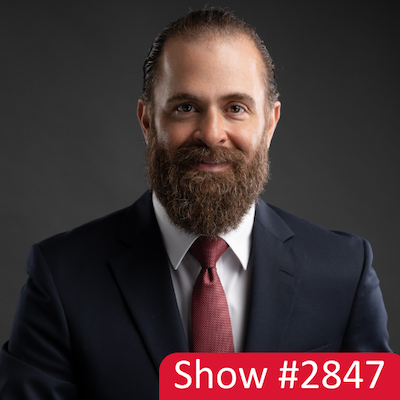
17 Aug August 17, 2026 – RE Super Show Ryan Gibson and Multifamily Investor August Biniaz
00:04 INTRO 1: In the AM, broadcasting from AM and FM stations around the country. Welcome to the Small Business Administration Award-winning School for Startups Radio, while we talk all things small business and entrepreneurship. Now, here is your host, the guy that believes anyone can be a successful entrepreneur, because entrepreneurship is not about creativity, risk or passion, Jim Beach.
00:18 JIM BEACH: Hello, everyone, welcome to another exciting edition of School for Startups Radio. I hope you’re having a great day out there, riding the roller coaster life of being an entrepreneur, figuring out AI, figuring out how to make millions of dollars using it. We’ve got a great show for you today. You know, and I am becoming more and more convinced that small businesses adopting AI much faster than the big businesses, the Fortune 500 and is being much, much more successful.
00:43 JIM BEACH: The stories that I hear that I believe are small business stories, the stories that we’re hearing for big business, just don’t include actual success. They include deception and trying to pull the wool over the eyes of the board while saying we have cool stuff when in fact they don’t yet. Anyway, let’s get back to our show today. Got a fantastic show today, too. Great, great entrepreneurs and great stories. First up, we have Ryan Gibson.
01:07 JIM BEACH: He is making a bunch of money in real estate as, in particular, in storage units in particular. He’s also a pilot and we talk about all of the ways that pilots have an advantage over the rest of us and work schedule and stuff like that. Anyway, that’s an interesting conversation. But then we get into talking about the storage units. And I learn a lot. That is absolutely fascinating. Ryan is kicking butt and really just picking a huge success story. Anyway, after that, August Biniaz is with us.
01:35 JIM BEACH: He is also doing the incredible success thing in real estate. He has got a company called CPI Capital and is also knocking it out of the ballpark and it just really reinforces this idea that at some point real estate is a huge part of almost every success story that you hear. You know, one of the ways we should look at entrepreneurship is find me the stories that are successful and let’s copy those people and follow in their footsteps, right?
02:00 JIM BEACH: And all of this success leaves, problems and all of these, uh, trite expressions. They’re all true, right? And so these are 2 great examples to learn from today. And we’ve got some amazing stuff coming up here in the rest of the week, including jumping back to Amazon. We haven’t talked about selling on Amazon in maybe a year or 2 or something, and we have an amazing guest talking about that. We also have.. Billionaire camping up. That’s right, secret billionaire.
02:24 JIM BEACH: I know if this billionaire secret, but we’re certainly not going to introduce him as billionaire Fred Smith. That would be rude. But we do have a billionaire coming up here in the week, and so we’re always excited about that. They’re just different people and learn different things from them. So anyway, great show. Thanks for being with us. We’ll get started here in just a second. You got to go buy my book, The Real Environmentalists, please. It’s arguing that you, the environmental entrepreneur, the one saving the earth.
02:52 JIM BEACH: Go buy it. Telling you to talk and no action on climate change?
02:57 THE REAL INVIRONMENTALISTS AD: Introducing the The Real Environmentalistss, the bold new book by Jim Beach. It’s not about activists, politicians, or professors. It’s about the entrepreneurs, real risk takers, building cleaner, smarter solutions, not for applause, but for profit. The entrepreneurs in the book aren’t giving speeches. They’re in labs, factories, and offices, cleaning the past, and building clean products for the future. The Real Environmentalistss is available now because the people saving the planet aren’t the ones you think. Go to Amazon and search for The Real Environmentalistss. Thank you.
03:25 JIM BEACH: Oh man, okay. We are back again. Thank you so very much for being with us. Very excited to introduce a really cool story. Please welcome Ryan Gibson to the show. He is the co-founder and president of Spartan Investment Group. They specialized in commercial real estate with a huge focus on self storage. He’s also done some residential development, infill development, and investor relations, some syndications, and navigating all sorts of other complex property transactions.
03:49 JIM BEACH: He is also on the side, a commercial airline pilot and has a show of his own, he is the co-host of Passive Income Pilots podcast. Very impressive. Ryan, welcome to the show. How you doing today?
04:01 RYAN GIBSON: Thanks. Thanks for the great intro, bud. I’m doing great.
04:04 JIM BEACH: I have a service while I will do that every time you come onto a plane or walk into a new room, a restaurant, and in the evenings, I will throw in world-renowned lover. Ryan Gibson is in the house, you know, whatever you want, Ryan. It’s whatever service you want, we will arrange it.
04:22 RYAN GIBSON: I love it. I love it. No, it’s great. Yeah, I, uh, I just, I just love being a pilot because, you know, pilots tend to look down on everybody. So.
04:32 JIM BEACH: Ah, that’s a good one. Yes. My favorite pilot joke is how do you know there was a pilot in the room?
04:38 RYAN GIBSON: I would tell you. How you heard it. No, I just tell everybody. I mean, you know, I mean, it’s what I do. It’s not even a joke. It’s like real life, you know, we just, we’re dying to tell you what we do for our for our careers. And I think…
04:56 JIM BEACH: It’s true with surgeons too. Because you hold people’s lives in your hands.
05:00 RYAN GIBSON: Well, you know, the difference between a surgeon and a pilot’s pretty, pretty fast, you know, um, if I may, if I make a mistake, everybody dies to include me. If a surgeon makes this mistake, he goes home at night or she goes home at night. So, you know, big difference.
05:16 JIM BEACH: You know, surgeons when I say that joke, they really don’t like that. I’ve been at some dinner parties where they get very offended when I say things like that. So I’ve just leaned in to say it more. But anyway. Before I was born, my father and a fellow doctor buddy of his bought an airplane, and we’re taking lessons and learning to fly and everything, and one weekend, the partner, took the airplane and flew into Florida’s mountain as if you, there’s a mountain in Florida.
05:44 JIM BEACH: He flew into the mountain in Florida. I think it might be like 450 feet of elevation or something. Killed himself and his whole family. And a month or 2 later, my dad was at the airport kicking tires for a new plane and their instructor came up and said, you know, Bill, he was the good pilot between the 2 of you.
06:05 RYAN GIBSON: Wow.
06:06 JIM BEACH: So they bought a house at New Smyrna Beach instead.
06:09 RYAN GIBSON: Wow. Well, that, I mean, hey, got to be upfront with people and Aviation’s a serious business and I appreciate people that tell you straight, you know, um, because it could save your life.
06:20 JIM BEACH: Were you drawn to it as a child? Is it what you want to do your entire life?
06:25 RYAN GIBSON: Not my entire life, but pretty pretty early on, 15 years old.
06:29 RYAN GIBSON: My uncle, um, wasn’t, no one in my family was a pilot, but my uncle was, uh, it was a car guy, and, uh, you know, worked on Mustangs, like, really loved being around my uncle because he was just, he’s just mechanically inclined and super fun, and he had a friend that had a buy-wing French trainer for World War 2, and, um, you know, for my surprise birthday, It took me for a ride and I fell in love and just the ability to just jump in a plane and go fly somewhere was just so awesome.
07:05 RYAN GIBSON: And then I, you know, heard about how straightforward the career was, you know, get your ratings at your hours, you know, and off to the airlines, then you fly for a living. And so that, that kind of what got me hooked, you know, kind of the, the, the focus path to getting there and then also just the, the, the freedom of flying is super fun.
07:27 JIM BEACH: And the schedule, very flexible, and a lot of us would consider very light. What is it? Why 20 hours?
07:33 RYAN GIBSON: Yeah, you know, what is it? Yeah, you kind of think of it this way, right? You, you, um, you know, for every hour you spend flying. It’s like, it’s it’s like a multiple of four. So, you know, if you fly, you know, a trip, you know, a 4 day trip, you’re going to fly, you know, 20 hours, you know, but really to go on that 4 day trip, you’re going to be gone 80 hours, you know, or 90 hours.
07:59 RYAN GIBSON: So, you know, you gotta think of, you know, but you have about half the month off. So, you know, you have, you know, when you’re off, you’re off and that’s great because there’s no paperwork and things to do and people to answer to. Uh, but when you’re, when you’re flying, yeah, you’re not flying many flight hours, but you’re, you know, walking through terminals and getting transported to hotels and overriding cities and so you’re kind of gone.
08:25 RYAN GIBSON: And, um, but, you know, when you’re in your layovers and you’re, you know, you’re kind of down, you get a lot of downtime and, you know, that’s a great place to kind of learn, start a business, listen to a podcast, pick up a new skill.
08:39 RYAN GIBSON: And that’s where I really learned leaned in and started learning about real estate, you know, over 15 years ago now where, you know, I’ve been an airline pilot for over 20 and, you know, in my layovers, I was like, great, all these podcasts, webinars, things you could be on, real estate, you could go see people you could meet in layovers and, you know, it becomes like a really nice career to have a 2nd career with, um, which is awesome.
09:05 RYAN GIBSON: But yeah, you’re limited to actually the FAA can only fly you as an airline pilot, a 1000 hours a year. So like, you know, I’m sure you probably talk to people about getting real estate professional status to get tax exemptions, you know, get tax breaks and things like that. Pilots are well positioned for that because they can only work a 1000 hours a year.
09:25 RYAN GIBSON: Uh, so, you know, that kind of justifies getting rep status more than, say, a doctor or just a regular W 2 job where you’re at an office 40 hours a week.
09:35 JIM BEACH: And they kick you out at 60. 65 now. Up the age?
09:39 RYAN GIBSON: Yeah, so they upped it a few years ago. Actually back in like, I think 2011-ish. Um, but yeah, 65, you get kicked out uh, as an airline pilot. Lots of pilots figure out other things to do, like other, you know, they get simulator instructor jobs or part-time, you know, instructing other going to corporate flying, but yeah, generally airline pilots are they’re done at age 65. So.
10:05 JIM BEACH: Fantastic. And that does give you a tremendous, yeah, I didn’t know about that 65 change. That’s new to me, but… All right, so when did you start getting? Go ahead. I’m sorry, interrupted?
10:15 RYAN GIBSON: No, no, no, you’re good. They might even change it to 67. I think it’s going through Congress right now, but you know, we’ll see if it actually gets approved.
10:28 JIM BEACH: Would you like that or do you want to stop earlier and develop?
10:32 RYAN GIBSON: Man, I, I’ll make up anyway. Yeah, you know, I’m afraid to like answer this because it’s such a politically charged, uh, you know, opinionated thing in the industry, right? Like, you know, the young guys want the old guys gone and the old guys want to squeeze out a couple more years because, you know, they’re in their highest career earning years, right? So I think it depends on, you know, what side of the seesaw you’re on on that one.
10:59 RYAN GIBSON: You know, if you’re a young guy and you’re trying to get upgraded and get the captain, you know, it’s all seniority based, right? So it’s like, yeah, we want those guys to all be in mandatory retirement at 65. But, you know, the reality is, is like, you know, you know, usually when you get into your 60s, you’re not, you may or may not be ready to retire, depending on how you’ve planned your financial life, depending on your home life.
11:24 RYAN GIBSON: You know, you may be ready to get out of there, you know, as soon as you can, and, you know, some people are more financially positioned, but, you know, for the guy that gets, you know, to 65, you know, who can pass a medical and he’s good, he’s good fit, you know, fitness and acuity and all that, and people are just living longer, right? So I, I don’t, I don’t see why there should be any age cap, to be honest.
11:51 RYAN GIBSON: Um, you know, it should be based on your ability to actually do the job, right? Um, and, you know, similar, you know, from on the on the other end of the scale, like, you know, the minimum age, you know, there should be a minimum age, but at some point, like, you know, if you can do the job, if you’re a competent person, you know, you should be able to do the job, right?
12:15 RYAN GIBSON: Maybe it’s 21 or 18 or something, but I feel like, uh, the age is, I think it’s kind of a silly governor at the end of the day. Um, I think it should be based on your ability to do the job or not physically mentally. Um, and so I’m kind of, I’m kind of for giving people the option to go longer. Um, but I totally understand why people are against it as well. So.
12:40 JIM BEACH: You made me think of something interesting here. I live in Atlanta, home of Delta. And so we have thousands and thousands of pilots that live here in Atlanta, particularly in 2 neighborhoods, one Peachtree City down south of the airport and then another Buckhead, or the, you know, the really expensive part of town north of Atlanta. And I know quite a few pilots, and I discovered over time that there’s a sub industry of doctors and psychiatrist and stuff that take care of pilots off the books.
13:08 JIM BEACH: You know what I mean? So that they don’t lose their rating. I know, you know, I get a lot of kidney stones, and I know my kidney doctor has lots of Delta pilots that he takes care of to make sure that they’re clean so they can fly.
13:24 RYAN GIBSON: That’s right. Yep. Yeah, you have to get a 1st class medical every 6 months. And, um, you know, there’s very stringent requirements that the FAA has like getting an EKG or, um, you know, having, uh, you know, urine tests and, you know, all these things that go into, um, having a medical. It’s kind of like a, it’s a scary thing, right? Because, I mean, your entire career and your entire livelihood depends upon, you know, what goes on in that exam.
13:50 RYAN GIBSON: So a lot of people keep their aviation medical doctors separate from their like general doctor, right? Like they’re not going to go to their general doctor and um, and make that the same as aviation. A lot of general doctors don’t want to, you know, general practitioners don’t want to, do both your medical and your annual exam. So, it’s, um, you know, it’s a, it’s a, it’s definitely like a whole industry where the FAA has authorized certain doctors to get, to give medicals and issue medicals.
14:19 RYAN GIBSON: And, um, yeah, there’s a lot of requirements that go into that.
14:22 JIM BEACH: You might find this interesting back. Back in the 80s, my father, a doctor got together with a guy who had UAW contracts, the auto workers union, and they formed a company that would analyze workers to determine if they had actually been disabled at work or not, and it was a neutral party that both sides could agree on. Yeah, you can send people there and we’ll both agree that that’s fair and unbiased. And it was a great business for a while. I think the contract…
14:51 JIM BEACH: I’t know what happened to it. It was when I was a kid, but just anyway. What about, though? A lot of pilots like to turn 60, then go fly for the other carriers. I had a friend who had a great career afterwards at, I don’t know if it was Etihad or what’s the UAE one.
15:10 RYAN GIBSON: Emirates.
15:10 JIM BEACH: Emirates, yeah.
15:11 RYAN GIBSON: Emirates, Qatar, and Etihad. Yeah, they’re kind of the three that are in the UAE. Yep.
15:17 JIM BEACH: And boy, they pay well and take care of you. Well, I understand. Living in Dubai?
15:22 RYAN GIBSON: Yeah, they do, but you know, a lot of that stuff is sort of sunset. You know, that was probably popular maybe around the, you know, great financial recession when, you know, a lot of, you know, they were, you know, increasing the retirement age while simultaneously, you know, going through a recession. And, uh, you know, the the mainline carriers were going through a lot of concessionary contracts and pilots were basically making less and they were searching for opportunities to to be, you know, highly compensated. That has all changed.
15:50 RYAN GIBSON: I mean, that that that world is so different now. Um, you know, Delta Airlines uh, pays extremely well. They, you know, the, you know, the, the airline is is operating at a high level. Um, pilot pay is back um, to a really, you know, adjusted for inflation, probably the highest wages, you know, even adjusted for inflation that um, the industry is experienced.
16:10 RYAN GIBSON: And you know, it’s largely largely driven by the fact that there’s just, there’s a lot of retiring pilots and there’s not a lot of pilots coming through the pipeline. You know, the military doesn’t have very many pilots coming out, the, you know, the insurance and requirements to go through flight school, it becomes so constrained. You know, there’s just not a lot of pilots. And so, you know, there’s uh, you know, there’s been a huge demand. I actually just recorded a 2 hour episode of my podcast about this.
16:39 RYAN GIBSON: Um, there’s actually 93,000 pilots needed by 2034 and in just in the United States alone. And to put that into perspective, there’s 103,000 total airline pilots. So literally the industry has to hire as many pilots that exist today. Yeah, and that’s just the wave of retirements that is coming. And so, you know, the, you know, you kind of think of it like a commodity. I mean, the commodity price has gone up because there’s a shortage.
17:04 RYAN GIBSON: And, um, you know, there’s just, uh, It’s a, it’s a huge swing in the industry. And so it’s become really a very attractive career. Especially working for people
17:15 JIM BEACH: I think it gets AI’d out, though. The machines can just fly it. All we need is one person there who has moderate training.
17:22 RYAN GIBSON: Yeah, I think that’s interesting. I, you know, I think, you know, I think it’s, it’s, it’s easy to, you know, catch a real, like Elon and here that surgeons are going to be replaced in 3 years when, you know, I can’t even get my car to turn right on a merging intersection on autopilot, right? So, I, you know, I, I love that stuff. I love technology. I just think we’re really far away from it. I mean, here’s here’s a different way of looking at things, right?
17:50 RYAN GIBSON: So, you know, you know, whenever you look at airline crashes, you always say, oh, well, the pilot’s usually at fault, you know, back in the 1930s and 40s and 50s, you know, when you looked at the, the reason why airplanes crashed, you know, most of the time it was mechanical failure, right? And then over the years, mechanical failure has gone way down and pilot error has gone way up. And you say, well, it’s the pilots that kill people, right? The pilots made a mistake or whatever.
18:20 RYAN GIBSON: But here’s what you don’t think about. How many times a pilot prevents an airplane from crashing. And how much the automation fails and the pilot is right there to fix it. And those are much harder statistics to sort of get out of things. And so I think when you think about like, 0 yeah, the plane flies itself or it’s very automated. There’s, you know, you talk to any pilot.
18:42 RYAN GIBSON: There’s so many nuances that happen, you know, in ILS, you’re flying, the autopilot starts to oscillate or, you know, some small micro decision, you know, stops a big chain of events from happening. I think those things are less understood. And I think as people start having their cars drive them around. I think you’re going to start noticing what we’re talking about.
19:02 RYAN GIBSON: Like, yeah, my Tesla sort of drives me to work, but I better be right there at the wheel because it can’t really think through a lot of scenarios. So I’m kind of like clicking it off every once in a while. I think having 2 pilots, 2 competent pilots in the flight deck is here to stay for a long time. Um, and, uh, you know, and, you know, we used to have three. Now we have two.
19:26 RYAN GIBSON: Um, you know, how, how, you know, you got to think one pilot is sort of getting experience from the more experienced pilot, that’s a really important factor. And then you have health concerns, right? I mean, how many times have we seen, you know, a pilot have a sudden heart attack or something happens on a flight and God, you know, thank God we had that other pilot in the flight deck. On the other hand, you have planes.
19:51 RYAN GIBSON: You, they’ve probably seen a recent report where we had an airplane where a pilot had a heart attack, single pilot, uh, and a king air. I think it was in Wisconsin or something, and Garmin has a system now that takes over the airplane and landed it safely.
20:06 JIM BEACH: Ooh, I did. That’s very impressive.
20:08 RYAN GIBSON: Yeah. Yeah, if you Google it, it’s very interesting. Like a robotic voice. And it basically is talking to the controller and it’s telling the controller, you know, this plane is taken over by the auto land feature and is landing on its own and declaring an emergency and squawking, you know, the emergency code and all this stuff, right? So it’s, it’s, it’s here and not there and and you still need them, but, you know, there’s more technology.
20:34 RYAN GIBSON: So, I’m not saying it’s not going to happen in our lifetime, but I would say, you know, we’re probably 20 or 30 years away from, you know, full-blown, you know, getting replaced in the in the flight deck and, uh, you know, for the reasons that I just kind of went over.
20:52 JIM BEACH: So, Did you hear what happened with Waymo here in Atlanta? You know, the operated taxi company?
20:57 RYAN GIBSON: Yeah, I mean, it well, I’ve heard stories. I don’t know about the Atlanta one, but you know, was it the one where the the car went through like a crime scene or something?
21:08 JIM BEACH: I hadn’t heard that. Our Atlanta story is that all of the unused waymos were gathering on one residential cul-de-sac and congesting the entire street so that no one could get in or out.
21:20 RYAN GIBSON: Right, right. Yeah, that’s interesting. Well, it’s funny, you know, you hear these, you know, crazy stories, but, you know, also, again, how many times did somebody fall asleep at the wheel? Or, um, you know, um, you know, or just get too, you know, how many times have I been in an Uber, and I’m like looking at the driver, and I’m, he’s kind of dozing off because he worked another shift at another company, and now he’s driving night shift or per Uber, right?
21:46 RYAN GIBSON: And, you know, I mean, there’s accidents and things that happen and, you know, Waymo, you know, it’s funny for every, for everyone funny kind of scenario like that, I mean, how many times have they prevented bad things from happening, right? From fatigue and otherwise, you know, people are intoxicated when they’re driving and things like that. So. But yeah, it’s interesting. Interesting times. And, uh, you know, I have no doubt it’s gonna work its way up into the airline environment.
22:12 RYAN GIBSON: You know, one thing to consider is it does take 15 years to develop an airplane. And so, you know, I know we can kind of insert robots into there, but there’s a lot of thought and safety that goes into that. And I, you know, I think there’s a combination of that in public trust that goes into, you know, I kind of just want a pilot up there that knows what he’s doing, you know, versus a robot.
22:38 JIM BEACH: Yes, I do. That could be like, yeah. I want a driver. I don’t trust the auto yet. I want to drive my car. I love, you know, the emergency features like you’re drifting or something like that or, you know, automatic brakes if you need that. That’s wonderful. But I still want to drive. I want my taxi driven by a person and I want my airline flown by a pilot. So anyway, Ryan, let’s move on running out of time and we haven’t gotten to the good stuff.
23:07 JIM BEACH: When did you start the side shuffle and start getting into real estate? Were you into storage first?
23:13 RYAN GIBSON: Yeah, so so I, um, you know, years ago, you know, I really will, I love the idea of passive income. I wanted passive income, money, mailbox money showing up, and it is, and when they get into real estate investing. Which is I went out and bought a bunch of single family homes. And, you know, what started off as, hey, I want mailbox money and I want to be a real estate investor. I wanted the tax benefits. I wanted the cash flow.
23:41 RYAN GIBSON: Um, I ended up with a bunch of headaches. And, you know, my goal as an airline pilot was I ended up having, uh, you know, rental houses in every city that I own, that I lay, I had a layover in. And so I could kind of keep track of the houses while I’m in my layover cities and, you know, kind of double dip on the time that I was, you know, where I was.
24:07 RYAN GIBSON: But, you know, the money was good and everything, but what I realized was that, My ROI on life was terrible because I was spending all the time effort, you know, managing all these rental properties. And inevitably it bled into my days off. It bled into like, you know, problem tenets and headaches and things like that. And about the same time I was, um, I moved into Washington, DC and my business partner moved in next door. We just started, we decided to start Spartan Investment Group.
24:35 RYAN GIBSON: And we had a vision at the company of like, let’s help high income professionals like airline pilots invest and get exposure to real estate without all the active work that goes into managing real estate itself, right? Like let’s give them investments that are well vetted and run by a professional operator, but they don’t actually have to go manage tenants and toilets and termites and all the things that go along with management, right? And so we started Spartan.
25:00 RYAN GIBSON: And, you know, we, with the reason why we sort of got into storage, was because, you know, it’s easy to own, easy to evict, easy to maintain, we wanted to scale it, but more importantly, we looked at the last 40 years of performance of storage, and it literally has outperformed every single asset class ever. So multifamily, single family, industrial, small bay flex, whatever it is, retail, office, every asset class, it’s outperformed. It’s out, it’s averaged. Averaged annual return is 17% for 40 years.
25:29 RYAN GIBSON: And we were pretty impressed with it. And at the same time, I was kind of like, yeah, but I’m a millennial and I, you know, I don’t, I don’t, I don’t think people are going to use storage anymore. And then all of a sudden, I was, at the same time, I was having my son. And when I had her son, we did a home renovation, and guess what I had to do? I had to move all my stuff out and put in storage.
25:58 RYAN GIBSON: And I think the epiphany for me was, I had this life event, and that’s why I used storage, and what we realized learning about storage was, People use storage when they have life events, and life events are recession resistant. So you may think storage is silly and there’s too much of it. The reality is, is that the average American used to use about 2 square feet per person, now they use over 7 square feet per person.
26:25 RYAN GIBSON: And to tie this back to the airline analogy, um, one in every 3 Americans has used a self storage facility. Ed Bastian from the Delta CEO just came on and said, one in every 5 Americans has been on a an airplane. So there’s more people that have used a storage unit than flown on airliners and flown on airplanes.
26:44 JIM BEACH: Wow, I’m not sure that sounds believable, but I do, I’m not, you know, that’s just blow away type statistic.
26:51 RYAN GIBSON: It’s insane.
26:51 JIM BEACH: And, and, you know, 5 Americans have been on an airplane?
26:55 RYAN GIBSON: Yeah. Yeah, Ed Bastian was just on an interview talking about that.
26:59 JIM BEACH: Oh, I know.
26:59 RYAN GIBSON: And one and every, and one and every three. No, yeah. Yeah check it out. And, you know, it’s interesting. Yeah, it’s interesting. Like people who use self-storage, always have something going on in their life, which is why we branded our pre-ups, we branded our, uh, well, Spartan is our investment company. Thats how you make investments with us, but we actually have, and in Georgia, you’ll find locations, we have 21 locations in Georgia.
27:25 RYAN GIBSON: Our brand is called FreeUp Storage, FreeUpStorage.com, that’s our operating brand, and our tagline is make space for life, because these customers that come to us are always going through some type of life transition, divorce, death, downsizing, displacement, death in the family, um, you know, or I collect, I like to call it diapers, right? You growing or you have some kind of disease. So it’s like the 5 D’s, right? And, you know, people who use storage are all the 70% of them are all doing that.
27:54 RYAN GIBSON: And then the other 30% of them are have some kind of a business need. You know, we have, uh, you know, um, a property actually down in Delta, Delta pilot country, right? And down in Peachtree City in the Sharpsburg area. And, you know, people are always moving, downsizing, relocating, whatever it might be. And, uh, you know, they always are coming into our stores with some sort of, like they’re going to some type of life transition.
28:19 RYAN GIBSON: And the story I love to tell too is, you know, I remember when COVID hit, I was flying a Delta 737 down to Florida, and we had one person on our plane. And, you know, it was funny, you know, 189 seats or whatever it was, um, and I couldn’t help myself, but, you know, go back there and kind of introduce myself and welcome aboard, you know, the flight, you know, to Orlando. Um, you know, your private jet, right? Your private, you know?
28:46 RYAN GIBSON: And I was like, I, I got, I got to ask you, like, where, where are you going and why do you find it necessary to travel right now? There’s no one in the airport. And she said, well, unfortunately, my mother just passed away and I have to go down to Florida and I have to move all this stuff out of her home and put it in self storage.
29:09 JIM BEACH: Yep. Yep.
29:09 RYAN GIBSON: And and so like even during COVID, our business absolutely took off. I mean, we had more rentals, more rent increases, double digit rent growth because America was effectively going through a disease transition, right? They were going through, um, you know, people moving out of the cities, moving to the suburbs, people moved their stuff into, you know, they moved into an RV, and they traveled the country and they, they had to clear out rooms in their, their home to make room for home office or home gym.
29:38 RYAN GIBSON: Um, you know, a lot of businesses closed. They had to move all their stuff out of their retail center or their office and put it in storage. Um, you know, these things are like, you know, even if you’re going through a hard time or a good time, people are always kind of using, um, you know, the storage. They have a need for storage. And so this kind of concept really insulated our business plan.
30:02 RYAN GIBSON: And, um, gave us that kind of anti-fragility of like, you know, being an uncorrelated investment to the stock market that had, you know, a great tax benefit, good cash flow, and great returns. And we thought, what a perfect asset class to scale to. And now we’re the 25th largest operator in America.
30:19 JIM BEACH: Wow.
30:20 RYAN GIBSON: Yeah, so we have… We have about 47,000 units.
30:23 JIM BEACH: Wow, Ryan. Very impressive.
30:24 RYAN GIBSON: Yeah, yes. So it’s about 7.5 million square feet. It’s just shy of $1 billion of value. See, Georgia is our biggest state that we’re in. Our 2nd, sorry, 2nd largest state and then Texas is our largest state. Um, so we’re in Texas.
30:38 JIM BEACH: We participate in that through Spartan.
30:40 RYAN GIBSON: Yeah, so you go to Spartan investor, you know, Spartan-investors.com, and we, you know, we are, we are just storage. So you can invest, you know, as little as 50 K or 100 K, and you can participate in a facility of your choosing. So you can decide, you know, we have a bunch of pilots that invested in the Sharpsburg one, obviously, because, you know, that one’s down in, you know, the Newnan, you know, Peachtree City area.
31:06 JIM BEACH: Right where they live.
31:07 RYAN GIBSON: Right where they live and it’s kind of cool. It’s like, hey, they own they own the cash flow on that deal. They own the depreciation. We’re actually about to do a big cash out refinance on that where they get most of their money back and still own the property. Um, you know, so it’s just, it’s such a fun business because you can, you can, as an investor, you can kind of decide which deals you go into. And then you’re a partner in the deal.
31:35 RYAN GIBSON: You’re a part, you’re a silent partner in that deal and you don’t have to do a dang, dang thing, you know, you can just enjoy the cash flow and read the reports every month and, you know, benefit from the, from the investment that you’re in. So it’s a pretty cool, pretty cool deal.
31:53 JIM BEACH: I love it. Ryan, we’re bad out of time. One question off the wall. What the hell happened to Malaysia Airlines Flight 370, or whatever that was?
32:02 RYAN GIBSON: Yeah, so I think I, you know, I’m calling not the expert on that, but I think what ended up, I think it was, I think they determined it was a suicide. I think that one of the pilots kind of unplugged everything and and decided to, um, kind of, kind of… Yeah, don’t quote me on that. I mean, I think that’s what happened.
32:22 RYAN GIBSON: I, you know, I never, I kind of lost track of that, that accident, uh, to be honest, but that kind of seemed to be a pretty strong theory at the time. So, yeah.
32:34 JIM BEACH: 9.14 or 9.15 after 9.11 when they reopened the skies and Disney. Myself and my three-year-old son were the only people on the Delta 7 o’clock flight to Orlando that morning. We flew to Orlando, spent the entire day at Disney alone, and then flew home that night.
32:50 RYAN GIBSON: Wow. Well, my 1st solo flight was on 911 that morning. Friday morning. And [unclear].
32:55 JIM BEACH: According to my computer, the top thing that came up, approximately 82% of Americans have flown at least once in their lifetime, 90% of Americans have flown at a commercial point at some point, 94% flu in 22 on and on and on. This, the top line of Google says 82%, Ryan. So maybe Sebastian, what’s wrong on that one?
33:14 RYAN GIBSON: Maybe he was. I don’t know. Don’t want to misquote them. Maybe he said it a little bit different, but something about one and 5 maybe a Delta plane or maybe a neural, I don’t know. It was a Delta plane.
33:27 JIM BEACH: I bet let’s go there.
33:29 RYAN GIBSON: Yeah, maybe it was a Delta plane. Yeah, that’d make a lot of sense. But, um, yeah, so overall, I mean, I think, uh, you know, the usage is high. You know, I usually, you know, I do a lot of speaking events and you’ll have 300 people in the room and, you know, it’s like, hey, raise your hand if you ever use self-storage and all the hands pretty much go up. And, um, you know, the responses are all pretty consistent to what our customers experience.
33:57 RYAN GIBSON: You know, it’s interesting. 66% of our customers also have a garage. So I think a lot of people think like, oh, well, you know, they don’t need a lot of storage there because there’s a lot of land or a lot of barns or a lot of, you know, garages or whatever, but that seems not to be a factor, you know, that much either. So, um, yeah. So it’s a it’s a great, a great industry.
34:21 RYAN GIBSON: Really happy to be part of it for over a decade and um, you know, love the people in the industry and love the opportunities that we get.
34:30 JIM BEACH: How do we find out more? Follow online.
34:32 RYAN GIBSON: Yeah, so you can go to Spartan-investors.com. And that’s how you can, you can fill out an intake form or get on our list. We have to do a self-storage newsletter, you can get our investment opportunities, et cetera. We also have an academy. So we have a free academy. If you want to learn about investing, you can take like a free course on how to, how it all works, which is super cool.
34:58 RYAN GIBSON: Um, I lead all the courses on that, and you can also email me at Ryan@Spartan-Investors.com. And I’d be happy to connect with you.
35:06 JIM BEACH: Fantastic. Ryan, thank you so much for being with us. Great stuff, we’d love to have you back.
35:12 RYAN GIBSON: Thank you, sir. Appreciate it.
35:13 JIM BEACH: And we will be right back.
35:15 INTRO 2: Well, that’s a wonderful question, actually, Gil. Oh, my gosh, I love the opportunity to do this. Thank you, Jim. Wow, that’s a great one. You know, that is a phenomenal question. That’s a great question, and I don’t have a great answer. That’s a great question. Oh, that is such a loaded question. And that’s actually a really good question. School for startups radio.
35:42 JIM BEACH: We are back and again. Thank you so very much for being with us. Very excited to introduce another amazing entrepreneur. This is just another great story. Please welcome August Biniaz to the show. He is the co-founder and CEO of CPI Capital. They are an investment strategy, acquisition, asset management firm with more than 15 years of experience in real estate in particular. They have acquired and managed more than $22.5 billion in multi-. No, I don’t think that’s right.
36:08 JIM BEACH: Let’s go with million. $225 million in multifamily and build-to-rent assets. We’re going to have to fire somebody for that. In 2025, he completed the private equity and venture capital executive program at a place called Harvard Business School, and he is the host of Real Estate Investing Demystified August. Welcome to the show. How you doing today?
36:27 AUGUST BINIAZ: Thanks for having me. I’m doing great.
36:29 JIM BEACH: Where’s the market for real estate going right now? Is it city by city or do we have an overall buyer seller market? What’s going on at sort of the macro level?
36:39 AUGUST BINIAZ: I would say macro level, real estate is very sensitive to interest rates, and today, relatively speaking, interest rates are pretty high, especially when you talk about residential real estate and commercial real estate. Uh, they’re basically pinged off of different, uh, treasuries, uh, with, uh, uh, residential being the 30 year treasury and the commercial loans being more the 5 year or 10 year treasury, and you can see those treasury numbers are pretty high. So, uh, when interest rates are high, the buying power for, um, purchasers are less.
37:07 AUGUST BINIAZ: So yeah, real estate is definitely going through a correction cycle when it comes to single family and a bust cycle when it comes to commercial real estate. Uh, today where we’re at, uh, we also have geopolitical issues, uh, that’s taking place, uh, with wars happening around the world, uh, and the U.S. Would, uh, involved in the Iran war, which is creating a lot of tension and uh, uncertainty, and then also the, a situation where the Strait of Hormuz, where 20% of the world’s oil passes through.
37:35 AUGUST BINIAZ: So people I, you know, at the at the gas station, they’re feeling it at the pump. Uh, but um, on the commercial real estate space where we’re in, uh, buying multifamily and build-to-rent, uh, projects.
37:46 AUGUST BINIAZ: Uh, we’re, we’re, the reason I said we’re in a bust cycle, and uh, bus phase of the cycle, and residential is more on a correction phase is because in commercial real estate, um, after COVID, the central banks, the Fed had to, um, draw off the Fed funds rate, which resulted in interest rates, uh, coming down very low, and a lot of acquisition groups, and a lot of developers started building a lot of products, buying a lot of products, and the market really peaked in 2022.
38:16 AUGUST BINIAZ: Uh, since then, as we discussed, interest rates have increased, a lot of supply has come online. Which has a downward effect on rents and occupancy. So, um, that has cumulated in where we are today with, uh, prices on multifamily dropping nationwide and some places up up to 30%, uh, rents dropping and a lot of, uh, sunbelts, growth cities like Phoenix, uh, Austin, DFW, Tampa, as well. So, um, but real estate is cyclical, it goes through these cycles and uh, there could be opportunities in the bust cycle.
38:44 JIM BEACH: That is very well said. Yes, good time to raise money and invest, right?
38:49 AUGUST BINIAZ: Well, when it comes to raising money, it’s always a good time to raise money. It’s difficult to put the pencils down and uh not under ideals, but uh, frankly, they’re from 2022 to 2024. We felt that it was a really bad time because the Fed was on a tightening cycle. It didn’t make sense to buy any deals at that time because we felt it was a peak of the market and uh just the environment didn’t make sense.
39:14 AUGUST BINIAZ: So we sat on the sideline, uh, we came back into the market in 2024. Uh, but yeah, today, I would say, because there is blood on the streets, and, uh, a lot of distress deals, operational distress deals, it’s a great time to reenter the market. Um, real estate goes through these cycles of recession, recovery, expansion, and hyper supply.
39:33 AUGUST BINIAZ: And if you, I use the analogy of a clock, when you look at a real estate cycle, and there’s a 12 hour clock, you got, uh, 12 o’clock at top, so that’s the top of the market, that’s absolute mania. That’s when people are uh, just can’t wait to give their money to you. They can’t wait to buy deals. They’re putting non-refundable deposit day one and it’s absolutely bananas. The real estate market is. And then if you look at the reverse.
40:00 AUGUST BINIAZ: That is 6 o’clock whereas the bottom of the market, a lot of distress, and a lot of uncertainty, interest rates are high. So, um, and that’s kind of the, the real estate clock is the way we look at it. And today, it looks like we’re pretty close to 6 o’clock. We’re somewhere either between 56 or possibly have come out of 6 and we’re coming back to a, uh, recovery phase, but it be a 5 or 6 or 7.
40:27 AUGUST BINIAZ: That’s the best time to invest in real estate at that bottom, that 6 around that 6 o’clock phase. So I would say that’s where we are today, frankly.
40:36 JIM BEACH: All right, I love that analogy. That is very strong analogy. I hate to ask this question because it’s so stupid. Let’s build to rent mean. Is it? I mean, that’s just an apartment building, is it? I don’t understand why were you, what’s that term build to rent mean? Why are we making it a distinction from anything else?
40:54 AUGUST BINIAZ: Yeah, so uh, take zooming out, commercial real estate is a pretty broad umbrella. You have multiple asset classes under the commercial real estate.
41:01 AUGUST BINIAZ: You have multifamily, as we discussed, you have industrial, you have retail, you have hospitality, you have office, uh, so under the multifamily space, you have this new category, which is called build-to-rent, and really the background of build-to-rent, where it started, where it spawned from was, uh, I, I, when the, when the subprime mortgage crisis took place in 2008, the GFC, um, home prices, residential, single-family home prices corrected across the US, uh, by 30% In average.
41:27 AUGUST BINIAZ: And but real estate prices had had gone up starting in World War 2, every single year, uh, all the way up to that point. So, a lot of institutions understood that this is a dip in the market, and these are large private equity investment groups like the blackstones of the world, Apollo, KKR.
41:44 AUGUST BINIAZ: Uh, they understood that this is a, just a bump in the road that they could, if there was an opportunity for them to come in and purchase single family homes on a 30% discount, they would just, uh, they would just kind of go over this phase and when the market turned back on, they could sell these homes and that’s what exactly Blackstone did.
42:04 AUGUST BINIAZ: Blackstone came out and bought 15,000 single-family homes, started a company called Invitation Homes, took that company public, and ultimately bought roughly 75,000 single-family homes across the U.S. Blackstone exited Invitation Homes; Invitation Homes is still a publicly traded company today, but they made great profits for themselves and their investors. This was post 08, but by 2013, 2014, they could no longer buy homes pennies on a dollar, a dollar because the market cycle has changed.
42:29 AUGUST BINIAZ: But they love that model of owning lots of single family homes. So they actually started developing communities of rental, single family homes, which was basically the spawn of build-to-rent. That is when an investment group, institutional or smaller, comes and buys a piece of land, hires the general contractor, and builds a community of single-family homes or duplexes.
42:48 AUGUST BINIAZ: And then stabilizes it, meaning brings in rent, attendants, rent it out, stabilize it, either, get some refinance and get a better, better mortgage than a construction mortgage and hold it for a few years, and then eventually sells it off to another group.
43:02 AUGUST BINIAZ: So that’s what the spawn of a new asset class called build-to-rent, which just uh, basically describes a, a community of single family homes that are in one location that are in one place and not scattered, like Blackstone started with, uh, that’s basically build-to-rent for. You know, there are different strategies within that, um, uh, category that you could either build it or you could, if you want to be involved in build to rent.
43:28 AUGUST BINIAZ: You can buy an existing, uh, community of single family homes from somebody else who’s built it, but, uh, but yeah, that’s what overall what build-to-rent bees means.
43:37 JIM BEACH: I didn’t know any of that, August. That is a great learn education piece for me. I’m blown away. Uh, you know, I knew the whole KKR and Blackstone buying too many houses story, and I think it’s wrong. I think that there should be a law, something I, you know, I’m 100% capitalist, but I think that what that did to the overall country was pretty negative, and I wouldn’t allow that, again, if I were made the dictator. And by the way, August, I’m running for dictator.
44:05 JIM BEACH: So if you want to, you know, nominate me, that would be wonderful.
44:09 AUGUST BINIAZ: No, no, no. Just a point, quick point on that. So I’m a free market capitalist. I believe in, you know, I follow the many of the points that Milton Friedman made, on this point, I agree with you. I think it should be right for people to own a home and institutions coming in and trying to buy homes uh, and compete with uh, somebody trying to buy a home for their or a young family. I think that’s wrong and I’m actually against that.
44:35 AUGUST BINIAZ: No, keep in mind, build-to-rent is a bit different than that. build-to-rent is when you’re coming and you’re theating supply, um, which has uh, which has a downward effect on rent. So creating more supplies.
44:47 JIM BEACH: I always want more supply. Always build more.
44:50 AUGUST BINIAZ: Yes, yes. But always like the model that’s exactly. The model that Blackstone did the invitation homes, actually, there is a new law that that was passed is, uh, is the ROAD to Housing bill, that included, um, uh, basically a, um, you know, awarding on institutions not being allowed to compete with everyday people to buy home.
45:08 AUGUST BINIAZ: That’s in there, but build to rent, actually building what CPI does, building, uh, communities of single family homes, then bringing that online, has had a, basically, there’s been a carve out in the, uh, road to housing, uh, bill that that was approved bipartisan, actually, uh, that it was approved. So, yeah.
45:26 JIM BEACH: Yeah, you know, I’m also an environmentalist. But I think that we’re being too conservative and we need, you know, California, New York desperately need new housing. And then it would be such a good job creator as well to have tens of thousands of people out there building new housing and stuff.
45:35 AUGUST BINIAZ: 100% agree with that.
45:44 JIM BEACH: Tell us your entrepreneurial history. How did you work your way into this, August? What were you doing prior to this and how’d you get the idea to create CPI capital?
45:54 AUGUST BINIAZ: I’ve always been in real estate in one form or another. I wore many different hats within this space. I tell people I come from, somewhat of a real estate family. My maternal grandfather was a real estate broker, and my mom was a real estate investor of the family. So if real estate was a language, I understood it from an early age. Uh, I got my real estate license in my early 20s and started the brokerage side of business.
46:19 AUGUST BINIAZ: I didn’t really see myself, um, being a broker for my career, but I loved real estate, so I started actually doing small fix and flips. Uh, did well in that space, but I eventually started my own general contracting firm building homes from the ground up. Both custom and spec homes. I was doing that for close to a decade, always wanted to scale and do bigger projects. But I didn’t understand the world of real estate private equity funds and syndications.
46:45 AUGUST BINIAZ: And when I learned that there was an opportunity to be able to raise capital from members of the public to be able to do bigger deals and use the experiences that I had and my team had to build wealth for our investors. It uh, really was the, the foundation of starting CPI. Now, interestingly enough, the company initially was in Canada and only focused on US real estate. The idea was the mandate was to bring US commercial real estate for Canadian investors to go to have access to.
47:13 AUGUST BINIAZ: But today we’re partnering with both US investors and Canadian investors. We’re still only investing in the US because the US, the yields are higher for real estate in the US, is much more business friendly, landlord-friendly, and it’s just a much larger, um, uh, you know, market in the US, a lot more deal flow, a lot of more debt options that exist in the US. So, um, uh, so, and that was basically my good background on where we’re at today.
47:42 JIM BEACH: Great story. Very well said. Yeah, I wouldn’t do it in Canada either. That, what I hear about Canada and business is not very good. Where in the United States have you focused?
47:52 AUGUST BINIAZ: Our focus has been mainly Texas and Florida. Each state has a larger economy than the whole country of Canada. The population is uh near half or more than half of the Canada’s population. Um, they’re, they have huge economic drivers, they have fortune 500 companies that are there.
48:07 AUGUST BINIAZ: A lot of people want to move to those states, uh, work-life balance, affordability, believe it or not, both states have, so those have been our focuses in, in, uh, Florida, we’re very focused on Tampa, uh, city of 3200000 people, work-life balance. Um, we enjoy investing in Tampa and then in Texas, we’re focused on currently on San Antonio and DFW. Uh, those are the 2 markets they enjoy because they don’t have as much, uh, often is going through definitely a difficult time with oversupply.
48:35 AUGUST BINIAZ: And Houston has issues with hurricanes. Tampa does as well, but, uh, Houston also has issues with uh, boom-and-bust cycle when it comes to his reliance on, uh, the oil and gas industry. So, um, yeah, but those are those are our market focus.
48:51 JIM BEACH: All right. And absolutely nothing up north, I noticed.
48:53 AUGUST BINIAZ: Yeah, I… Yeah, no. In this model doesn’t work out. In Massachusetts these days.
48:58 JIM BEACH: How do you analyze?
48:59 AUGUST BINIAZ: There are lots of ways to invest and make money. But there are ways to invest that make money in other states. It’s just that our business model, which is multifamily and build-to-rent, because of their rent to value ratios that existed in Texas and Florida, that model doesn’t work in northern states.
49:18 JIM BEACH: How do you analyze the deal? What are the metrics, the KPI that you’re looking for? What do you make your decisions based upon?
49:25 AUGUST BINIAZ: So everything’s gone from their limited partner economics we’re trying to achieve. So on our multifamily deals, we’re trying to achieve between 16 and 20% average annualized returns, that the cash flow combined of the capital gains upon exit. So, uh, then we start analyzing the deal, we take all the information that the broker has given us. We do our own market research, we do our own investigation into the deal and see, can we achieve those those economics for our investors?
49:50 AUGUST BINIAZ: And if the answer is yes, and that’s something that will move on on the deal. And if the answer is no, then we say, hey, the deal does not make sense. There’s no point of investing time on this to, uh, analyze the deal, or that’s on a super high level, uh, of how we analyze those.
50:10 JIM BEACH: All right, and are you growing now as much as you want? Are you, are you can determine how fast you want to grow basically, right? If you want to go and raise more money, you grow faster, if you don’t want to raise money, right? You’re not kind of control, mediate your growth. What are you doing right now? Pushing? Is now time to put your foot on the gas?
50:33 AUGUST BINIAZ: I think so. I think for commercial real estate in particular, multifamily on BTR is an excellent time to enter the market today and as long as they can find a deal that makes sense. Equity is very tight these days. Investors have had issues. They either have been burnt over the last cycle, uh, and uh, either lost funds or have been liquidated. So, and then you have again, but like I mentioned earlier, there’s some geopolitical and uncertainty is happening around the world.
50:59 AUGUST BINIAZ: So uh, when it comes to equity, it is pretty tough to raise equity these days. Um, and that’s, you know, I mean, post GFC, uh, at 2008, it was very difficult. The debt markets were very tight. So equity was somewhat available, but there was no debt available because of the subprime mortgage crisis and bank failures and so on. Today, that is plenty, but equity is very difficult to find because investors are very emotional, right? And the investment sentiment is really down.
51:26 AUGUST BINIAZ: So today as long as you can, secure the right deal and find, find the equity for it. It’s a great time to be in the market today.
51:36 JIM BEACH: Are you looking for individual investors or family offices or anyone that’s qualified? What are, what’s your, uh, obliga- or desires?
51:43 AUGUST BINIAZ: Yeah, our main focus is accredited retail investors, these are high income earners, doctors, lawyers, uh, accountants, high income earners, business owners, uh, podcast hosts,
51:43 JIM BEACH: Exactly. Yeah.
51:52 AUGUST BINIAZ: And uh, yeah, yeah, I mean, we we have uh, family offices and more institutional investors that have partnered with us. Uh, but our firm has been around for 6 years, so, uh, we don’t have the long enough track record to bring in, for example, our pension fund who, uh, you know, their minimum investment is 50000000. So we’re not, we’re not in that level.
52:12 AUGUST BINIAZ: So, uh, but it’s a great opportunity for uh, retail investors to connect with us and kind of get that white-glove treatment because we’re more of a boutique firm, and as we grow, then they expand, and of course, we’re going to be trying to deal with more institutional investors and larger investors. But today’s majority of our investors are still retail.
52:32 JIM BEACH: And each deal is a standalone LLC or something like that, right? A standalone entity.
52:37 AUGUST BINIAZ: Exactly. Each deal is his own project specific entity. And we use limited, we use limited partnership, not uh, LLCs because LLCs are not tax efficient for Canadian investors, uh, investing into the US, yeah.
52:49 JIM BEACH: All right. Oh, yes, very, very, very impressive. You’ve done it really well and I would, uh, love to more, uh, you know, think about it myself. How do we find out more? Follow online, get in touch, all that stuff, please.
53:02 AUGUST BINIAZ: Listen to your show. Yes, no, I’m very active on LinkedIn, on the LinkedIn top voice, so I create a lot of great content about commercial real estate, about multifamily, BTR, the economy. So, August Biniaz; connect with me on LinkedIn. And then our website, we have a lot of great information and content on our website. You can, you know, get access to our, uh, uh, um, podcasts on our website as well, so CPICapital.com.
53:26 AUGUST BINIAZ: We also have a, uh, uh, webinar masterclass when we bring on experts and have discussions with them that you can only access from our website, um, our webinar masterclass. So yeah, check out our website, check me out on LinkedIn. Love to connect.
53:39 JIM BEACH: Fantastic. Thank you so much for being with us. Learned a lot. Really love it, and we’d love to have you back. Thanks a lot.
53:47 AUGUST BINIAZ: Thanks for having me.
53:48 JIM BEACH: We are out of time for today, but you know what we do? That’s right. We come back tomorrow. Be safe. Take care. Go make a million dollars. Bye now.
Ryan Gibson – Co-Founder and President of Spartan Investment Group
People use storage when they have life events, and
life events are recession resistant.

Ryan Gibson
Ryan Gibson is the Co-Founder and President of Spartan Investment Group, a commercial real estate investment firm with a significant focus on self-storage. As President and Chief Investment Officer, Ryan helps lead the firm’s investment strategy, capital formation, investor relations, acquisitions, and portfolio growth. He has organized hundreds of millions of dollars in private equity and capital for Spartan’s projects, helping the company expand its self-storage portfolio across markets throughout the United States. His real estate experience includes self-storage, residential development, infill development, finance, sales, marketing, investor relations, real estate syndication, and navigating complex property transactions. Before building his career in real estate, Ryan became a commercial airline pilot, an experience that continues to influence the way he approaches investing and leadership. He applies aviation principles such as disciplined checklists, risk assessment, redundancy, go or no-go decision making, and preparation for adverse scenarios to evaluating investments, markets, and business decisions. This risk focused philosophy has become an important part of his approach to protecting investor capital while pursuing long-term growth opportunities. Ryan is also the co-host of the Passive Income Pilots podcast, where he helps pilots and other busy professionals understand private real estate investing and strategies for building passive income. He earned his bachelor’s degree in Business from Mercyhurst University, with concentrations in Marketing, Management, and Advertising. Through Spartan Investment Group and his educational work, Ryan focuses on connecting individual investors with commercial real estate opportunities while emphasizing disciplined underwriting, thoughtful risk management, and sustainable wealth creation.
That’s the best time to invest in real estate at that bottom,
that 6 around that 6 o’clock phase.

August Biniaz
August Biniaz is the Co-Founder and Chief Investment Officer of CPI Capital, where he leads the firm’s investment strategy, acquisitions, and asset management activities. With more than 15 years of real estate experience, he has played a key role in acquiring and managing more than $225 million in multifamily and build-to-rent assets, helping investors access institutional-quality real estate opportunities throughout the United States. August began his real estate career as an agent before founding White Rhino Developments, a company that specialized in building custom and speculative homes throughout British Columbia. His experience as both a developer and investor has given him a practical understanding of every stage of the real estate investment process, from acquisition and development to operations and asset management. At CPI Capital, August works closely with family offices, institutional investors, and private capital partners to expand the firm’s investment platform and deliver strong long-term results. In 2025, he completed the Private Equity and Venture Capital Executive Program at Harvard Business School, further strengthening his expertise in capital formation, investment strategy, and deal structuring. August is also the host of the Real Estate Investing Demystified podcast, where he educates investors on commercial real estate, market trends, and wealth-building strategies. As a speaker, educator, and industry thought leader, he is committed to helping both new and experienced investors better understand the opportunities and challenges within the multifamily real estate market.