
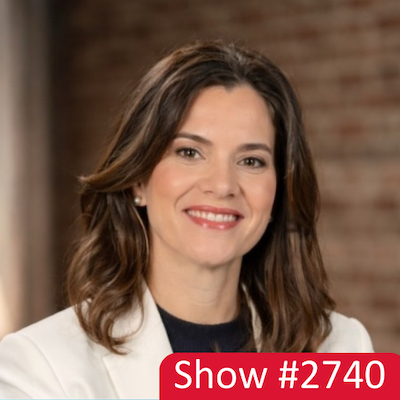
23 Feb February 23, 2026 – Disney Lessons Vance Morris, Superperformers George Pesansky and Fly to Moon Fabiana Neves
Transcript
0:04 Intro 1 : Broadcasting from am and FM stations around the country. Welcome to the Small Business Administration award winning school for startups radio where we talk all things small business and entrepreneurship. Now here is your host, the guy that believes anyone can be a successful entrepreneur, because entrepreneurship is not about creativity, risk or passion. Jim Beach,
0:26 Jim Beach : hello everyone. Welcome to another exciting edition of School for startups radio. I hope you’re having a great day out there, making some money, riding the roller coaster life of being an entrepreneur. Remember our three big lessons. Don’t think you need an original idea. Just go copy someone else’s idea legally. Of course, innovate the daylights out of it. Of course, also we don’t believe in taking risk. We’re not going to start a business with over $5,000 we want to reduce risk as much as possible. And $5,000 is a great limit. And passion is reserved for the church, the synagogue, the mosque and your family. You don’t need to love your business. You just need to like it more than working for the man. I’ve got a great show for you today, three great guests. We’re going to talk about what Disney can teach us. We’re going to have a movie about going to the moon, and we’re going to learn about superpowers all today on a cram packed show. So thank you so very much for being with us. We’re going to go and get started right now. I’m very excited to introduce another great guest. Please welcome Vance Morris to the show. He started off as a birth control security guard, ooh, I left a word out there, birth control factory security guard. That’d be funny if he was a security guard just for birth control. And he worked his way up through Disney leadership, and then it had a little problems, and had a bankruptcy, I think, and then started cleaning carpets and has become an incredibly successful entrepreneur. He now helps business owners get served and keep clients through the entire life of their business. Yes, welcome to the show.
2:02 Vance Morris : I appreciate it, sir, looking forward to it. So what
2:05 Jim Beach : kind of birth control were you a security guard for? Were you at the Trojan factory?
2:11 Vance Morris : No, I Well, actually they made it was ortho and they actually made diaphragms there. And we invented a game called Ultimate diaphragm. If you’re familiar with Ultimate Frisbee.
2:26 Jim Beach : Yes, perfect game
2:29 Vance Morris : for the indoors, because those little suckers can really fly and bounce off the walls.
2:37 Jim Beach : I haven’t seen a diaphragm since the 80s.
2:40 Vance Morris : That was back when I was I was there 1987
2:45 Jim Beach : that’s about what I’m talking about. Yeah, have they gone out of style? Do women still use those
2:51 Vance Morris : I you know that is well above my pay grade, Sir,2:55 Jim Beach : I don’t know either. All right, tell us about your career. Walk us through how you ended up at Disney, and then carpet cleaning. Give us some foundation. Oh, sure.
3:06 Vance Morris : So we I was at college living in Western Massachusetts, which no offense to anybody in Western Mass, but not a whole heck of a lot going on there, and it’s cold. So buddy of mine from college was a recruiter for Disney, and I called him up and I said, Hey, you got something for me? He said, Yep, come on down. And that was the extent of my interview with Disney. I don’t think they do it that way anymore.
3:31 Jim Beach : What job did you end up with?
3:33 Vance Morris : So I opened up the yacht and beach club in one of their restaurants, and I moved on as a service trainer at the Empress Lily, which is a big concrete steamship that goes nowhere. Make a lousy employee. I just don’t like to be told what to do, and so I managed to get myself fired from a couple of high profile jobs in DC Smithsonian Museum system, Kennedy Center for Performing Arts, just was didn’t like being told what to do. So after I got fired the second time, I decided, you know, I should start my own thing. And so I did what every small boy dreams of doing, and I started a carpet cleaning business.
4:19 Jim Beach : Why? Why carpet cleaning versus a laundromat versus a dental office?
4:25 Vance Morris : Yeah, no, I had a lot of opportunities. I was actually working with a franchise Headhunter at the time, and I really wanted to open a restaurant, but I didn’t have $2 million liquid cash, so that kind of squashed that. And I looked at a number of different concepts. Dry cleaning, actually was one of them. I also looked at fruit smoothies and everything, but this carpet cleaning franchise kept poking its head up, and they actually have a product that I can look any one of my customers in the eye and say, you know, this works as advertised. And so I. Was looking for a product that I could stand behind and combine it with my Disney customer experience and customer retention knowledge and really create a premium level service. That’s one that was our our niche was more affluent homeowners, we kind of stayed away from rentals and things like that, not saying they don’t deserve clean carpet, but I didn’t want to be the one cleaning it. So we really market ourselves to our affluent clientele. Our prices certainly reflect that we’re currently still probably about 35% higher than any of my closest competitors. So, so yeah, it grew. Sorry.
5:47 Jim Beach : How do you justify being 35% higher, and how do you market to just affluent customers and let the apartments know that you don’t want to do that business just by the price?
5:58 Vance Morris : Well, when the apartment complex is called for us to bid. We politely say no and refer them to one of our competitors. Our marketing was all, you know, very affluent looking. I mean, they were pictures of large homes on the water. Maybe they’ve got a beamer in the driveway. You know. The other images would be, you know, just somebody entertaining with a party at their home. I mean, those were the types that we were looking for, the, you know, the folks that wanted to keep up with the Joneses. And really were, you know, wanted the best. I mean, it’s like going on a Disney Vacation versus going to your local Carnival in your local town. You know, does Disney have more exciting rides? Debatable. Is it a much better guest experience? 100% I mean, you go to your local carnival and you know, it’s 20 bucks all you can ride. You got a whole bunch of ex cons that are running the rides, and half the fun is wondering whether the ride is going to collapse before it finishes and you get what you pay for. So with us, you know, we our messaging was towards the affluent, and, you know, the experiences we provided were, you know, I mean, it was all little things. Then you add them up and it turns into a big thing. So, you know, like dirty water. What do we do with the water? We sucking all the dirt. We suck out of your carpet. Most carpet cleaners will let it run down your driveway and into the sewer. We will bucket it up and take it back and dispose of it properly. You know, we don’t use subcontractors. We use we have real employees, so a lot of small differentiators that really just added up to a much bigger experience.
7:51 Jim Beach : And then, how big did that company grow?
7:55 Vance Morris : We grew it. Well, I still have it 19 years now. We added a oriental rug washing facility to it, and about seven years ago, added a mold remediation company to it. So really, using our existing clientele or existing list and marketing new services to them, we got five employees. I got a general manager that runs the entire operation now, and I spend about 90 minutes a week on it pretty much cash and checks and kissing babies. I love that
8:25 Jim Beach : very, very well done. And I love that you have a niche. I would never have thought of saying I’m only going to do carpet cleaning for the wealthy. That That makes a lot of sense. And that was a great decision.
8:37 Vance Morris : So, yeah, it was funny, you know, because I would go into the chemical warehouses and the supply stores, and I would always be joke to it. Here comes the guy that only likes to clean clean carpet. And I’m like, Well, why would I want to clean dirty carpet? That’s difficult, that’s time consuming. I should, you know, I want to work for people that want to keep up. You know, their their investment, whether it be rugs or tile or anything. I don’t want to work for somebody who just ignores everything until it’s to a point where it’s no longer cleaning and it’s actually restoration.
9:15 Jim Beach : Haven’t oriental rugs falling out of style tremendously.
9:22 Vance Morris : Well, I use that yes and no. Rugs have not because tile floors and wood floors are and especially the manufactured wood floors are back in style. And what do people immediately do with that wood floor? They put a rug on top of it. So while we may not be seeing quite as many oriental rugs, and we’ve had quite a few, we’ve had some 70, $80,000 rugs in the shop. You know, we do take care of your pottery barn Restoration Hardware rug that you certainly don’t want cleaned in your home, and we can. Take care of that
10:02 Jim Beach : great idea, great idea, and now you have created another part of your business, or a totally different business, the deliver service now Institute over the last 15 years, tell us about that. Sure.
10:18 Vance Morris : So you know, I didn’t want to clean carpet for the rest of my life. I knew that. So, you know, I always knew that putting systems into place that would allow me to do something else was at the top of the list. And I was actually at a mastermind meeting and a business coach to orthodontists after we did introductions and everything. Said to me, You know what? I would pay you to take me and my members to Disney and walk us all around and teach us all about Disney, and the business was born right there in Cincinnati, Ohio, so we there’s a few parts to it. I still do that. Actually, just got back from an event. I take business groups down to Disney for three and four day full immersion boot camps, where we learn how they make the sausage, so to speak, after they in the classroom, after they in the theme park, and at the end of it, they’ve got a blueprint on how they’re going to disneyfy their business. I do have a bunch of private clients. I work with one on one, and then I have group coaching, where you know, if you’re not quite ready for the one on one, you can still have access to me in a group. And really, I focus 100% on customer retention. And in order to have customer retention, well, you better be delivering some great experiences. So I help companies engineer great experiences that essentially give them customers for life.
11:47 Jim Beach : How often do you need your floors cleaned, rugs, carpets?
11:52 Vance Morris : Well, depends on how many what you got going on in the house. If you’re 80 years old and you live by yourself, probably every couple of years will be sufficient just to get the dust and stuff out of there. But you know, if you got three kids, two dogs and a ferret, well, you should probably be cleaning every three to six months.
12:13 Jim Beach : Okay, I would never have thought that frequently. So you really do try to get them locked in as frequent.
12:19 Vance Morris : I mean, not to get technical on it, but you know, I mean carpeting, aside from like your roof or HVAC, is one of the biggest expenses you’ll ever have in your home. It’s also the biggest air filter you have in your home, and like any filter, you need to clean it before it gets full and all clogged up. So once you start seeing those dark lines, you know, the path through your living room. It’s already too late. You know, it’s going to be very difficult to get that back to looking good, but if you stay on top of it, just like oil changes in your car, you’ll have that carpet for, you know, 20 plus years.
12:59 Jim Beach : All right, so what are some of the Disney lessons that you can help business owners learn and take back to their businesses. I love that idea. What are some of the actual points?
13:09 Vance Morris : Sure, yeah, you know, one of the things that Disney does well is they create experiences out of the mundane all the boring things that you’ve got to do day in and day out to keep the business up and running, Disney’s just figured out a way to make an experience out of it, answering the telephone, you know, greeting you somewhere. So it’s not really a huge expense. You don’t need a Cinderella Castle or, you know, go karts or something to create an experience. You just have to have a different mindset. I have a insurance company Allstate guy who’s one of my clients. And there are, I don’t know, probably seven or eight all states in his town, plus 50 or 60 other agents. And he was having a hard time standing out. And I suggested to him, I said, Well, what’s the number one spot where, you know, people reach out to you? And he said, telephone. I said, Great. So let’s make an experience out of answering the phone. And actually, his receptionist came up with it. You know, if you call most companies, you’ll get something to the effect of, thank you for calling Dave’s insurance. How can I help you? You know, we’ve all heard that 1000 times, but Dave is a rock and roll fanatic. I mean, he’s got autographed guitars, gold records on the wall, pictures of the who, I mean, he’s just, he’s a nut about rock and roll. So his receptionist said, You know what? We should really lean into that. And so now they answer their phone. Thank you for calling Dave’s insurance, the agency that rocks. And they try and sound like Wolfman Jack radio, DJ, and by answering the phone that way, they shift sort and screen out anybody who would be a bad client for them, because if you remember, your marketing is designed to do two things, attract the people you want and repel the people you don’t want. And just by answering the phone that way, they’ve been successful in attracting people and. And who just they enjoy themselves, and they just don’t want to be stuck with a muckety muck with, you know, the green eye shade and
15:08 Jim Beach : things like that. I love it all right? Another Disney lesson, sure.
15:15 Vance Morris : You know, certainly we all have times when our customers wait. So at Disney, that’s what you do. You wait for a lot of things. You wait for food. You wait in line for, you know, the ride, you wait for transportation. There are also wait periods in our businesses. Disney calls it line entertainment, where they entertain you in line, and actually being in line is really part of the experience. I mean, if you’re on a mansion, you got talking tombstones and, you know, characters walking around in our own businesses, you know, there are wait periods, and when you do your customer journey, which I strongly suggest people map out, is, you know, there’s, you know, touch point one with your business. Maybe it’s a phone call or a website, and then maybe touch point two is as a meeting. Well, you are doing things as the business owner. In between that phone call and the meeting your prospect or customer, all they’re doing is waiting, and they’re waiting that might only be a couple of days might be a couple of weeks, depending on your industry, but what are you doing to entertain them, to deliver value to them while they are waiting for the next step? So you got to look at it from the customer’s point of view, and you know things that you can send them. I have one financial advisor client who’s in a huge office complex, probably 100, 150 other tenants and prospects were having a difficult time finding her office. She actually had probably like a 30% no show rate on first appointment because people couldn’t find the place. So we created a video of one of her people got out in the street, drove in, drove into the parking lot. We videoed the whole thing, parking in the space, walking into the lobby, what button to push on the elevator, what floor to get off on. And so we created this 32nd video on how to get to her office, and we send that out with an email, which is part of her sequence. And you know, her no show rate dropped down to like, 5% just by that silly video. So again, it doesn’t have to be a wow. Doesn’t have to be expensive or grandiose. It just it needs to serve a purpose, and it needs to be a little different. So really looking for things to do while they’re waiting. You know, have you written a book? Great. You should definitely get that book in the mail to them. You know, if you’re if your ticket is huge, maybe you’re a kitchen, bath remodeler, and somebody’s going to drop 100 grand on your on your services. Well, emailing your proposal while efficient is not exactly screaming, oh, my God, I care about you. Spring $9 for the darn FedEx, put your proposal in the FedEx and send it out. Nobody else is going to do it. Everybody else is going to rely on on email. You’re going to stand out because you’re the only one that thought ahead and thought enough of the customer to send a FedEx.
18:21 Jim Beach : You know, mail sticks out these days because we get so few, so little good mail, a piece of good mail sticks out
18:29 Vance Morris : 100% I mean, FedEx is like Christmas, you know, oh, my God, who sent me a FedEx and Postal Service, say what you will about them, they got a heck of a lot better deliverability rate than any of the email providers. I mean, I think it’s like 99% and you have to touch it and feel it and look at it and make a decision, am I going to open this and read it, or am I going to chuck it with email? Hell, you may never even get the darn thing. It went to a promo folder, a spam folder, or it’s just easily deleted.
19:01 Jim Beach : I used to teach an MBA class, and one of the cases that we did was the Disney apology. I’m sorry. You felt disappointed. Yep, that’s not an apology to me. What do you think Vance of the Disney apology, where they don’t really apologize, but they blame you?
19:23 Vance Morris : No, well, you know, if it is their fault, they will admit to it.
19:30 Jim Beach : I don’t know about that. You don’t think ever, I’ve never. No, I 100% disagree with that.
19:39 Vance Morris : Oh, well, if you got noisy neighbors and you go down to the front desk and complain, they’re like, oh my god, so sorry. Let me get that taken care of for you. You know, I mean, I guess it depends on the situation. He slipped
19:53 Jim Beach : more than you think. Vance, I don’t, okay, yeah. Them the theme parks, because that hotel has a manager that we can get and talk to and stuff, you know, but if you go and the ride breaks down two minutes before you get on it, I don’t think you’re going to get the front of the line pass for free that they used to do. They’re just going to say sorry, and they’re going to say, We’re sorry. You felt inconvenienced by the closing of the ride. They’re going to add that extra phrase in there. You felt, you know that’s saying it’s not our fault when it is. I get it, yeah, so I get it. Much better job of that. I’m a Disney fanatic. I’m just so sad the way they’ve increased over quality is decreased, right?
20:43 Vance Morris : Yeah. Well, let’s hopefully Josh will be able to to be able to bring some of that magic back for everybody.
20:49 Jim Beach : I did hear that they’re working on a new land there the villains land, and they’re almost ready to start construction. And He came in through the entire plan out two years of work, and said it wasn’t grand enough start over. I like that. That’s the one thing I’ve heard about him that I was excited for.
21:06 Vance Morris : That’s it. That’s a Walt move, you know. But you know, don’t forget, Josh was directly responsible for the Disney Cruise Lines, and they are just absolutely amazing, more so than the resorts, and definitely more so than than the theme parks.
21:26 Jim Beach : He was also the guy that took all the benches out. Benches. Yeah, there are no benches left anymore. The lands methodically land after land because they don’t. They just don’t want people sitting down, and they’re getting rid of places to sit. Yesterday, on YouTube,
21:47 Vance Morris : we check out the new, new Epcot pavilion, because that was under construction for a number of years.
21:54 Jim Beach : And center reduce. What’s that? The thing right in the middle, like the tech those things.
22:03 Vance Morris : Well, really, now an open space with that, they got bar stools and countertops and benches. I mean, it was a really well thought out area where there was there was crap before. It’s actually kind of a, I won’t call it the grassy knoll, but it’s just a very comfortable place to relax.
22:26 Jim Beach : Yeah, look at other places. Look in the Star Wars lands, for example. You won’t find a single place to sit down in any of them. So I’ll send you the link to the video. I was kind of pissed. Yeah, yesterday. Do you have another Disney lesson?
22:48 Vance Morris : Sure I got, I got plenty of, plenty of Disney lesson. More Sure thing. So, you know, in
22:57 Vance Morris : well, I can tell you when, when we were working the front desk. You know, this family came in extremely distraught, and you know, we’re trying to find out what was wrong. And they evidently, they just had, like the flight from hell coming down. You know, they were delayed a bunch of times, luggage is lost. They were just completely frazzled, and so Disney, in this case, again, this is the resorts, not the parks. Said, Well, geez, you know, we know how important it is for you to get your vacation started. Why don’t you go over, take your kids over to the merchandise shop and get them each an outfit so that they have something to wear until the until the luggage arrives, and then, why don’t we just give you we’ll give you a bunch of fast passes for your family so you don’t have to wait when you are in the parks. That was something that wasn’t Disney’s fault or Disney’s problem, but they accepted it and said, You know what, the marketing around this is going to be much more valuable than the fast passes and $5 in retail clothing that they gave away.
24:07 Jim Beach : Yeah, that’s a good decision. Yeah. I mean, the
24:11 Vance Morris : stuff that Disney goes viral for, you know, when they’re doing service recovery is sometimes it’s the simplest things. There was this one. This kid wanted a new slinky. You know, from Toy Story, family said, Okay, if you’re going to be if you’re going to behave yourself, we’ll get you a slinky at the end of the trip. So and the trip, kid gets slinky. They’re waiting to go in for breakfast, and mom told dad, watch the kid. Watch the slinky. I’m going to go check on the reservations. And of course, they go into the restaurant. Dad failed at his one job and left the slinky on the bench. And they got about halfway home, they were driving, and from the back seat, the kids screaming, he’s going nuts. So mom calls Disney’s Lost and Found and says, Hey, did anybody turn in a slinky? Now for you and me, that might kind of create a chuckle for the cast member that answered the phone being a service professional. They said, Well, tell me what happened. And he said, Well, my idiot, husband was supposed to watch the slinky. He didn’t do it, and now it’s gone, and my kids a mess. And the cast member said, Okay, I’ll just send you a new one. No proof of purchase, no receipt, no nothing, just I’ll send it to you. So when the box arrives at the house, she opens it up, and there’s a new slinky in there. There’s also a bucket of green army men and Woody, and a little note in there said we thought that slinky would be lonely on the trip home, so we included a couple of friends with them. That’s cool. I don’t know about you, but I wouldn’t have done that. I might have given them just the slinky, but I wouldn’t have added the additional toys. And then they also included a little handwritten note, and that cast member took pictures of slinky and woody all around their resort and included the pictures in with the new with the with a thank you card. That thing got millions and millions and millions of views. That’s quintessential Disney right there. They’re just known for that kind of thing.
26:16 Jim Beach : Used to be known for that kind of thing. Okay, yeah, I’m my last two Disney experiences were both bad, and then I went to Universal and had an infinitely experience, better experience
26:31 Vance Morris : on the third trip. Well, let’s hope Josh is listening to your podcast.
26:36 Jim Beach : I’m, you know, I used to sort of be down on Eisner, but after Iger, I’m back on the Eisner track. I I’m so glad to get rid of Bob. You know, I just thought just, I can’t stand him. I think he’s killed the brand.
26:59 Vance Morris : Yeah. I mean, if you look at the origination of the company, there was Walt, the creative and Roy, the operations finance guy. And after Walt, they had a couple of family members, tried to be CEO card Walker and a bunch of them, and they failed miserably. Then Eisner came in with Frank Wells. Eisner being the creative Frank Wells being the finance operations guy.
27:26 Jim Beach : He’s the guy helicopter crash, right? Yeah, he Yeah, yeah.
27:29 Vance Morris : Brilliant guy. Oh, my God. He was so nice, but he was also Eisner’s conscience. And that’s when Eisner went off the rails. Was after Frank passed, and he went from being a great CEO to a mediocre to poor CEO. And really, I mean, when they got Iger in, he was kind of a mix of both. But still, I think he wielded a little too much power, although he had some smart things, you know, acquiring Marvel and Star Wars, etc, I think those were good additions to the company. The worst decision was Bob, Jay pick. I mean, that bald guy, anybody thinking, let that guy in, leave him in charge. And so smartly, they got rid of him. And I think, I think Josh is going to be great for the company.
28:17 Jim Beach : I actually saw Josh at Universal Studios in May. Oh, really last year, yes, they had just opened up their new theme park, and he was there that day, being told by Universal’s CEO. And so I saw them walking around, and
28:36 Vance Morris : I guess that beats Michael Eisner sneaking in in the dead of night with a couple of executives climbing over the fence.
28:43 Jim Beach : Remember that story about the movie Park? Yeah, we have run out of time. Vance, quickly. I can’t believe how quickly that went. How do we find out more and get in touch. Take some classes from you, get some coaching.
28:56 Vance Morris : Sure you can find me on LinkedIn. It’s the only social media I do Vance Morris on there. And then for anybody who would like to wow their customers and don’t feel too creative, I can give you a 52 ways to wow your customer. It’s a free download, and you can find it at Wow, 52 ways.com. Fantastic.
29:18 Jim Beach : I love it. Vance, thank you so much for being with us. And I love the love the franchise, the safety you did there, the niche that you did there, going affluent. That was brilliant, you’ve just executed perfectly. So thank you so much for being with us. And I know my birth control is safe now,
29:36 Vance Morris : yes, it is completely
29:39 Jim Beach : and we will be right back.
29:51 Jim Beach : We are back in again. Thank you so very much for being with us. Don’t you wish you could perform better? I do, and I have a guest that’s going to help. All of us do that, please welcome George pasanski to the show. He is author of a new book called Super performance, eight strategies to reach full potential for yourself, your team and your organization. George is the President at my blended learning.com and has a career in coaching, and helping Six Sigma and lean methodologies. Welcome to the show, George. How are you doing?
30:27 George Pesansky : Oh, thanks for having me. I’m great. Just a beautiful morning.
30:32 Jim Beach : You are lucky. It’s cloudy and gross here, so looking forward to a weekend maybe.
30:39 George Pesansky : Yeah, what do they say about the weather? If you don’t like it, just wait and it’ll change. Yes, especially here,
30:45 Jim Beach : congratulations on the book. It’s five star rated on the Amazon place. Tell us about it. Yeah.
30:50 George Pesansky : Thank you so much. It was such a labor of love, really kind of a story to my younger self, all of the advice, all of the really tips and tricks and things that, in most cases, I learned the hard way over 30 years of helping fortune, 100 size companies drive change and improvement and really helping individuals, teams and organizations reach their full potential, I wanted to take 30 years of experiences and ideas and put them all into about 300 pages for about 30 bucks. I love it.
31:28 Jim Beach : Can you give us some of the strategies? Can we walk through some of them?
31:31 George Pesansky : Yeah, absolutely. You know some of the chapters, you know, some of the eight strategies that we we outline. You know, one of my favorite is a saying I use that focus is your friend. Of all of the advice I’ve given, sometimes people kind of will come back and give me feedback that that didn’t go as well, or it didn’t happen the way they hoped. But the one piece of advice I consistently give, if we can define our problem, if we can focus on a narrow set of expectations, it always produces a better outcome. So we talk a lot about that, as well as this concept I call the improvement factory, really thinking about creating change and helping you reach your potential by not just thinking about, you know, working on a problem or kind of fixing an issue, but thinking about your capacity to improve, and what is the downtime that’s really robbing and preventing your consistent application of driving change and improvement. And it applies, you know, to an individual, but it also often in teams and organizations, when you start to think about what we’re trying to accomplish, like a machine that I want to have running high quality outcomes, 24 hours a day, much like a factory, we all have an improvement factory, and when we become the managers of our own improvement factory, we can really hold ourselves to a whole different level of accountability.
33:01 Jim Beach : Let’s deep dive into those really fast, please. You said focus. Do you mean concentrating on what I’m doing right now and not letting anything distract me? Or do you mean having a niche that we focus in and we don’t do anything outside of that niche?
33:17 George Pesansky : Yeah, there’s, you know, two pieces that we really try to encourage, you know, one is to obviously focus on a specific outcome, a result that you’re you know, you’re thinking about as a vision, but also recognizing that there really is very few things where outcomes just immediately occur. Almost everything that we do in life and business and work is a series of small victories and being able to focus on the barrier, the issue, the problem, really the target that is in your way, that is preventing your progress to the greater outcome, That technique, which is really this idea of focus is really powerful, because if you can name it, if you can describe it, if you know what’s preventing that next step, then you’re one step closer to that outcome. Way too often people just focus on the outcome, and they really get overwhelmed by all the barriers
34:19 Jim Beach : and with the improvement factory. Can you give me an example of that? I’m not exactly sure what you mean by that yet.
34:26 George Pesansky : Yeah, you know if, if you think about, really, any operation, any business, really, you know, just individuals also may be trying to get started in their, you know, professional endeavors, we obviously want to improve the level of customer service we may have in our restaurant, or we want to improve the results that we’re getting in terms of the number of parts, the number of material, the amount of material we’re making in our factory. And when we think about those things, we we tend to think about them as, how do I eliminate the waste? How do I. Not throw away as much food. How do I lower my costs, and all of the things that help us be more successful in the way we run our business. If you apply that, not just to the actual physical business, but you think about the effort that you put in to making things better, to coming up with a new menu, well, what is the capacity that I have to spend time on that new idea, and what are those resources that I’m using, and how much downtime do I end up generating because I get distracted, or I end up kind of moving to areas that are not as interesting, these distractions, this lack of focus. It’s like a factory with no manager. So when we think about, you know, driving change and improvement, and we think about it as something that’s going to be like a machine that’s going to consistently produce results, often, we can be a lot more disciplined in producing those results.
35:57 Jim Beach : All right, let’s go back to chapter one of the book. What’s the golden hour?
36:02 George Pesansky : My favorite concept in helping teams really start to see levels of performance is to have them focus on the glass being half full versus half empty. We often, especially when it comes to safety organizations, will talk about, you know, having no accidents, no incidents, no problems at all. And that’s a super difficult thing to achieve, because there are lots of things that can end up hurting people. The reality is that many organizations achieve that top level, zero loss performance every single day. The problem is that they just don’t perform for extended periods of time, that we can’t go a week or a month without having an injury, or I can’t go a few hours without having a customer complaint. The Golden Hour is recognizing that there are periods of excellence, even in operations, that really feel like they’re performing poorly. And when we recognize where those golden hours are happening, and we really focus on what I call the root cause of success, we can extend and stretch that time to be able to have higher levels of performance.
37:18 Jim Beach : Okay, so the golden hour could be different for every function, every job, every person,
37:27 George Pesansky : yeah, absolutely, you know, as as a as a host, you you probably have had experiences where, you know, everything is just clicking, and it’s really ideal. And it could be the guests, preparation and subject. It could be, you know, kind of you’re feeling a certain level of energy thinking about, how do I find myself back in this moment where everything is ideal, and what were some of the root causes? What are some of the factors that really contributed to that success? We often think a lot about the things that are preventing us and the things that are causing us to fail or getting in the way, and focus a lot of energy on fixing problems. And what I have found is is that that absolutely has, you know, a purpose, and there’s a worthy energy to put to it, but very few people, very few organizations, really try to understand why what they did worked, and then try to do more of that. And I have found that to be an equally powerful strategy for my clients.
38:28 Jim Beach : What is the prison of expectations? Sounds like something my mother
33:37 George Pesansky : Is that something you learned from Ross Perot?
38:32 George Pesansky : it may have been, actually there. There’s a phenomenon, I think that happens. You know, you see it. I think, you know, in school, with with kids, you see it in certainly business scenarios, and it’s the way that we measure, it’s the way that we look for performance. And if, you know, I set an expectation, and it’s a challenging one, as somebody tries to reach that expectation, if they have the potential, if they have the capability, to far exceed my expectations, but they may not feel comfortable being able to do it consistently. That I’m having a great day, I can get an A on this test, but if I get an A on the test today, then my parents might expect me to get A’s every day. So let’s let’s not go too far. Let’s not get too crazy. That is the prison of expectations and individuals, teams, organizations put so much emphasis on achieving a particular metric, the more energy, the more you know, visibility, the more stress we create on consistently being able to achieve that metric, the less likely the team is ever to exceed it, because they don’t want to be locked in a prison of expectations where they’re going to have to do something a lot better all the time, and people hedge all the time. I think it’s just humans.
40:00 Jim Beach : Ecology. I think I was 17 when I had my first, you know, downtown coat and tie job. It was in Coca Cola, and within my first three hours, two people came up to me independently and said, dude, slow down. You’re already slow down.
40:19 George Pesansky : You Yeah, you had a first hand experience. I tell, I tell a story in the book that’s almost exactly the same. Someone said, Someone sat me down and said, Okay, let me, let me explain a few things here
40:31 Jim Beach : that’s bad. What about the friction? You look for friction in chapter five. Are you talking about the things that aren’t going well.
40:42 George Pesansky : Yeah, you know when, when you think about, really, any organization again, it could be a manufacturing operation, could be, you know, a software coding business or restaurant, really, anything at all. There are going to be things that don’t go well. They’re going to be mistakes. There are going to be things that are taking longer, workloads that are not properly balanced. And this friction, it kind of creates heat in the workplace. It, you know, can cause teams to start have resentment to each other. It can cause, you know, the costs to start to rise because we’re, you know, experiencing wastes and losses and problems. And that friction, you know, is a little bit like the heat that you might use to kind of make a cup of coffee. And you can literally, sometimes walk into organizations, maybe your experience at Coca Cola, May, May, may be familiar to this, and you can kind of feel that the temperature is kind of high in here, that people are on edge, that, you know, there’s a certain degree of stress that you can almost feel hanging in the air, that friction, and it can be, you know, from a lot of places, is what’s really preventing the motor from running really well, from getting the business to operate really well, those businesses, those manufacturing operations, those restaurants that are really profitable, producing fantastic results, the temperature is lower. You can feel, you know, kind of that lack of stress, and you can feel that ownership in what we do. So our goal is to find the sources of friction and recognize, you know, what are those things that we’re doing that lower the temperature, those root causes of success and and really, you know, kind of help the the organization perform in a much more consistent way.
42:29 Jim Beach : Well, congratulations. The book is five star rated on that Amazon place with 25 star reviews, very impressive. How do we get a copy of the book, George? Find out more about you. Yeah.
42:39 George Pesansky : Thank you so much. George pazanski.com, has all of the podcasts, all of the articles, as well as links to all of the books, both here in the US and internationally. We have hardcover, of course, our digital Kindle, and we also have an audiobook that I had a chance to narrate, and you can also find it on Amazon, Barnes Noble or anywhere you buy books, fantastic.
43:02 Jim Beach : George, thank you so much for being with us. You’ve got a great voice. I’m sure the audiobook would be fantastic. No, thank you with us. We’d love to have you
43:09 George Pesansky : back. Thank you so much, Jim. I really appreciate
43:11 Jim Beach : it, and we will be right back. Oh my gosh.
43:22 Intro 2 : I love Oh my gosh. That is a phenomenal question. That’s a great question. And I don’t have a great answer loaded question, and that’s actually
43:37 Jim Beach : a really good question. School for startups radio, we are back and again. Thank you so very much for being with me. There is a new movie out that I love to talk about. It’s called drive me to the moon. I bet you can figure out what it’s about. It’s the lunar voyage, one mission to the moon, and it is sponsored by Castrol. And I’m very excited to welcome Vice President of Castro Americas, Fabiana nuevas. She’s been with the company for about 25 years, starting off in the Brazil office and working her way up there to becoming a vice president here in the American office. Very impressive. Fabiano, welcome. How are you doing?
44:24 Fabiana Neves : Thank you. Thank you for having me. Jim. All good here. Thank you.
44:29 Jim Beach : Where in Brazil are you from? Sao, Paulo, I’ve been there. I just love Brazil. I had the best time ever there. Yeah, a great time. You must miss it horribly. You get to go back once a year.
44:45 Fabiana Neves : Yeah, we go back once a year. So my kids have rooted in the in America, but definitely, yes, I’m still rooted there. So yeah, thank you. Excellent.
44:56 Jim Beach : Tell me about the movie and why Castrol was involved. With it.
45:01 Fabiana Neves : Oh, great. So the documentary, right? So drive me to the moon. That is just released. It really brings to life the behind the scenes and what truly it takes to be in the moon, right? So, from the concept, from the engineering, behind the technology, behind on their own, their mission, right? So making sure that mission is successful, Castro is really, really happy to partner with the space industry to provide not only lubrication solutions for the machines, but also to provide our technology, our support for the for the mission. And now you all can see, right? So how and in what it takes to be there.
45:47 Jim Beach : So when is this mission to the moon?
45:51 Fabiana Neves : So it’s released now already. So you can watch in our website, castro.com/drive, me to the moon. You can also look after on YouTube. So it’s there, it’s available,
46:04 Jim Beach : okay? And how long is it? Is it
46:07 Fabiana Neves : about an hour? Yeah, it’s about an hour. Fantastic.
46:11 Jim Beach : I didn’t know that Castrol was part of the moon effort. How long has Castrol been involved with NASA?
46:21 Fabiana Neves : Ah, yeah, we have been partnering with the space industry and NASA for over seven decades now. Super exciting now. So yeah, seven decades of partnering is starting on the 60 with the Apollo mission, with the Mars missions, the rovers, the opportunity, the curiosity and the perseverance rovers to Mars mission, and now with the with the private sector supporting the lunar voyage, one with lunar outposts. So he has been over seven decades of partnering and supporting the space industry.
46:57 Jim Beach : So I know you’re supposed to change your oil in your car every 5000 miles. When they go to the moon, do they have to stop every 5000 miles?
47:08 Fabiana Neves : Really good question. No, missions. Missions to the moon. You don’t have a way, right? So to change along the way, but you definitely need some repairs. Yeah, so, but you can imagine, you can imagine that, hey, how hard it is, and in these conditions, a lubricant cannot fail, right? So if work it on the voyage to the moon and in the moon, you definitely can work and work really, really well on your 5000 mile drain.
47:41 Jim Beach : So how long did they take to make the movie? How much time does it cover?
47:46 Fabiana Neves : It was about two years capturing everything, right? So from that, from that mission. So it was recorded over two years, okay?
47:57 Jim Beach : And it was a documentary. Does it have a theme or a thesis, or what do you want us to remember after seeing this special,
48:07 Fabiana Neves : you will definitely will remember what it takes to be there, from the concept to the collaboration between industry Castro lunar outpost and everything on the technology, on the engineering, and how you not just build the equipment to be there, but also how to get there, right? So in what to expect when it’s in there, you will see the mission control, the people behind these providing control monitoring. So it’s really, really interesting behind the scenes, seeing right? So everything that that it takes to be there, how complex it is, you know, how challenged it is, as well as how rewarding it is once it is successful and you really reach there
49:01 Jim Beach : is this part of the commercialization of space and the decreased role of NASA and the increasing role of SpaceX and Bezos company? Is this part of that commercialization?
49:18 Fabiana Neves : Yeah, it’s definitely part of the commercialization of the of the space, making it more accessible, and looking for a sustainable way of human presence there. So we are, we are really happy to partner with lunar outpost on that mission and looking in a way to achieve that goal. So that’s the that’s critical, and was the first step towards that working together, right? So to make it a space accessible, right?
49:52 Jim Beach : Well, we all want that to happen. I can’t wait. Who’s the the target audience for the movie is it people who remember. Apollo, or, I don’t know who’s the target audience,
50:04 Fabiana Neves : okay, definitely, who remember Apollo? But also, I mean everyone who you know likes the space and likes technology, likes innovation. You don’t need to be like a technical expert on space to enjoy the documentary. You can also just be curious about space, about innovation, about technology, about collaboration. So I think this is all for you, and if you missed right. So a new more mission. So definitely came right. So for you as well.
50:37 Jim Beach : Yes, I lived in Orlando when Apollo 11 went off, and I was only two and a half, or something like that, but my mother, well, we could go out in the front lawn and see the rocket in space or in, you know, taking it, not taking off, but you know, at 2000 feet, 3000 feet, we could see it. And I have that memory still to this day, one of my most vivid memories of that. And you know, I’ve always been obsessed with the moon ever since then. Do you think that more interest in space and exploration will happen because of this?
51:15 Fabiana Neves : Absolutely, Jim, and I’m happy you had that opportunity, right? So I’m from the late 70s, so I could not experience that. But throughout the years, have seen similar things, right? So that’s one component of the documentary, is that that critical moment, right? So as well as everything that happens before, and yes, we are keen, I think we are seeing artems Now, right? So as as a NASA, as a NASA mission, a lot of attention to these so we are keen to support these missions and having human presence in the moon again.
51:52 Jim Beach : And do you think that we’re going to end up permanently there? What is the goal that you hear of for visiting the moon?
52:03 Fabiana Neves : Yeah, so that’s a good question, right? So I don’t know if I would answer with with my view, but definitely, there is a lot going on, on joining forces of the private sector, the government, the industry, universities, right? So to look after ways of sustainable human presence in the moon. I do believe it can happen, right? So we can, we can make it happen, definitely within everyone, collaborating, right? So making it more accessible, making sure we bring right, so fresh perspective, new technologies to to place, right? So, with everything that we learn to throughout the years, right? So the decades? Yeah, I definitely believe it can happen someday.
52:52 Jim Beach : I hope so. Where do we see the movie? Find out more. Find out more about Castrol.
52:57 Fabiana Neves : Visit our website. Castro.com/drive, me to the moon. Fantastic.
53:04 Jim Beach : All right. I love it. And thank you so much for being with us today. Will you check on that 5000 mile changing the oil on the way to the moon for me? And get back to me about that?
53:16 Fabiana Neves : Definitely you have technology of Castro that goes to 10,000 miles now you definitely have some of our our lubricants that can go as far as that, providing with the technology that was proven to work in the toughest environmental out of this planet.
53:37 Jim Beach : Thank you so much for being with us and sharing this information. I can’t wait to watch the movie. And thanks a lot for being with us.
53:44 Fabiana Neves : Thank you for having me.
53:46 Jim Beach : We are out of time for today, but come back tomorrow. Thank you so much for being with us. Have a great day. Go make a million dollars by now you.
Vance Morris – Former Area Food & Beverage Manager at Walt Disney World and President & Chief Experience Officer of Deliver Service Now institute
Your marketing is designed to do two things, attract the people
you want and repel the people you don’t want.

Vance Morris
Vance Morris is a customer experience strategist, entrepreneur, speaker, and the President and Chief Experience Officer of the Deliver Service Now Institute. He is widely recognized for helping businesses transform ordinary transactions into extraordinary customer experiences that drive loyalty, referrals, and long-term profitability. Vance spent more than a decade as a senior leader at Walt Disney World, where he served as an Area Food and Beverage Manager and helped oversee operations in one of the world’s most respected service organizations. During his time with Disney, he learned firsthand the systems and operational discipline behind creating memorable guest experiences, building customer loyalty, and delivering consistent service excellence at scale. Following his Disney career, Vance became an entrepreneur and successfully built and operated multiple home service businesses. Drawing on his Disney experience and real-world ownership perspective, he founded the Deliver Service Now Institute in 2013 to help business owners escape price competition and instead compete on customer experience and perceived value. Through his proprietary XPerience Service System, he has helped more than 1,100 businesses improve customer retention, increase profitability, and create lasting client relationships. Today, Vance works with entrepreneurs, service professionals, and organizations across industries through consulting, coaching, speaking, and immersive training programs. His work focuses on helping companies create customers for life by delivering intentional, memorable experiences at every stage of the customer journey. Vance Morris is considered one of the leading voices in applying Disney-style service principles to small and mid-sized businesses, showing owners how to turn service into a competitive advantage and a powerful driver of growth.
George Pesansky – Forbes Councils Contributor at Forbes Coaches Council and Author of Superperformance: 8 Strategies to Reach Full Potential for Yourself, Your Team, and Your Organization
When we become the managers of our own improvement factory, we
can really hold ourselves to a whole different level of accountability.

George Pesansky
George Pesansky is an operational excellence expert, executive coach, author, and performance strategist with more than three decades of experience helping individuals and organizations achieve consistent, high-level results. He is widely recognized for his work in leadership development, process improvement, and building repeatable systems that enable sustainable peak performance. Throughout his career, George has worked extensively with Fortune 500 organizations, developing innovative methodologies that streamline operations, eliminate ambiguity, and create cultures of clarity and accountability. He has trained and supported more than 10,000 professionals in Six Sigma, Lean, and World Class Manufacturing principles, helping organizations improve efficiency, strengthen leadership capability, and drive measurable business outcomes. George is also the founder of Capacity2Care, a nonprofit organization dedicated to helping high-performing professionals contribute their expertise to charitable organizations, creating meaningful operational and social impact. In addition to his coaching and consulting work, he is the author of Superperformance, a book that teaches leaders and professionals how to identify, replicate, and sustain their highest levels of performance by turning best practices into standard practices. Today, George works with executives, teams, and organizations around the world through coaching, speaking, and training programs, helping them unlock potential, improve performance, and build systems that produce consistent, long-term success.
Fabiana Neves – CEO of Castrol Americas
There is a lot going on, on joining forces of the private sector,
the government, the industry, universities, right? So to look
after ways of sustainable human presence in the moon.

Fabiana Neves
Fabiana Neves is the President and CEO of Castrol Americas, part of the bp group, where she leads one of the world’s most recognized lubricant businesses across North and South America. In this role, she is responsible for driving business growth, strengthening Castrol’s market leadership, and advancing innovation across automotive, industrial, and energy sectors. Fabiana brings more than two decades of leadership experience within Castrol and bp, having held senior roles across marketing, business development, and general management. Her career includes positions such as Vice President of Business Development and Integration for Latin America at bp, as well as multiple leadership roles at Castrol, including General Manager, industrial marketing leader, and regional commercial executive. Through these roles, she has led strategic initiatives focused on brand growth, customer engagement, and commercial performance across global and regional markets. Prior to becoming CEO of Castrol Americas, Fabiana served as Vice President for Castrol Americas, where she helped lead major brand initiatives and partnerships, while supporting Castrol’s mission to develop high-performance lubricants and advanced technologies for demanding environments, including space and next-generation mobility applications. Known for her strategic leadership and deep expertise in global energy and lubricant markets, Fabiana has built a reputation for driving transformation, strengthening customer relationships, and leading high-performing teams. Today, she continues to guide Castrol Americas through a period of innovation and growth, helping shape the future of mobility, industrial performance, and energy solutions.